

SHIBUY.A. × WATCH
![[Report] Shibuya Culture Project 20th Anniversary Event "Shibuya's 20 Years of Memories and the Future"](https://biz.shibuyabunka.com/storage/images/watch/1766127653_wide.png)
[Report] Shibuya Culture Project 20th Anniversary Event "Shibuya's 20 Years of Memories and the Future"
2026-01-05
SHARE
The website "Shibuya Culture Project," which launched in 2005, has been recording and sharing the changes in Shibuya's cityscape and culture for 20 years. At the milestone 20th anniversary event, a variety of opinions were exchanged about the future of Shibuya, including those of the younger generation, as well as looking back on the progress made so far.
Looking back on Shibuya's 20 years and considering the future of the city
The Shibuya Culture Project, a website aimed at promoting the charms of Shibuya, was launched in 2005. To commemorate its 20th anniversary, an event entitled "20 Years of Shibuya Memories, and the Future," was held on December 8, 2025, at the COURT on the 8th floor Shibuya Hikarie. The event brought together Tokyu, which operates the website, and production staff, as well as visitors interested in the evolution of Shibuya's cityscape and culture, who shared time to reflect on the trial and error that has gone into the project so far and think about the future of Shibuya.
Part 1 Talk: "Shibuya's Past: 20 Years of Focusing on Shibuya"
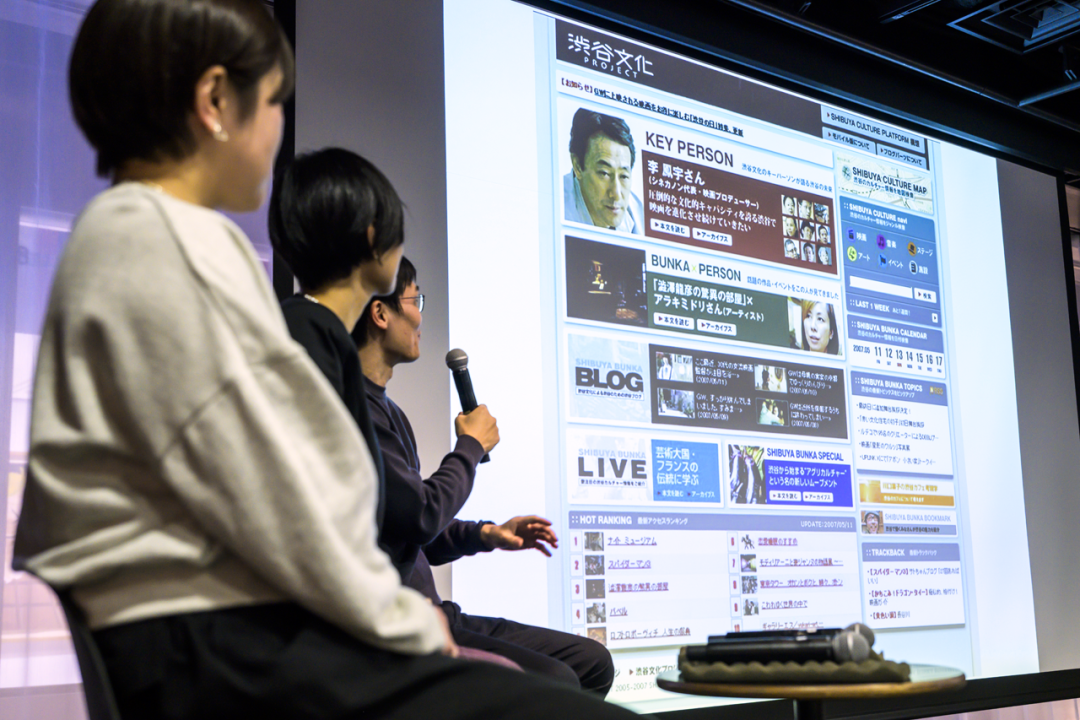
Started as a media outlet that communicates the soft side through people
The first part of the talk session was themed "Shibuya's History: 20 Years of Focusing on Shibuya," and looked back on the changes in Shibuya over the past 20 years and the progress of the content of the "Shibuya Culture Project," which has continued to share this information. Three of Tokyu's past employees who have been in charge of running the site took to the stage, and Takashi Fujii of JLOCAL (Shibuya Keizai Shimbun), who has been involved in planning and editing the site for 20 years since its launch in 2005, served as facilitator.
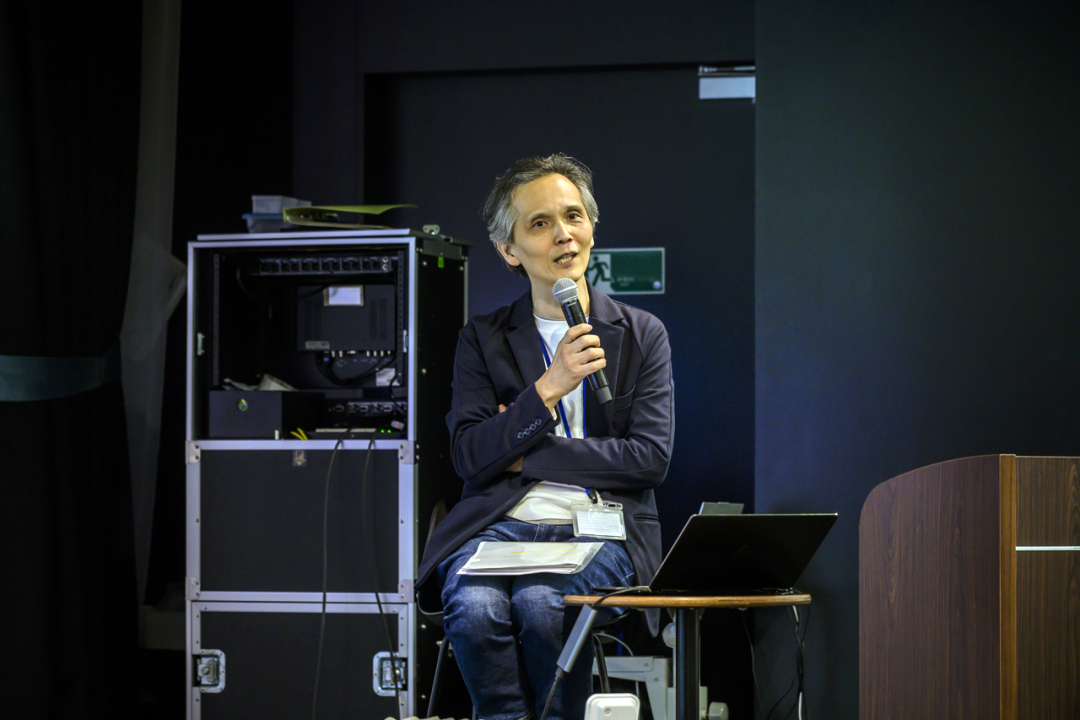
Fujii has been in charge of planning and editing since the project's launch in 2005.
The session began with a discussion of the situation in Shibuya in 2005. Since the opening of Roppongi Hills in 2003, a wave of startup companies have been relocating to Roppongi, and Shibuya has fallen behind in the competition between cities. Against this backdrop, Tokyu announced the "Shibuya Culture Platform Concept," which aimed to turn the entire city of Shibuya into a platform for cultural creation. This trend led to the launch of the website, which focuses on soft aspects such as culture.
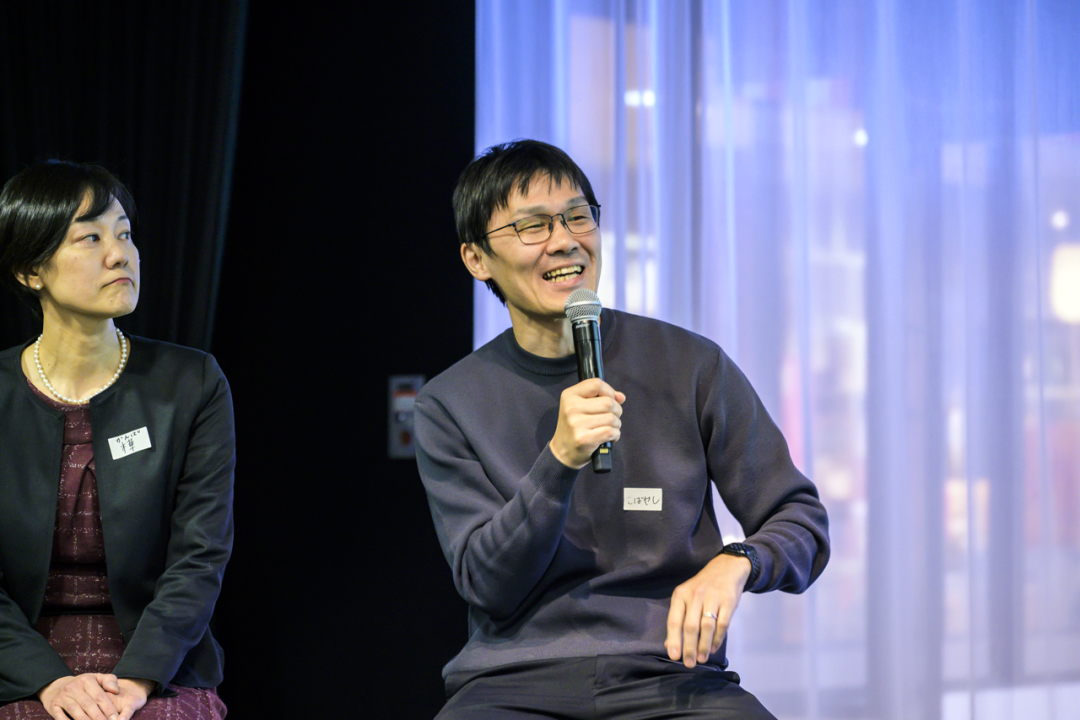
Kobayashi, the creator and first person in charge of the Shibuya Cultural Project
Kobayashi Otoya, the first person in charge of the project and a member of the Digital Strategy Group at Digital Platform, recalls, "There are limits to what Tokyu can do to develop the city on its own. That's why we wanted to find partners, and the idea of a media outlet that would communicate the soft aspects of Shibuya through its people began to take shape." He also revealed that, in anticipation of competition with Shinjuku, Ikebukuro, Ginza, and other areas, they deliberately toned down the "Tokyu color" and emphasized its position as a "city portal." Regarding the name "project," he said, "At first, I thought it might be better not to use that name (laughs)," but added, "In the end, I'm glad it gave the impression of being a never-ending effort that's always moving forward."
Since launching its website in December 2005, Shibuya Culture Project has interviewed approximately 170 key people (groups) based in Shibuya, conveying the "charm of Shibuya" through their words.
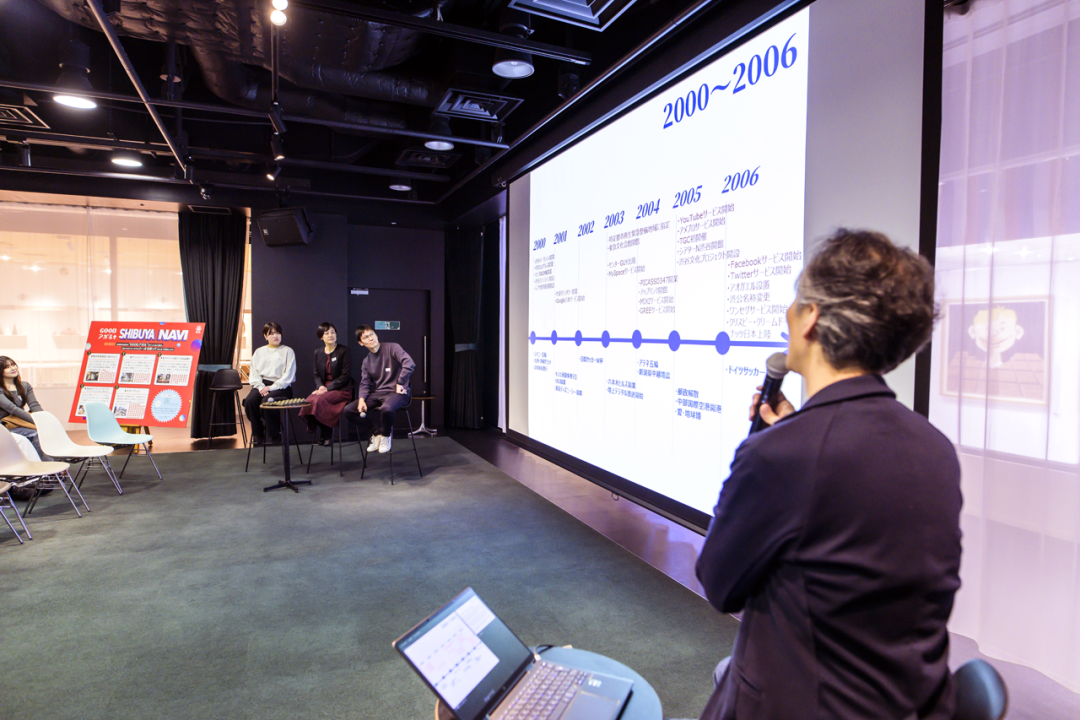
As part of a redefinition of entertainment, the redevelopment work itself is being turned into content
Next, he spoke about the "Entertainment City Shibuya" concept that Tokyu announced in 2012. Kaba Yukiyo, who was in charge at the time of the concept and is part of the Public Relations Group in the President's Office, explained, "The idea is to redefine Shibuya as entertainment in a broader sense, including the lifestyle and culture that is part of everyday life, rather than just entertainment in the narrow sense represented by show business. By updating the city's image in a positive way and attracting players who share its values of diversity and tolerance, we aimed to make Shibuya 'the most popular city to visit in Japan.'"
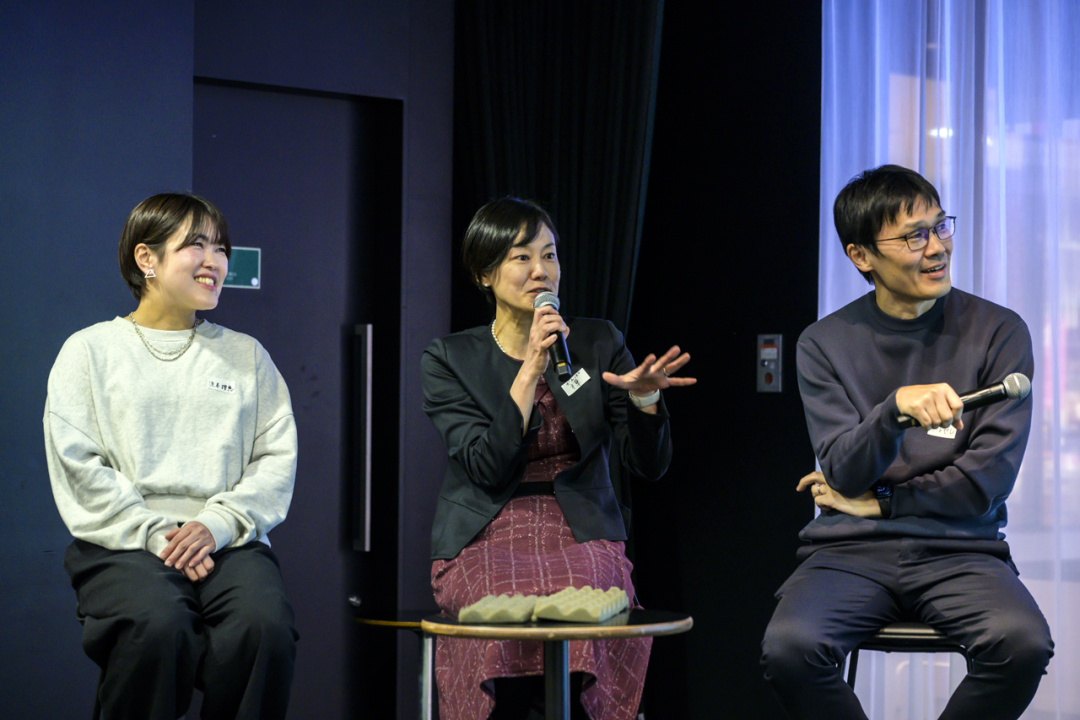
Kaba was in charge of running the facility for a long period from 2009 to 2016, taking time off to raise her child.
One of the most popular pieces of content based on this concept is a series of articles that portray the redevelopment work itself as entertainment. For example, a video article introducing the "Toyoko Line Underground Switch Construction" that took place on March 15, 2013, recorded 3 million views on YouTube. Furthermore, in collaboration with Shibuya University, a special class was held in which the general public could tour the construction site, and attempts were made to promote the construction process itself as a culture. "Construction is actually fascinating. We thought long and hard about how to communicate that as entertainment," recalls Kaba.
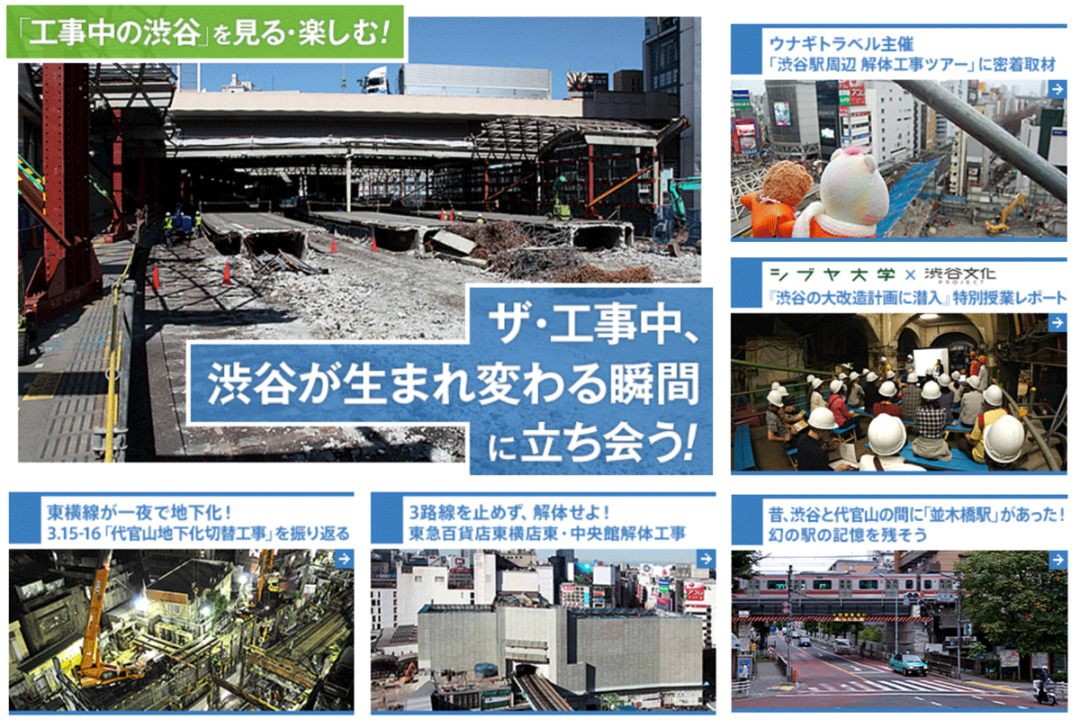
Starting in March 2014, we ran a feature article on the theme of "making construction into entertainment." The Shibuya Station redevelopment project, which had previously been perceived as dark and noisy, was reinterpreted from a unique perspective, presenting it as a new attraction.Feature article: "The Under Construction: Witness the moment Shibuya is reborn"
This video documents the Daikanyama Underground Switching Works, which took place between the last train at the 85-year-old Toyoko Line Shibuya Station on March 15, 2013, and the first train on the following day, the 16th. The high level of Japanese civil engineering technology, which took the above-ground line underground in just three and a half hours between the last train and FUKU-TOSHIN LINE, drew attention from overseas, in preparation for the start of through service between TOKYU TOYOKO LINE Tokyo Metro Co.,Ltd. Tokyo Metro Fukutoshin Line.
- Farewell to our beloved "Kamaboko roof" at Toyoko Line Shibuya Station (March 2013)
- "Tokyu Toyoko Department Store East Building" Last Tour (June 2013)
- Witness the moment Shibuya is reborn during the construction (March 2014)
- Report on the demolition work site of the Tokyu Department Store West and South Buildings (June 28, 2022)
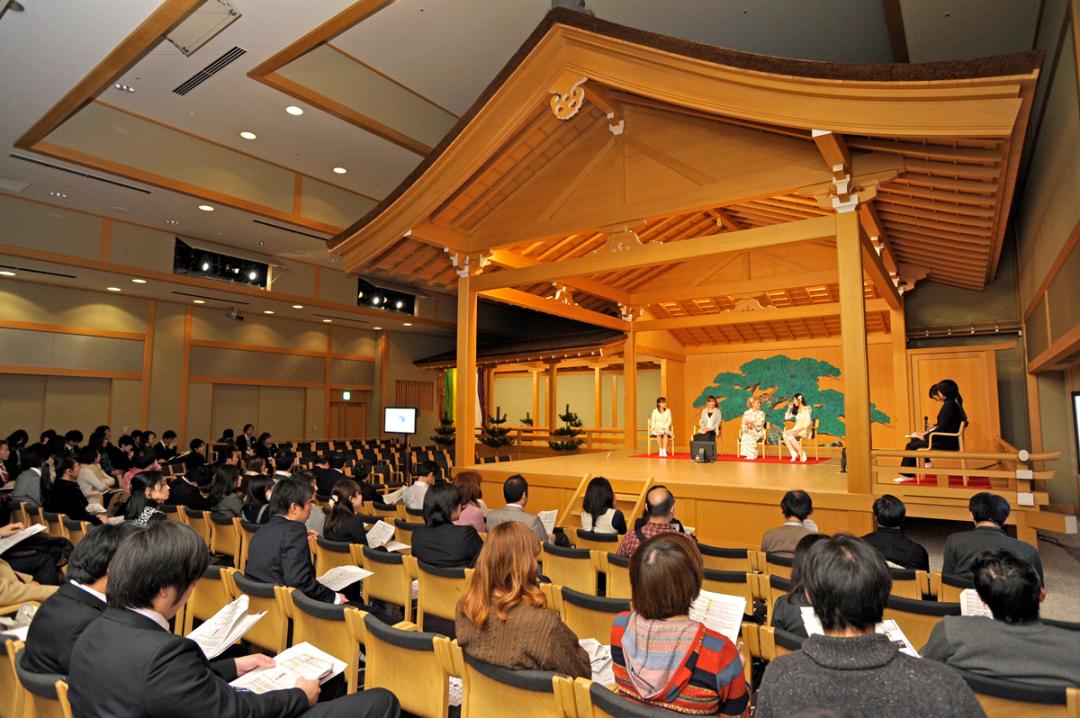
The Shibuya Cultural Tea Ceremony talk event was held five times between March 2010 and February 2013, with a variety of themes including "The Charm of Shibuya," "Having Fun in Shibuya," and "Working in Shibuya." The photo shows the "Shibuya Cultural Tea Ceremony Girls' Gathering," held on February 10, 2012, to celebrate the opening of Shibuya Hikarie, at the Cerulean Tower Noh Theater. (Photo taken on February 10, 2012)
With the spread of smartphones, we are now in an age where you can get information without even coming to the city, so we also worked on creating content that would give people a reason to visit the city. One example of this was the talk event "Shibuya Cultural Tea Ceremony." By providing an opportunity to talk with key people in Shibuya in real life, we provided an experiential value that cannot be obtained online. These efforts also led to the creation of a booklet, demonstrating the expansion of media from the web to real life and then to paper.
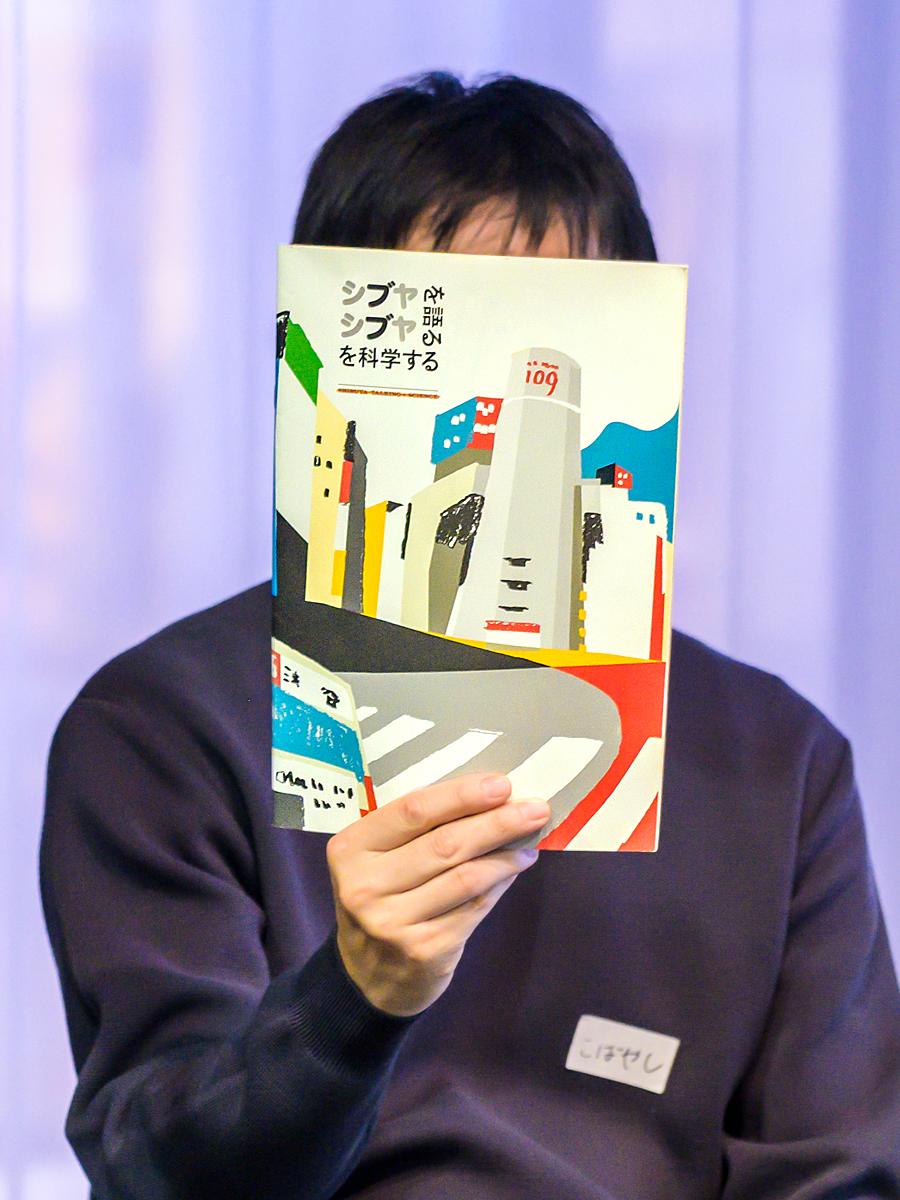
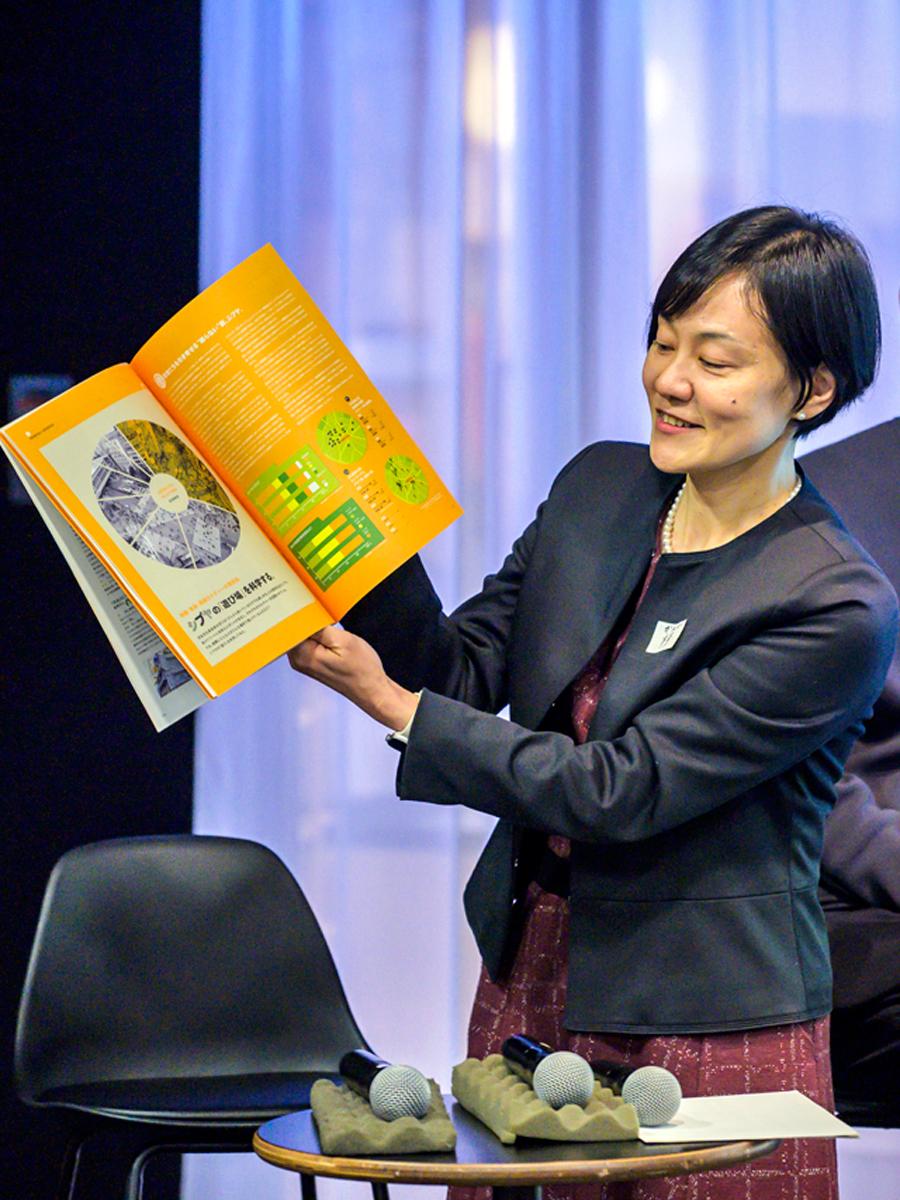
During Kaba's time in charge, he published a booklet compiling information about the talk event "Shibuya Cultural Tea Ceremony" and the "town of Shibuya." He also actively worked to disseminate information beyond the scope of the website, including planning Shibuya souvenirs and developing a program on the community FM station "Shibuya Radio."
"It's over, but it's not over" - Continuing to promote the Shibuya area
After that, redevelopment got into full swing, and one by one, "places of memories" like Tokyu Toyoko Department Store began to disappear. In response to this, a commemorative booklet titled "NO END" was produced and released on a special page on the website. Fujii said, "Inspired by the title of the Toyoko Theater's stage curtain, "NO END," the booklet expresses the transition of the Shibuya area. I think it is the culmination of the activities of the Shibuya Culture Project to date."
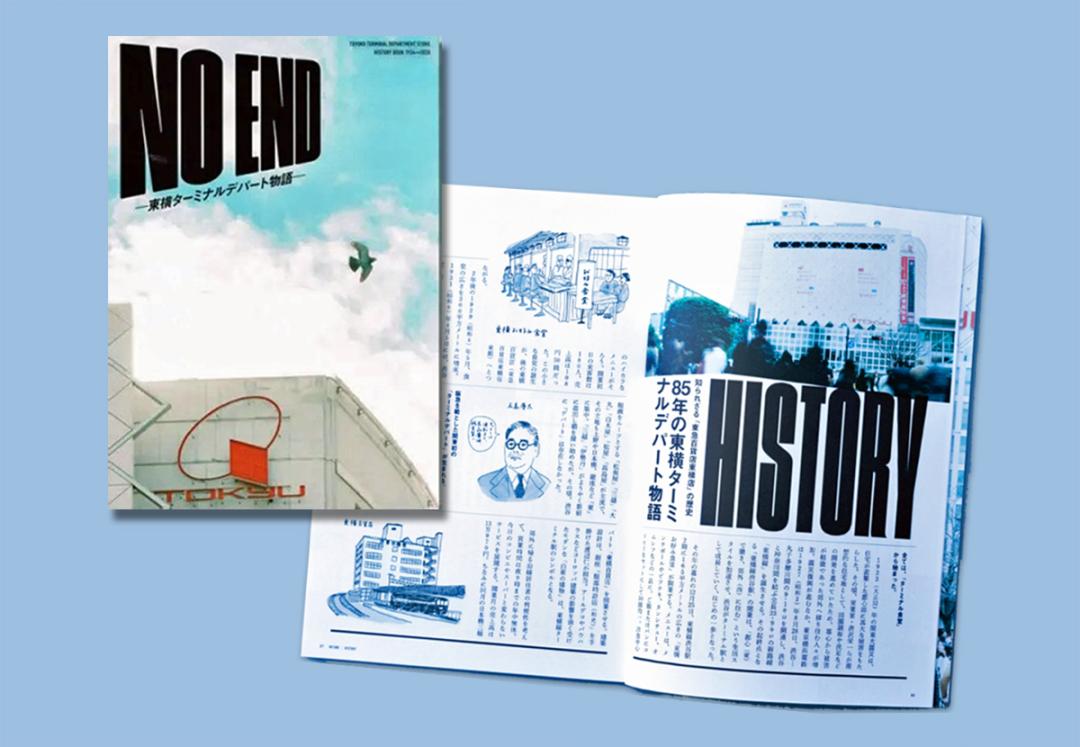
For the closing campaign leading up to the closure of the Tokyu Toyoko Department Store West and South Buildings on March 31, 2020, the Shibuya Culture Project came up with the catchphrase "NO END," and produced a commemorative booklet titled "NO END - The Story of Toyoko Terminal Department Store," planned an exhibition, and ran a wrapped train. The photo above shows the commemorative booklet, which was issued in a limited run of 2,000 copies.
At the same time, the spread of COVID-19 meant that people were unable to gather together for a long period of time. Rie Hamamoto, who was in charge at the time of the project and was part of the Infrastructure Development Group of the Social Infrastructure Business Division, recalls, "Even though I was handed the baton, it was difficult to set up opportunities for interviews and coverage, and I struggled to figure out what to communicate and how." As a result, the site entered a temporary slump.
In the wake of the COVID-19 pandemic, the site is redefining its role. As redevelopment progresses, the number of "working people" in Shibuya has increased dramatically, and the face of the city has changed dramatically. In response to this situation, the site has shifted its focus from its previous omnidirectional information dissemination to a media outlet aimed at "people working in Shibuya," and is developing content that focuses on "working" without changing its policy of emphasizing the soft side.
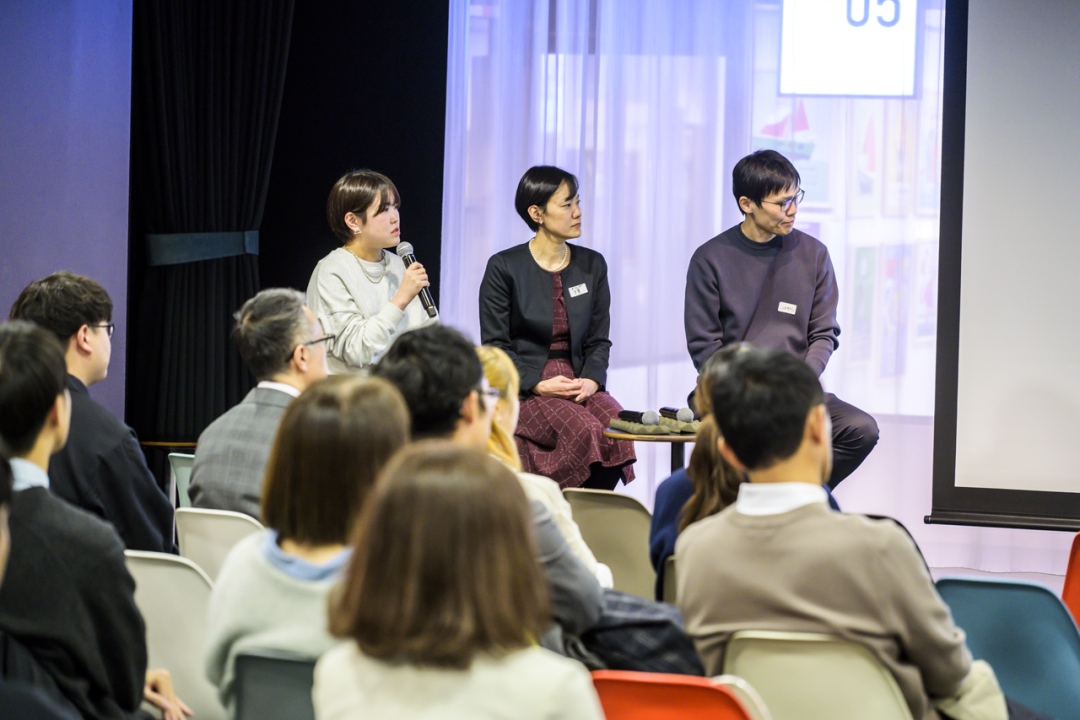
Hamamoto was in charge from 2018 to spring 2025. After a slump in operations due to the COVID-19 pandemic, the site underwent a major renewal in 2024, aimed at "people working in Shibuya." Ahead of the 20th anniversary of the site's launch, the site showed a new direction.
At the same time, there has been a change in the way Tokyu is presented. Hamamoto says, "In the past, we deliberately avoided putting Tokyu in the forefront, but now we're in a phase where we want to show our involvement as 'a part of Shibuya.'"
The content on the site, which has been accumulated over the past 20 years, serves as a valuable archive that has continued to record the changes in Shibuya in real time, and is available for anyone to easily view.
Part 2 Talk: "The Future of Shibuya: Let's Talk About the Future of Shibuya"
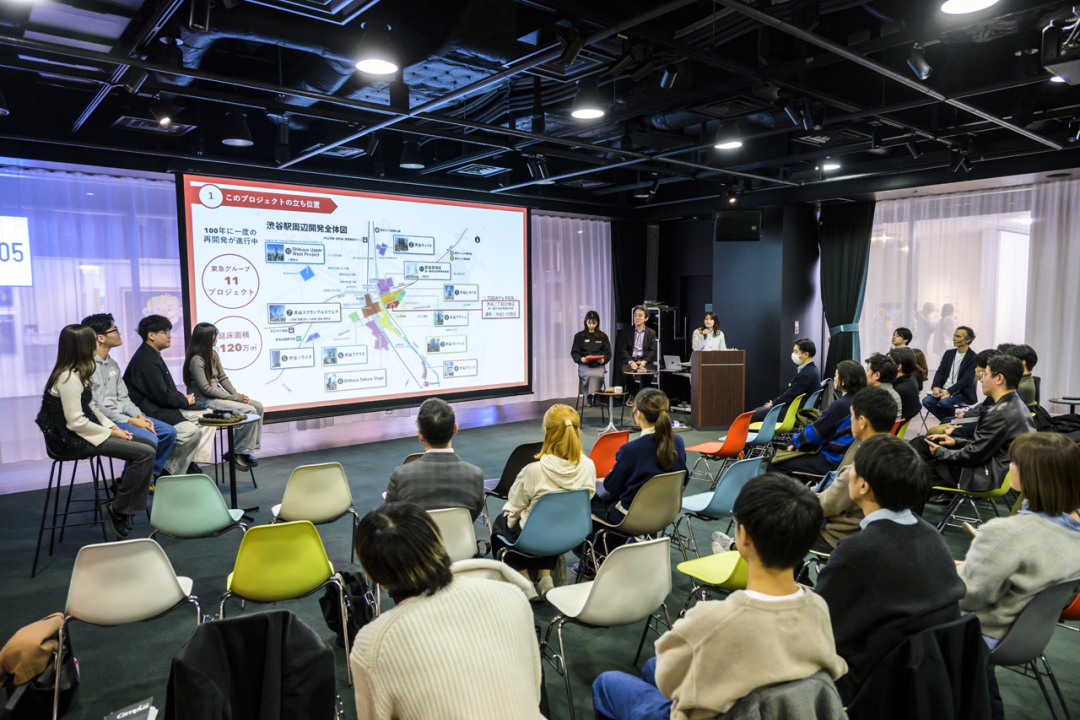
A young man who is the same age as the site's founder, 20 years old, talks about the future of Shibuya
The second part of the event was a talk session to consider the present and future of Shibuya from the perspective of the younger generation. Four participants, mostly university students around the age of 20, took to the stage. The facilitators were Nishi Itsuki, editor-in-chief of the Shibuya Keizai Shimbun, and Kameda Mai, who is in charge of Shibuya promotion and management at Tokyu. Nishi began the session by saying, "I'd love to have a frank discussion about the future of Shibuya."
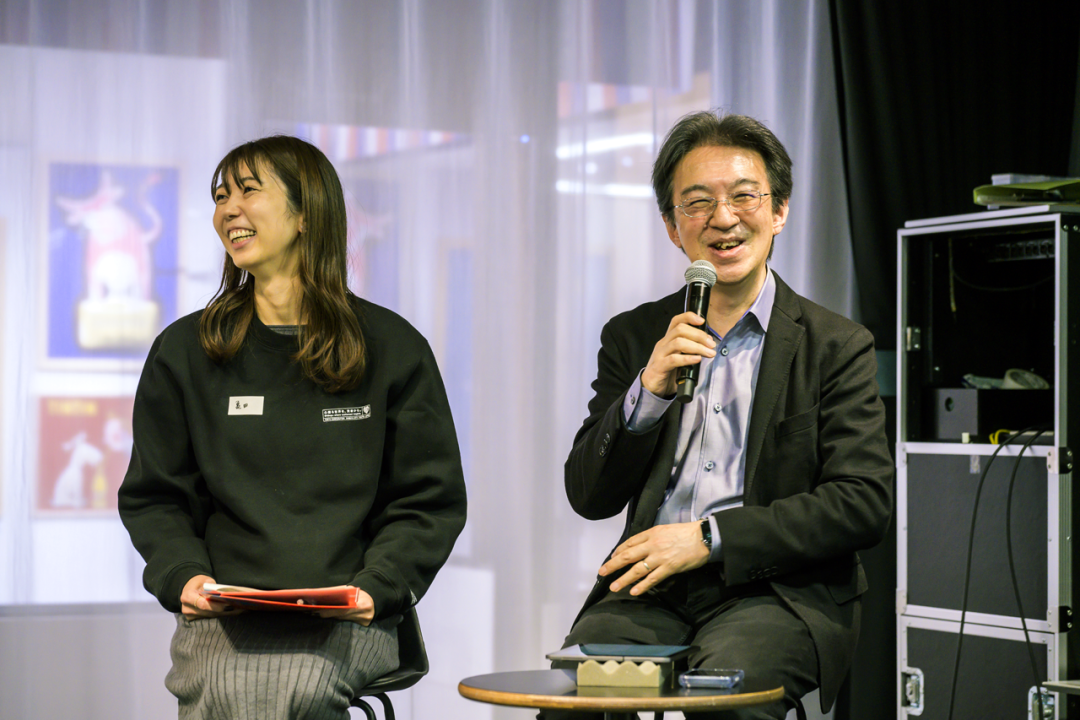
Tokyu's Kameda (left) and Shibuya Keizai Shimbun Editor-in-Chief Nishi (right), who moderated the second part of the talk
The first to be introduced was the efforts of the Kubota Seminar at Aoyama Gakuin University's School of Business. The seminar, which studies marketing and consumer behavior, has been working with Tokyu to consider urban development in Shibuya. Third-year student Kisumi Makino said, "I felt that it was not easy to liven up Shibuya. While there is a lot that has been built up over the years, I felt that we needed to reconsider how young people, such as students, view Shibuya."
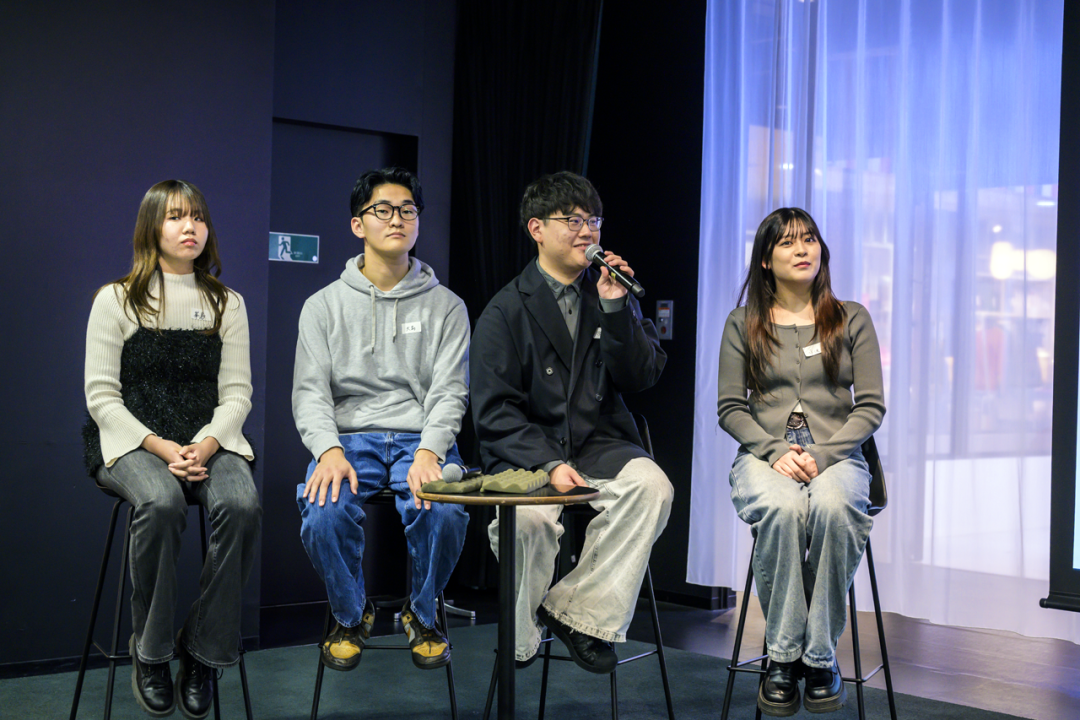
The speakers were four university students born around 2005, when the Shibuya Culture Project was established (from left: Emi Mineshima and Yuzuru Oshima from Kokugakuin University, Kisumi Makino and Moeka Hirasawa from Aoyama Gakuin University).
Next, Yuzuru Oshima, a member of the Tahara Seminar at Kokugakuin University's Faculty of Economics, spoke about his involvement with Shibuya through fieldwork. He said that through participation in local events and classes in collaboration with Tokyu and Tokyu Hotels & Resorts, he envisioned "Shibuya 10 years from now" and proposed the role that Tokyu could play. However, he also frankly commented that "it was more difficult than I imagined to specifically envision Shibuya 10 years from now."

Mr. Oshima from Tahara's seminar is involved in planning and running the Shibusawa Sakura Festival, which is held every spring along the Shibuya River.
What do young people think when they see the completed image of Shibuya in the future?
During the session, a video showing an image of Shibuya as it will look in 2034 was screened. Seeing the future image while overlaying it with the current cityscape prompted participants to comment, "There are parts I can understand, but there are also parts I still can't fully imagine."
When students watched the video of the completed image, many expressed their hopes for "ease of walking" and "clarity of flow." Some mentioned that Shibuya's unique bowl-shaped topography had been the cause of its previous difficulty in navigating the area, and expressed hope that "it will become a city where everyone can live comfortably." Furthermore, there were also comments that praised the increase in photo spots and the fact that the cityscape will be easy for foreign tourists to understand.
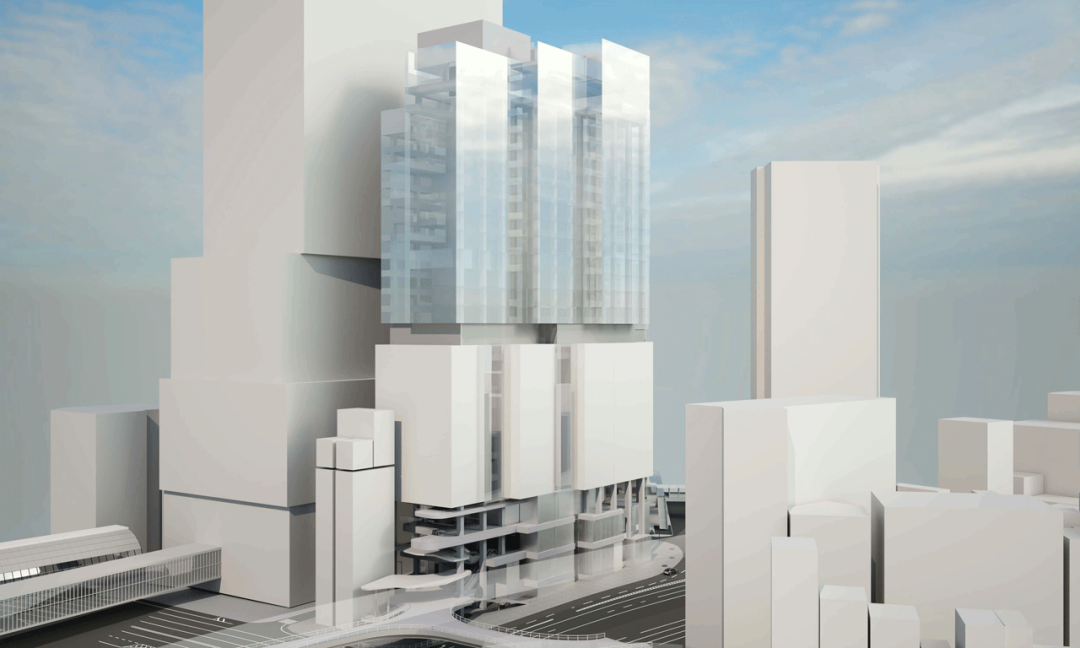
A perspective drawing of the Shibuya 2-Chome 22 District, which is currently under construction and is scheduled for completion in the mid-2030s. A cinema complex is also planned for the middle floors.
Here, Tokyu gave an explanation about the redevelopment of the "Shibuya 2-chome 22 District." Currently, Tokyu is promoting 11 redevelopment projects in the Shibuya area, and among these, the 2-chome 22 District is positioned as a large-scale development that will serve as the gateway to the east exit of Shibuya Station. Centered around an urban core that connects the station to ground level, the area will connect with underground passageways, pedestrian decks, and surrounding facilities, and aims to become a space that will become a new symbol of the east exit. There are also plans to attract Shibuya's largest movie theater.
Regarding the movie theater and commercial facilities planned for the 2-chome 22 district, students freely expressed their opinions, such as, "It would be great if the number of films shown could increase," "I would like a movie theater where I can easily watch late shows by myself," "It would be interesting to have an experiential movie theater like 4DX," and "It would also be good to have a screening space that is suitable for supporting idol activities."
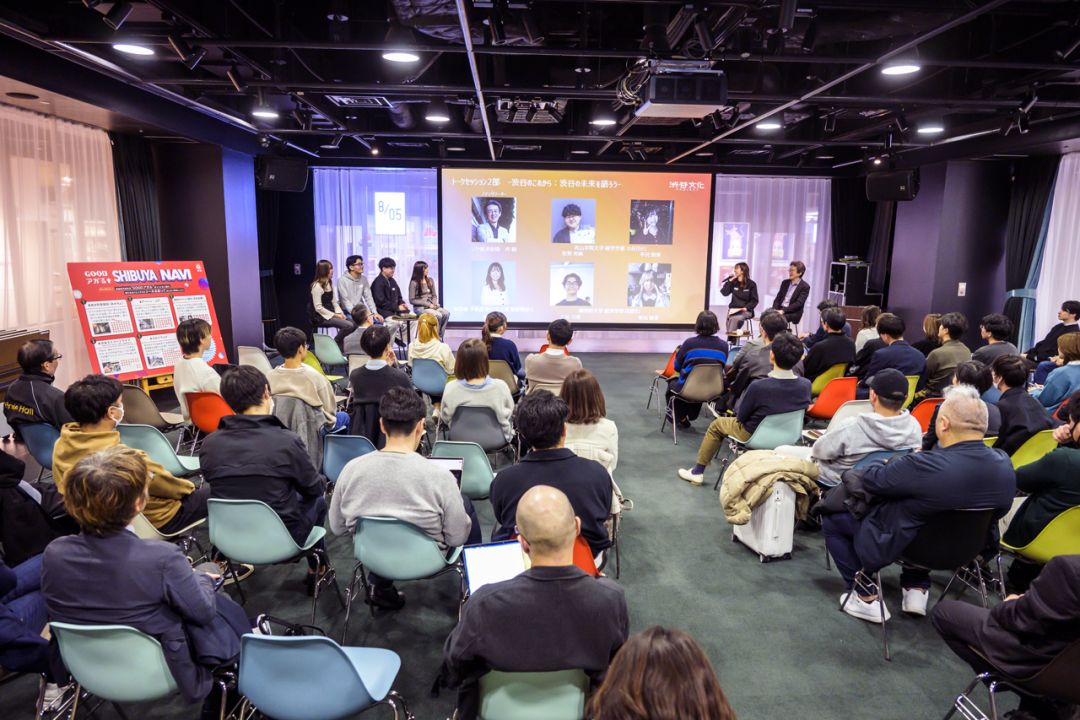
The voices of each and every visitor to this town will shape the next Shibuya.
The conversation returned to Shibuya's current state, and participants exchanged opinions about everyday life. Many said, "If we're going to get together, Shibuya is the place to go," highlighting its appeal as a city where people can spend time without a specific goal in mind, whether it's shopping, eating, visiting cafes, or visiting live music venues. Hirasawa Moeka, a student at Aoyama Gakuin University, originally from the countryside, said, "Even if my friends are scattered across places like Saitama and Yokohama, it's easy to get together in Shibuya." Oshima, a music lover, also pointed out, "The concentration of live music venues in a small area is an appeal that other cities don't have." Mineshima Emi, a student at Kokugakuin University, said, "I often hung out in Harajuku when I was in middle and high school, but I started coming to Shibuya after I became a university student. I have the image of it as a more adult city."
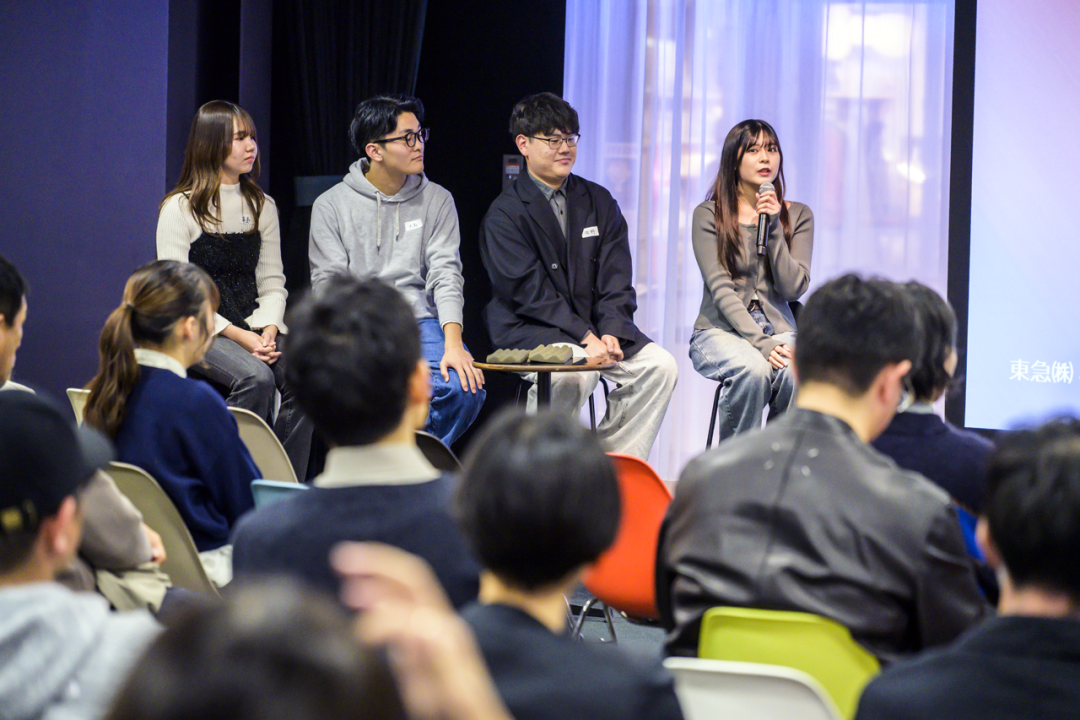
Visitors listen intently to the talks of students including Mr. Hirasawa from Kubota's seminar
When asked what they hope for in Shibuya in the future, they spoke of the need for a calm space to spend time waiting for a movie, a store layout that suits people in their 20s and 30s, and a place where anyone can sit down and rest. Furthermore, a stream of free-spirited ideas for the future emerged, including large-scale live events and projection mapping, a sports space where people can easily get active, an indoor entertainment facility that is not affected by the weather, and green spaces. Hirasawa's comment that "it would be nice if there was a place in Shibuya where people could see today's society and culture at a glance when they came to Shibuya" was also striking.
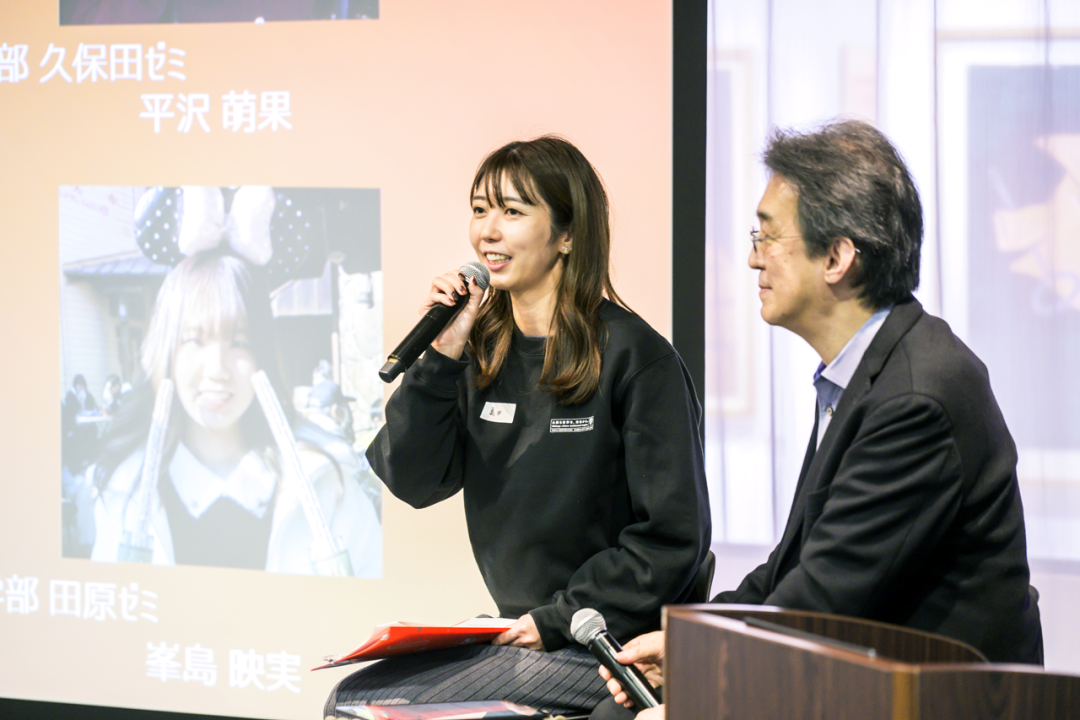
Kameda was in charge of the Shibuya Cultural Project from 2016 to 2019.
In response to these voices, Kameda said, "It was invaluable to be able to hear actual voices directly. I would like to listen to everyone's opinions and create a Shibuya where everyone can belong." At the end of the session, Nishi concluded the exchange by saying, "While there is an abundance of information online, the value of actually experiencing and feeling the city can only be gained by coming to the city. I hope that voices like those today will gradually be reflected in the future of Shibuya."
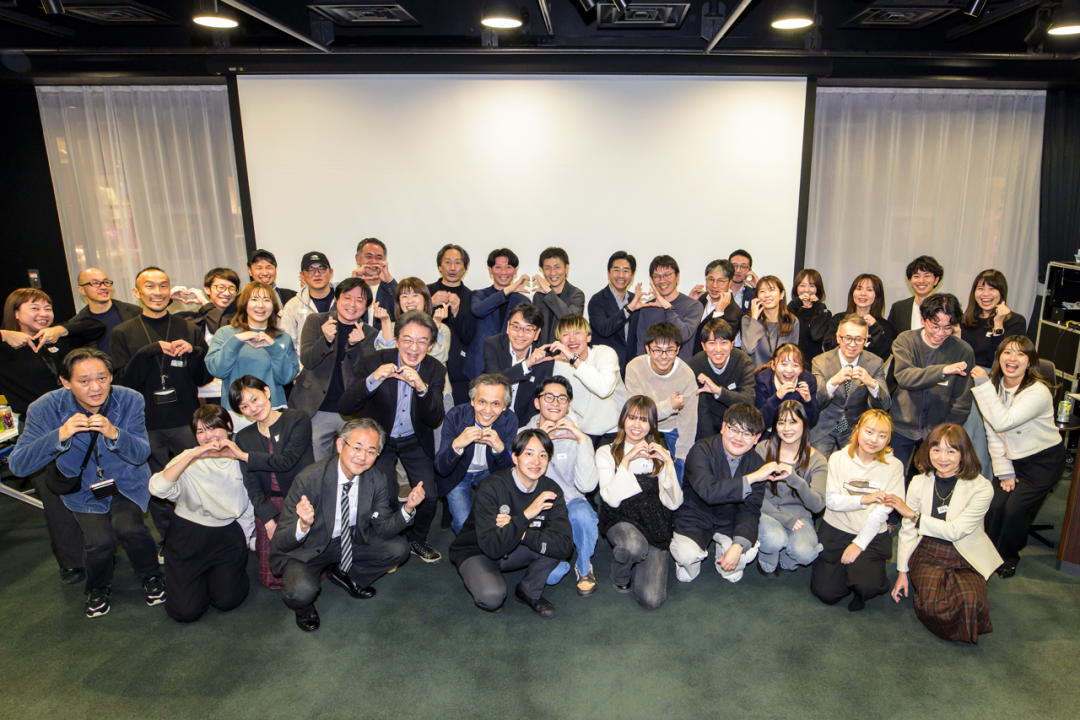
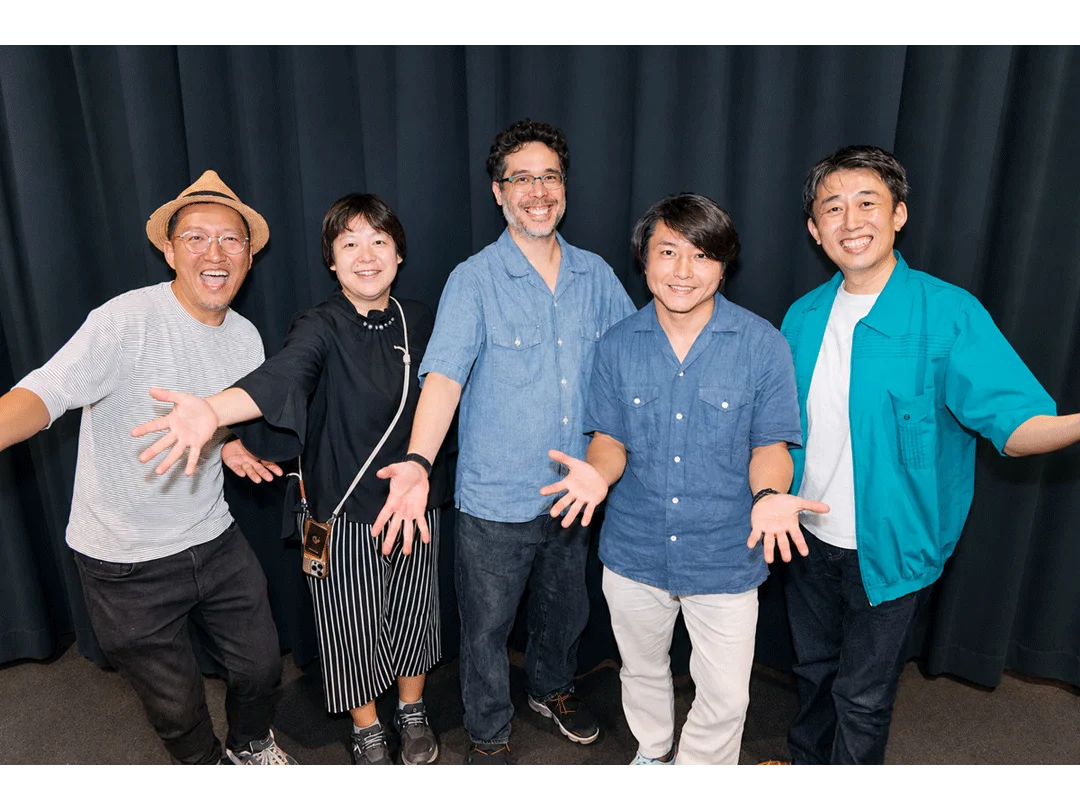
A commemorative photo with the speakers and everyone in attendance, made with a heart mark
Watching Shibuya continue to change might leave you with mixed feelings. Some people may feel a sense of sadness as fond memories of the time come flooding back, thinking, "I loved Shibuya back then." But if you think about it, Shibuya is also a city that has been constantly changing. The Shibuya of those days that captivated me may have been merely a fleeting moment in the city's long history. This change will likely continue into the future. If the city is constantly being updated, try updating your perspective as well. By doing so, you're sure to discover new ways to enjoy Shibuya.
The 20th anniversary event highlighted once again how the Shibuya Culture Project has continued to capture the "now" of Shibuya for 20 years, providing hints for facing the city from a new perspective. This accumulation will be passed on to the future, and as an "open archive," it will continue to be updated as Shibuya evolves.
Interview and writing: Ryota Ninomiya / Photography: Osamu Matsuba
Venue
Genres within watch
Articles in the same genre
2026-10-18〜
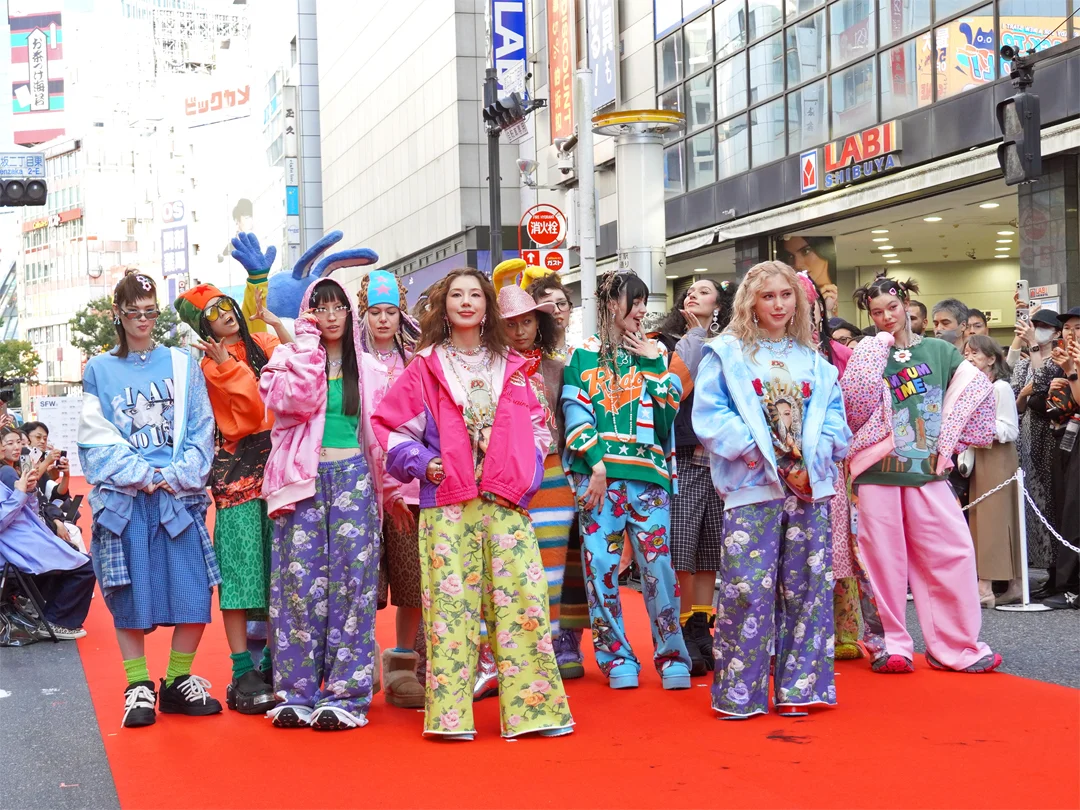
Fashion and culture intersect in the heart of Shibuya: Riisa Naka and others take part in a street runway.
2026-10-18〜
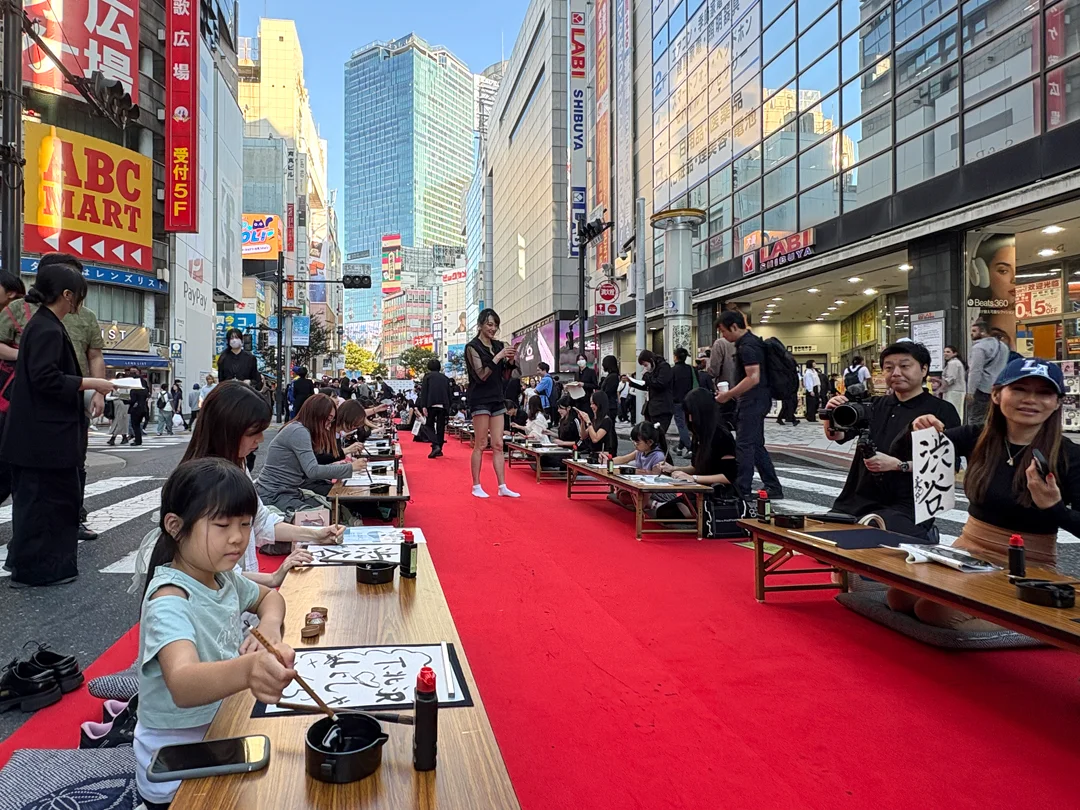
Calligraphy experience held on Bunkamura Street in Shibuya; over 100 people line the red carpet, including foreign tourists.

2026-10-01〜
THE HIKARIE WINDOW / Keisuke Hara — The ever-changing Shibuya and the rhythm of everyday life
2026-09-30〜
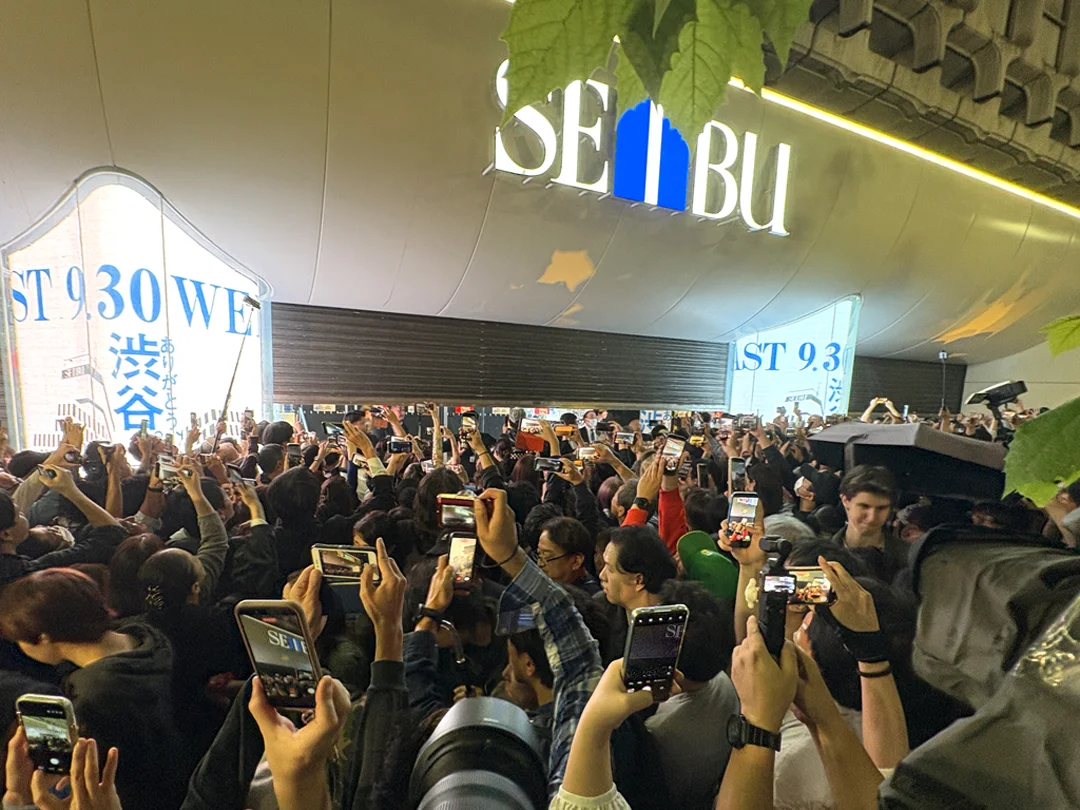
Seibu Shibuya Store closes its doors after 58 years of history: The department store that created "Shibuya" marks the end of its history.
Featured articles on the site
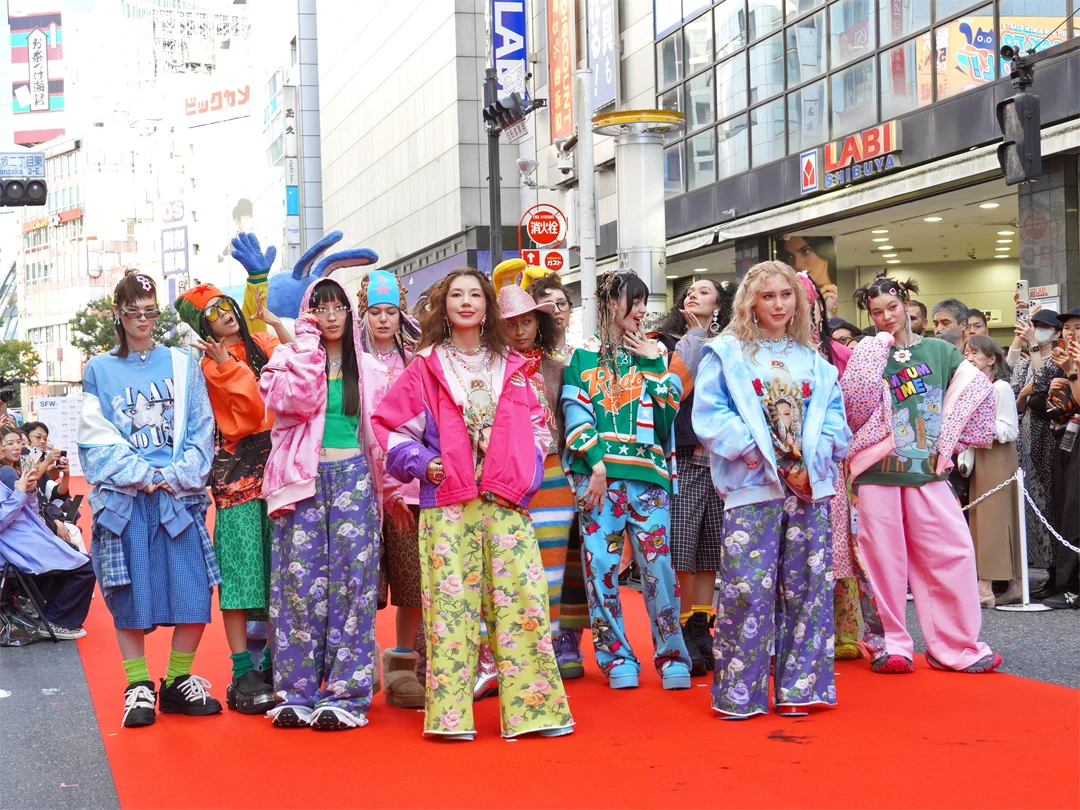
Fashion and culture intersect in the heart of Shibuya: Riisa Naka and others take part in a street runway.
#Shibuya Club Vol. 1 ~ Discussing "Innovation x Culture" in Shibuya
Interactive illuminations to open in Yoyogi Park: A 1.8-kilometer "Forest of Light" to begin in November.