

SHIBUY.A. × INTERVIEW
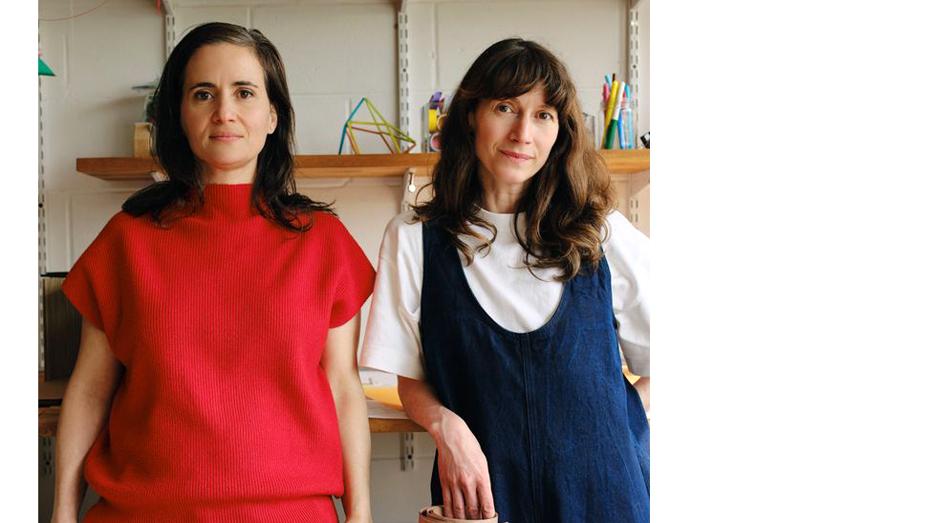
Melissa Mongiat(right)
Daily Tous Les Jours
Art that casts a spell on the streets of Shibuya
Daily To Les Jours' thoughts on the relationship between cities and people
2026-01-28
SHARE
Daily Tous Les Jours is an art and design studio based in Montreal, Canada, founded by Mouna Andraos (Mouna Andraos) and Melissa Mongiat (Melissa Mongiat). Muna, who is in charge of technology, and Melissa, who is in charge of narrative, create works based on thorough research that are tailored to the place and place, and are highly regarded as leading new fields that combine interactive art, storytelling, performance, and urban design. In 2025, she released her first book, "Strangers Need Strange Moments Together: Designing Interaction for Public Spaces," which has attracted even more attention.
Strangers connect through sound in the city. Montreal, Canada-based art and design studio Daily Tous Les Jours has created works around the world that subtly change people's behavior and relationships by installing mechanisms in public spaces. This time, they have been selected to participate in DIG SHIBUYA 2026, a technology and art event to be held in Shibuya, where they will be exhibiting their interactive work Duetti in a public space. Using this work as a starting point, we spoke to Melissa Mongiat of DTLJ about the origins of their work, technology, and the relationship between cities and art.
Date and time: January 23, 2026 (Friday) - February 27, 2026 (Friday)
*The opening hours will be the same as the opening hours of the National Route 246 crossing deck.
Location: National Route 246 crossing deck
(Deck connecting SHIBUYA SCRAMBLE SQUARE and SHIBUYA STREAM)
Organizers: Daily Tous Les Jours / Tokyu Corporation / Shibuya Station Area Management General Incorporated Association
Produced by: Theatre Workshop Inc.
Cooperation: Quebec Government Office in Japan / Kotobuki CORPORATION
The birth of DTLJ, using everyday life as a canvas
First, please tell us about your art and design studio, Daily To Les Jours.
Daily Tous Les Jours (hereafter referred to as DTLJ) is a unit I (Melissa Mongiat) founded together with Mouna Andraos. Based in Montreal, we create art projects that primarily encourage interaction between people in public spaces. I studied Narrative Environmental Design at Central Saint Martins, University of the Arts London, and Muna studied Digital Art at ITP, New York University, but we both shared a desire to use the magic of technology to make cities fun and interesting places.
We met in 2008. At the time, I was transitioning from graphic design work to creating interactive works in public spaces, and my friends introduced me to Muna, saying, "There's someone as unusual as you." Even before we met, people around us thought we were both "eccentric" (laughs).
As we worked on projects together, we realized that we both love projects that involve people outdoors, rain or snow. Even though we come from different backgrounds, Muna and I have a strangely synchronized brain and understand each other's thoughts very well. I think it's really wonderful to have someone who makes you feel that way.
We currently have a large staff, but there is no clear division of roles based on expertise. Rather, we all work together on projects, complementing each other.
The unit name, which mixes English and French, is also interesting.
It's a combination of the English word "Daily" and the French word "Tous Les Jours," both of which mean "everyday." Everyday life is our material, our canvas, our source of inspiration, and something we want to transform into something interesting. Also, Montreal is a French-speaking part of Canada, and both Muna and I are constantly using both English and French in our minds, so we chose a name that combines English and French.
The idea behind Duetti, a work that connects people
What kind of work is "Duetti," which has been installed in Shibuya this time?
"Duetti" is an artwork that connects people. The work, which means "duet" in Italian, is made up of two components: a musical bench and a bollard. Each device has a mechanism that produces music, and the sound changes depending on how and how fast it is moved, creating a unique duet. The work was created with the hope that it would provide a moment of slowness and relaxation for people moving around in the fast-paced city.
There's no need to take the time or prepare yourself to play with Duetti. I hope that people will have fun and feel like children again. When strangers accidentally make sounds on the benches and bollards and listen to the music that is created, unexpected interactions can arise that transcend age, titles, and cultural backgrounds. As with Duetti, our projects aim to create opportunities for people to meet and interact through small devices. We hope that simple stories of music, dance, and encounters will spark conversations between people.
Many of our encounters and connections come from participating, from doing things together. We've done a lot of social impact research, and recent findings show that the likelihood of conversations between strangers increases when you participate in the same activity.
What does DTLJ value when creating works?
The creation of a work begins with understanding the context, so I first observe the people there. I first created Duetti in Milan, Italy, and intuitively created a work that plays sound because I wanted to create serendipitous connections between people in the city. This is because sound and music have the power to attract and entice people. What I value is conveying to people that "the environment we find ourselves in can be changed by our own actions." I would be happy if people felt that "the world looked a little more beautiful when we got on Duetti and created a wonderful harmony together."
How did you come up with the idea for the rotating bench?
The direct inspiration for this design came from rocking chairs. The first rotating bench was installed on the riverside in South Bend, Indiana, USA. I wanted people who don't usually pay attention to the river to be able to take their time and enjoy the riverside scenery, so I wanted to create a bench where people could relax, and that's when I came up with the rocking chair.
Letting yourself sway along in the rhythm of a rocking chair puts you in a dreamy state, inspiring all sorts of fantasies. That's why we named this bench "Daydreamer." The bench spins, allowing you to relax, enjoy 360-degree views, and see everyday life from a new perspective. If you ride this bench with someone, you can have fun pushing and pulling each other, or if you ride alone and let the inertial motion take you, you'll experience an indescribable feeling of floating.
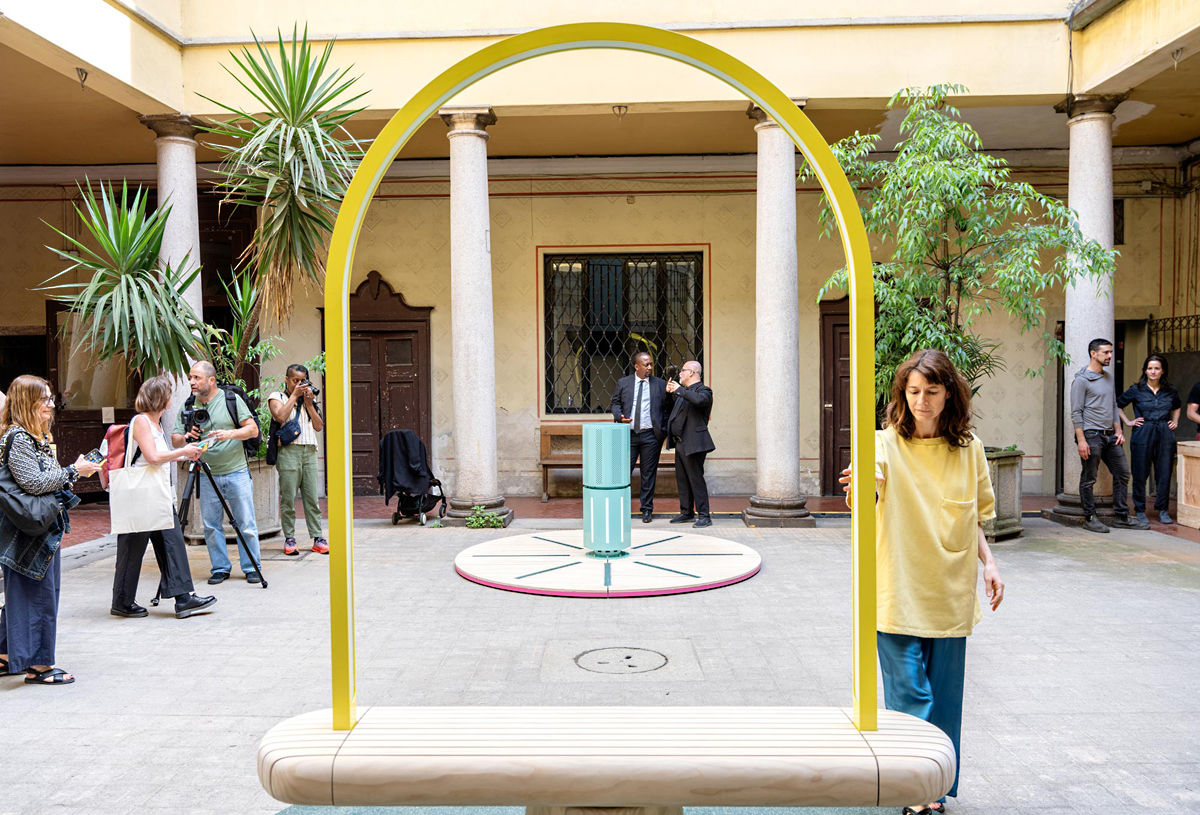
Front: Daydreamer, Back: Bollard
How the device that plays the unique melody works
Were there any particular technical innovations you made?
At first, there was no arch, but we thought that this would draw people's attention, so we added an arch. Not only does it look fun, but it also serves as a handle, increasing safety. People can ride it standing up like a playground equipment, and elderly people can ride it safely. The pivot (spinning axis) was particularly difficult. If it rotated too fast, children could fall and get injured. So, in order to develop a pivot that rotates slowly, we incorporated various innovations and developed a complex system using magnetic brakes.
Additionally, the disc (disc-shaped platform) under your feet is designed to play beautiful music when it is stepped on. The disc is divided into four sections, each with a different sound. There are protrusions at the borders between each section, and you need to exert a little force to get past the protrusions and turn the bench. When you go around the whole way, an arpeggio of many overlapping voices plays, and when this mixes with the sound coming from the disc under your feet, an even more complex melody is created, making you feel like you are composing music while you are sitting on the bench.
The bollards were inspired by the posts you see around town. Bollards are usually installed to distinguish between areas where cars and people can enter and areas where they cannot, but the bollards in Duetti are meant to be played around and walked on. When you walk in any direction on the disc, chords resonate, allowing even people with no knowledge of how to play the piano or compose music to create short pieces. The device is programmed with a variety of chords, and no matter how you walk, a harmonious sound will be produced.
When you ride it, you hear a mysterious sound that sounds like a chorus.
One of the musical inspirations was choir singing. It sounds Italian, a bit Fellini-esque, and a bit like a Baroque chorus. Science has shown that physical activity has a variety of neurological effects. It has such a powerful psychological effect that it has been used historically as both a form of therapy and torture.
It has also been shown that the instinctive act of moving to music has a positive effect on the mind and body. Playing and singing with others stimulates the release of large amounts of happy hormones. Swaying on a musical bench makes you feel like you're dreaming with your eyes open, releasing stress and awakening your imagination. The sounds created by the movement also make you want to sway even more.
Riding Duetti puts a smile on everyone's face.
Creating moments in Shibuya that will make you want to sing "La la la"
Was there anything in particular you paid attention to when creating public art in Shibuya?
When working on a project in a new location, you are confronted with a new context. I am very happy to be able to create this work in Shibuya, because when people imagine Tokyo, Shibuya is the city that comes to mind. Shibuya is a city where a lot of people are always coming and going, but many of them are walking while looking at their smartphones or in a hurry, so it is not easy to get people to notice your work.
Duetti has been installed on the National Route 246 crossing deck (the former TOKYU TOYOKO LINE platform). The space is spacious, like a courtyard, but it is also a little secluded, so to make it easily recognizable, we have put up a sign with a catchy slogan on a panel below the "Kamaboko roof," which was once the symbol of Shibuya Station on the Toyoko Line. We hope that people busily travelling to and from their destinations will catch their eye, and get on Duetti, enjoying even a brief moment of stress relief.
Also, because it's adjacent to JR Shibuya Station, you can catch a glimpse of the signs and artworks from the station platform and train windows. It would be great if it looked like a little show not only to people passing by on the deck, but also to people at the station and on the train. I would be happy if people noticed and thought, "Maybe something interesting is happening here."
The catchphrases are fun too, such as "We do 'lalala' every day."
The "la-la-la" part is also connected to the musical experience of Duetti. "La-la-la" is a universal phrase that comes out spontaneously when you're in a good mood, regardless of age or language. For example, when a child is in a good mood, they will spontaneously start singing "la-la-la." Of the four catchphrases we have proposed, "Let's share a magical moment with strangers" is the title of our book and the motto of our activities. We hope that passersby will share time together on Duetti, forming a small bond—that is how we enjoy the present.
DTLJ has created public art all over the world, but what was your impression of the city of Shibuya when you decided to exhibit there?
When I came to Tokyo previously, I stayed near Shibuya, and even though it's a bustling metropolis, if you go down a back street you can find quiet places, and strangely enough, every road eventually leads to Shibuya Station, so it was interesting to not have a sense of direction. I think it's a truly one-of-a-kind city, unlike anywhere else in the world. For tourists, the sheer number of people at the scramble crossing and being in the middle of it is an amazing experience, providing a unique feeling that can't be found anywhere else. Montreal is also a tourist city, so it can feel like there are a lot of tourists, but it's nothing compared to the overwhelming scale of the hustle and bustle in Shibuya.
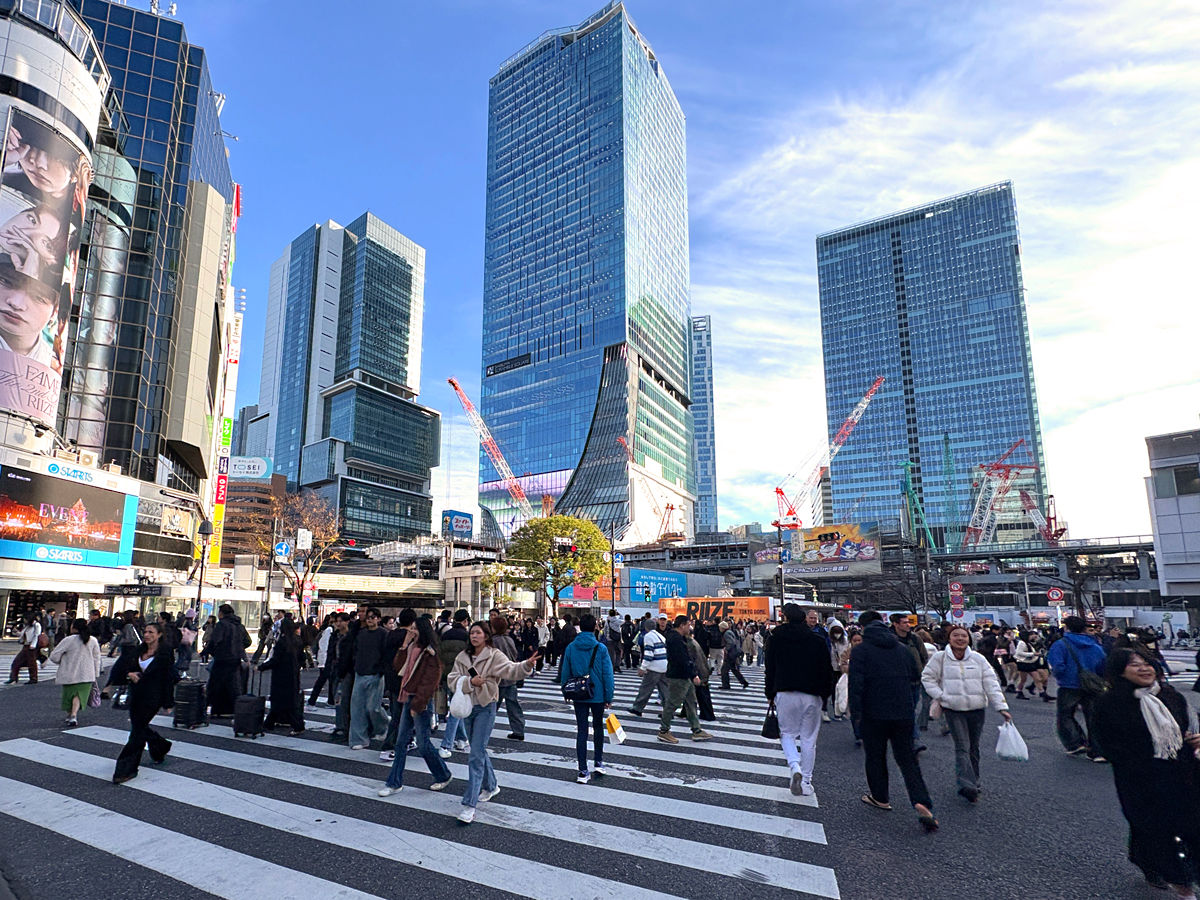
What kind of potential do you think there is for the city of Shibuya?
Shibuya is a fast-paced, shining place, a metropolis where many different cultures are born. Having lively, open spaces within the city that anyone can access, like the scramble crossing, is of great significance for the city. Through the activities that take place in such spaces, people develop pride in their town and a sense of belonging, of being a part of it. This feeling can also lead to facing important questions about how you live your life and what is important to you. I think Shibuya has many such places.
One of DTLJ's important goals is to provide access to culture to everyone in the world. That's why, although we sometimes exhibit our works in museums, most of our works are installed in public spaces. The Shibuya venue is an outdoor public space, but it also has a roof, so I think it's a place where people can relax and enjoy themselves.
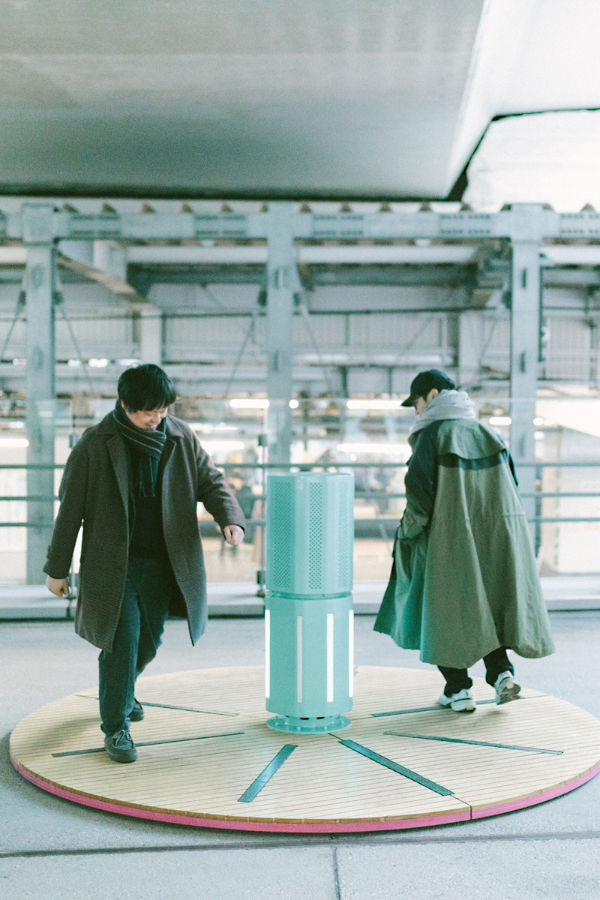
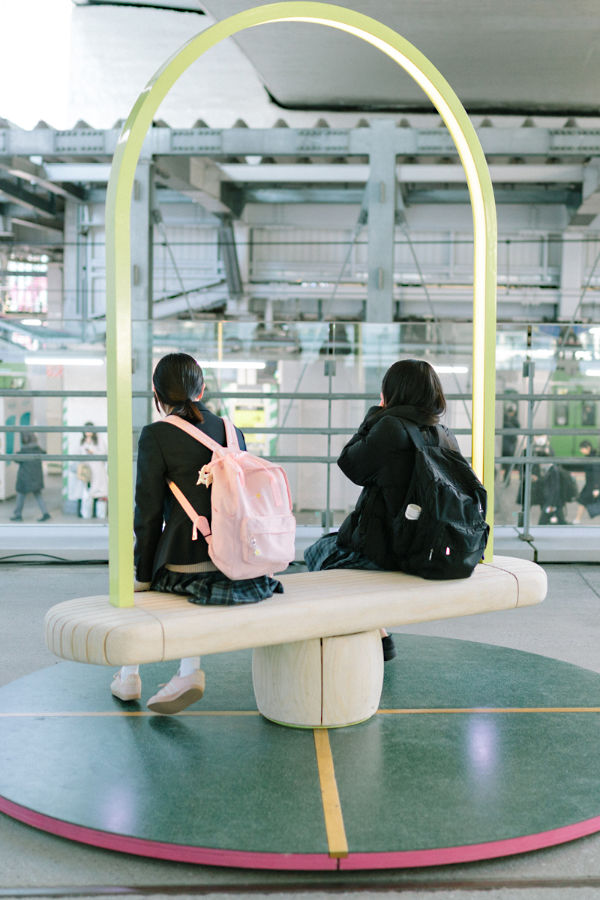
The exhibition in Shibuya
Have you ever thought that you would like to create something like this in Shibuya someday?
I'd love to one day create a choreography piece that harnesses the energy that fills Shibuya and involves many pedestrians. The first time I saw the streets of Shibuya was at the still Shibuya Scramble Crossing that appears at the beginning of the Netflix drama "Alice in Borderland." Seeing this scene, where you feel your own small existence in the universe, I thought it would be interesting to create a choreography piece there, in other words, a piece in which people dance. Of course, there are a ton of things I would need to be careful of to make this a reality.
We have created many works that incorporate dance, and dance is one of the important elements of DTLJ's creative activities. We know that the way you walk, move your body, and dance has a variety of positive effects on the mind and body. It is particularly important that when we dance together, we create a sense of unity and solidarity, that we are part of a larger group. This is because it is a feeling that is directly connected to a basic need of humans, who are social animals.
In an age of division, art can be a "connecting force"
DIG SHIBUYA 2026 is a technology x art event set in Shibuya, and DTLJ also creates works that combine the poetic elements of art with technology. What does technology mean to DTLJ?
Even before starting DTLJ, Muna was involved in activities to expand people's access to technology. This led to DTLJ's current activities of "providing people with access to culture, including technology." However, as she continued his production and research, she also realized that technology, which is supposed to connect people, now has some aspects that prevent us from connecting with each other.
Technology is dividing us in very clever ways. Without our knowledge, apps are making decisions about who we connect with, where we go, and who we meet. Algorithms trap people in echo chambers where similar people gather. As a result, inequality and social polarization are increasing, and loneliness is spreading around the world, becoming a major problem everywhere. It's a loneliness pandemic.
With this in mind, we use technology to connect people in our work.
On the other hand, what does art mean to DTLJ? Please tell us why you are involved in creating so many public art pieces.
Having studied design, for me, public art is a tool to allow free exploration of the outside world and spark meaningful innovation. Shibuya is probably no exception, but cities tend to become homogenous, impersonal spaces. I create public art with the hope of rekindling the magic and making cities more interesting. When we're in a crowd, we tend to lose sight of ourselves. It's natural to shut ourselves out, to ignore the people passing by, and to become indifferent. In urban spaces like these, the power of art is needed to create places where people can rediscover their true selves and feel connected to others.
Humans are social animals, and it's known that even introverts can release happy hormones in their brains by talking to strangers or offering small helping hands. When people come into contact with public art and get the feeling that "this is our place," they'll want to return in search of new encounters. While it's true that you can "view" art on your smartphone or in a museum alone or with a small group, it's difficult to get the feeling that many people are accessing art together.
However, with participatory art in public spaces, the participants become part of the work, creating a different kind of magic that is different from just watching. As with Duetti, not only the device but also the movements of the people who ride it, the sounds that result, and the atmosphere of the place become part of the work. There is hope and possibility in thinking about what people can do together. I believe that art is hope, possibility, and freedom.
I heard that in the production process, you also place importance on narratives and stories that create interactions between people.
I majored in narrative environments in graduate school, and I truly believe that stories and narratives have the power to connect people. Stories captivate people's hearts and inspire them to change their usual behavior and try new things. "How should we live our lives?" "What are we able to do now, and what are the possibilities for what we can do in the future?" "How can we make these things happen?" Stories provide clues for thinking about these important questions together, rather than alone, and for realizing them.
We draw on various genres of art and culture to create stories. Dance, especially group dancing, is also an important element in our work. We have received a lot of inspiration from the work of dancer Pina Bausch. Recently, we have also been inspired by the energetic and uplifting dance of K-Pop.
We sometimes use movies as references. For example, we once created a piece inspired by the bar scene in Tarr Béla's film Werckmeister Harmonies (Choreography for Man and the Solar System). Music is also important, and we often use music in our works, and we have collaborated with various musicians for each piece. Music connects people beyond language. Regardless of age, our bodies are designed to respond to music when we hear it. For example, Musical Swing, a musical swing that we created early on, was well received and has since been exhibited in various locations as a series.
Above all, I received a lot of inspiration and strength from the many people I met through the project, including musicians. These encounters led to subsequent projects, and have continued to this day.
Musical Swing
Speaking of your closest connections, both Melissa and Muna had children a few years ago. Has becoming a mother influenced your work in any way?
More people are now willing to beta test the app (laughs). My children are joining in the testing and playing with it, so I feel like my ideas have broadened. Also, in addition to being a mother, I've started caring for my elderly parents, so I've gotten less sleep, but I've started paying more attention than ever to the importance of relationships, influences, and interactions between different generations.
Above all, raising children fills me with hope and possibilities for the world, and I feel a renewed sense of obligation to make the world I will leave to my children a better place.
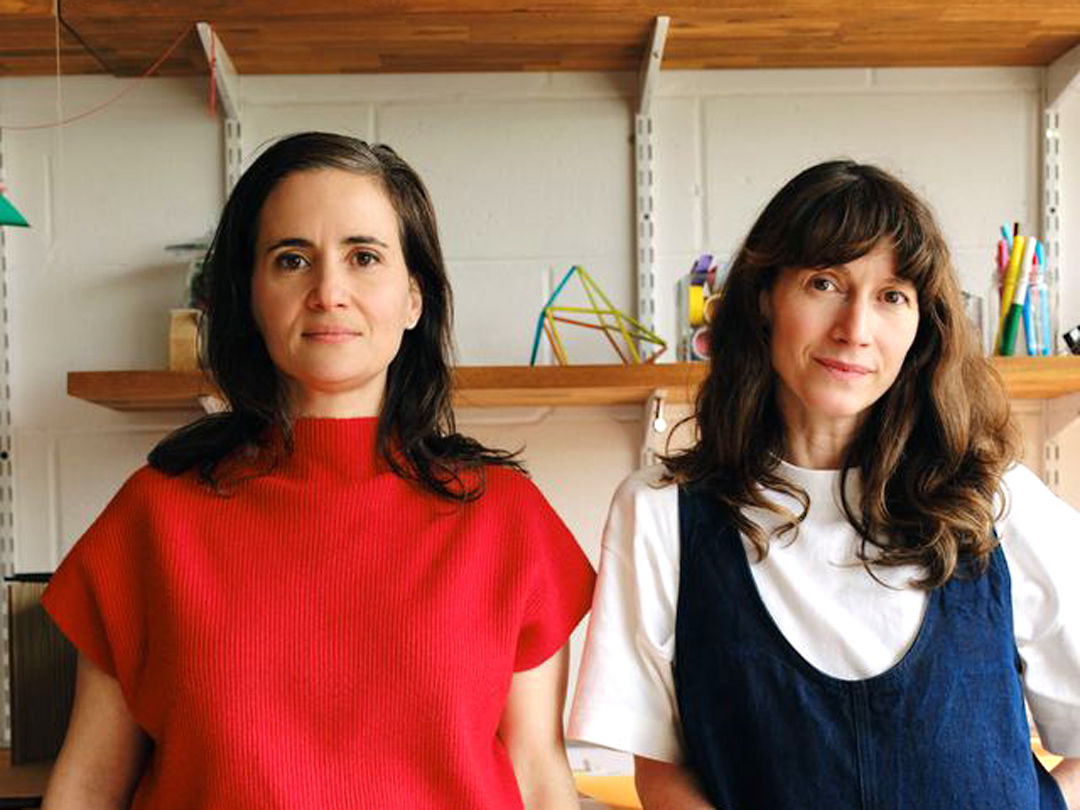
The DTLJ couple say, "Through raising children, we feel a sense of hope and responsibility for the world."
Interview and text by Junko Kawakami. Photos (only at Duetti in Shibuya) by Yasuko Tadokoro.
Featured articles on the site
"Thai Festival" to be held at Yoyogi Park; featuring a collaboration between Tatsuya Ishii and BNK48
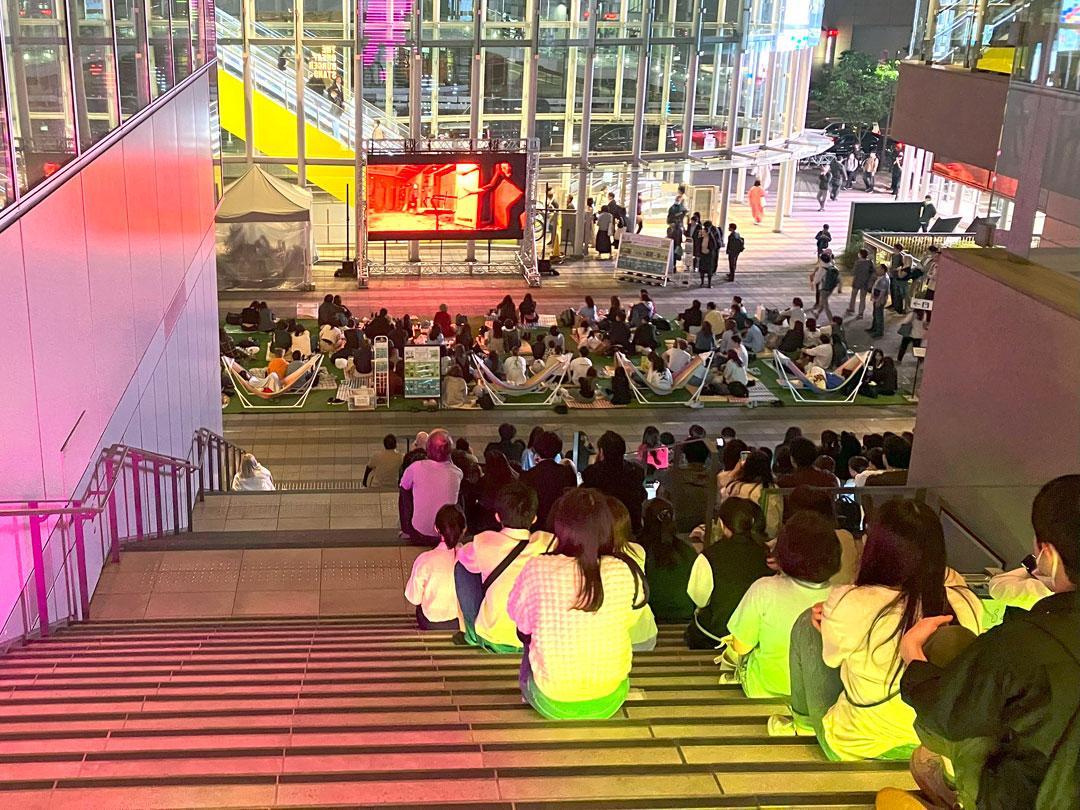
SHIBUYA STREAM to host an outdoor cinema event: 29 films screened for free for 13 days during Golden Week.
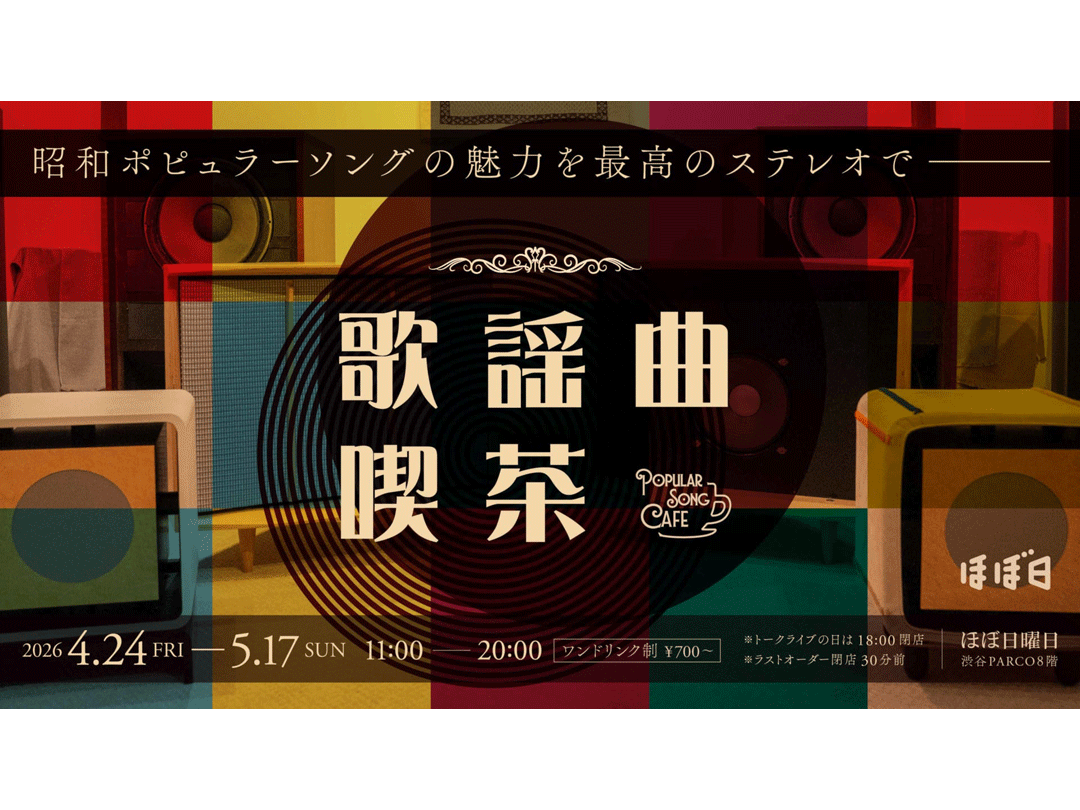
A "kayokyoku café" opens at Shibuya PARCO, offering a high-quality sound experience of classic Showa-era songs, with talk events held in the evenings.