

SHIBUY.A. × WATCH

"MINA," a small museum combining art and coffee, opens in Shibuya 3-chome
SHARE
Tokyu will open a small museum called "Museum of Imaginary Narrative Arts [MINA]" in Shibuya 3-chome on April 1st. The museum will be directed by the contemporary art unit "L PACK." and will operate as a new cultural hub that combines an exhibition space with a cafe. The aim is for the museum to be more than just a place to appreciate art; it will also be a place where people can encounter artworks as an extension of their everyday lives, drinking coffee, enjoying a meal, and engaging in conversation.
The venue is behind Shibuya Police Station along Roppongi Street in Shibuya 3-chome, the same spot where the special tent-style theater "Shibuya Dreams Come True Theater (SHIBUYA DREAMS COME TRUE THEATER supported by Page30)" was operating last year.

Shibuya 3-chome is a quiet and peaceful area with lots of greenery.
While this area is close to Shibuya Station, it retains many long-standing local resources, such as Konno Hachimangu Shrine and the Shibuya River. It is also home to Aoyama Gakuin University, Kokugakuin University, and Jissen Women's University, making it an educational district. Meanwhile, with the development of SHIBUYA STREAM and the innovation hub SOIL (Shibuya Open Innovation Labo), the area has seen a concentration of IT companies in recent years.
Set against the backdrop of the city's atmosphere, where local residents, students, and workers mingle, MINA will use art to bring out the charm of the Shibuya 3-Chome area, where tradition and innovation intersect.
MINA was born from a "fictional museum"
The "Imaginary Narrative" in the facility's name, "Museum of Imaginary Narrative Arts [MINA]," means "fictional story." From the conception stage, L PACK.'s Sho Odagiri and Tetsuya Nakajima centered on the idea of an "imaginary museum." Rather than creating a strict image of a museum beforehand, the project is an attempt to develop an image of a museum unique to this location through exhibits, pamphlets, food and drink, and interactions with the city.

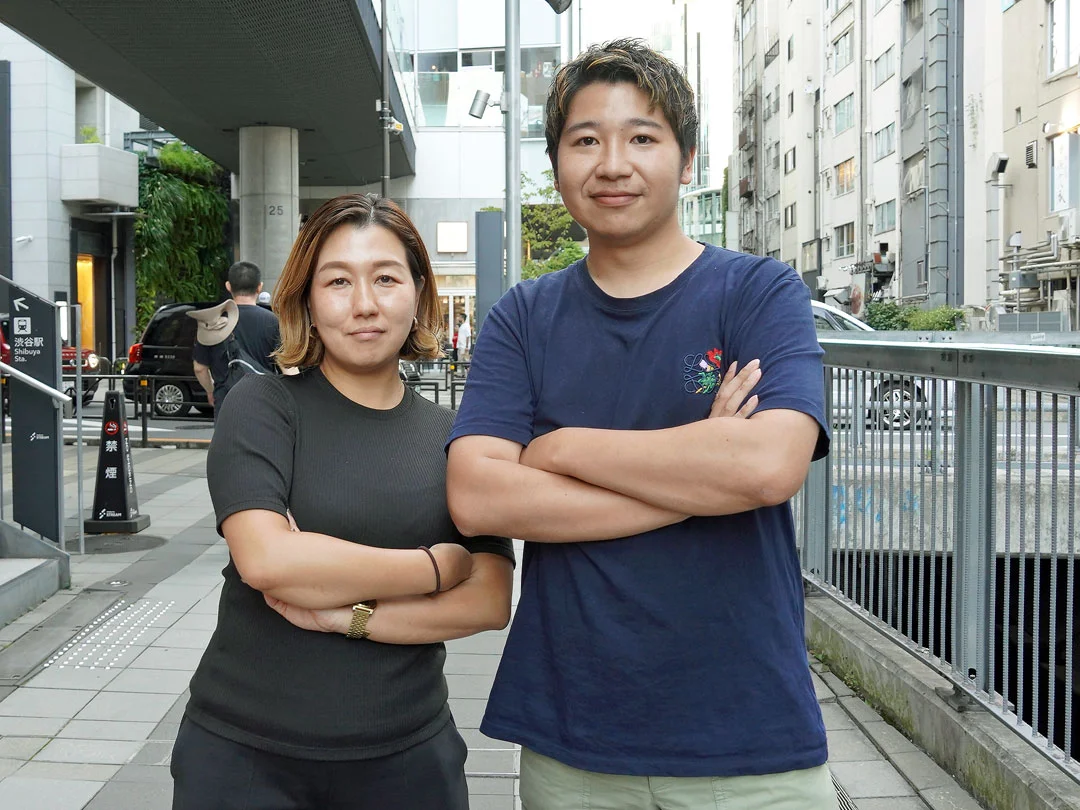
Tetsuya Nakajima (left) and Sho Odagiri (right) of L PACK.
The name "MINA" was also considered based on the sound of the museum's location, Shibuya 3-7. The concept of a "fictional museum" came first, and "Mina" was born as an abbreviation to fit that image, which then evolved into the official name, "Museum of Imaginary Narrative Arts."
The word "Narrative" also embodies the hope that the people who gather here will participate in the space in their own way and "weave new meanings."
A new space that combines an exhibition room and a cafe
A major feature is that the entire exhibition room functions as a cafe. You can spend some quiet time in front of the artworks, or enjoy a meal like in a coffee shop. Odagiri says, "A place where the exhibition room and dining space are completely integrated will probably be a space that can't be found anywhere else." Not only art lovers, but also those who happen to come across the artworks as an extension of their cafe visits are welcome.
They want it to be a place for people working in the area to have lunch during the day, a place to stop by for a drink after work in the evening, and a place where students can gather casually.


Siphon coffee makers, which are rarely seen these days, are lined up on the counter. This coffee has a clean aftertaste with little unpleasant flavor, making it easy to drink even for those who don't like bitter coffee.
Coffee will be served using siphon extraction, including Nakajima's own roasted "MINA Blend," and roasted beans will also be available for purchase.


The nostalgic "Teppan Napolitan" (left) and "Hayashi Rice" (right) are classic coffee shop menu items. Ⓒfujico


"Pudding" (left) with a Showa retro feel and "Rice flour sable" (right) shaped like the "M" of the logo. Ⓒfujico
The food menu will include familiar dishes reminiscent of a traditional coffee shop, such as teppan napolitan, hayashi rice, pudding, and lemon cake. Food will be provided by Taguchi Gohan, a Nagoya-based cooking school. They will create recipes specifically for this venue, incorporating the sensibilities of good old-fashioned coffee shop culture. A limited-edition menu will also be prepared for each exhibition, and food will be developed to complement the exhibits.
An area with a local feel despite being in Shibuya
L PACK. has continued to work to become part of the city, starting with "scenes with coffee." In 2019, they collaborated with Tokyu in Ikegami, Ota Ward, to launch "SANDO BY WEMON PROJECTS," an information center based in a cafe. Regarding the Shibuya 3-Chome area, Nakajima says, "Even though it's Shibuya, it has a local feel that's close to everyday life." During preparations, local residents often asked, "What kind of shop are you running?", and through their interactions with the people living nearby, they felt the closeness of the city.

The terrace seats are located along Roppongi Street, where students from Jissen Women's University and Kokugakuin University come and go. As the temperature rises, it will be pleasant to enjoy a beer on the terrace.
However, this facility does not put "local community formation" at the forefront. Odagiri says, "Communities are born and nurtured naturally." He says that the goal was not to strongly promote art, but rather to explore the most suitable form for the location, and arrived at the idea of a "museum where exhibitions and food and drink blend together."
An experiment to add new color to Shibuya 3-chome
According to Tokyu's Daiki Inaba, "There was originally an old building on this site, but it was demolished due to deterioration and earthquake resistance issues." After that, while considering whether to turn it into a pay parking lot or use it for something else, the starting point for this project was the idea that "we could add individuality to Shibuya 3-Chome, which is hard to see from the outside, and liven up the town."
Rather than simply renting out the land, Tokyu is involved in the planning and management of the project as the owner, working closely with L PACK.. Inaba describes it as "a new format where we grow the facility together, rather than just bringing in tenants like in a regular commercial facility and then leaving it at that."
The area is home to many universities and schools, including Konno Hachimangu Shrine, and has a strong connection to history and learning. Unlike Dogenzaka, which is dominated by music and nightlife, the Shibuya 3-Chome area has a more relaxed atmosphere, making it a good fit for an art-focused approach.

The interior atmosphere of MINA. The seating and table arrangements change depending on the exhibition.
The building is a single-story structure with a total floor area of 94.77 square meters. The interior is not overly elaborate, and is composed mainly of highly movable furniture so that the layout can be changed for each exhibition. The idea of leaving room for the "Imaginary" is also reflected in the space. The number of seats will vary depending on the content of the exhibition, but the base number is around 30. Terrace seating will also be provided, making it a space that can be used in a way that is open to the city.
The first exhibition is about "publicity and advertising"
The opening exhibition is "Re-editing the Narratives of the Public" (April 1st to June 21st). Participating artists are sculptor Gensho Sugawara and artist BIEN, who works across multiple media.


Several works by sculptor Gensho Sugawara are on display in the store.
Starting from the two aspects of museum posters - "advertising" and "publicity" - the project reexamines the role that art can play as a medium. "I want to create an experience that will change the way people see advertisements and public spaces when they return to Shibuya after seeing the works here," says Odagiri.

Photographs by artist BIEN on display on the wall
The exhibitions are scheduled to be updated four times a year, approximately every three months. Not only will the artists be replaced, but the exhibitions will also break down the original functions and roles of museums and create themes. The first exhibition will be based on "posters," and from then onwards, the plan is to reinterpret the function of a museum itself as a theme, such as "archives" or "storage."

To coincide with the exhibition, a menu and quarterly magazine, "COFFEE TABLE BOOK," will also be published. Starting with the menus placed on each table in the cafe, the booklet will guide you through the artworks, the city, and Shibuya culture, and is designed to be a natural pick-up point while sipping coffee. In addition to commentary on the exhibition, the booklet will also feature features that delve into the relationship between the city and art. The booklet can be freely taken home, and will be developed as a medium that can be read and re-read at home.
Beyond temporary use, an attempt to forge the future of the city
This project is expected to last for around five to six years, but Inaba says, "If all goes well, there is a possibility that functions similar to MINA will be incorporated into future redevelopment." Rather than being limited to temporary use until redevelopment, it will also be a testing ground for testing out the cultural functions needed in the area and linking them to the future of the city.
When people think of Shibuya, they tend to think of large-scale developments and bustling commercial spaces. However, the Shibuya 3-Chome area has a sense of calm and learning, a sense of local time, and a sense of community. MINA is set to become a place that gently brings art back into everyday life, rather than isolating it as something special.
Enjoying a cup of coffee and encountering a work of art are two things that can be effortlessly placed side by side, and we look forward to seeing this as a new Shibuya scene.
- Museum of Imaginary Narrative Arts[MINA]
- Address: 3-7-1 Shibuya, Shibuya-ku
- Opening: Wednesday, April 1, 2026 (planned)
- Business hours: 11:00-22:00 (no closing days)
- official:https://mina-shibuya.org/
Venue
Editorial Department: Takashi Fujii
Shibuya registrar. In addition to Shibuya of Culture information, seasonal news and topics, it will spell write that feel every day.
Genres within watch
Articles in the same genre
![[Shibuya Scenery Records Vol. 2] The "Onko Gakkai Kaikan" continues to preserve the legacy of blind scholar Hanawa Hokiichi](https://biz.shibuyabunka.com/storage/images/watch//1787122066.webp)
2026-09-02〜
[Shibuya Scenery Records Vol. 2] The "Onko Gakkai Kaikan" continues to preserve the legacy of blind scholar Hanawa Hokiichi
2026-08-27〜
A new hangout spot in Shibuya: ANCR's new cafe lounge, "Nakaniwa."

2026-07-22〜
Top 5 Recommended Curry Restaurants in Shibuya! Selected by Shibuya resident Kago-san.
2026-07-08〜
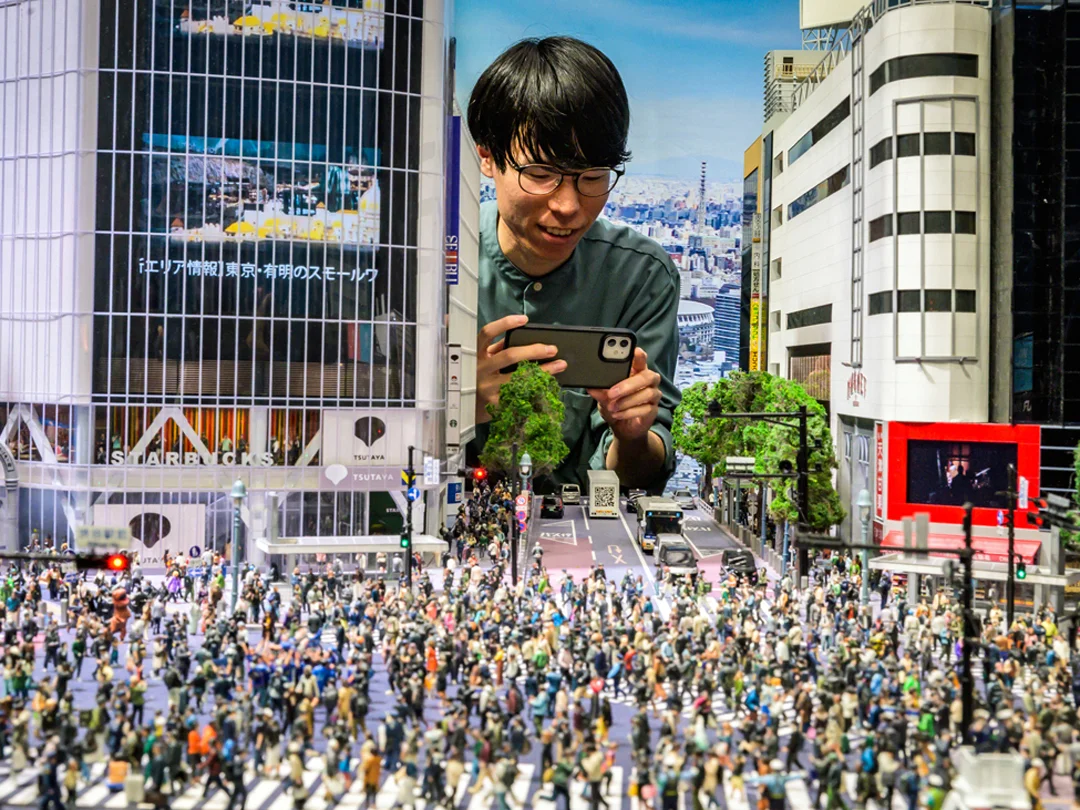
A 1/80 scale diorama of Shibuya is born: Urban modeler Yu Irimajiri talks about the charm of Shibuya.
Featured articles on the site
Shibuya's autumn colors are brought to life by the Konno Hachimangu Shrine Grand Festival, featuring a portable shrine procession in Dogenzaka and Aoyama, along with festival stalls and international cuisine.
[Shibuya Scenery Records Vol. 2] The "Onko Gakkai Kaikan" continues to preserve the legacy of blind scholar Hanawa Hokiichi
Seibu Shibuya and Tokyu Department Store collaborate for the "final" time: Former rivals offer each other encouragement.