

SHIBUY.A. × WATCH

Oyama Kaido is a noodle road!? Shibuya, Dogenzaka / Miyamasuzaka and the memory of noodles
2026-01-23
SHARE
In 2025, a flurry of new ramen shops opened along Dogenzaka and Miyamasuzaka. Miyamasuzaka is home to a wide variety of establishments, from Wagyu beef ramen and abura soba to Kyoto-style ramen, duck broth ramen, and famous Kansai restaurants, and Dogenzaka is seeing a surge in unique ramen shops opening their doors. Behind this is likely a rush of new shops opening in anticipation of rising inbound tourist demand. However, at Shibuya Culture, rather than viewing this phenomenon as a mere fad, we would like to consider the relationship between Dogenzaka and Miyamasuzaka and noodles from a different perspective. Is this a passing coincidence? Or is it an extension of the noodle memories that the city of Shibuya has attracted throughout its history?
Noodle map for Oyama Kaido (Dogenzaka and Miyamasuzaka)
Red = New ramen restaurants opening in 2025 (9 restaurants) Blue = Existing ramen restaurants (29 restaurants) Orange = New soba/udon restaurants opening in 2025 (2 restaurants) Green = Existing soba/udon restaurants (7 restaurants)
A landscape with a slope welcoming travelers and soba noodles
During the Edo period, Shibuya's Dogenzaka and Miyamasuzaka served as the "Oyama Kaido (Yagurazawa Okan)," a central road in the city. As the "Oyama Pilgrimage" from Edo to Oyama in Sagami Province spread among the common people, the area quickly became a bustling resting spot, especially in the summer, with pilgrims clad in white robes passing by. Miyamasu-uttake Shrine, located halfway up the slope, is a shrine with a background in mountain worship and was one of the bases where people heading to Oyama could pray for a safe journey. It is said that more than 100 teahouses lined both sides of Miyamasuzaka to soothe the weary traveler, and the quick soba noodles no doubt sated the hunger of pilgrims. It is also said that from the top of the stone steps into the temple grounds, distant views of Mount Fuji and Mount Oyama were possible, and Miyamasuzaka was also known at the time as "Fujimi-zaka." The faith of those traveling up the slope and the food that sustained their feet were crucial. In the city of Shibuya, slopes, faith, and noodle culture have long been inseparably linked.
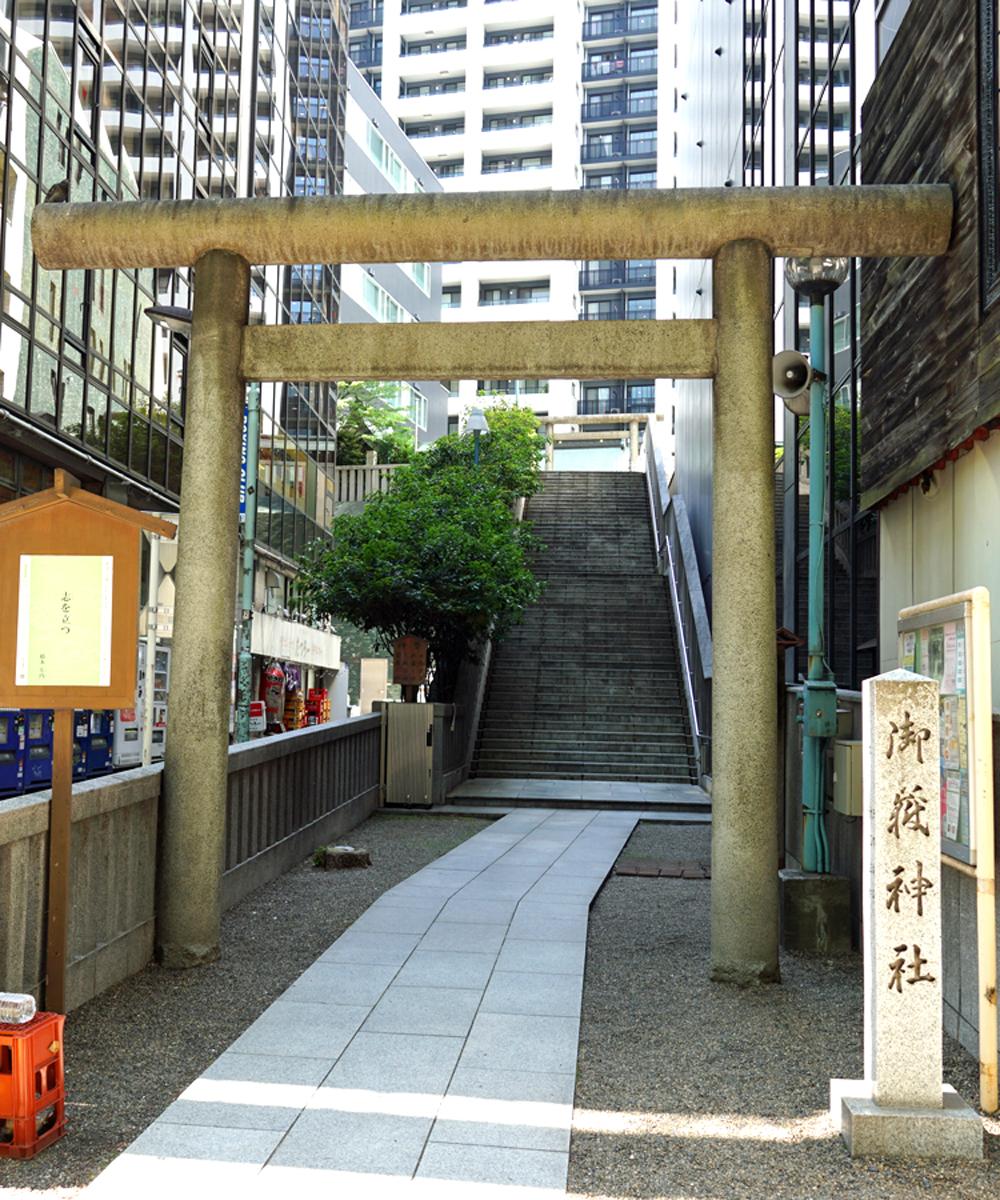
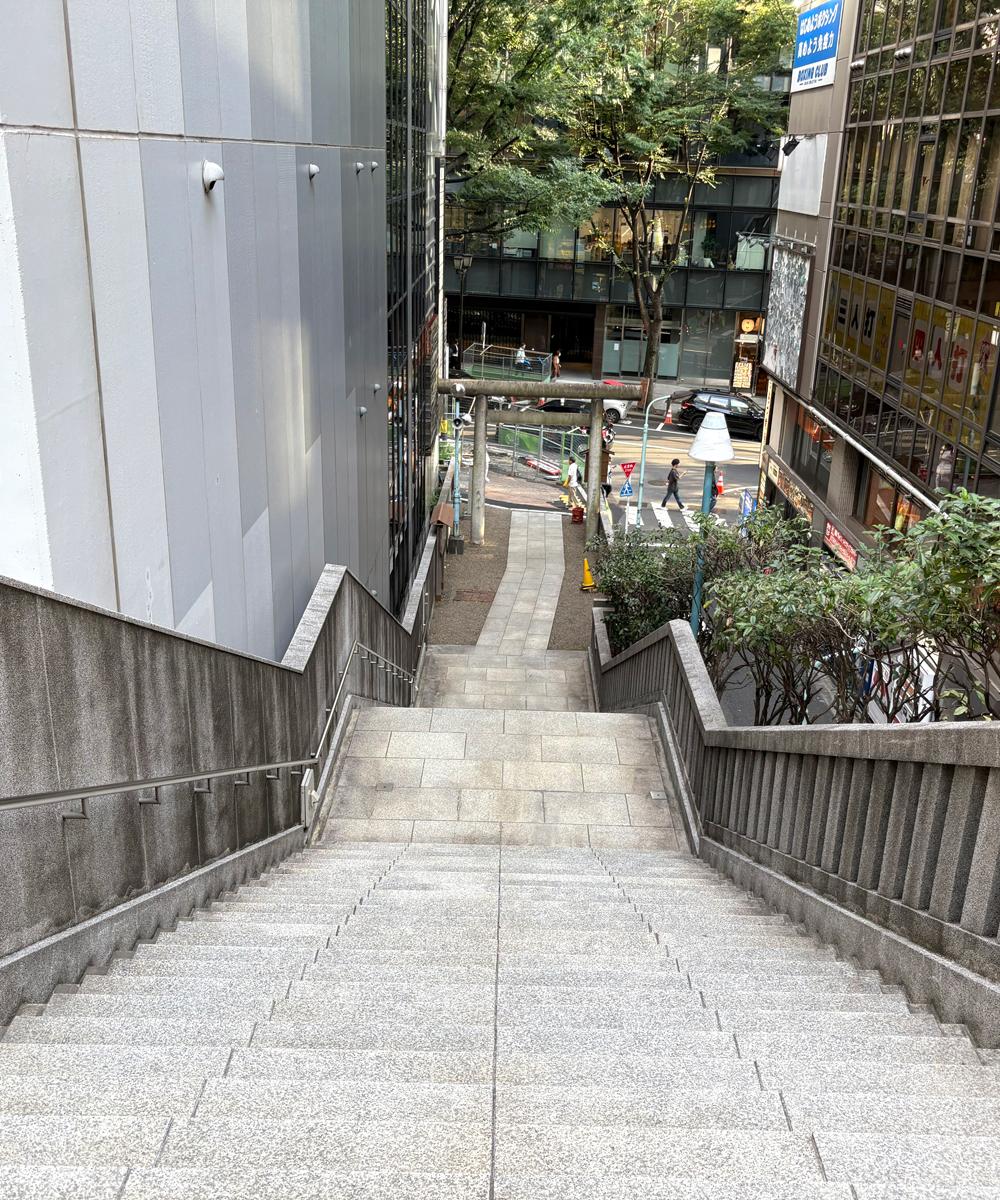
Left: Miyamasu-ontake Shrine, located halfway up Miyamasuzaka. Right: After climbing the steep stone steps, you will reach the shrine grounds on high ground. Currently, it is surrounded by tall buildings, so you cannot see the mountains towering to the west, but it is said that in the past, you could get a good view of Mt. Daisen and Mt. Fuji.
Shibuya, the city of water, and memories of flour milling
Shibuya is a "city of valleys" and was once a "city of water." Several waterways, including the Shibuya River and Udagawa River, converge here, providing water for daily life and transporting goods. Waterwheels were also used to mill rice and flour. It's no surprise that scenes like grinding buckwheat flour and making noodles with pure water were a part of everyday life along the streets.

Katsushika Hokusai, Thirty-six Views of Mount Fuji, Waterwheel of Onden, Public domain, via Wikimedia Commons
Katsushika Hokusai's Thirty-six Views of Mount Fuji - Waterwheel on the Onden River depicts the area around what is now Cat Street (a promenade constructed using the Shibuya River's culvert). With rice paddies stretching out against the backdrop of Mount Fuji and waterwheels milling rice and flour, it is clear that Shibuya has always depended on water. Today, much of the Shibuya River has been culverted, and there are only a limited number of places where you can actually see the water flowing. Nevertheless, the water flowing underground in Miyashita Park and Cat Street quietly conveys to the present day the memory of Shibuya as a "town of waterwheels."
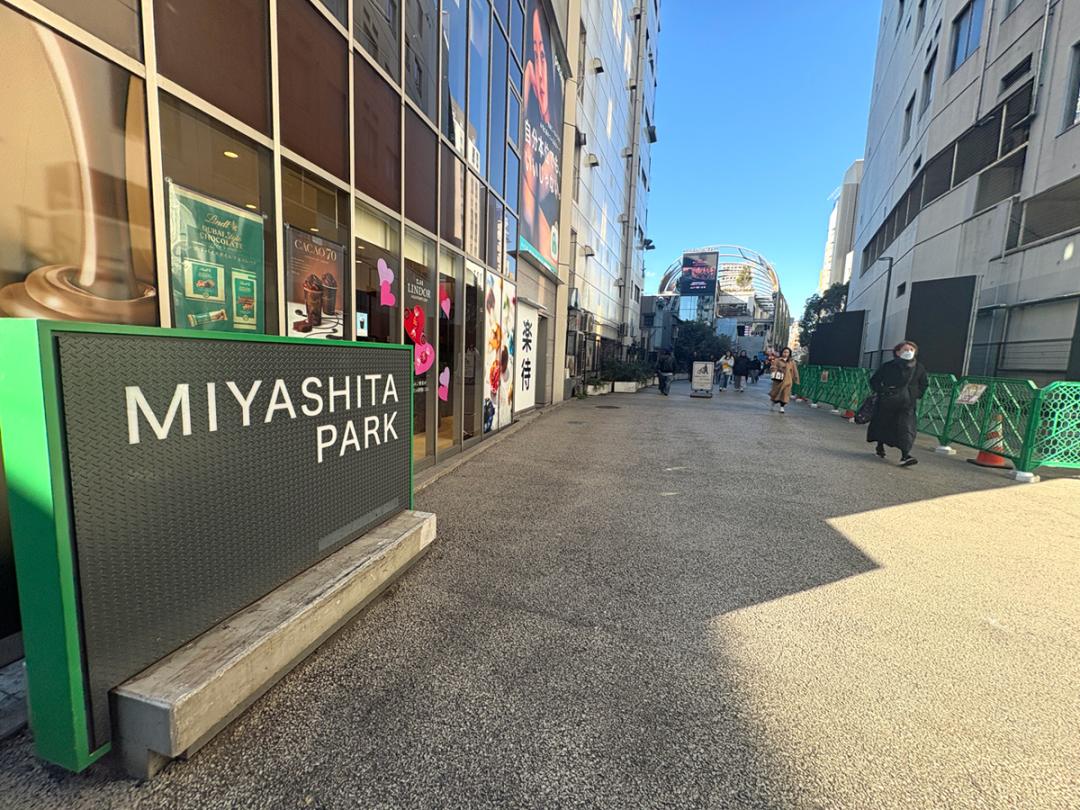
The Shibuya River flows below Miyamasuzaka, where Fujimi Bridge (Miyamasu Bridge) was built and where a waterwheel was also located. Currently, the entrance to Miyashiya Park is a promenade that has been developed by maintaining the Shibuya River, which has been covered up. The gentle curves somehow give the impression of the river.
The "magnetism of noodles" will come together again in 2025
It may be a bit of an exaggeration to say that there will be "movements in 2025" that are an extension of this history. However, the fact remains that there are many restaurants that want to open in Dogenzaka/Miyamasuzaka (Oyama Kaido), which has long been a busy street with a lot of foot traffic and has been the bustling center of the city.
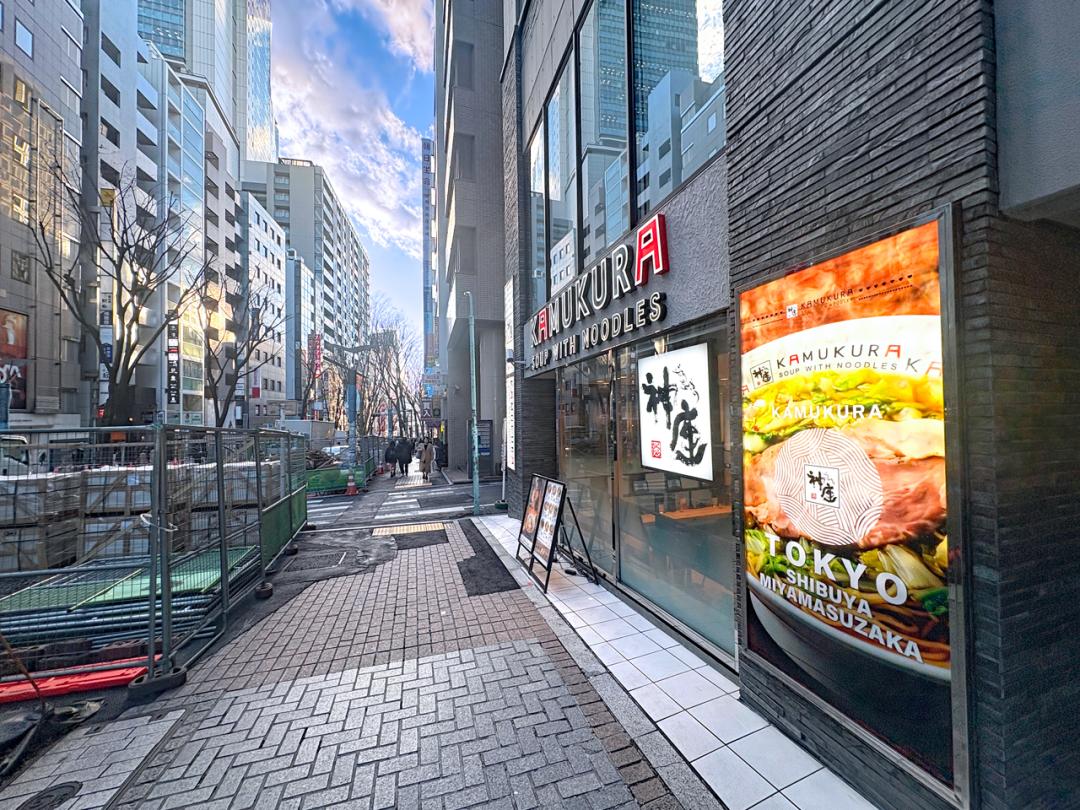
Dotonbori Kamizura Premist, a popular restaurant in the Kansai region, has opened near Miyamasuzaka.
In 2025, a number of ramen restaurants with different styles opened in Miyamasuzaka, including Dotonbori Kamukura Premist (March 10th), Kyoto Kitashirakawa Ramen Kairikiya (March 31st), Wagyu Ramen Kiwami (April 24th), Ramen Kamo to Negi (May 11th), and Ganso Yudo Abura Soba (October 23rd).
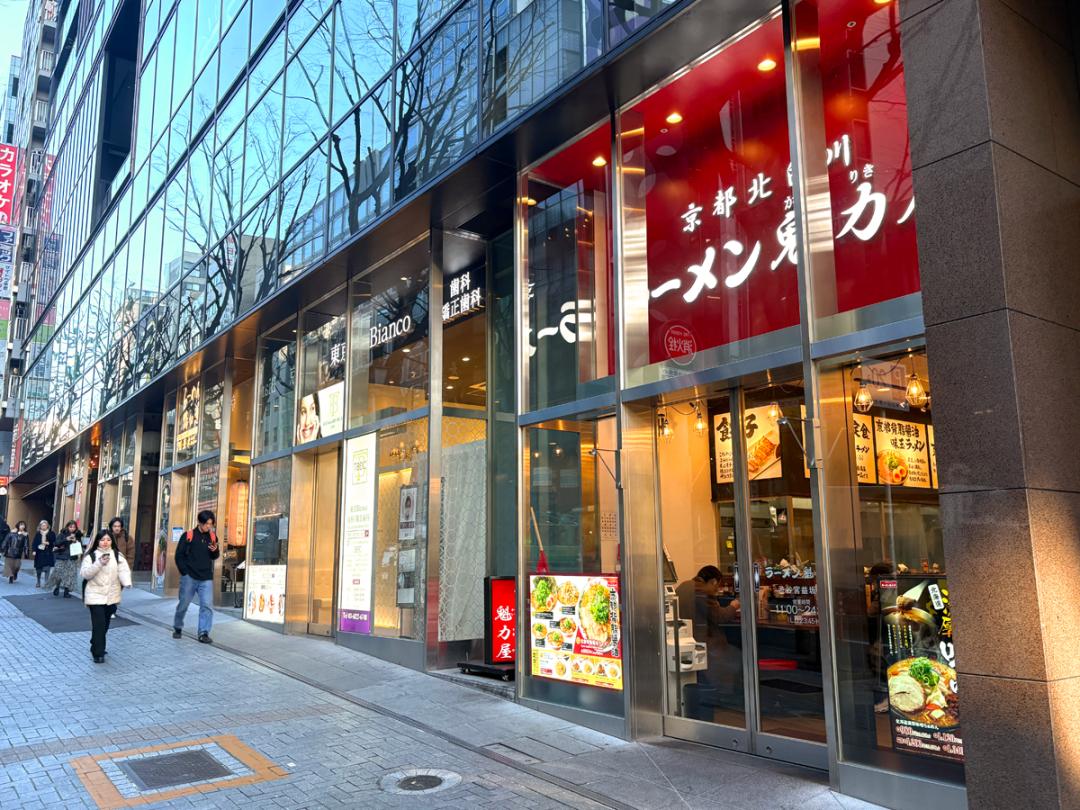
Three new restaurants, "Kairikiya," "Kamo to Negi," and "Abura Soba," have opened on the first floor of Miyamasuzaka Building The Shibuya Residence, giving the street a stronger Ramen Road feel.
Dogenzaka is also seeing a succession of distinctive new establishments, including "Mensho Maro" (February 13th), "AFURI" (April 25th), and "Stamina Ramen Oniyama" (June 26th). While not many in number, the soba restaurant "Honke Shibusoba" (September 14th) opened at the bottom of Dogenzaka, and the udon restaurant "Niku Udon Nikumeshi Jinzo" (April 3rd) opened at the top of Dogenzaka, further solidifying the noodle culture along Oyama Kaido.
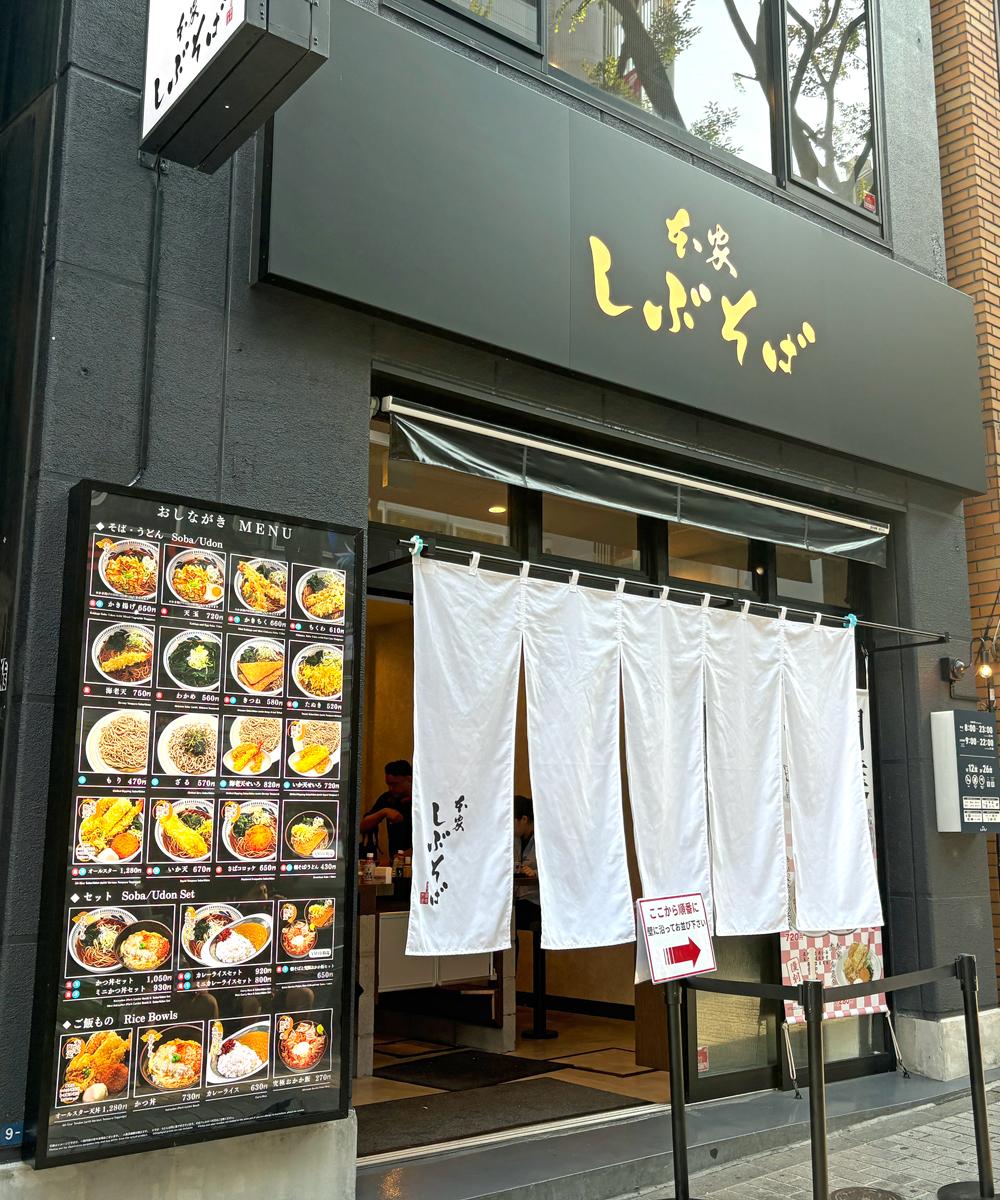
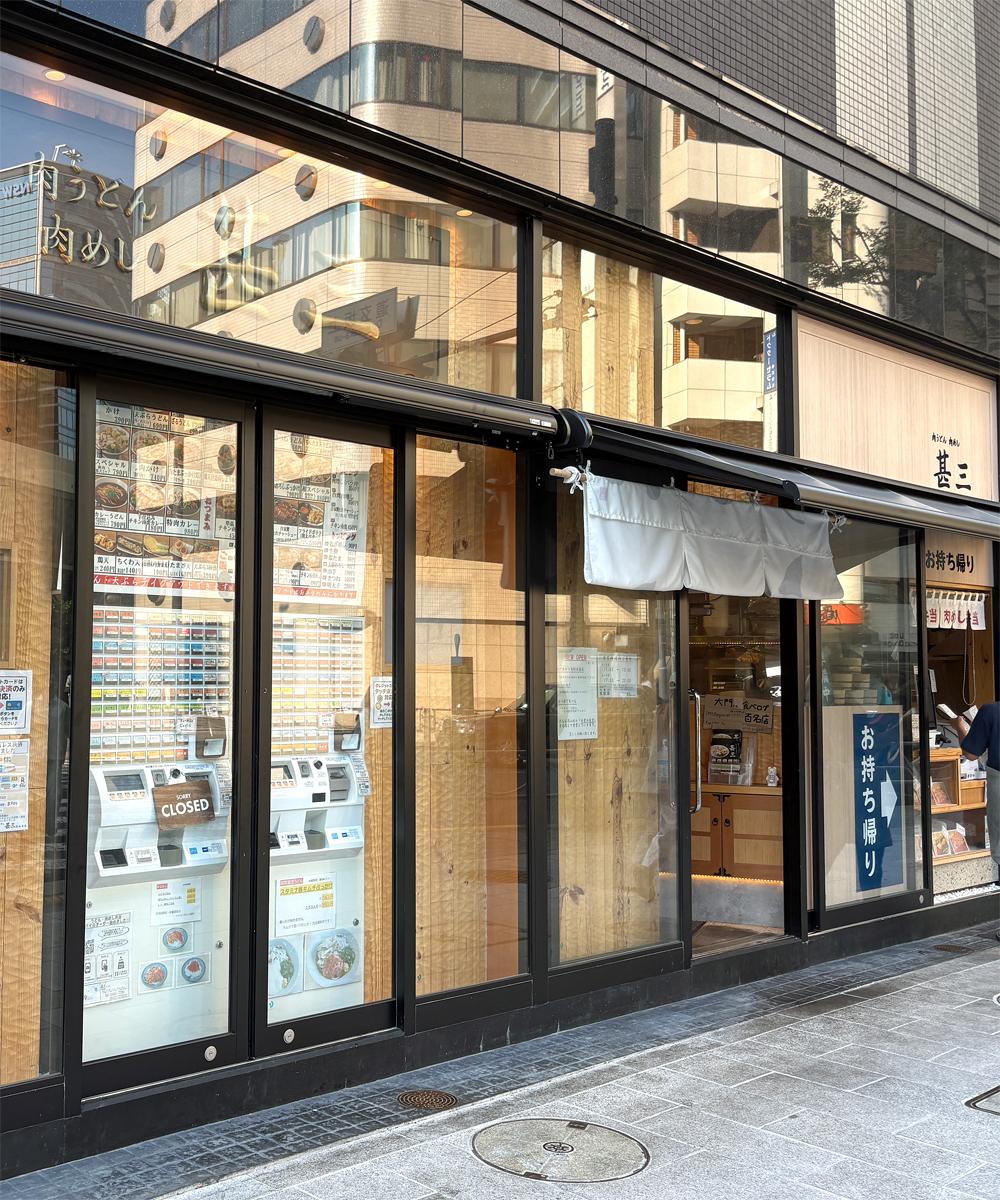
In addition to ramen shops, new restaurants have opened in the area, including Honke Shibusoba (left) at the bottom of Dogenzaka and Niku Udon Nikumeshi Jinzo (right) on the first floor of the APA Hotel South Building at the top of Dogenzaka, expanding the noodle options available in the area.
On the other hand, given that rents have remained high since the COVID-19 pandemic, it is by no means easy for business owners to open stores near the station on Dogenzaka and Miyamasuzaka. In a sense, the sudden increase in new store openings along Dogenzaka and Miyamasuzaka itself could be seen as an indication of the large number of vacant storefronts in prime street locations. In fact, looking at the current store opening trends, it seems that there are more chain stores than individual stores, and stores that have already established a track record in other areas, and in many cases they are deciding to open in central Shibuya as their "next move."
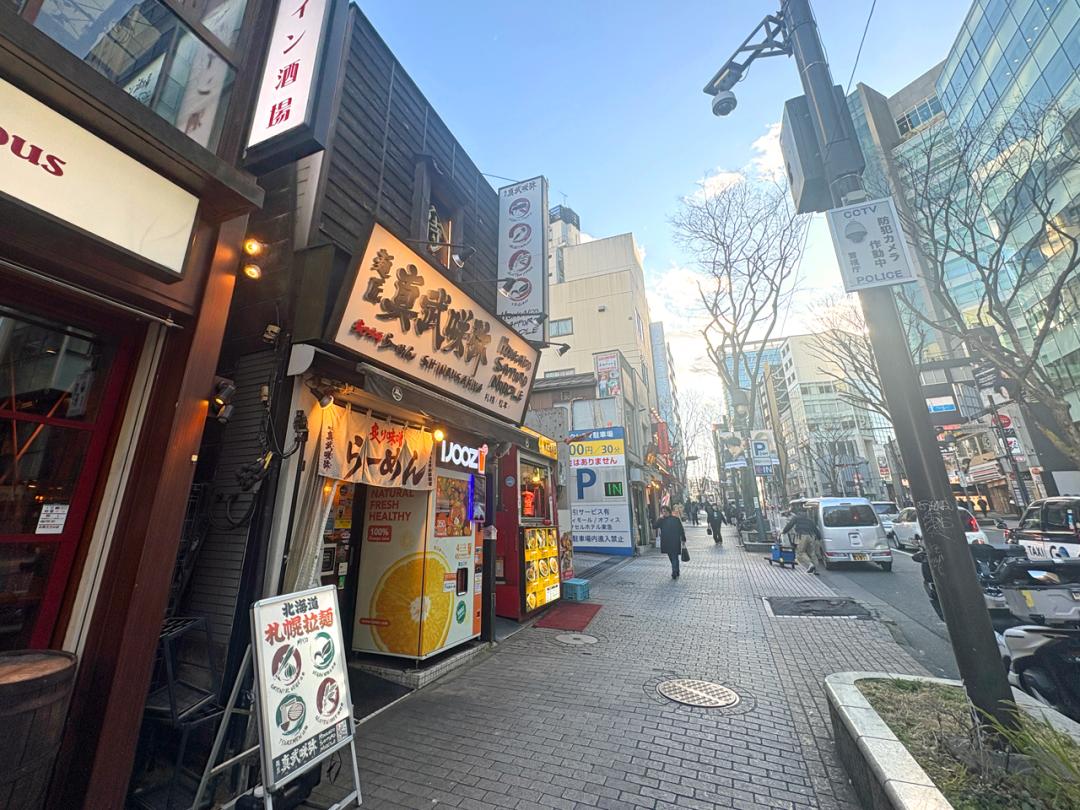
Dogenzaka Hilltop is lined with popular and unique restaurants, including "Mensho Shinbu Sakuya" for seared miso ramen, "Dogenzaka Mammoth" for tsukemen, "AFURI" famous for its clear, light ramen, and "SAJI." popular for its kelp water tsukemen.
One of the most iconic locations is AFURI Shibuya Dogenzaka, which opened at the top of Dogenzaka in April last year. AFURI's origins lie in its flagship store, ZUND-BAR, which opened at the foot of Mt. Oyama in 2001. In 2003, AFURI Ebisu opened as its first Tokyo store. It has gained popularity for its clear soup, made with pure spring water, and its commitment to quality ingredients, and it currently operates stores mainly in Tokyo and Yokohama.
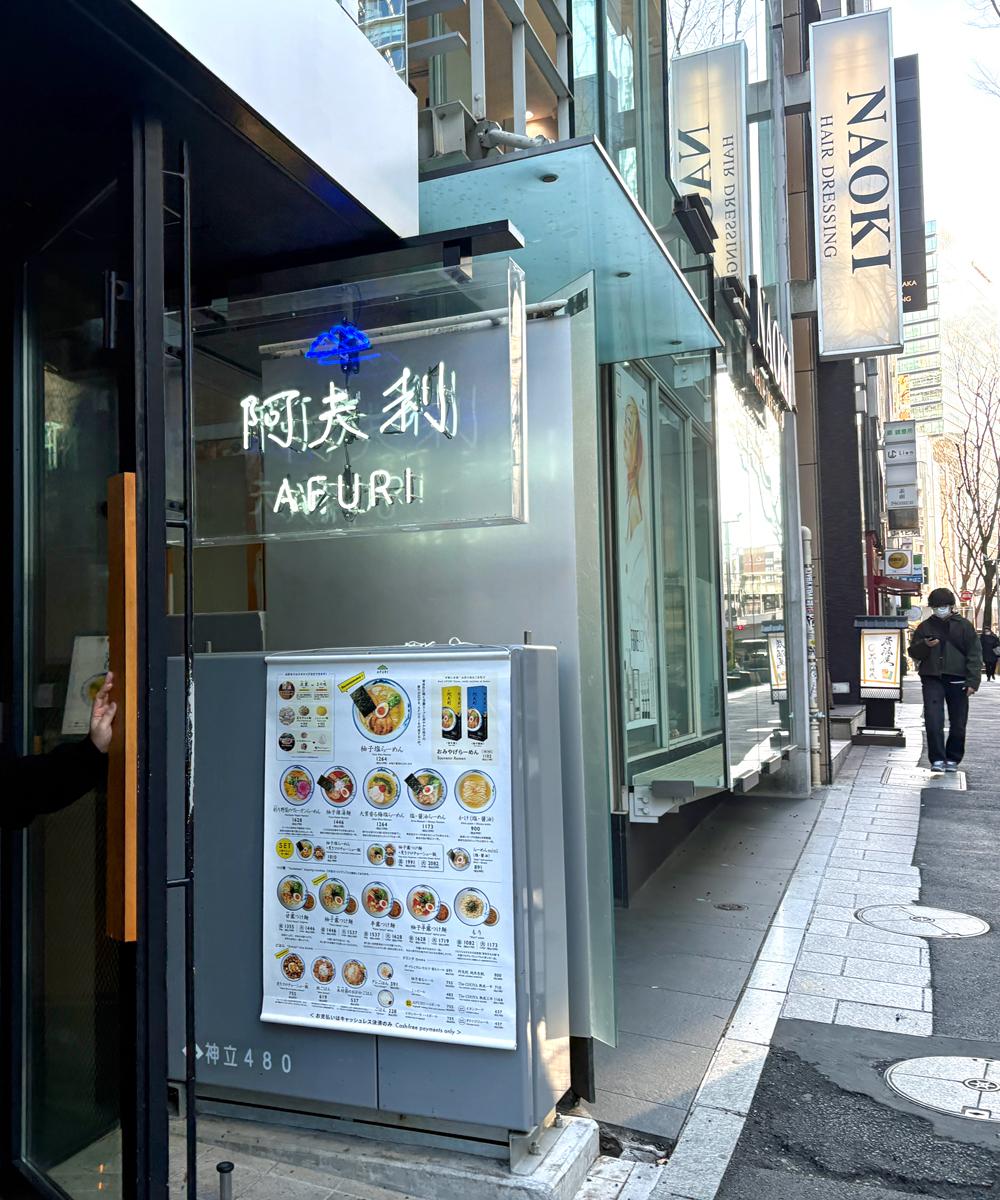
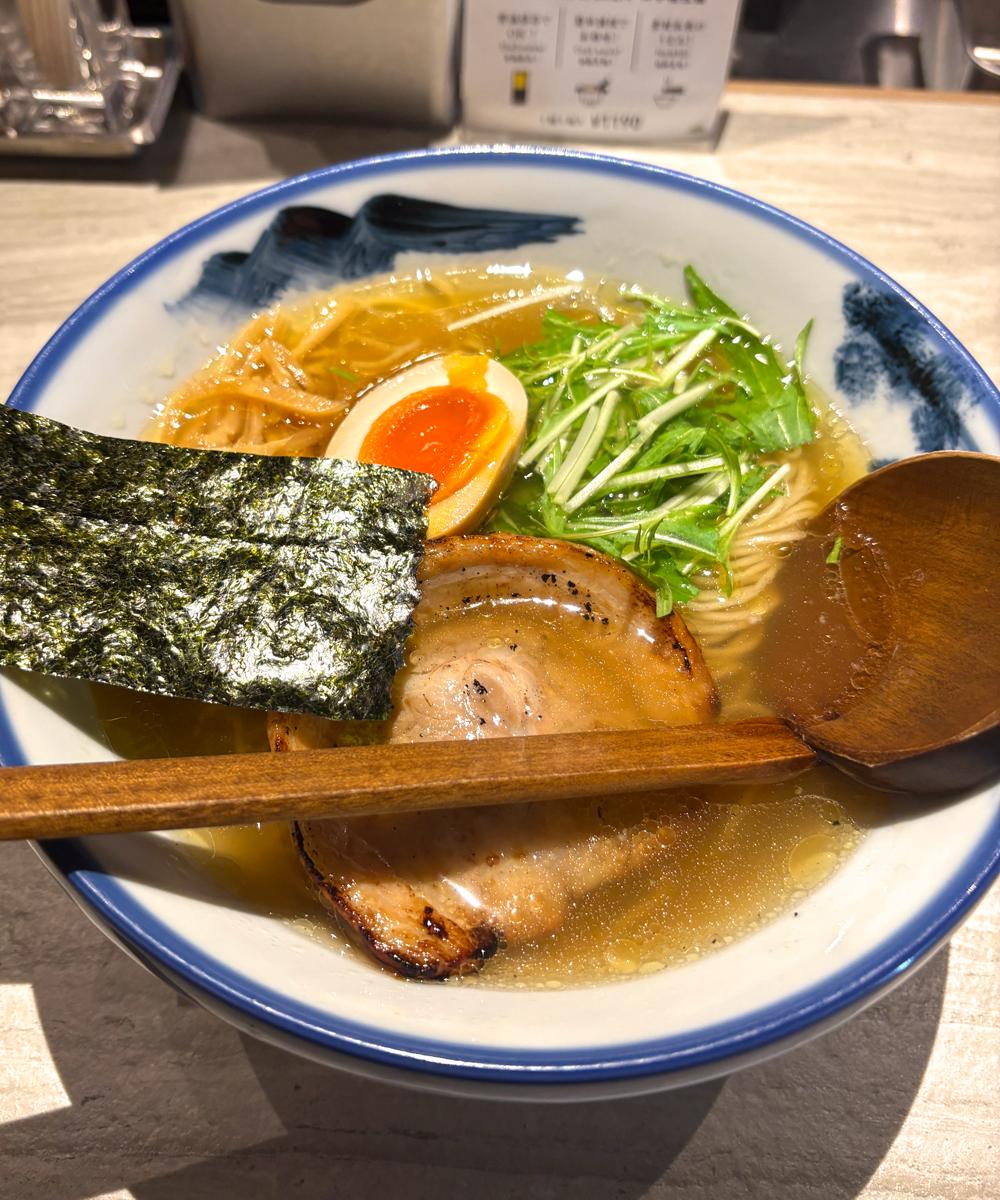
Left: Near the entrance to AFURI Shibuya Dogenzaka, which opened on Dogenzaka in April 2025. Right: The signature dish, Yuzu Shio Ramen. Its clear, golden-colored soup is distinctive.
The store's name comes from Mt. Afuriyama, another name for Mt. Afuriyama. In ancient times, Mt. Afuriyama was also known as "Amagasakiyama," and is known as a sacred mountain where people came to pray for rain and bountiful harvests. Meanwhile, Shibuya's Dogenzaka area flourished as one of the starting points of the road along which people traveled on pilgrimages to Mt. Oyama during the Edo period. The fact that a brand with its origins in the waters of Mt. Afuriyama has set up a store on Dogenzaka, once bustling with pilgrims, is not just a store opening in a busy shopping district, but also evokes the historical context linking Shibuya and Mt. In reality, the intention behind the store opening is unclear, but by combining these backgrounds, it can be interpreted as part of a story.
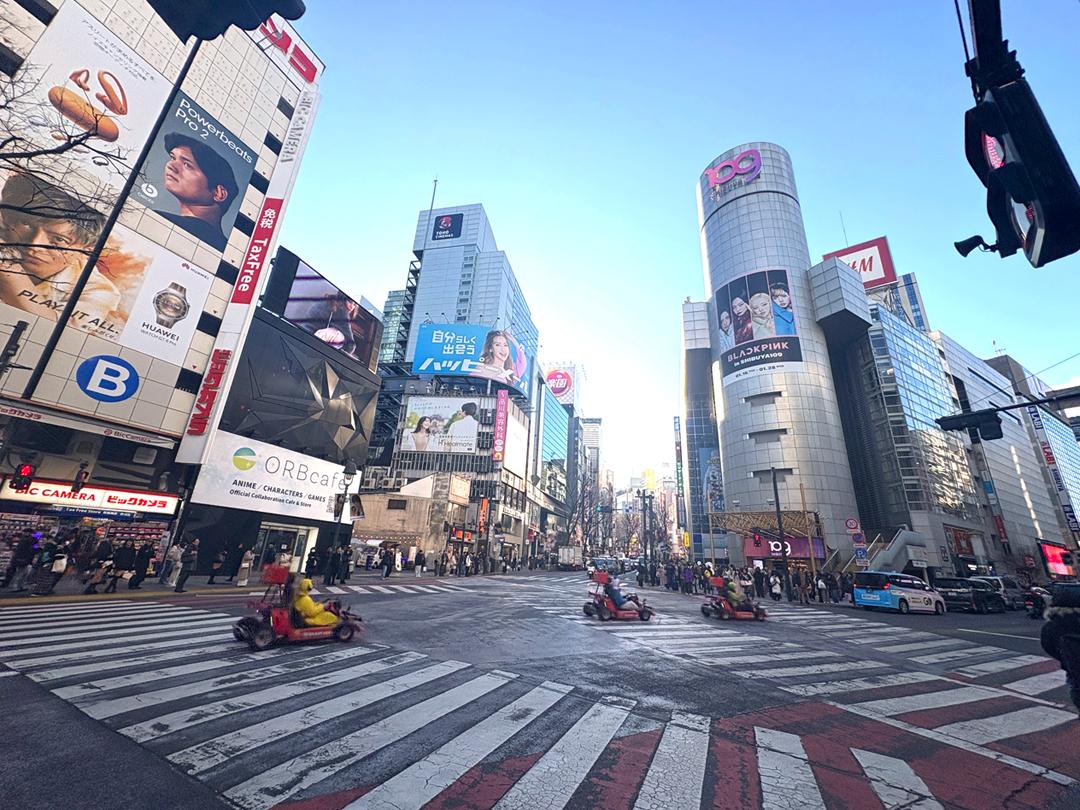
In this way, Dogenzaka and Miyamasuzaka are once again reinforcing their status as a "noodle hub." Just as Edo travelers would prepare themselves at the nearby ramen shops before heading up the mountain, ramen and other noodles continue to energize and satisfy people in modern-day Shibuya, filling their stomachs between work shifts, serving as a late-night snack, and even captivating the palates of foreign visitors to Japan. The bustle of the Oyama Kaido continues, even as steam rises from the streets, even as it takes on a different form.
Editorial Department: Takashi Fujii
Shibuya registrar. In addition to Shibuya of Culture information, seasonal news and topics, it will spell write that feel every day.
Genres within watch
Articles in the same genre
2026-01-23〜
Oyama Kaido is a noodle road!? Shibuya, Dogenzaka / Miyamasuzaka and the memory of noodles
2026-01-06〜
Sarugaku Bridge, connecting Shibuya and Daikanyama, to be rebuilt after more than 10 years of road closure; model on display at ward office
2025-11-10〜
A rush of new stores opening in Miyamasuzaka - a town taking advantage of the "space before redevelopment"
2025-08-31〜
Redevelopment and the City's Memories: Where Did the Six Children Go?
Featured articles on the site

Shibuya turns into a gaming venue!? Urban festival "SHIBUYA GAMES WEEK 2026" to be held for the first time

The world-famous hit "Squid Game" will have its first real-life event in Japan, kicking off on January 16, 2026
"DIG SHIBUYA 2026" - A mix of cutting-edge technology and art in Shibuya, starting February 13th