


SHIBUY.A. × INTERVIEW
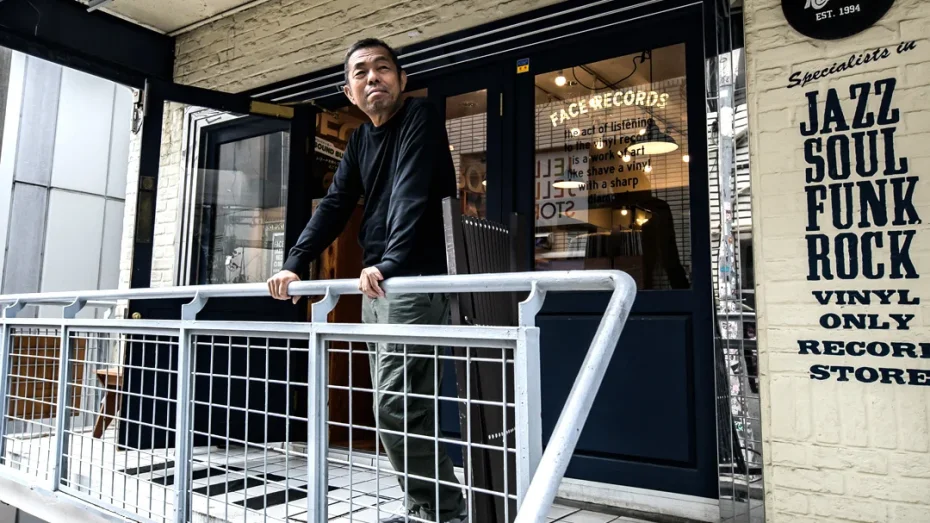
Chairman of the Board, FTF Corporation
<Part 2> Unearthing the memories of record culture hidden in Shibuya's Udagawacho
2026-07-17
SHARE
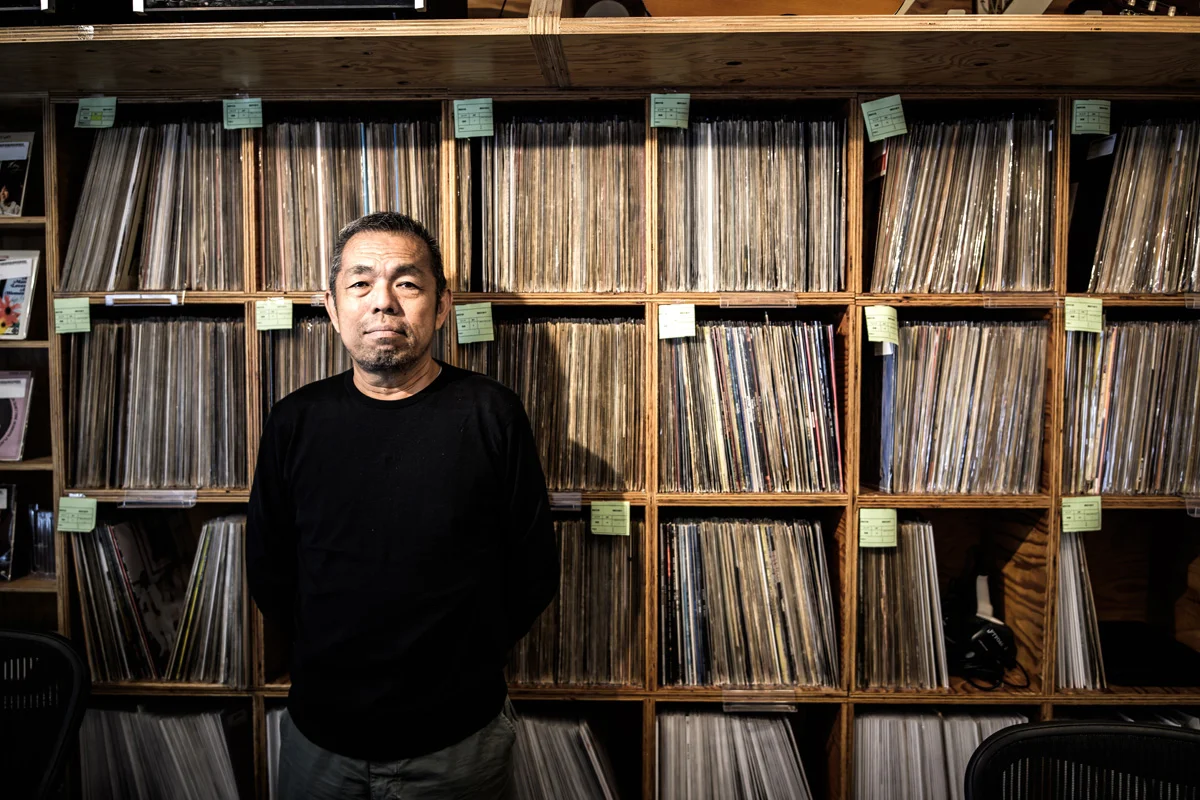
Born in Tochigi Prefecture. In 1994, he opened "Face Records," a mail-order only used record store, and in 1996, he opened a physical store in Udagawa-cho, Shibuya. In 2016, he opened "Face Records NYC" in New York City, USA. He currently serves as the Chairman of the Board of Directors of FTF Co., Ltd., which operates stores in Tokyo, Sapporo, Nagoya, Kyoto, Fukuoka, and New York. In May 2026, he published "The History of Record Stores in Shibuya ~ & Beyond: The History of Record Stores in Shibuya, and Something More," which unearths the memories of the city of Shibuya.
Shinichi Takei has run the used record store "Face Records" in Udagawa-cho, Shibuya, for 30 years. One day, he realized that he didn't know much about the history of Shibuya, so he began an investigation to uncover that memory. What emerged was the little-known history of Shibuya that lay behind its record culture. In the second part of the interview, we asked him about the image of the city that he saw through his investigation and his hopes for its future.
Only those who have lived in this city
I wanted to give form to the unseen scenery.
Could you tell me what sparked your curiosity about the first record store in Shibuya?
Despite having run a record store in this town for many years, we realized that we didn't know enough about the history of Shibuya and Udagawa-cho, where our base is located, and that was something we genuinely regretted.
When I asked people born and raised in the surrounding Shibuya area about the city's history, surprisingly few could give me specific answers. Despite so many events having accumulated in this city, its transformations haven't been properly documented. Faced with this reality, I felt a strong urge to leave my own record as someone directly involved.
Could you tell me why you decided to publish that research as a book?
The main impetus for this was the overwhelming response I received when I started writing about this research on Note. I felt that it was necessary to create a proper record rather than just keeping it as a personal interest. Having run a record store in Shibuya for many years, I also felt a sense of urgency that if I didn't document it from the perspective of someone who was there, the history of this town would be lost.
Also, reading "Taisho Shibuya Dogenzaka," a book by Kayo Fujita, the proprietress of the okonomiyaki restaurant "Kokeshi," which realistically documents the history of Shibuya Dogenzaka, had a significant influence on me. Touching upon that reality, I came to want to capture the scenery that only someone who has lived in this town can see.
The U.S. military housing complex "Washington Heights"
It was the root of Shibuya's record culture.
What discoveries were made during the course of the investigation?
Many fascinating facts and traces have come to light. For example, it turns out that the area around Udagawa-cho, where many record stores are currently located, was once behind the "Army Prison." This was a place where people who protested against the war and political prisoners may have been held, and listening to Western music such as jazz was forbidden at the time. The fact that record stores are now clustered together right next to it gives a sense of historical overlap.
Furthermore, the area where SHIBUYA109 is located was also known as "Koibumi Yokocho" (Love Letter Alley), a place where young women would gather to write letters on behalf of American soldiers returning to their girlfriends. The fact that it remains a popular spot for young people today, even if it's just a coincidence, is an interesting continuity.
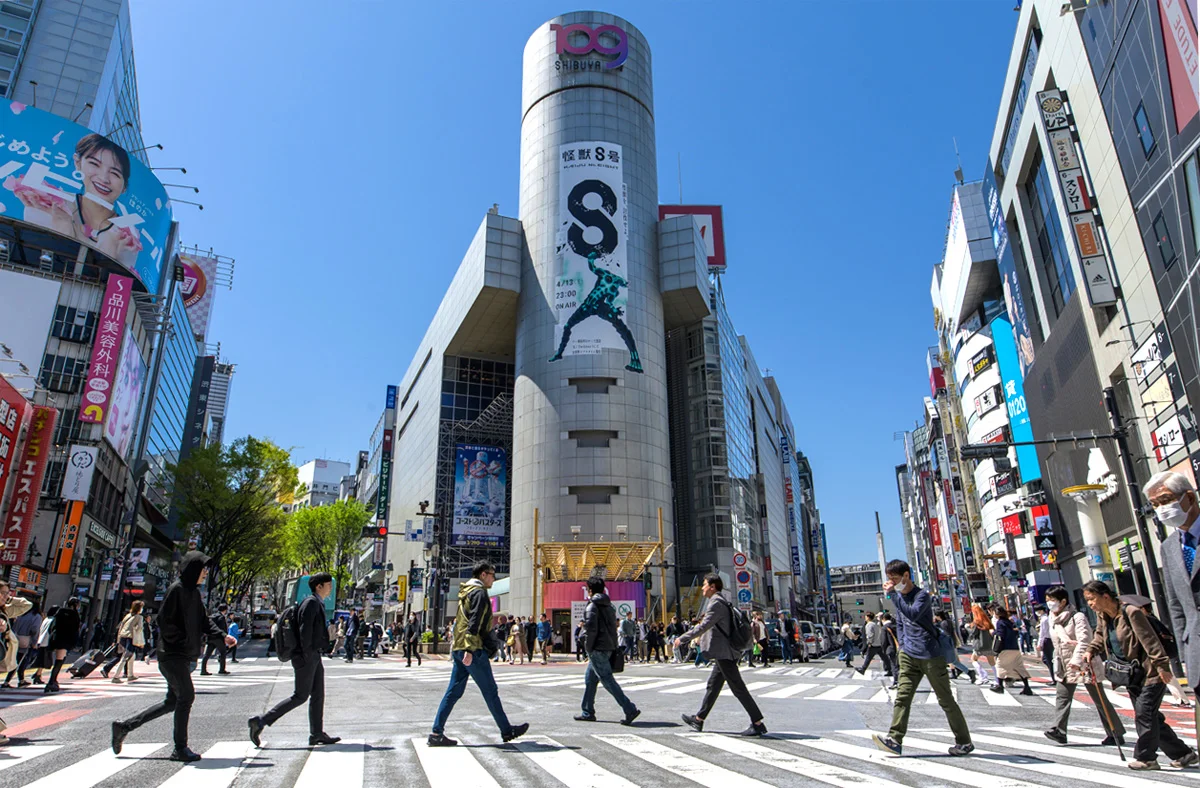
In the post-war period, the area around what is now SHIBUYA109 was home to businesses that wrote love letters for American soldiers. Based on this episode, author Fumio Niwa wrote the novel "Koibumi" (Love Letter). In 1953, it was made into a film directed by Kinuyo Tanaka, and the area became widely known as "Koibumi Yokocho" (Love Letter Alley).
The process by which record culture took root in Shibuya is also carefully explained, isn't it?
Tracing the roots of Shibuya's imported record culture reveals a deep connection to Washington Heights, a U.S. military housing complex located in Yoyogi after the war. Within Washington Heights at the time, there was a store called a PX (Post Exchange) under the control of the Army, where records were also sold. Since soldiers were transferred approximately every three years, unwanted records were either sold or simply discarded.
The collection of these items was handled by specific companies that had contracts with GHQ. I actually had the opportunity to speak with the daughter of someone involved at the time, and she told me that the collected materials were gathered in places called "sorting areas." There was apparently a sorting area near the present-day Inaribashi Bridge. There, experts sorted the items, and the selected goods were distributed to used bookstores and antique shops, and that's how records ended up circulating in the streets as merchandise. I believe it's an undeniable fact that used records were distributed through these channels.
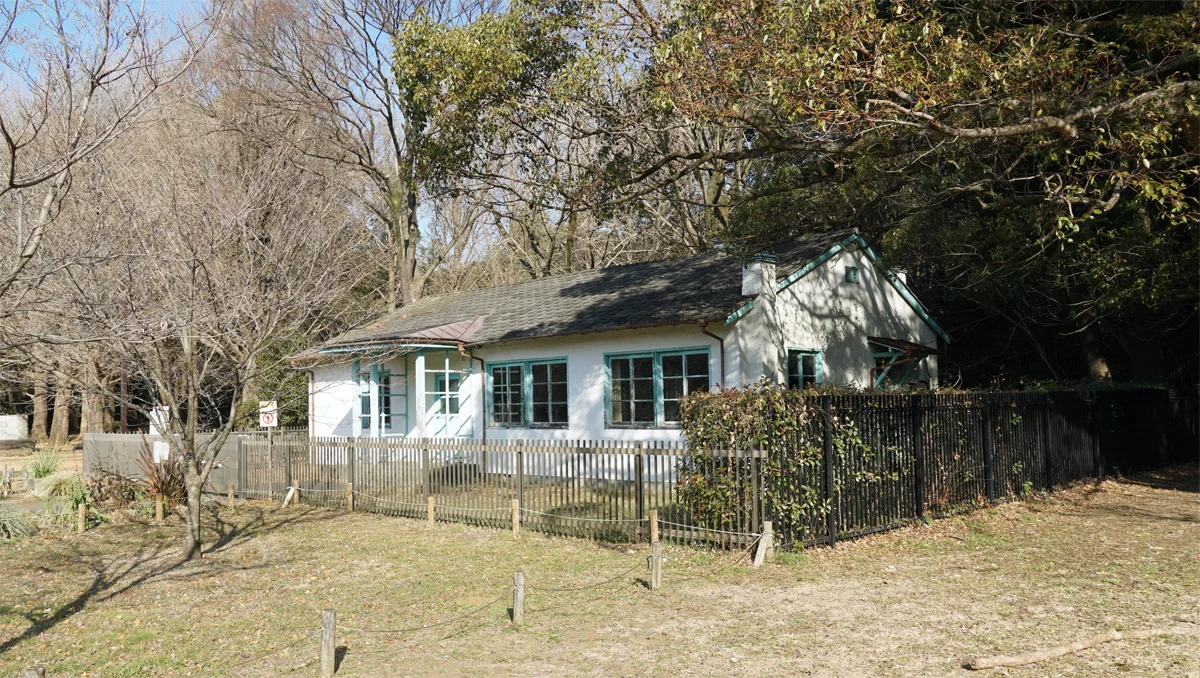
The area around Yoyogi Park was once home to "Washington Heights," a housing complex for U.S. military families (approximately 800 units). Prior to the 1964 Tokyo Olympics, the land was fully returned to Japan, and the houses were renovated and used as accommodations for the Olympic Village. The only remaining accommodation unit within the park (pictured) was demolished in 2025 due to deterioration (photo taken January 2025). Currently, a café recreating the building's exterior operates on the site.
"Digital fatigue" leads to a resurgence of appreciation for analog.
The base of record culture is also expanding.
Moving forward in time, this book also touches upon the influence of "Sezon culture." What kind of impact did it have on Shibuya's record culture?
Stores like Cisco, Discport, and WAVE, formerly located within the Seibu Department Store, were more than just places to sell records as "things" in Shibuya at the time. Their groundbreaking aspect was that they proposed music and lifestyle as an integrated whole. These stores received cutting-edge music from America and the UK with almost no time lag, and in a sense, they served as a hub where global music information gathered in real time.
I believe that the existence of this Saison culture created the foundation for enjoying music not merely as a consumer good, but as a new set of values and a lifestyle. I think that accumulation of experiences led to the record boom in Udagawa-cho that followed.
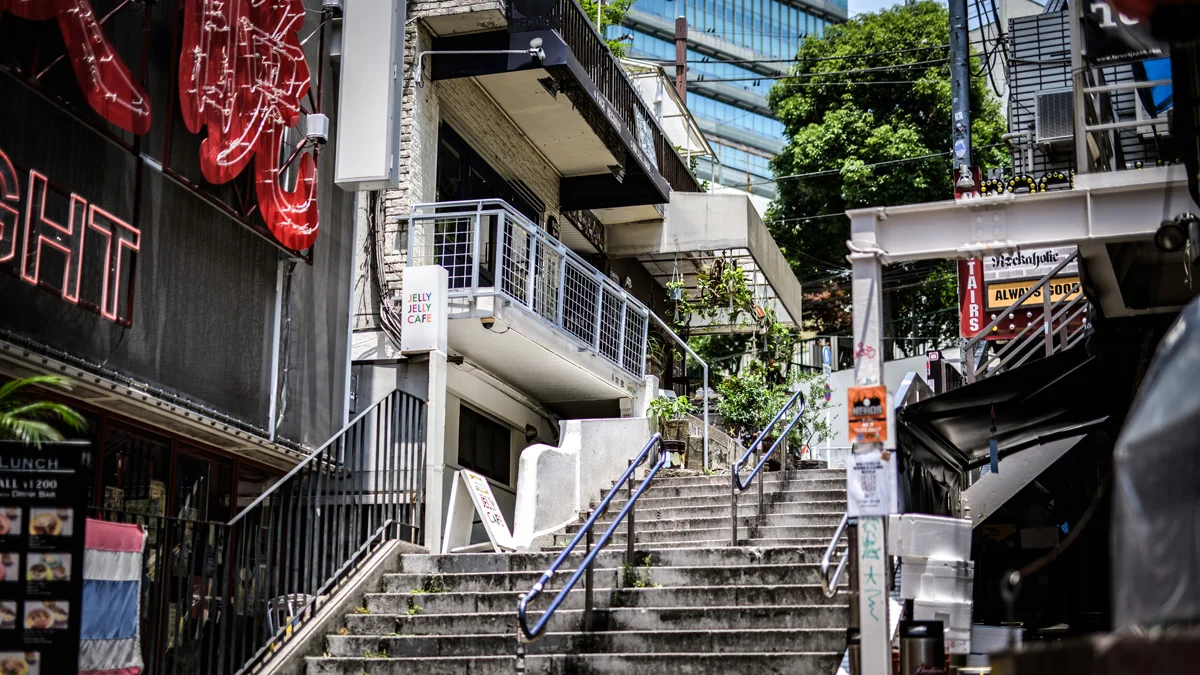
CISCO, a record store, opened in 1970 in "Be-in," the basement of Seibu Department Store's Building B. Later, it moved to Udagawa-cho, and the area around the store became known as "CISCO Hill."
After various transformations, what psychological factors are at play in the current trend towards a return to analog?
First, there's likely a psychological aspect to it, such as "digital fatigue." When a convenient trend takes hold in society, there's always a reaction against it. Also, as music becomes digitized, I'm reminded that the desire to have something tangible to hold in one's possession is a desire that will never disappear.
For younger generations, records are no longer seen as simply an old medium, but rather as something like a "new product" they've never seen before. While it was once thought that the core fan base consisted mainly of people in their 50s and older, a recent survey at my shop showed that the largest group of customers were in their 30s, indicating that it's not simply the older generation returning to analog. The experience of holding a large album cover and the joy of owning a physical object, things that digital media can't offer, seem fresh and appealing to them. Furthermore, I've heard stories of acquaintances whose middle school-aged daughters are collecting records, which really makes me feel that the fan base is expanding.
More and more people are displaying their favorite artists' records not just for listening to the music, but also for their album covers, much like they would display a painting. Surprisingly, data from Japan, the US, Spain, and other countries shows that about half of record buyers don't even own a record player, indicating a growing artistic appreciation for the album cover itself. I think that this kind of enjoyment, along with other aspects of vinyl records, will continue to thrive.
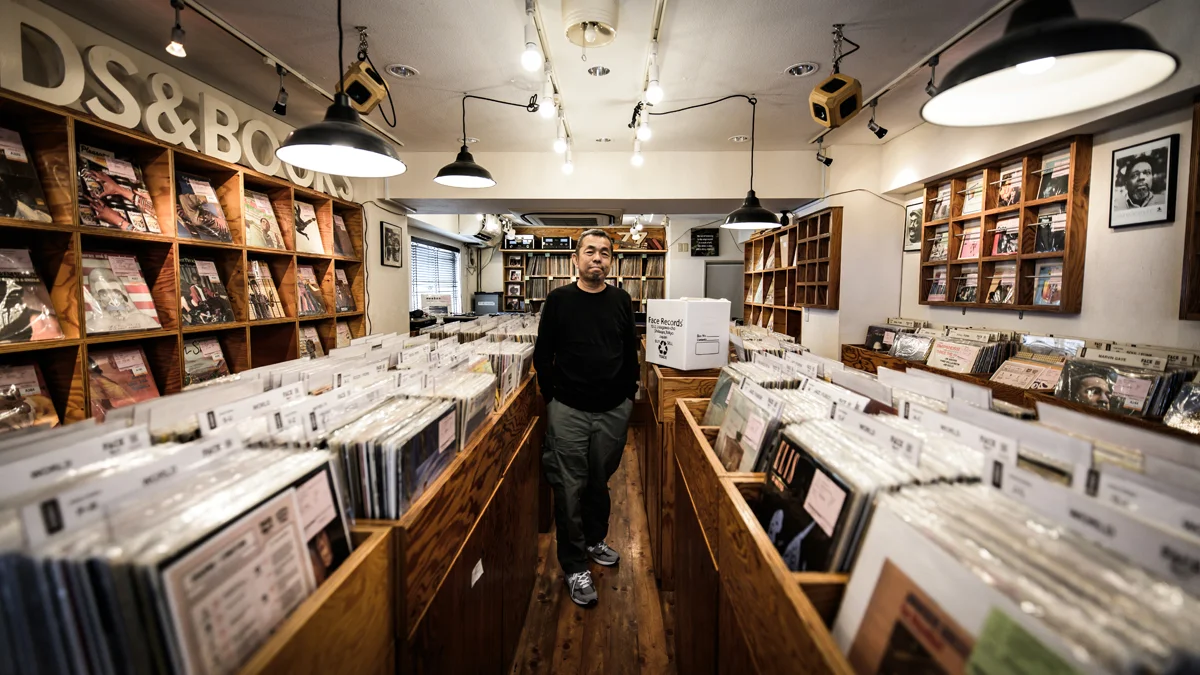
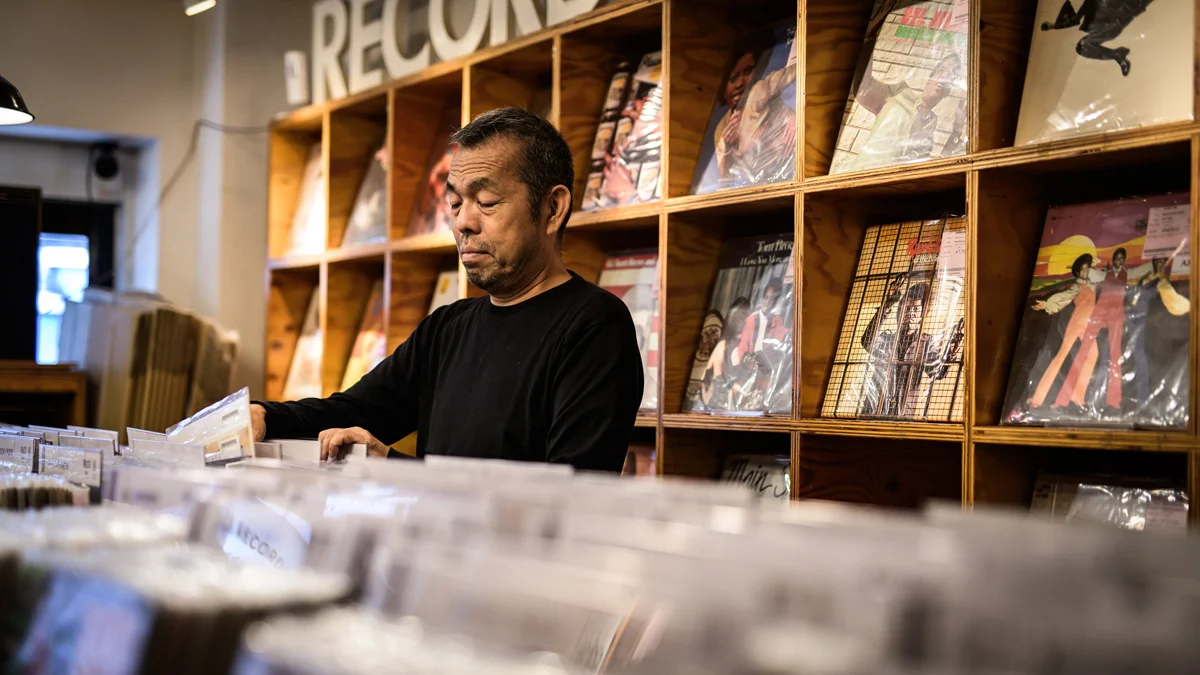
Inside Face Records in Udagawa-cho. Apparently, more than half of the customers are foreigners these days, partly due to the recent popularity of city pop.
A sign that reads "Shibuya Record Store"
I want to pass this on to the next generation.
How do you perceive the changes in Shibuya?
I believe that the diversity of people mixing together is still Shibuya's strength. However, the city is changing so rapidly that it's becoming increasingly difficult to remember what it used to be like. Even so, I want to believe that Shibuya's essence—people gathering there in search of interesting things—will continue.
On the other hand, I also see challenges with the structure of the town. With the ongoing redevelopment, it's now a difficult environment for small, independently owned specialty shops to survive, unlike in the past. Udagawa-cho used to have "gaps" where culture could emerge from places with low rent. I think it was because of that space that record culture was able to grow within the town, but it may not be easy to maintain that in Shibuya today.
Please tell us about anything you'd like to try in the future, or any new dreams or goals you have.
Currently, following up on this research, I'm working on a study about Harajuku. It all started when I began documenting the history of our town through my record store business, but I believe my role now is to continue documenting the town's history from various cultural perspectives, not just through records. I want to delve even deeper into past events that are still hidden from view.
As for the overall vision for the town, it would be great if we could create a system where record stores can cooperate with each other to maintain the record store district, similar to the used bookstore district in Jinbocho. I believe that the rivalry between stores in the past and the inability to build a sufficient cooperative system was one of the reasons for Shibuya's decline.
Ultimately, our main goal is to pass on the legacy of "Shibuya's record store," which we have upheld for so long, to the next generation in some form. We want to keep the flame of record culture that this city has cultivated alive and bridge it to a new generation.
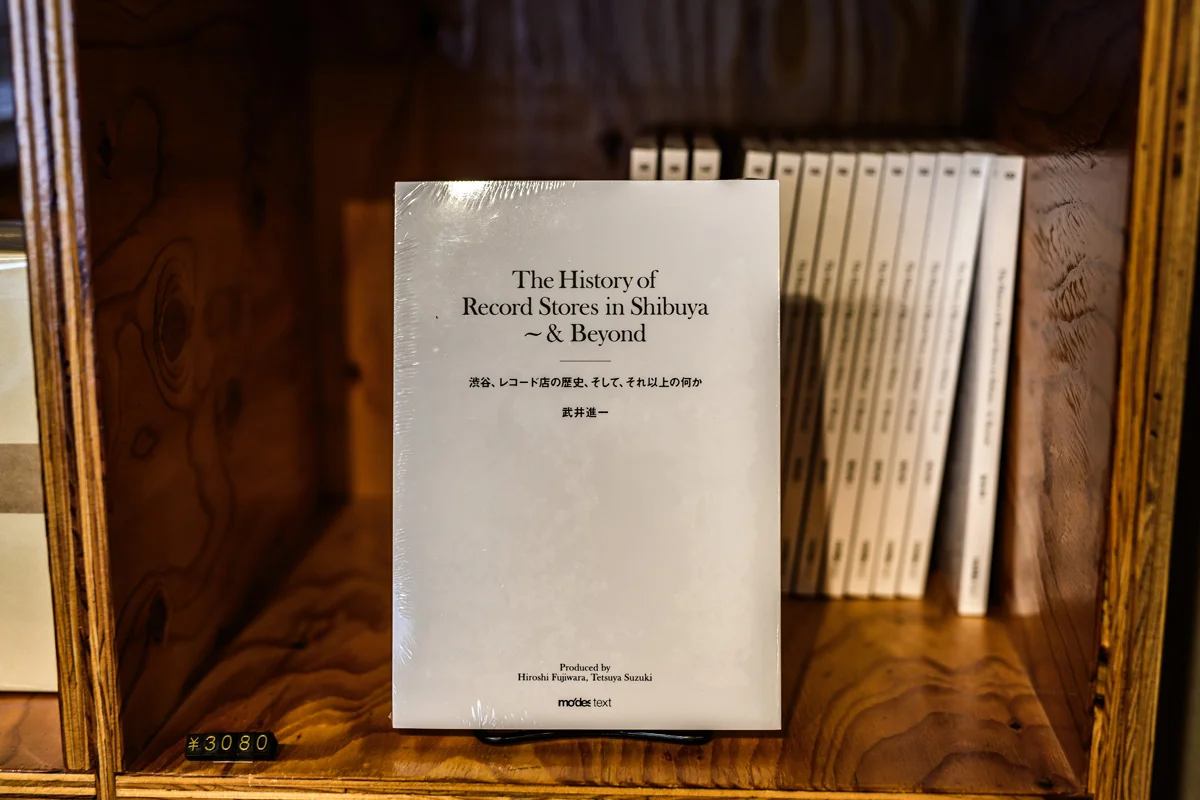
In May 2026, Takei published "The History of Record Stores in Shibuya ~ & Beyond Shibuya: The History of Record Stores, and Something More" (mo'des book).
『The History of Record Stores in Shibuya ~ & Beyond
"Shibuya, the history of record stores, and something more" (mo'des book)
Author: Shinichi Takei
Produced by: Hiroshi Fujiwara, Tetsuya Suzuki
Selling price: 2,800 yen (3,080 yen including tax)
Shinichi Takei, who has run "Face Records" in Udagawa-cho, Shibuya for 30 years, wondered, "Where was the first record store in Shibuya?" As he traced old maps and documents, his inquiry expanded to the memory of the entire city of Shibuya. From its encounter with American culture after the war to the present day, Shibuya's journey emerges through the lens of records. With the production of Hiroshi Fujiwara and others, the results of his research have been compiled into a book.
Interview and writing: Ryota Ninomiya / Photography: Osamu Matsuba
Featured articles on the site
#Shibuya Club Vol. 1 ~ Discussing "Innovation x Culture" in Shibuya
Interactive illuminations to open in Yoyogi Park: A 1.8-kilometer "Forest of Light" to begin in November.
Seibu Shibuya Store closes its doors after 58 years of history: The department store that created "Shibuya" marks the end of its history.