

SHIBUY.A. × WATCH

A 1/80 scale diorama of Shibuya is born: Urban modeler Yu Irimajiri talks about the charm of Shibuya.
2026-07-08
SHARE
Small Worlds Tokyo, an indoor miniature museum located in Ariake, Tokyo, has been showcasing an elaborate 1/80 scale miniature world within its approximately 7,000 square meter space since its opening in 2020. The museum features nine different areas, including a filming model of Evangelion, a space center, cityscapes from around the world, Kansai International Airport, and Ariake Arena, captivating visitors from both Japan and abroad with its precise craftsmanship and dynamic presentations.
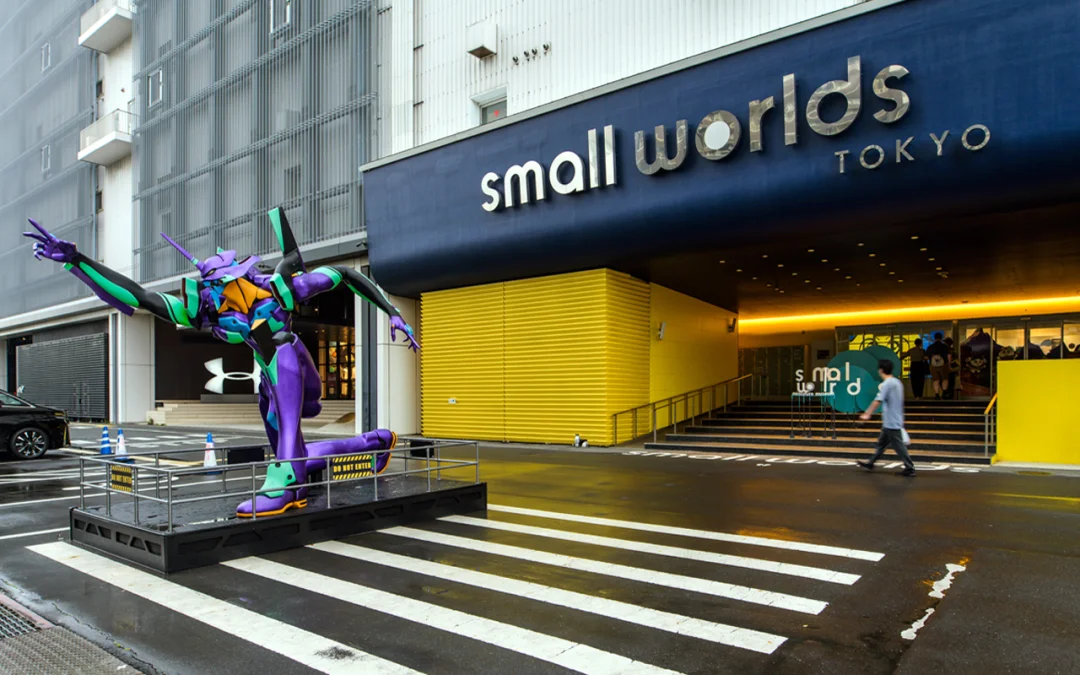
At the entrance of the indoor miniature museum "Small Worlds TOKYO," Evangelion Unit-01 greets visitors.
On June 11th, a new area called "Shibuya" opened at the museum. This large-scale urban diorama recreates the area in front of Shibuya Station, a place where many people gather, on a 1/80 scale, and realistically depicts the complex above-ground and underground structures around Shibuya Station, including the Shibuya Scramble Crossing. Through lighting effects that switch between day and night, approximately 5,000 figures, and light displays using approximately 3,000 LEDs, visitors can experience the dynamism of the international city of Shibuya.
This time, we visited Small Worlds Tokyo and interviewed Yu Irimajiri, who was in charge of creating the new "Shibuya" area. Why did he choose to model Shibuya, and what aspects of Shibuya's character did he discover through the creation process? From a bird's-eye view of the city, we explore the allure of "Shibuya," a city that attracts people from all over the world.
The origin lies in "the enjoyment of looking down on the city from above."
The diorama was created by diorama artist Yu Irimajiri. He also works under the creator name "Urban Modeler MAJIRI" and has been sharing the process of creating urban dioramas on social media and YouTube. He was involved in a wide range of aspects of the newly unveiled "Shibuya" area, from conception and design to production and lighting effects.
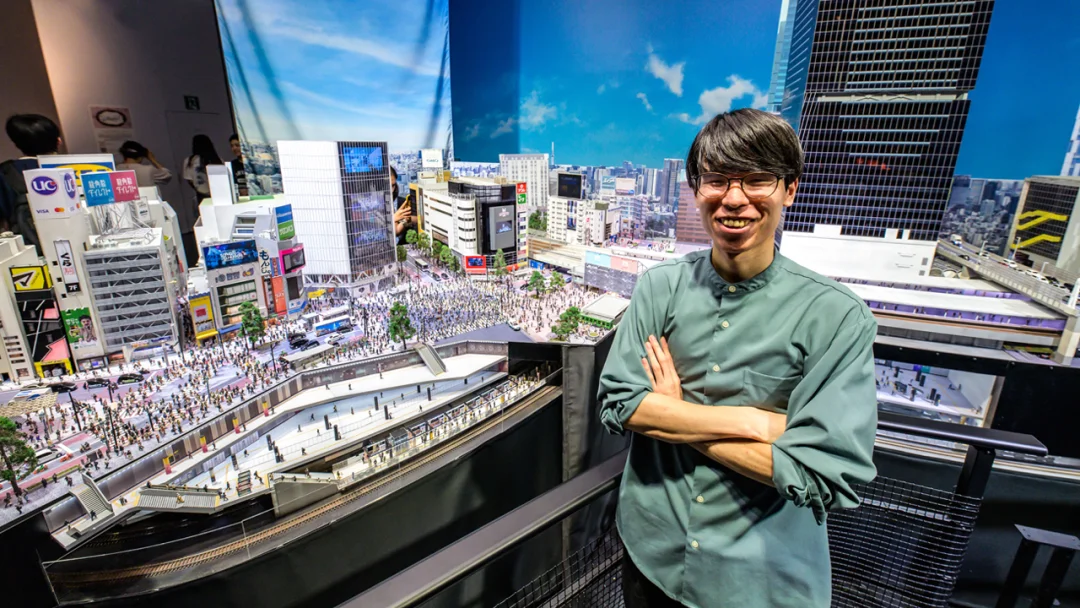
Yu Irimajiri, urban modeler and diorama artist who worked on the "Shibuya" area.
Irimajiri's interest in dioramas began when she was in elementary school. It all started when she created a small rural landscape to run N-gauge model trains on.
"Initially, it was just a landscape for running N-gauge (railway) trains. But gradually, I became interested in creating the landscape itself. Now, the railway isn't the main focus; the city itself is the artwork. This has led to my desire to create a large-scale urban diorama where the railway runs through it."
Originally from Mie Prefecture, Irimajiri studied civil and environmental engineering at Wakayama University's Faculty of Engineering while continuing to create models on his own. During his university years, he began sharing his work on YouTube, which garnered significant attention. After graduation, he joined Small Worlds TOKYO. After approximately eight months, he became independent, but he continues to maintain a good relationship with the museum as an artist.
"During my time there, I was in charge of things like mechanisms that move when you press a button, program control, and mechanical design. Much of my work was closer to mechanical design than architecture. I love all aspects of manufacturing, so I believe my strength lies in being able to be involved in everything from design to programming and control."
Shibuya was "the most interesting city to make a diorama of."
For Irimajiri, Shibuya is a city he has a strong attachment to, having created artwork there during his student days. The initial inspiration for creating Shibuya came from a friend from Tokyo during his university years who asked him to create Shibuya next.
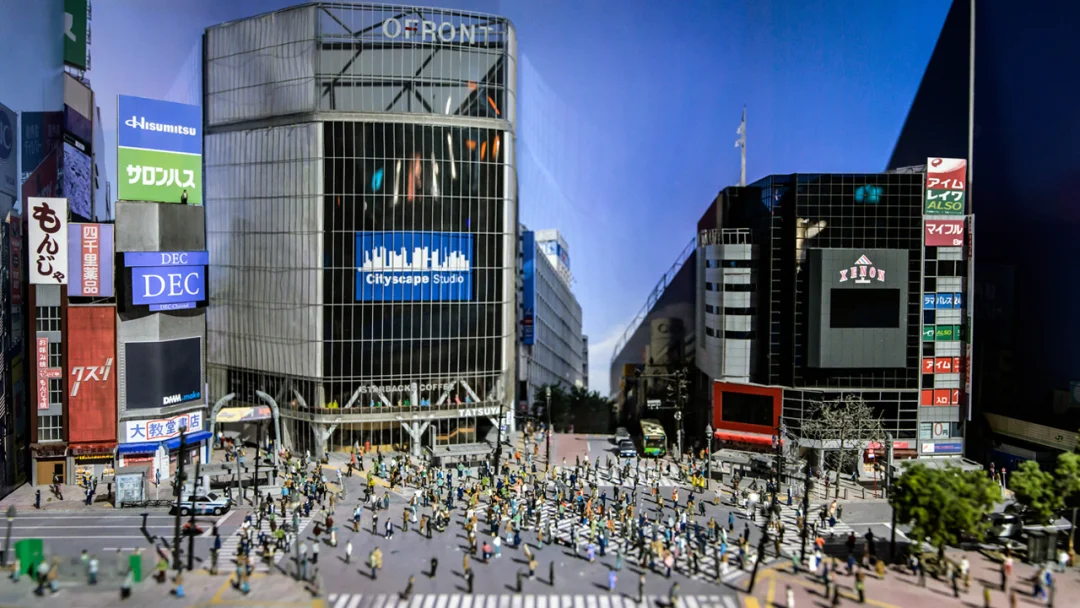
A diorama of Shibuya that Irimajiri created during his student days is also on display at Small Worlds TOKYO.
"At the time, I wasn't thinking, 'If it's in Shibuya, it'll become a hot topic.' I simply thought it would be fun to make, so I decided to give it a try. After it was released, there was a huge response, and that has led to my current activities."
At the time, he was a student and didn't have the time or resources to go to Tokyo for interviews, so he mainly worked on the project while looking at Google Street View, and had a friend take some of the photos.
For this large-scale exhibition at Small Worlds Tokyo, "Shibuya" was newly created, and the idea was proposed by Irimajiri herself.
"I've created dioramas of various cities, including Shinjuku, but I've always felt that Shibuya is the most interesting city to create a diorama of. The complex multi-layered structure with its overlapping above-ground and underground areas, and the density of the city, are very well suited to dioramas. Furthermore, it's very popular with inbound foreign tourists, so I thought Shibuya should be the first city I created."
Irimajiri-san doesn't usually hang out in Shibuya, and currently lives in Adachi Ward, leading a lifestyle closer to the old downtown area. Nevertheless, she says she has a "special longing" for Shibuya.
"Shibuya's streets aren't right angles; they're intricately interwoven. The history of people walking through the city is directly reflected in its shape. I find slightly chaotic and complex streetscapes more appealing than neatly planned, organized ones, and I'd love to create something like that."
Aiming to create a city that you can recognize as "Shibuya" the moment you see it.
The Shibuya diorama recreates the area encompassing Center Gai, SHIBUYA109, Hachiko Square, and the entire Shibuya Station. SHIBUYA STREAM area is also included as a background element. While the basic scale is 1/80, the same as HO gauge, SHIBUYA SCRAMBLE SQUARE Tower, being the tallest building at 229 meters, was adjusted to 1/110 scale to maintain overall balance.
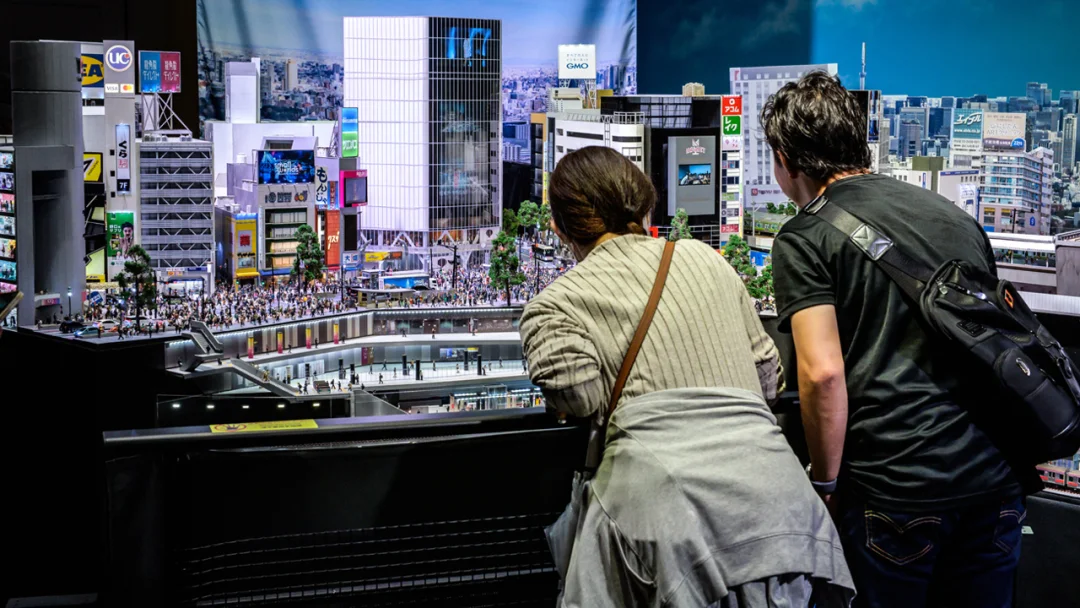
Visitors intently gazing at the "Shibuya" area.
What Irimajiri was particularly particular about was not simply scaling down the actual city, but rather creating something that "you can instantly recognize as Shibuya the moment you see it."
"How can we make this complex city look its most appealing? By slightly exaggerating the spatial relationships and scale, we can make it look even more 'Shibuya-like' than it actually is. That adjustment process is the most interesting part."
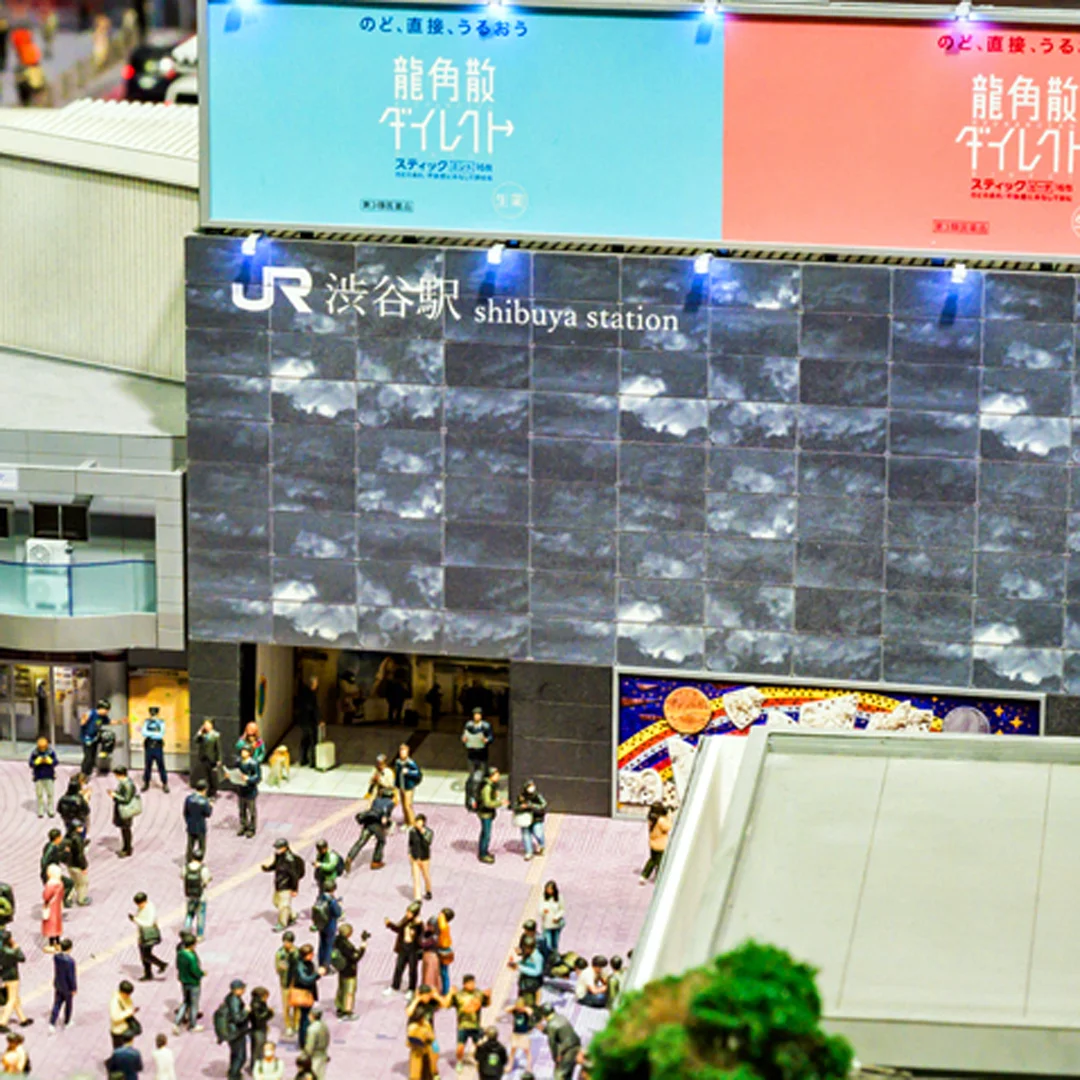
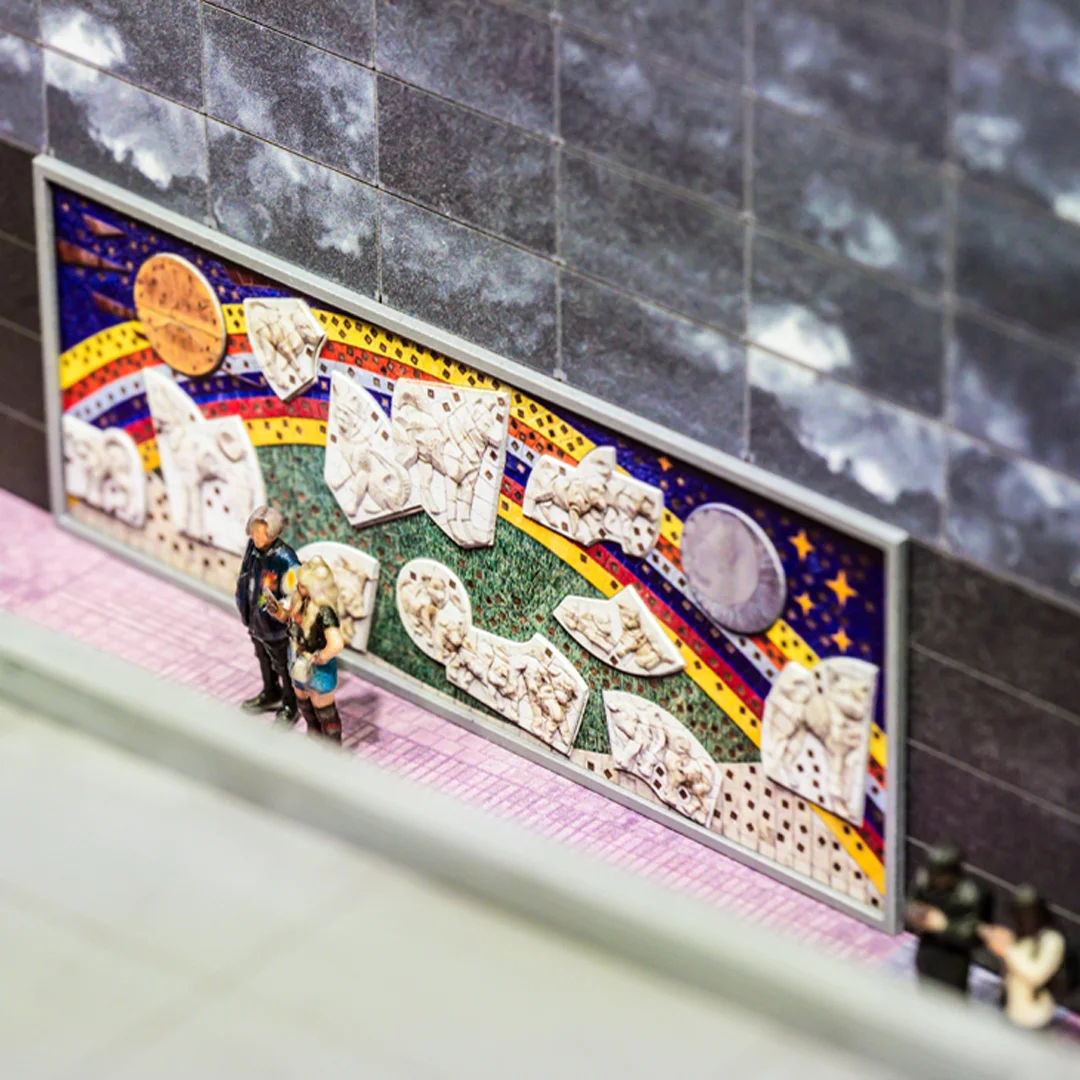
Left: Exterior view of JR Shibuya Station before redevelopment. Right: Relief of the Hachiko family that was once on the station wall.
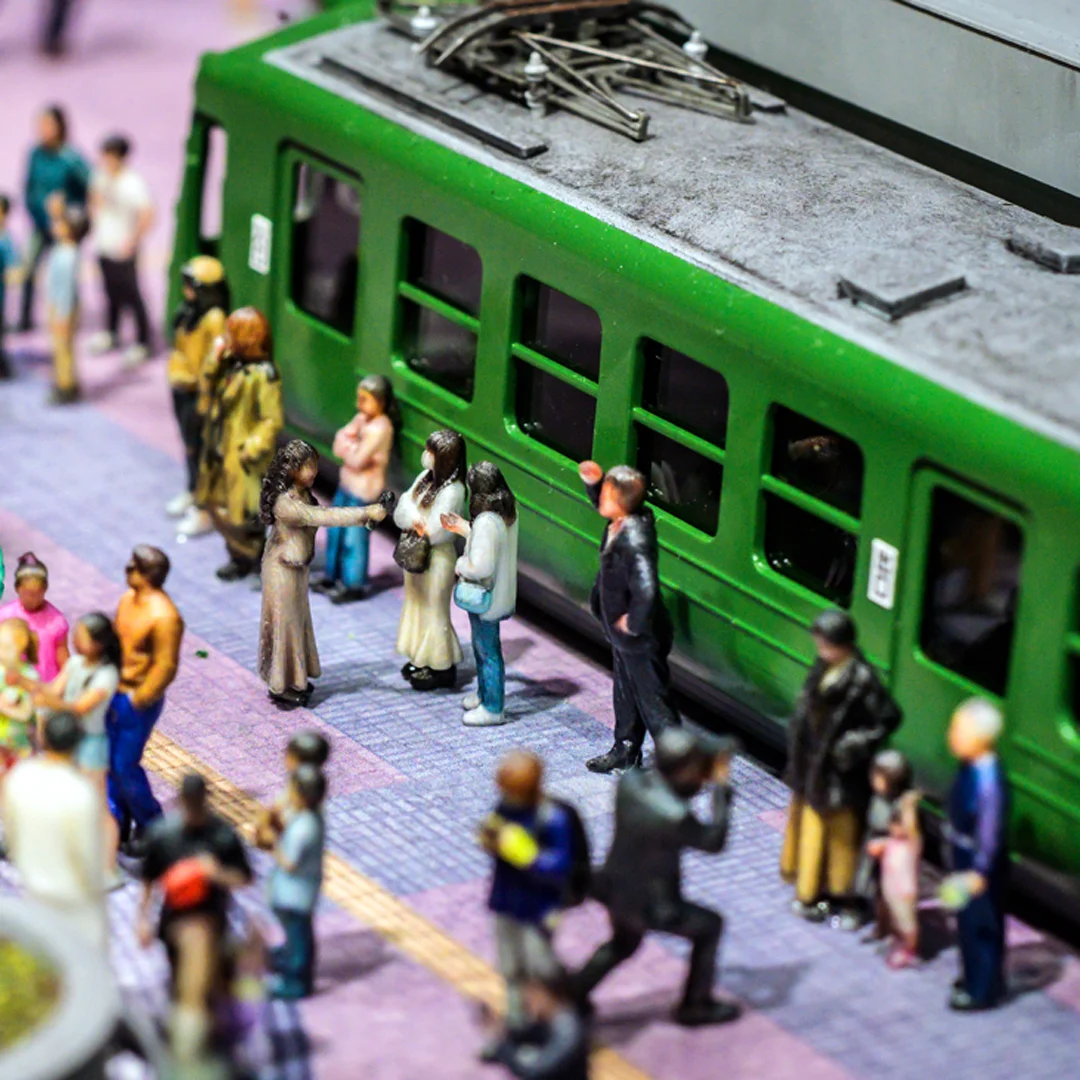
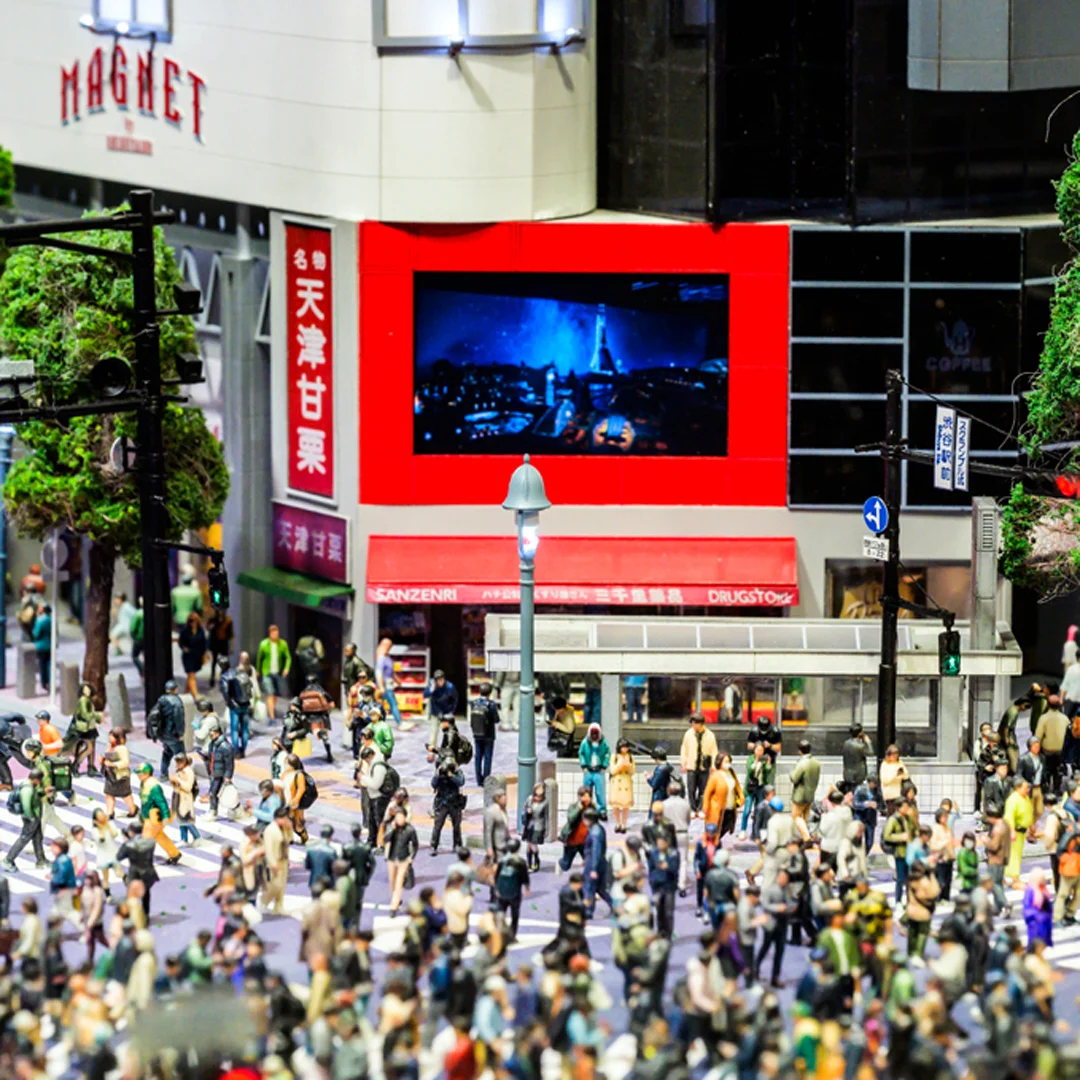
Left: The first Tokyu 5000 series train, affectionately known as "Aogaeru" (Green Frog) (now relocated to Odate City, Akita Prefecture) Right: "Sanri Pharmacy," which closed in December 2024
Therefore, the diorama incorporates not only the Shibuya of today but also the Shibuya of memories. Elements that make viewers feel "this is Shibuya" are placed throughout, such as the "JR Shibuya Station" before the redevelopment began, which can no longer be seen, the "Hachiko Family mural on the station wall," the "first generation Tokyu 5000 series train (nicknamed "Aogaeru")," and "Sanri Pharmacy." On the other hand, facilities that have been newly created as a result of the Shibuya Sakura Stage redevelopment, such as the "JR Shibuya Station New South Exit ticket gate," are also recreated.
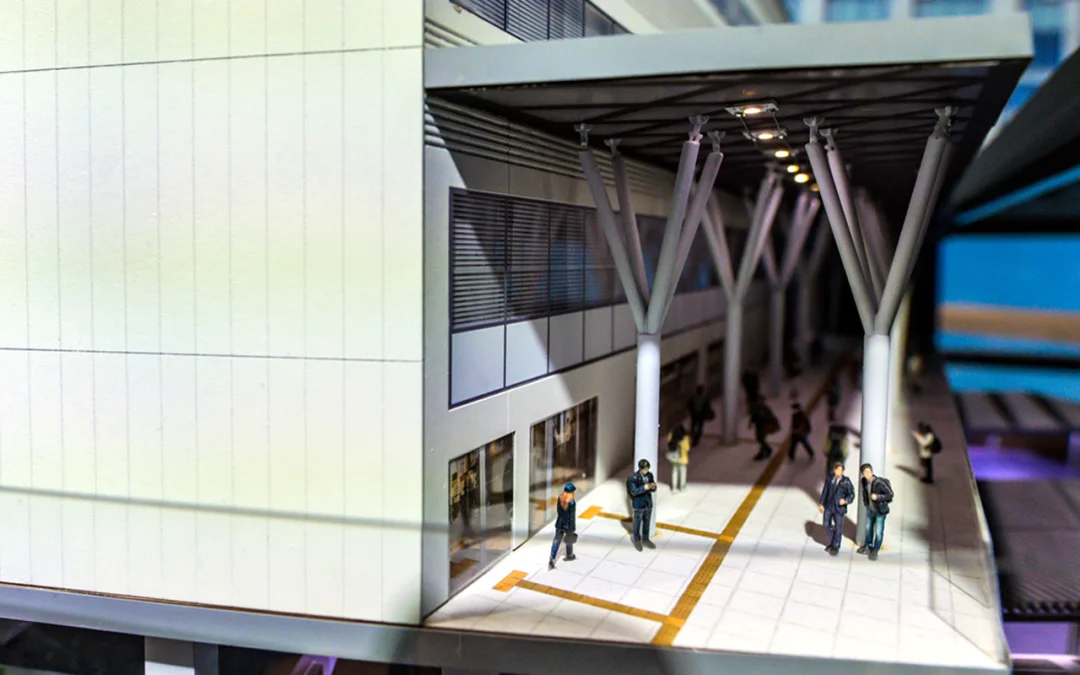
The "JR Shibuya Station New South Ticket Gate," which was relocated in July 2024, is located on the north side free passage that crosses over the JR lines.
"We picked out the 'most Shibuya-like aspects' from everyone's memories and created this piece by blending the current state of Shibuya with the Shibuya scenes from their memories."
A panoramic view from the 5th basement floor to the 47th floor above ground.
The main attraction is the three-dimensional structure that allows you to see the underground and above ground as one. Shibuya Station is a complex network of subway, JR, and private railway lines, with underground passages and commercial facilities intersecting in a multi-level fashion. Its complexity often leads to it being called a "dungeon" (underground labyrinth). This diorama attempts to present the complex multi-layered structure, from the 5th underground floor to the 47th above ground, as a single, integrated whole.
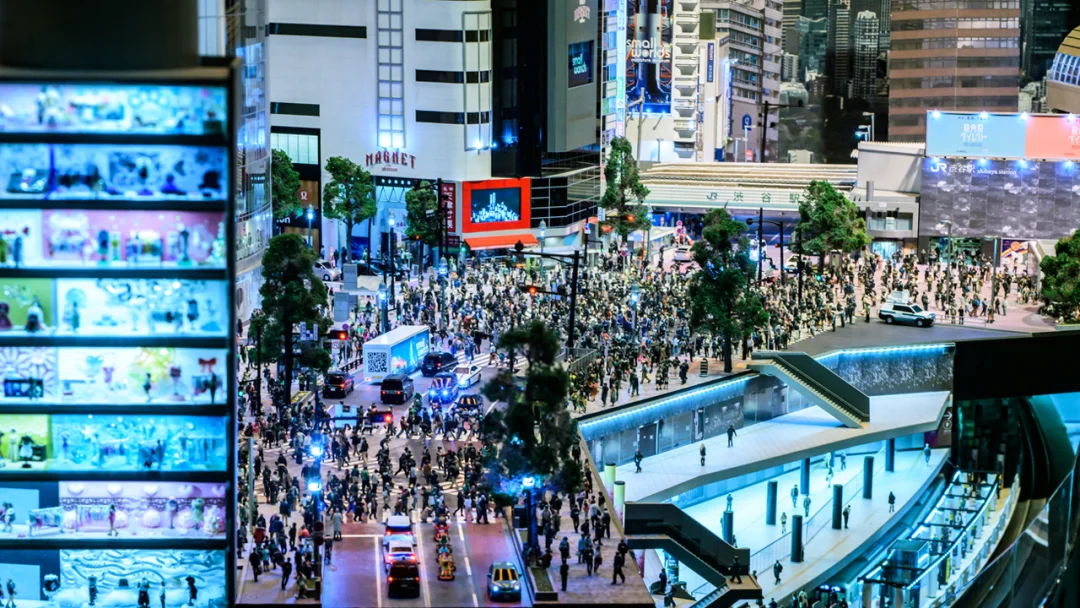
From above ground to underground, this diorama depicts the "city of Shibuya" in a way that is not visible in reality.
"I don't think there are many dioramas that recreate the underground as well. Shibuya is a city that developed vertically, not horizontally. The biggest strength of this diorama is that you can see its complex structure, including the underground. Because it's a perspective you can't see in the actual city, you can understand how the city is built. I hope you enjoy it as if you were a giant looking down on the city."
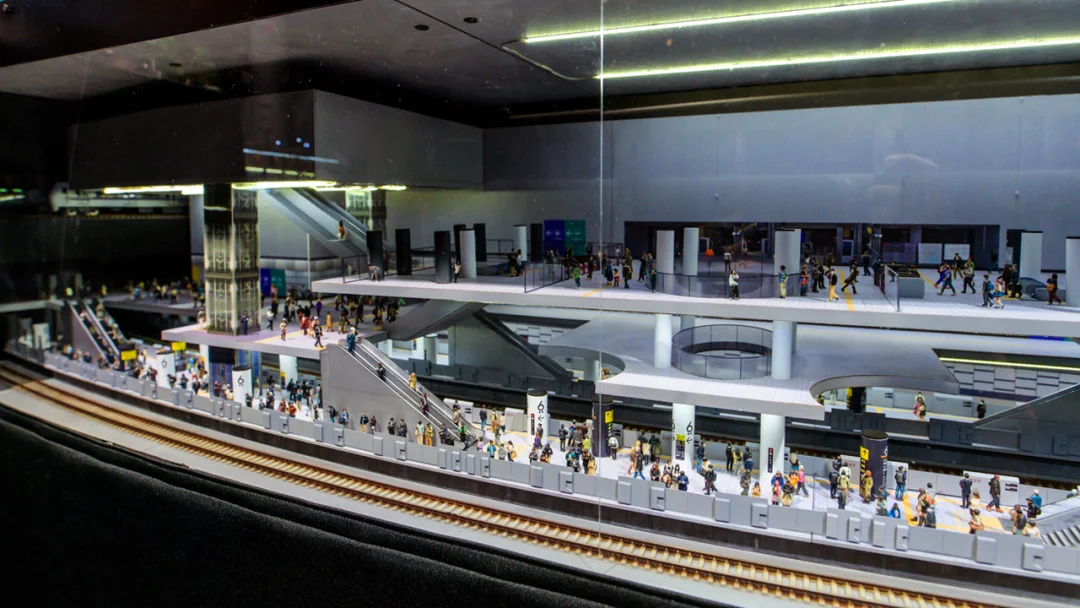
A meticulous recreation of Shibuya's underground concourse, ticket gates, and subway platforms.
Dioramas allow you to capture everything in one view: the flow of people on the ground, the railways running underground, the skyscrapers, and even the small details of street corners. Focusing on the details reveals the everyday life of the city, while a bird's-eye view reveals the organically interconnected structure of the urban landscape. One of the joys of viewing dioramas is discovering the origins of a city that you wouldn't normally see just by walking around.
Urban development created through digital technology and craftsmanship
Preparations for the diorama began at the end of last year, and full-scale production started in January of this year, taking approximately six months to complete. Prior to production, Irimajiri spent three days walking around Shibuya with a 360-degree camera, thoroughly photographing not only buildings and streetscapes, but also alleys and underground entrances.
"We created 3D data manually based on the video footage, and then, to make it easier to view as a diorama, we adjusted the scale and deformed the design in some areas. We created unfolded drawings for each building and disassembled and assembled them part by part on the 3D screen. We created about 35 buildings in Shibuya, and many of them were large buildings, so that alone was a considerable amount of work."
One of the major features is the "day and night lighting effects," which is another example of how digital technology and craftsmanship are fused together. In the diorama, day and night switch approximately every 10 minutes, and the same cityscape takes on a completely different appearance depending on the time of day.
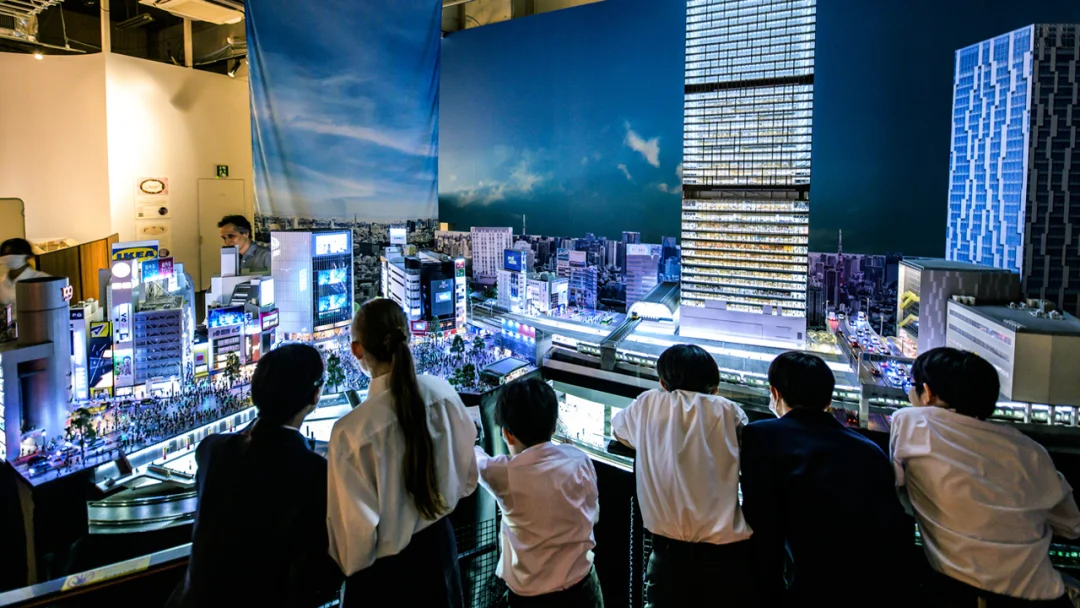
The lighting changes every 10 minutes, and you can also enjoy the night view of Shibuya.
In particular, the East Tower of SHIBUYA SCRAMBLE SQUARE, which "required a month to produce," incorporates approximately 3,000 LEDs. At night, the lights illuminate the interior of the building, making the skyscraper, with its detailed recreation of each individual office room, stand out and creating a realistic urban nightscape.
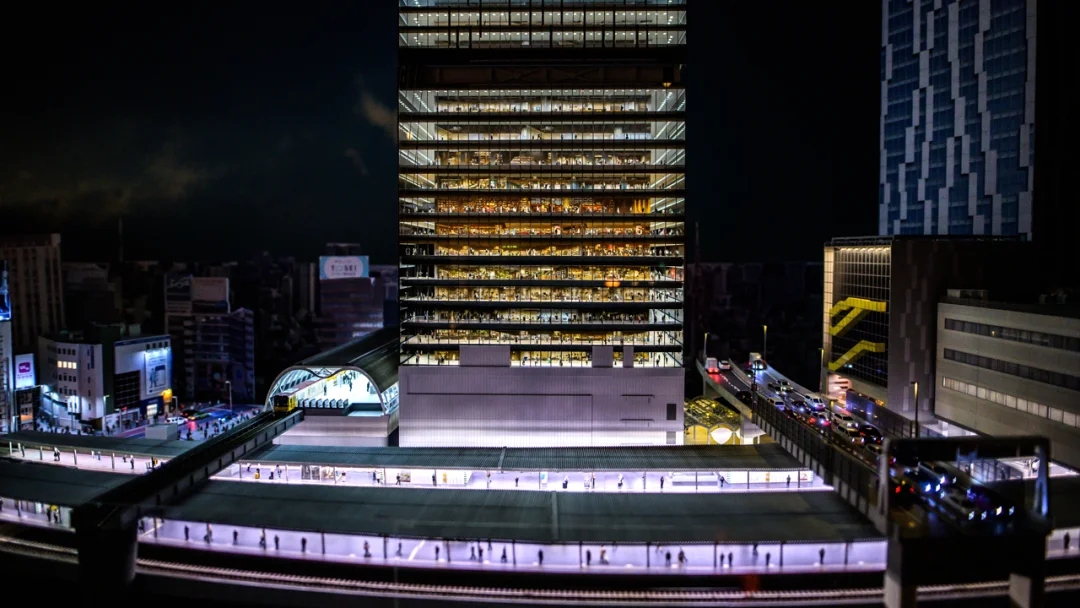
The "SHIBUYA SCRAMBLE SQUARE East Tower" incorporates approximately 3,000 LEDs.
"In typical architectural models, you usually put in one light to give the whole thing a soft glow, but in this diorama, I used about 3,000 LEDs, and I made it so that I could change the color and brightness of each one. At one point, some of the LEDs malfunctioned, and about 200 to 300 of them stopped working. Replacing all of them was a really tough job (laughs)."
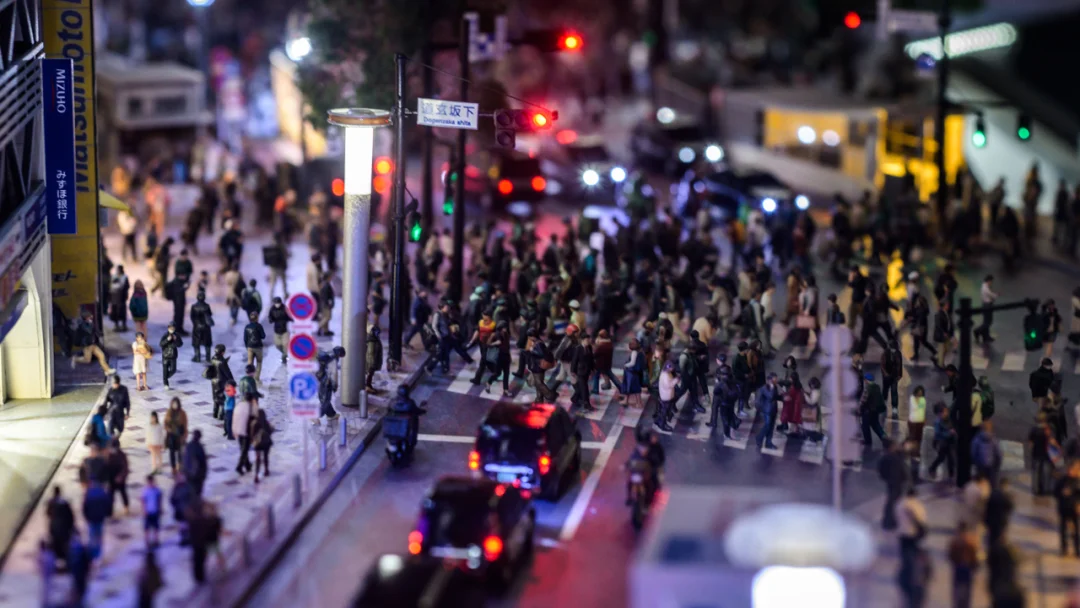
"The area in front of Shibuya Station at night" is a mix of streetlights, traffic lights, and car taillights.
While the attention to detail increases the workload, the indoor setting also allows for delicate LED lighting effects and large-screen video presentations. Irimajiri says he wants to "expand the possibilities of expression in indoor dioramas" and continues to explore new possibilities for urban representation.
5,000 figures create the everyday life and stories of Shibuya.
In addition to the railways and skyscrapers, what truly stands out in the Shibuya diorama are the approximately 5,000 human figures placed around the intersections and the area around the station.
Initially, the plan was to place around 10,000 figures, but when they actually lined them up, it became clear that there were too many people, and the highlights of the cityscape and buildings were lost in the mix. After much trial and error, they settled on "approximately 5,000 figures" to ensure that the expressions and movements of each individual were clearly conveyed.
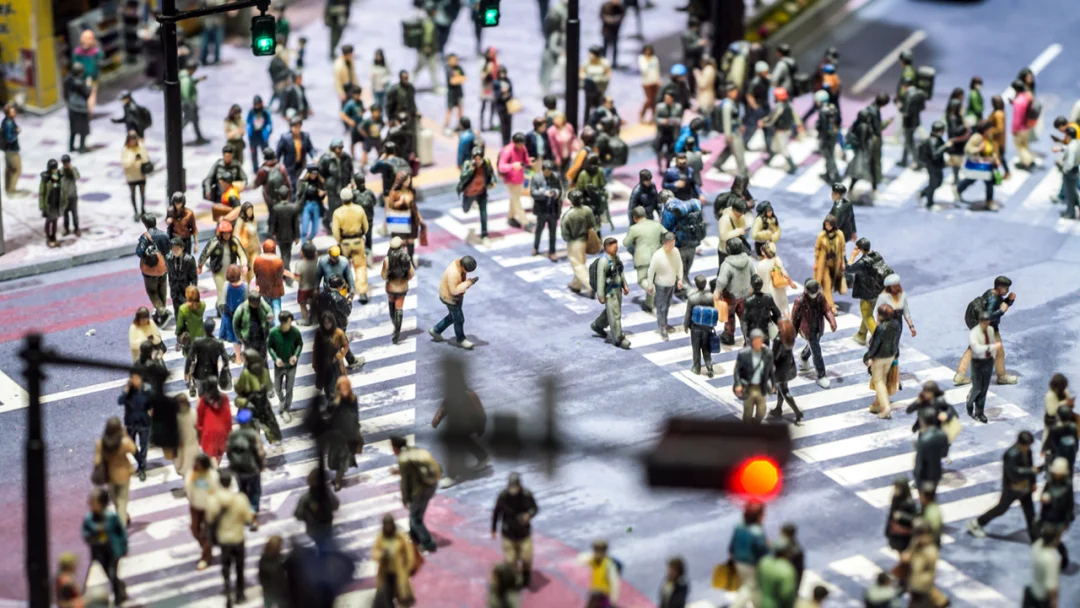
By placing figures with different appearances, movements, and clothing in various locations throughout the city, the diorama gains a sense of drama and vitality, reflecting the lives and actions of the people involved.
"Too many people can actually make it harder to appreciate the charm of the town. We put a lot of effort into the figures this time, so we thought this number was just right so that you could feel the story of each individual figure."
The figures are not off-the-shelf products, but original creations made using a full-color 3D printer based on 3D scan data of people. Care has also been taken to ensure that the clothing and poses do not overlap as much as possible.
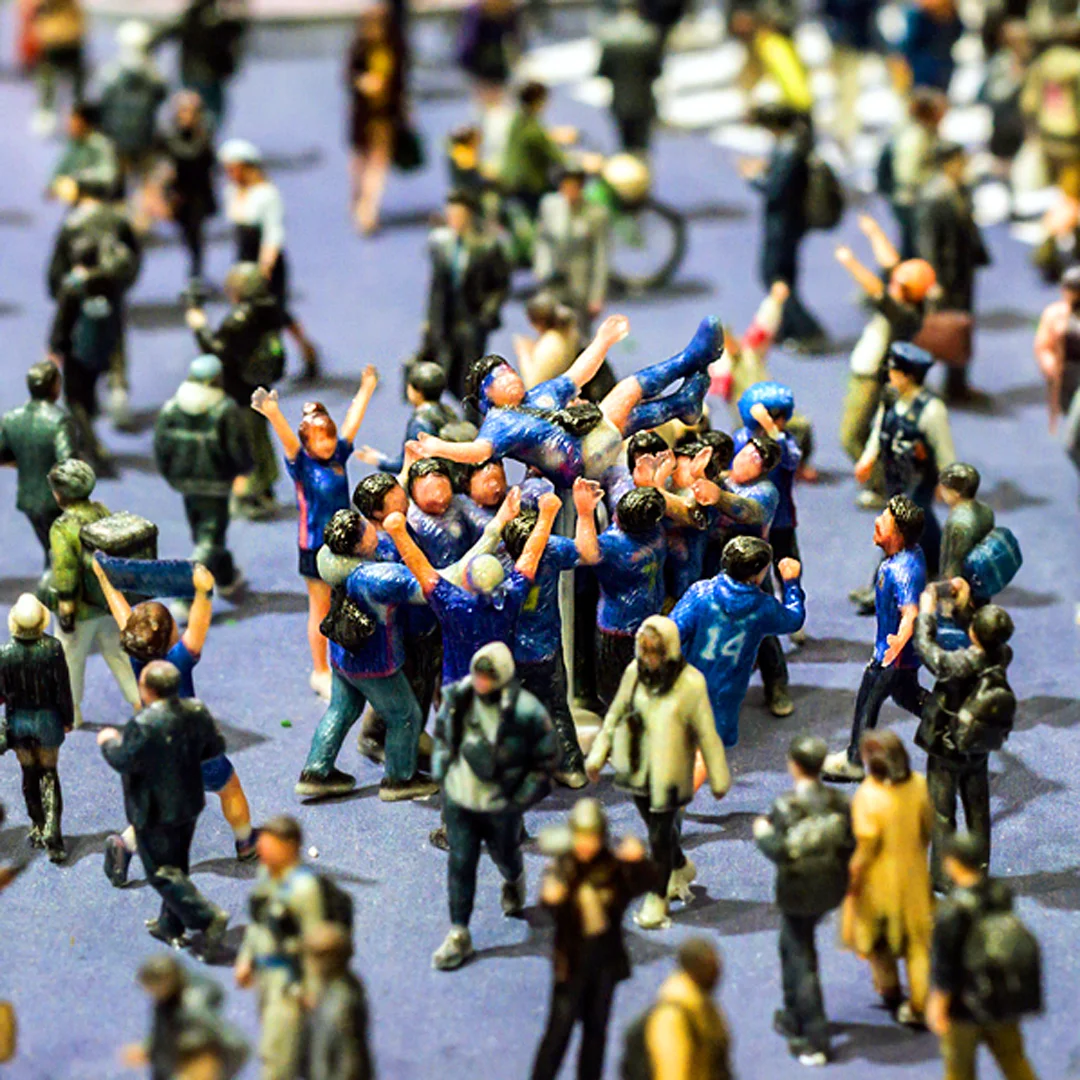
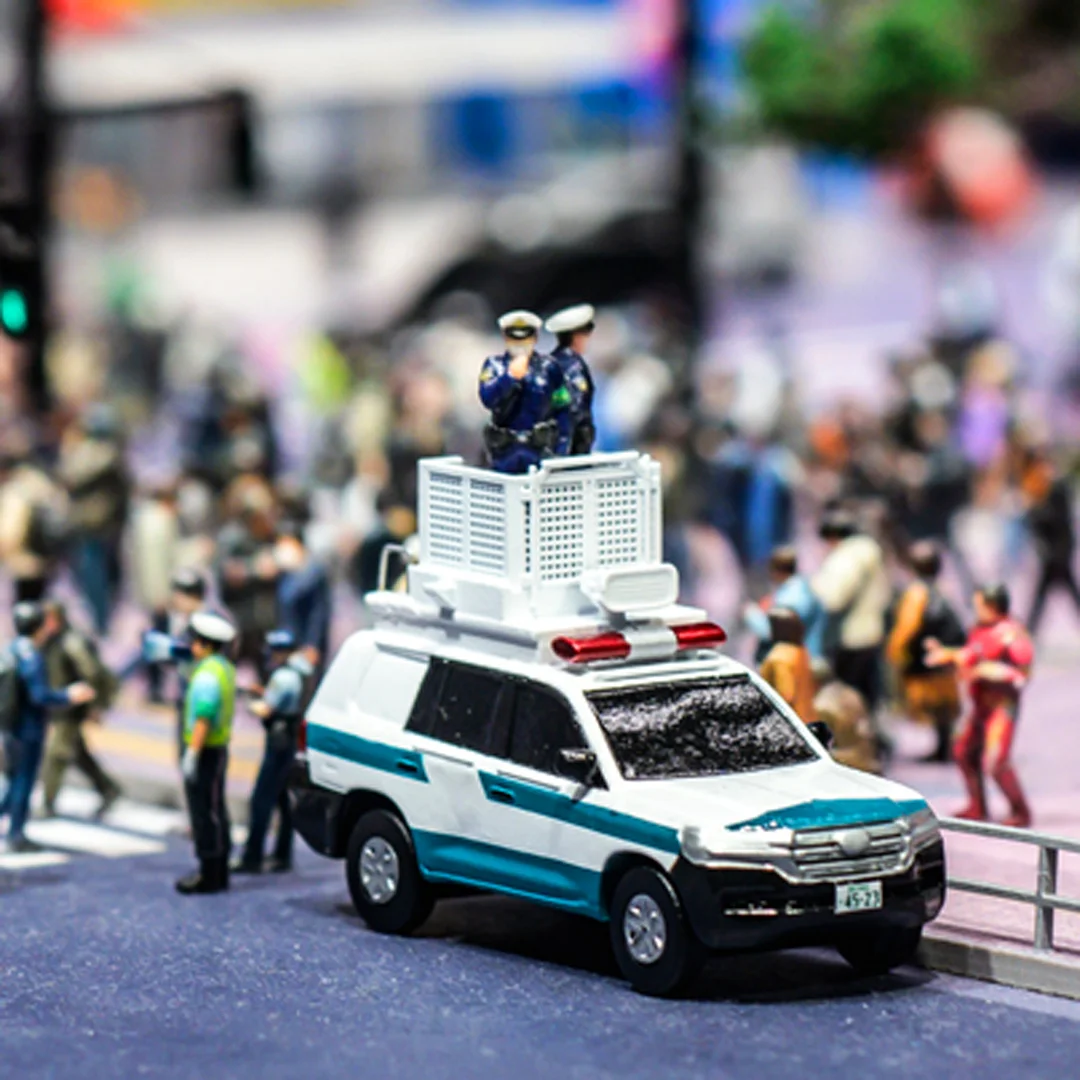
Left: Supporters celebrating a soccer victory. Right: DJ police officers directing traffic.
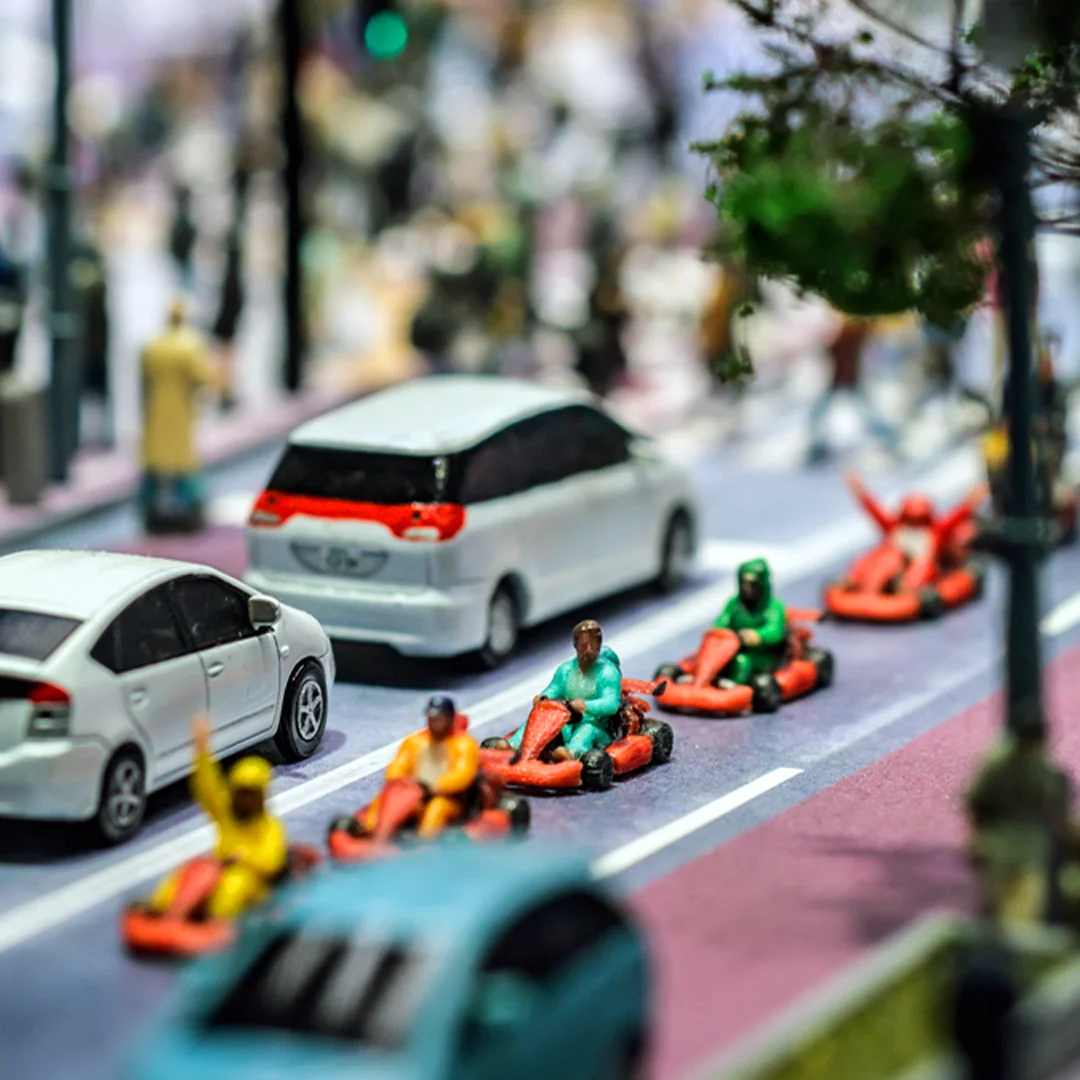
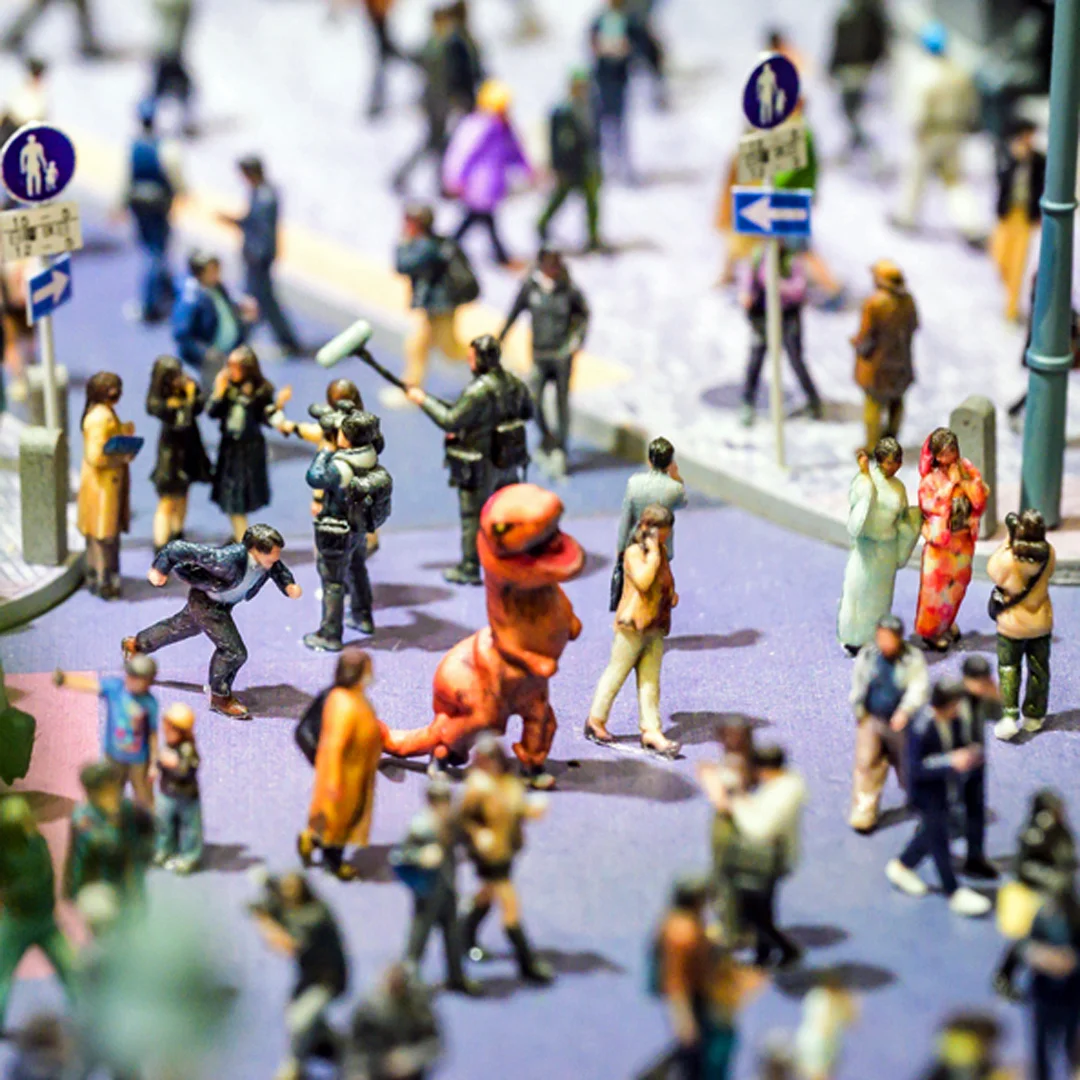
Left: Mario Kart, popular with inbound tourists. Right: High school girls being interviewed by a TV station, tourists in Halloween costumes, and others enjoying taking commemorative photos.
If you look closely at the intersections, street corners, and narrow alleys, you'll see a diverse array of people characteristic of Shibuya thriving throughout the city. From supporters cheering on the Japanese national team in the ongoing World Cup, to DJ police officers, Uber Eats delivery drivers, people riding LUUPs, tourists enjoying Mario Kart, young women, people being interviewed on television, and idols performing street live shows, people who symbolize modern Shibuya are scattered everywhere.
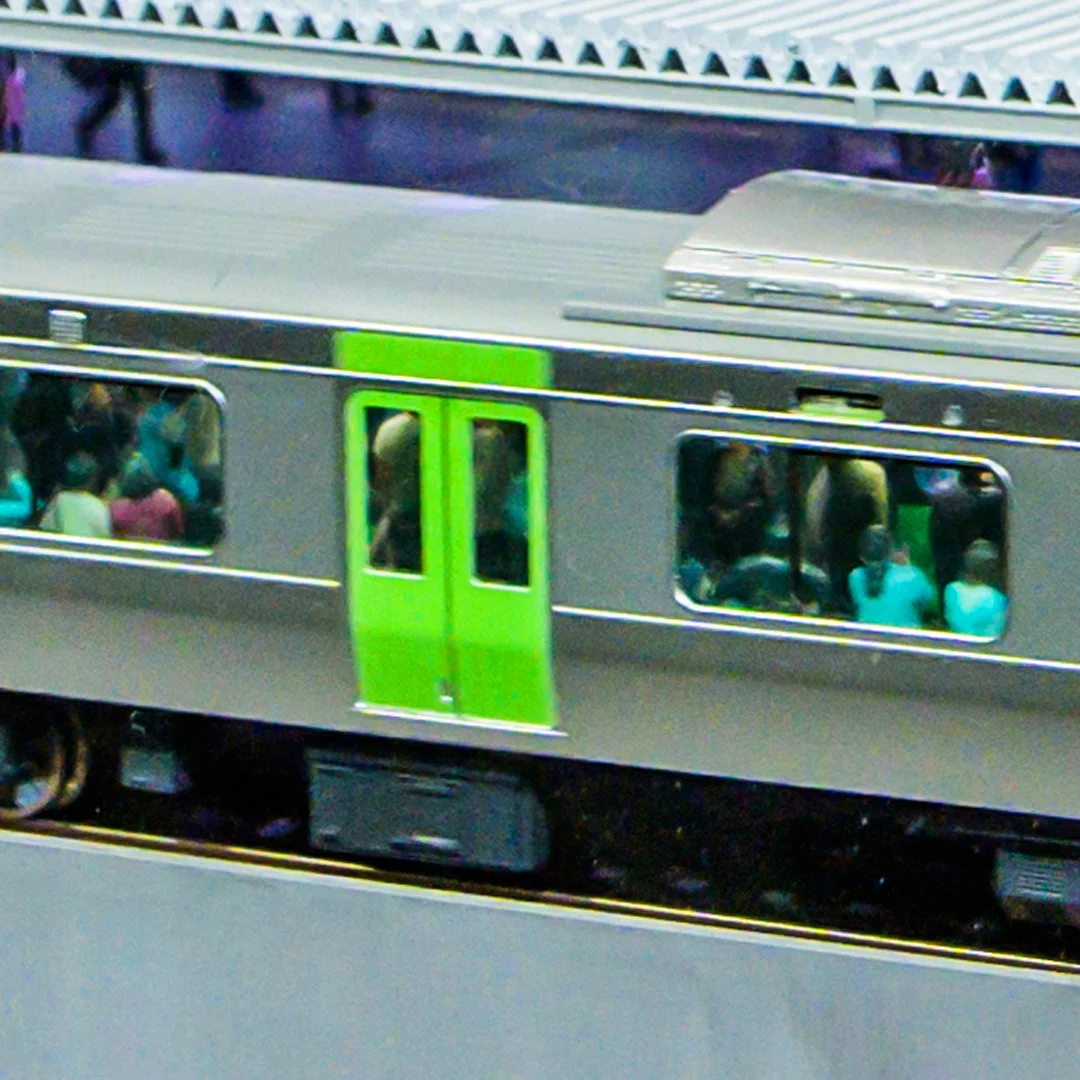
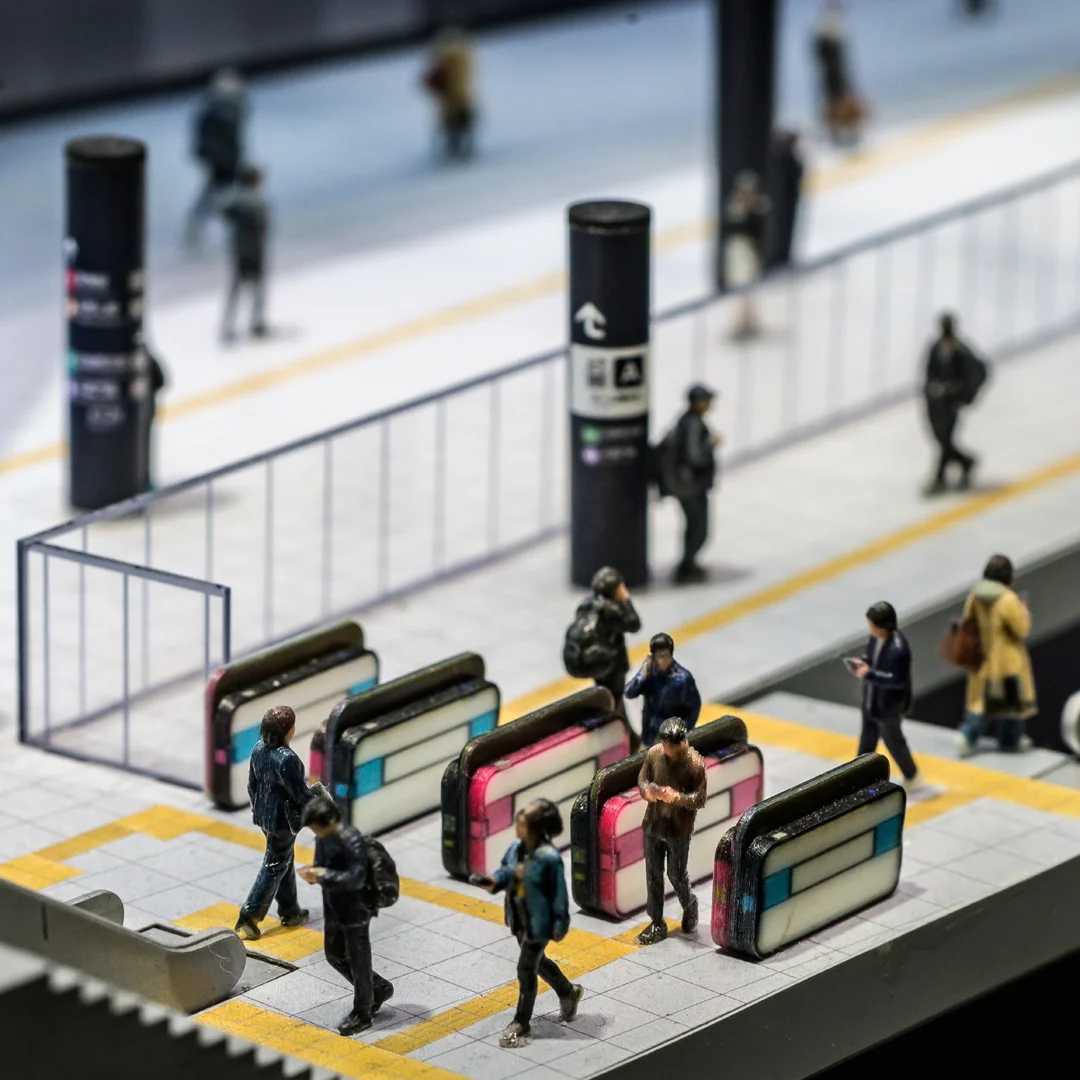
Left: Figures are placed inside the train. Departure melodies are played at stations, and announcements are heard inside the train. Right: Station ticket gates. The electronic sounds of "beep" and "beep-beep" that play when you hold up a transit IC card are played, as well as the occasional "beep-beep-beep" error sound that plays when the balance is insufficient. Attention has been paid to realistic sounds heard at stations, including the sound of the train running.
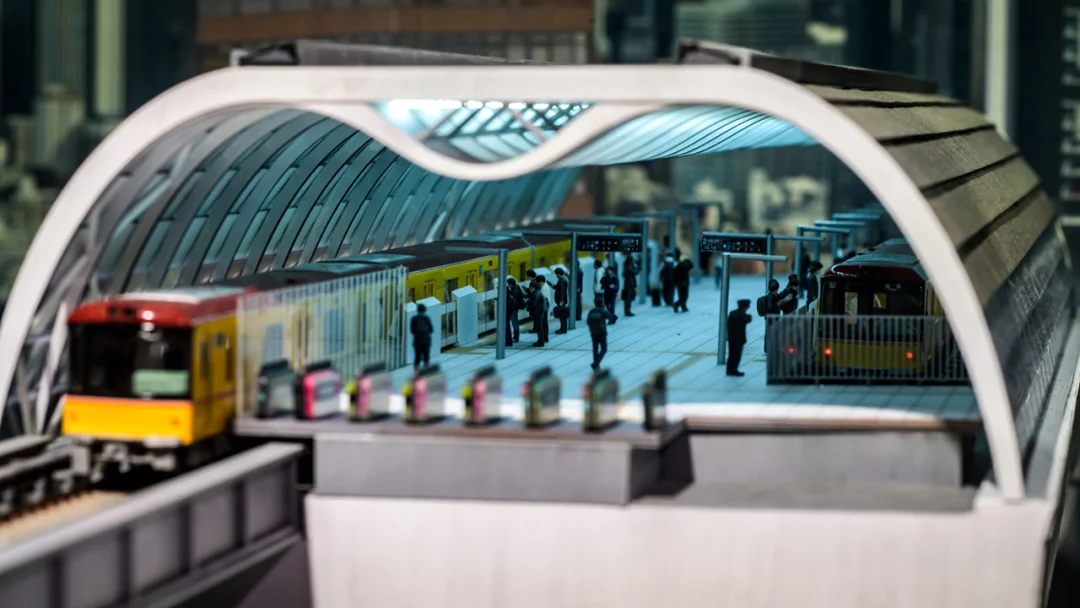
Shibuya Station on GINZA LINE is characterized by its M-shaped roof. In the future, there are plans to open a skywalk, called "Skyway," which will allow people to walk on top of the roof.
Furthermore, hundreds of figurines are placed not only on the roads but also inside the train cars, capturing the atmosphere of the entire city while paying attention to the feel of each station and line.
"I wanted to reflect the current zeitgeist of Shibuya. The figures of supporters cheering on the Japanese national team at the Shibuya Scramble Crossing were added after the resounding victory against Tunisia (laughs)."
Furthermore, the central section of the Shibuya Scramble Crossing uses a system that allows for easy removal and replacement. Therefore, the plan is to update the streetscape by changing the roads and figures to match seasonal events such as summer Bon Odori festivals and autumn Halloween celebrations. This kind of flexible presentation is a "strength unique to permanent exhibitions."
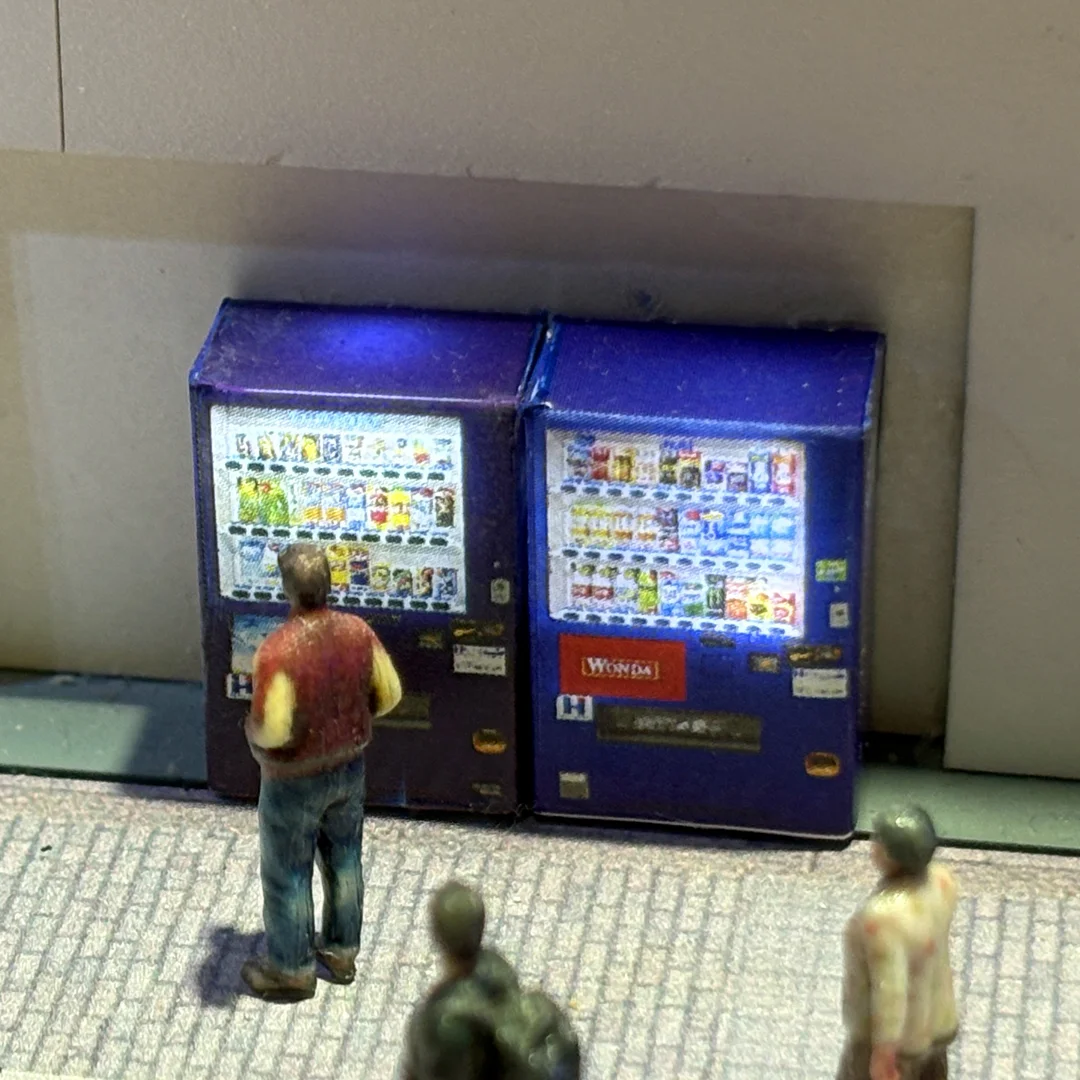
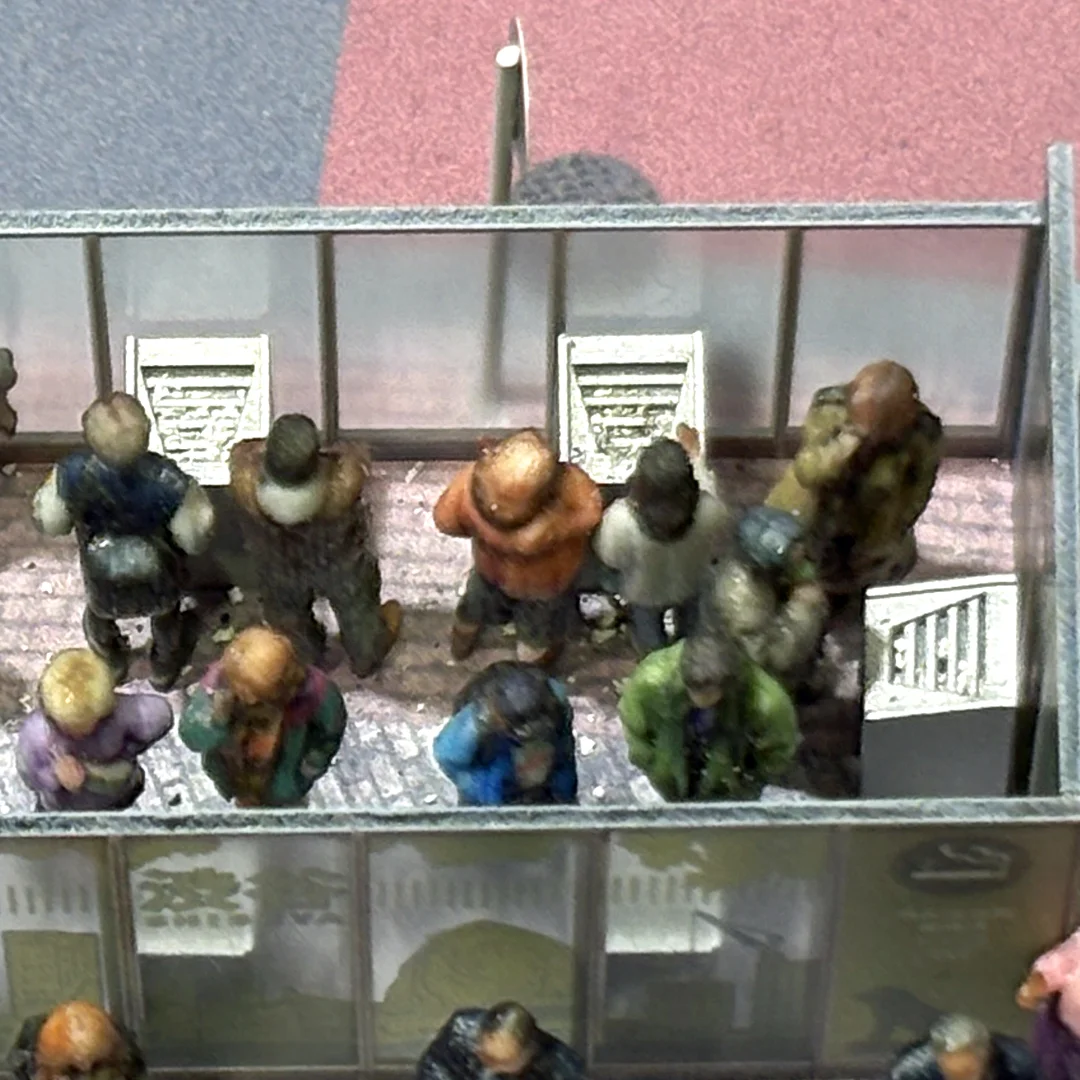
Left: Vending machine in the city. Right: Ashtray filled with cigarette butts in a smoking area.
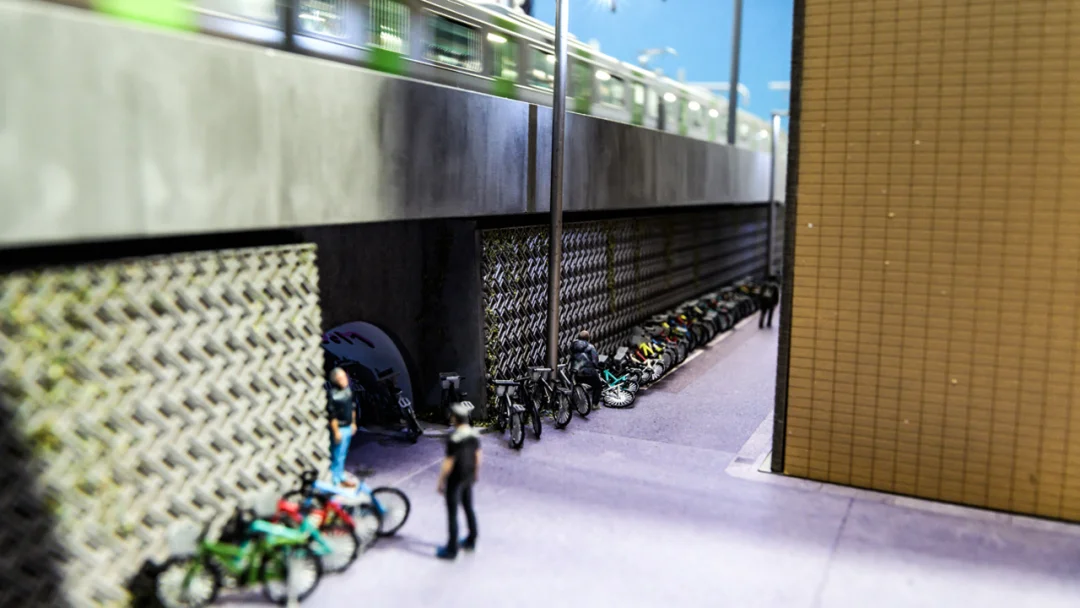
Bicycles lined up next to the entrance of the railway tunnel under the JR elevated tracks in Shibuya. In the back right, there is a person who has knocked over their bicycles like dominoes.
The meticulous attention to detail beyond the figures is also noteworthy. From vending machines in back alleys and fire hydrant poles to outdoor air conditioning units on building rooftops and cigarette butts in smoking areas, everything is carefully recreated. You can enjoy not only admiring the buildings and trains, but also strolling through the diorama, searching for the attention to detail and little touches scattered throughout the city.
Updates that change with redevelopment
How will the Shibuya diorama, which is still undergoing redevelopment, evolve in the future?
"It's hard to say for sure because of production costs, but I think that the new Shibuya landscape will become the standard for inbound tourists as the redevelopment progresses, so I'd like to keep up with that and update the diorama accordingly."
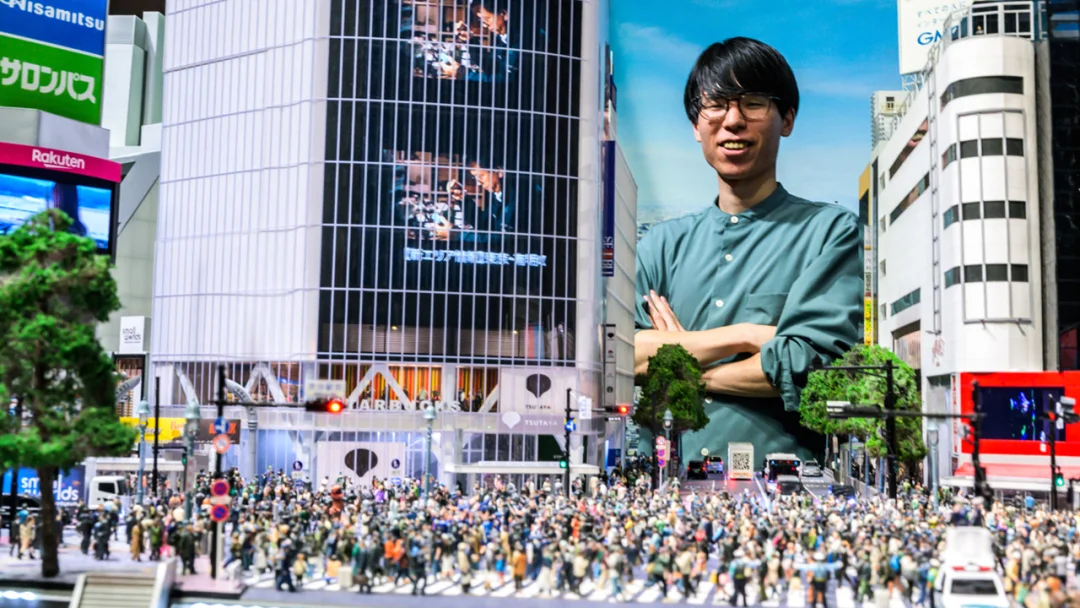
"I think it would be interesting to expand on areas that we haven't been able to recreate this time, such as Sakuragaoka and the east exit, and to recreate the old Shibuya that everyone is familiar with," says Irimajiri.
The video showcasing the diorama has garnered over 7 million views (as of June 2026), suggesting that further expansion and updates of the Shibuya diorama can be expected in the future.
What became clear through this interview is that this diorama is not merely an elaborate model, but a work of art that three-dimensionally represents the structure of the city, the flow of people, and even the memories of the times. You can view the above-ground and underground areas, which are not visible in reality, as a single unit, and scenes of Shibuya from a little while ago are mixed in, while the latest facilities and current events are quickly incorporated... It expresses the Shibuya that is uniquely Shibuya, combining realism and stylization. The more you look closely at the details, the more new discoveries you will make. The fact that you can find a different story each time you visit is surely one of the great pleasures of this diorama.
After walking around the real Shibuya, looking at this diorama reveals aspects of the city's structure and character that you might not normally notice. We hope you enjoy comparing the real Shibuya with the miniature version and making new discoveries.
- Small Worlds TOKYO
- Business hours: 9:00 - 19:00 (Last entry 18:00)
- Address: Ariake Logistics Center, 1-3-33 Ariake, Koto-ku, Tokyo
- Price: Adults 3,200 yen / Juniors (12-17 years old) 2,100 yen
Children (ages 4-11): 1,700 yen
*Free for children aged 3 and under - Official: DetailsThis direction
Interview and writing: Takashi Fujii / Photography: Osamu Matsuba
Venue
Genres within watch
Articles in the same genre

2026-10-01〜
THE HIKARIE WINDOW / Keisuke Hara ― 変わり続ける渋谷と、日常のリズム
2026-09-30〜
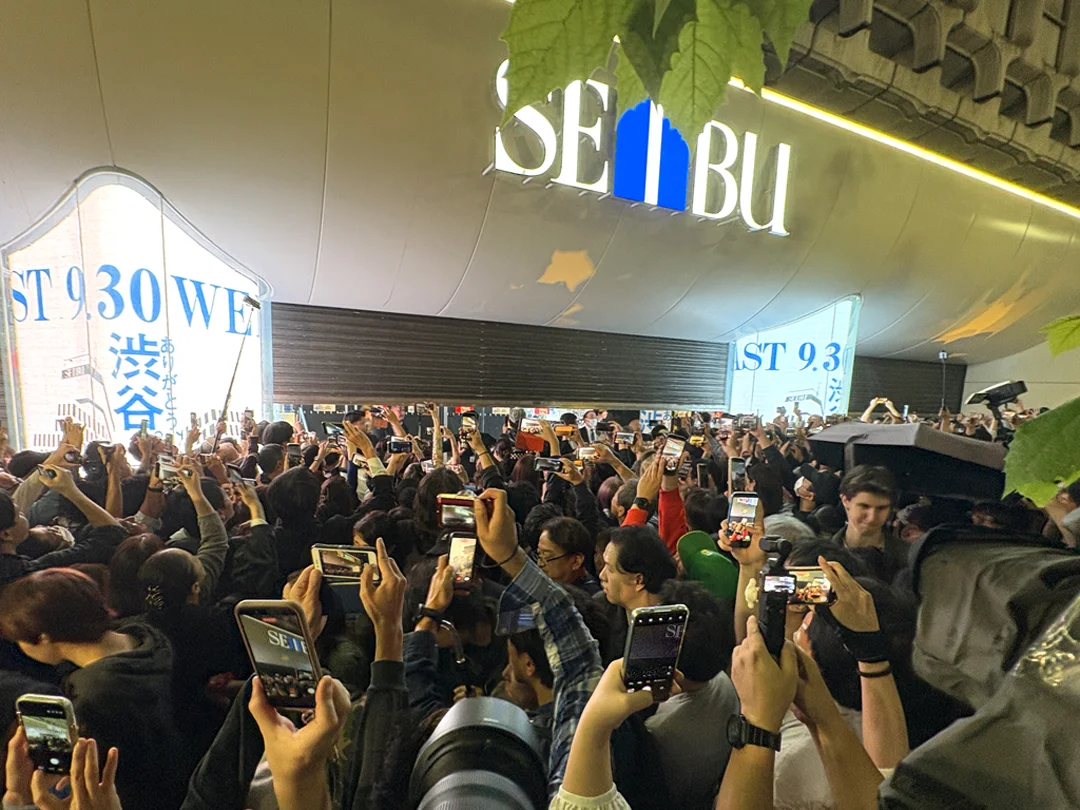
西武渋谷店、58年の歴史に幕 「シブヤ」をつくった百貨店、最後のシャッター
![[Shibuya Scenery Records Vol. 2] The "Onko Gakkai Kaikan" continues to preserve the legacy of blind scholar Hanawa Hokiichi](https://biz.shibuyabunka.com/storage/images/watch//1787122066.webp)
2026-09-02〜
[Shibuya Scenery Records Vol. 2] The "Onko Gakkai Kaikan" continues to preserve the legacy of blind scholar Hanawa Hokiichi
![[Report] Art exhibition at Shibuya Hikarie that encourages "play": Giant board game and table tennis with pots that make noise.](https://biz.shibuyabunka.com/storage/images/watch//1787381088.webp)
2026-08-22〜
[Report] Art exhibition at Shibuya Hikarie that encourages "play": Giant board game and table tennis with pots that make noise.
Featured articles on the site

代々木公園で「九州観光・物産フェア」 九州グルメ約100店、マグロ解体ショーも
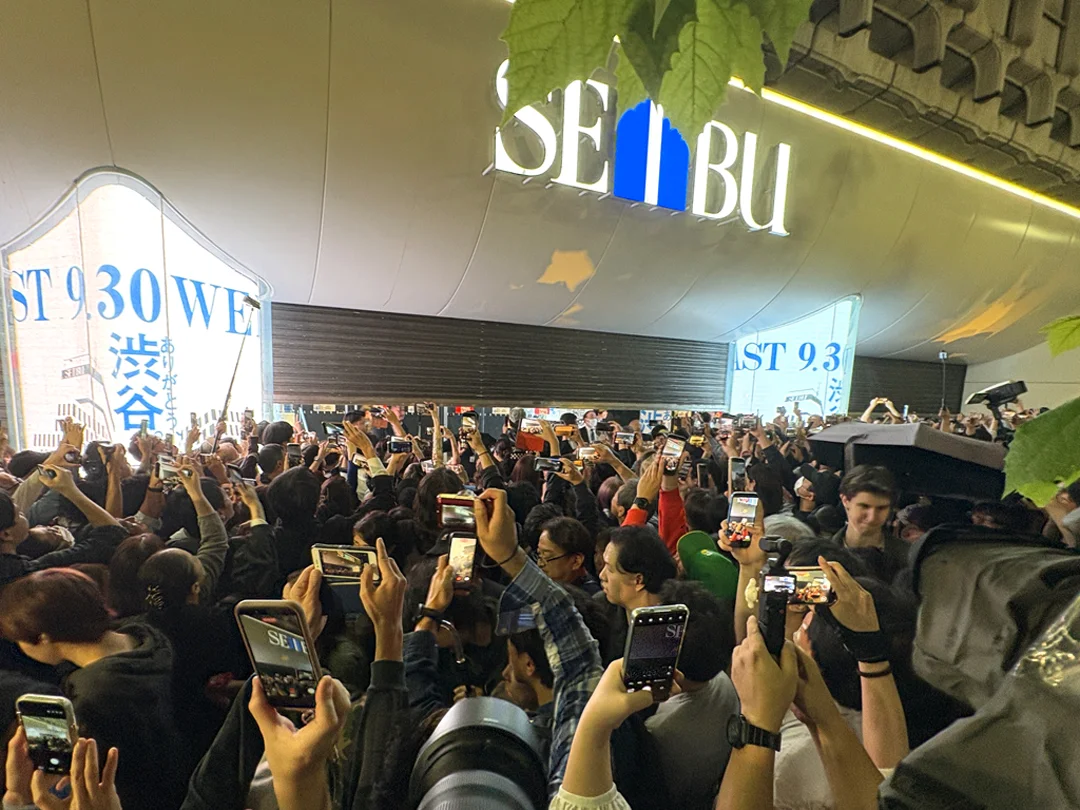
西武渋谷店、58年の歴史に幕 「シブヤ」をつくった百貨店、最後のシャッター

渋谷の肉料理おすすめ5選! 渋谷在勤・かごさんが厳選するお店を紹介