


SHIBUY.A. × INTERVIEW
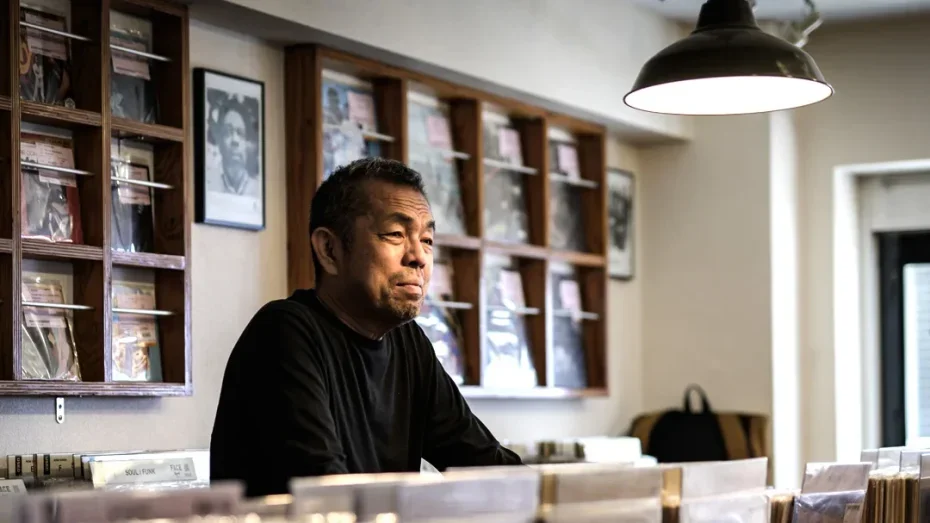
Chairman of the Board, FTF Corporation
<Part 1> Continuing to keep the flame of record culture alive and passing it on to the next generation from Shibuya.
2026-07-17
SHARE
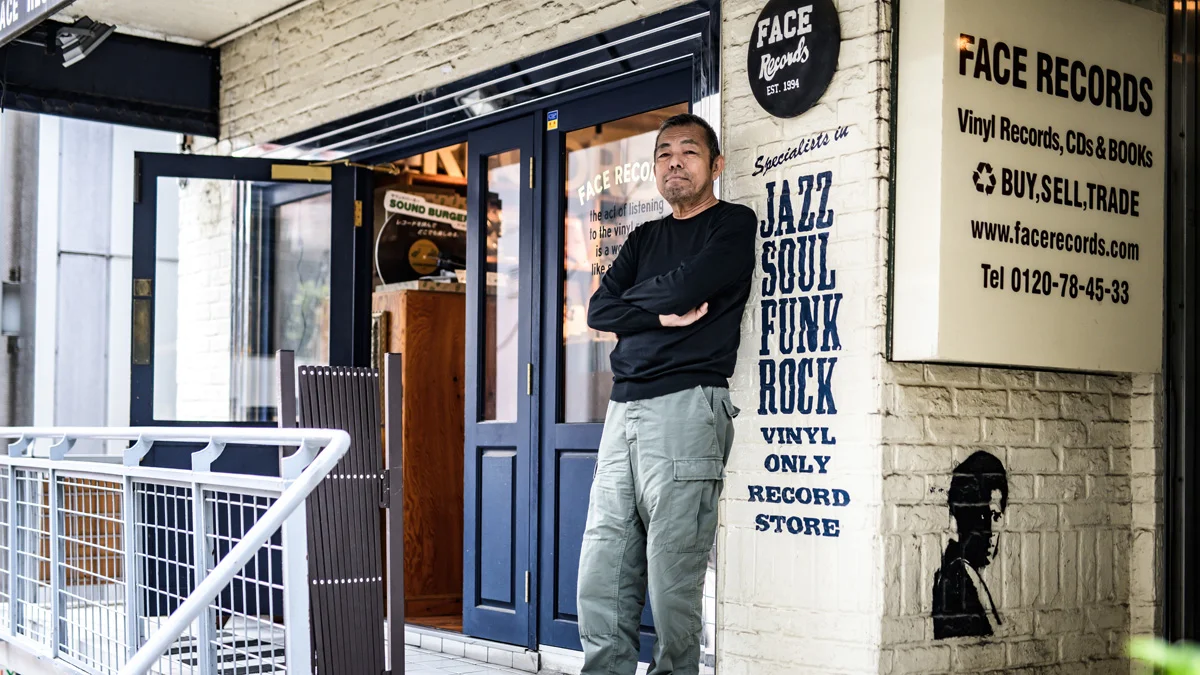
Born in Tochigi Prefecture. In 1994, he opened "Face Records," a mail-order only used record store, and in 1996, he opened a physical store in Udagawa-cho, Shibuya. In 2016, he opened "Face Records NYC" in New York City, USA. He currently serves as the Chairman of the Board of Directors of FTF Co., Ltd., which operates stores in Tokyo, Sapporo, Nagoya, Kyoto, Fukuoka, and New York. In May 2026, he published "The History of Record Stores in Shibuya ~ & Beyond: The History of Record Stores in Shibuya, and Something More," which unearths the memories of the city of Shibuya.
Shibuya's Udagawa-cho, a district densely packed with unique record shops, has attracted music fans from all over the world. Shinichi Takei, who has run the used record shop "Face Records" here for 30 years, is one of the people who have spearheaded Shibuya's record culture. We spoke with Mr. Takei, who has witnessed firsthand the changes in Udagawa-cho, also known as "Record Village," about the past and present of the area and the future of record culture.
I frequented Shibuya in search of new culture.
I also encountered record culture.
Please tell us about your formative experiences that drew you to culture, such as music and fashion.
I'm from Tochigi Prefecture, and ever since I was in junior high school, I'd read magazines like "POPEYE" and my longing for Tokyo grew stronger. So I started coming to Shibuya and Harajuku to buy clothes about once every six months. I was interested in music, but I wasn't yet at the point of buying records. It was then that I stumbled into a store called "GREEN ONIONS" in Udagawa-cho by chance, and that became a significant encounter for me.
Back then, the 1950s boom was in full swing, but most of the things you saw around town were reproductions. However, at GREEN ONIONS, they had records alongside original goods and signs. I thought, "These are the real thing," and even as a middle school student, I thought the aged, shabby look was cool. Looking back, that moment might have been the starting point of who I am today.
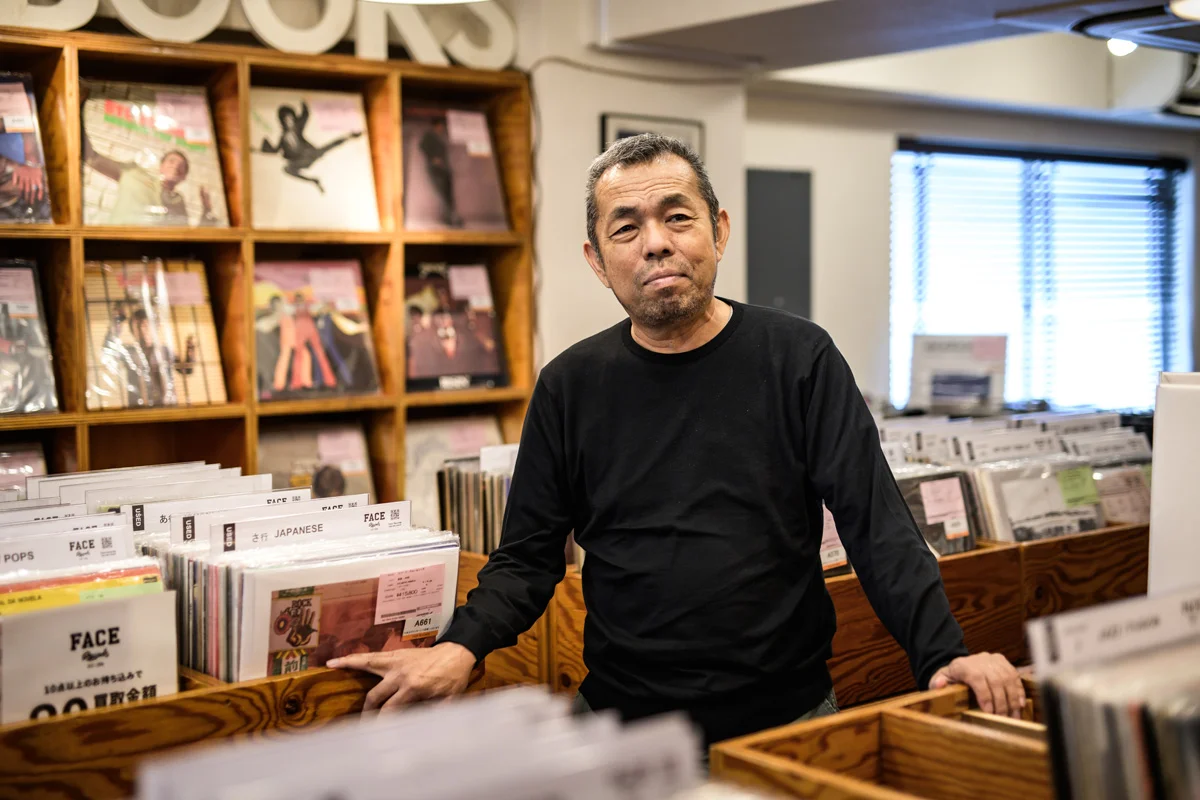
What was the trigger that made you seriously immerse yourself in the world of music?
My deep involvement in music was partly influenced by culture magazines. I devoured magazines like "Takarajima" that linked fashion and music, and at first, I even formed my own punk band and played music. Gradually, my interests expanded to include ska, reggae, jazz, soul, Latin, and Brazilian music.
A particularly significant turning point was the emergence of Hiroshi Fujiwara. He popularized the DJ style and showed young people that "this kind of expression is possible." I dropped out of high school and started working odd jobs, and from then on, I spent all my earnings on records. I started DJing at 17, and the amount of records I bought accelerated even more.
In the late 80s, the first DJ boom arrived, and Vestax began releasing inexpensive mixers for home use. It was around that time that Shigeichi Kuwahara founded the "Japan Music Selectors Association," and I thought, "I'd like to join something like that." I wasn't the type to pursue scratching; I was drawn to "old music" like reggae and punk. I guess I have a fundamental fondness for "old things." Around that time, there was a concentration of import record stores in Udagawa-cho, so the latest records from overseas were available in real time, and you could also get imported magazines at places like "Tower Books" inside Tower Records. Because both records and magazines were easily accessible, before I knew it, I was going to Shibuya more often than any other city.
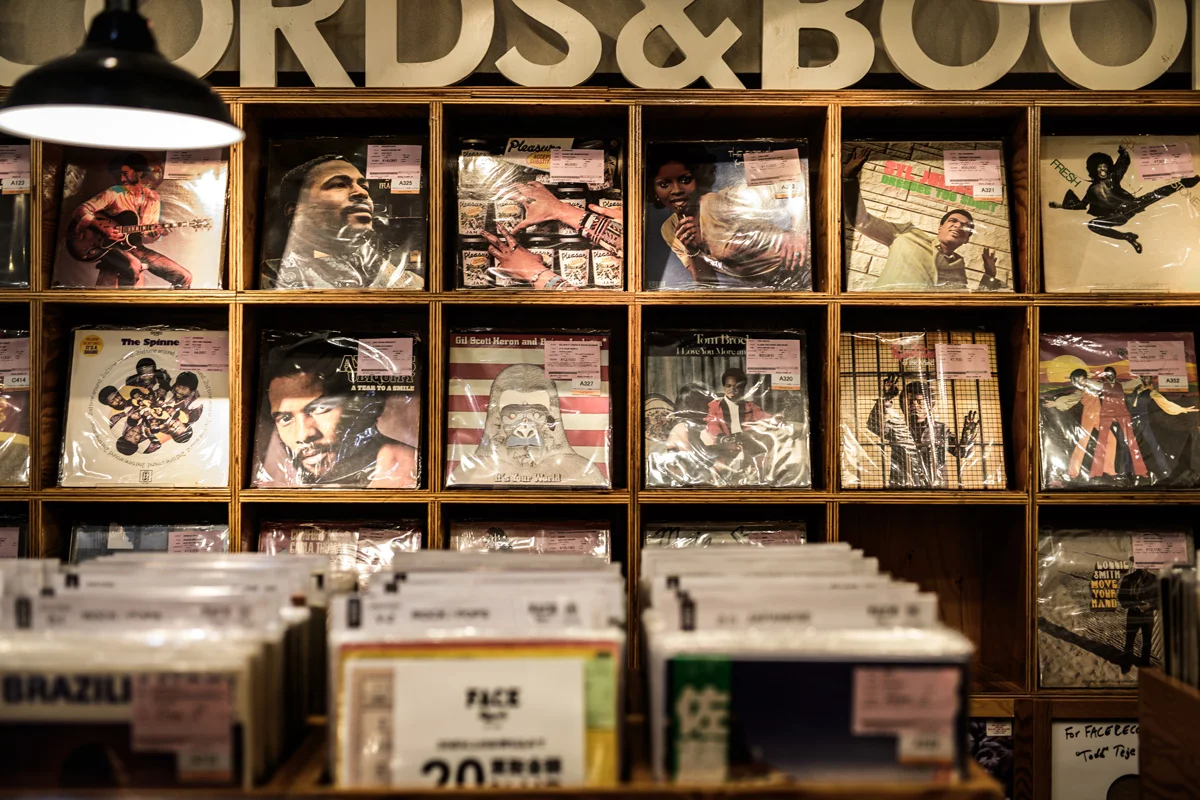
In the 90s, Udagawa
There was a "gap" where culture could be created.
Could you tell me how you came to open an import record shop?
My experience working part-time at an online record store was a major turning point. I also had the opportunity to go to London to buy records, which was a huge experience for me. At that time, London had mountains of records that hadn't yet made it to Japan, and they would sell out as soon as I brought them back. As I repeated the cycle of selling records and immediately going back to buy more, I felt the passion of the imported used record business firsthand.
After that, I had to close that store, and I was forced to do it myself, which was the direct reason for my independence. First, I started as an online-only store from my home in Yokohama. At that time, there were only about 50 online record stores in the whole country, so it was a rare existence. However, the concept of "working from home" didn't exist back then, so there were a lot of difficulties, and considering the future prospects, I decided to open a physical store in Shibuya in 1996.
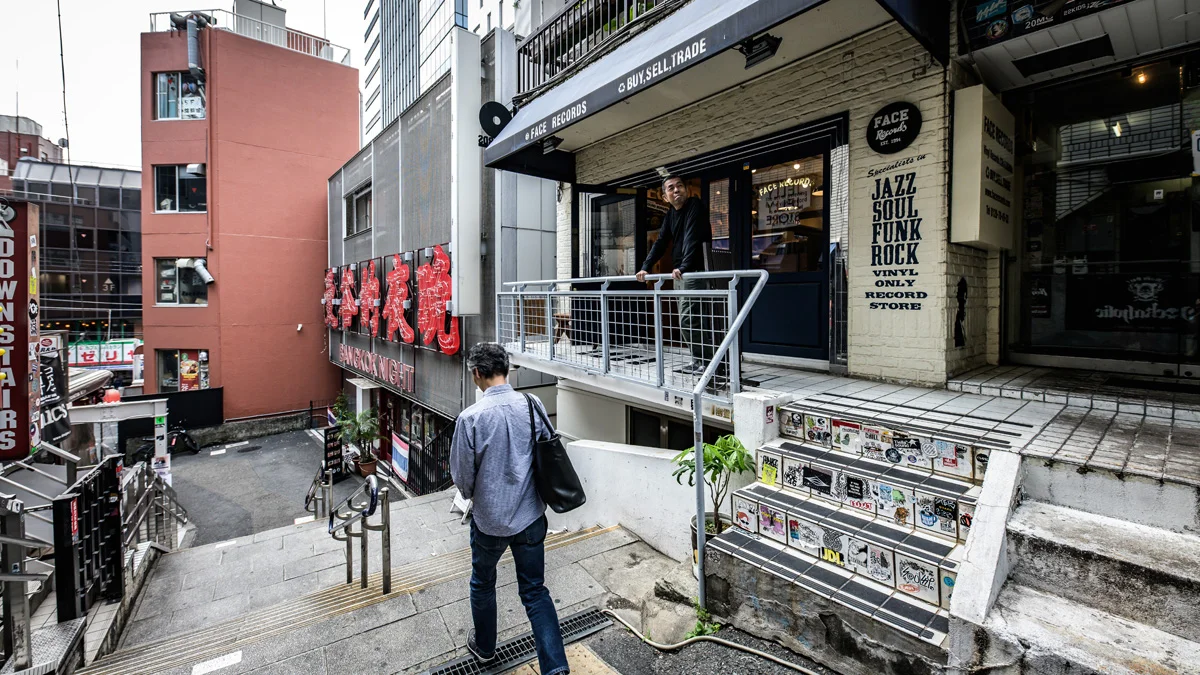
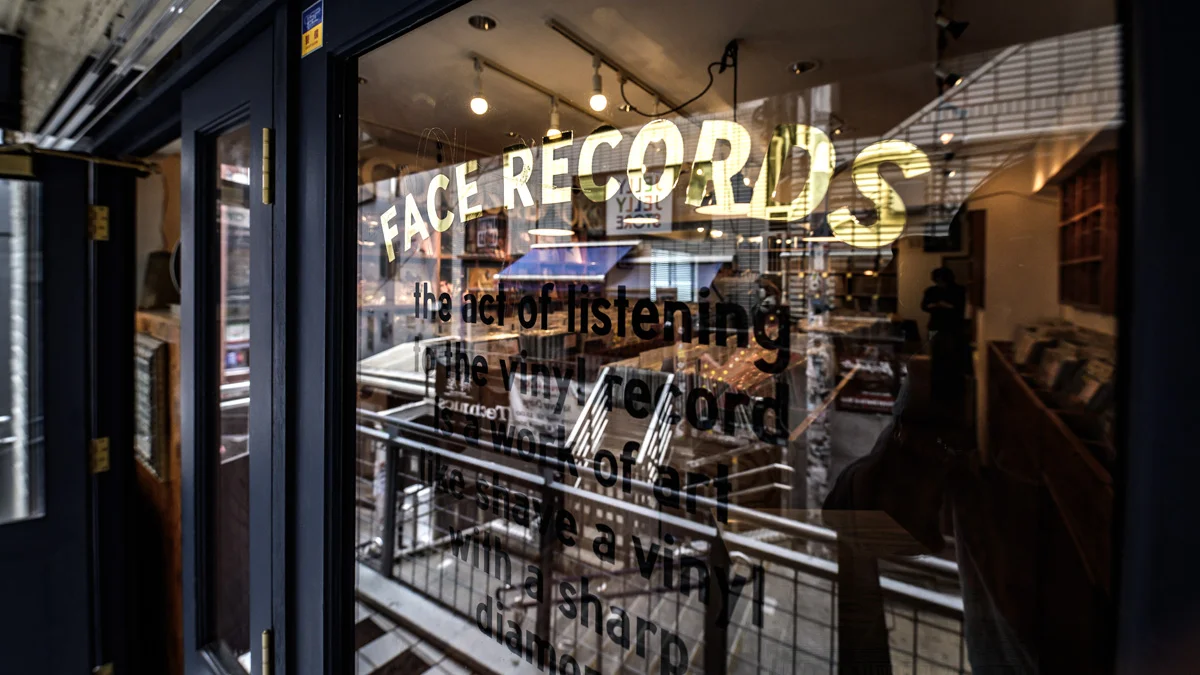
Face Records Shibuya store, located on Cisco Hill, is celebrating its 30th anniversary.
Could you tell us why you chose Udagawa-cho in Shibuya as the location for your store?
The biggest reason is that Manhattan Records moved to Udagawa-cho in 1992. For people who deal with black music, Masao Hirakawa of Manhattan Records is a highly respected figure, and his actions had a big impact on the entire industry. I think that's the main reason.
Shibuya back then had a slightly different atmosphere than it does now. There were still many private homes, old buildings, and vacant office buildings, and there were quite a few commercial properties with relatively cheap rent. Import record stores that brought in the latest records from overseas in real time were also concentrated there, making it a truly exciting environment for starting a record shop. I think culture was born from those kinds of "gaps."
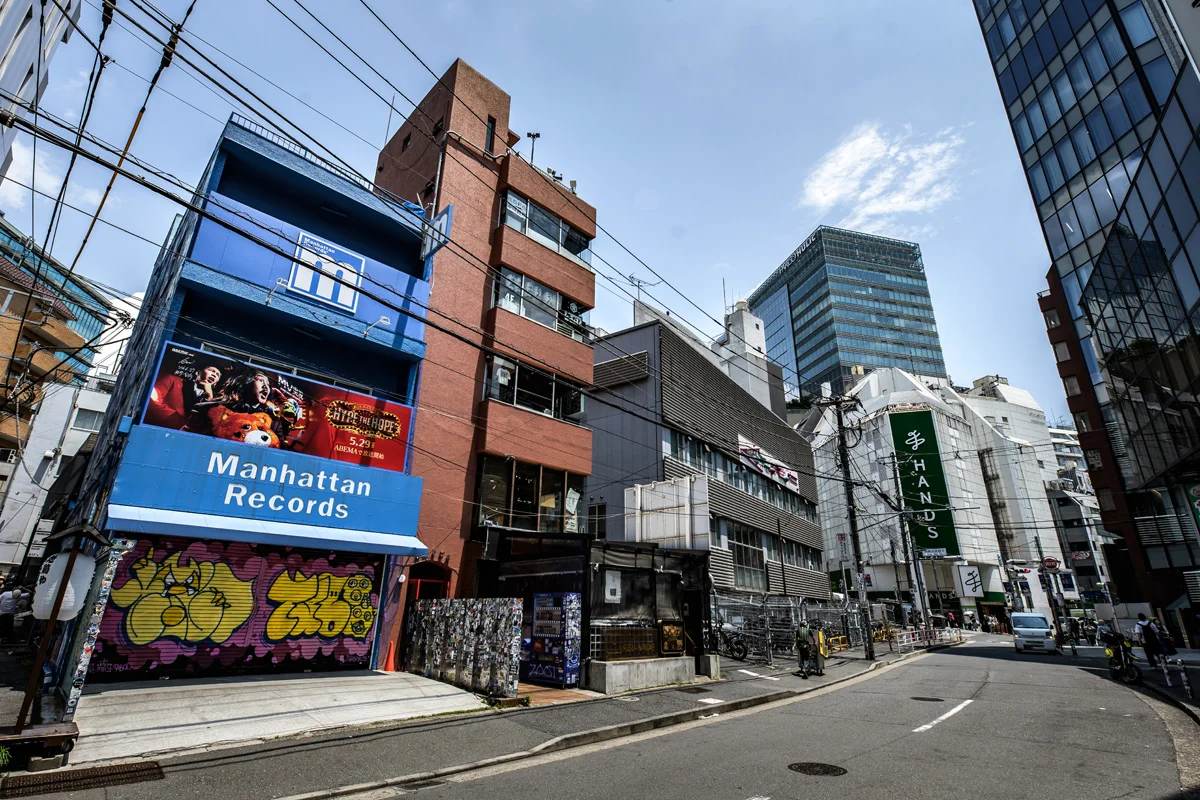
Manhattan Records, located at the entrance to Cisco Hill, has been a driving force in Udagawa-cho's record culture.
The sheer volume and quantity of records from its heyday was overwhelming.
Vinyl diggers gathered from all over the world.
What was Shibuya like when it first opened?
Shibuya in 1996 was truly a time when record culture was on the rise to its peak. Leading stores like Tower Records, Manhattan Records, WAVE, CISCO, and Dance Music Records lined the streets, and the act of buying records itself was more popular than it is today. In particular, Udagawa-cho was a rare area in the world where numerous specialty stores were crammed onto a single floor of a small building, creating a concentration of record shops.
Even though the internet didn't exist back then, the speed at which information about new arrivals spread was astonishing. Information spread like wildfire through word of mouth alone, and it was commonplace to see many young people lining up overnight on record release days. Also, many shop owners traveled the world themselves to buy records, so the overall selection in the city was overwhelming in both quality and quantity, with the latest releases from America and the UK appearing in stores with almost no time lag. That's why it became a kind of trend for overseas musicians and DJs to buy records in Shibuya when they visited Japan, and it was such a popular spot for vinyl diggers from all over the world that you'd even see the reverse phenomenon of DJs buying records in Los Angeles and then taking them back to Shibuya.
On the other hand, there wasn't much of a sense of solidarity among the shops. The shop owners were all kind of lone wolves (laughs). There were several attempts to form a union, but they all fizzled out in the end. Perhaps that individual dedication was what made the town so exciting.
What kind of changes did it undergo after its heyday?
Looking at the trend in the number of stores, I remember it peaking around 2001. The situation changed drastically after that. The closure of Cisco in 2008 was a symbolic event. A major factor in the decline was the wave of digitalization. With the emergence of download services like Napster and the iPod, as well as the spread of CDJs (CD player equipment), I myself felt that it was the end, and the headwinds were so strong. At its lowest point, I think there were only about 10 record stores left in Udagawa-cho.
However, on the other hand, a new set of values was emerging, a kind of backlash against the rapid digitalization. Around 2010, a new lifestyle of people called "hipsters" began to attract attention, mainly in Seattle and Brooklyn, New York. They enjoyed espresso and lattes at Starbucks, insisted on Made in the USA clothing, listened to music on their convenient iPhones, but had their own unique values, such as buying records of their favorite artists' works. I learned about this situation in America through Yumiko Sakuma's book "The Hip Lifestyle Revolution," and felt that "Japan will probably become like that someday," and I felt a definite possibility for the revival of analog. At the time, we were going through a tough time financially, but I felt that "there is nothing more fun than records," and my wife also encouraged me, saying, "Let's be the last one left." If I had to sum up the reason why I haven't closed the store until now in one word, I think it would be pride.
In the second part, we will delve into Mr. Takei's research activities, which unearth the memories of record culture hidden in Shibuya.
Interview and writing: Ryota Ninomiya / Photography: Osamu Matsuba
Featured articles on the site
#Shibuya Club Vol. 1 ~ Discussing "Innovation x Culture" in Shibuya
Interactive illuminations to open in Yoyogi Park: A 1.8-kilometer "Forest of Light" to begin in November.
Seibu Shibuya Store closes its doors after 58 years of history: The department store that created "Shibuya" marks the end of its history.