SHIBUY.A. × INTERVIEW
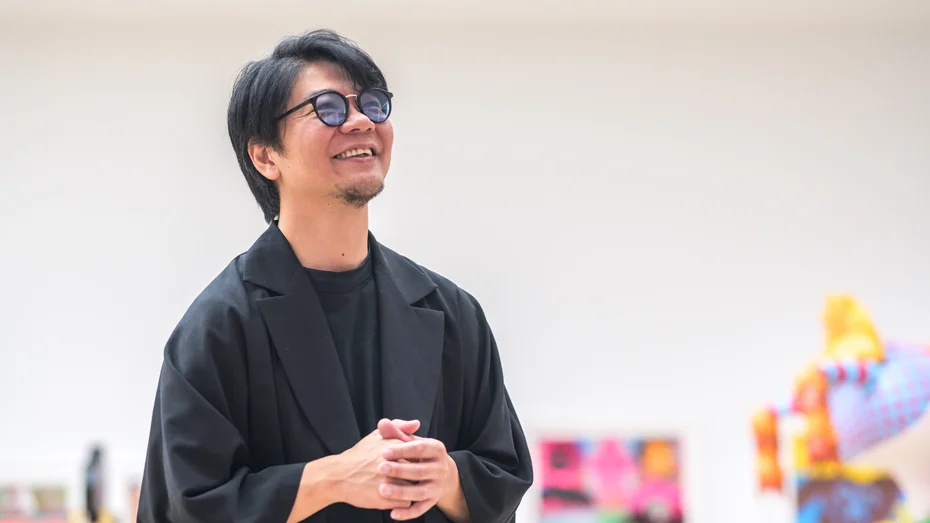
NANZUKA Representative / Gallerist
<Part 2>
What I want to communicate remains the same even in the new gallery.
NANZUKA takes its next step in Shibuya.
2026-11-25
SHARE
Born in Tokyo in 1978, he studied art history at Waseda University and its graduate school. In 2005, he opened "NANZUKA UNDERGROUND" in Shibuya 2-chome, later relocating to Jingumae (closed in October 2026). He has expanded his activities to include "NANZUKA 2G" in Shibuya PARCO and a space in Nakameguro that combines sushi and art. In parallel, he introduces Japanese artists to the world through participation in overseas art fairs and exhibition planning. In 2024, he established "NANZUKA ART INSTITUTE," a museum-style art space in Shanghai. Also in the same year, he opened the bar "NANZUKA TAKEN" in SHIBUYA AXSH, and in September 2026, he opened a new flagship gallery, "NANZUKA," in the same facility.
Masafumi Minamizuka has opened a new gallery, "NANZUKA," in Shibuya 2-chome. He says that even though the space has changed drastically, the core message he wants to convey remains the same, and for the opening event, he chose an exhibition by Keiichi Tanaami, with whom he has worked for many years. In the second part of this interview, we asked him about his thoughts on the current art scene, the feelings he put into the new gallery, and his vision for the future.
After 10 years of operating at a loss, what I wanted to communicate and the sensibilities of the times began to align.
You've expanded your activities both domestically and internationally. What has the journey been like so far?
For the first 10 years or so, we were constantly in the red, and it wouldn't have been surprising if we'd gone bankrupt at any moment. We only became profitable around 2015. That was right around the time when social media, especially Instagram, started to gain significant influence. Thanks to the power of social media, art, which had previously been a closed world, began to spread alongside fashion, interior design, and other forms of design through smartphone screens, and young people were at the heart of it all. In a sense, I think art became more mainstream. I think the artists we've introduced have been a good fit for this change. Perhaps there was a connection in terms of generational sensibilities as well.
Also, I think that continuing for 10 years has increased the gallery's credibility and made the artists we represent more well-known. However, from the time I started the gallery, I had this unfounded confidence that "the artists I like will surely sell in the future." So, when sales were slow, I kept wondering "why?" Then, at some point, I felt like I was finally aligning with the sensibilities and frequencies of the times. It's something close to that feeling.
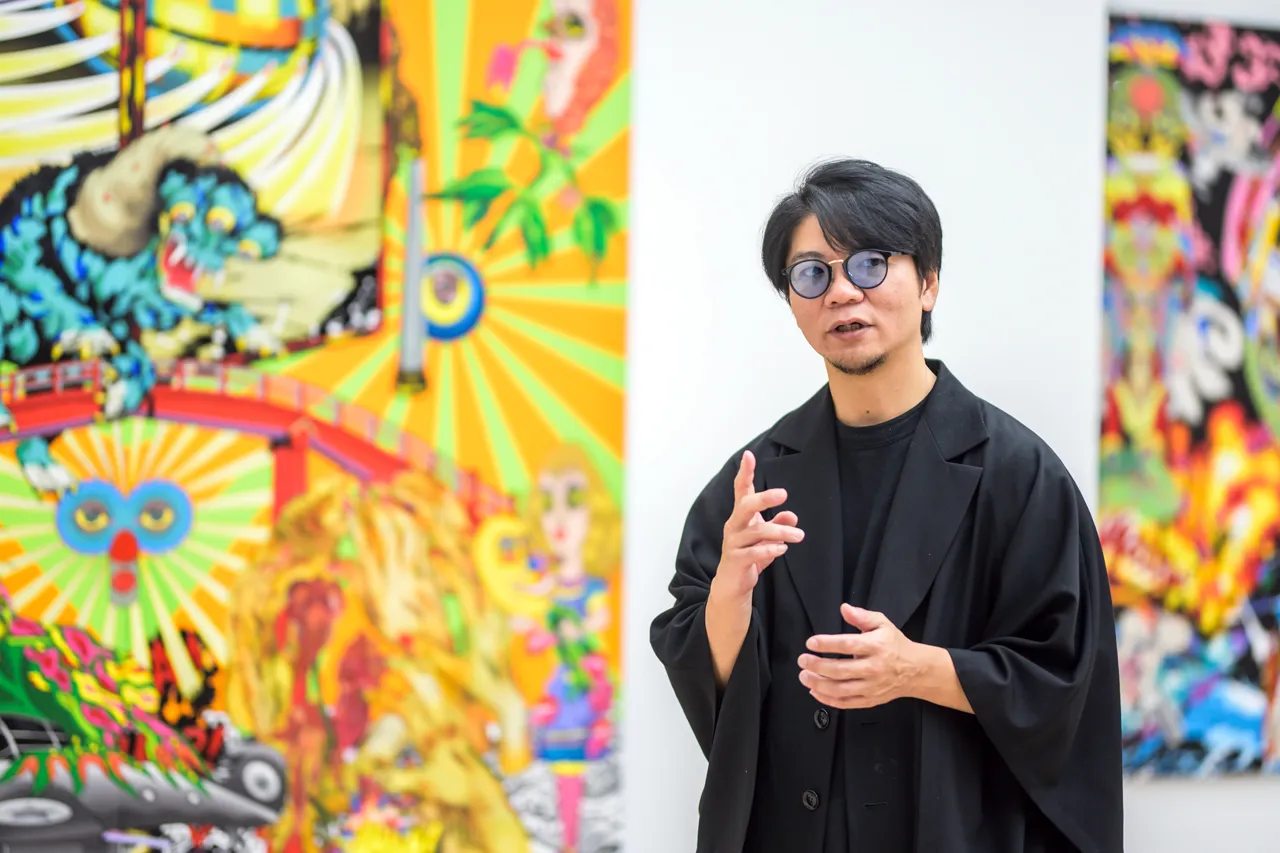
They've expanded their activities to include opening stores in Parco department stores and creating dining spaces, haven't they?
The goal is to create opportunities for people who don't usually engage with art to experience it. That's why we're creating a space in Parco, collaborating with sushi restaurants, and running a bar. The idea of spreading the image of an artwork widely is something that Warhol and others have been doing with pop art. Warhol mass-produced his works using printing technology, and Yayoi Kusama created and distributed her own newspaper in New York. Spreading the artwork and making people aware of it by distributing it widely is a strategy and methodology that is embedded as context in the history of pop art.
Mr. Tanaami understood this very well. He loved making T-shirts, and he often said during his lifetime, "Just having young people walking around town wearing T-shirts with my artwork's graphics is good publicity, isn't it? So let's make lots of T-shirts."
The unique characteristics of Shibuya and the gallery have come together to create the NANZUKA we see today.
How has the city of Shibuya influenced NANZUKA's activities?
I think that Shibuya's environment, our gallery's style, and the artists have all worked together to discover, appreciate, and nurture new value. If we had started somewhere else, it would have unfolded completely differently, and NANZUKA wouldn't have the character it has today. I think the characteristics of the city and the gallery overlapped, including aspects that I wasn't even consciously aware of. Ms. Tanaami also lived in Shibuya and had her house very close to the gallery.
Looking at the recent redevelopment trends, there's a certain sadness in seeing a decline in unique shops and slightly quirky places as the city changes. Previously, Shibuya had a culture of seeking out and visiting unique shops and products, like record stores tucked away in out-of-the-way locations. However, this isn't just a change in Shibuya; it's also a reflection of the changing business structure, where anything can now be bought online. For young people and visitors from overseas, the current Shibuya landscape is fresh and interesting, and I too benefit from it being a city that easily attracts people.
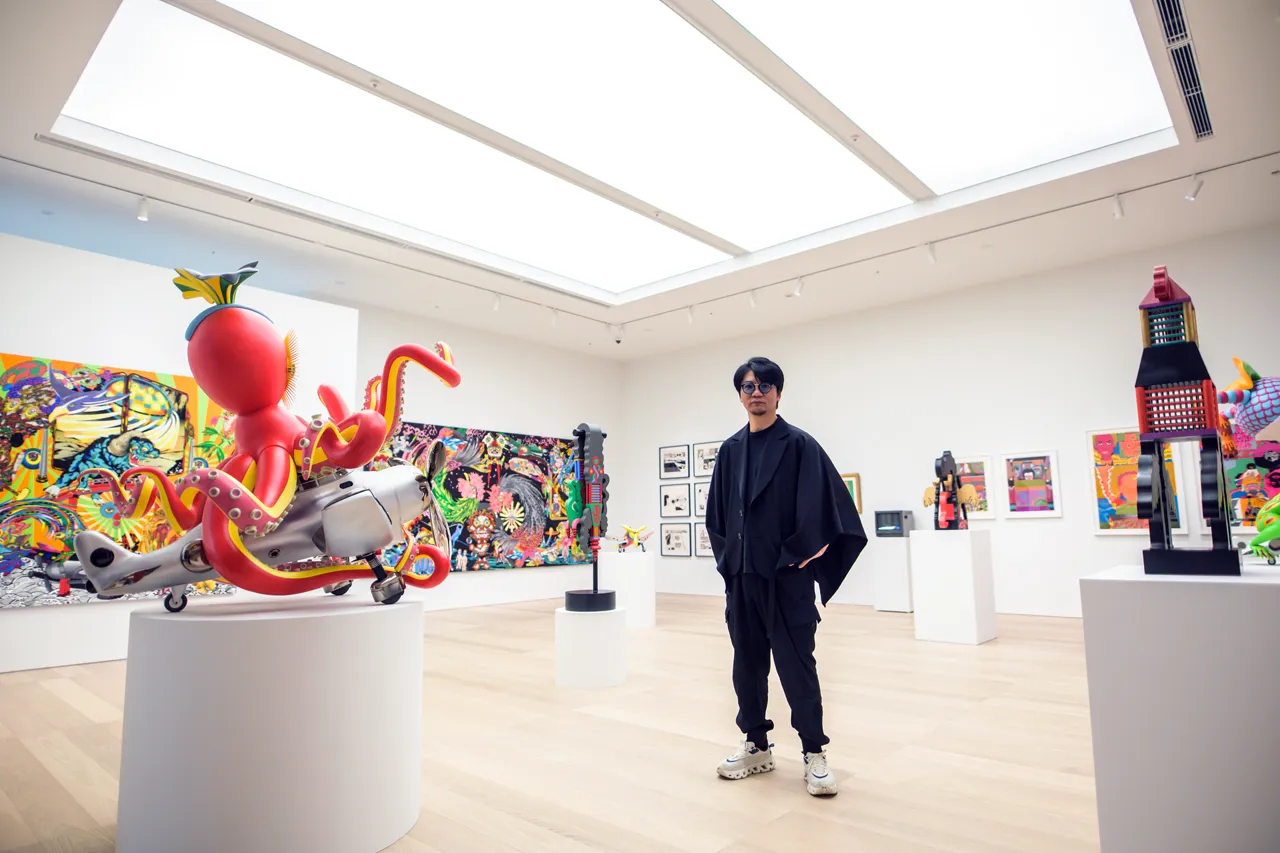
A gallery that adopts the "white cube" exhibition space, characterized by white walls and uniform lighting, resulting in an inorganic and simple exhibition space.
What kind of place has the new gallery in Shibuya 2-chome become?
In terms of space, I feel it's close to one of the ultimate forms of a gallery. With its high ceilings and beautiful space, it's quite different from the underground-inspired colors of the past. It's what you might call a sophisticated space, and I remember being very drawn to it when I first started the gallery and went on inspection trips abroad, where there were many large galleries with spaces like this one.
The previous underground gallery had a unique charm, like opening a heavy door to step inside. The name "UNDERGROUND" not only referred to its underground location, but also embodied the idea of being underground in a cultural sense. I think the contrast between that and NANZUKA, which now has such a contrasting space, is also interesting. I've been doing this for 20 years, so maybe I've grown up a little. (laughs) However, even though the space has changed drastically, the core message I want to convey remains the same.
Building upon the 20 years spent with Keiichi Tanaami, we will pass on the possibilities of art to the next generation.
Please tell us why you chose Tanaami's exhibition "DO NOT BOMB" as the opening exhibition, and what you feel are the charms of Tanaami's work that you appreciate anew.
NANZUKA is a gallery that has grown together with Mr. Tanaami for a long time. We want to continue to showcase his work, and we also wanted to hold an exhibition that would clearly convey the relationship between the anti-war message Mr. Tanaami left behind and the present era. He had told us about creating a new gallery before he passed away, and he even designed the logo for it.
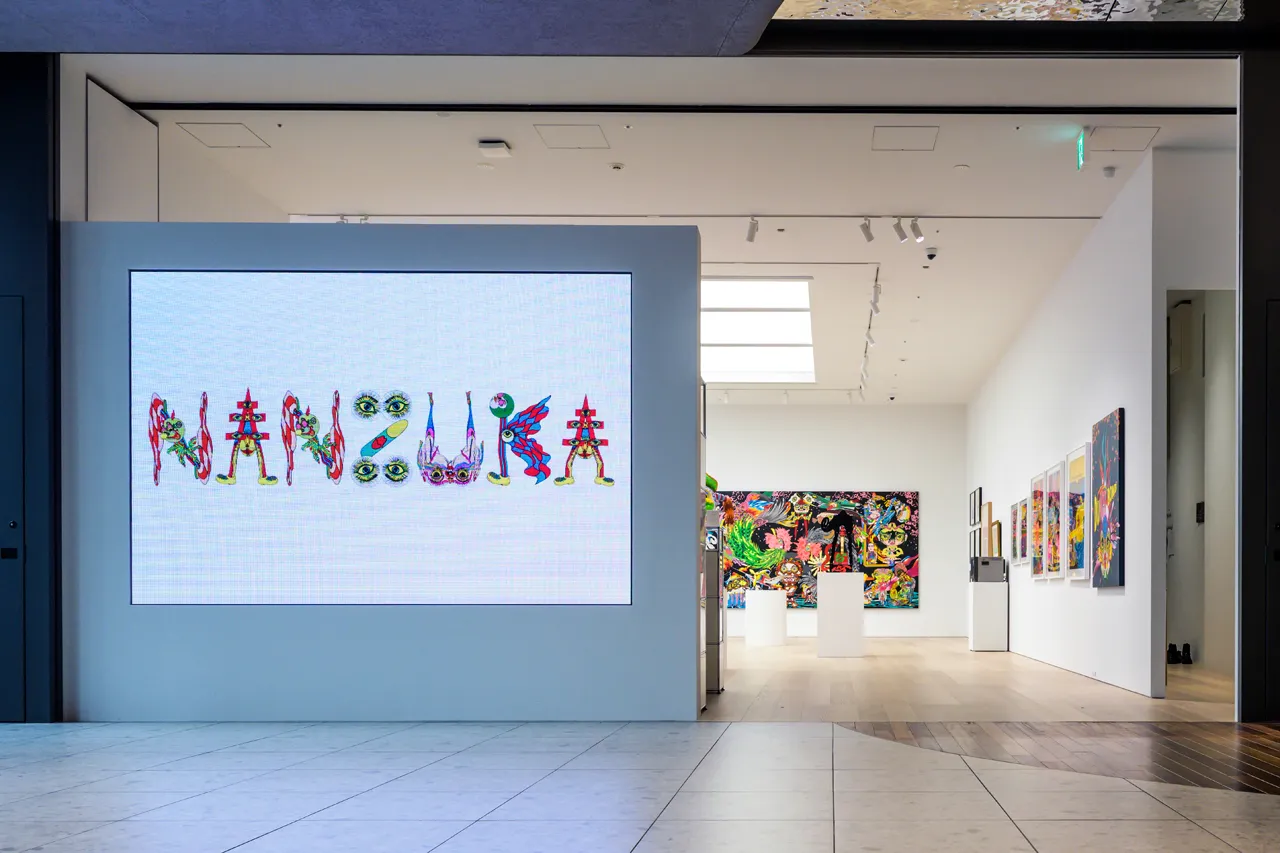
At the entrance to the gallery is a logo designed by Keiichi Tanaami, who was looking forward to the opening of the new gallery during his lifetime.
Mr. Tanaami was a truly playful and quick-witted person. We ate together almost every week, and he was well-informed about current events through magazines and radio, knowing everything from popular music to current affairs. And he remained flexible and insatiably curious until the very end. When his project came to a halt due to the pandemic, he started copying Picasso's works to calm himself down, and he found it so enjoyable that he continued to paint one after another. He truly had an insatiable desire for self-improvement, and his creative work never stopped. He often said, "It's presumptuous to call it a slump. That's something you reach only after you've given it your all." I think he was a true artist at heart.
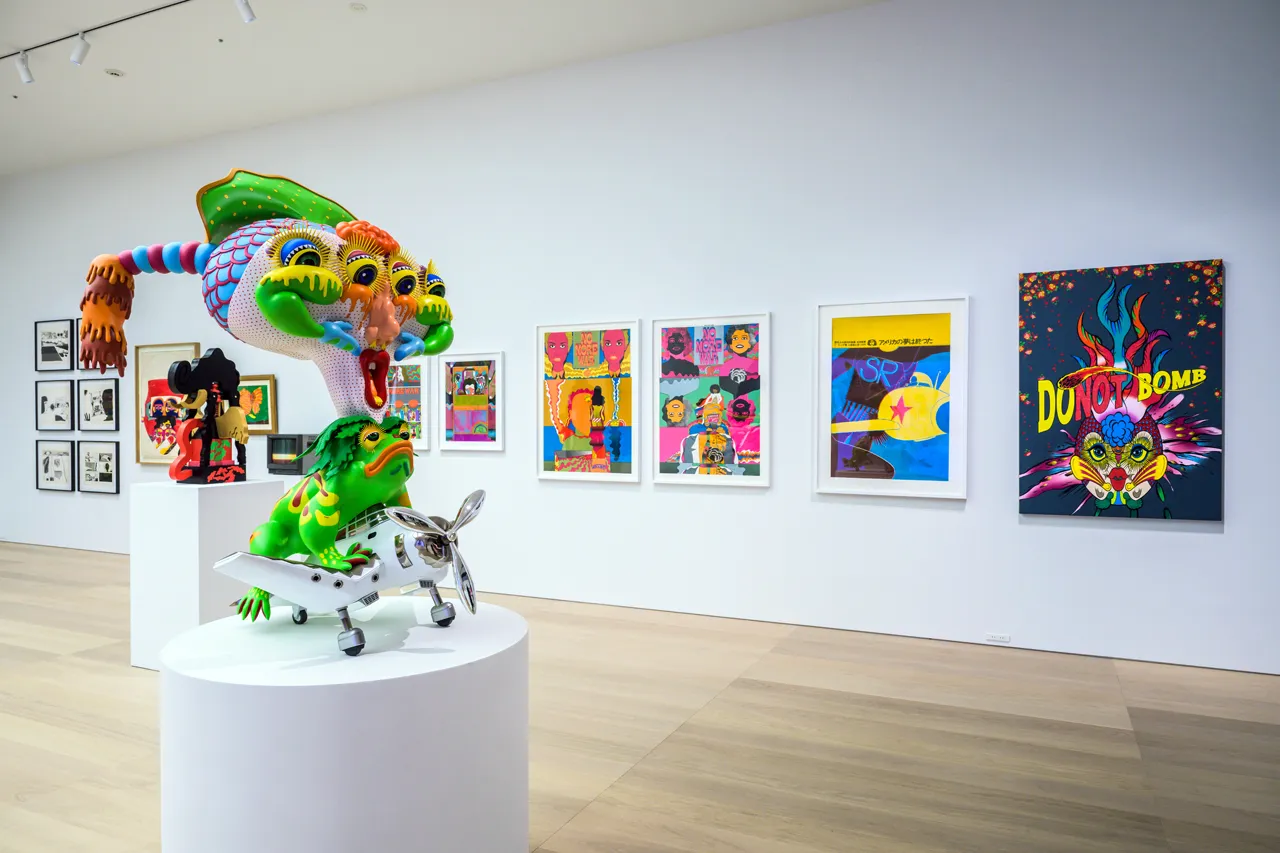
To commemorate the opening of the new gallery, an exhibition by Keiichi Tanaami, "DO NOT BOMB" (September 12 - October 17, 2026), will be held. The two-dimensional work "DO NOT BOMB" (H141 x W100 x D4 cm) on the right and the three-dimensional work "Shapeshifting 1" (H130 x W98 x D78 cm) in the foreground were both created during the preparation period for the retrospective exhibition held at the National Art Center, Tokyo in 2024. These works carry on the spirit of the "NO MORE WAR" series, which was presented in the late 1960s with the theme of anti-Vietnam War, and reflect Tanaami's own childhood experiences of war.
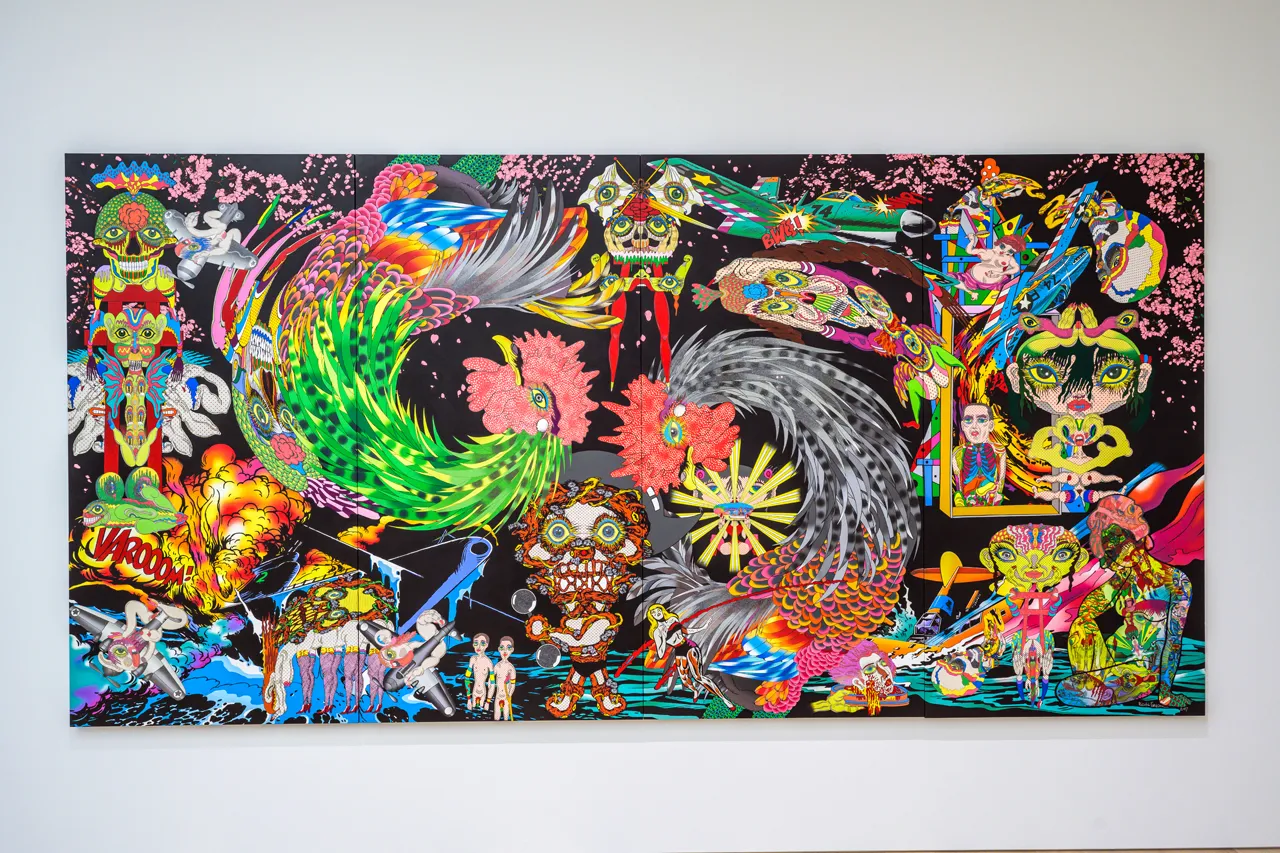
Keiichi Tanaami, "Infinite Universe" (2017, H202 x W400 x D4cm). A large-scale work filled with motifs that symbolize Tanaami's unique worldview, such as fighter jets, chickens, and cherry blossoms in full bloom. It was unveiled at "Art Basel Hong Kong" in 2017.
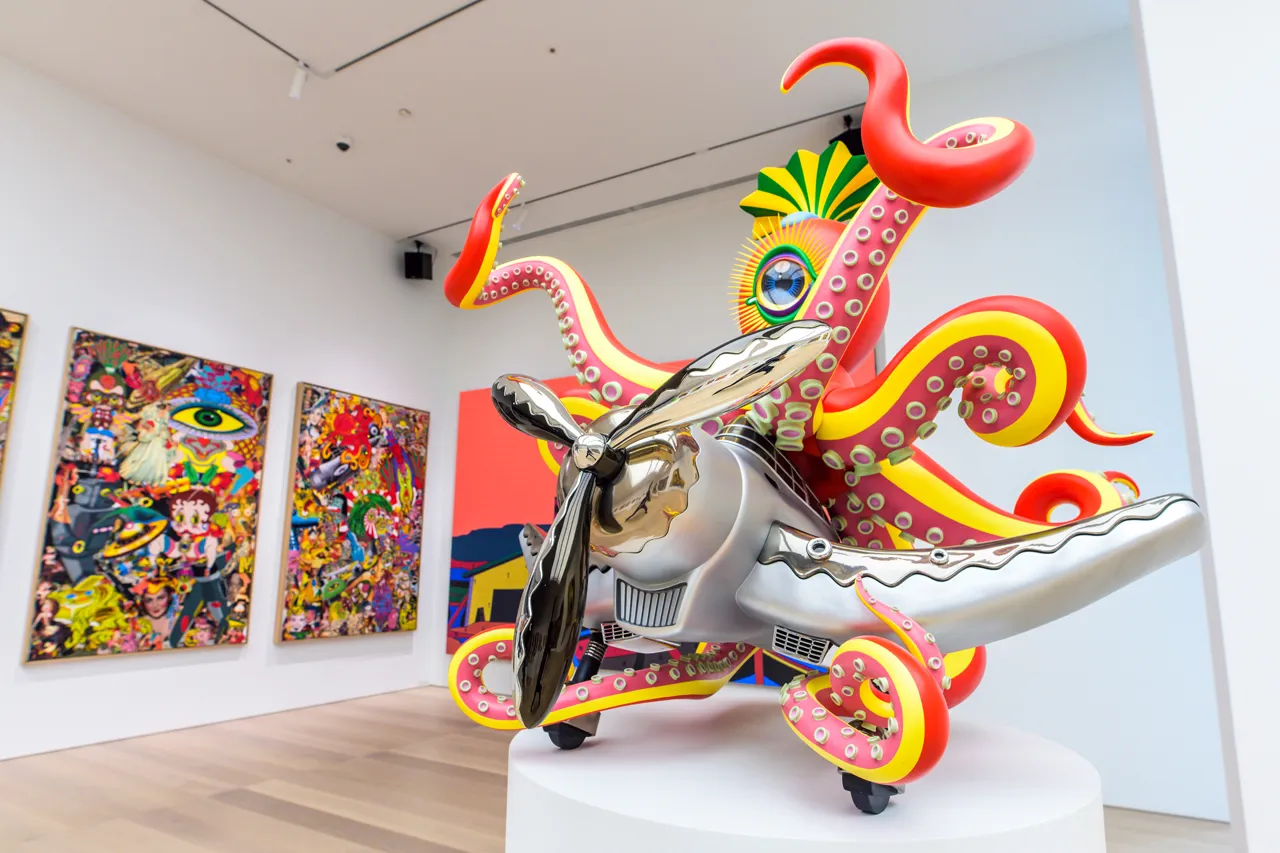
Keiichi Tanaami, "Ever-Changing 2" (2024, H130 x W133 x D134cm). This is one of the three-dimensional works exhibited at the large-scale retrospective exhibition "Keiichi Tanaami: Adventures in Memory" held at the National Art Center, Tokyo in 2024.
Please tell us what you would like to achieve in the future.
When I started working with Ms. Tanaami, we set three goals. First, to participate in major art fairs like Art Basel. Second, to get her signed to a large gallery overseas and hold an exhibition in New York. And third, to hold a retrospective exhibition at a public museum. The first two were achieved relatively quickly, and the last goal also became a reality with the retrospective exhibition held at the National Art Center, Tokyo in 2024. Since that was also a goal for both of us, I feel like we've reached one of our goals. So now, I'm wondering what we should do next. (laughs)
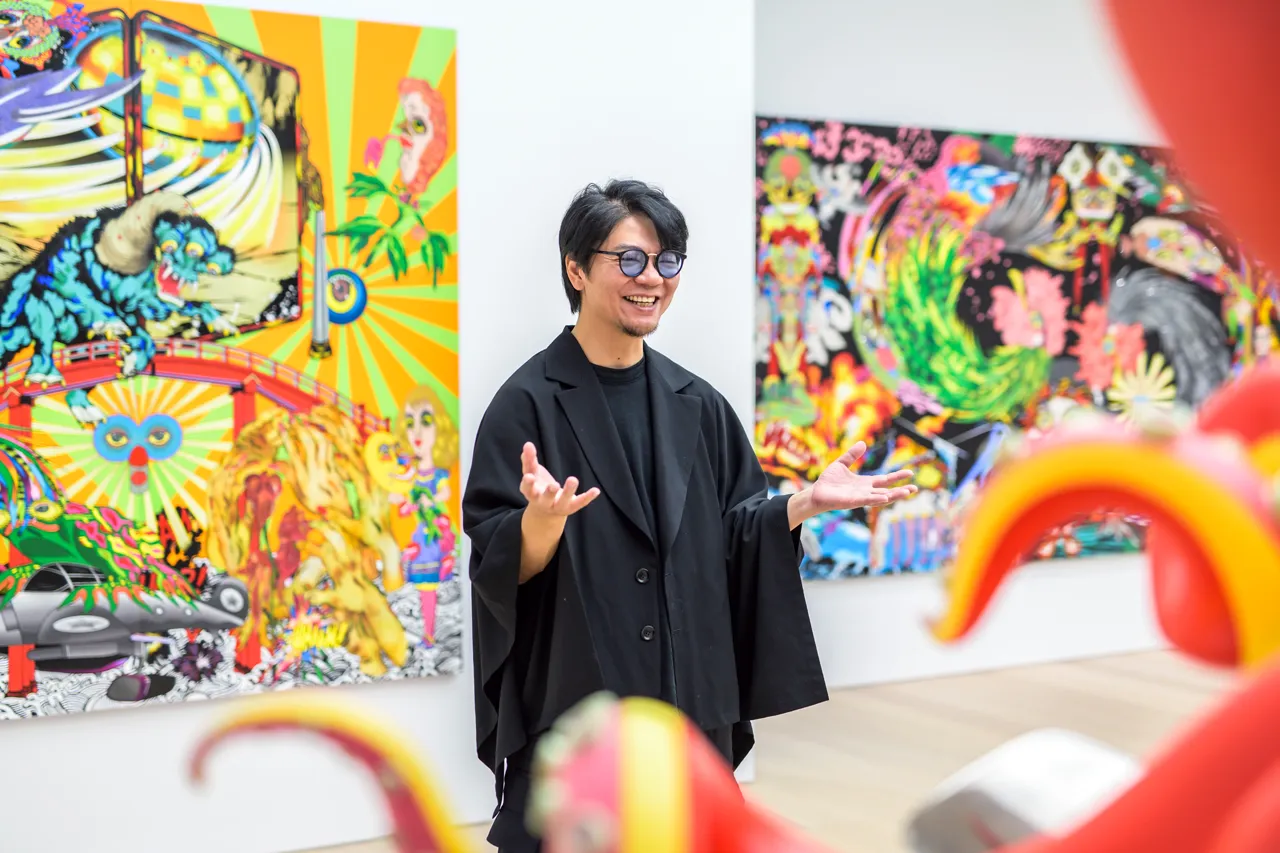
Having fulfilled the three promises he made with Mr. Tanaami, he has just begun to move towards new goals with the opening of his new gallery.
If I had to say one thing, it would be that I hope to contribute to increasing the social value and meaning of art by having more galleries in Japan. I hope that a cycle will be created where young galleries increasingly go overseas and introduce Japanese artists. When I first started my gallery, I was treated like a "young upstart who didn't know anything about the industry," so I want to warmly welcome newcomers. (laughs) I'll gladly teach them anything I know, but ultimately, I think it's up to each individual whether they can make the most of the opportunity. I hope that we can create an environment where Japanese art becomes more vibrant, not just for my gallery, but for all the people involved in art as a whole.
In addition to the gallery, there is also an art bar where art lovers gather.
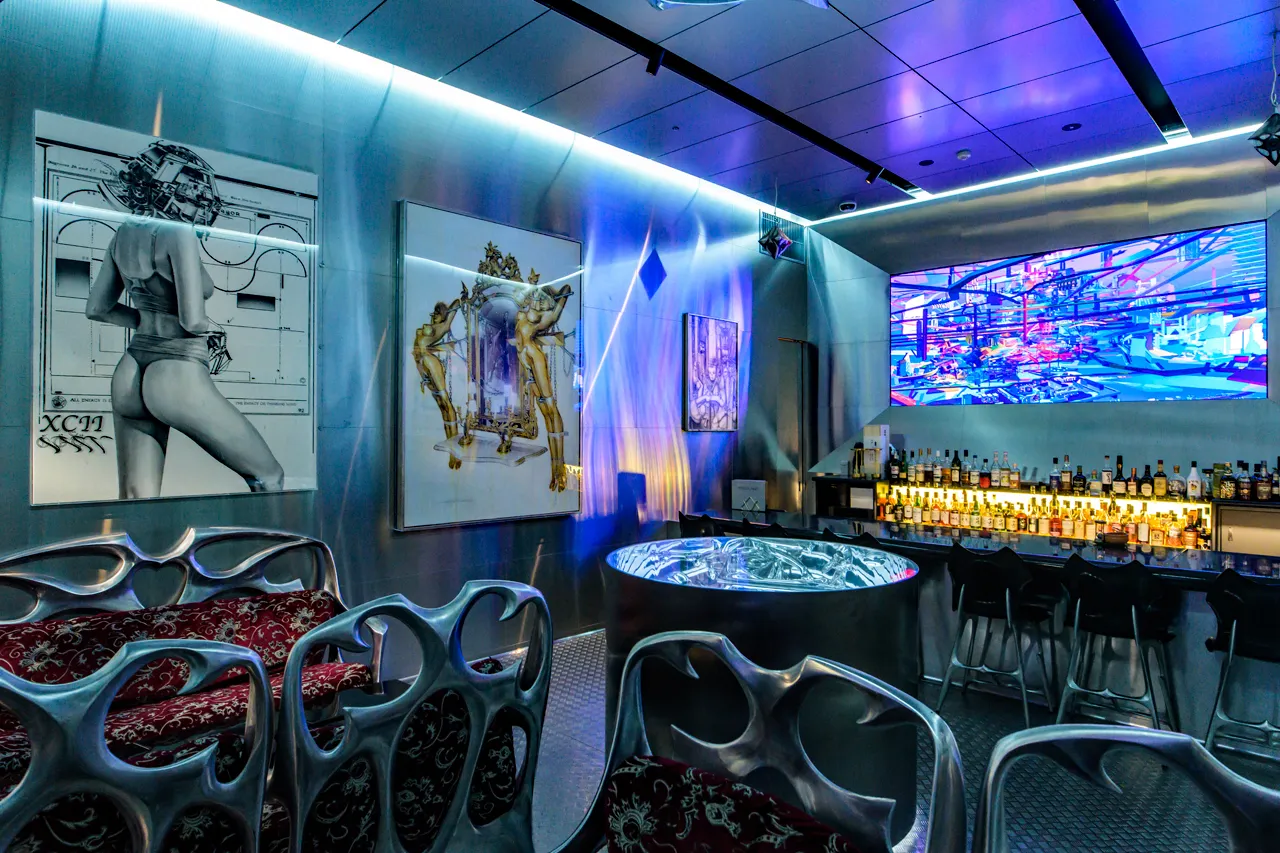
Inside the art bar "NANZUKA TAKEN"
Prior to the opening of the new gallery, in July 2024, an art bar called "NANZUKA TAKEN," whose space was art-directed by Minamizuka herself, opened on the second floor SHIBUYA AXSH.
The bar features furniture such as sofas and counter chairs designed by artist and sculptor Tetsuya Nakamura, as well as works by Hiroki Tsukuda, allowing customers to enjoy drinks in an art-filled environment.
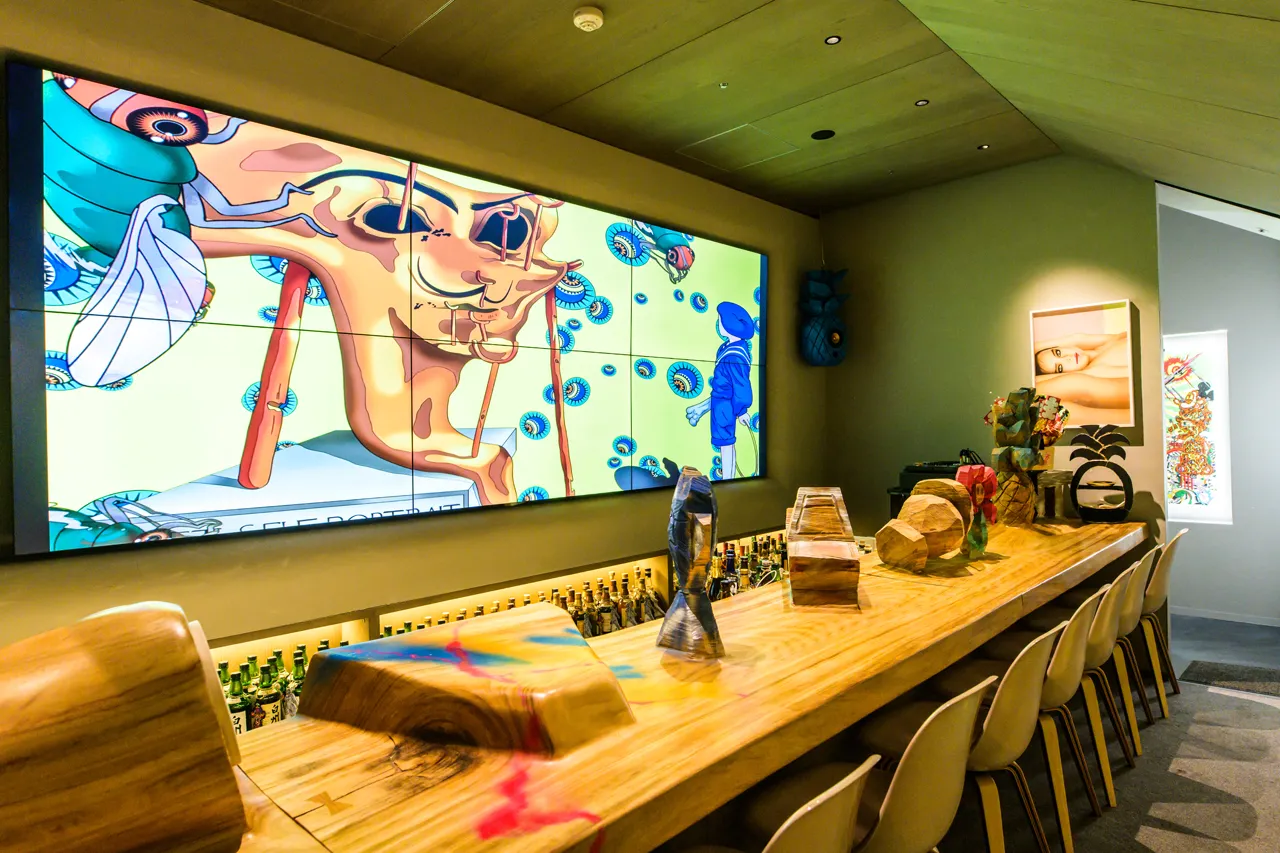
Behind the hidden door is a private room for members only.
With the opening of the new gallery on the third floor, the art bar is likely to be used in a wider range of ways in the future, such as for after-parties following solo exhibitions by affiliated artists.
NANZUKA TAKEN
Address: 2-17-1 Shibuya SHIBUYA AXSH 2nd Floor
Opening hours: 6 PM to 2 AM (Closed Sundays, irregular closures on Mondays)
Number of seats: 16
Featured articles on the site
南塚真史さん(NANZUKA代表/ギャラリスト)|「アートはこうあるべき」を問い直す。 渋谷で歩んだNANZUKAの20年。
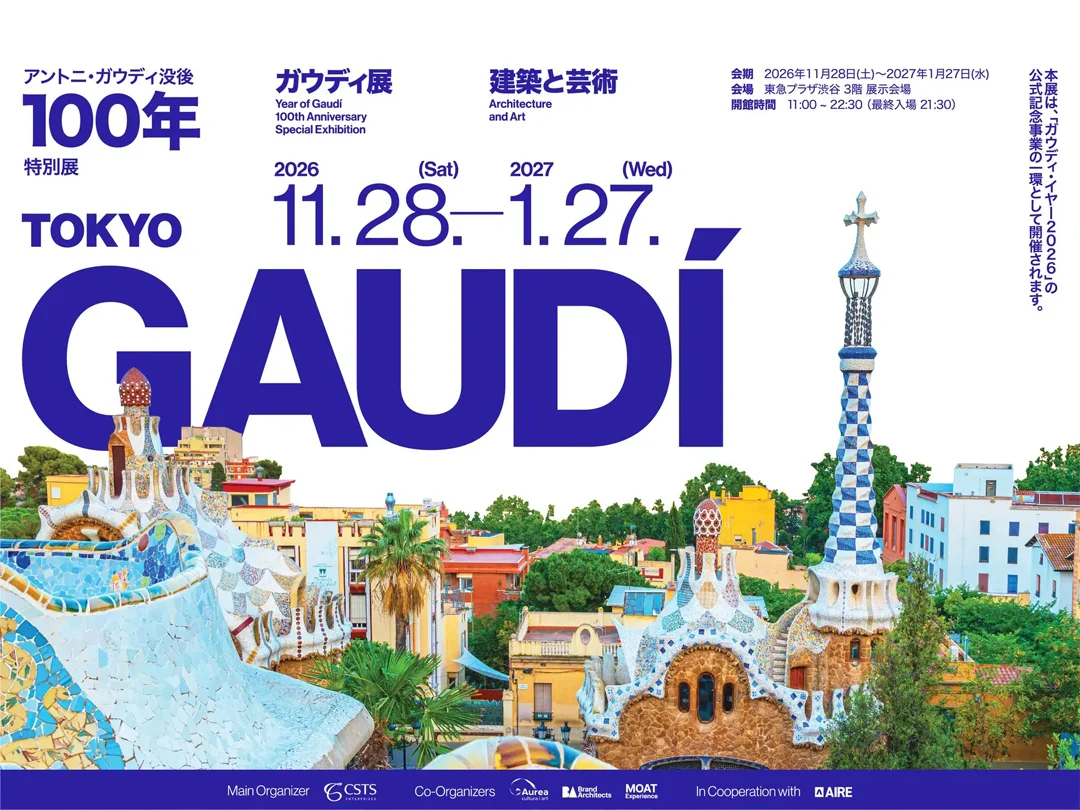
A special exhibition commemorating the 100th anniversary of Gaudí's death is being held in Shibuya, featuring over 160 items including original drawings and architectural models.
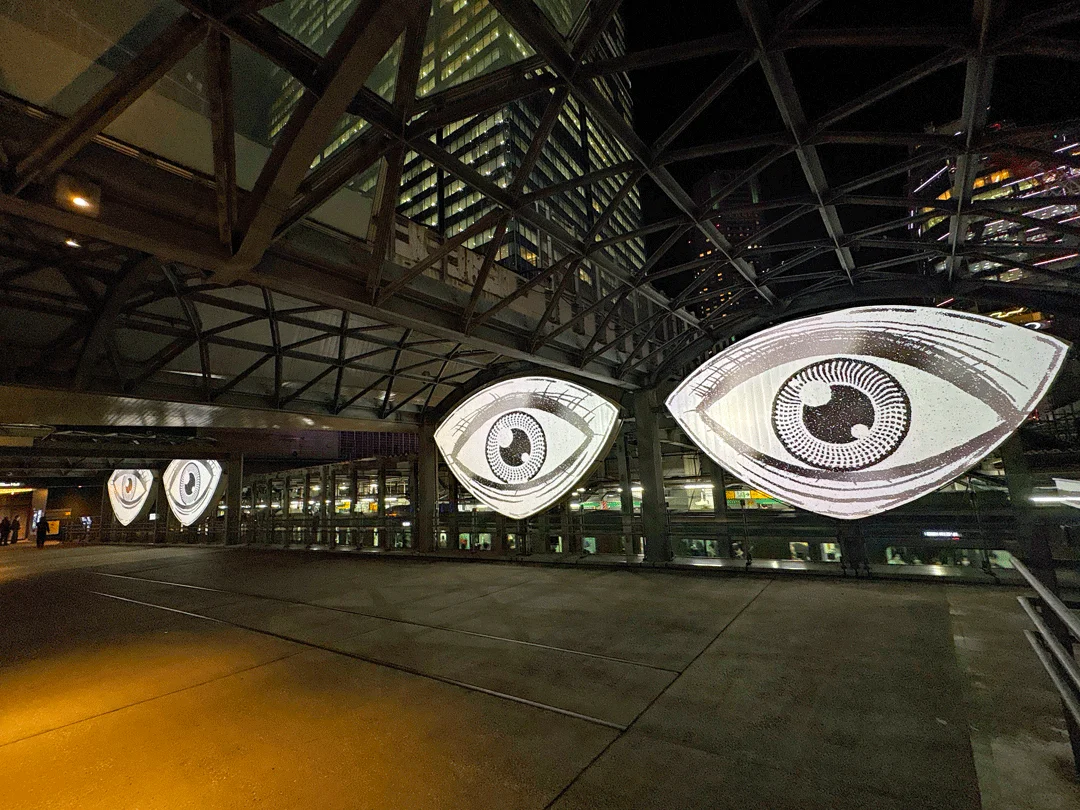
A giant "eye" appears in the sky above National Route 246 in Shibuya; light and sound art based on the design of the former Tokyu Toyoko Line Shibuya Station.