

SHIBUY.A. × WATCH
![[Report] The "slow pace" that flows through Shibuya amidst redevelopment: A small community thriving along the Shibuya River](https://biz.shibuyabunka.com/storage/images/watch/1779538066_wide.webp)
[Report] The "slow pace" that flows through Shibuya amidst redevelopment: A small community thriving along the Shibuya River
2026-06-01
SHARE
Cities are driven solely by efficiency. People are constantly on the move, train stations are being renovated, and skyscrapers are rising one after another. While this makes things more convenient and comfortable, I also feel that it has become harder to find a reason to stop and linger in the city.
Amidst the ongoing redevelopment of Shibuya, the outdoor event "shibuya slow stream," held along the Shibuya River on May 16th and 17th, stood out with its slightly different atmosphere. In this article, while reporting on the event on the 16th, I would like to consider how to preserve and nurture "space" within a city undergoing rapid redevelopment.
- shibuya slow stream vol.26 "rooted hope"
- Dates: May 16th (Sat) & 17th (Sun), 2026
- Time: 12:00-21:00
- Location: SHIBUYA STREAM
- Rates: Free admission
- official:Click here for details
The venue is Inaribashi Plaza, located in front of the grand staircase SHIBUYA STREAM and facing the Shibuya River. Despite being at the foot of a cluster of skyscrapers, it is a space where you can feel the breeze and flow of water from the riverside.
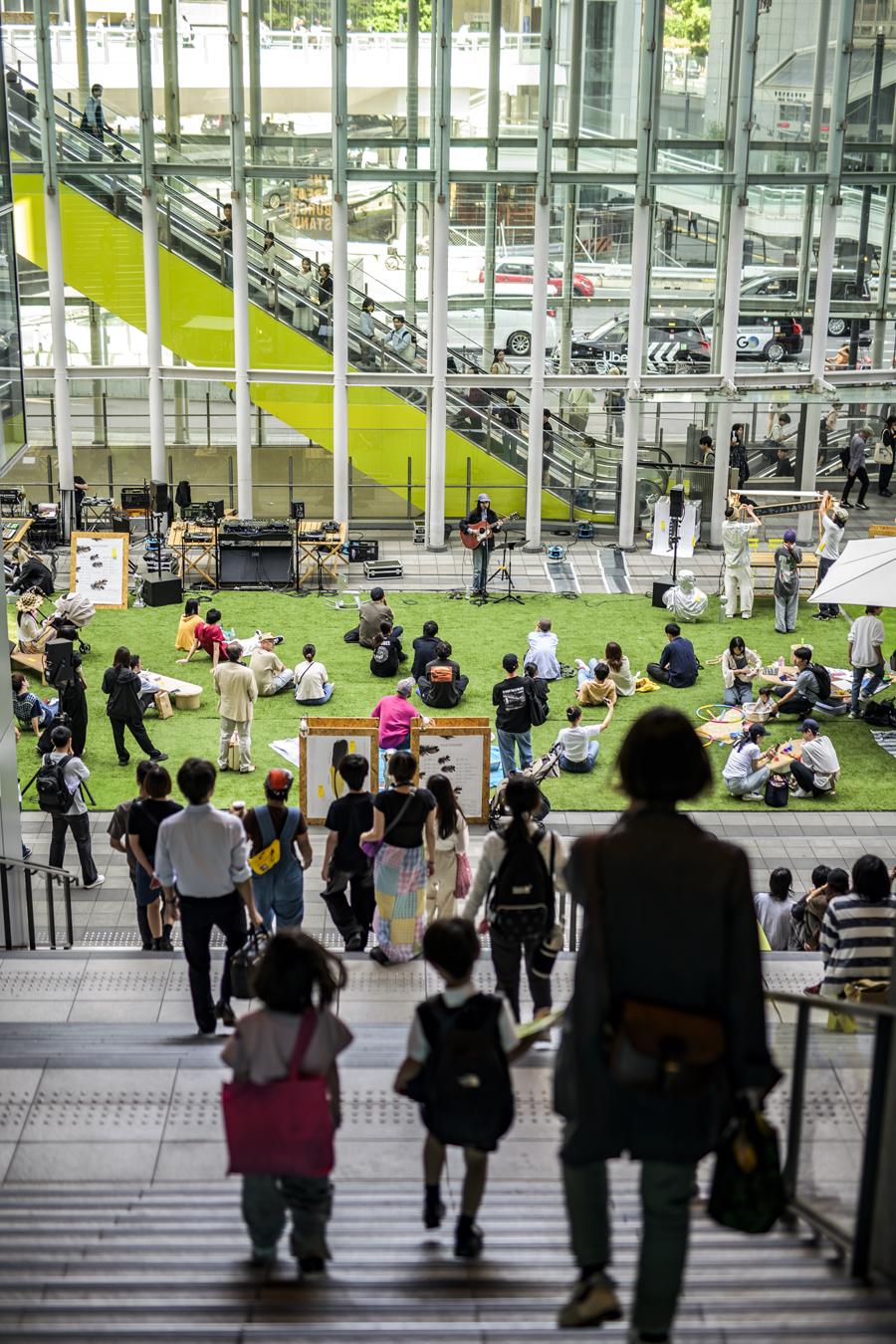
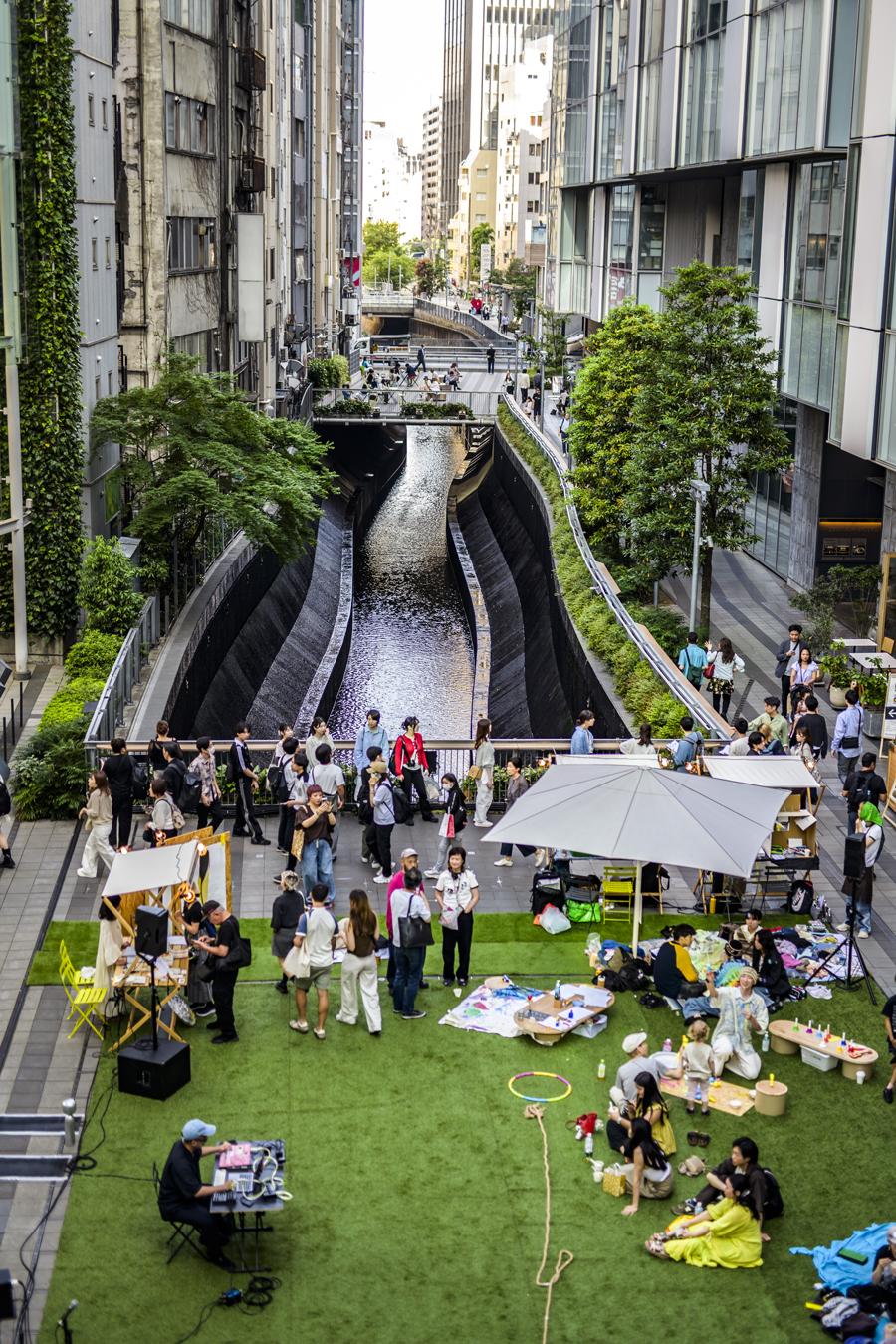
"Shibuya Slow Stream" was held at Inaribashi Square along the Shibuya River, at the bottom of the grand staircase of SHIBUYA STREAM
The event, which is held regularly along the Shibuya River, started in November 2020 amidst the COVID-19 pandemic. It is held at a pace of 3 to 5 times a year, and this was the 26th time it has been held. The theme this time is "rooted hope," emphasizing the importance of "taking root" in the land, culture, and the lives of the people.
Akifumi Kumai, the director, said, "We have been continuously asking the question, 'What makes a good city?' This time it's 'rooted hope,' but we change the theme each time and throw out words to the public." He continued, "I believe that expanding our vocabulary will enrich society and bring us closer to a better city. Events tend to be one-off events, but urban development shouldn't end with just building a building. I want to continue asking the question, 'What makes a good city?' through events."
It's approachable, yet profound.
The venue featured a variety of content, including live music performances, DJ sets, a market, workshops, and food and drink booths. On this particular day, Chizuru Oki, Midori Tagami, Shokuhin Matsuri aka foodman, and Illreme performed live, adding a gentle touch of color to the space along the Shibuya River.
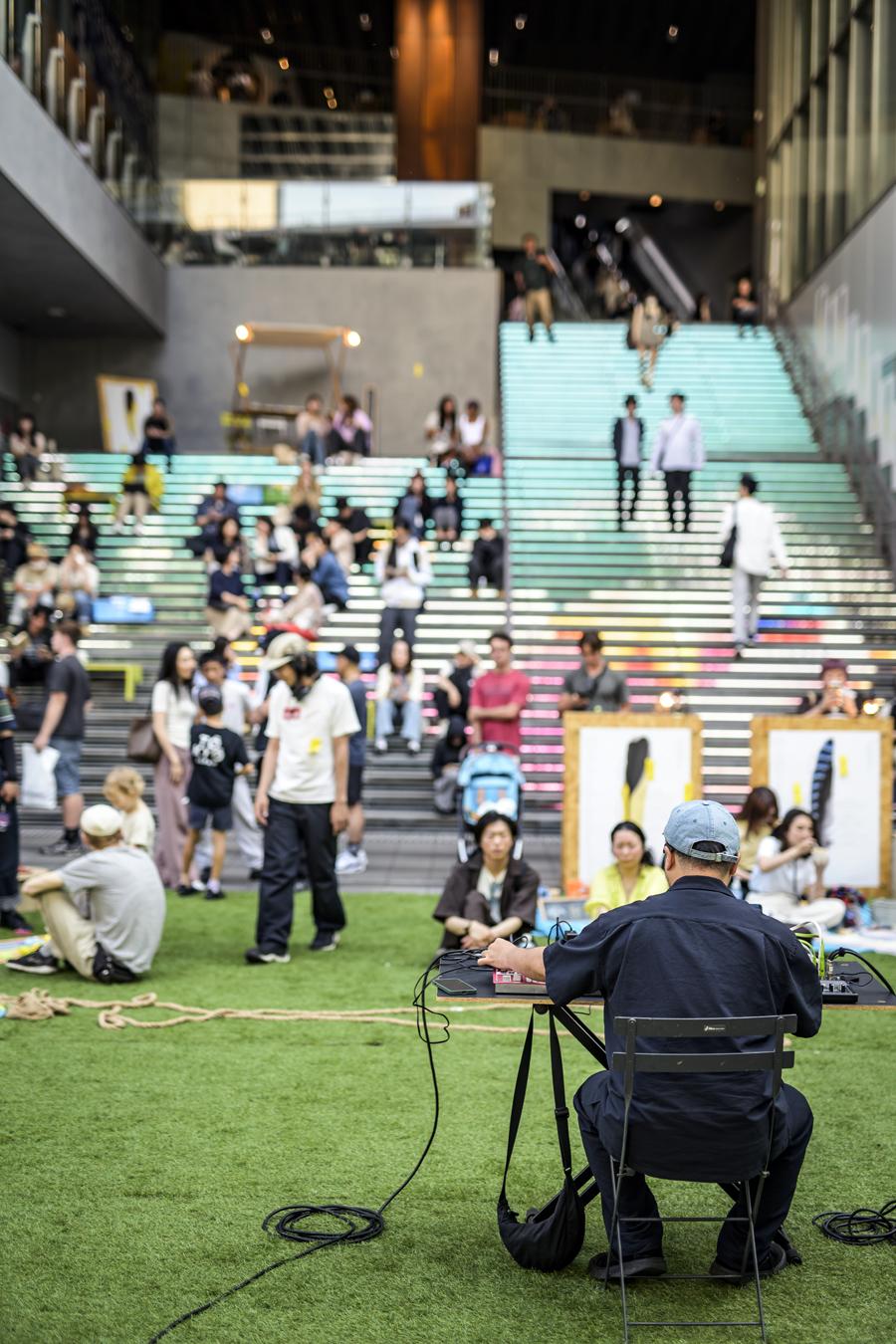
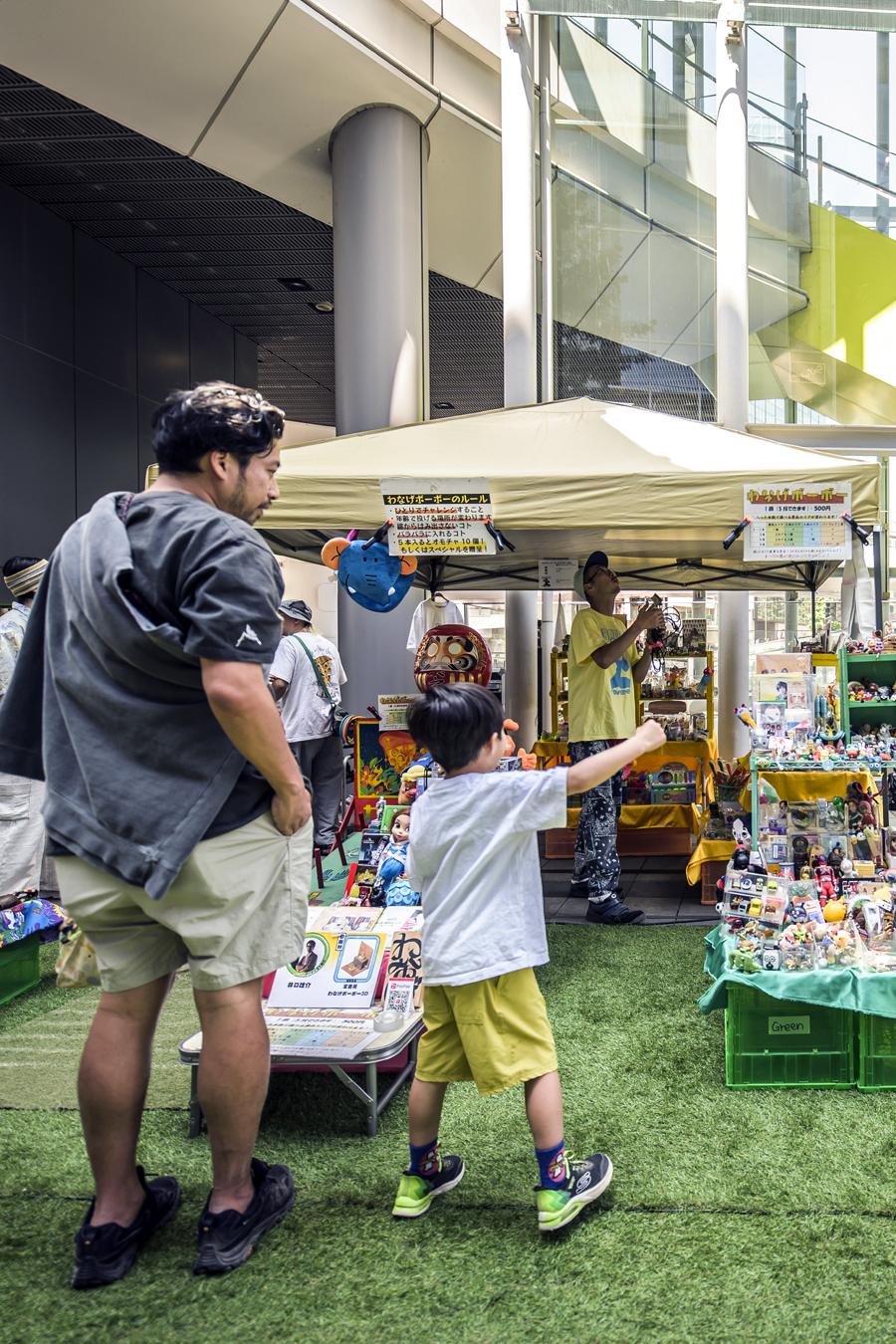
Left) Visitors sit on the stairs and grass, leisurely enjoying the live music. Right) A family visits "Wanage Bobo (a new generation analog game store)" which is filled with toys from the Showa era.
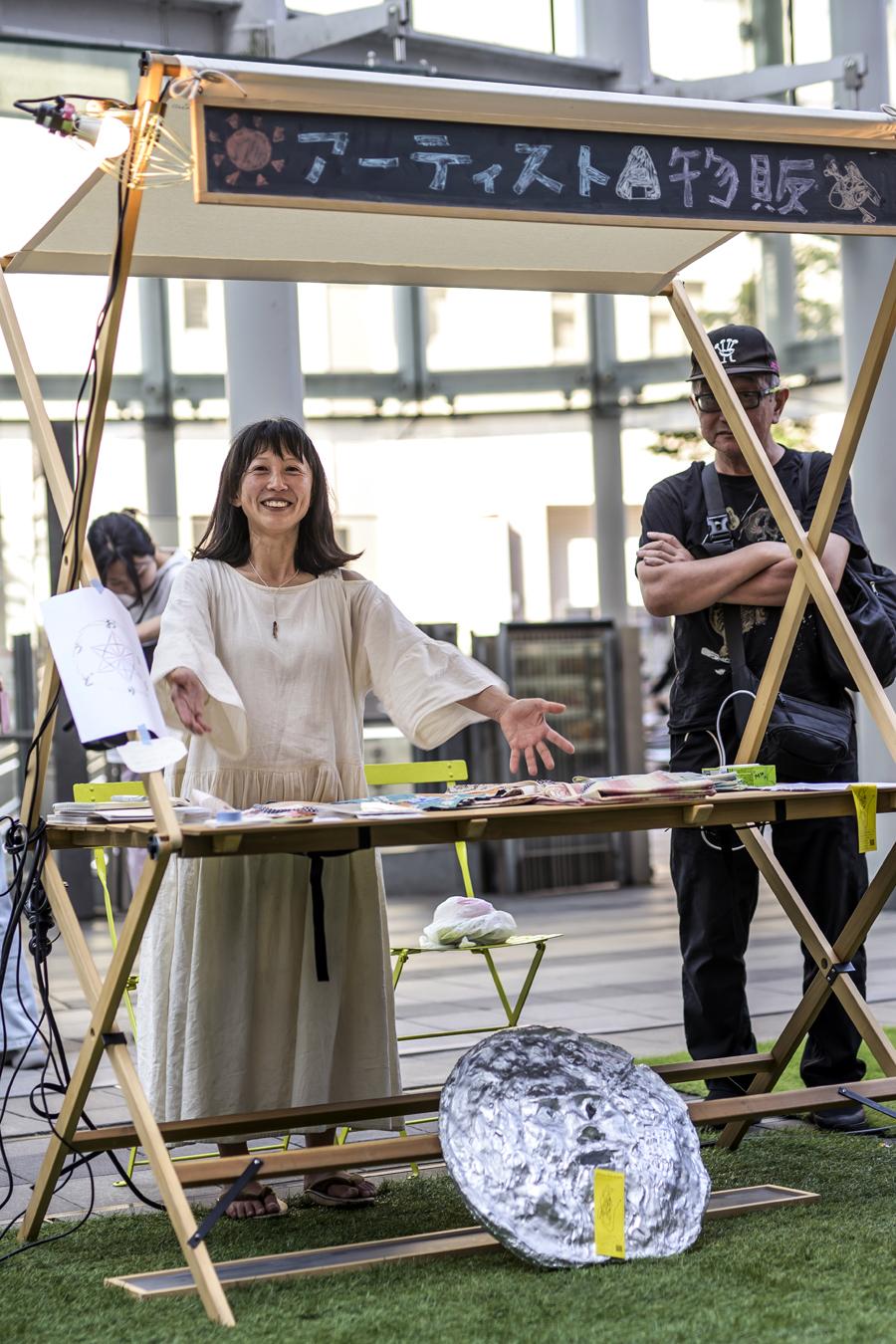

Left) A shop selling merchandise and items from the performing artists. Right) A unique "picnic flea market" where you can buy items at half price if you talk about "what's important in life."
Unique pop-up shops were also present, including "wagamama books" which sells art books, zines, and books on queer culture, "Chasui" which hosts an open-air tea ceremony, "Wanage Bobo" which sells analog games, and "Re:store" which sells remade CDs. Food and drink booths offering Taiwanese sweets and medicinal cuisine were also lined up, creating an atmosphere that naturally made visitors want to stay for a long time.
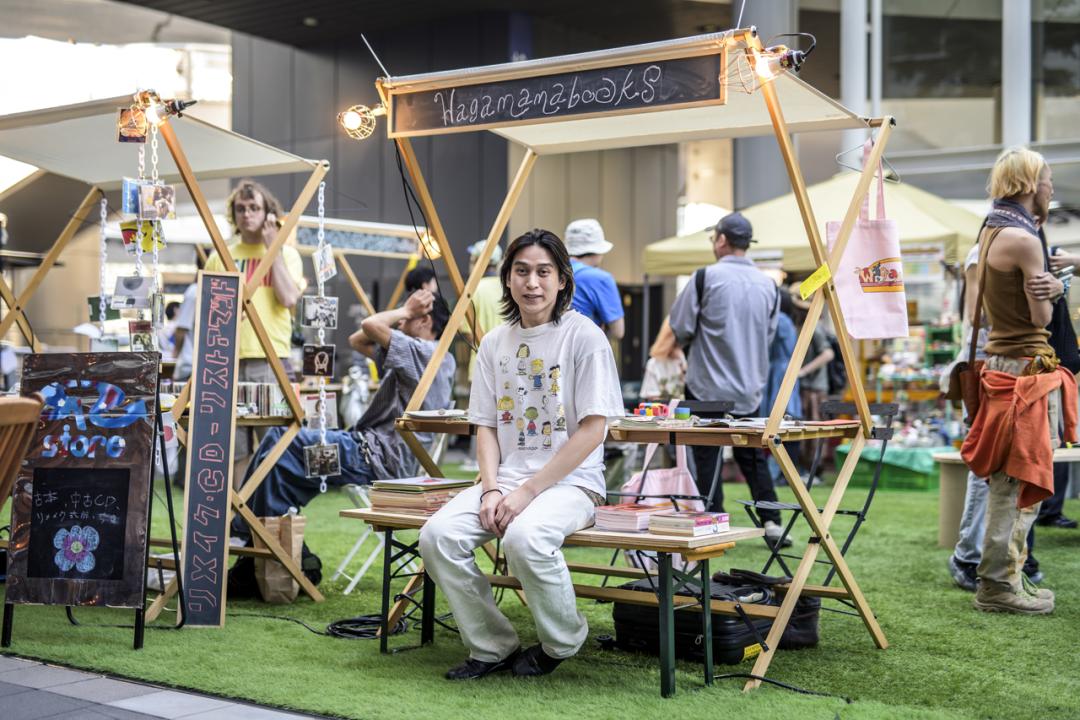
wagamama books, by the shop owner Aga-san
Aga, the owner of "wagamama books" who has roots in both the Philippines and Japan, says, "My main job is graphic design. I make zines and books as an extension of my work." She enjoyed the event as "a place where my expression and the atmosphere of the city are loosely connected."
Ms. Kumai describes the event's characteristics as "low barrier to entry, yet profound." "If it's only profound, the barrier to entry becomes high, and if it's only low, it becomes shallow. That's why I want to create a space where anyone, from children to people from overseas, can naturally come in," she says. She then added, "I also want people to know that there are deep questions about cities and culture embedded in the background."
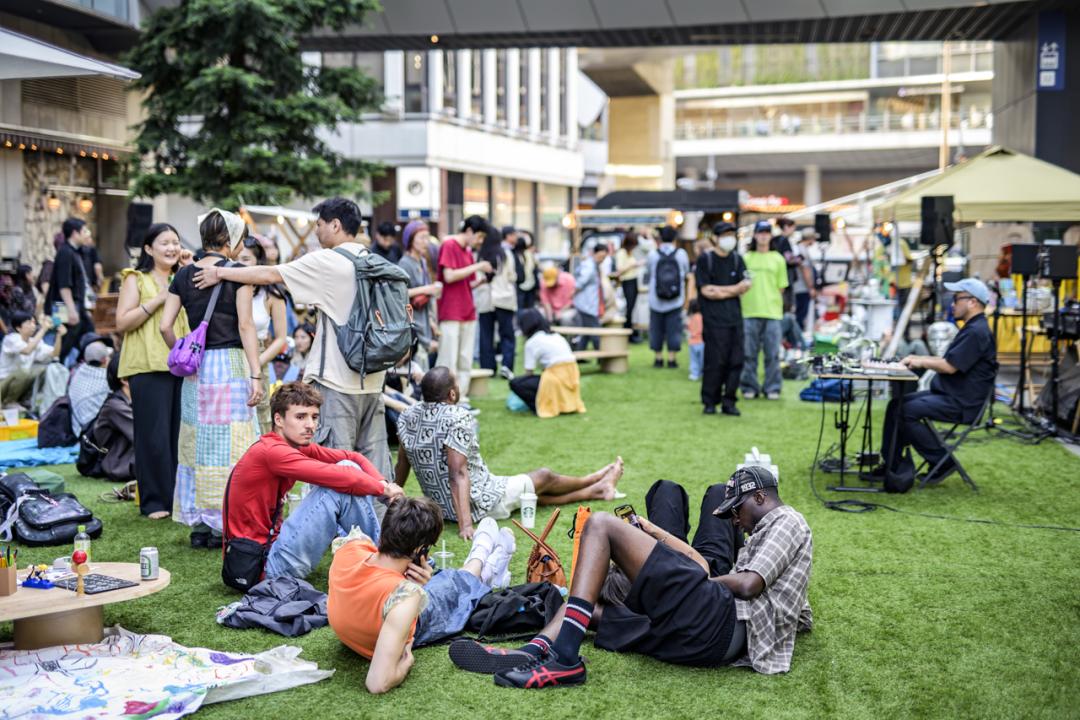
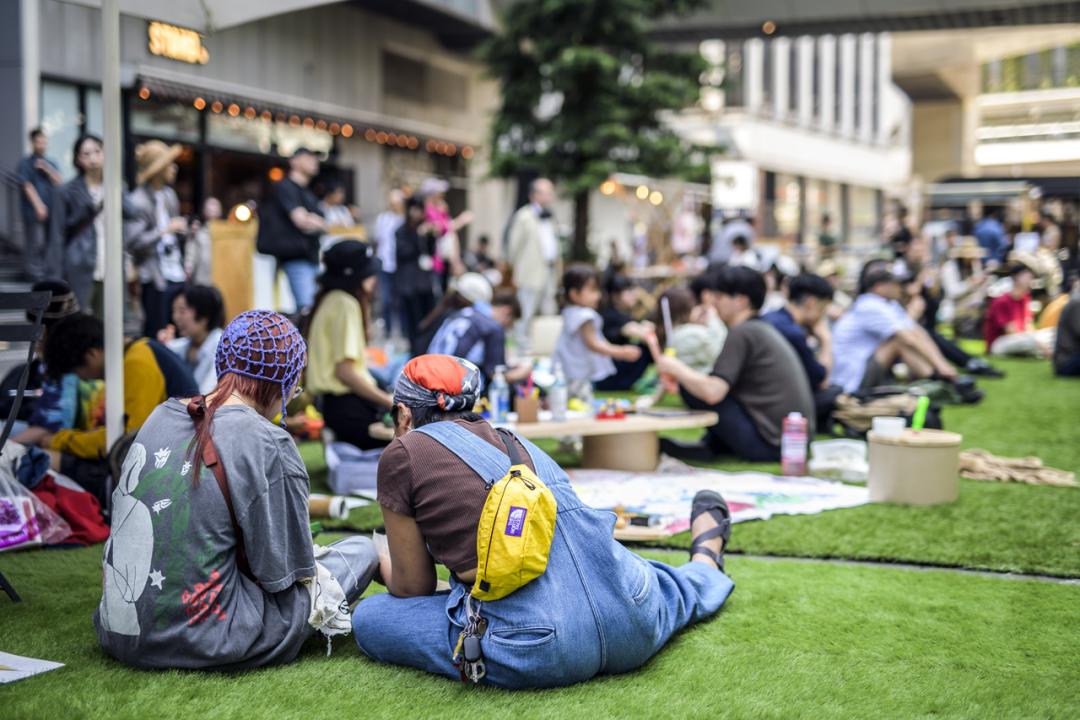
In the heart of Shibuya, visitors take off their shoes and lie down, spending their time as they please.
The appeal of this event lies not so much in "what's there," but in "how you can spend your time there." Chairs and places to sit were scattered throughout the venue, and visitors listened to music while reading books, lying down, eating meals, gazing at the river, or simply relaxing. Unlike large festivals that emphasize crowds and excitement, "doing nothing" is naturally accepted here. It was a space where you could enjoy "space"—simply spending time slowly in the city without any particular purpose.
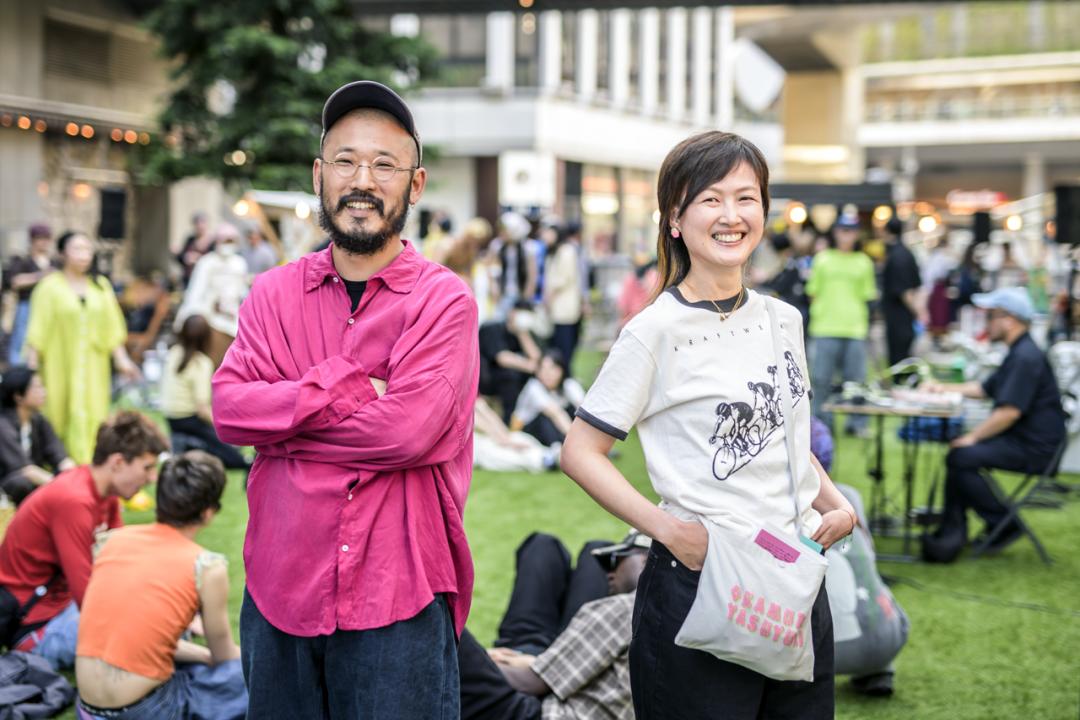
Event director Akifumi Kumai (left) and Tokyu's Akie Tanno (right)
Interactions among diverse people are expanding.
Akie Tanno, who is in charge of the event at Tokyu, also said, "We haven't set a target audience. Everyone is a target audience."
"We'd be happy if it became a place where elderly neighbors would say, 'I came to the dentist, but I saw something going on, so I stopped by,' and then sit down and enjoy coloring..."
Ms. Tanno herself grew up in Shibuya, and has been familiar with the area since childhood.
"Since childhood, I've always felt that Shibuya is a place where outsiders can behave as they please, expressing themselves freely and creating something new. There's a scene I want to see. It's like creating a microcosm of Shibuya... This place is a sanctuary for me, so I hope it becomes the same for visitors. I'd be happy if that feeling spreads. And I believe Shibuya should be a place where creators and young people can freely take on challenges, so I want to create such a space here as well."
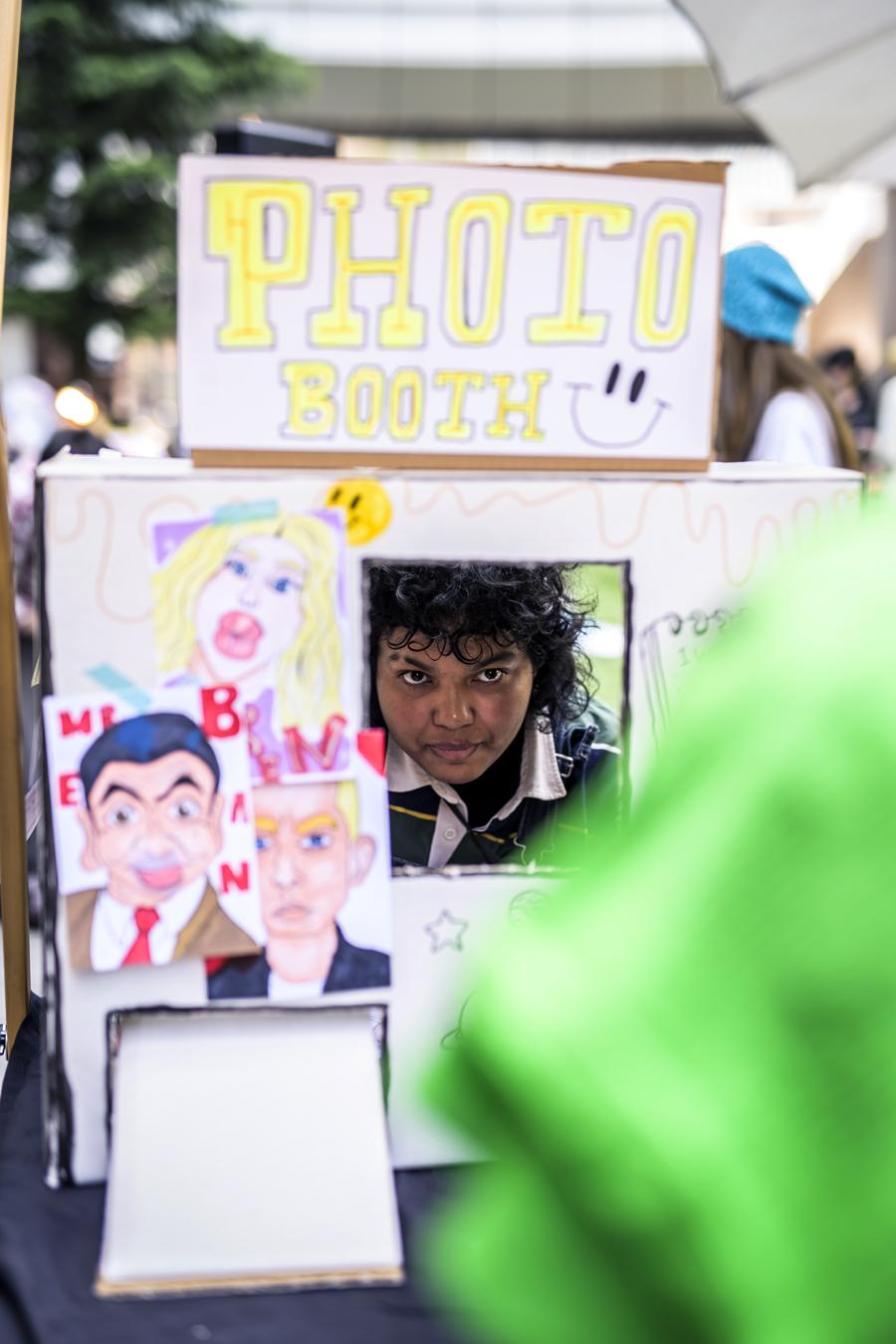
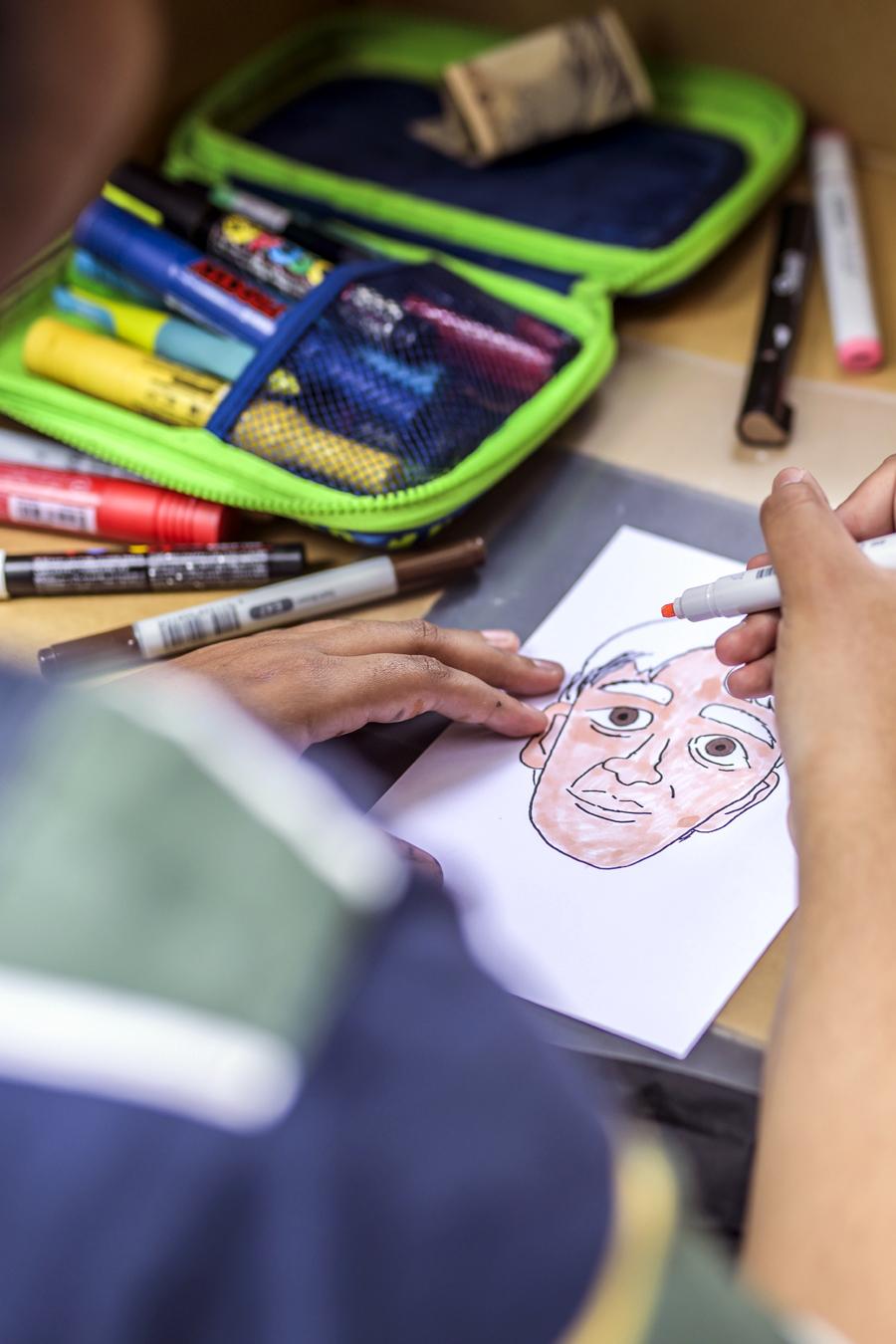
A young artist who runs the caricature photo machine "PHOTO BOOTH"
In fact, young members studying curation at "GAKU," a creative school located within PARCO, are also involved in the event management. This provides them with an opportunity to put the knowledge they've learned in lectures into practice in a real-world setting.
Looking around the venue, one also notices the large number of foreign visitors. Many of the organizing staff and vendors have overseas roots, and it was noticeable that many of them were visiting with their children, as well as members of their cultural communities and foreign residents living in the Shibuya 3-chome East area.
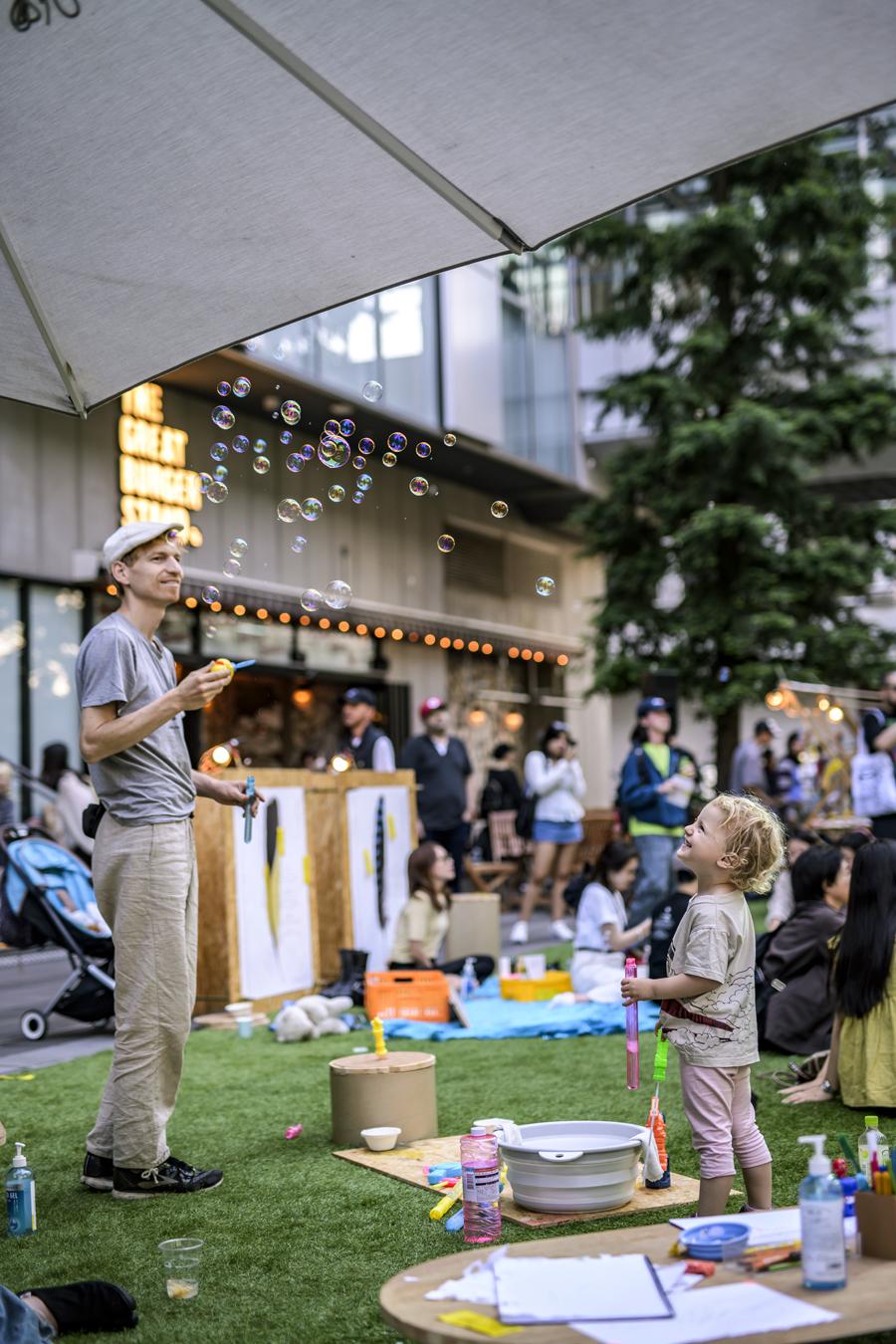
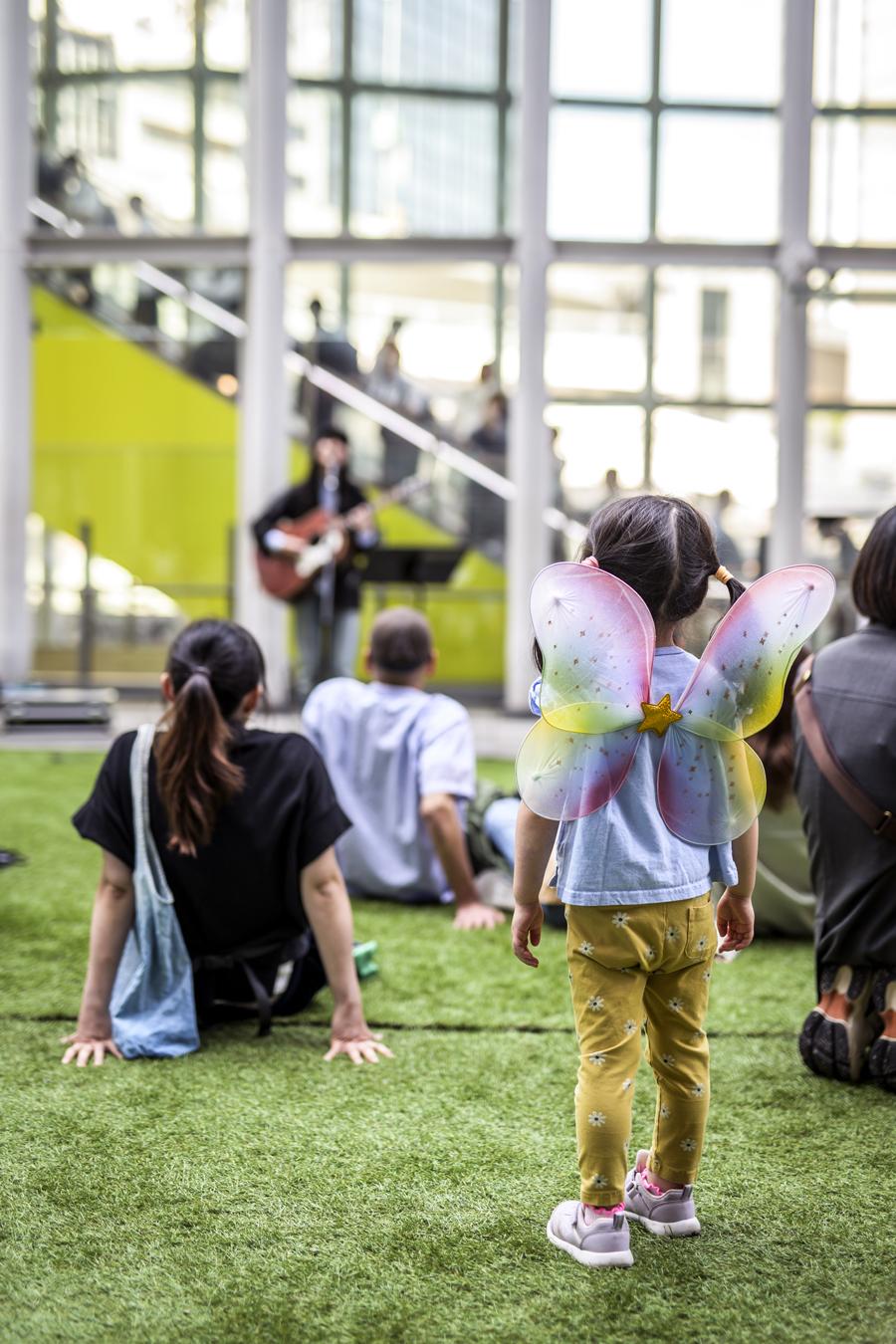
Couples pushing strollers and families enjoying themselves with small children were also there.
Ms. Tanno said, "People from overseas like to spend time outdoors and have fun. They're good at having fun. So they naturally enjoy scenery like this."
The small community, transcending nationality, gender, age, and cultural background, is gradually expanding with each event, like ripples spreading across the surface of water.
A small biotope cultivated in the Shibuya River
One initiative that symbolizes this "small community" is the biotope activity that continues along the Shibuya River.
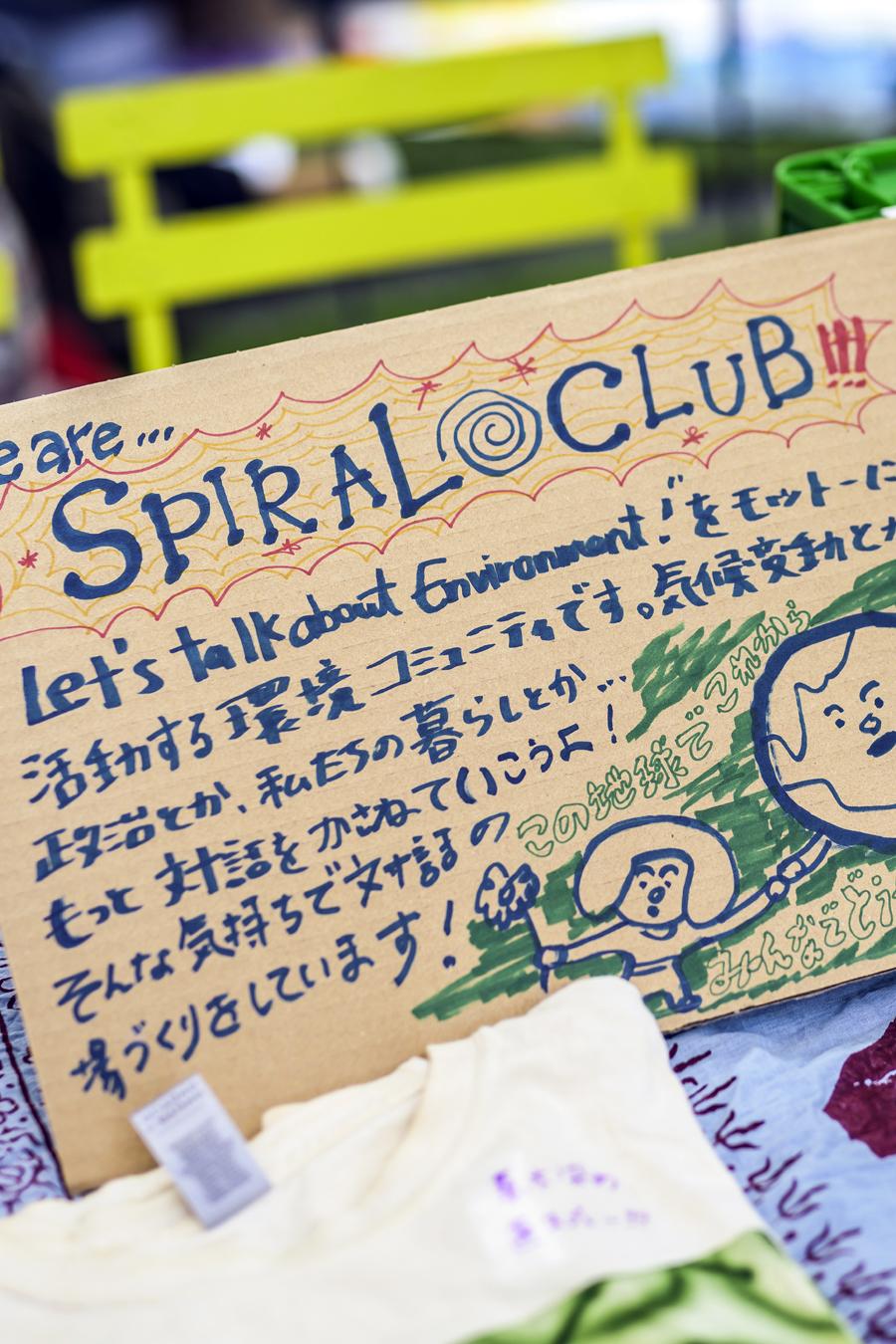
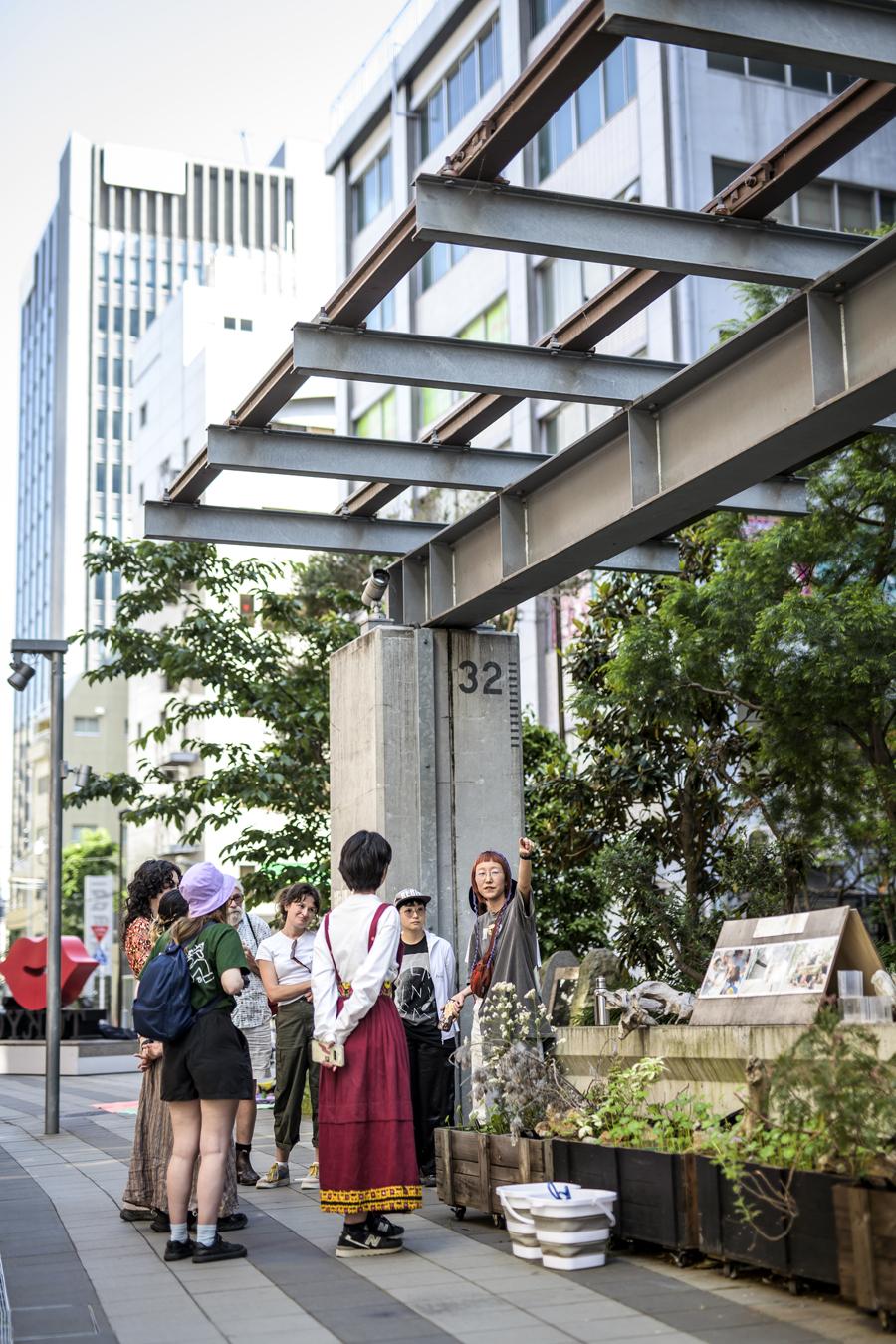
A biotope located under a pergola (covered space) next to the studio of the community FM station "Shibuya no Radio" on the promenade along the Shibuya River.
The volunteer community "Spiral Club" has been cultivating a small biotope along the Shibuya River promenade, "Shibuya River Street," since 2023. Local residents and children also participate, continuing their activities to observe the aquatic environment and the creatures that inhabit it.
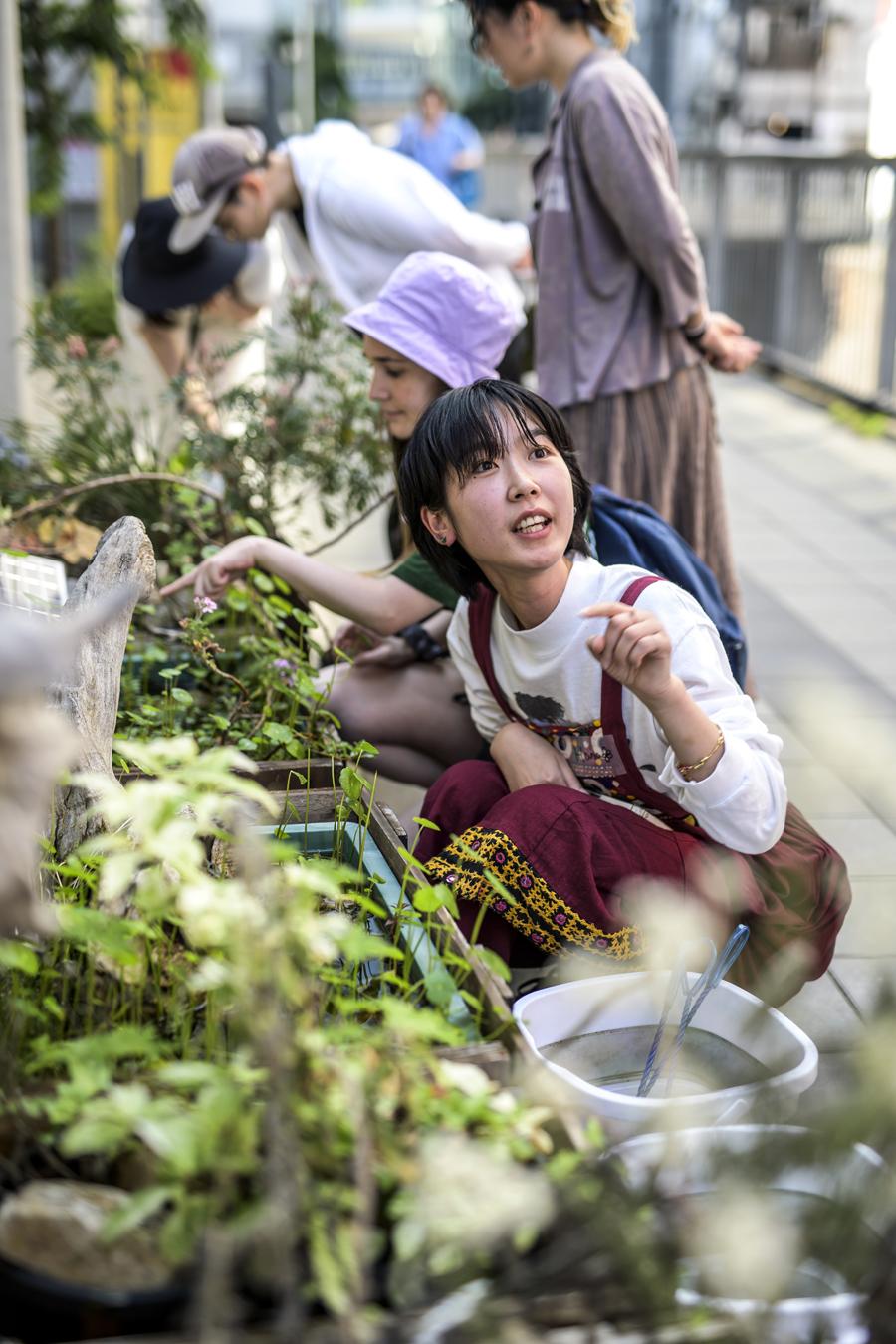
During the event, activities included observing and cleaning the biotope, as well as a workshop on the theme of "What makes a good river?". The workshop held on the 16th attracted about eight participants from various countries, including Australians traveling in Japan and Portuguese and Belgian residents, who deepened their interactions while speaking a mix of Japanese and English.
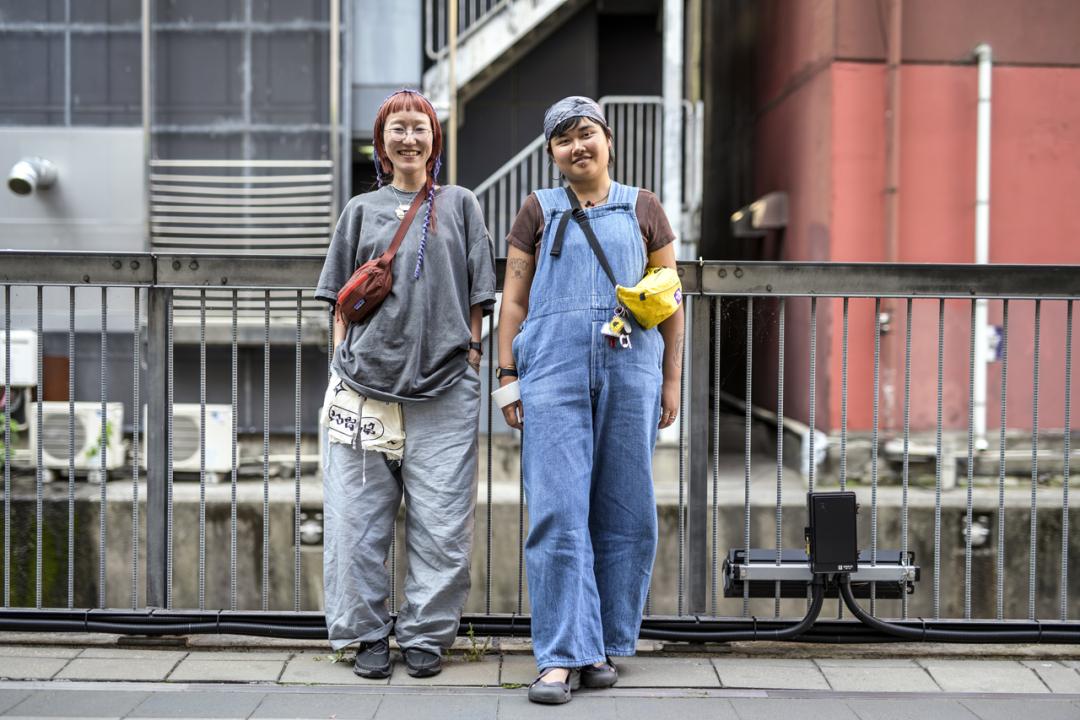
Spiral Club members Moe Nakamura (left) and Nanami Kobayashi (right)
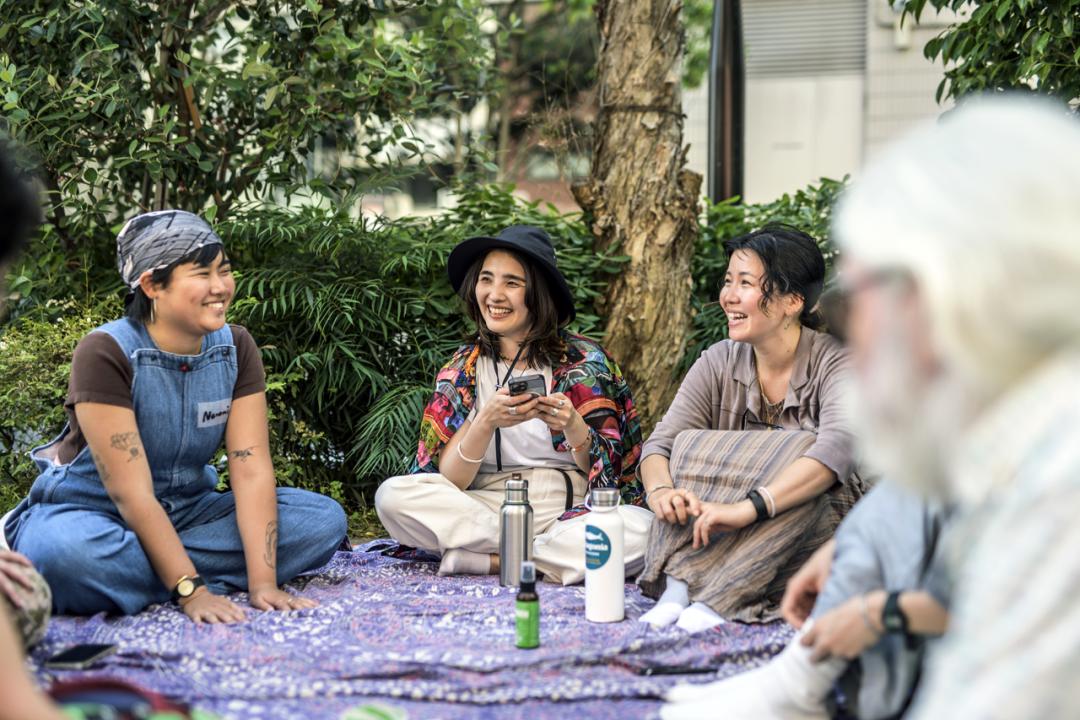
Regarding the origins of Spiral Club, member Moe Nakamura recalls, "In Japan, there were few places where we could casually talk about climate change and environmental issues. These are topics that are commonly discussed overseas, but in Japan, there were hardly any opportunities to talk about them with people of the same generation. When I returned from studying abroad, I thought, 'First of all, I want to create a community where we can have a dialogue.'"
A scene from an open meeting held on a walking path, where anyone could participate by spreading out blankets.
Nanami Kobayashi, also a member, says, "Discussions about the environment are connected to discussions about politics, gender, and lifestyles." Regarding the reason why many members and participants have overseas roots, she explains, "People who are interested in environmental issues and climate change often gather information in English, so it's natural that people who can speak English tend to gather together."
A key characteristic of this community is that it's not just comprised of a fixed group of members, but also a fluid network of diverse individuals from both within Japan and internationally who gather and engage in dialogue.
Can it really be called a river?
Biotope activities began as a way to encourage reflection on climate change and the natural environment. For a long time, the Shibuya River was like the "backside of the city." Hidden in the shadows of railway overpasses and buildings, it wasn't a place where people would linger. However, with the opening of SHIBUYA STREAM in 2020, improvements were made to the clear stream and water features, and the riverside promenade "Shibuya River Street" was created. Currently, it is a popular space where people can experience the waterfront in the middle of the city.
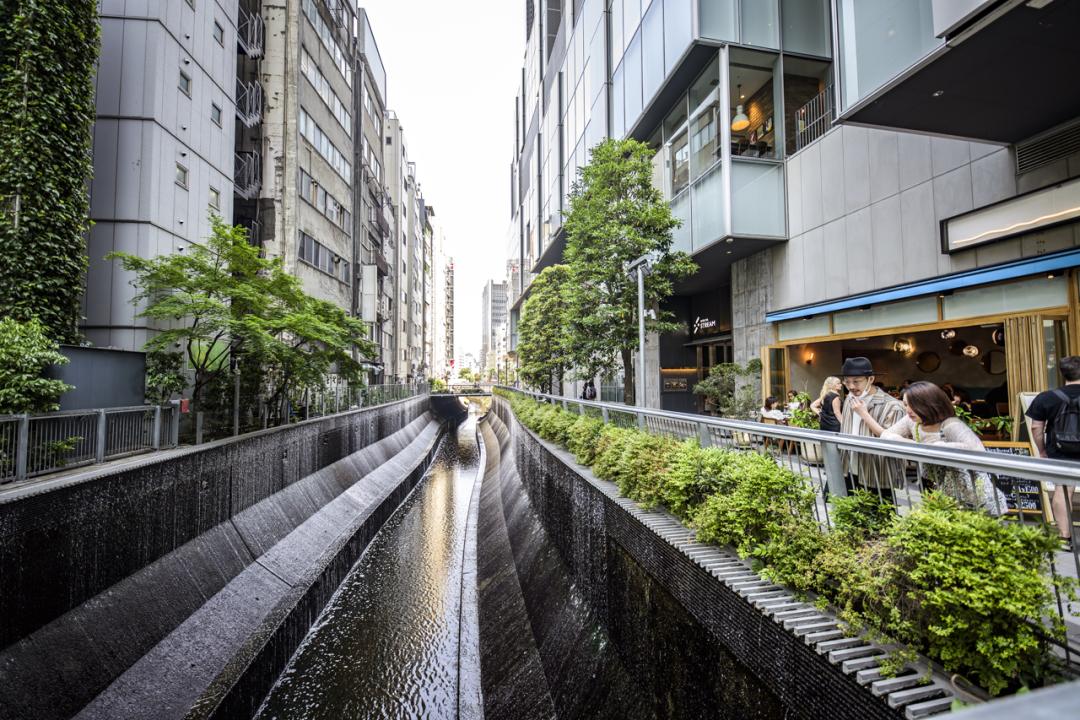
The Shibuya River was developed as part of the redevelopment of the former Tokyu Toyoko Line site.
On the other hand, Nakamura frankly states, "The Shibuya River has few living creatures and is surrounded by concrete. I question whether this can truly be called a river."
In this workshop, participants considered together what makes a "good river." Opinions included: "It has an ecosystem where living things and plants coexist," "It's a place where you can spend a long time relaxing," "You can feel the changes of the seasons," and "You can enjoy the changes in the microorganisms in the water."
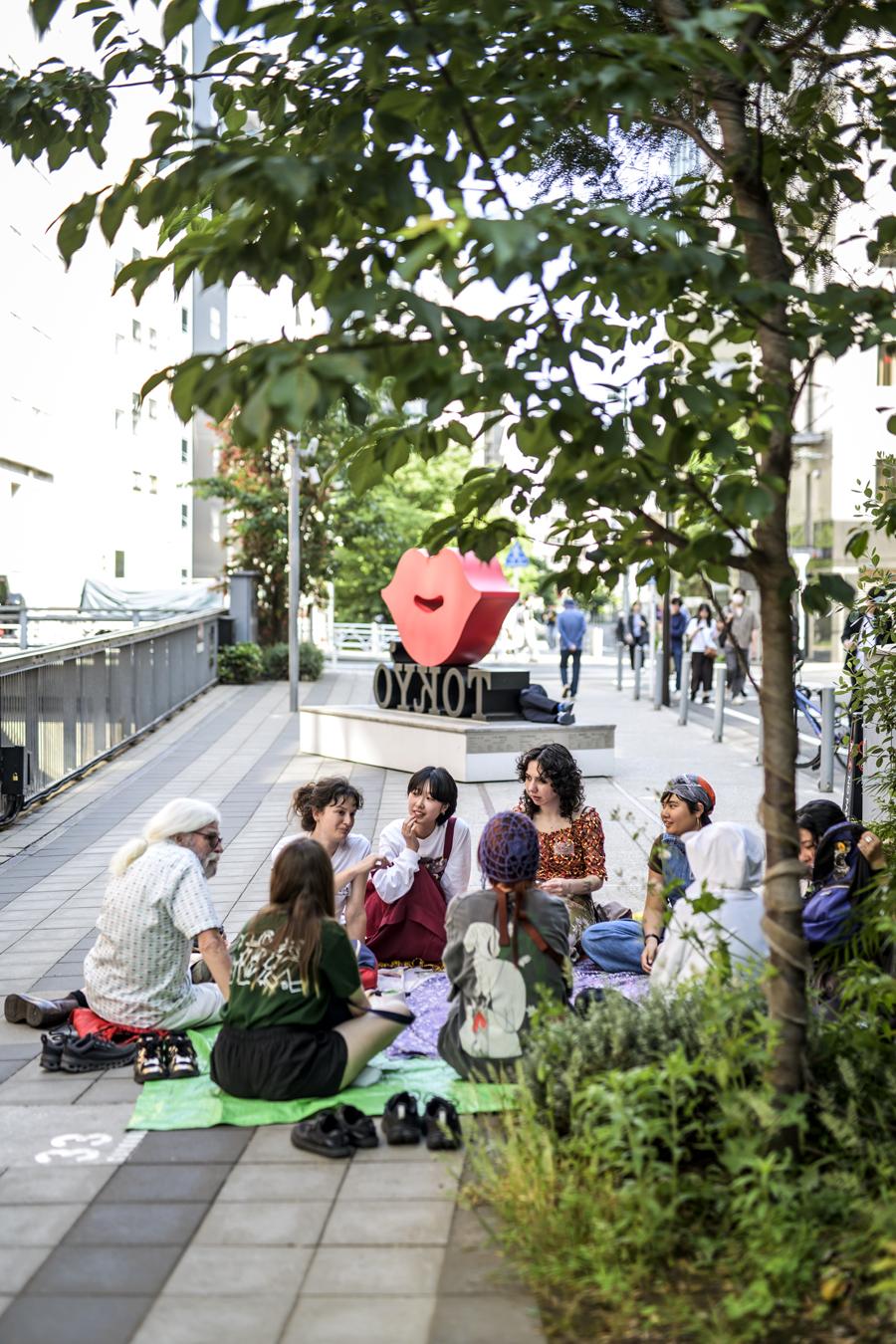

Participants engage in a dialogue on the theme of "What makes a good river?" The diverse opinions and values of people from different backgrounds stimulate each other.
The current Shibuya River is still far from that ideal. Nevertheless, Nakamura says, "We can't drastically change the river itself on our own. But if more people want the river to become richer, there's a possibility that it will change little by little."
He then added, "First, I want to increase the number of people who are interested in rivers."
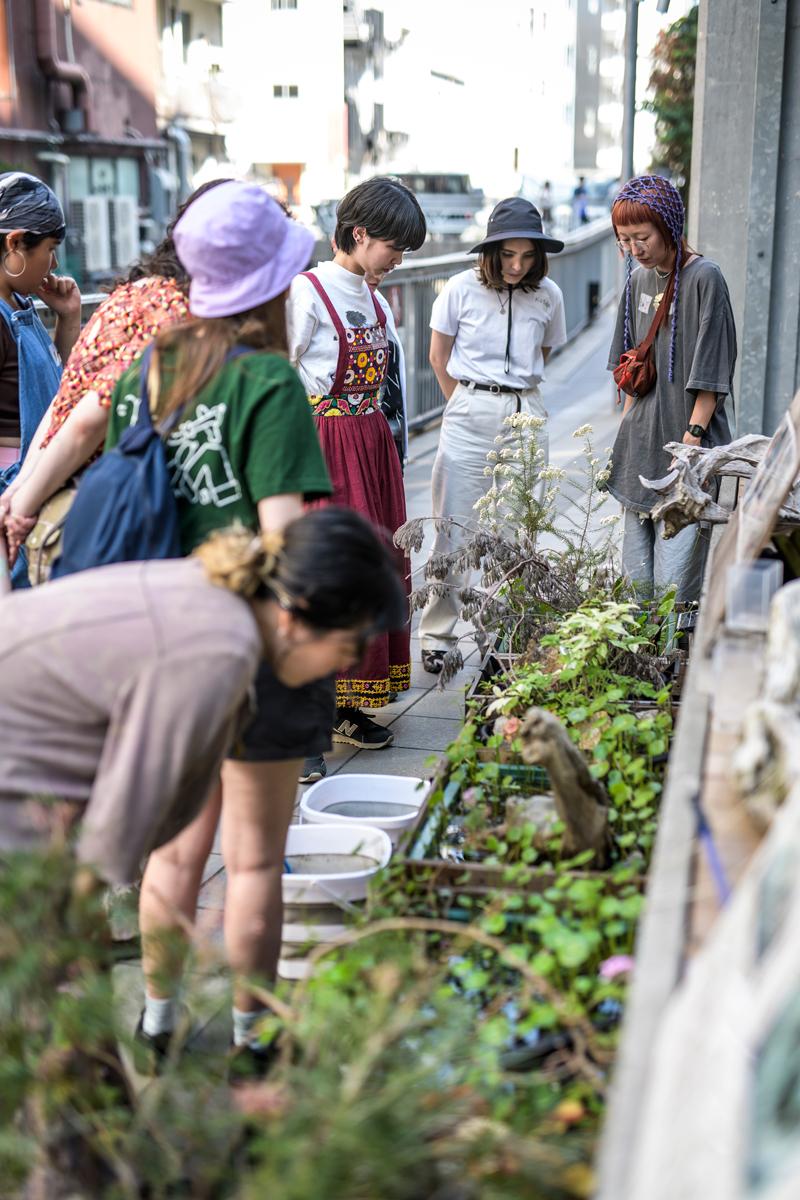
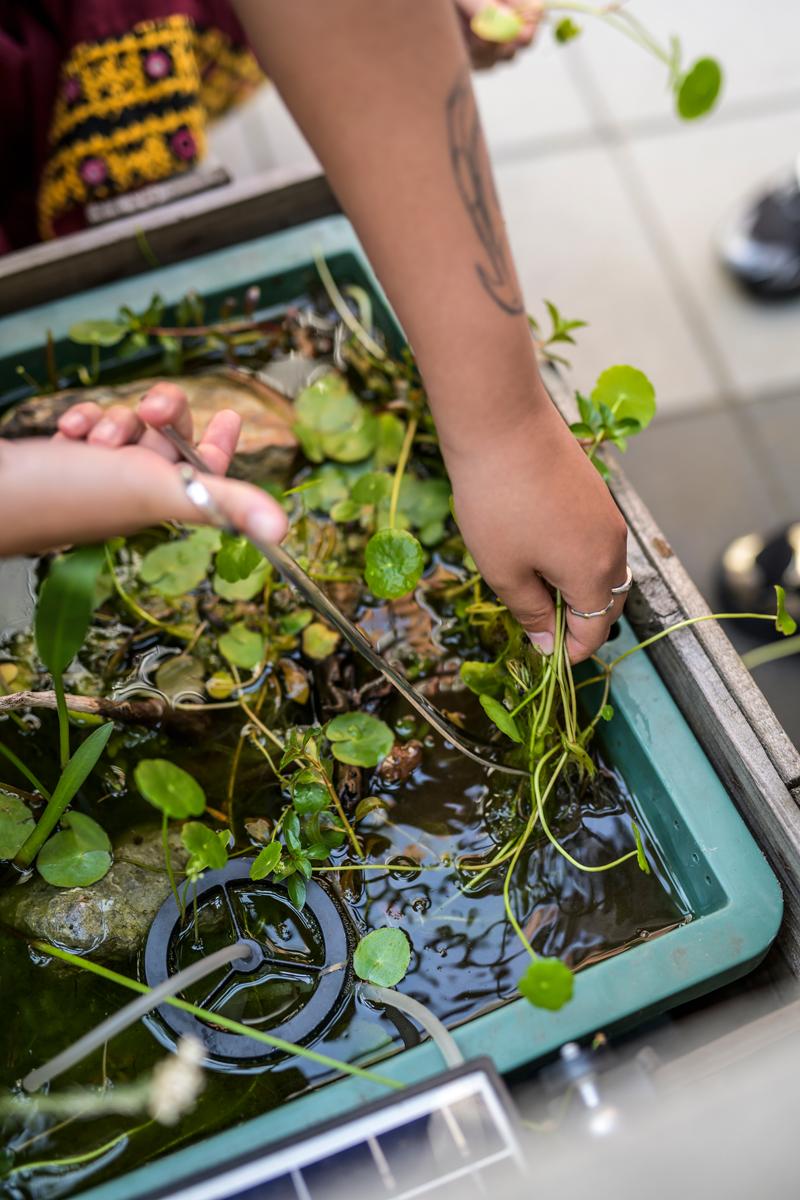
Participants clean the biotope by removing algae that have increased with rising temperatures and thinning out overgrown aquatic plants.
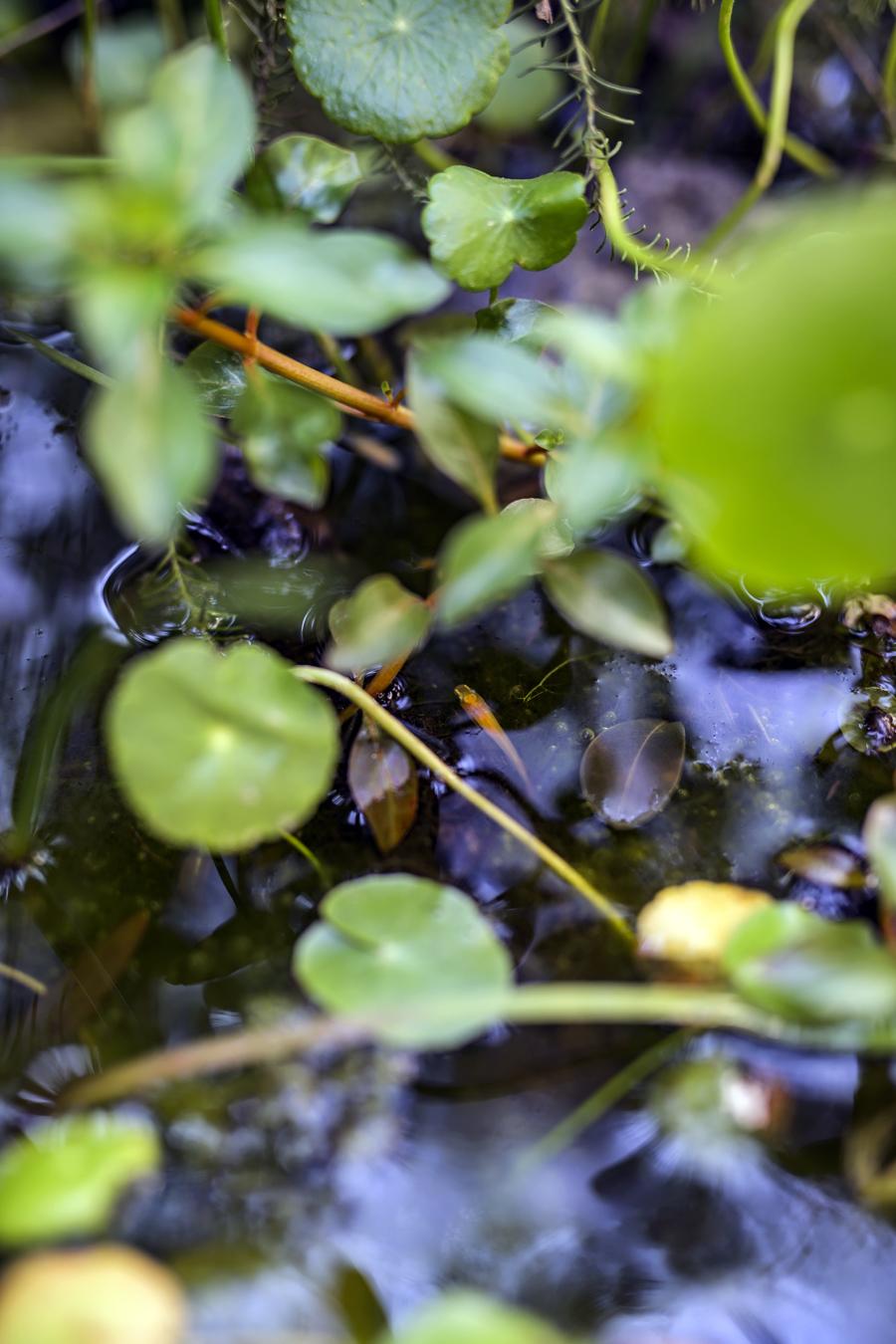
The medaka fish swim around energetically in the biotope. Small shrimp and snails also live there, and depending on the season, dragonflies may fly in or butterflies may come to drink the water.
During the workshop, participants quietly observed small biotopes containing medaka fish and plants in aquariums for one minute, and removed overgrown algae and aquatic plants. Through these small water features, the relationships between people and nature, and between people themselves, were gently reconnected.
Occasionally, families strolling along the promenade and tourists from overseas could be seen stopping to admire the biotope.
Can we restore "space" to cities?
The area along the Shibuya River was once a dark, overgrown space beneath the elevated railway tracks, like the "B-side of Shibuya." However, the development of SHIBUYA STREAM opened up the underground culvert, creating a landscape where the river is visible once again.
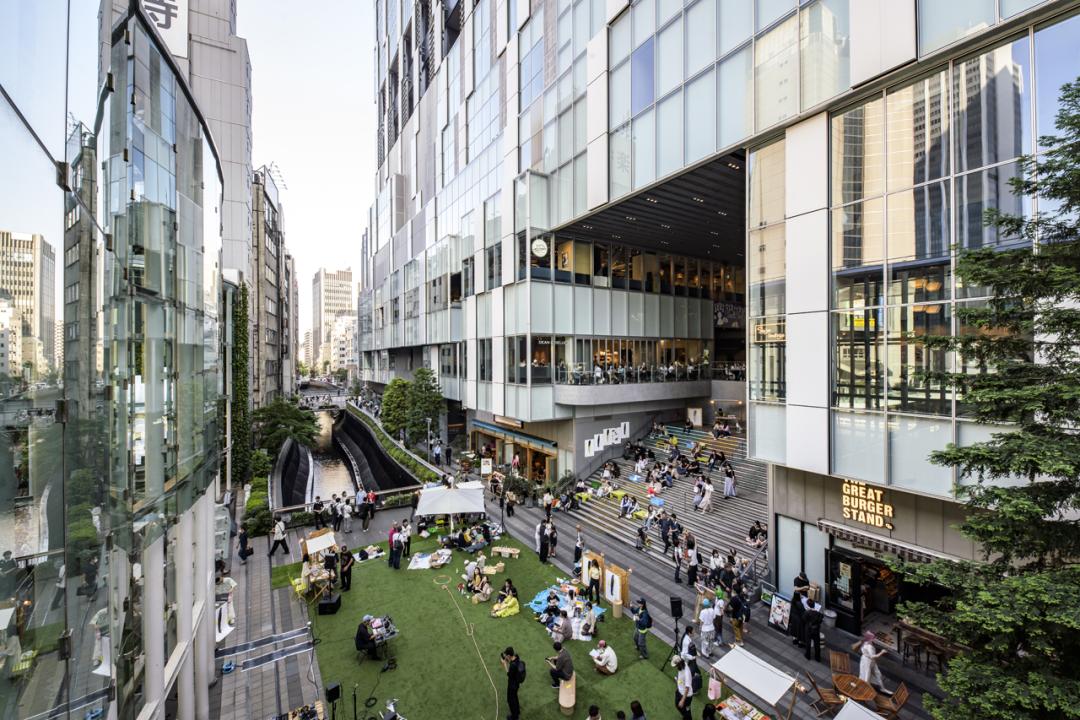
In the "Shibuya South Area," located south of Shibuya Station, new urban development is progressing, centered around the Shibuya River. It offers a different landscape from the area around the Hachiko statue and Shibuya Scramble Crossing, showcasing a new charm of Shibuya.
Kumai says, "The fact that the river has returned to the heart of the city is very significant."
"If there wasn't a river here, this event wouldn't be happening as it is now. Rivers are also pathways for the wind, and without them, it might feel stifling, and people might not want to stay here. I think the relationship between water and humans is an essential theme when considering what makes a good city."
The sense of openness created by the improvements to the Shibuya River, and the feeling of being close to nature, are said to be the charm of this place.
Furthermore, Kumai pointed out that "the phrase 'creating vibrancy' is often used, but it's not simply about having a lot of people." He added, "I think a truly rich city is one where nature, including not only people but also plants and animals, is thriving."
In Shibuya, where large-scale redevelopment is underway, while ease of movement and convenience are emphasized, the value of "places to stop" and "spaces to relax" tends to be overlooked. Surely, cities need places not only for those in a hurry, but also for those who want to rest for a while or simply relax and do nothing.
What was taking place on the banks of the Shibuya River was not merely an event, but rather a testing ground for gradually updating the way we use the city.
"It's important to keep asking ourselves, 'What makes a good city?' What interesting and meaningful things will emerge from that question? I think this event itself is probably a practical application of that."
The next event is scheduled for November 7th (Saturday) and 8th (Sunday).
Interview and writing: Takashi Fujii / Photography: Osamu Matsuba
Venue
Genres within watch
Articles in the same genre
2026-10-18〜
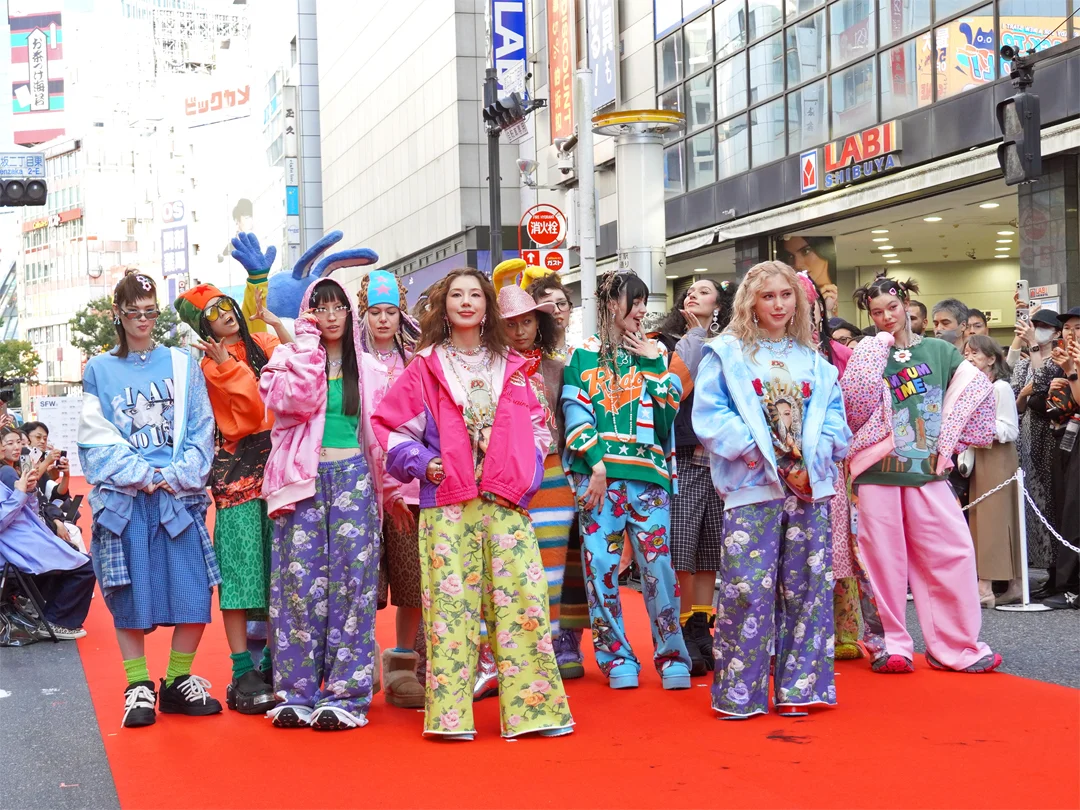
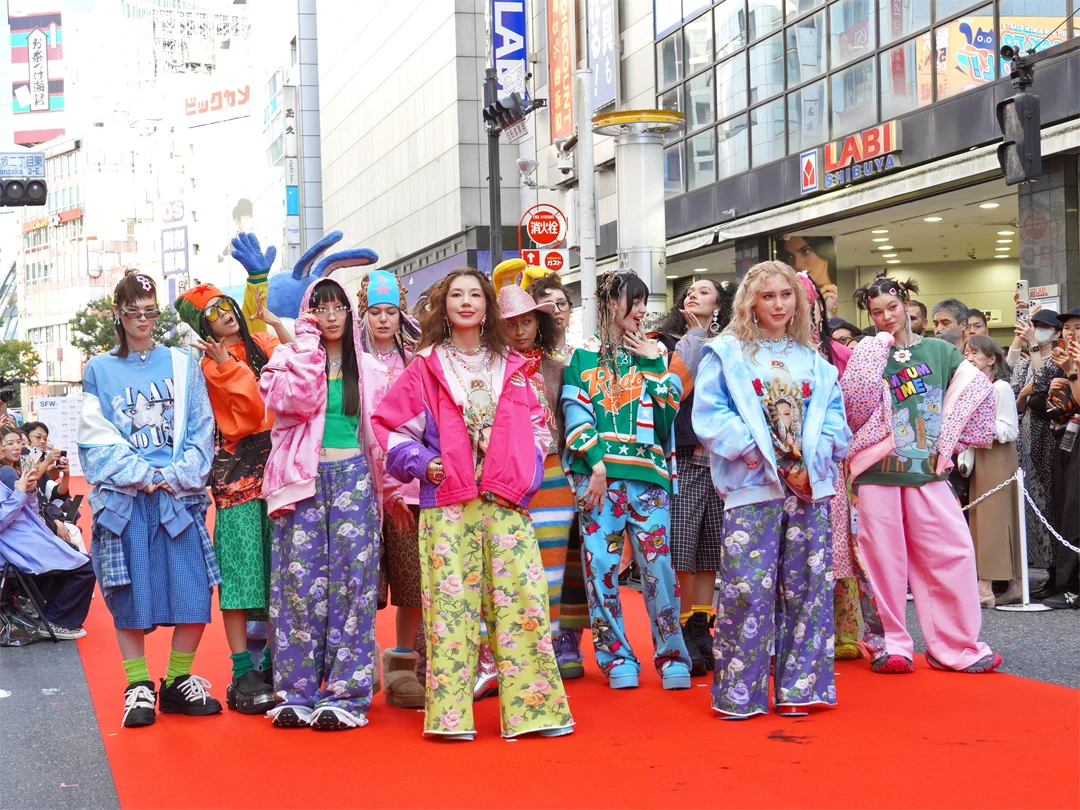
渋谷の真ん中でファッションと文化が交差 仲里依紗さんらが路上ランウェイ
2026-10-18〜
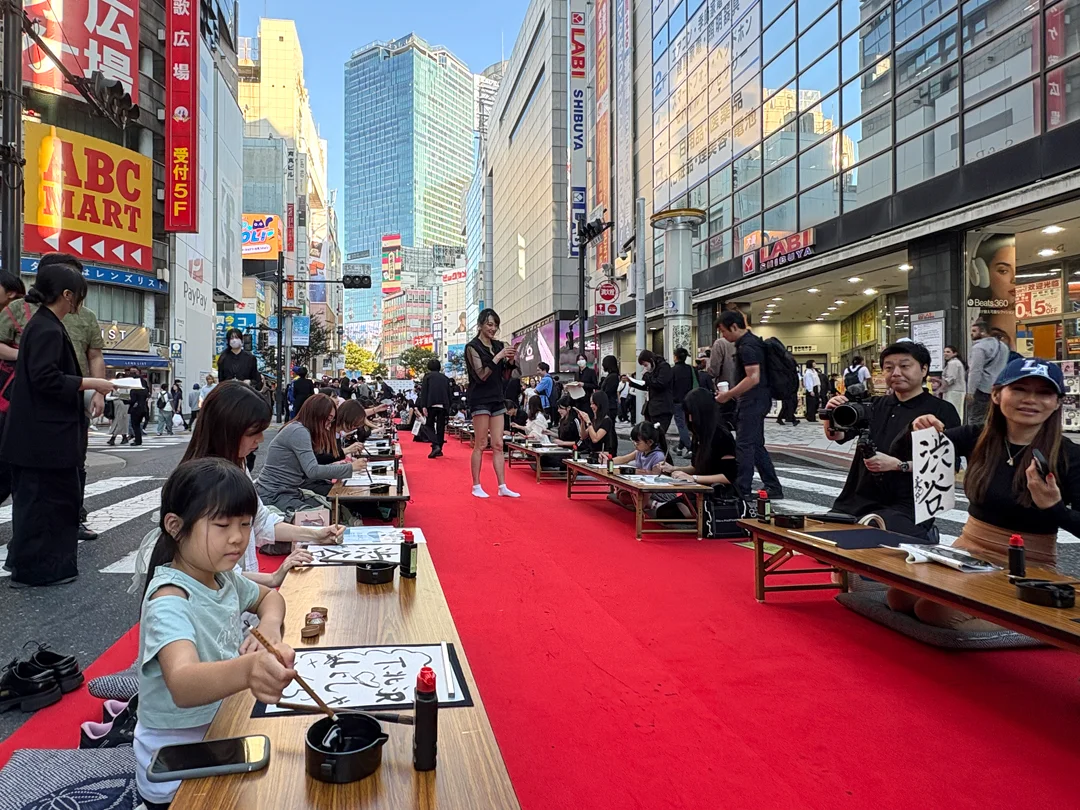
渋谷・文化村通りで書道体験 レッドカーペットに100人超、外国人観光客も
2026-08-20〜
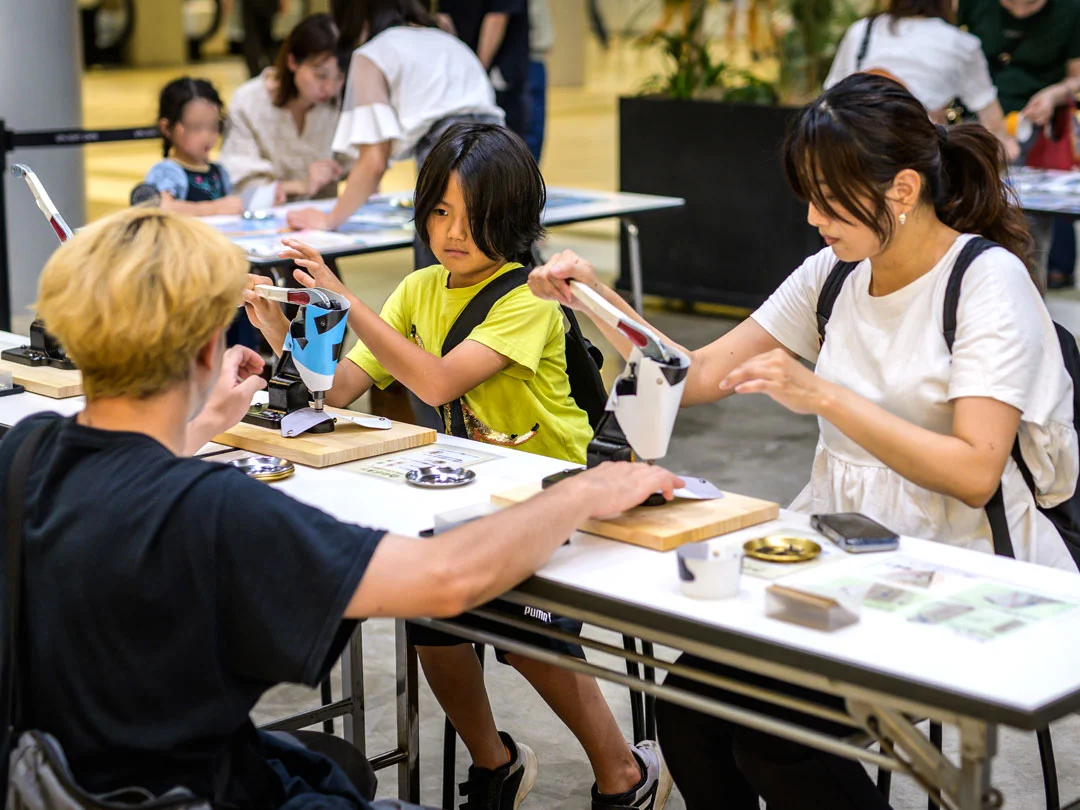
Parents and children reuse advertising banners displayed at Shibuya Station to create one-of-a-kind wallets.
![[Report] Japan's national team, hailed as the strongest ever, sparks excitement in Shibuya for their World Cup match against Tunisia!](https://biz.shibuyabunka.com/storage/images/watch//1782038663.webp)
2026-06-21〜
[Report] Japan's national team, hailed as the strongest ever, sparks excitement in Shibuya for their World Cup match against Tunisia!
Featured articles on the site
渋谷の真ん中でファッションと文化が交差 仲里依紗さんらが路上ランウェイ
#Shibuya Club Vol. 1 ~ Discussing "Innovation x Culture" in Shibuya
Interactive illuminations to open in Yoyogi Park: A 1.8-kilometer "Forest of Light" to begin in November.