

SHIBUY.A. × WATCH

Cherry blossom viewing party held at SOIL; cherry trees grown using compost are in full bloom—Yokozakura and Konnozakura are also at their best in Shibuya 3-chome.
2026-03-25
SHARE
On March 25th, a cherry blossom viewing party was held at "SOIL (SHIBUYA OPEN INNOVATION Labo)" (Shibuya 3-chome), an open innovation hub operated by Tokyu Corporation, where participants gathered around potted cherry trees grown using compost produced locally. The project began with a "How to Make Compost" workshop in November of last year and has been held over four sessions. This cherry blossom viewing party was the culmination of the series of events, following the third session, "An Event to Fertilize Cherry Trees with Compost," held on the 2nd of this month, and the cherry trees, which the participants themselves had replanted, were in full bloom.
The event was originally planned to be held in an outdoor plaza, but due to unfortunate rain, the venue was moved indoors. Nevertheless, residents and workers who had participated in the fertilization event on March 2nd gathered again, surrounding 10 pots of cherry trees that were in full bloom with deep pink flowers. The saplings, which had been replanted about three weeks ago in soil blended with compost made from food waste brought in by each person from their homes and workplaces, bloomed earlier than usual this year, partly due to the warmer weather.
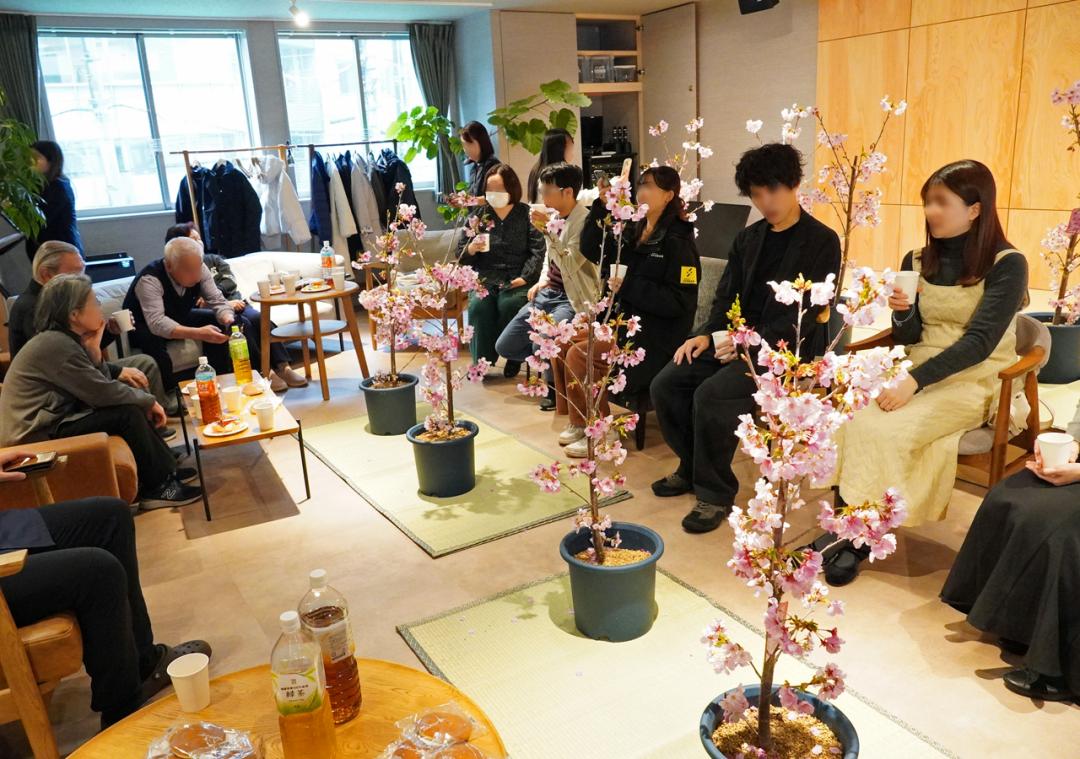
The cherry blossom viewing party was hastily moved indoors at SOIL due to the rain.
A man working in Shibuya who has been participating in the program since last year recalls, "I was approached about joining while working on urban development projects in Shibuya 3-chome. I found the initiative of creating the soil ourselves and growing cherry trees in that soil very interesting."
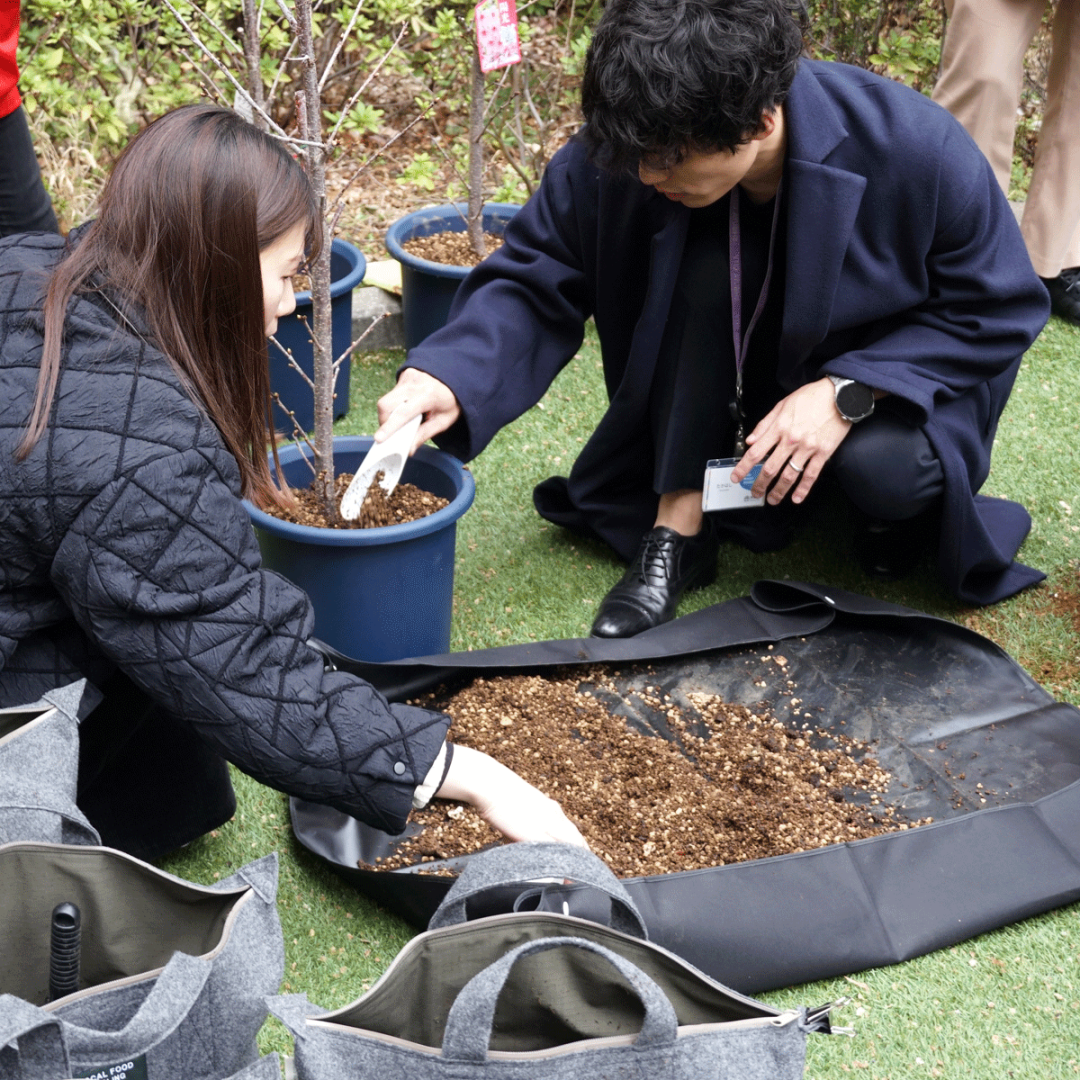
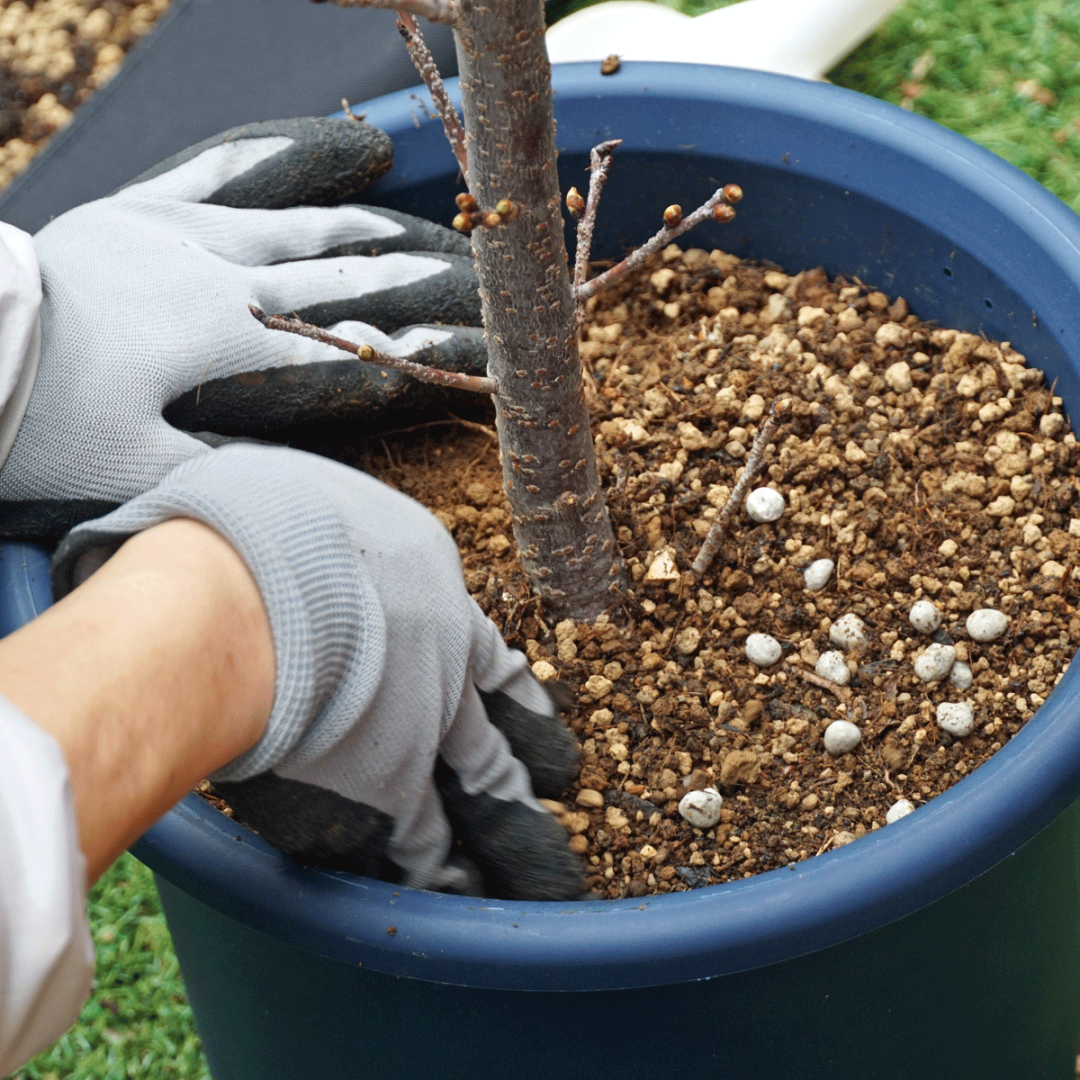
This is a scene from the "Composting to Cherry Trees Event" held on March 2nd. Compost made from food waste was used to replant cherry trees.
Although it was her first time composting, she said, "Using my own kitchen waste, I found it much easier and more enjoyable than I imagined." On the other hand, she pointed out that "it's difficult to use up all the soil produced at home, and finding ways to utilize it and a collection system are challenges for the future." Nevertheless, she emphasized the significance of the initiative, saying, "While typical workshops often end with soil preparation, this time we were able to see it through until the cherry blossoms bloomed. It wasn't just an experience; I felt a real connection with the town and its people."
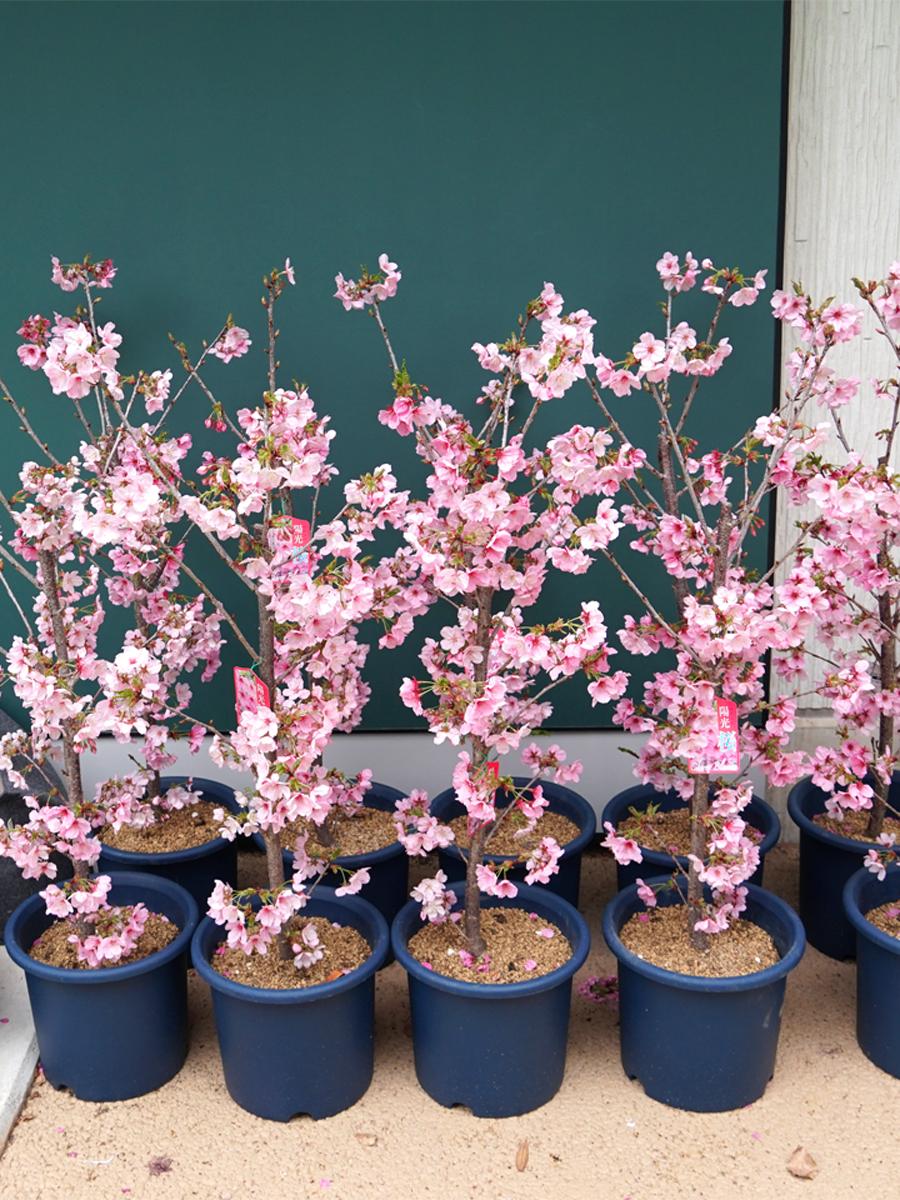
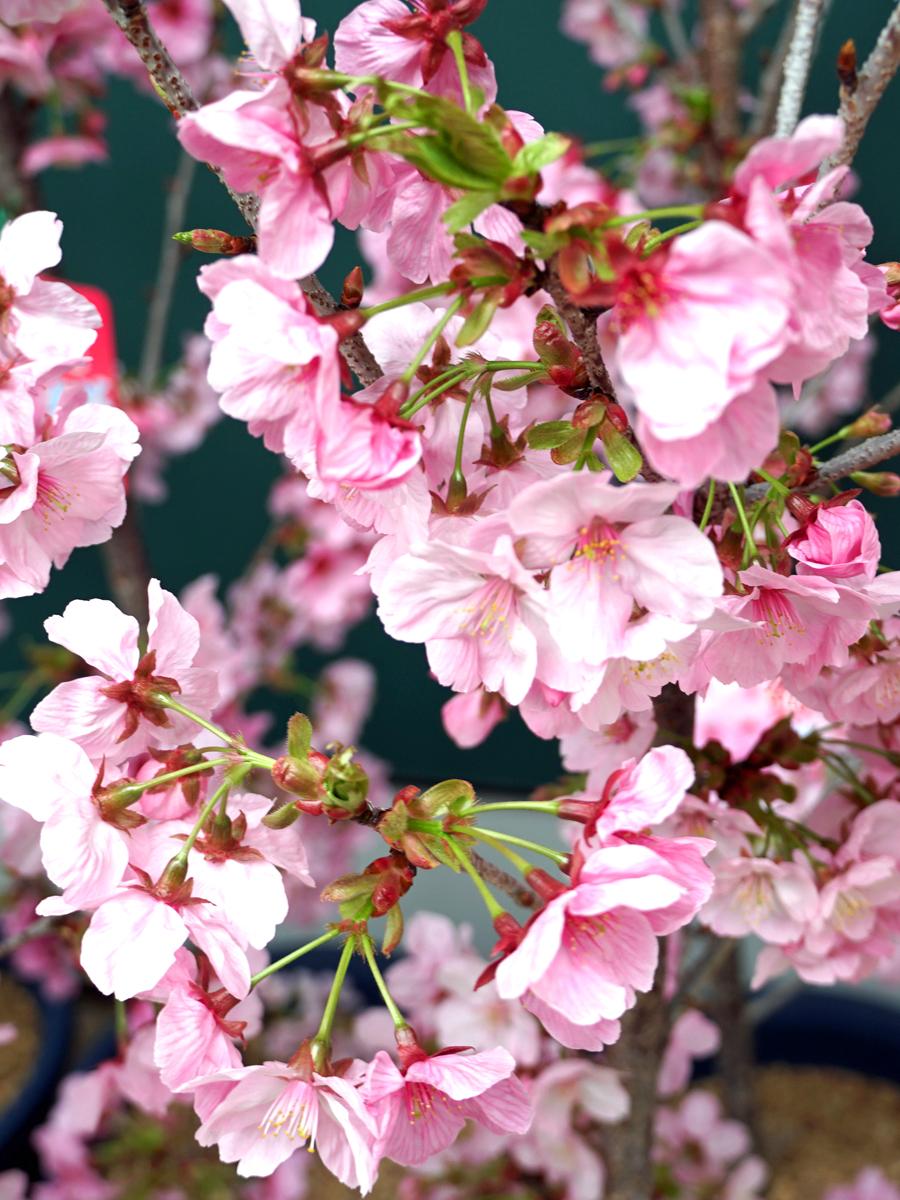
By absorbing nutrients from the compost, the 10 potted cherry trees reached full bloom in about three weeks.
Regarding his relationship with the Shibuya area, he said, "While Center Gai has a strong image as a place for 'consumption,' 3-chome also has a calm, everyday atmosphere. I felt that this initiative was well-suited to the characteristics of the area." He added, "People from diverse backgrounds, such as local residents and businesses, interacted naturally. I hope that continuing this will also lead to an improvement in the attractiveness of the town."
After the event, the man said he would take the cherry blossom pot home by train, and with a smile, he added, "I would be happy if I could have a small cherry blossom viewing with my family. I want to take care of it so that it will bloom again next year."
A community born through the medium of "cherry blossoms"
Ai Yasue of Tokyu, who organized the event, reflected on the four-part initiative that began in November of last year, saying, "Initially, we were feeling our way through it, not knowing if the cherry blossoms would actually bloom or how many people would participate." On the other hand, she said, "When we reached out to people in the community, far more people participated than we had imagined, and some even came to all the sessions. We realized that there is a real need for this kind of initiative."
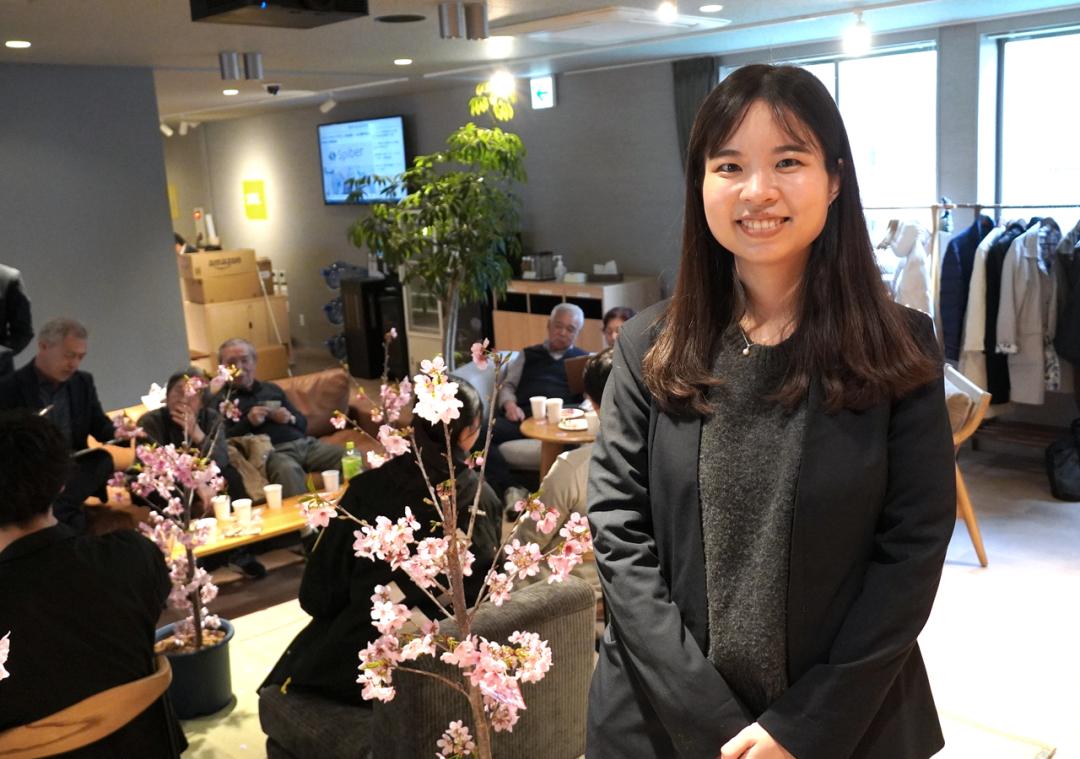
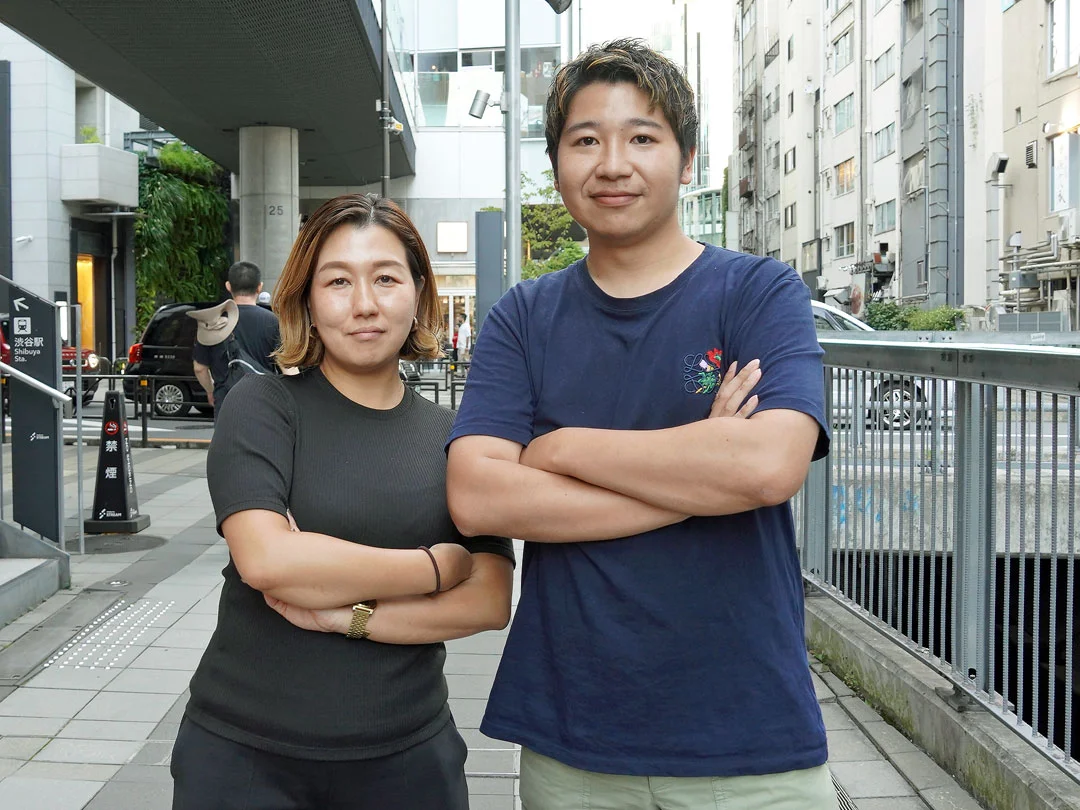
Ai Yasue of Tokyu, who organized the event.
Regarding the participants, he said, "A truly diverse group of people gathered, from young people to the elderly, including company employees and local residents. It was wonderful that a scene of people naturally gathering together was created through 'cherry blossoms,' a symbol that is uniquely Japanese."
Regarding Shibuya 3-chome, he explained, "This area has a strong image associated with cherry blossoms. From the Yoko cherry trees on Meiji Street to the Konno cherry trees at Konno Hachimangu Shrine, cherry blossoms are a key feature of the area." He added that cherry trees were planted at the entrance when SOIL opened, and expressed his hope that "this will be an opportunity for people to pay attention to those cherry trees once again."
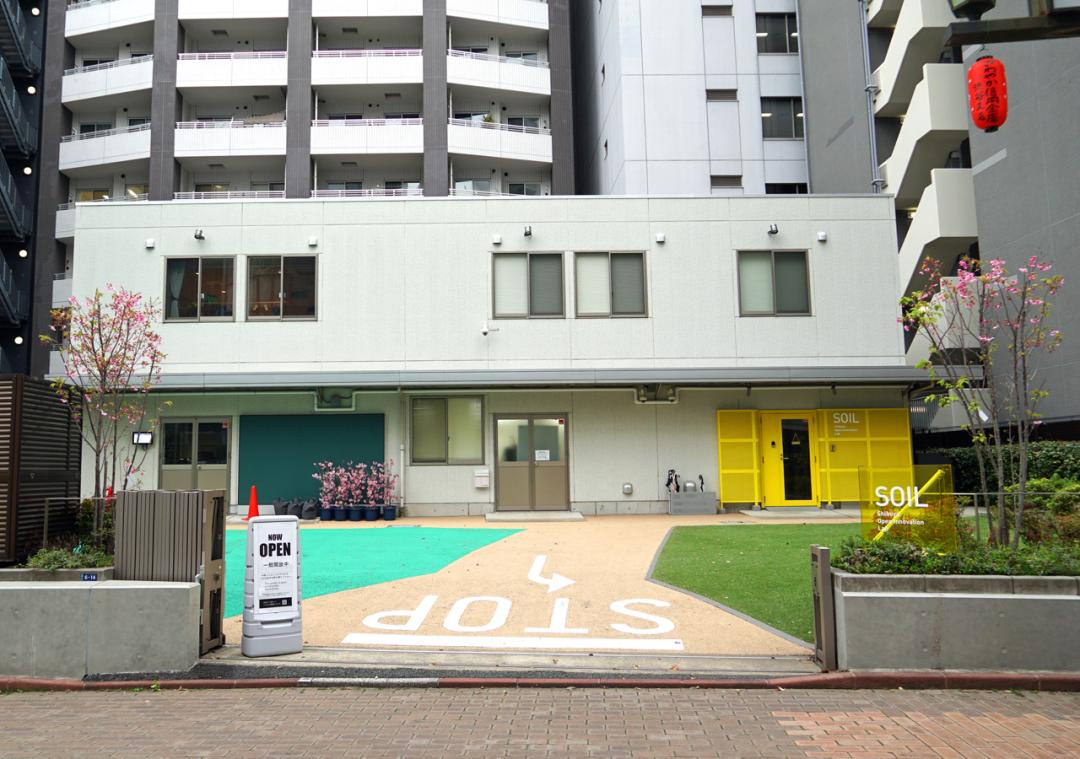
Indeed, there are Yoko cherry trees planted on both sides of the entrance to SOIL. However, compared to the potted cherry trees that receive plenty of compost, the volume of blossoms is somewhat lacking. Next year, we should definitely add compost to these as well...
Regarding the future, he said, "We want to continue our efforts to utilize this plaza. We want to make it a place that local people can easily use," and added, "There are surprisingly few places in Shibuya where people can easily gather. We hope to foster connections between people in a place like a 'hangout spot'."
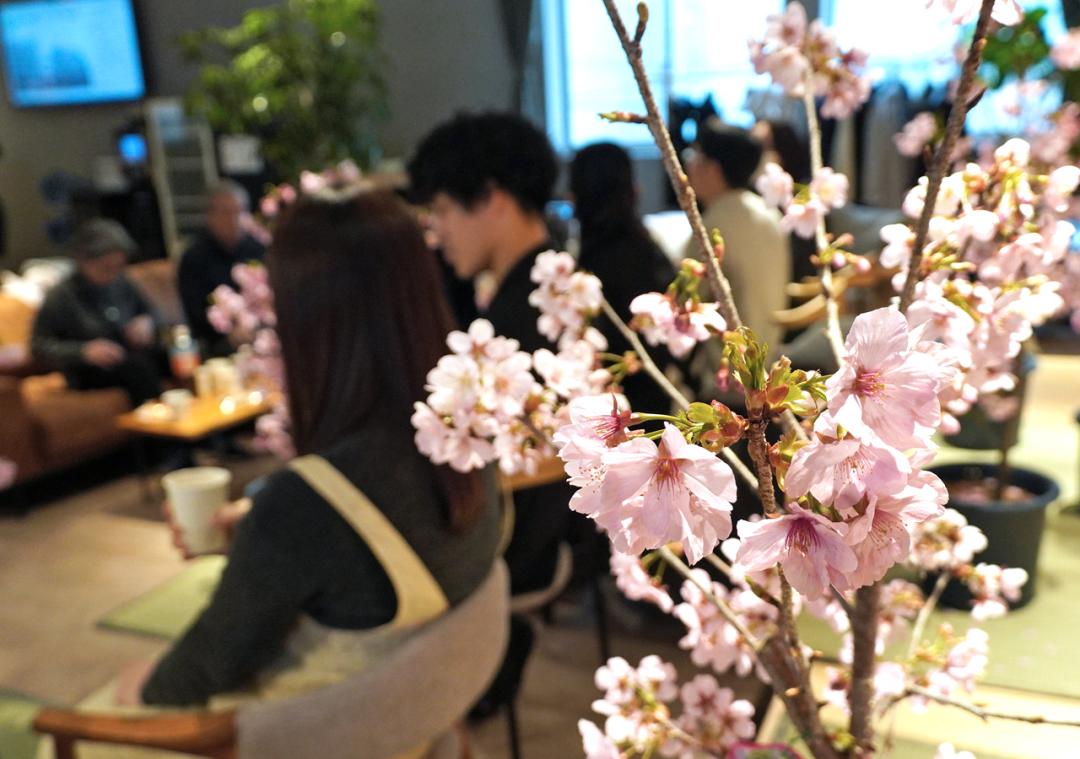
Participants of all ages gathered around the cherry blossoms and enjoyed a relaxing time.
An "early spring" is spreading in Shibuya 3-chome.
Cherry blossoms are also in full bloom around SOIL. Along Meiji Street, there is a row of Yoko cherry trees, the same variety as the potted plants featured here, which are in full bloom a little earlier than Somei Yoshino cherry trees. The deep pink blossoms adorn the streets, and many people can be seen stopping to take pictures.
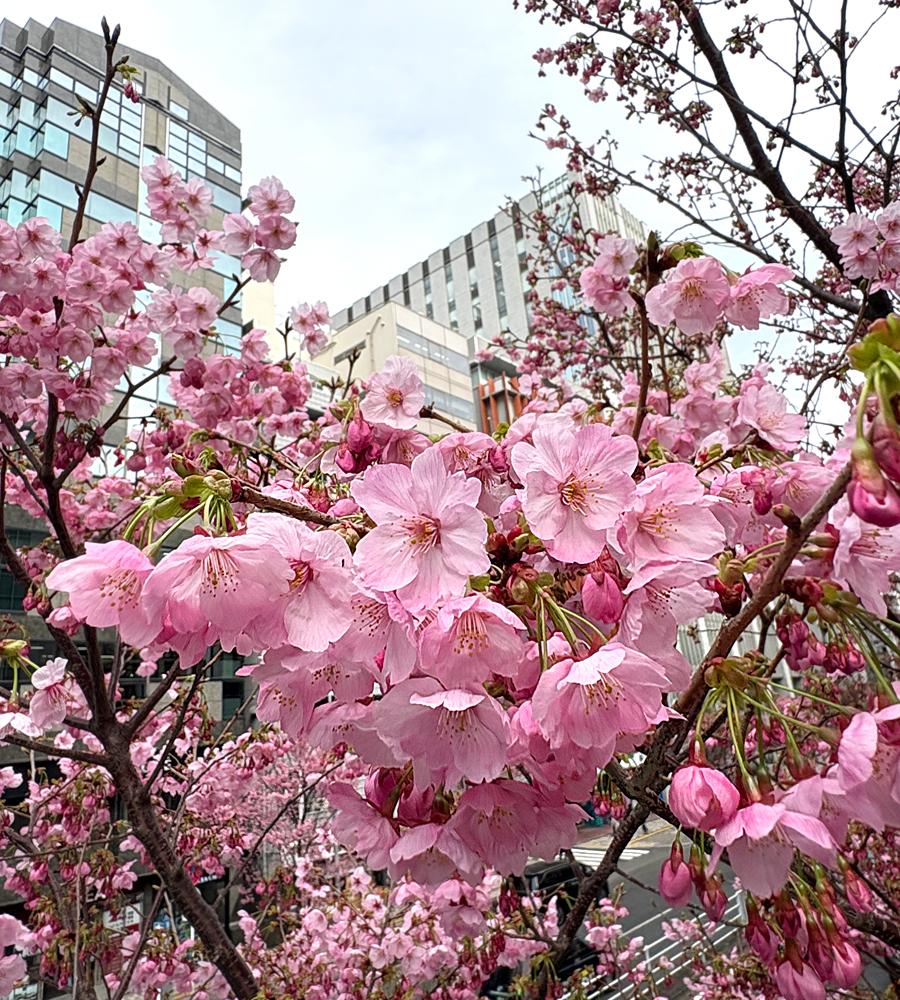
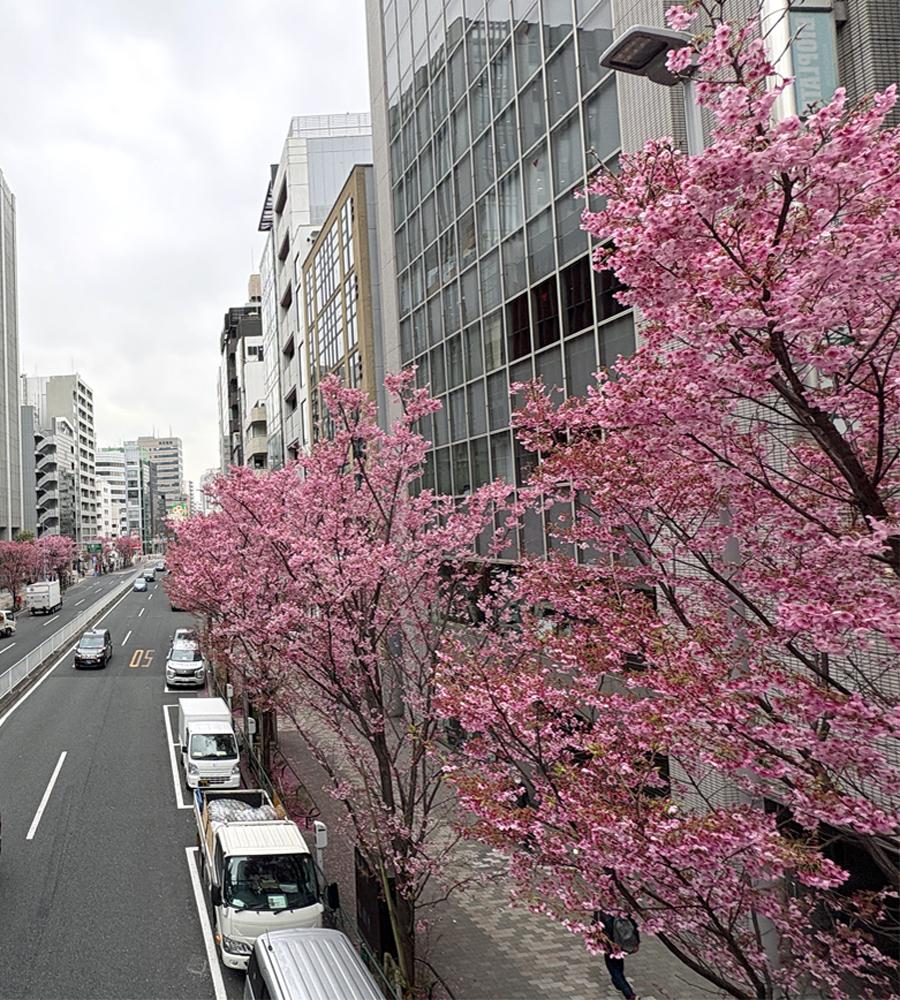
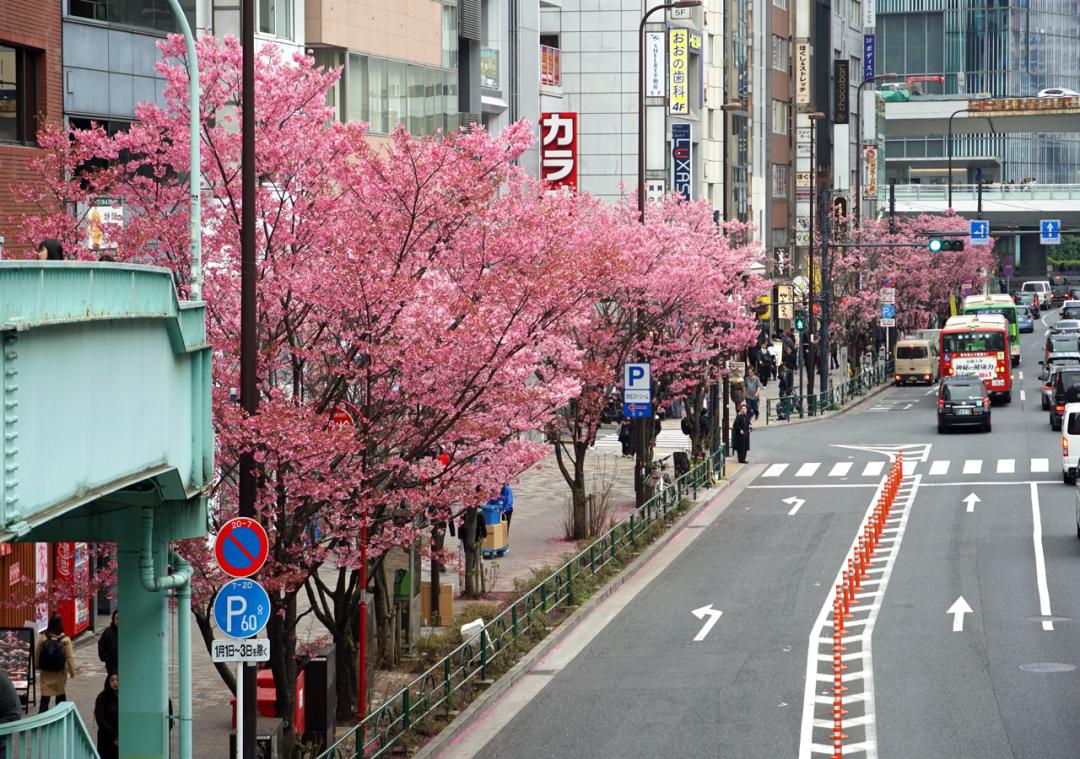
The rows of Yoko cherry trees along Meiji Street are in full bloom (Photo taken: March 25, 2026).
At the adjacent Konno Hachimangu Shrine, the famous Konno Cherry Tree, one of the three most famous cherry trees of Edo, is also in full bloom. This rare variety has both single and double blossoms on a single branch, and it is said to have been transplanted from Kamakura by Minamoto no Yoritomo in the Kamakura period in memory of his loyal retainer, Shibuya Konnomaru. It is also a designated natural monument of the ward. This historically significant tree is now in bloom with delicate flowers, delighting visitors. The annual Konno Cherry Blossom Festival is scheduled for March 28th (Sat) and 29th (Sun), but the weather is a concern. Please bring rain gear if you plan to visit.
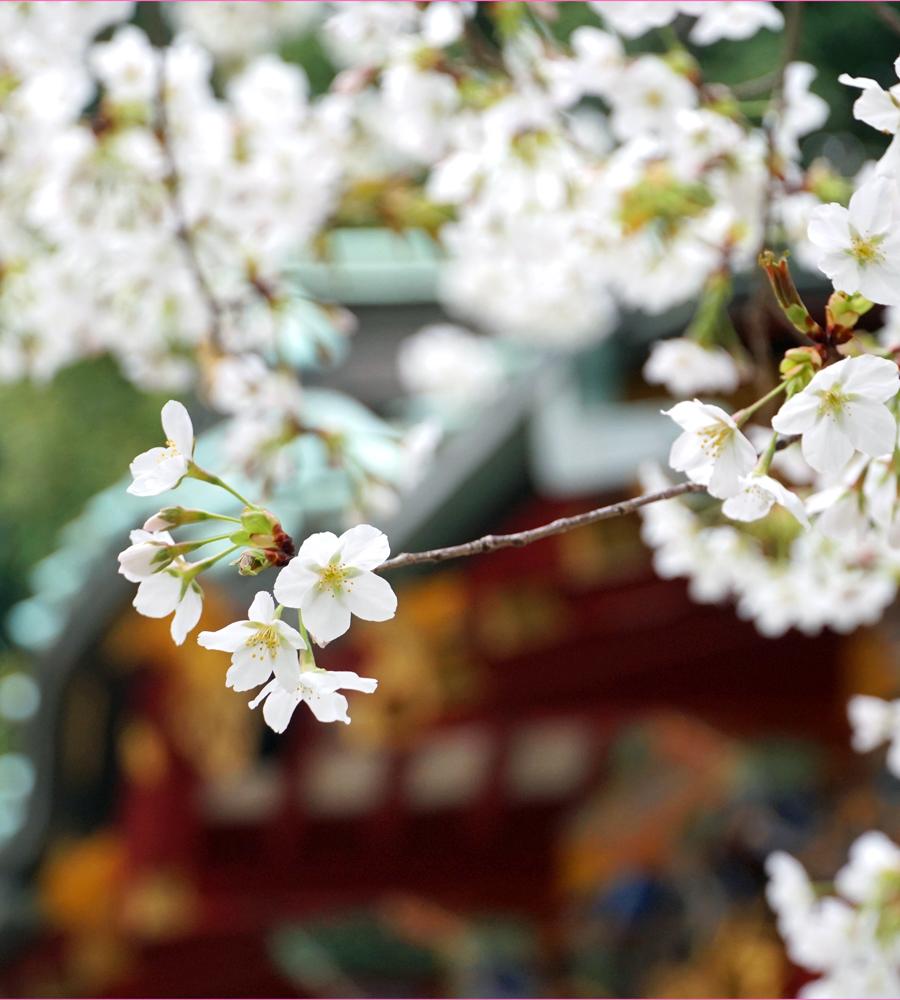
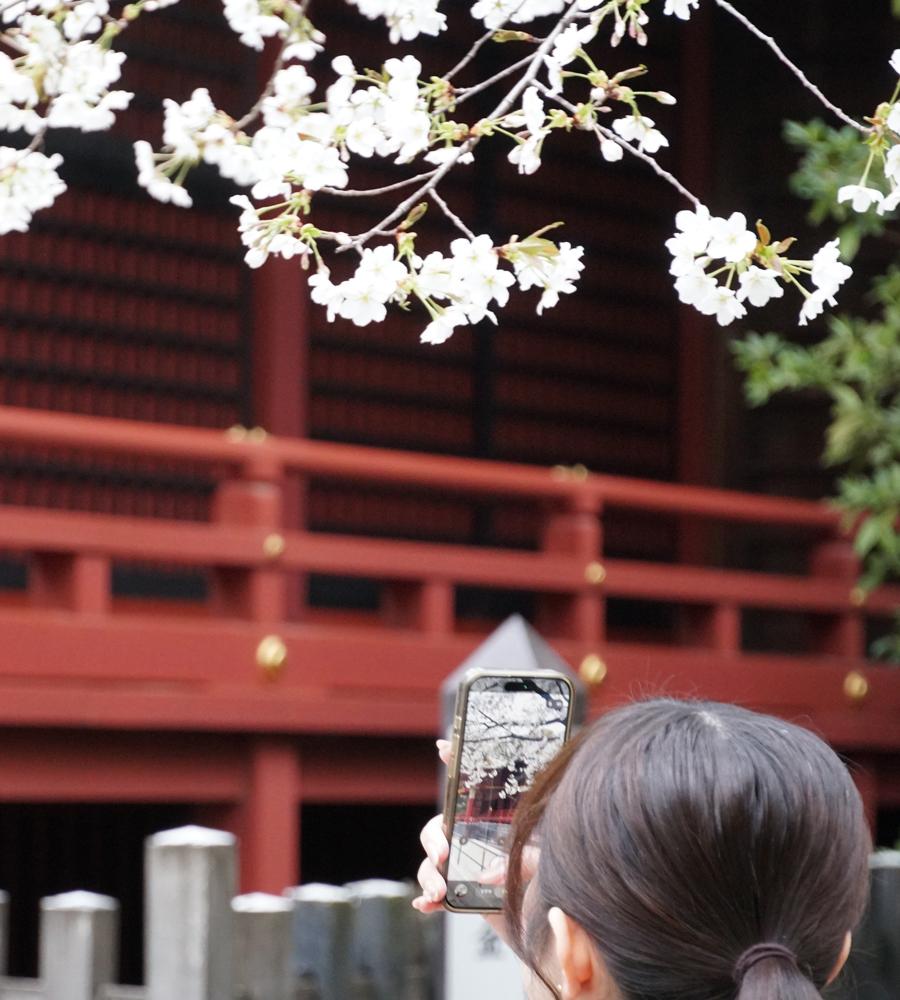
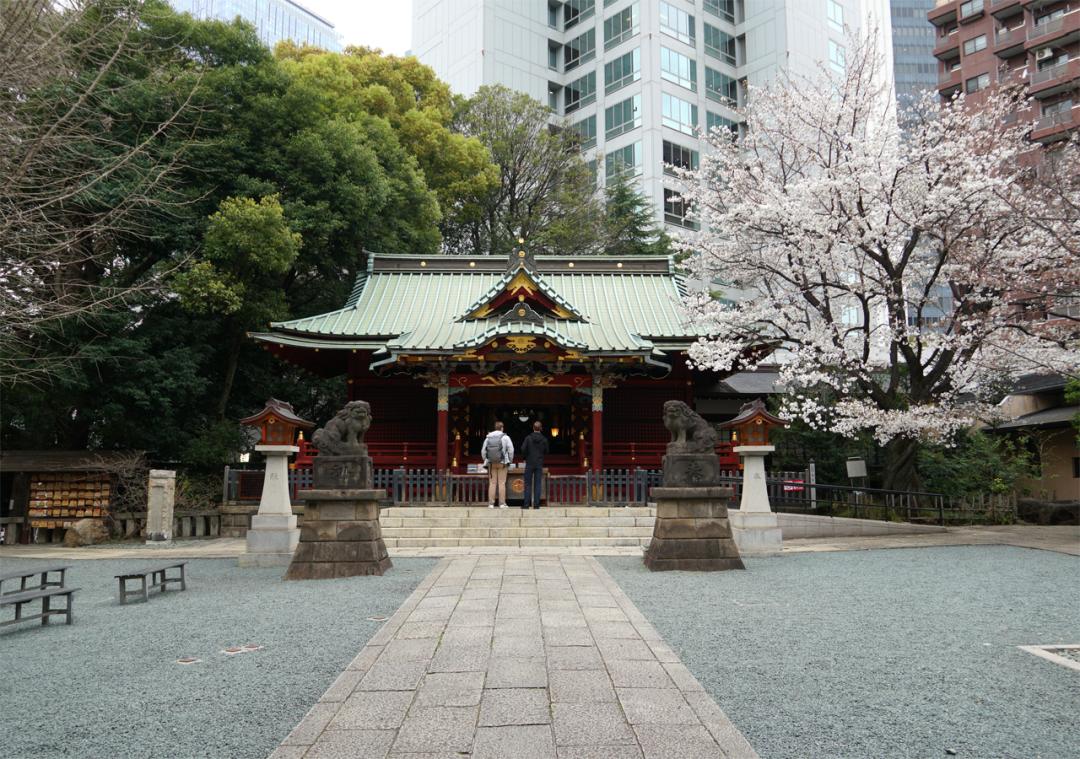
The "Konno Cherry Blossoms" bloom magnificently to the right of the main hall of Konno Hachimangu Shrine. Their pale pink blossoms, almost white, are a stark contrast to the deep pink of the Yoko Cherry Blossoms. (Photo taken March 25, 2026)
The Kawazu cherry blossoms along the Shibuya River, the Yoko cherry blossoms on Meiji Street, the potted cherry trees at SOIL, and the Konno cherry blossoms at Konno Hachimangu Shrine—being able to enjoy cherry blossoms at different times over several weeks is a unique feature of this area.
A "small-scale cycle" that originated in Shibuya 3-chome is spreading into the cityscape as the cherry blossoms bloom. This initiative, which began with composting, is gently connecting people, communities, and time, painting a new spring landscape.
Venue
Editorial Department: Takashi Fujii
Shibuya registrar. In addition to Shibuya of Culture information, seasonal news and topics, it will spell write that feel every day.
Genres within watch
Articles in the same genre
2026-08-20〜
Parents and children reuse advertising banners displayed at Shibuya Station to create one-of-a-kind wallets.
![[Report] Japan's national team, hailed as the strongest ever, sparks excitement in Shibuya for their World Cup match against Tunisia!](https://biz.shibuyabunka.com/storage/images/watch//1782038663.webp)
2026-06-21〜
[Report] Japan's national team, hailed as the strongest ever, sparks excitement in Shibuya for their World Cup match against Tunisia!
![[Report] The "slow pace" that flows through Shibuya amidst redevelopment: A small community thriving along the Shibuya River](https://biz.shibuyabunka.com/storage/images/watch//1779538066.webp)
2026-06-01〜
[Report] The "slow pace" that flows through Shibuya amidst redevelopment: A small community thriving along the Shibuya River

2026-03-19〜
The 33rd French Film Festival opens in Shibuya with a spectacular opening at a Noh theater; Sophie Marceau and others are visiting Japan.
Featured articles on the site
渋谷の肉料理おすすめ5選! 渋谷在勤・かごさんが厳選するお店を紹介
[Shibuya Scenery Records Vol. 2] The "Onko Gakkai Kaikan" continues to preserve the legacy of blind scholar Hanawa Hokiichi
Seibu Shibuya and Tokyu Department Store collaborate for the "final" time: Former rivals offer each other encouragement.