


SHIBUY.A. × EVENT

2025-12-14
6th Space QOL Research and Development Center Event: "How can we make space a livable economic zone? - Creating new industries in science, design, and health through space QOL" (QWS Academia, Waseda University)
A program to encounter "unknown questions" in collaboration with universities
2025-11-28
SHARE
Source: Peatix
[SHIBUYA QWS original program "QWS ACADEMIA"]
This is a program in collaboration with universities that allows students to encounter "unknown questions." At universities, there are students and researchers who are facing a wide variety of "questions." "QWS ACADEMIA" is not just a class where knowledge is transmitted, but aims to stimulate each other in both directions and create a chemical reaction.
【Event Summary】
Waseda University's Global Science and Intelligence Fusion Research Institute and Space QOL Research and Development Center will hold a public event titled "How can we make space a livable economic zone? - Creating new industries in science, design, and health through space QOL."
Space was once a realm that only a select few experts, such as astronauts, could set foot in. However, in recent years, with the realization of private space travel and the concept of space hotels emerging one after another, the possibility of low Earth orbit (LEO) becoming a new living space for humanity is becoming more realistic. The Basic Plan for Space Policy, approved by the Cabinet in 2023, also clearly calls for the expansion of economic activity in space and the promotion of manned exploration from Earth to the Moon and Mars, and companies, universities, and research institutions are stepping up efforts to build a new space industry.
Supporting this movement are fundamental technologies such as the Environmental Control and Life Support System (ECLSS). Up until now, ECLSS has been developed as infrastructure to support survival in space, but going forward, research, development, and implementation will be required that incorporate aspects of comfort and quality of life (QOL).
Therefore, Waseda University launched the "Space QOL Research and Development Center to Realize Healthy and Comfortable Space Life for the General Public" in August 2024. Space QOL focuses on aspects such as human physiology, cognition, and experience, and aims to improve comfort, health, and QOL during space stays by combining ECLSS research with a human-centered research approach.
This event will bring together researchers, practitioners, companies, startups, and others from various fields to share and discuss the potential of space QOL research and development and visions for its social implementation, with an eye toward a future where living in space will create new markets.
If you are interested in the project, would like to exchange information on research topics, or are interested in industry-academia collaboration, please make the most of your time and participate. Researchers and students participating in the project will gather.
◆Date and time: December 14, 2025 (Sunday) 18:00-20:30 (Doors open: 17:30)
◆ Venue: SHIBUYA SCRAMBLE SQUARE 15th floor SHIBUYA QWS Cross Park
◆Participation fee: Free
◆Capacity: 60 people
◆Application for participation:
◆ Target audience: Anyone interested in the project can participate (high school students, technical college students, university students, graduate students, faculty and staff, teachers, researchers, working adults, etc.)
◆ Co-organized by: SHIBUYA QWS Innovation Council, Waseda University Global Science and Knowledge Integration Institute
◆ Co-hosted by: Ministry of Education, Culture, Sports, Science and Technology's Aerospace Science and Technology Promotion Commission "Product and Service Design Human Resource Development Program for Supporting Human Comfort in ECLSS Environments" and the Industry-Government-Academia Collaborative Creation Consortium for the Promotion of Sustainable Future Food
◆Sponsor: Beyond 2020 NEXT PROJECT
◆ Program
17:30 Doors open/reception
Moderator: Ayaka Matsumoto (2nd year student, Graduate School of Advanced Science and Engineering, Waseda University / Chief Secretary of Beyond 2020 NEXT PROJECT)
18:00-18:05 Opening remarks: Kazuhiro Kusunoki (Professor, Center for Research Strategy, Waseda University)
18:05-18:25 Lecture 1: "Building a New Space Economy"
Kojiro Hatada (President and CEO, Future Space Transportation Systems Co., Ltd.)
18:25-18:45 Lecture 2: "Kanagawa Prefecture's efforts to promote the space-related industry"
Atsushi Takahashi (Director of the Industrial Promotion Division, Industrial Department, Industrial and Labor Bureau, Kanagawa Prefecture)
18:45-19:00 Lecture 3: "Supporting the health, QOL, and comfort of space travel through space QOL research and development"
Tomomi Nonaka (Professor, Faculty of Science and Engineering, Waseda University)
19:00-19:10 Break
19:10-19:30 Lecture 4: "Living in Space Will Become a Market: Space Business and Innovation from Non-Space Sectors"
Seiko Shirasaka (Chairman/Professor, Graduate School of System Design and Management, Keio University)
19:30-19:40 Introduction to the human resource development program
“FY2020 Space Aerospace Science and Technology Promotion Commission Fund: Space specialist human resource development
"Human Resource Development Program for Product and Service Design Supporting Human Comfort in ECLSS Environments"
Tomomi Nonaka (Professor, Faculty of Science and Engineering, Waseda University)
19:40-20:25 Panel discussion
"Making Space a Livable Economic Zone - Creating New Industries in Science, Design, and Health through Space QOL"
Panelists
Kojiro Hatada (Founder and CEO of Future Space Transportation Systems Co., Ltd.)
Shinichi Kimura (Director, Space Systems Creation Research Center, Graduate School of Science, Tokyo University of Science)
・Shirosaka Seiko (Chairman/Professor, Graduate School of System Design and Management, Keio University)
・Kaori Itagaki (CEO of Eat Treat Co., Ltd.)
Tetsuma Nakagawa (Researcher and Lecturer, Global Science and Knowledge Integration Institute, Waseda University Comprehensive Research Organization)
Moderator: Tomomi Nonaka (Professor, School of Creative Science and Engineering, Waseda University)
20:25-20:30 Closing remarks by Toru Asahi (Professor, Dean of the Graduate School of Advanced Science and Engineering, Faculty of Science and Engineering, Waseda University)
【Speakers】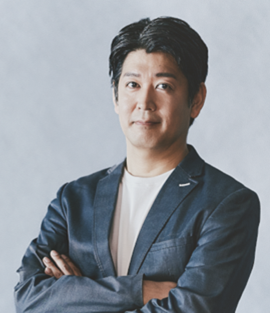
Kojiro Hatada (President and CEO, Future Space Transportation Systems Co., Ltd.)
Representative Director of Future Space Transportation Systems Co., Ltd., Outside Director of ispace Inc., and Outside Director of ArcEdge Space Inc.
After graduating from Kyoto University's Graduate School of Energy Science (Master's program) in 2004, he joined the Ministry of Economy, Trade and Industry (METI). After working on energy policy and industrial policy, he was seconded to the Ministry of Foreign Affairs in 2012, where he worked at the Delegation of Japan to the European Union and the Embassy of Japan in Belgium. In 2015, he was seconded to the Cabinet Office's Space Development Strategy Secretariat, where he contributed to the expansion of private space businesses, including the enactment of the Space Activities Act, the formulation of the Space Industry Vision 2030, and the creation of the space business idea contest S-Booster. In 2017, he returned to METI and founded the new startup support program J-Startup. In 2018, he left METI to join Digital Hearts Holdings Co., Ltd., where he was involved in the launch of a cybersecurity talent discovery and development program. In 2019, he founded Digital Hearts Plus Co., Ltd. In May 2022, he founded Future Space Transportation Systems Co., Ltd., where he serves as Representative Director, President and CEO.
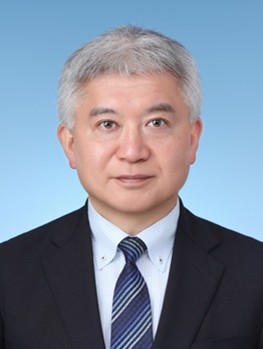
Atsushi Takahashi (Director of the Industrial Promotion Division, Industrial Department, Industrial and Labor Bureau, Kanagawa Prefecture)
He graduated from the Faculty of Law at Waseda University in 1995 and joined the Kanagawa Prefectural Government in the same year. He has served in the Finance Division, General Affairs Division of the Policy Bureau, General Affairs Office of the Health and Welfare Bureau, Faculty Planning Division, Deputy Director of the Finance Division of the Education Bureau, Deputy Director of the Faculty Personnel Division, and Director of Management in the General Affairs Office of the Education Bureau, before assuming his current position in April 2024.

Kaori Itagaki (CEO of EatReat Co., Ltd.)
Architect and designer. Representative of eatreat Inc. / eatreat food and design. Head of k2-foundation, a first-class architectural firm. Runs Hitobori Manbai Granola. After graduating from the Department of Architecture at Tama Art University, he studied under architects Koichi Maeda and Takashi Hara. He is a visiting researcher at the East Asian Institute and Department of Urban Architecture at Columbia University. He completed the Master's course in Design for Food at the Design School of Milan Polytechnic. He came into contact with food from around the world while living abroad, and has presented artwork using food as a medium from the perspectives of architecture, design, and art. He develops design work related to the act of eating in a variety of fields, from restaurant concept development to education. He was a finalist at the efood2022 International Food Design and Food Study Conference and won the Grand Prize in the efood 2024 Professional Division. He is currently a visiting researcher at Ritsumeikan University's R-GIRO.
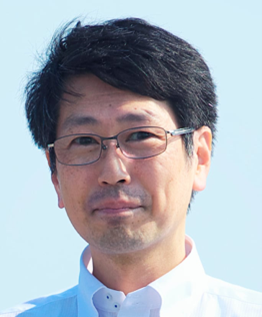
Shinichi Kimura (Director, Space Systems Innovation Research Center, Graduate School of Science, Tokyo University of Science)
He completed his doctoral studies at the University of Tokyo Graduate School of Pharmaceutical Sciences in 1993 (PhD in Pharmacy). After working at the Ministry of Posts and Telecommunications' Communications Research Laboratory (now the National Institute of Information and Communications Technology), he has been working at Tokyo University of Science since 2007. He has been researching technologies to remove space debris, participating in many space robot and small satellite missions such as the Engineering Test Satellite VII (Orihime/Hikoboshi), Manipulator Flight Demonstration (MFD), Micro Labsat-1, and Hodoyoshi Satellite-3, and has developed various space equipment such as the surveillance camera systems for IKAROS and Hayabusa-2 by utilizing ground-based consumer devices. As Director of the Tokyo University of Science's Space Systems Creation Research Center, which was established in April 2021, he promotes research into technologies for living in space, linking ground-based technologies such as environmental and lifestyle-related technologies to space. He also serves as a member of the Space Utilization Subcommittee and Chair of the Investigation and Safety Subcommittee of the Ministry of Education, Culture, Sports, Science and Technology.
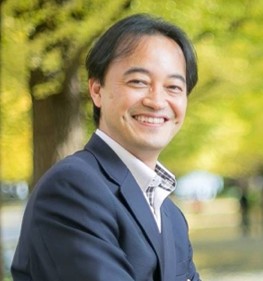
Professor and Chair of the Graduate School of System Design and Management, Keio University
Graduated from the University of Tokyo Graduate School of Aerospace Engineering and Keio University Doctoral Program in Systems Engineering. After graduating from the graduate school of Aerospace Engineering, he worked in space development at Mitsubishi Electric Corporation for 15 years. He participated in the development of "Kounotori" and other projects. At the university, he has been researching large-scale system development and innovation creation methodologies for technology and society integration systems. He has been teaching system design at Keio University since 2004, and has been an associate professor at the Graduate School of System Design and Management since 2010 and a professor since 2017. He will be the dean of the SDM Graduate School in October 2023. He developed an on-demand small synthetic aperture radar (SAR) satellite as a program manager for the Cabinet Office's Impulsing Paradigm Change (ImPACT) Program. He founded Synspective Inc. to implement the technological results in society (received the Minister of Education, Culture, Sports, Science and Technology Award at the Japan Startup Awards 2022). He supports government activities as a member of many committees, including the Cabinet Office Space Policy Committee, the Cabinet Secretariat Digital Market Competition Council, and the Ministry of Economy, Trade and Industry's Industrial Structure Council Green Innovation Project Subcommittee.
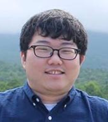
Tetsuma Nakagawa (Researcher and Lecturer, Global Science and Knowledge Integration Institute, Waseda University Comprehensive Research Organization)
Born in Kanagawa Prefecture, raised in Tokyo. Graduated from Waseda Jitsugyo High School in 2008, graduated from Waseda University School of Advanced Science and Engineering Department of Life and Medical Science in 2012, completed the Master's course in Life and Medical Science at Waseda University Graduate School of Advanced Science and Engineering in 2014, and completed the integrated doctoral course in Advanced Science and Engineering at Waseda University Graduate School of Advanced Science and Engineering in 2018, receiving a PhD in Science. From 2018 to 2022, he was a full-time researcher at the Kanagawa Institute of Industrial Science and Technology (local independent organization) and a visiting researcher at the Department of Physics and Information Engineering, Faculty of Science and Technology, Keio University, and then a principal researcher (graduate school lecturer) at Waseda University Kagami Memorial Institute for Materials Science before assuming his current position. He is currently the group leader of the Nano-Physical Property Measurement Tecton project of the JST Creative Science and Technology Promotion Program (ERATO) "Yamauchi Material Space Tectonics Project" and the principal researcher of the "Development of Optical Connection Metalens Using Dielectric Metasurfaces" project (Environment and Energy field) of the NEDO Public-Private Young Researcher Discovery Support Project Joint Research Phase (Environment and Energy field). In 2023, he received the 53rd (Autumn 2022) Society of Applied Physics Lecture Encouragement Award from the Society of Applied Physics and the 19th Osawa Award from the Fullerene, Nanotube, and Graphene Society. His specialties are physical chemistry, nanomaterials engineering, and electrical and electronic materials engineering, and his research interests are diverse, including chiral drugs, symmetry breaking in high-temperature superconductors, applications of mesoporous metal and semiconductor thin films to chemical and optical sensors, and the development of metalenses for optical communications.
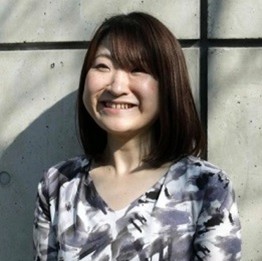
Tomomi Nonaka (Professor, School of Creative Science and Engineering, Faculty of Science and Engineering, Waseda University / Principal Investigator of the "Product and Service Design Human Resource Development Program for Supporting Human Comfort in ECLSS Environments")
He specializes in production systems engineering and service engineering. He holds a PhD in Systems Engineering. After graduating from the Faculty of Environment and Information Studies at Keio University and working in search engine marketing at a company, he enrolled in the Master's and Doctoral programs at Keio University's Graduate School of System Design and Management (SDM) as a member of the inaugural class, graduating in four years. While at SDM, he participated in postgraduate study abroad programs at Delft University of Technology and the Swiss Federal Institute of Technology, as well as a research internship at MIT. He has served as a specially appointed assistant professor at the Graduate School of Systems Informatics at Kobe University, an assistant professor in the Department of Industrial Systems Engineering at Aoyama Gakuin University's College of Science and Technology, an associate professor in the School of Food Management at Ritsumeikan University, and deputy general manager of Ritsumeikan EDGE+R. He will become a professor in the Department of Industrial Systems Engineering at Waseda University's School of Creative Science and Engineering in April 2023. He is engaged in research into sustainable business and social systems, research and development of space quality of life for ordinary civilians in space, and the design of service production systems based on human information such as job satisfaction and productivity. He is an ad hoc member of the Council for National Research and Development Agencies of the Ministry of Education, Culture, Sports, Science and Technology (Subcommittee of the Japan Aerospace Exploration Agency), a member of the Green Innovation Project Subcommittee of the Industrial Structure Council of the Ministry of Economy, Trade and Industry, a well-being policy advisor for Onomichi City, a member of IFIP WG5.7, a director of the Japan Industrial Management Association, a director of the Japan Creativity Academy, and a director of the Japanese Food Culture Association.
[Opening remarks]
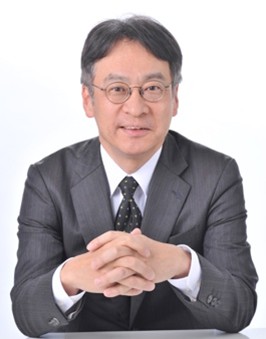 Kazuhiro Kusunoki (Professor, Center for Research Strategy, Waseda University)
He completed his Master's degree in Information Engineering at the Graduate School of Engineering, Kyushu University in 1988 and joined Mitsubishi Electric Corporation (Information Electronics Research Institute) in April of the same year. He completed his PhD in Engineering at the Graduate School of System Information Science and Technology, Kyushu University in 2000. He served as General Manager of the Development Strategy Department at the Information Technology R&D Center (2007) and Director (2019) before assuming the position of Executive Technical Director of the FA Systems Business Unit in 2022. He is involved in both strategic planning and management of R&D organizations, focusing on industrial real-time networks and distributed IoT systems, as well as product development management in the business division. During this time, he also served as Director of the Manufacturing Science and Technology Center (a foundation), Co-Chair of WG1 (Working Group on Manufacturing Business Transformation through IoT) of the Robot Revolution & Industrial IoT Initiative Council, and Director of the Industrial Value Chain Initiative (IVI). He became a Professor at the Waseda University Research Strategy Center in April 2023. As a University Research Administrator (URA), he is involved in supporting pre-award funding for various competitive space-related research grants.
[Closing Remarks]
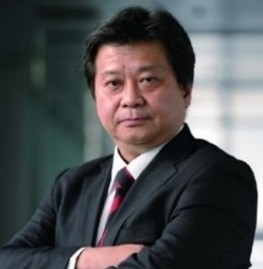
Toru Asahi (Professor and Dean of the School of Advanced Science and Engineering, Faculty of Science and Engineering, Waseda University)
Born in Fukui Prefecture and raised in Tokyo, he graduated from Tokyo Metropolitan Hakuoh High School. He graduated from the Department of Applied Physics, School of Science and Engineering, Waseda University in 1986, completed a Master's degree in Physics and Applied Physics in 1988, and received a PhD in Science in the same department in 1992 and a Master's of Business Administration in 2007. He is Director of the Waseda University Global Science and Knowledge Integration Institute, Vice Director of the Nano & Life Innovation Research Organization, and will serve as Dean of the Faculty of Science and Engineering, Waseda University, from September 2024. He promotes interdisciplinary research and fosters innovative talent. He is Deputy Project Manager for the Moonshot Agriculture, Forestry and Fisheries Research and Development Program Goal 5, "Development of a circular food production system supported by insects to solve global food problems and advance humanity into space," and a project member for the "Bioeconomic cultivated food production system using circular cell cultures using algae and animal cells." He is also Project Manager for the Yamauchi Material Space Tectonics Project, a JST Creative Science and Technology Promotion Program (ERATO), and an advisor for Onomichi City's Well-Being Policy. He serves as chairman of the "Industry-Government-Academia Collaborative Consortium for the Promotion of Sustainable Future Food." His research interests include chiral science, biophysics, crystal optics, functional thin films, symmetry breaking, and recycling-based food production systems.
[Moderator]
Ayaka Matsumoto (2nd year doctoral student in the Department of Advanced Science and Engineering, Graduate School of Waseda University / Chief Executive of the Beyond 2020 NEXT PROJECT)
He graduated from Waseda University Honjo Senior High School in 2020 and from the Department of Life and Medical Sciences, School of Advanced Science and Engineering, Waseda University in 2024. He is currently a member of the Waseda University Biophysical Science Laboratory (Asahi Laboratory). His specialties are physical chemistry and chiral science. He currently works as a part-time lecturer at Waseda University Honjo Senior High School. He joined the student group Beyond 2020 NEXT PROJECT in 2020, serving as General Affairs in 2022, Secretary General from 2023, and Chief Secretary from 2025. He is a member of the World Children's Future Conference Project, which supports the United Nations, the SDGs Education Curriculum Project, and the Entrepreneurship Education Project.
[Executive Committee]
Yuki Kimura (1st year master's student, Business Design Department, Graduate School of Creative Science and Engineering, Waseda University)
Rintaro Kuga (1st year master's student, Business Design Department, Graduate School of Creative Science and Engineering, Waseda University)
Minami Sasaki (1st year undergraduate student, Department of Architecture, School of Creative Science and Engineering, Waseda University)
Rinna Kojima (3rd year undergraduate student, Department of Industrial Systems Engineering, School of Creative Science and Engineering, Waseda University)
Nanako Kitaoka (3rd year undergraduate student, Department of Industrial Systems Engineering, School of Creative Science and Engineering, Waseda University)
Misaki Mori (3rd year undergraduate student, Department of Industrial Systems Engineering, School of Creative Science and Engineering, Waseda University)
Tomoya Ishizuka (1st year master's student, Business Design Department, Graduate School of Creative Science and Engineering, Waseda University)
Ryusuke Kiyohara (2nd year master's student, Business Design Department, Graduate School of Creative Science and Engineering, Waseda University)
Seo Jeongho (3rd year undergraduate student, Department of Industrial Systems Engineering, School of Creative Science and Engineering, Waseda University)
Daiga Harada (2nd year undergraduate student, Department of Industrial Systems Engineering, School of Creative Science and Engineering, Waseda University)
To apply to participate in the event
Thank you from here.
Venue
Genres within EVENT
Articles in the same genre
2026-03-26〜2026-03-27
Parent-child astronomy class in the Shibuya night sky and moon observation event at "Shibuya Sky"
![[Teachers and education professionals welcome] "What will you learn when you become an adult?" A time to think about future work styles and re-learning](https://biz.shibuyabunka.com/storage/images/event/1771506807.png)
2026-03-29〜2026-03-29
[Teachers and education professionals welcome] "What will you learn when you become an adult?" A time to think about future work styles and re-learning
Featured articles on the site
【レポート】渋谷Bunkamuraで高木由利子写真展 遊牧の「村」を巡るように約100点展示
渋谷ファッションウィーク2026春開幕 渋谷を舞台にカルチャーを育む
A "small museum" will be born in the Shibuya 3-chome area. "MINA," a place where art and coffee meet, will open.