

SHIBUY.A. × EVENT

2025-12-20
What should education be like after generative AI? Professor Amari and Professor Sugihara's "The Recommendation of Play to Develop Uniquely Human Abilities" (QWS Academia, University of Tokyo)
A program to encounter "unknown questions" in collaboration with universities
2025-12-04
SHARE
Source: Peatix
[SHIBUYA QWS original program "QWS ACADEMIA"]
This is a program in collaboration with universities that allows students to encounter "unknown questions." At universities, there are students and researchers who are facing a wide variety of "questions." "QWS ACADEMIA" is not just a class where knowledge is transmitted, but aims to stimulate each other in both directions and create a chemical reaction.
【Event Summary】
The biggest change that "generative AI" has brought to humanity is that machines can now automatically produce documents that look as if they were written by a human. This situation, where no entity can take legal responsibility for this, is forcing fundamental changes to the basic academic skills that children should acquire.
Meanwhile, debates over curriculum guidelines remain far removed from the global changes of the times, leading to the tragicomedy of children who have never seen an analog clock in their lives being confused when trying to calculate time. What should education be like in the near future? Mr. Shunichi Amari, the "father of AI," and Mr. Kokichi Sugihara, the "impossible figure," assert that the answer is "play." This event will also include frontline reports from elementary school education, and will explore joyful education that fosters "uniquely human abilities that AI cannot."
◆Date and time: Saturday, December 20, 2025, 18:30-21:00 (Doors open: 18:00)
◆ Venue: SHIBUYA SCRAMBLE SQUARE 15th floor SHIBUYA QWS CROSS PARK
◆Participation fee: Free
◆ Capacity: Approximately 50 people
◆Application for participation:https://qws-academia1220.peatix.com/
◆Organizer: SHIBUYA SCRAMBLE SQUARE, Ltd.
◆Co-organized by: Designated National University Corporation, The University of Tokyo, Shinko Publishing Kairyukan, DynaxT Co., Ltd.
◆ Program
Start time: 18:30 Moderator: Professor Ito
Part One
18:40-19:05 Report from the Educational Field: Mr. Takumi Kojima
19:05-19:30 Keynote speech by Professor Kokichi Sugihara
19:30-40 Intermission + Demonstration setup
Part Two
19:40 – Demonstration and panel discussion Demonstration by Professor Amari, Professor Sugihara, Professor Kojima, Associate Professor Imai, Lecturer Lee, and students from the University of Tokyo
20:45 Q&A session
20:55 Closing Remarks (-21:00)
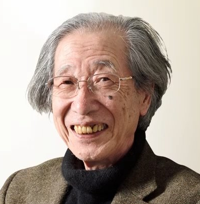
Shunichi Amari
Born in Tokyo in 1936. Graduated from the Department of Applied Physics, Faculty of Engineering, University of Tokyo, and completed the graduate school at the same university.
In the 1960s, he pioneered the theoretical foundations of today's AI technology and established information geometry. He is a professor emeritus at the University of Tokyo. He received the Order of Culture in 2019 and the Kyoto Prize in 2025.
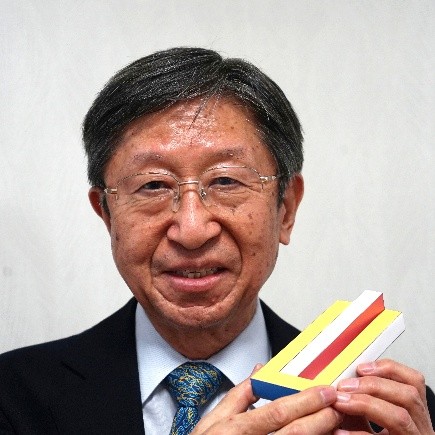
Kokichi Sugihara
Born in Takayama, Gifu Prefecture in 1948. Graduated from the Department of Mathematical Engineering and Information Physics, Faculty of Engineering, University of Tokyo, and completed the graduate school at the same university.
In the 1970s, he developed the field of computational illusions through his research into automatic computer recognition systems, and is internationally known as an artist of impossible three-dimensional objects. He is a professor emeritus at the University of Tokyo and a special research professor at the Meiji University Institute for Advanced Mathematical Sciences.
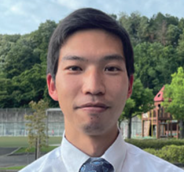
Takumi Kojima
Born in Tokyo in 1995. Graduated from the Department of Mathematics, Faculty of Science, Tokai University. Teacher at Sugo Gakuen Elementary School.
He is a rare educator nationwide, having graduated from the Department of Mathematics in the Faculty of Science and working in school education from the first grade onwards. At the request of Professor Shunichi Amari, he will be giving a keynote report on the actual situation in schools.

Takeshi Imai
Born in Tokyo in 1975. Graduated from the Department of Mathematics, Faculty of Science, University of Tokyo, and the Graduate School of Interdisciplinary Information Studies, University of Tokyo.
In the 2000s, he introduced a natural language processing system for genome analysis into electronic medical records, contributing to the establishment of today's medical AI from its early stages. At the same time, he worked as a media artist, creating the website for the Toyota Group Pavilion at the Aichi Expo.
Associate professor at the University of Tokyo Graduate School of Medicine.
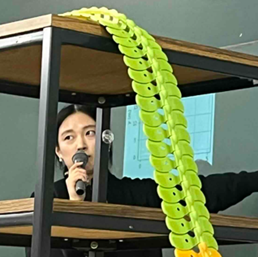
Lee Jin Yong
Born in Seoul in 1988, she grew up commuting back and forth between Japan and Korea. She graduated from Sookmyung Women's University in Korea with a double major in Information Communication in the School of Social Sciences and Visual Design in the School of Fine Arts, with a year of study abroad at Waseda University in between. After working at an advertising agency and the National Folk Museum of Korea, she completed her graduate studies at the University of Tokyo's Graduate School of Interdisciplinary Information Studies. She has designed cognitive devices from electronic elements beginning with molecular design, and created a rehabilitation system for Parkinson's disease. As a media artist, she is also responsible for the video direction of the performance of "Beethoven's Symphony No. 9" in 2025 to celebrate the 70th anniversary of Chofu City's founding and support the Deaflympics. She is a lecturer at the Japan College of Social Work and a researcher in the New Product Development Department at Dynax T Co., Ltd.

Ken Ito
Born in Tokyo in 1965. Graduated from the Department of Physics, Faculty of Science, University of Tokyo, and completed graduate studies there. He also studied composition under Teizo Matsumura and Yuji Takahashi, and conducting under L. Bernstein, P. Boulez, and others. He was awarded the first Idemitsu Music Prize, and served as director of the television program "Untitled Concert" from 1997 to 1999. He also advanced the neurocognitive foundations of music, rewriting traditional musical knowledge with the use of digital devices and resolving numerous difficult questions in music history. He earned a PhD in Philosophy and established the Composition-Conducting and Information Poetics Laboratory at the University of Tokyo's Interfaculty Initiative in Information Studies in 1999. Associate Professor Imai and Lecturer Lee are alumni. In addition to performing many of his works, he has established fundamental techniques, such as "spectral conducting," a conducting technique he developed with his teacher Boulez, and is also committed to nurturing the next generation of musicians.
【ABOUT SHIBUYA QWS】
SHIBUYA SCRAMBLE SQUARE opened on November 1, 2019, directly connected to and above Shibuya Station. SHIBUYA QWS (hereinafter QWS) is a members-only facility located on the 15th floor. With the concept of "Not just asking, not just meeting, not just creating, but changing the world," the facility aims to create a movement that leads to unknown value by intersecting the [questions] of players with diverse backgrounds.
https://shibuya-qws.com/
[Regarding the content of your responses that includes personal information]
The personal information you provide will be managed in accordance with SHIBUYA SCRAMBLE SQUARE, Ltd.'s personal information management regulations, and will be disposed of in an appropriate manner after use.
https://shibuya-qws.com/privacy-policy
[About the information listed for this event]
Information regarding speakers and the program will be updated as changes or additional decisions are made.
To apply to participate in the event
Thank you from here.
Venue
Genres within EVENT
Articles in the same genre

2026-03-26〜2026-03-27
Parent-child astronomy class in the Shibuya night sky and moon observation event at "Shibuya Sky"
![[Teachers and education professionals welcome] "What will you learn when you become an adult?" A time to think about future work styles and re-learning](https://biz.shibuyabunka.com/storage/images/event/1771506807.png)
2026-03-29〜2026-03-29
[Teachers and education professionals welcome] "What will you learn when you become an adult?" A time to think about future work styles and re-learning
Featured articles on the site

渋谷で初開催「フランス映画祭 2026」 全12作品上映、来日ゲストも登壇
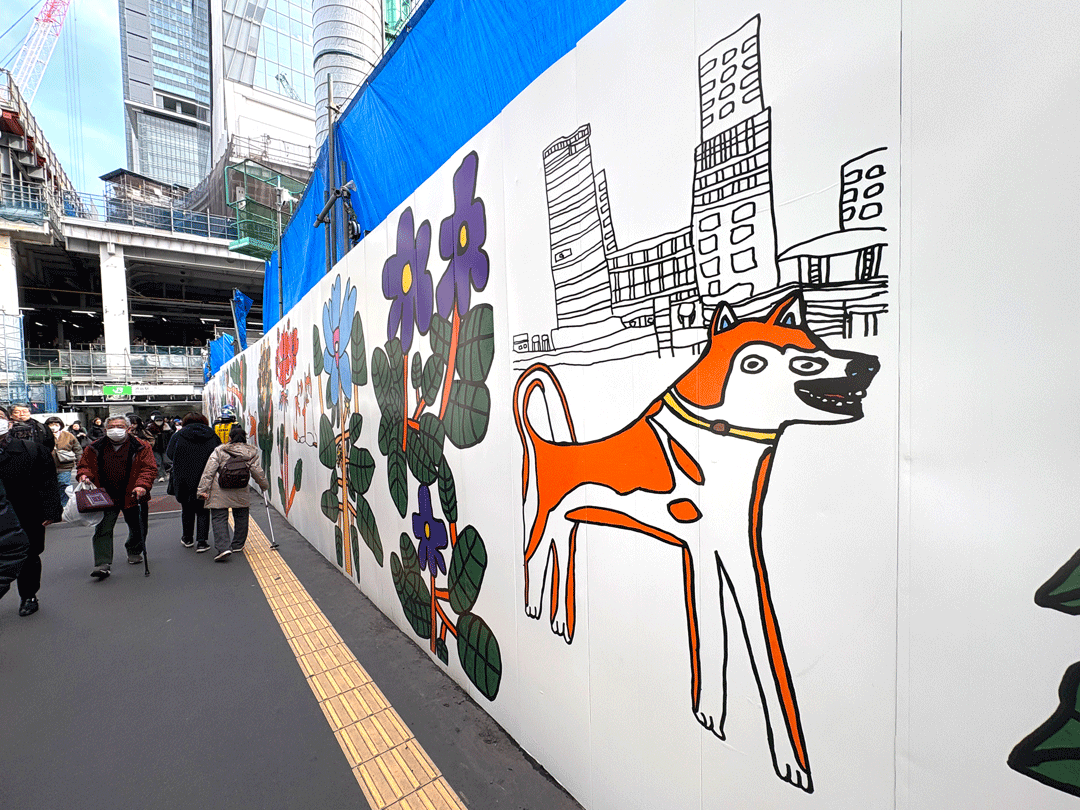
The second wave of Shibuya Station construction fencing art has been unveiled: "Shibuya symbols" by Kosuke Ota, including Akita dogs
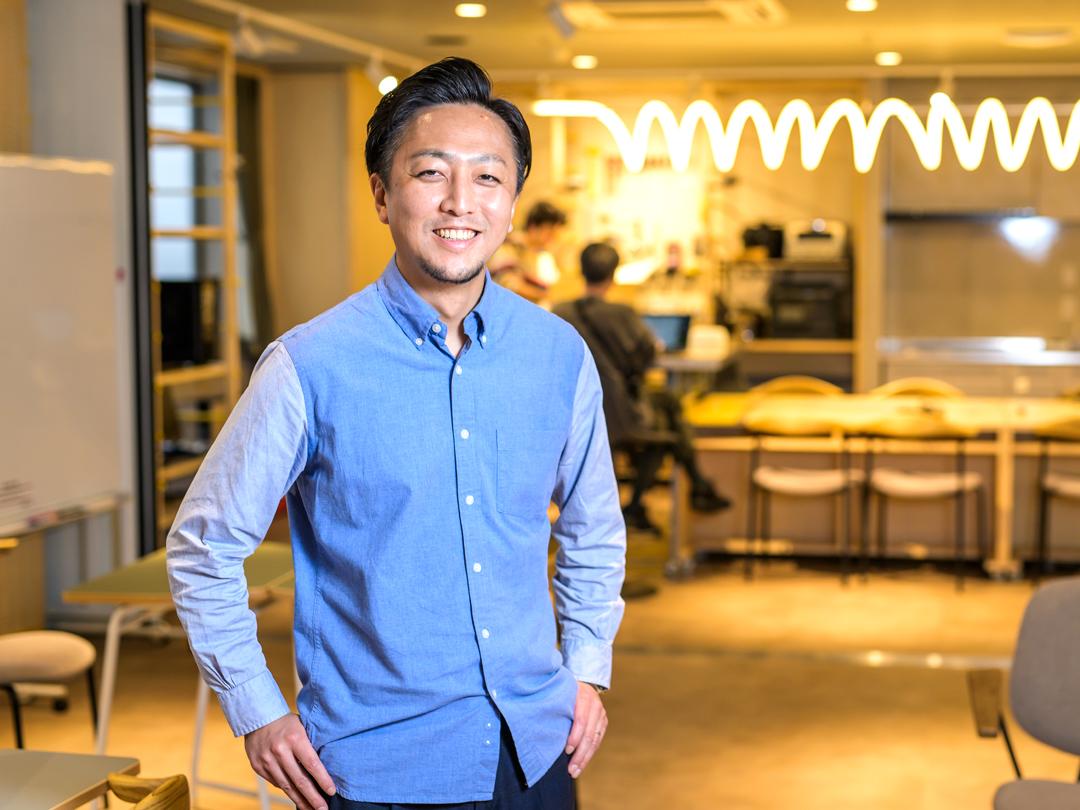
Creating an environment where people and technology can come together and create socially implemented innovations from Shibuya.