

SHIBUY.A. × EVENT

2026-09-11
"How can Shibuya cope with rainwater? – Transformation into a flood-resistant city" (QWS Academia Special, Tokyo City University)
Risk of urban flooding due to torrential rain
2026-08-17
SHARE
Source: Peatix
In Shibuya, located in a bowl-shaped area, the risk of urban flooding caused by torrential rains is an unavoidable problem. As an adaptation measure, measures have been implemented in the watershed, such as creating underground spaces to temporarily store rainwater and river water. The Shibuya River and Furukawa River basins have also worked on watershed countermeasures, which have helped to mitigate flooding, but as Shibuya continues to become more high-rise and its underground infrastructure becomes more complex, dealing with flood risk is also becoming more complicated.
In Shibuya, a city composed of towering buildings, rainwater flows directly from rooftops into the sewage system, essentially "passing right through" our surroundings. Furthermore, the Shibuya River doesn't maintain a stable environment solely through rainwater. Instead of simply viewing rainwater as a source of flooding, a new approach to rainwater management is needed to mitigate water-related disasters throughout the city and maintain the river's stability.
How can we reduce the risk of flooding caused by increasing rainwater? And how can we ourselves interact with rainwater?
I want to consider actions that will improve the impact of rainwater and create a better relationship with rainwater, starting from Shibuya, by crossing various fields such as river disaster prevention, landscape architecture, urban meteorology, urban design, and water communication.
* SHIBUYA QWS original program "QWS ACADEMIA"
This is a program in collaboration with universities that allows students to encounter "unknown questions." At universities, there are students and researchers who are facing a wide variety of "questions." "QWS ACADEMIA" is not just a class where knowledge is transmitted, but aims to stimulate each other in both directions and create a chemical reaction.
◆ Event Outline
Date and time: Friday, September 11, 2026, 18:00-21:00 (doors open at 17:30)
Venue: SHIBUYA QWS Scramble Hall, 15th Floor SHIBUYA SCRAMBLE SQUARE
Capacity: 150 people (first-come, first-served)
Participation fee: Free
Application destinationhttps://peatix.com/sales/event/5105038/tickets
Sponsored by SHIBUYA QWS Innovation Council
Co-sponsored by Tokyo City University
◆ Program (planned)
18:00 - Opening remarks
● Tomoya Noshiro (President, Tokyo City University)
18:05 - Project Explanation: "Rain ÷ Town ~Considering Water Disaster Mitigation from the Perspective of River Basin Community Development~"
● Takahiro Yokota (Professor, Department of Environmental Creation, Faculty of Environmental Studies, Tokyo City University)
18:15 - Presentation
"Capturing Heavy Rainfall and Protecting Cities: An Approach from Urban Meteorology"
● Shiho Onomura (Associate Professor, Department of Urban Engineering, Faculty of Architecture and Urban Design, Tokyo City University)
"Complex Spaces, Diverse People, and Area Disaster Prevention: Phase-Free Urban Development"
● Yukari Niwa (Professor, Department of Environmental Creation, Faculty of Environmental Studies, Tokyo City University)
"What is 'rainwater self-governance'? ~A culture in which living in harmony with rainwater has taken root,
A strong, prosperous, and secure community.
● Junji Hashimoto (Water journalist, Representative of Aquasphere Water Education Institute)
Visiting Professor, Department of Sustainability, Musashino University
"Characteristics of Shibuya's Rivers and Sewers, and Responses to Rainwater – From a Designer's Perspective"
● Yoshio Namiki (Pacific Consultants Co., Ltd., National Infrastructure Business Division)
(Director of Technology, Regional Flood Control Planning Office, River Basin Planning Department)
19:15 - Crosstalk Session
Panelists
● Shiho Onomura (Associate Professor, Department of Urban Engineering, Faculty of Architecture and Urban Design, Tokyo City University)
● Yukari Niwa (Professor, Department of Environmental Creation, Faculty of Environmental Studies, Tokyo City University)
● Junji Hashimoto (Water journalist, Representative of Aquasphere Water Education Institute)
Visiting Professor, Department of Sustainability, Musashino University
● Yoshio Namiki (Pacific Consultants Co., Ltd., National Infrastructure Business Division)
(Director of Technology, Regional Flood Control Planning Office, River Basin Planning Department)
commentator
● Kazuya Ito (Professor, Department of Urban Engineering, Faculty of Architecture and Urban Design, Tokyo City University)
● Takeshi Sato (Professor, Department of Environmental Management Systems, Faculty of Environmental Studies, Tokyo City University) and others
Moderator
● Takahiro Yokota (Professor, Department of Environmental Creation, Faculty of Environmental Studies, Tokyo City University)
19:55 - Closing remarks
● Koji Iwano (Vice President, Tokyo City University)
20:00 onwards: Networking and social gathering
* Moderator: Tomoko Goto (Associate Professor, Department of Environmental Creation, Faculty of Environmental Studies, Tokyo City University)
◆ Speakers (tentative) *In alphabetical order
Kazuya Ito (Professor, Department of Urban Engineering, Faculty of Architecture and Urban Design, Tokyo City University)
His specialties are geotechnical engineering, natural disaster science, and safety engineering. He holds a PhD in Engineering and is a registered professional engineer (construction). After completing his doctoral program at Tokyo Institute of Technology in 2003, he worked at the National Institute of Occupational Safety and Health (NIOSH) on research related to preventing occupational accidents caused by slope failures. In 2015, he became an associate professor in the Department of Urban Engineering at Tokyo City University, and became a professor in 2020. From 2026, he will also serve as the deputy director of the National Institute for Occupational Safety and Health. He is engaged in research on preventing and mitigating natural disasters caused by earthquakes and heavy rains, utilizing various model experiments, including centrifugal model experiments.
Shiho Onomura (Associate Professor, Department of Urban Engineering, Faculty of Architecture and Urban Design, Tokyo City University)
His specialties are urban meteorology and hydrological and river engineering. He obtained his Ph.D. in Science from the University of Gothenburg, Sweden. Subsequently, he worked at the Meteorological Research Institute of the Japan Meteorological Agency and Tokyo University of Science, engaging in research on the actual conditions and observations of disasters associated with extreme weather events such as torrential rain and tornadoes. He joined Tokyo City University in 2024. In recent years, he has been working on the development of small rainfall observation devices to understand localized torrential rain and on clarifying the actual conditions of urban flooding damage. He serves as a member of the Comprehensive Evaluation Subcommittee of the Keihin River Office of the Ministry of Land, Infrastructure, Transport and Tourism, and as a member of the Water Resources Development Subcommittee of the National Land Council, among others.
Takeshi Sato (Professor, Department of Environmental Management Systems, Faculty of Environmental Studies, Tokyo City University)
His specialty is physical geography. He completed his doctoral studies at the Graduate School of Natural Science and Technology, Chiba University, earning a PhD in Science. He is working on developing disaster risk assessment methods using topographic analysis and GIS, as well as elucidating the mechanisms of occurrence based on field surveys both domestically and internationally, focusing on sediment-related disasters such as landslides and slope failures. He also promotes international collaborative research with research institutions overseas, including in Vietnam, and aims to realize safe, secure, and sustainable local communities through the social implementation of research results.
Yoshio Namiki (Technical Manager, Regional Flood Control Planning Office, Watershed Planning Department, National Infrastructure Projects Division, Pacific Consultants Co., Ltd.)
Graduated from Chiba Institute of Technology, Department of Civil Engineering. Registered Professional Engineer (Construction Division). Joined Pacific Consultants Co., Ltd. in 1988. Primarily engaged in river planning-related work. Since joining the company, has mainly been in charge of flood control measures for small and medium-sized rivers managed by prefectures, including flood control plans and retention pond plans for small and medium-sized rivers in the wards of Tokyo, such as the Kanda River and Shibuya River, which are managed by the Tokyo Metropolitan Government. In addition to flood control planning, he is also engaged in hydraulic model experiments and water disaster prevention planning.
Yukari Niwa (Professor, Department of Environmental Creation, Faculty of Environmental Studies, Tokyo City University)
His specialties are urban planning and architectural planning. He holds a PhD in Environmental Studies and is a licensed first-class architect. He has been an associate professor at Tokyo City University since 2018 and will become a professor at the same university in 2026. In recent years, he has been engaged in research on urban disasters and area management, including research on the transformation of individual adaptive behavior and risk perception in response to a gradual scenario of increasing flood frequency (JSPS Grants-in-Aid for Scientific Research on Academic Transformation Areas (A)) and research on the inclusive coexistence of accessibility and resilience for vulnerable groups in Asian cities (JSPS Grants-in-Aid for Scientific Research (B)). He also serves as the representative of the "Research Group on Inclusive Spatial Design in the Age of Climate Change" in the Research Exchange Subcommittee A of the City Planning Institute of Japan, promoting networking through collaboration between industry, government, academia, and the public.
Junji Hashimoto (Water journalist, Director of Aquasphere Water Education Institute / Visiting Professor, Department of Sustainability, Musashino University)
As a water journalist, she conducts research and disseminates information on the theme of water and people. Her books include "Water Wars" (Bungei Shunju Shinsho), "Your City's Water and Sewerage Systems Are in Danger" (Fusosha Shinsho), and "2024 Water Future Predictions" (Sangyo Bunka Center). As a researcher at the Aquasphere Water Education Institute, she supports inquiry-based and collaborative learning, water environment conservation projects, and environmental interpreter training in schools and communities. Currently, she is a visiting professor in the Department of Sustainability, Faculty of Engineering, Musashino University, where she conducts research on "Water and Sustainability" and supports the "Water and Life Project" by university students.
Takahiro Yokota (Professor, Department of Environmental Creation, Faculty of Environmental Studies, Tokyo City University)
He completed his doctoral studies at the Graduate School of Agricultural and Life Sciences, University of Tokyo, earning a PhD in Agriculture. His specialties are Landscape Ecology and Urban Ecology. He is an auditor of the Japanese Institute of Landscape Architecture and a director of the City Planning Institute of Japan. Since 2015, he has been a professor and special assistant to the president of the Department of Environmental Creation, Faculty of Environmental Science, Tokyo City University. His research focuses on urban and watershed ecosystems, including verifying the effectiveness of implementing green infrastructure (GI) as nature-based solutions (NbS) and monitoring flood environment dynamics. He is also involved in watershed environmental activities such as "Garden GI Citizen Science" and the "Wood Station Project," and has been working for over 20 years on research for the conservation and utilization of paddy field environments in Bangkok, Thailand. He serves on committees related to environmental assessment and green space planning in many municipalities, including Yokohama City, Tokyo Metropolitan Government, and Nerima Ward, and is promoting technological development toward biodiversity net gain in collaboration with companies.
-------------
Disclaimer
・Photography of the event may be conducted and published in reports, on social media, etc.
- Participants are prohibited from recording audio, video, or taking screenshots.
・The schedule is subject to change without notice.
The university and the facility will not be held responsible for any disputes between participants that occur inside or outside the facility.
・Please refrain from any behavior that may cause inconvenience to the instructor or other participants, and participate with discretion. If the organizer determines that your behavior, including the above, is disrupting the program or causing inconvenience to other participants, you may be forced to leave the event.
・If any unforeseen circumstances arise and there are any changes to the lecture, we will announce it on this page.
・About handling of personal information
Please agree to the following privacy policy before applying.
The personal information contained in the questionnaire you fill out when applying will be managed in accordance with our university's privacy policy.
Please see below for the application page (Peatix) and our university's privacy policy.
◼︎Peatix Privacy Policy
( https://about.peatix.com/privacy.html?hl=ja )
◼︎University Privacy Policy
( https://www.tcu.ac.jp/privacypolicy/ )
-------------
【ABOUT SHIBUYA QWS】
SHIBUYA SCRAMBLE SQUARE opened on November 1, 2019, directly connected to and above Shibuya Station. SHIBUYA QWS (hereinafter QWS) is a members-only facility located on the 15th floor. With the concept of "Not just asking, not just meeting, not just creating, but changing the world," the facility aims to create a movement that leads to unknown value by intersecting the [questions] of players with diverse backgrounds.
https://shibuya-qws.com/
[About the information listed for this event]
Information regarding speakers and the program will be updated as changes or additional decisions are made.
To apply to participate in the event
Thank you from here.
Venue
Genres within EVENT
Articles in the same genre
2026-10-03〜2026-10-03
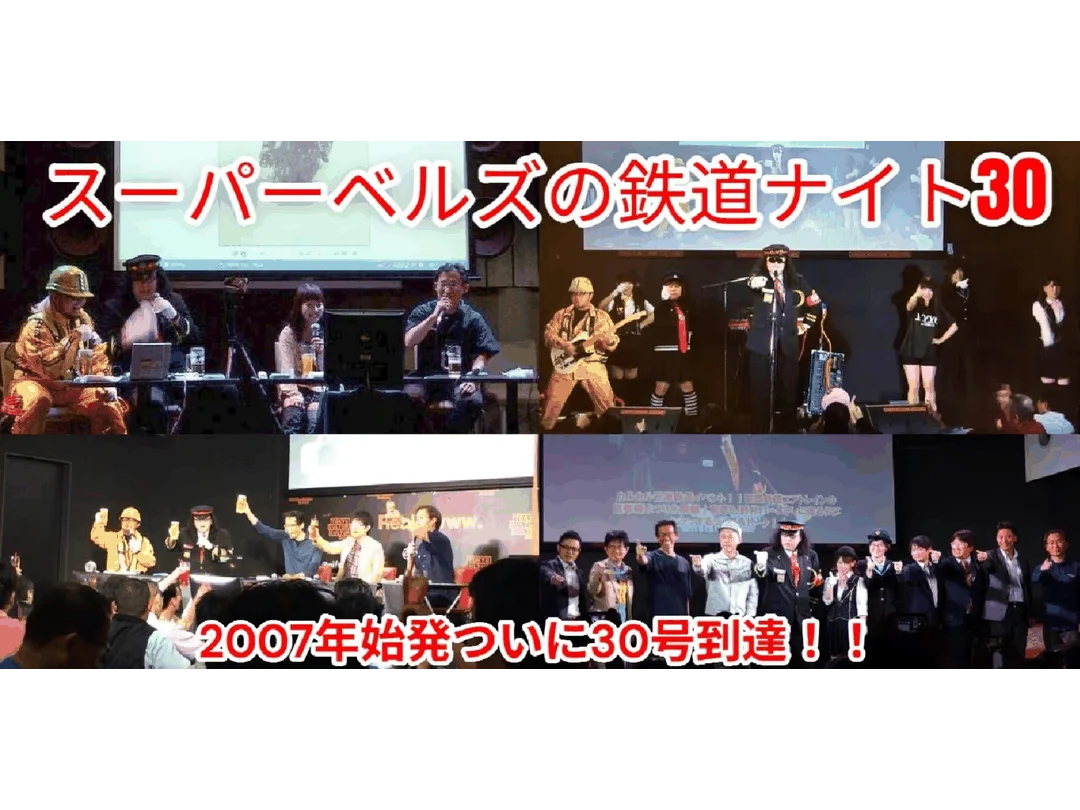
スーパーベルズの鉄道ナイト30 ~2007年始発ついに30号到達!!カルカルと歴史を共にしてきた伝統の鉄道ナイト白昼堂々出発進行!!!~
2026-10-04〜2026-10-04
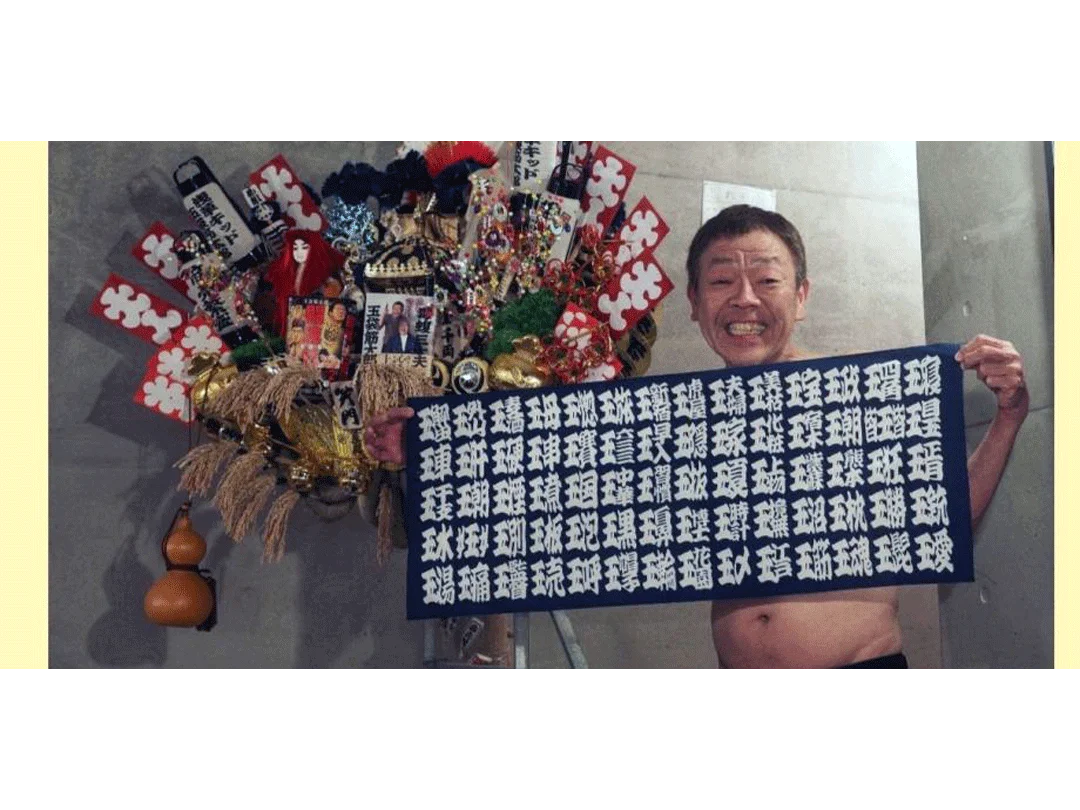
Tamabukuro Kintaro's "Snack Tama-chan" celebrates its 17th anniversary
2026-10-06〜2026-10-06
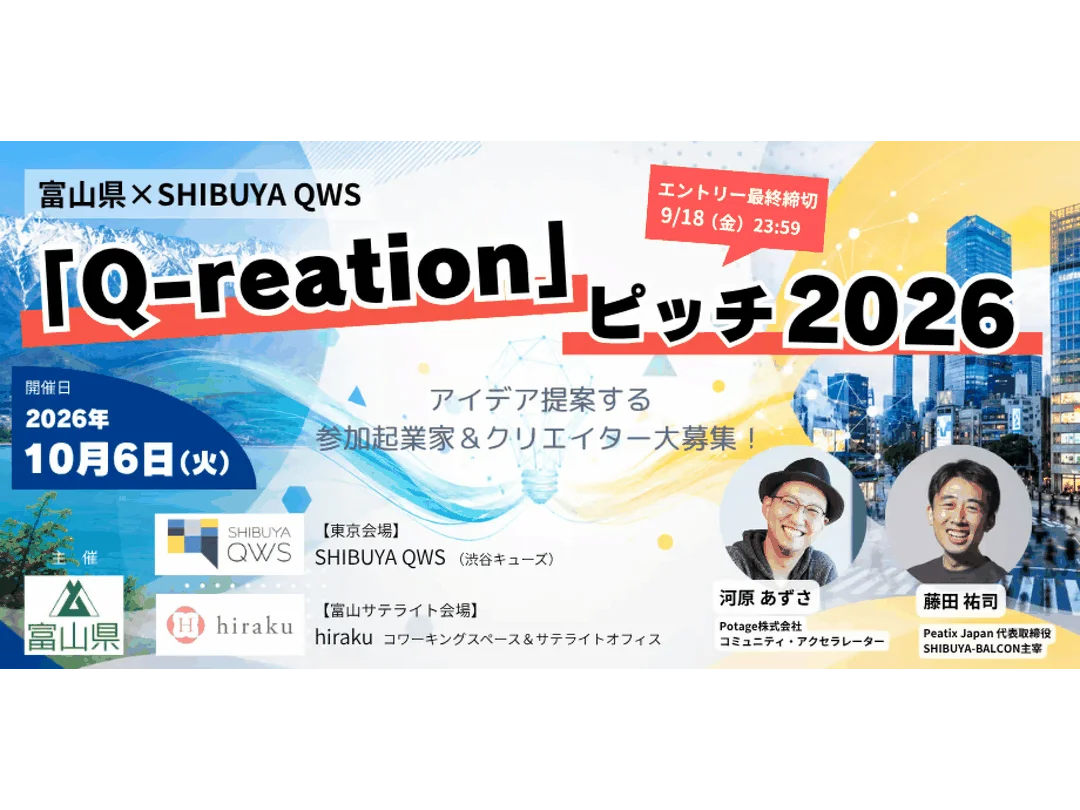
富山県×SHIBUYA QWS「Q-reation」ピッチ2026 ~地域キーパーソンの『問い』を解決するアイデアをプレゼンするイベント~
2026-10-06〜2026-10-06
渋谷〇〇書店 5周年特別記念イベント 「シェア型書店の現在地」
Featured articles on the site
西武渋谷店、58年の歴史に幕 「シブヤ」をつくった百貨店、最後のシャッター

渋谷の肉料理おすすめ5選! 渋谷在勤・かごさんが厳選するお店を紹介
[Shibuya Scenery Records Vol. 2] The "Onko Gakkai Kaikan" continues to preserve the legacy of blind scholar Hanawa Hokiichi