SHIBUY.A. × WATCH

Making Shibuya Station's East Exit More Enjoyable with Art: Collaboration Between People with Disabilities and Urban Development Members
2026-11-10
SHARE
On October 16th, a workshop was held at "Shibuya Font Lab" on the 7th floor of the commercial facility "Harakado" in Harajuku, where users of disability support facilities in Shibuya Ward (disabled artists) participated in creating art pieces to decorate the temporary construction fence at the east exit of Shibuya Station.
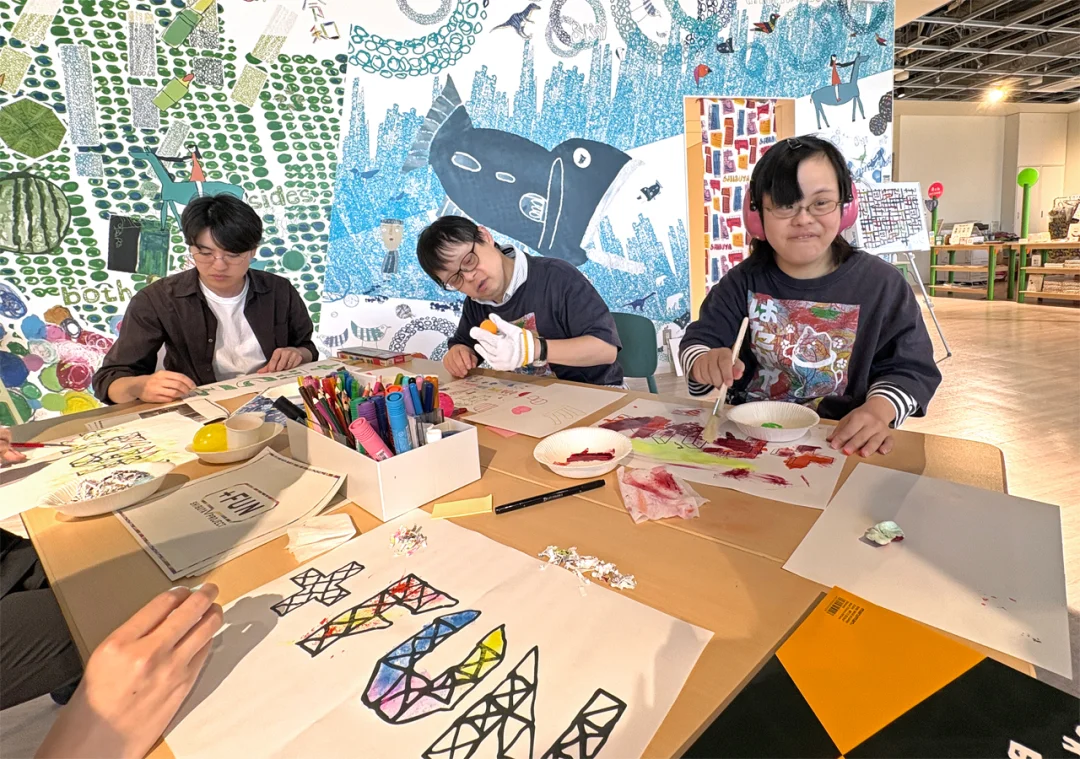
This workshop is a joint project between Shibuya Station Area Management (hereinafter referred to as "EliMane"), a general incorporated association working to improve the attractiveness and vibrancy of the area around Shibuya Station, and Shibuya Font, a general incorporated association. The aim is to add color and vibrancy to the often sterile construction site by displaying art created jointly by people with disabilities and those involved in urban development on the temporary fence surrounding the east exit of Shibuya Station, where redevelopment work is ongoing.
Adding color to the Shibuya Station under construction, making the city more fun with "+FUN"
Erimane has also been collaborating with Tokyu Corporation on the "Shibuya Station West Building Construction Temporary Fence Art Project," which began in 2025. The artwork is created by Kosuke Ota, who possesses a unique sensibility due to his autism spectrum disorder, and his worldview is presented in two phases: the first in August 2025 and the second in February 2026. The temporary fences of the construction site have been utilized as exhibition spaces for the art.
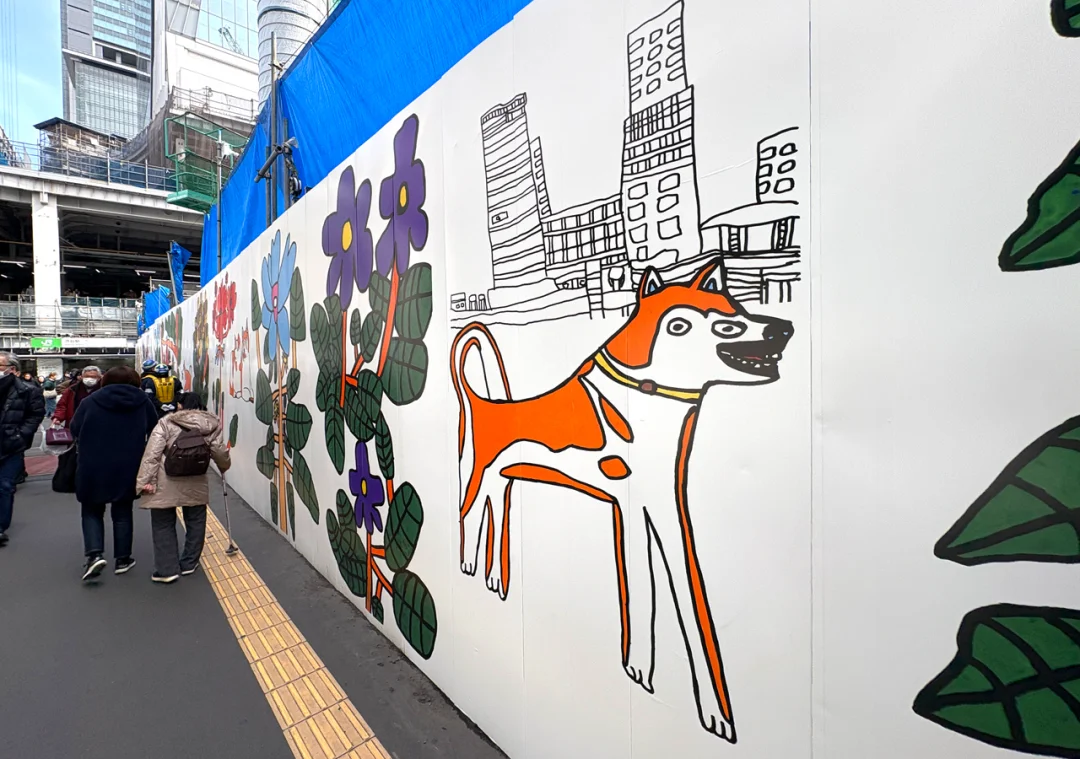
Kosuke Ota's artwork currently on display as part of the "Shibuya Station West Building Construction Temporary Fence Art Project"
- Shibuya Station Construction Fence Art - Second Installment Unveiled: Akita Inu and Other "Symbols of Shibuya" Depicted by Kosuke Ota (2026/02/20)
- "Even if you erase it, it reappears": Shibuya's graffiti problem - A new challenge for Shibuya Multi-story Parking (2026/05/27)
- What's the difference between "mural art" and "graffiti"? (November 2, 2022)
This time, instead of focusing on the west exit area, we're collaborating for the first time with "Shibuya Font," a design project born in Shibuya, to create new artwork for the east exit area. The artwork will be displayed on the temporary construction fence near the Shibuya Station East Exit bus terminal, on the east side of SHIBUYA SCRAMBLE SQUARE. The plan is to brighten up the area under the elevated tracks, which tend to be dimly lit even during the day, with colorful art, as GINZA LINE runs above it.
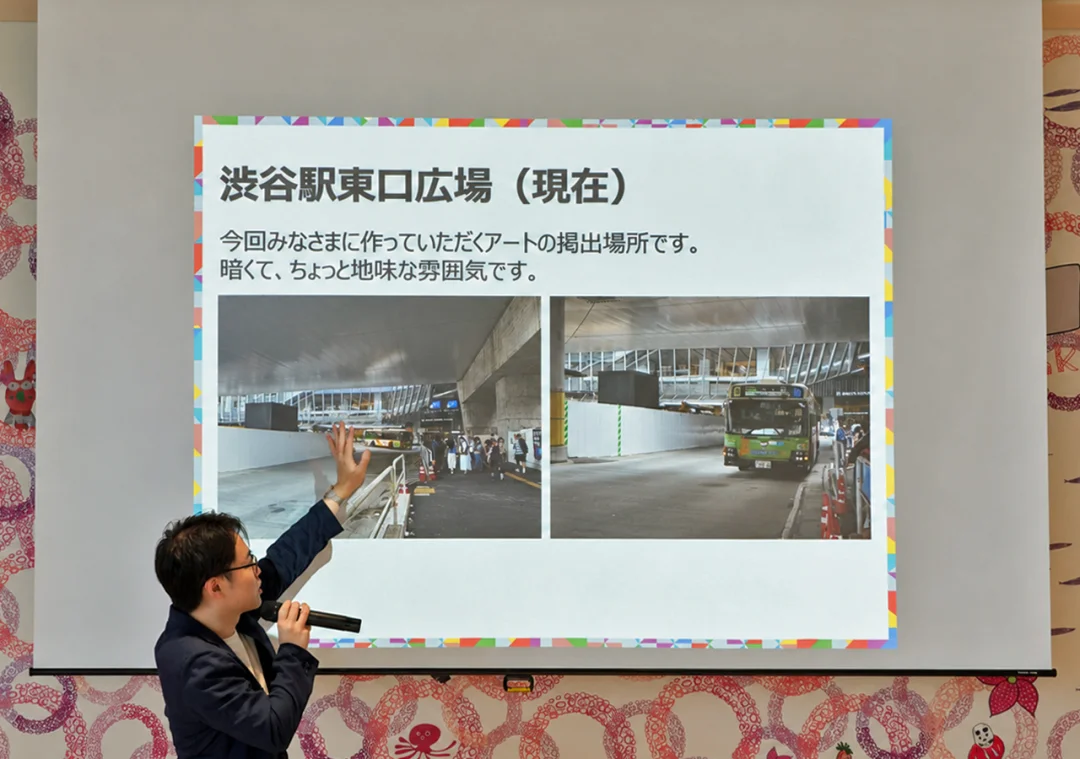
Keisuke Saegusa of Shibuya Station Area Management explains where the artwork created during this workshop will be displayed.
At the start of the workshop, Ms. Saegusa from Area Manager explained urban development around Shibuya Station and the details of this project. She introduced the organization's philosophy of "Moving Shibuya with a playful spirit" and their "+FUN" initiative, which adds fun to the city.
Ms. Saegusa touched upon the history of the east exit of Shibuya Station, which was once a popular cultural and entertainment hub with the Tokyu Culture Hall planetarium and movie theaters, and introduced the process of how the city is changing due to redevelopment. She conveyed to the participants her desire to make the city a fun and attractive place even during the construction period.
We created approximately 80 works of art in two hours together with people with disabilities.
On the day of the event, a total of 25 people participated: 12 users (artists) and 6 supporters from five disability support facilities in the ward, along with 7 members of the area management team. With the theme of "bright and fun," they engaged in free-form art creation for about two hours.
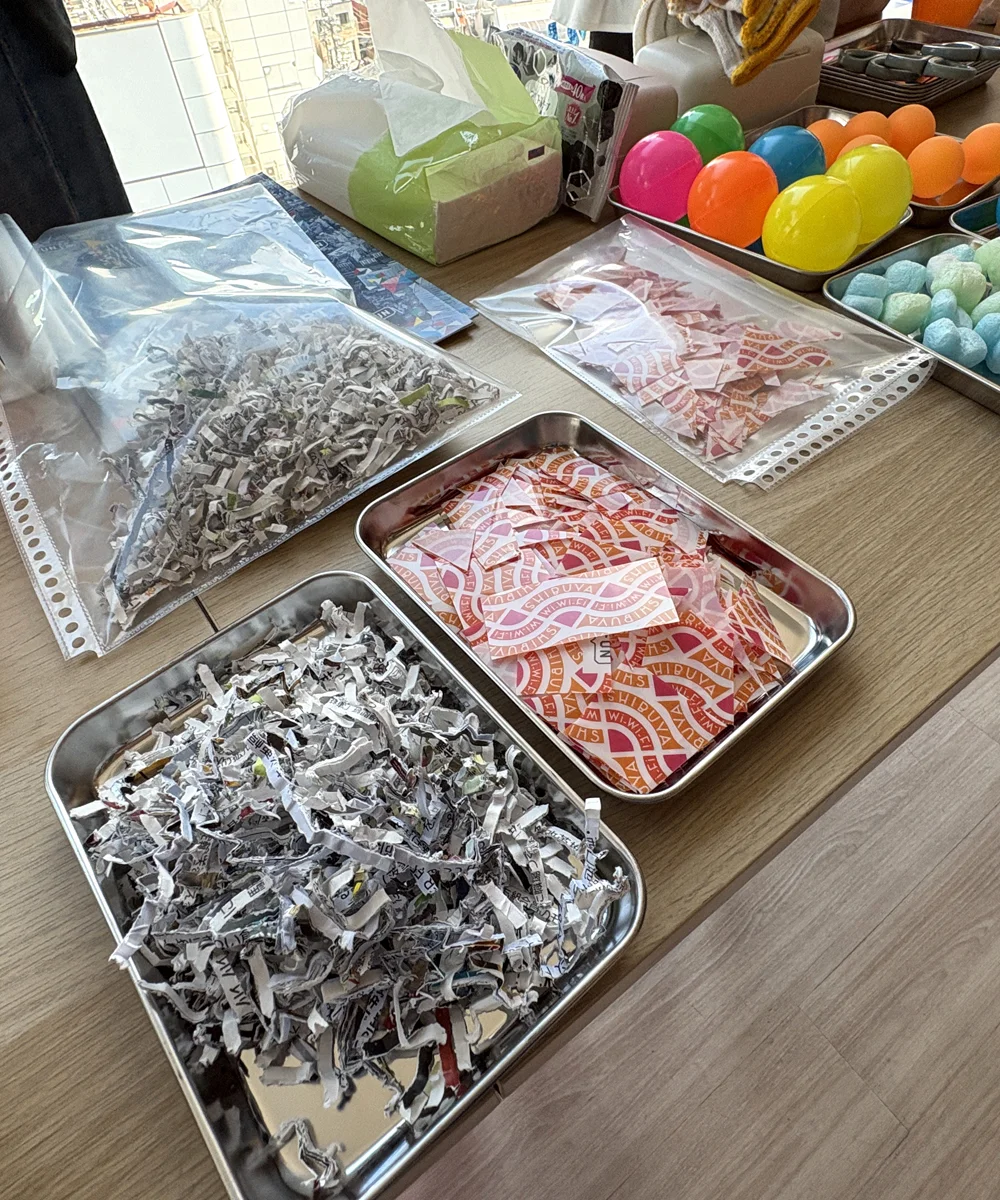
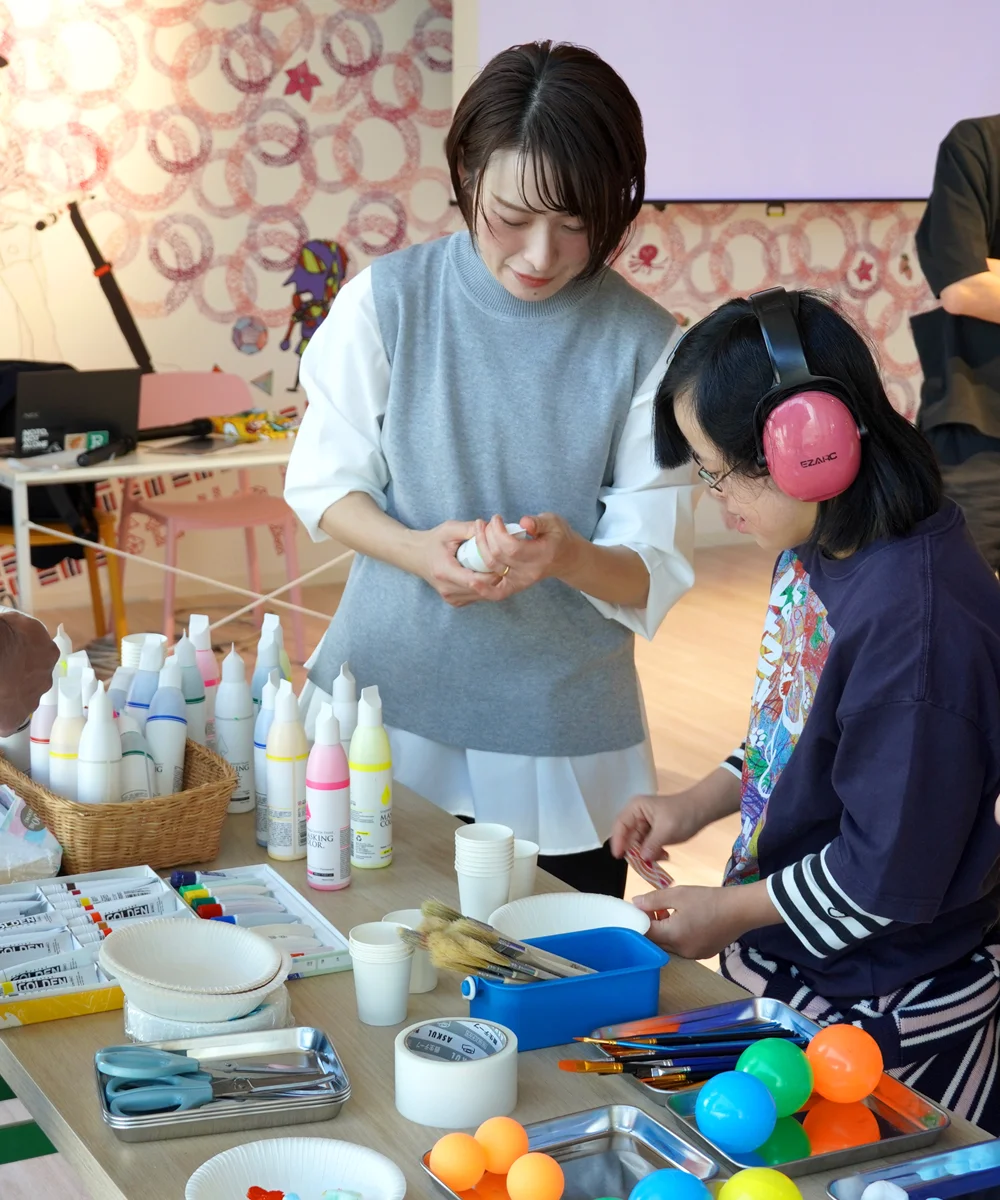
In addition to art supplies such as paints and markers, they also offer unique materials like colored balls, shredded clear files, and work gloves.
The venue was equipped with art supplies such as paints, brushes, sponges, and balls, as well as construction gloves, shredded paper, clear files, and tote bags made from recycled advertising banners. With support from Shibuya Font staff and supporters, the participants (artists with disabilities) began creating their works, each expressing their own unique sensibilities.
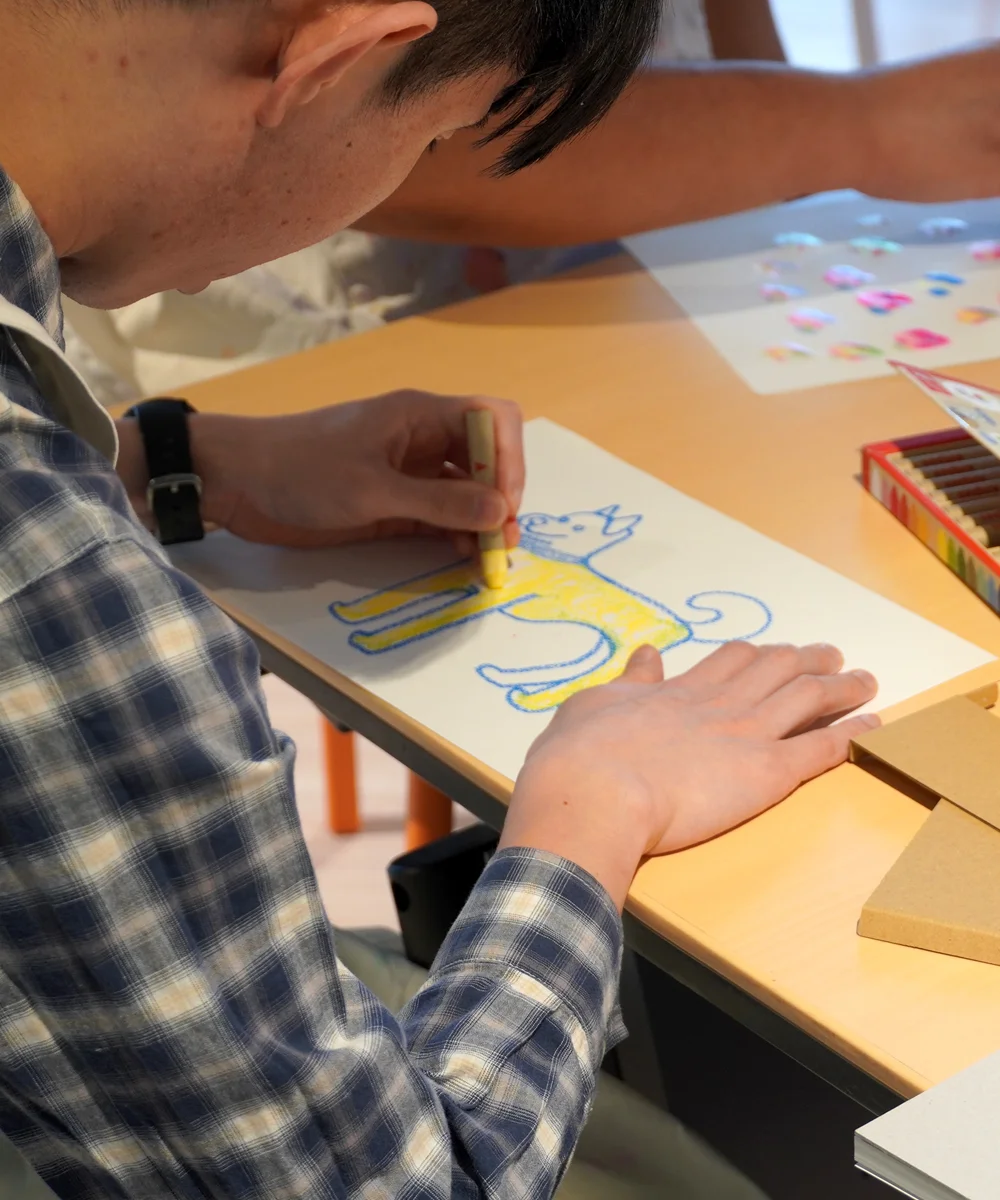
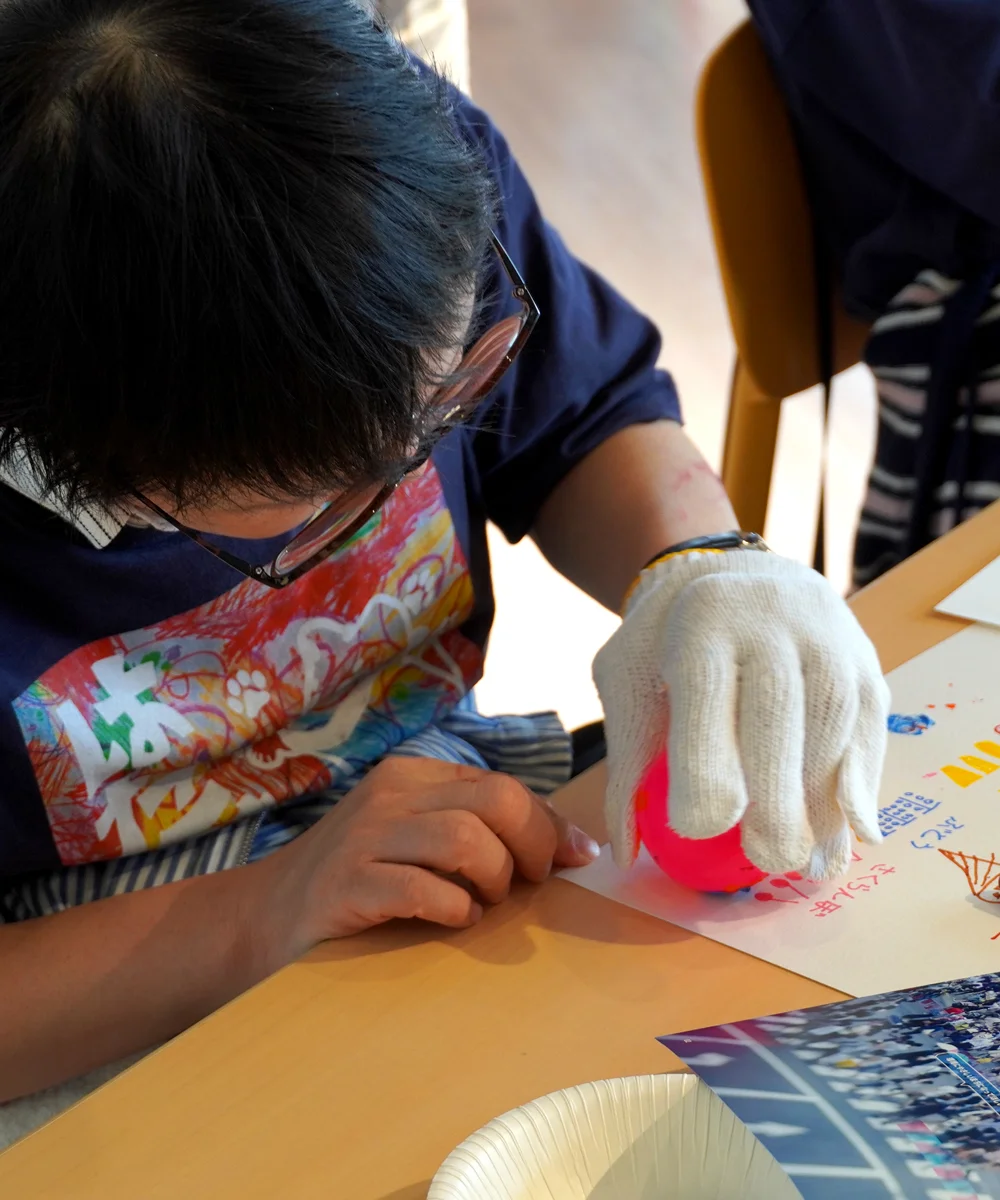
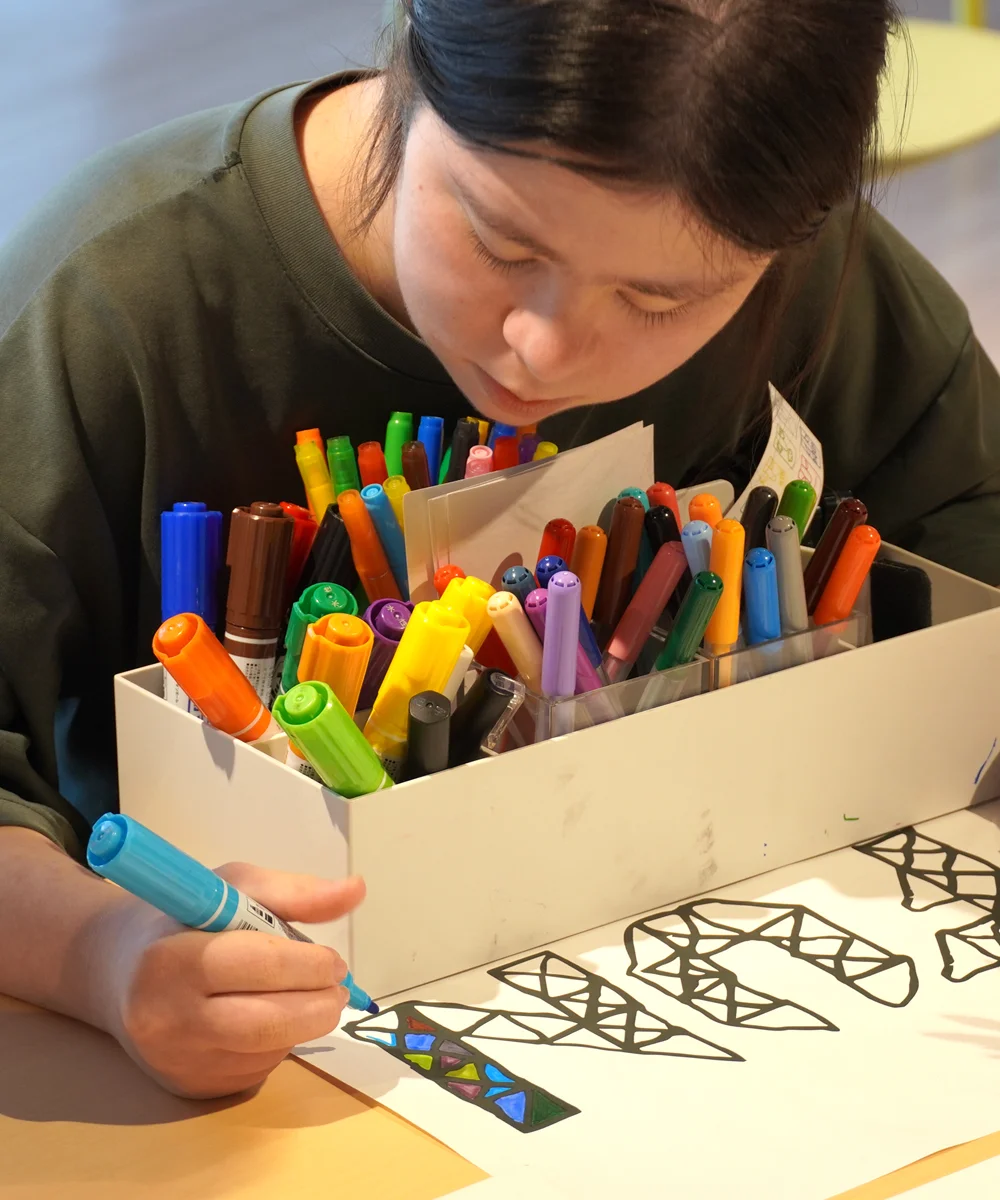
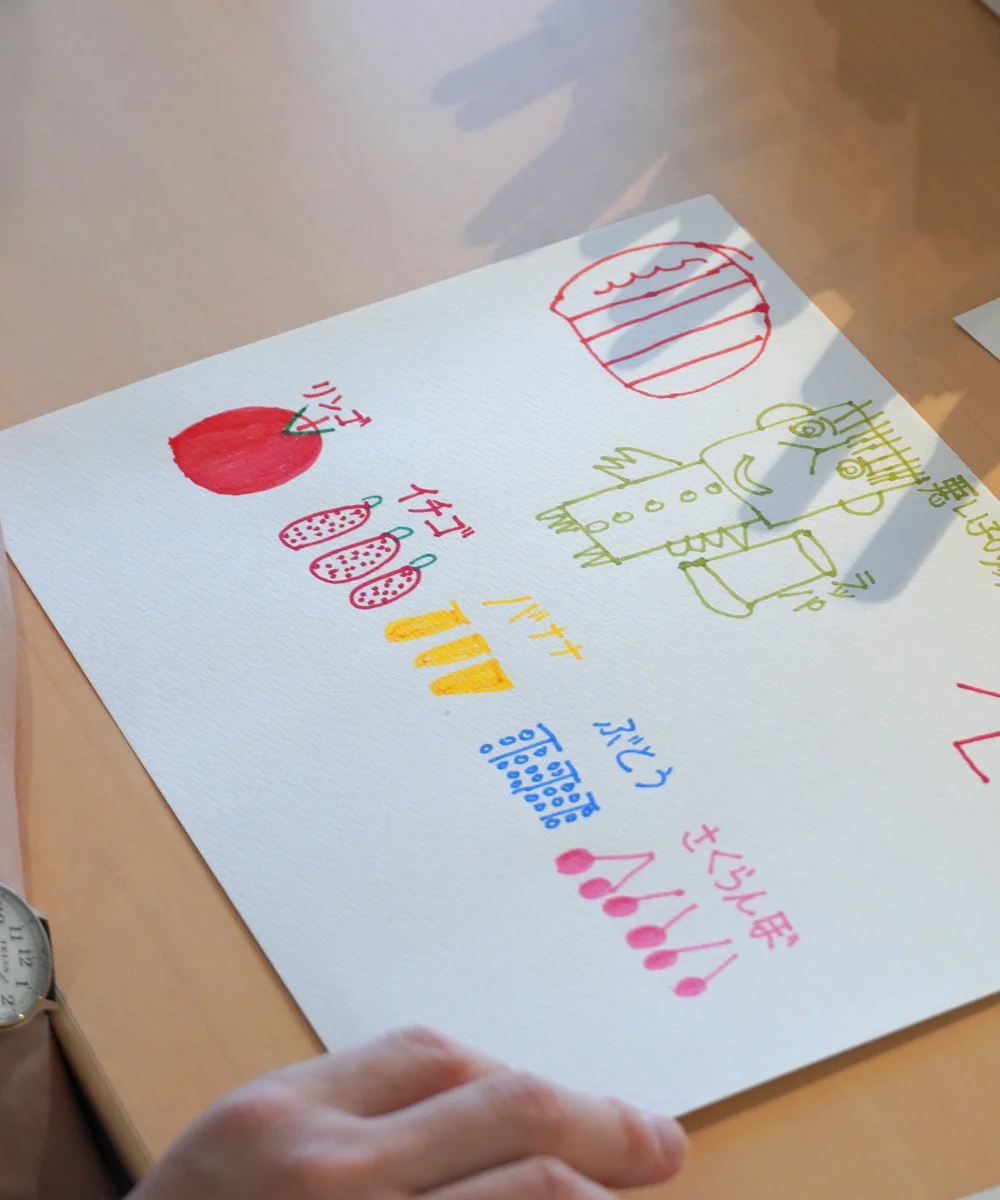
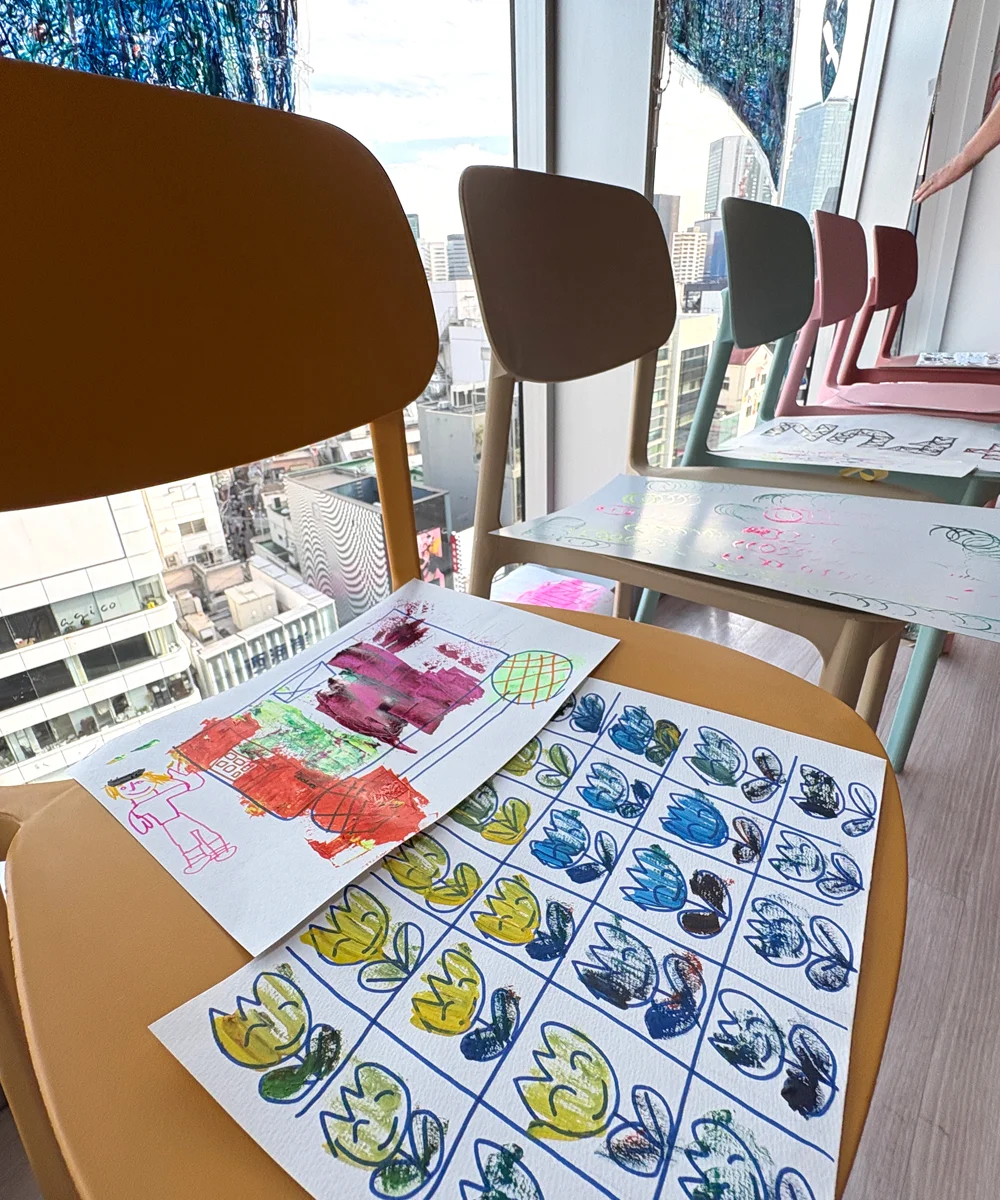
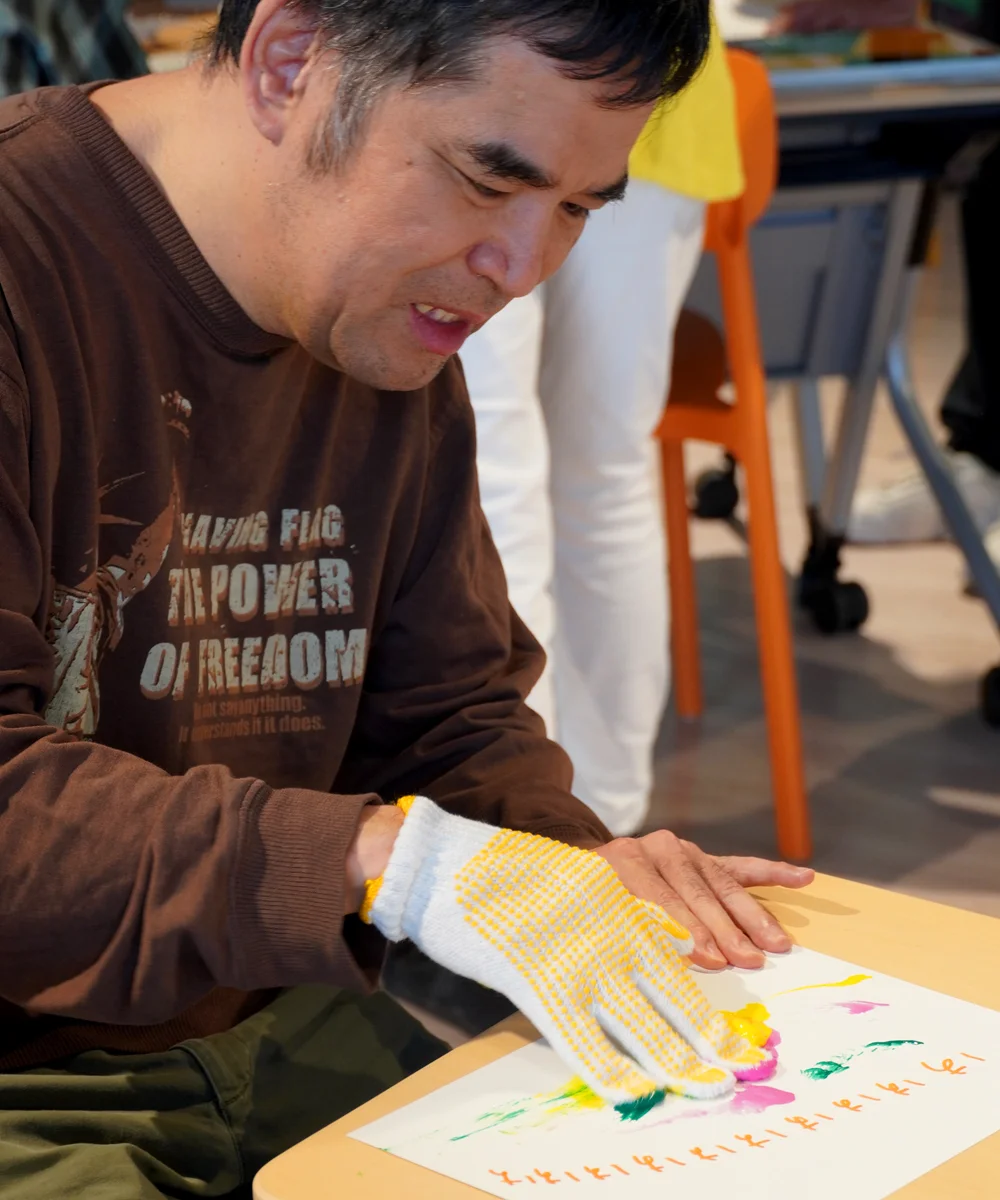
We worked on creating artwork using materials and expressions that brought out the individuality of each person.
There were various methods of expression: some people dipped balls or sponges in paint and dabbed or rolled them on drawing paper to create patterns, while others applied paint to work gloves and boldly spread the colors to create swirling patterns. Some participants drew animals such as squid, dolphins, and giraffes, as well as fruits such as strawberries, bananas, and cherries. There were also many drawings of dogs reminiscent of Hachiko, the symbol of Shibuya.
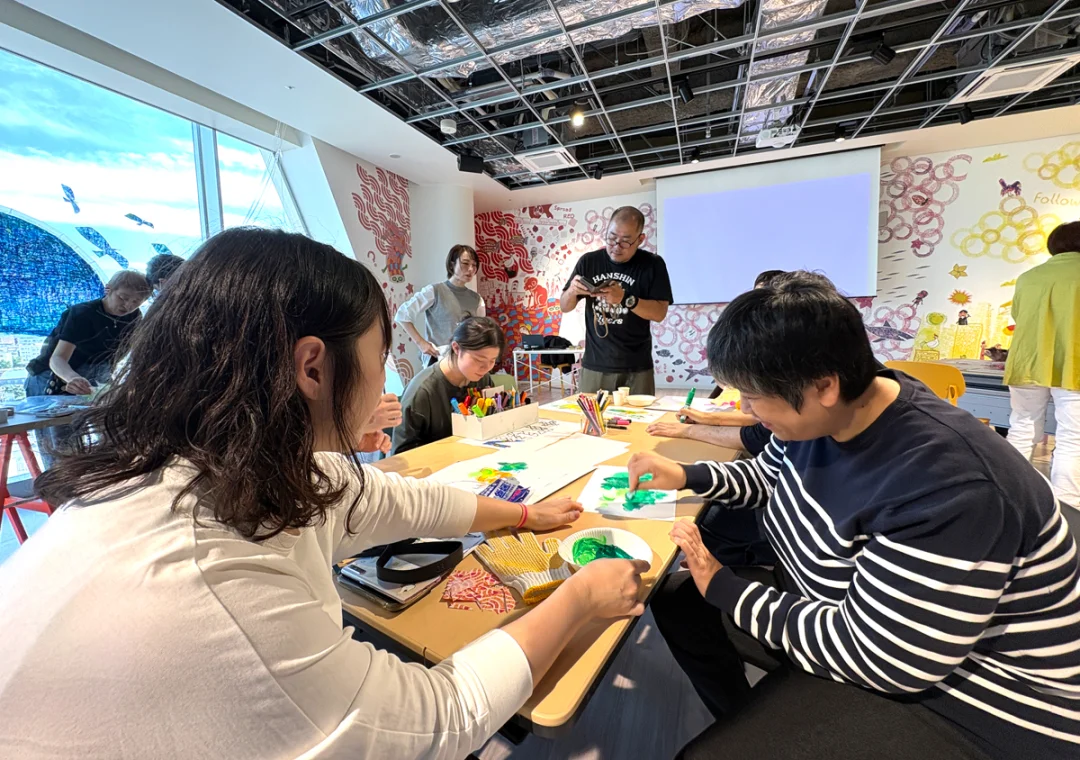
A scene from the artwork creation process. Participants with physical disabilities, such as those with limited use of their hands, were assisted by support staff.
Meanwhile, the staff members of Erimane started their project by coloring in the letters "+FUN" written in the Shibuya font. Inspired by the free expression of the artists with disabilities, some members gradually became engrossed in creating their own unique works, spreading paint directly with their hands or dripping it from above.
At the start, the disabled artists seemed nervous due to the unfamiliar environment and the large number of participants, but as the work progressed, their expressions softened, and they were seen interacting naturally with the area management members. Collaborative works were also created, with disabled artists adding their own drawings on top of those drawn by the area management members. A friendly atmosphere spread throughout the venue as they looked at each other's works and learned from each other's techniques.
For the area managers, who usually work on urban development projects, it was a rare opportunity to touch brushes and paints again, and it was impressive to see them engrossed in creating art as if they had become children.
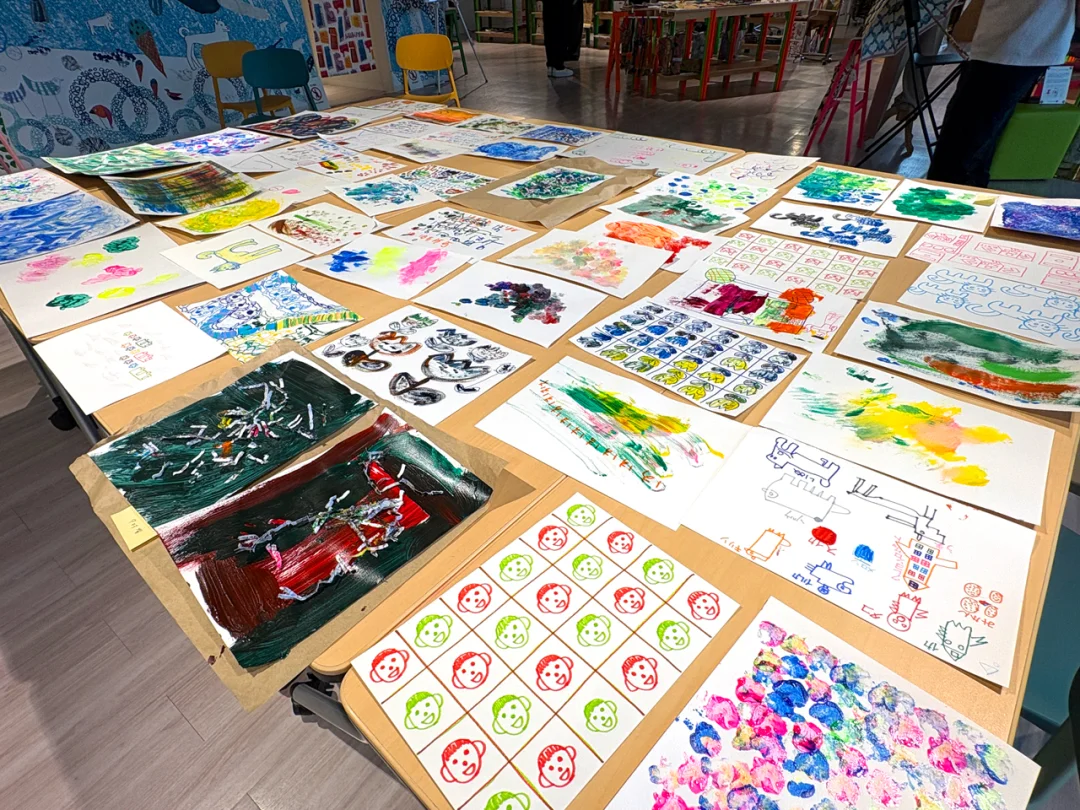
Nearly 80 pieces of artwork were completed during the approximately two-hour workshop.
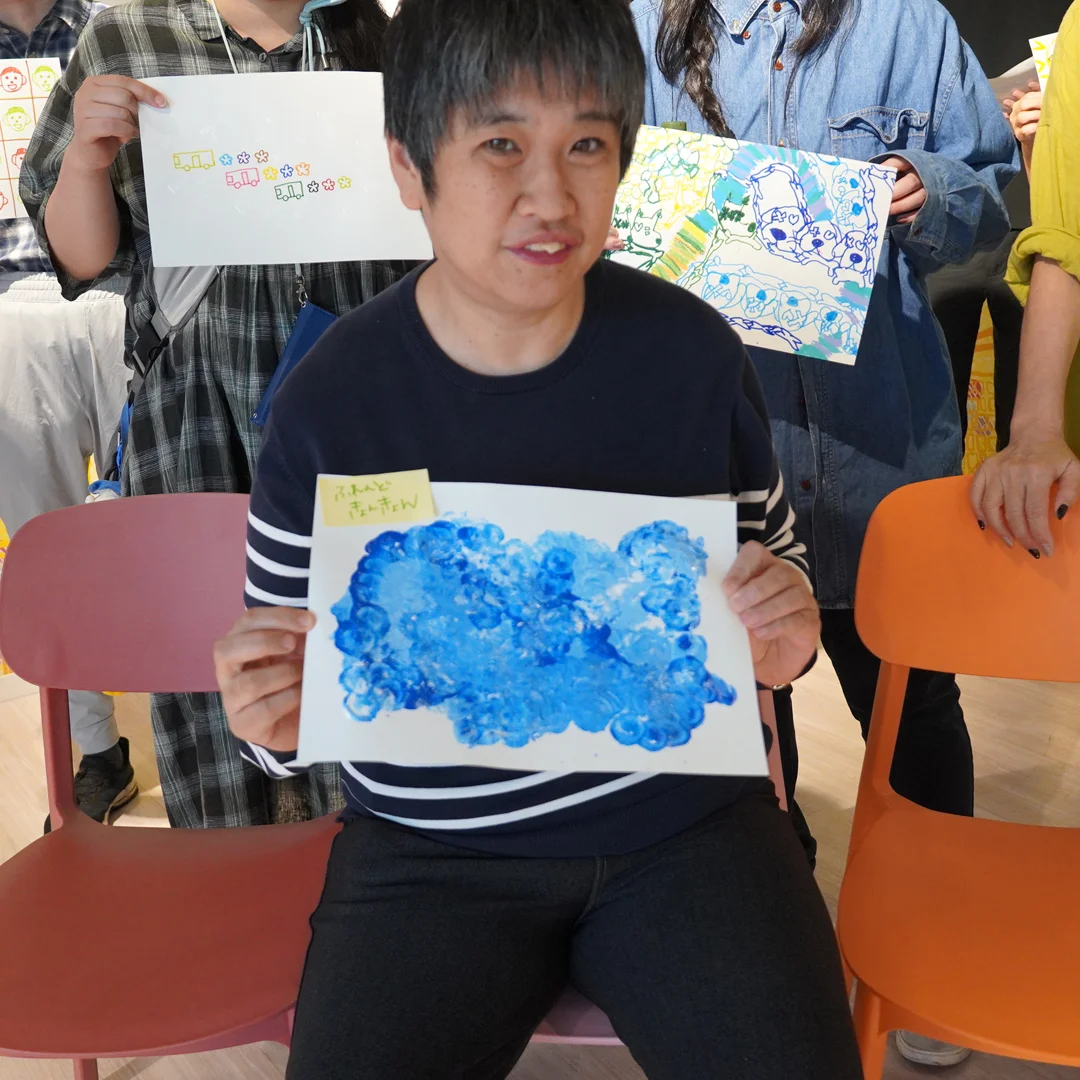
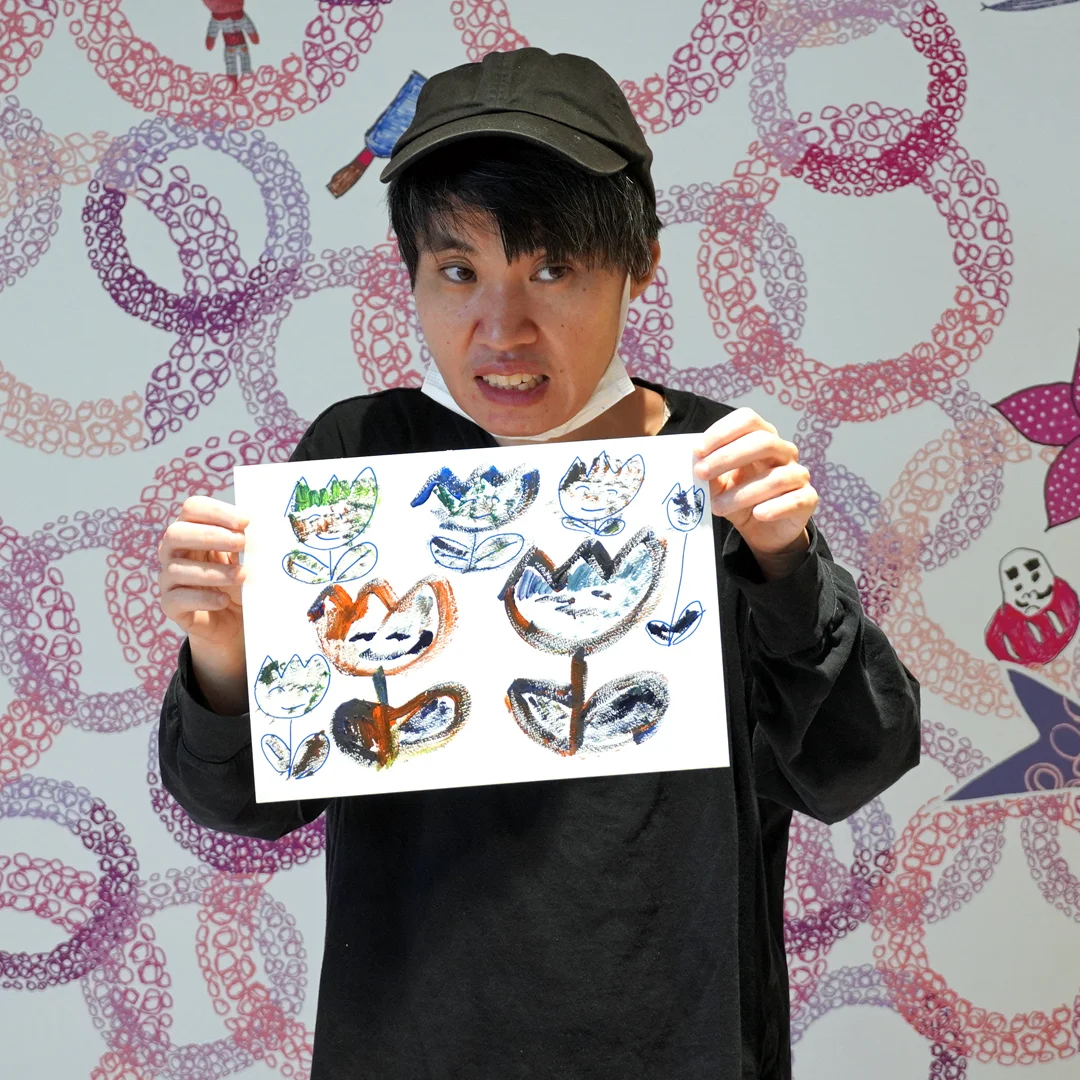
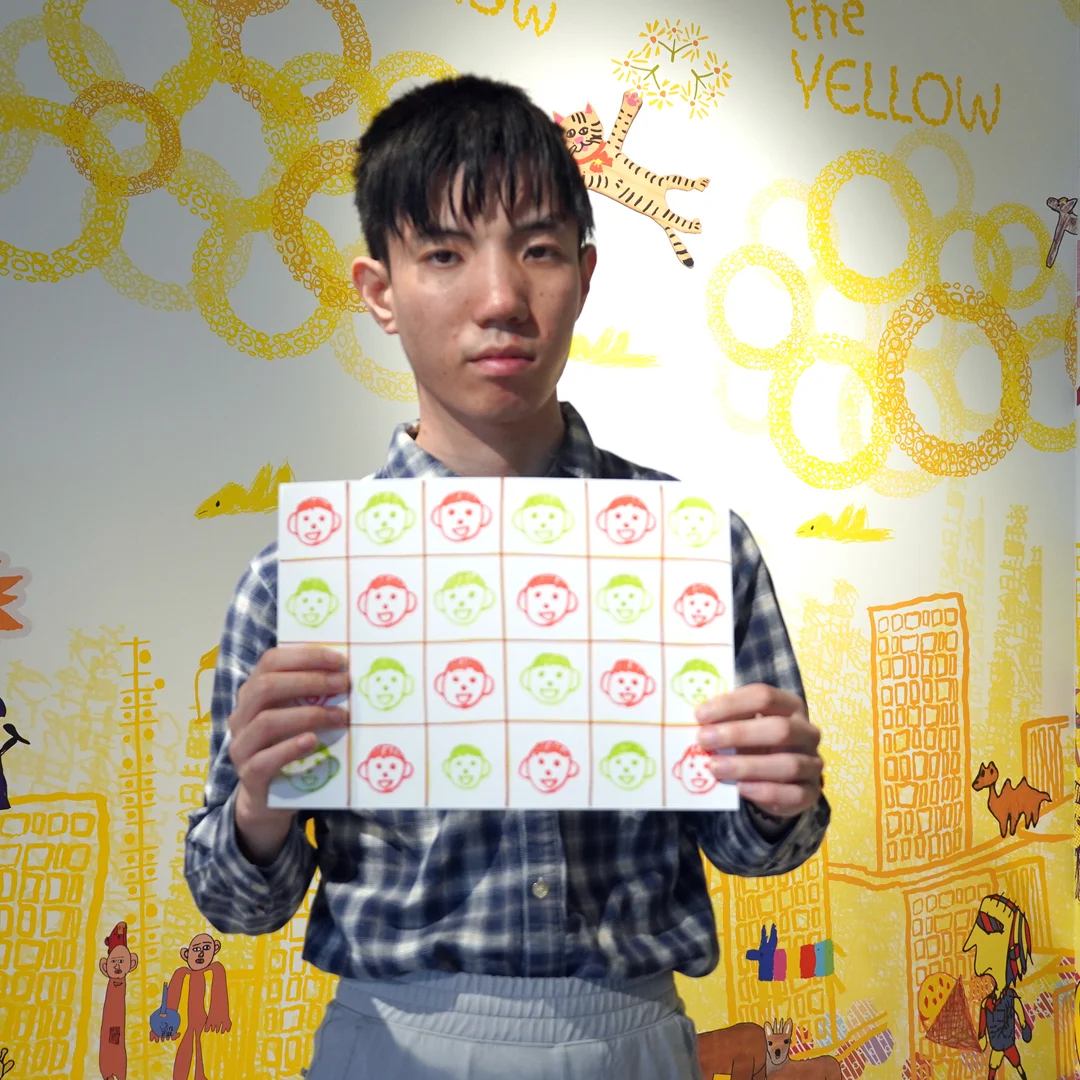
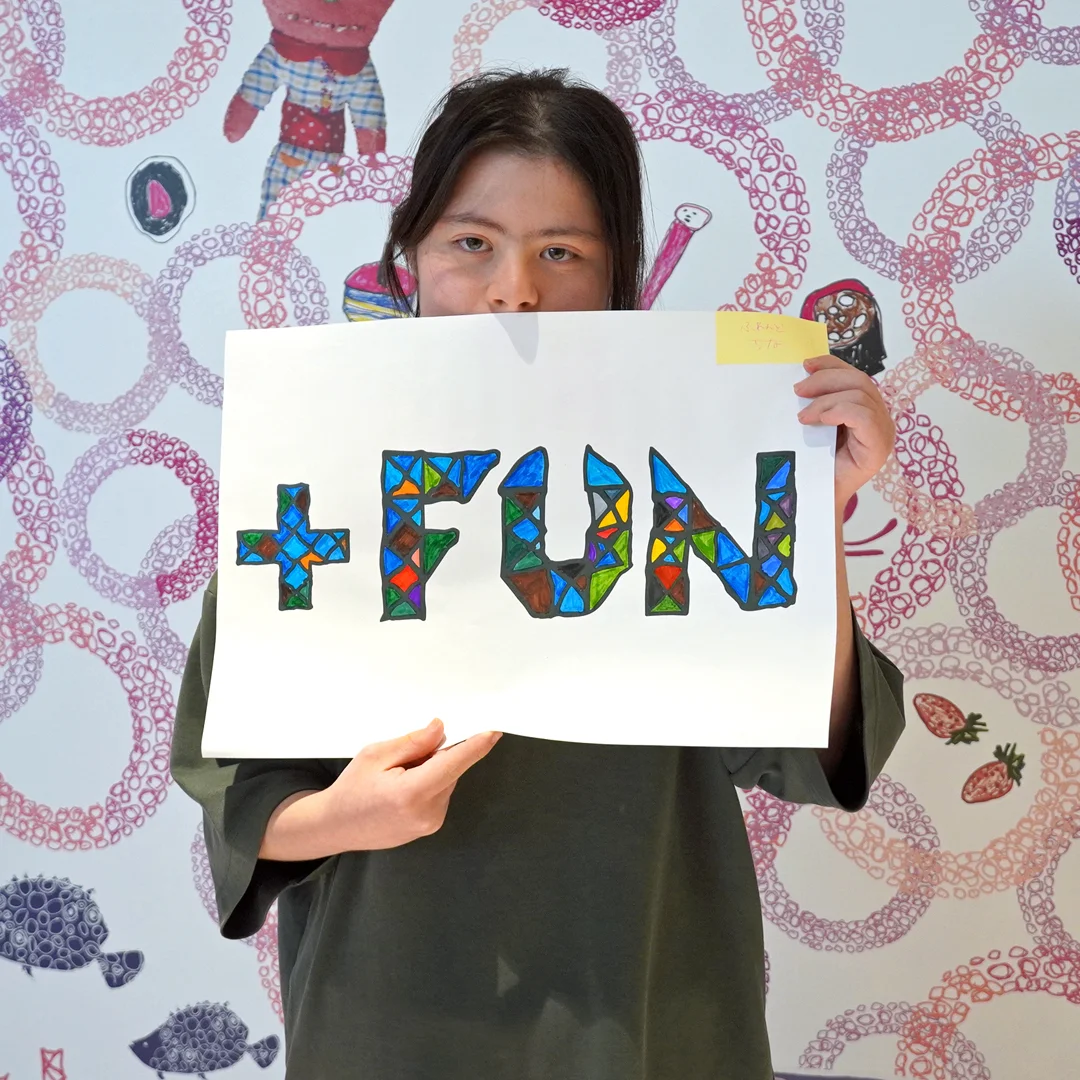
Take a commemorative photo holding your finished artwork!
Beyond "supporting and being supported": Shibuya Font's aim for co-creation
"Shibuya Font" is a project that began in 2016, triggered by a call from Shibuya Ward to "create a souvenir of Shibuya." Letters and drawings created by users of disability support facilities in the ward are transformed into fonts and graphic patterns by students at Kuwasawa Design Institute, a vocational school, and used in product development, spatial design, and other applications.
In 2021, the general incorporated association Shibuya Font was established. Currently, 11 businesses in the ward participate, and more than 750 designs have been created to date. Through the licensing of these designs, the association aims to improve the wages of people with disabilities and promotes collaborative creation among government, businesses, schools, and welfare facilities.
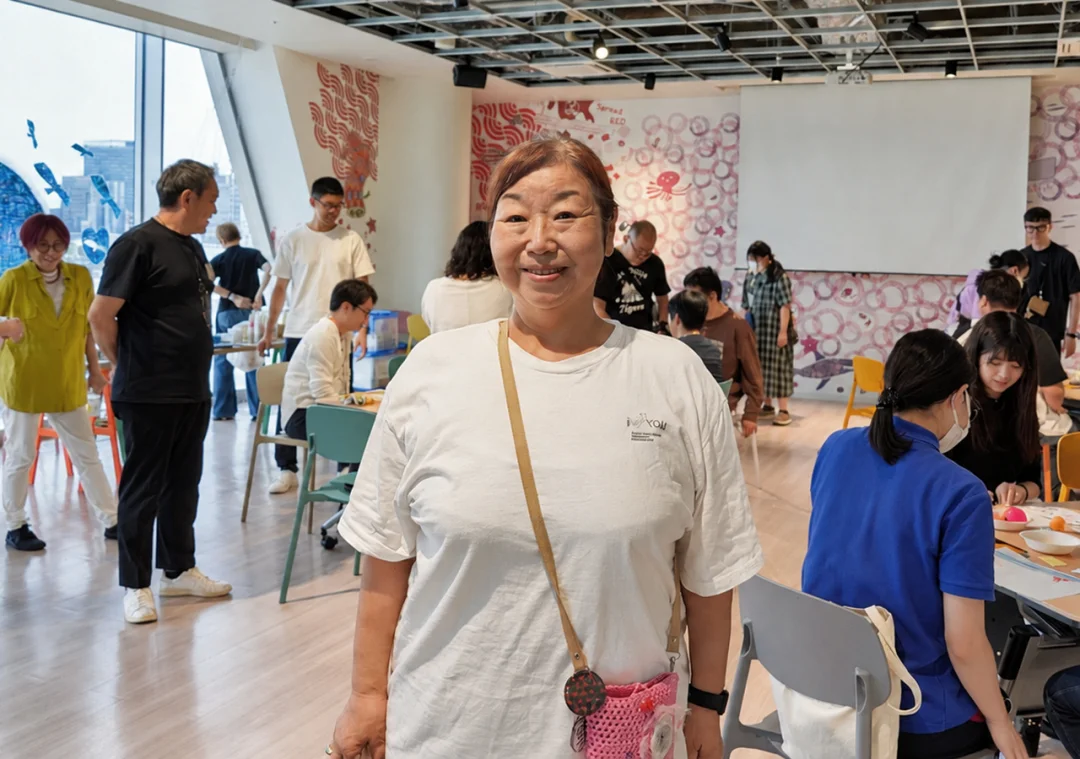
Kiyoko Sakamoto, General Affairs Manager at Shibuya Font
Sakamoto of Shibuya Font explains the characteristics of their activities by saying, "We are not trying to cultivate people who are good at drawing or artists with special talents."
"Even without drawing, embroidery, felt crafts, and things that come from everyday work and daily life can become design materials. Designers combine these with a new perspective and finish them into designs that connect with society. That is what we mean by co-creation," he says. This way of thinking was also evident in this workshop. Rather than a one-way relationship where people with disabilities create works and those around them support them, the participants stimulated each other's expressions and generated new ideas.
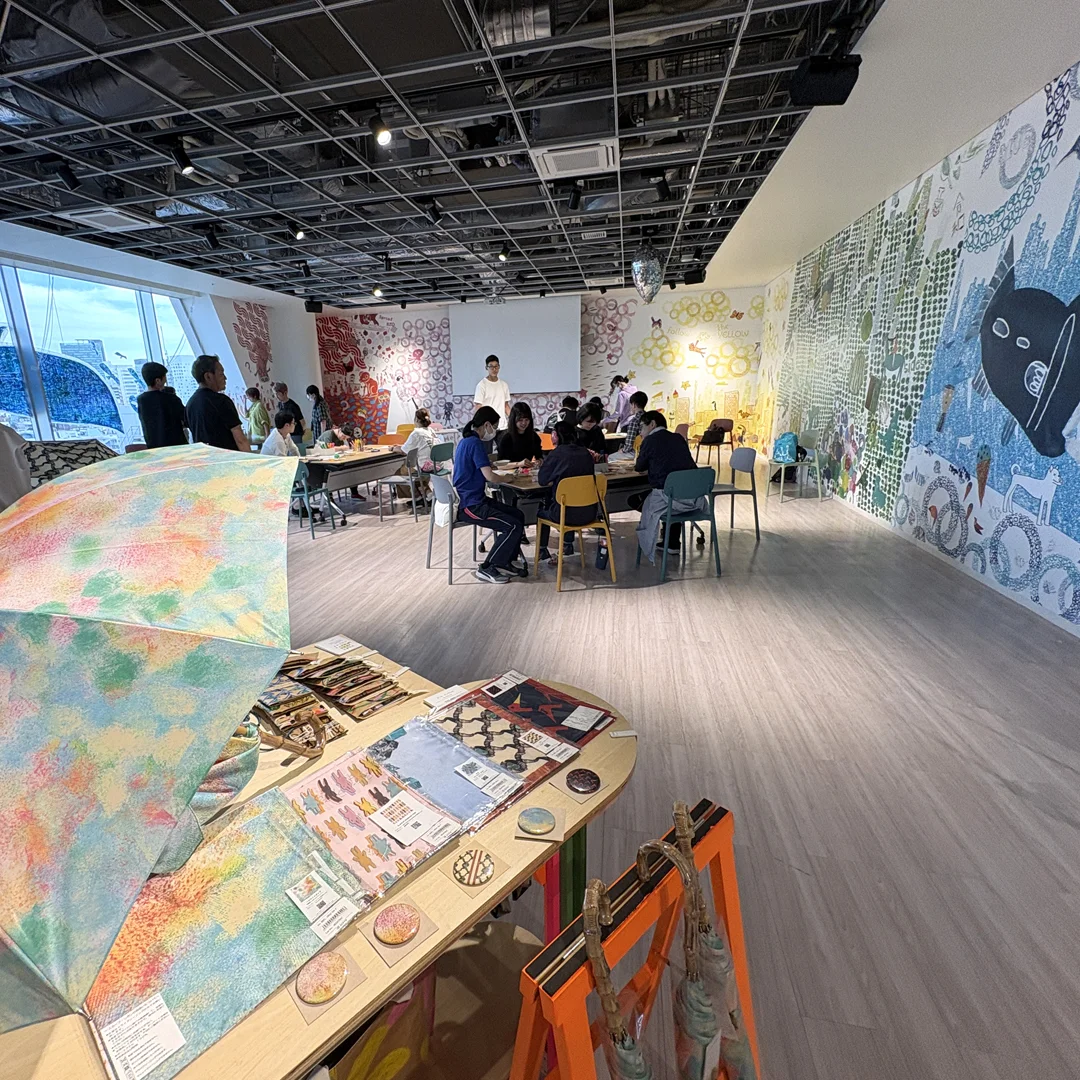
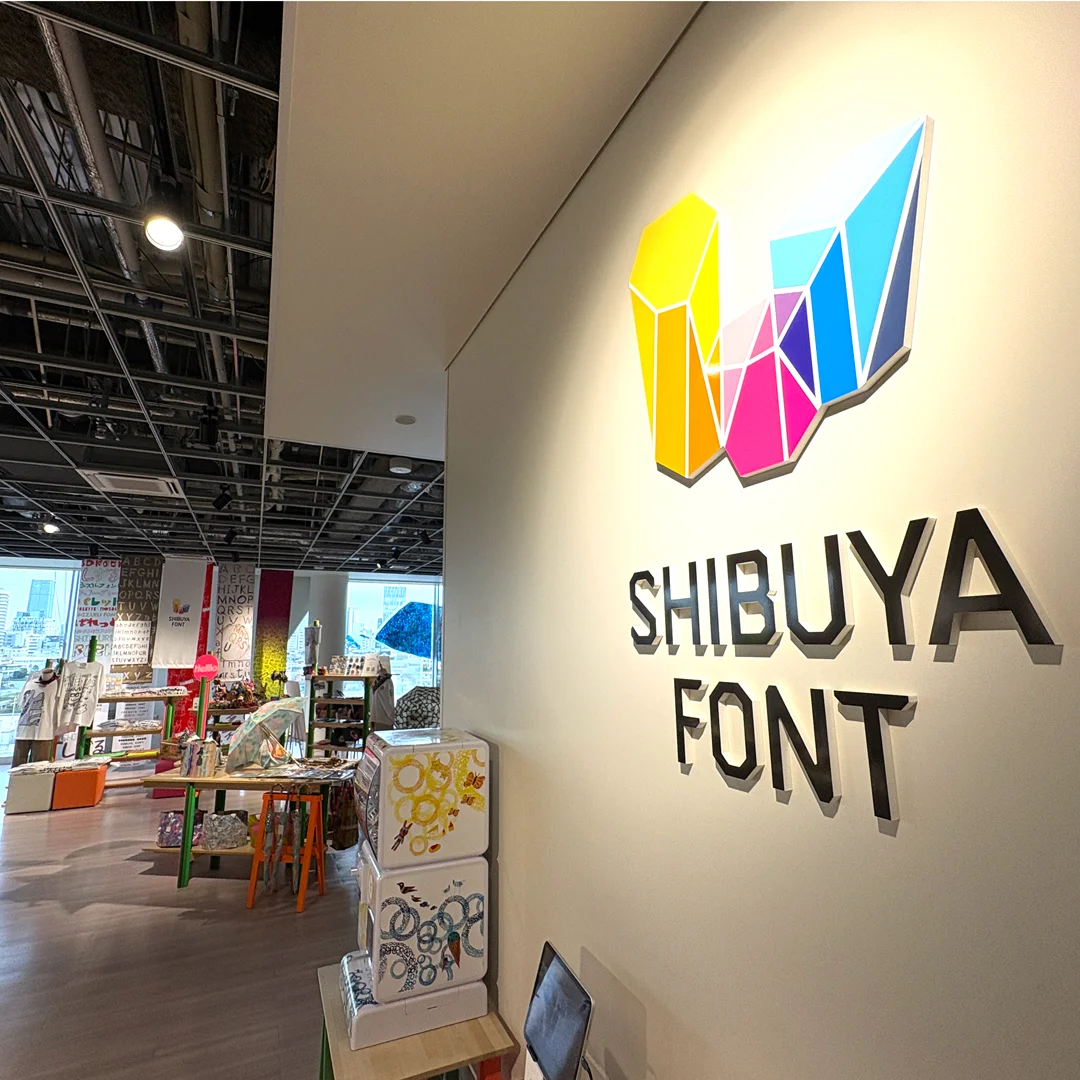
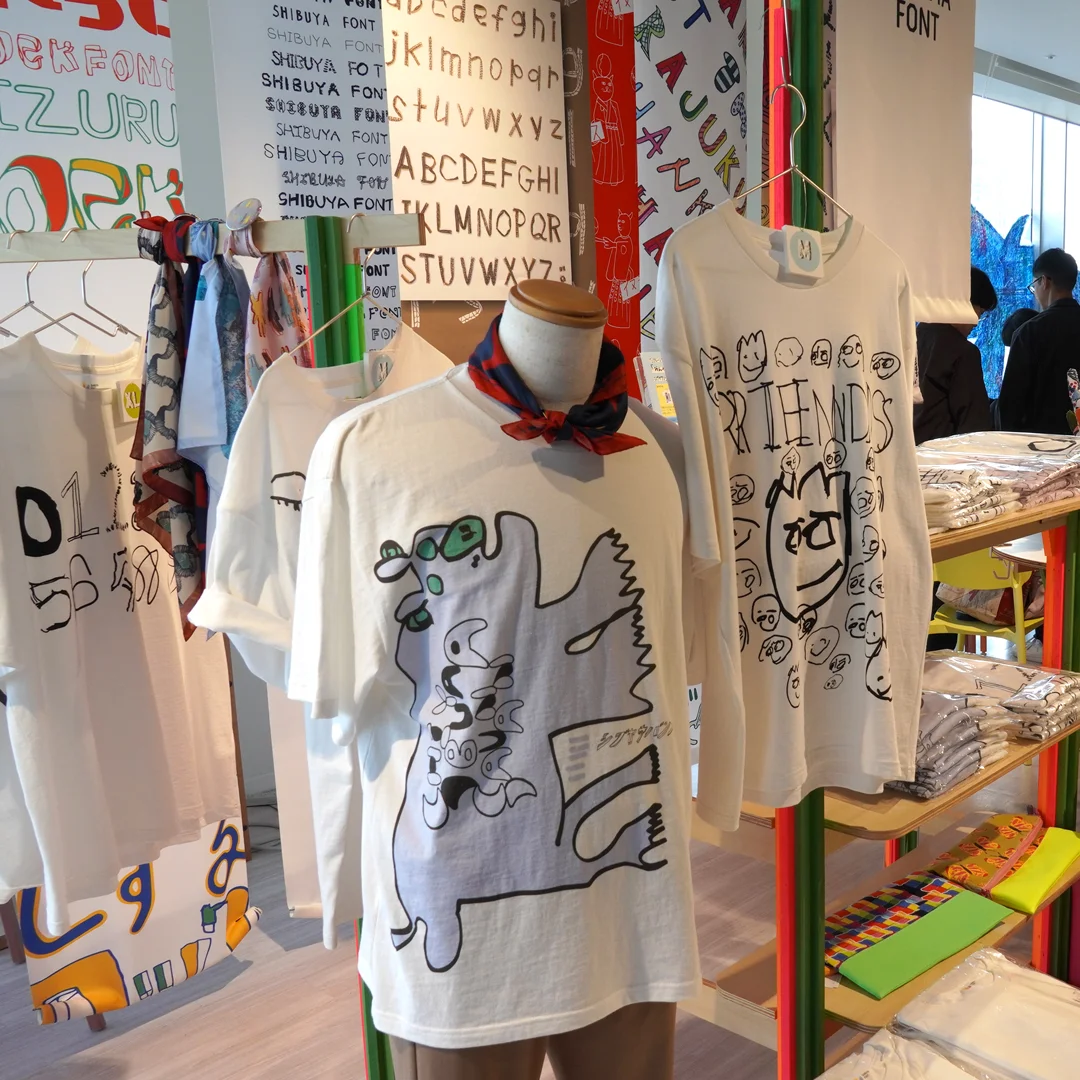
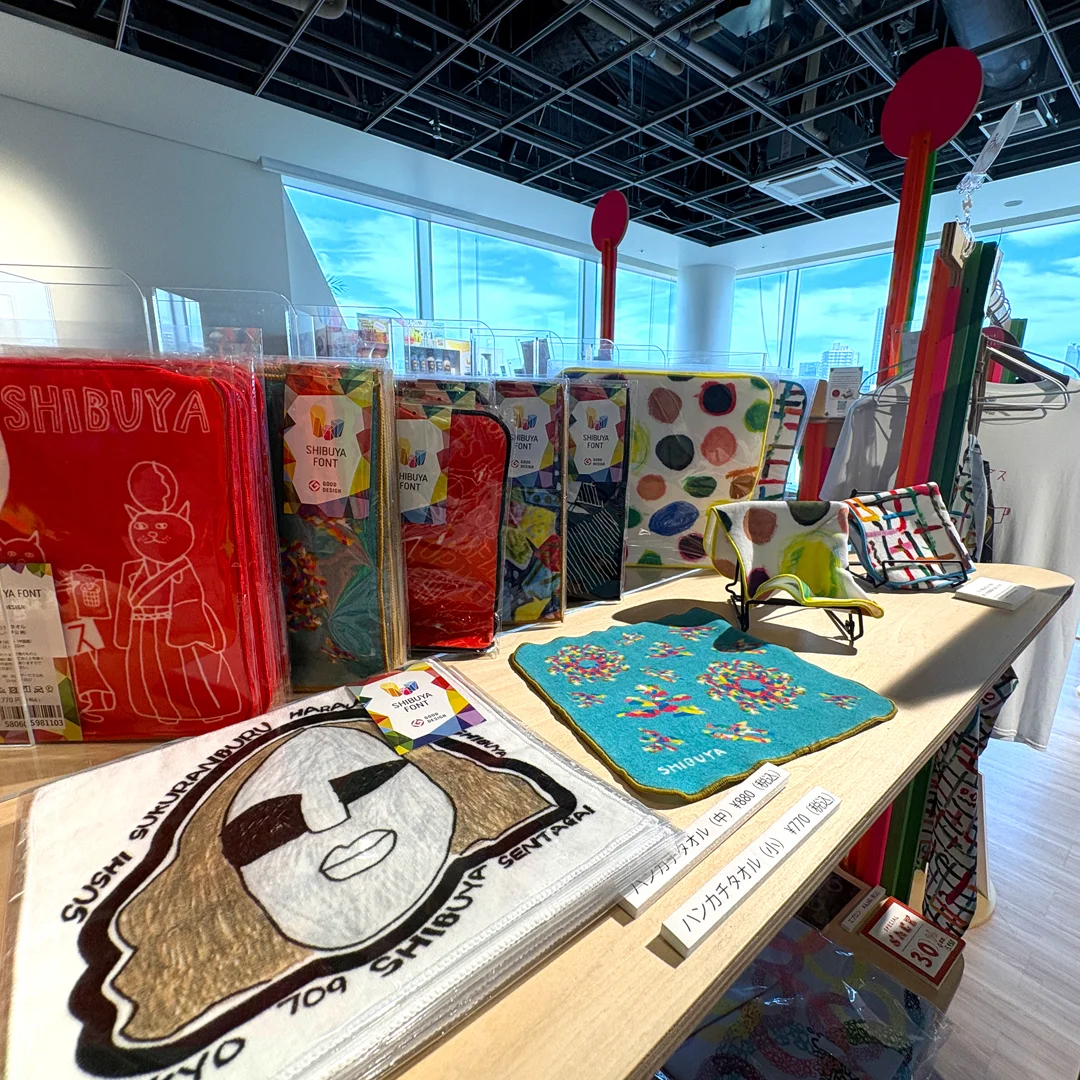
Shibuya Font Lab is located within Harakado, a large commercial complex at the Jingumae intersection. It offers a space for workshops and events, and also plans and sells a variety of products incorporating Shibuya Fonts. Every Friday, they also hold demonstrations and sales of bread and baked goods made by welfare facilities.
Sakamoto says, "People with disabilities express themselves freely, in a good way, without being bound by preconceived notions. They go beyond the common sense that we unconsciously hold, such as the idea that trees must be green and the sky must be blue. I am often surprised by their ideas."
Furthermore, she emphasized the significance of collaborative creation, stating, "Not only do people with disabilities change, but we ourselves, who are with them, also change. By influencing each other, new discoveries and insights are born. We want to eliminate the 'supporter and supported' relationship."
The completed original drawings will be reconstructed and put on display at the east exit of Shibuya Station next spring.
After the workshop, the completed works were displayed on a table for all the staff at Area Manager and Shibuya Font to admire. The original artwork to be incorporated into the final design was selected through voting for the works they liked best.
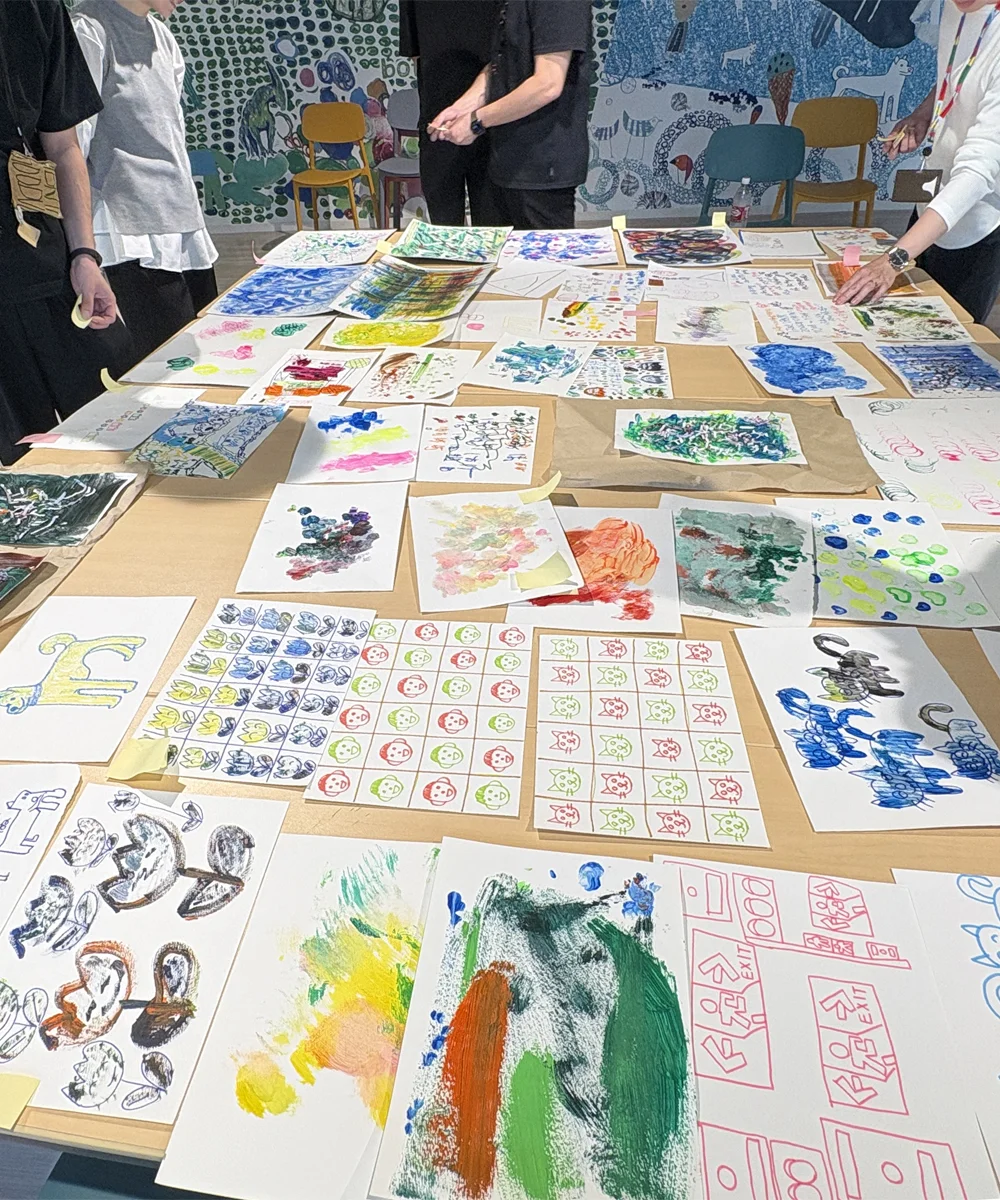
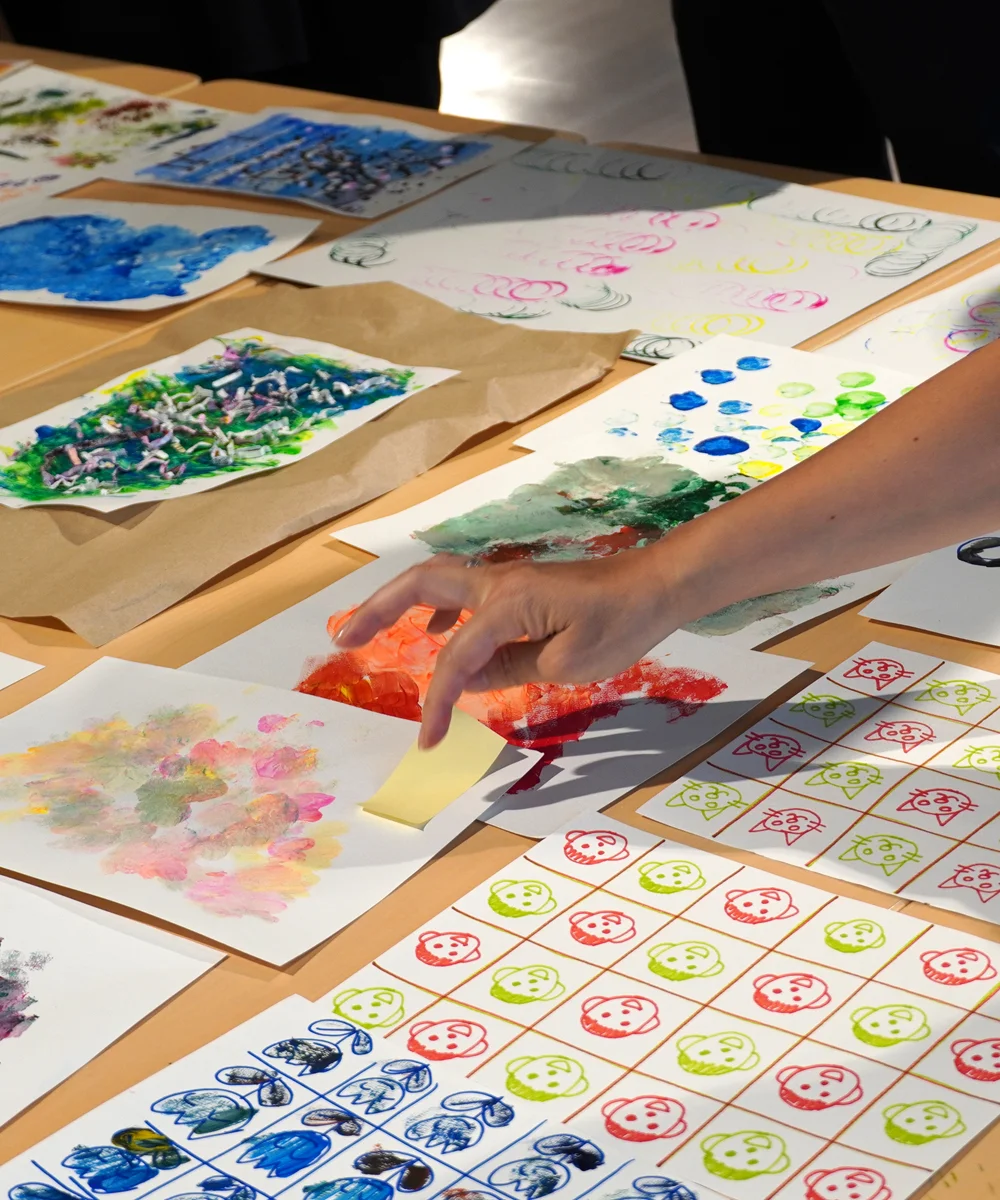
A scene from the selection meeting by those involved. They placed sticky notes on the works they liked and picked them out.
Going forward, the design elements such as colors, shapes, and patterns of the selected works will be digitized and reconstructed by Shibuya Font designers. After creating multiple design proposals, the selection and refinement process will be repeated by stakeholders to create one large-scale artwork.
Sakamoto explains, "Just because it's drawn by someone with a disability doesn't mean anything goes. Designers look at each original drawing, decide which parts to use and which not to use, and then refine it into a design that will attract many people in the city."
Regarding the fact that their work will be displayed in a public space at the east exit of Shibuya Station, they expressed their excitement, saying, "We are really happy that our work will be displayed in a place that everyone uses every day. Once it's finished, we can all go and see it together and take pictures saying, 'We made this!' It will also be an opportunity for many people in the city to get to know Shibuya Font."
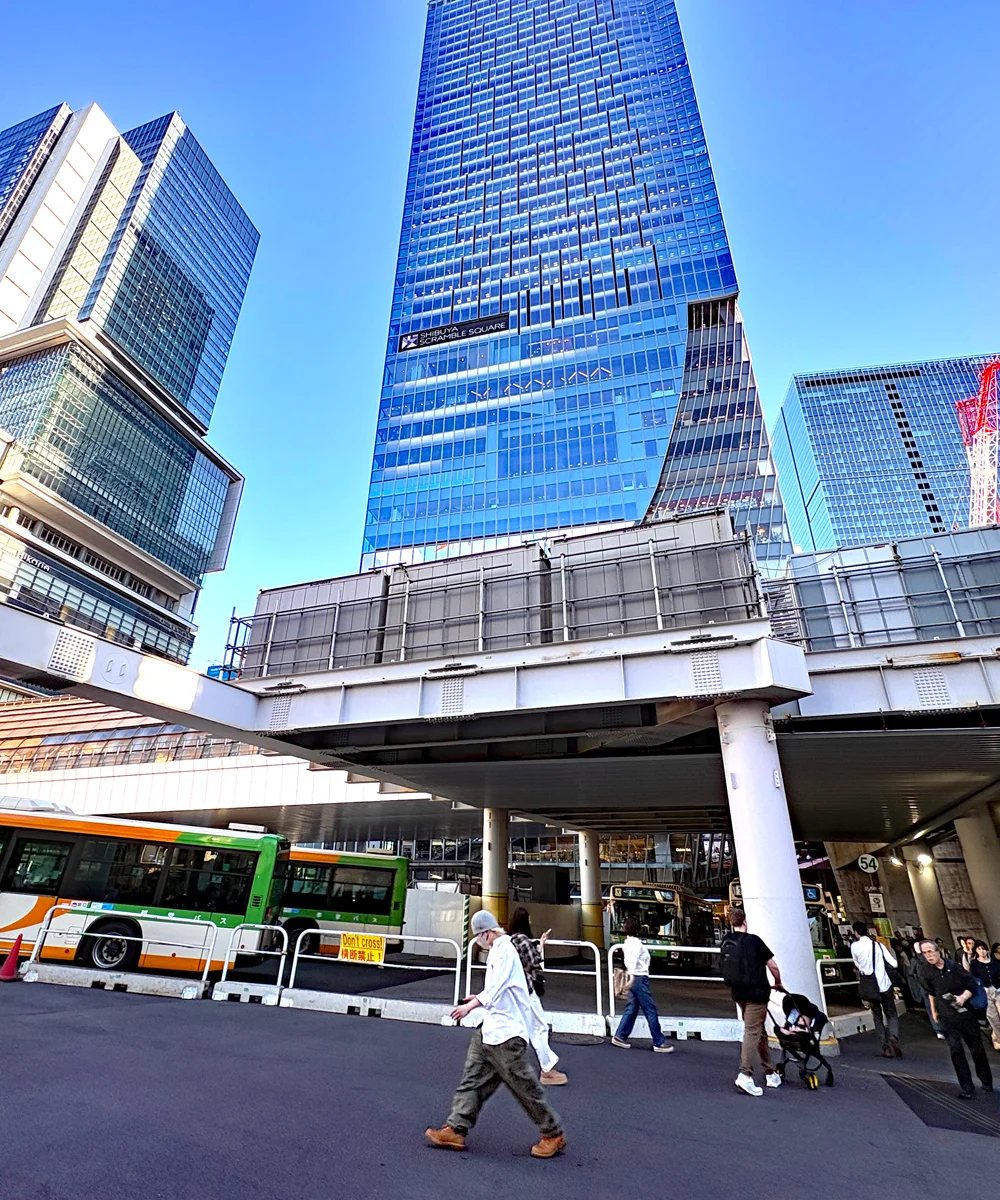
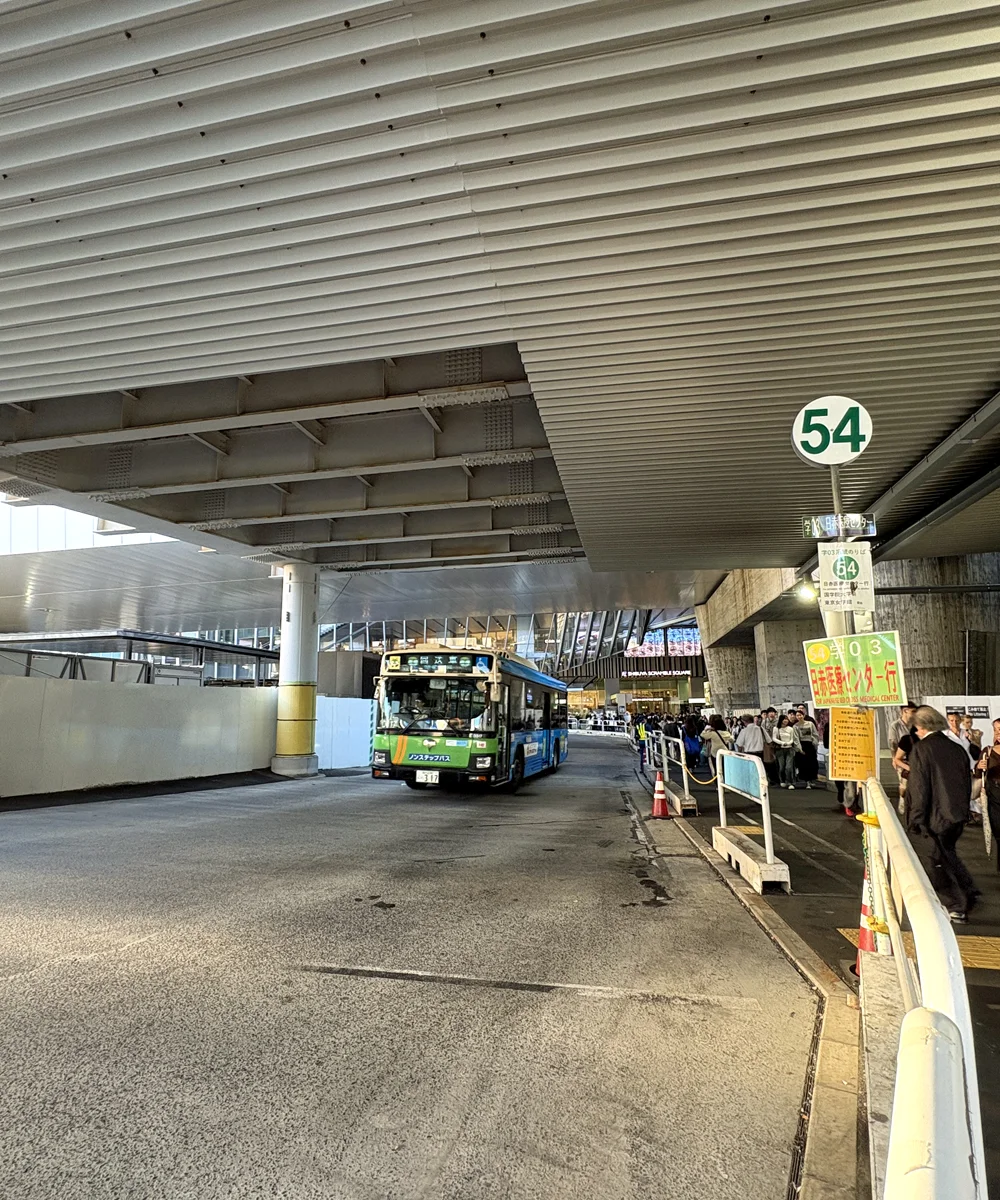
Near the bus stop at the east exit of JR Shibuya Station, where the artwork is planned to be displayed.
The completed artwork is scheduled to be displayed on the temporary construction fence at the east exit of Shibuya Station in the spring of 2027. The artwork, created by bringing together the individuality and sensibilities of people with disabilities and those involved in urban development, will add a new splash of color to the Shibuya Station area, which continues to undergo redevelopment.
Venue
Editorial Department: Takashi Fujii
Shibuya registrar. In addition to Shibuya of Culture information, seasonal news and topics, it will spell write that feel every day.
Genres within watch
Articles in the same genre
2026-11-02〜
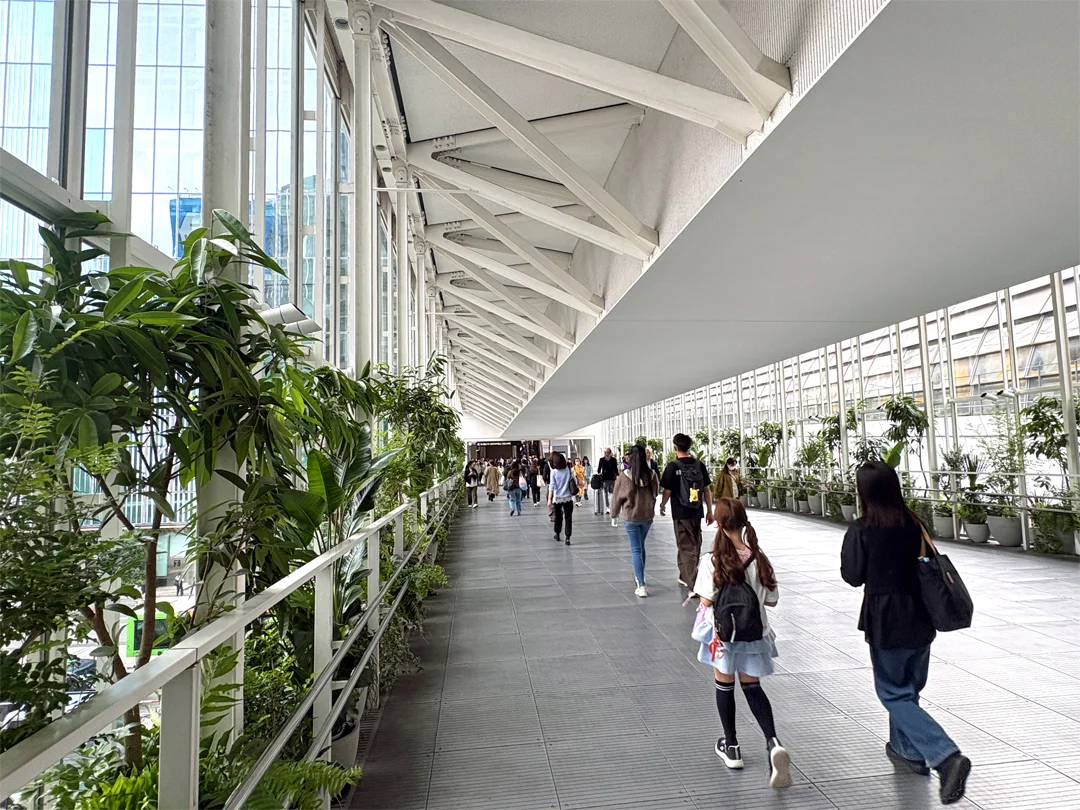
The connecting passageway directly linked to Shibuya Station has been transformed into a "city forest" with 180 potted plants.
2026-10-30〜
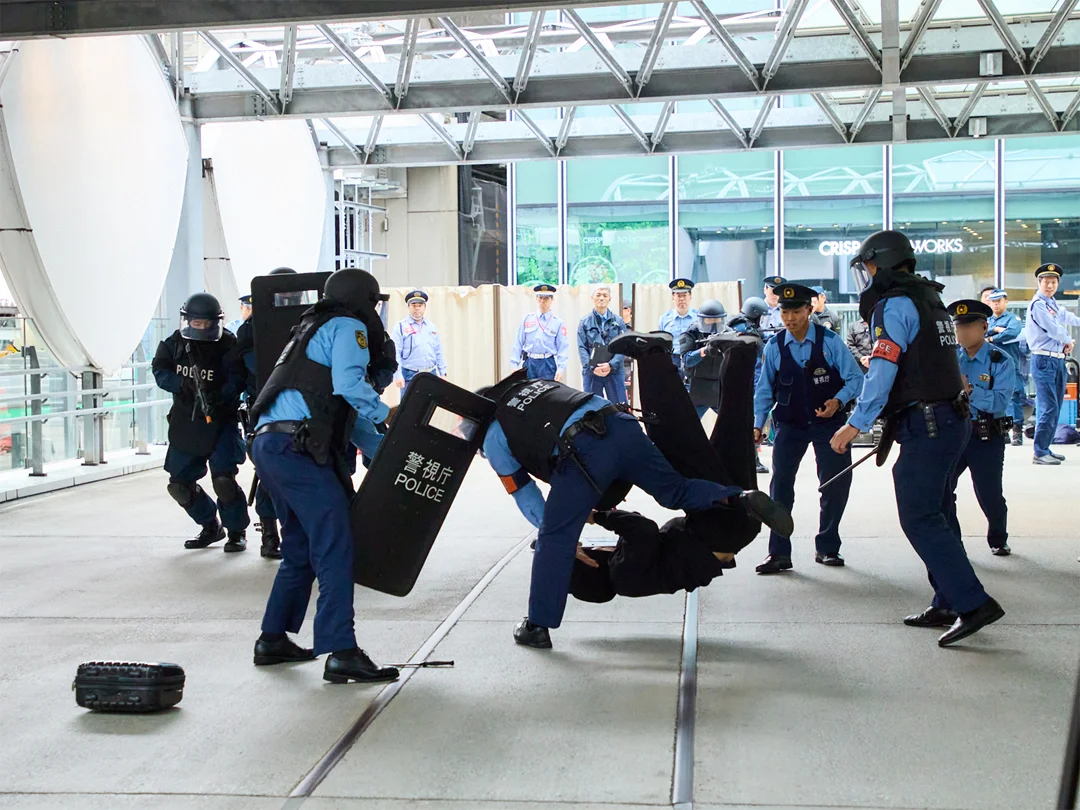
Security drill conducted at the pedestrian overpass at Shibuya Station, simulating scenarios involving a suspicious person with a handgun and explosives.
2026-09-30〜
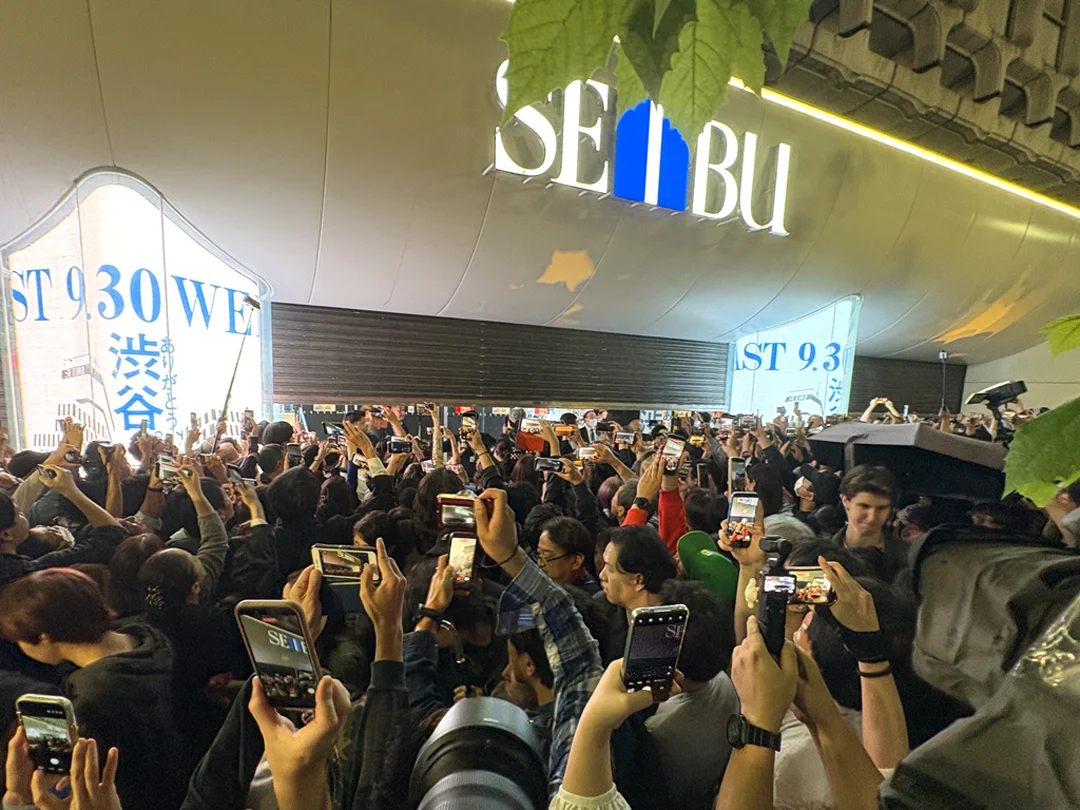
Seibu Shibuya Store closes its doors after 58 years of history: The department store that created "Shibuya" marks the end of its history.
2026-09-02〜
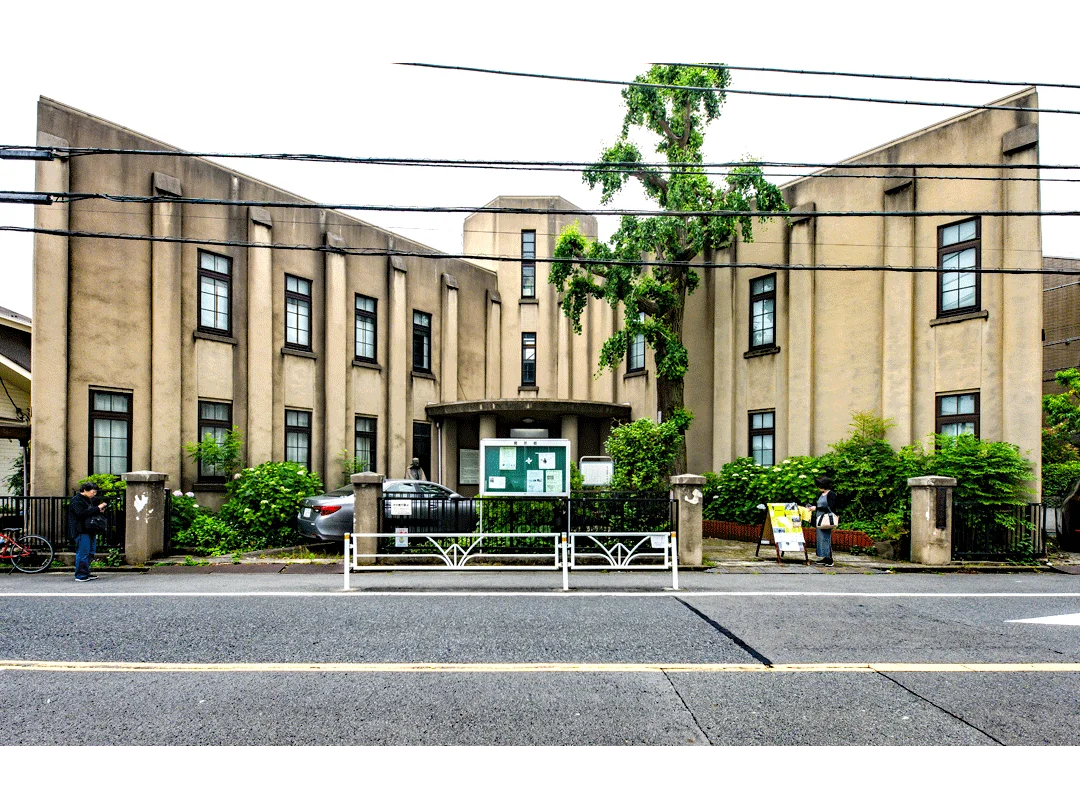
[Shibuya Scenery Records Vol. 2] The "Onko Gakkai Kaikan" continues to preserve the legacy of blind scholar Hanawa Hokiichi
Featured articles on the site
A photo exhibition tracing the memories of Shibuya's "vanished streets" and the city itself: 186 photographs and people's testimonies.
Create "animal keychains" at Shibuya Hikarie Deck: Parents and children can experience the "cycle of life."
The connecting passageway directly linked to Shibuya Station has been transformed into a "city forest" with 180 potted plants.