SHIBUY.A. × EVENT

2026-11-10
A photo exhibition tracing the memories of Shibuya's "vanished streets" and the city itself: 186 photographs and people's testimonies.
Shibuya Hikarie will host its first audio exhibition and the "Shibuya Disappearance Encyclopedia" starting November 10th.
2026-11-09
SHARE
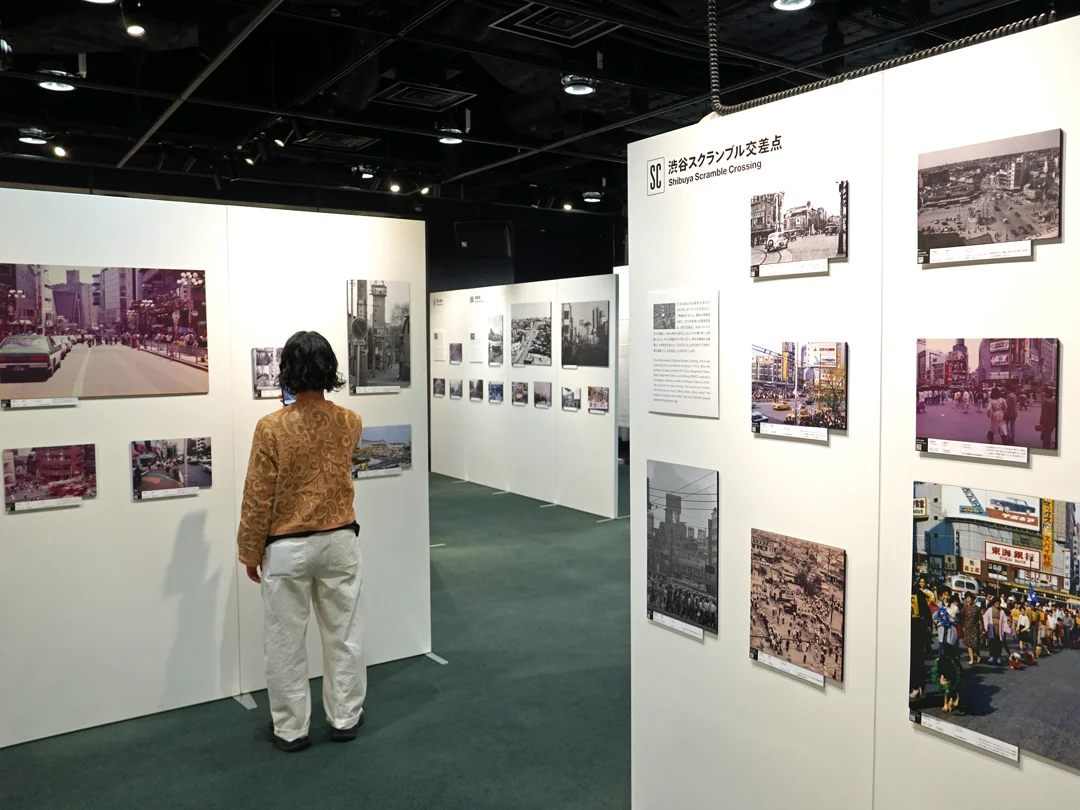
The "Shibuya Archive Photo Exhibition 2026," which traces the changes in Shibuya's streetscape and the memories of its people, will be held from November 10th to 23rd at the "8/COURT" event space on the 8th floor Shibuya Hikarie. 186 photographs taken from the Taisho to Heisei periods will be on display, focusing on approximately 30 streets, including Dogenzaka and Koen-dori. This year, an "oral history" section will be added, featuring audio testimonies from people connected to Shibuya.
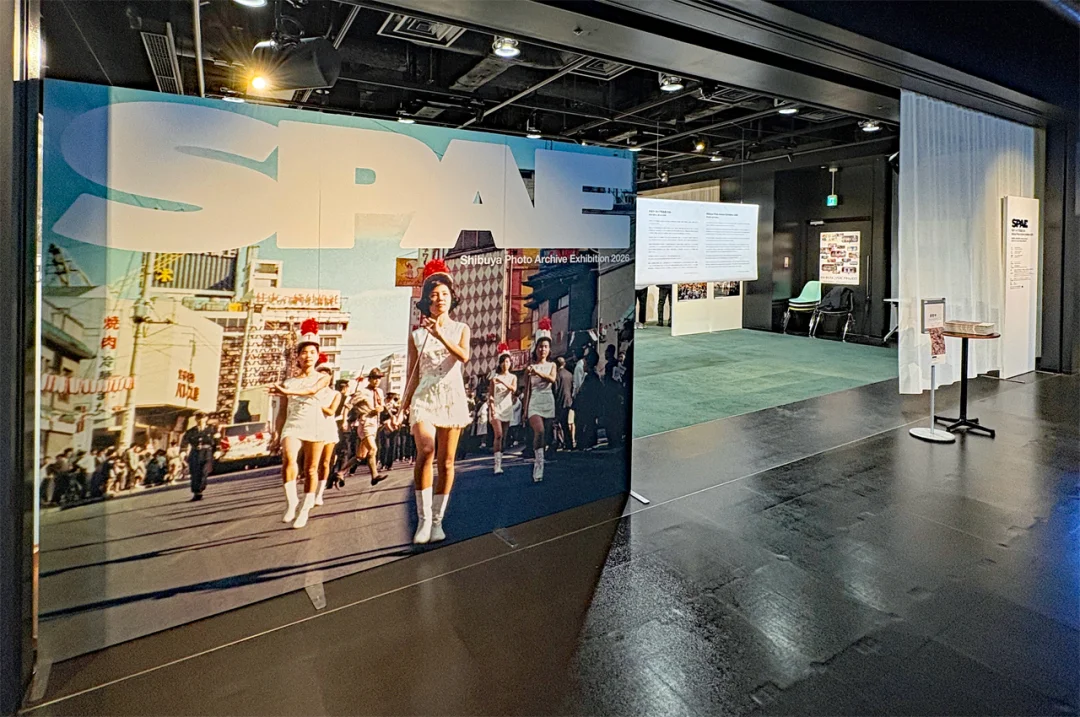
The entrance to "8/COURT," the event space on the 8th floor Shibuya Hikarie which will be the exhibition venue.
The event is organized by the Commons Archive Collective (CAC), which is dedicated to collecting, preserving, and passing on records related to the history and culture of the city to future generations. Starting with the "Shibuya Koen-dori Photo Exhibition 1977–1997" in 2021, they have been continuously holding the "Shibuya Archive Photo Exhibition" since 2023.
The theme for this year's fourth edition is "Shibuya's Streets and the Memories They Tell." Following on from last year, the exhibition will trace the origins of street names and the changes in the cityscape through photographs, while also focusing on the "voices" of the people who have lived, worked, and nurtured the culture there.

Yui Usami from CAC
Usami from CAC explains the background that led to this year's theme: "Last year, while researching the origins of street names, we found that many had ambiguous origins or multiple theories. This is because they have been passed down from person to person. From there, we wanted to look at what kind of activities the people involved with the streets have engaged in."
A photographic record of urban transformation, including streets that "disappeared from maps" due to redevelopment.
The photo exhibition will feature approximately 30 of the 70 named streets located within about a kilometer of Shibuya Station. It will showcase familiar streets such as Dogenzaka, Miyamasuzaka, Koen-dori, and Center Gai, as well as streets that have been transformed by redevelopment and newly created streets.
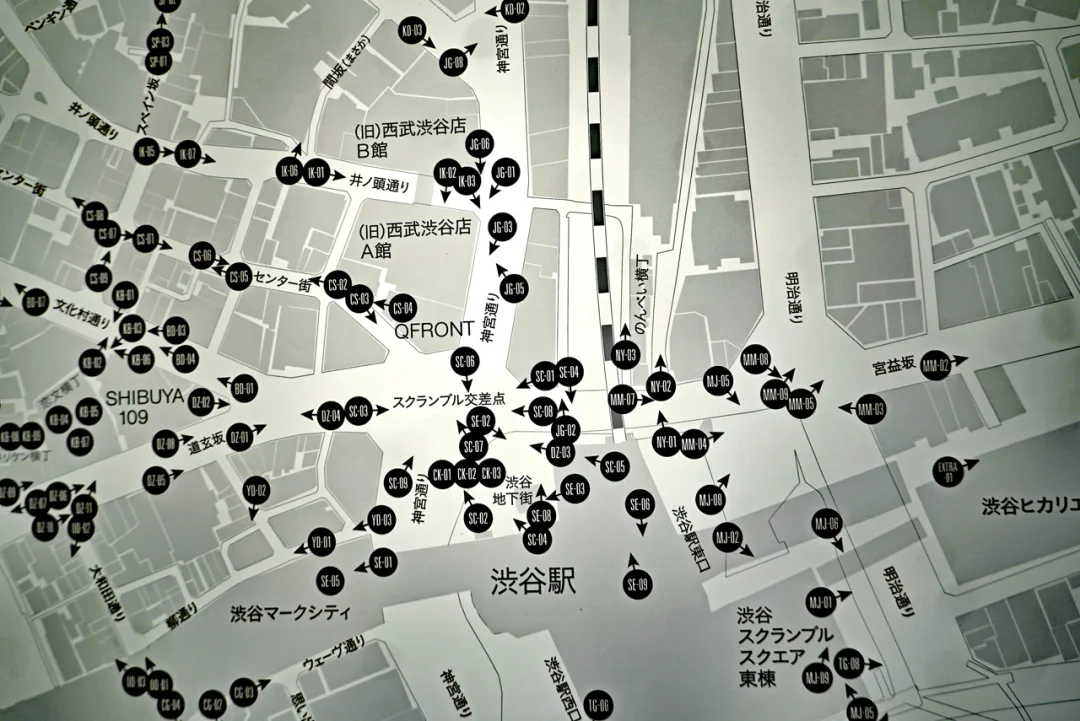
Approximately 30 streets will be featured, with 186 photographs on display. Maps indicating the shooting locations and directions will also be available at the venue.
The exhibition, titled "Streets That Disappeared from Maps," focuses on streets that once existed in areas where the cityscape has drastically changed due to redevelopment, such as around Bunkamura, Shibuya Sakura Stage, and Shibuya Hikarie. Through photographs, it traces the history of streets that have disappeared due to building reconstruction and road improvements.
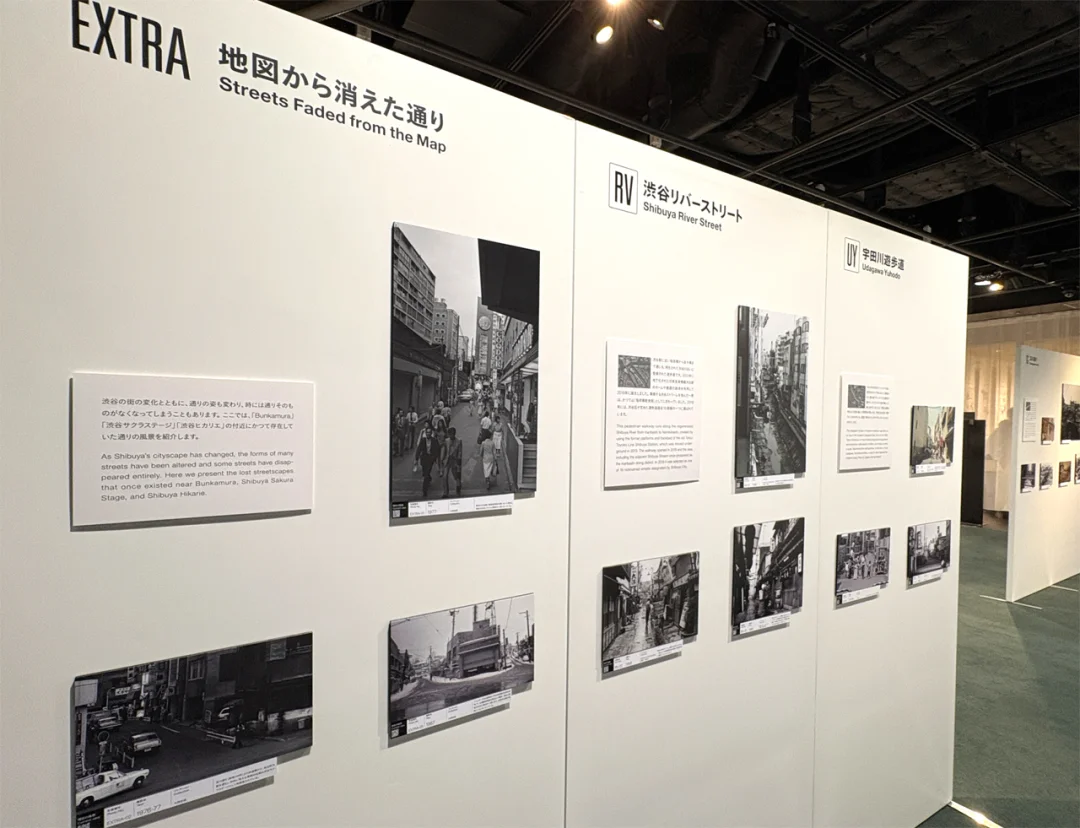
An exhibition titled "Streets That Disappeared from Maps," conveying memories of streets and facilities that once existed through photographs.
The exhibition at "Shibuya River Street," adjacent to SHIBUYA STREAM, showcases a photograph taken in 1958 (Showa 33) of the "Inaribashi Restaurant District." This area, once lined with restaurants and bustling with activity, now features a promenade along the Shibuya River. Visitors can compare the current streetscape, which was created in 2018 (Heisei 30) using the former Tokyu Toyoko Line Shibuya Station platform and tracks, with the scenery of the past. In addition, photographs taken in 1976-77 from a pedestrian overpass on National Route 246, looking towards Sakuragaoka-cho, are also on display. These photographs show the area before the redevelopment of what is now the Shibuya Sakura Stage area.
The "Udagawa Promenade" exhibit features photographs taken in 1973 (Showa 48) of the area around Kamiyama-cho. The promenade was built over the Udagawa River, which was covered over before the 1964 (Showa 39) Tokyo Olympics, and now has the atmosphere of a back alley lined with restaurants. On the other hand, the photographs from that time show playground equipment such as jungle gyms and swings, and parents and children playing there, giving a glimpse into the changing role and scenery of the street over time.
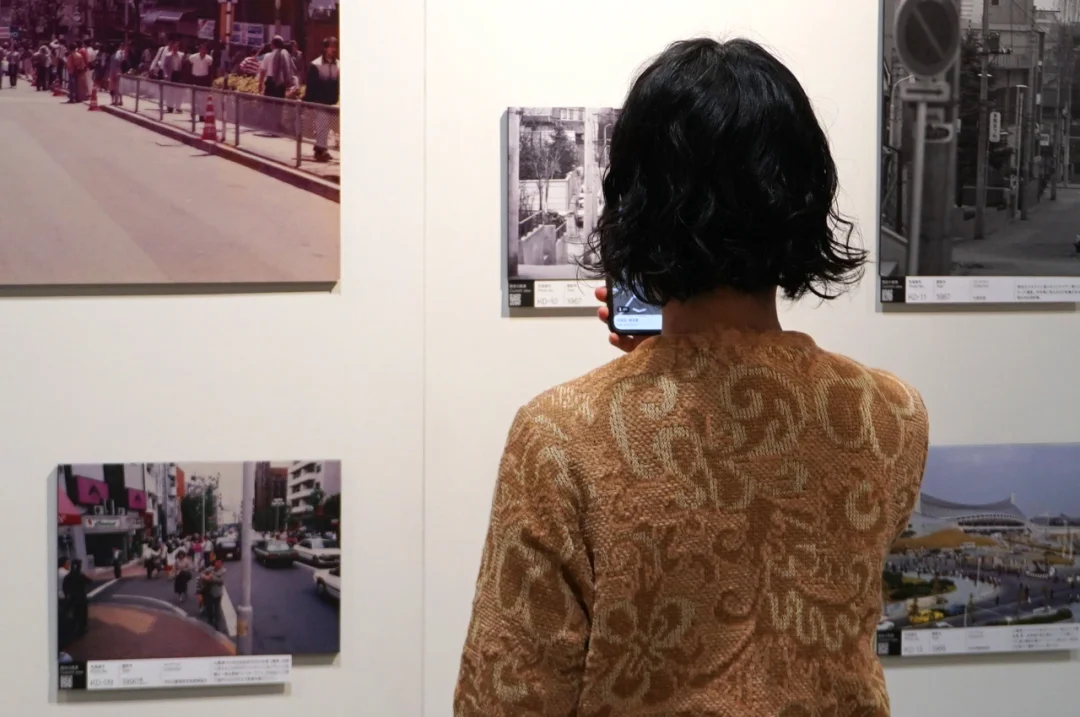
You can check your current location by scanning the QR code below the photo and compare the past and present of Shibuya, a city that is constantly changing.
The exhibition includes some of the photographs that were replaced last year, as well as new photographs borrowed from the Railway Museum and the Shibuya Redevelopment Association. Each photograph is accompanied by an explanation of the year it was taken, the location, the owner, and the history of the street. Visitors can also access Google Street View via a QR code to compare the past scenery with the current streetscape.
The audio recordings of 12 people's "narratives" can be relived using a nostalgic telephone receiver.
A new addition this year is the "Oral History" exhibition, which features testimonies from people connected to Shibuya. Interviews were conducted with 12 people ranging in age from approximately 40 to 90, including Maruyama geisha Kiriya Suzuko, Shigeru Murayama, the second-generation owner of Torifuku in Shibuya Nonbei Yokocho, and Kobayashi Mikio, a prominent figure in Miyamasuzaka, as well as local shop owners, people involved in urban development, people familiar with 90s culture, and researchers. They shared their perspectives on the city, culture, and lives of people in Shibuya.
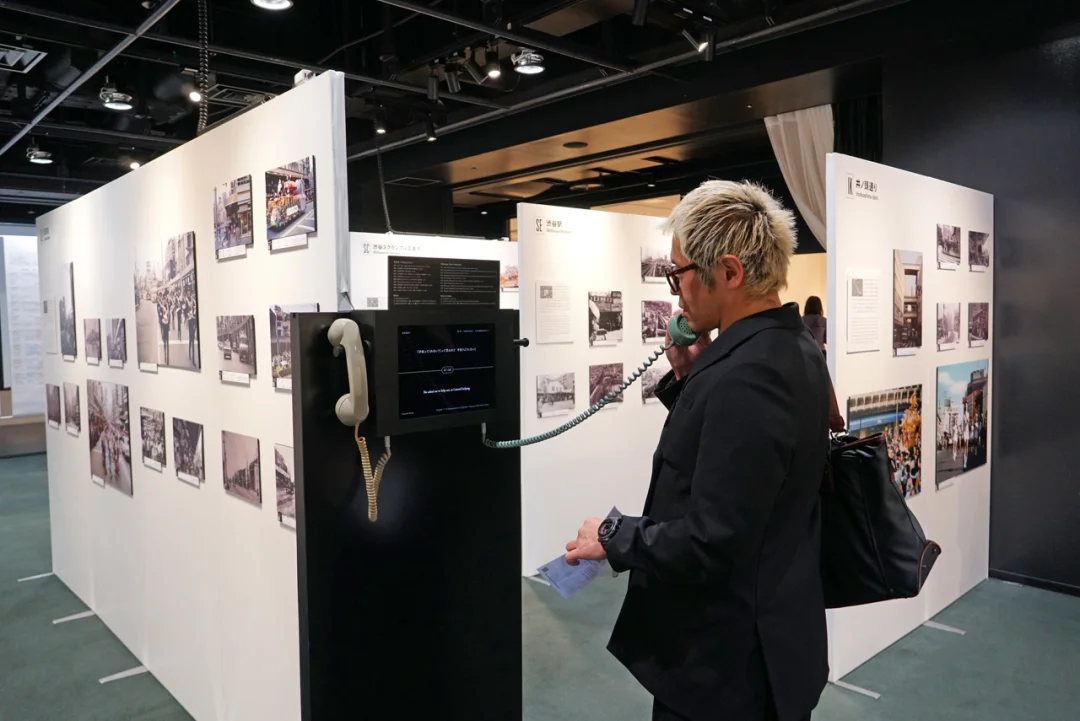
An oral history exhibition. You can listen to "memories of Shibuya" told by prominent figures of Shibuya through a telephone receiver.
At the venue, visitors can pick up old-fashioned telephone receivers, such as rotary dial phones, and listen to actual interview recordings. Japanese and English text are also displayed on monitors. The aim is to preserve the audio as a valuable resource for future use by recording it as text.
Usami recalls, "At previous photo exhibitions, visitors who saw the photographs recalled old memories and shared many valuable stories with us. We felt it would be a waste to keep those stories to ourselves."
He further stated, "Post-war memories are gradually fading with generational change. I felt it was necessary to record them now before they disappear, remaining only within each person." He added that he plans to continue working on oral history in the future.
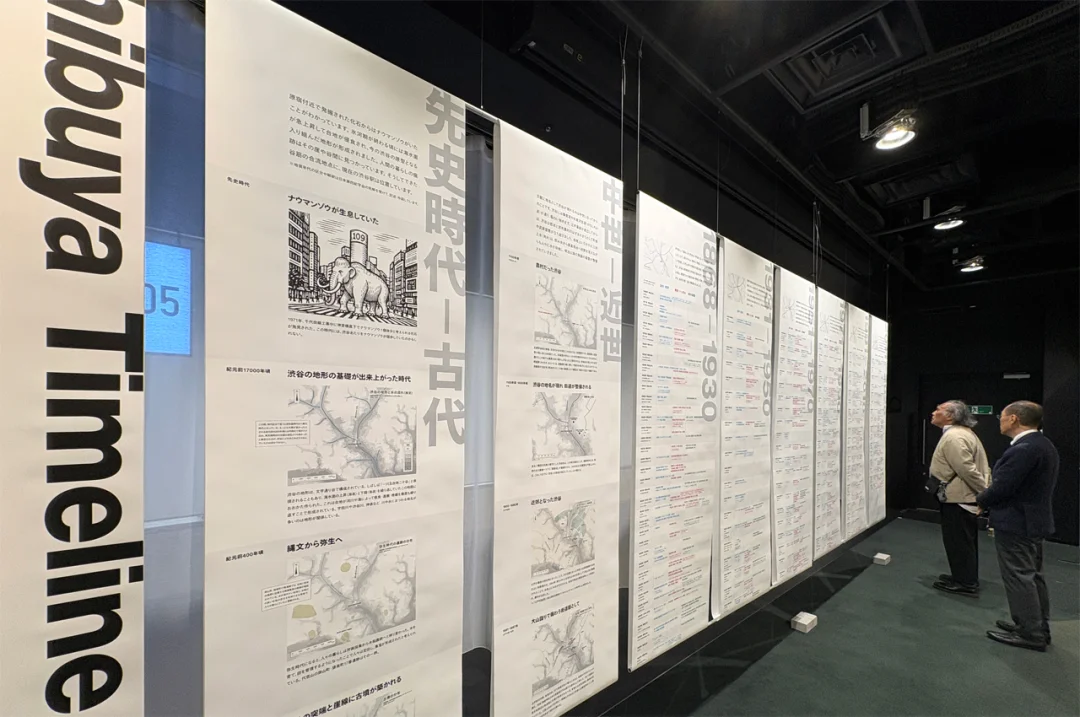
A timeline corner showcasing the history of Shibuya from ancient times to 2026. This year, "the closure of Seibu Department Store Shibuya" has been added. "Hands Shibuya," which will soon be closing, is also scheduled to be added during the exhibition period, and the timeline will be updated as needed.
In addition to photographs and audio exhibits, the exhibition will also feature "SHIBUYA TIMELINE 2.0," a timeline tracing the history of Shibuya from prehistoric times to the present day. It presents the history of Shibuya's topography, rivers, and roads, as well as the opening of railways, the development of the city, and the changes in culture and trends in chronological order. The content has been updated from last year, and new events for 2026 have been added.
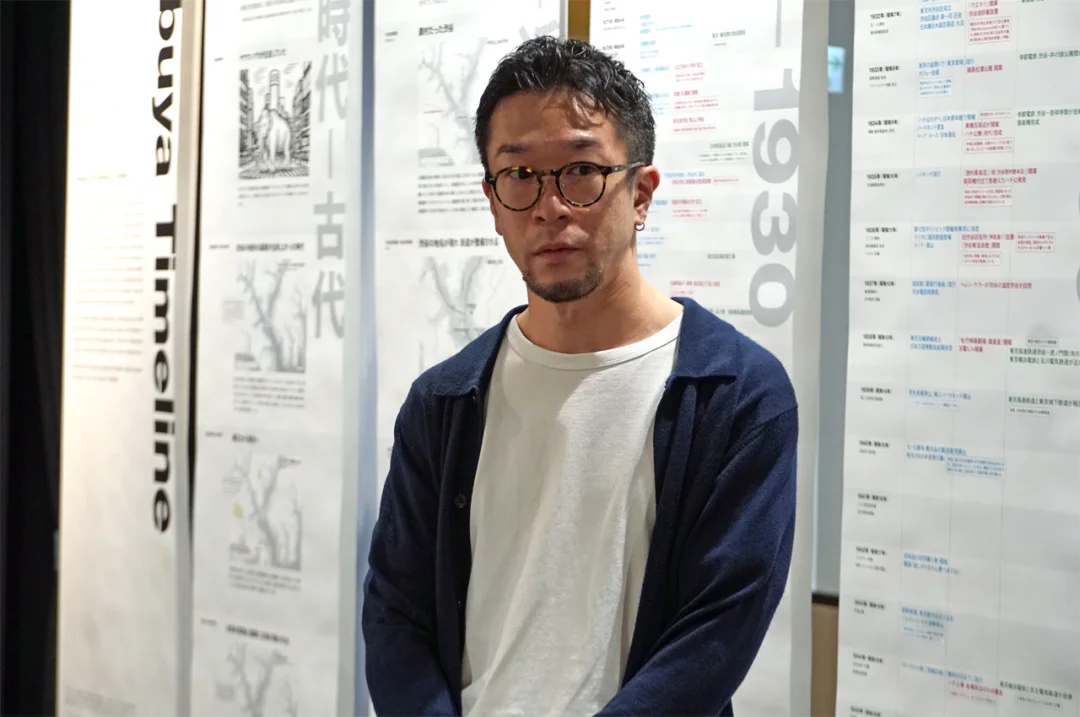
Sosuke Sugiura, representative of CAC
CAC representative Sugiura explains, "Shibuya's streets are deeply connected to its valley topography and the presence of rivers. We wanted to show people why people gathered there, why roads were created, and how the city developed, by allowing them to see Shibuya from a long-term perspective, including that background."
"Shibuya Disappearance Encyclopedia," featuring 374 entries including shops that have disappeared, is now available for pre-order.
At the venue, CAC will also be offering a pre-sale of its new book, "Shibuya Disappearance Encyclopedia." The book contains information on 374 shops, facilities, and streets that have disappeared from Shibuya over the past 100 years. It was compiled based on information collected through photo exhibitions and testimonies obtained through oral history interviews. The price is 900 yen. It will be sold at the venue before its general release in December.
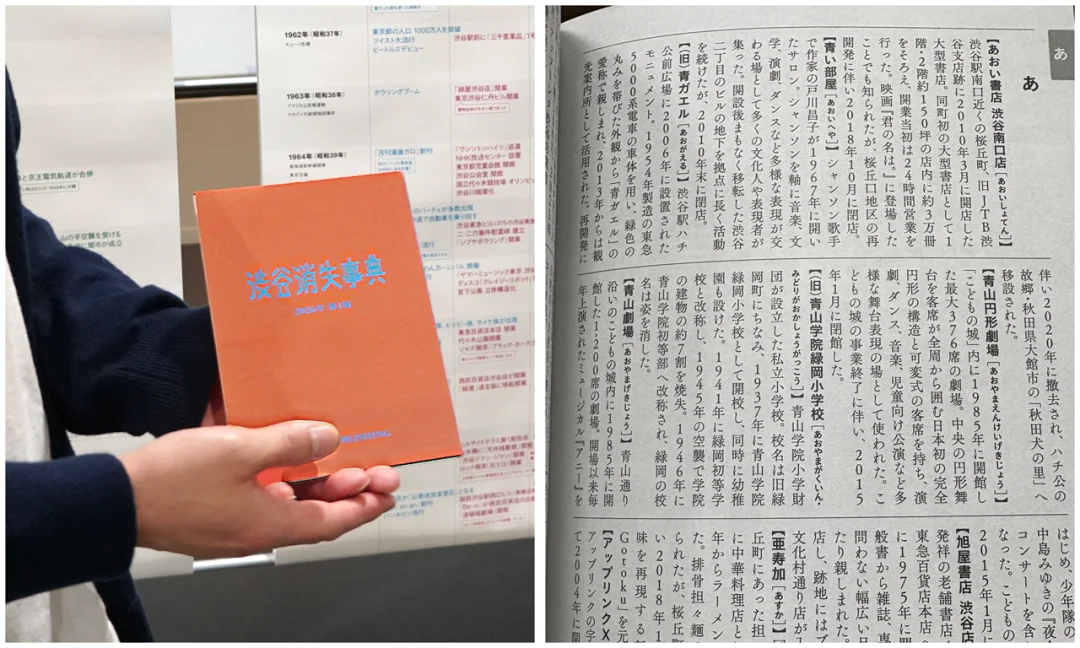
The book "Shibuya Disappearance Encyclopedia" was born from the "Shibuya Archive Photo Exhibition." It lists iconic Shibuya facilities and shops that no longer exist, arranged alphabetically, and introduces their history and characteristics in a dictionary format.
Sugiura explains the process behind the exhibition, saying, "Basically, all the photos on display are borrowed, so even if we hold more photo exhibitions, our own stock of photos won't increase. On the other hand, the thing that increases the most is our knowledge of Shibuya. We thought it would be interesting to bring all of that together."
This book is being presented as its first edition, and a system has been implemented at the back of the book that allows the general public to submit information about "things that have disappeared from Shibuya" via a QR code. The authors express their hope to "further enrich the content in the second and third editions by adding information submitted by everyone."
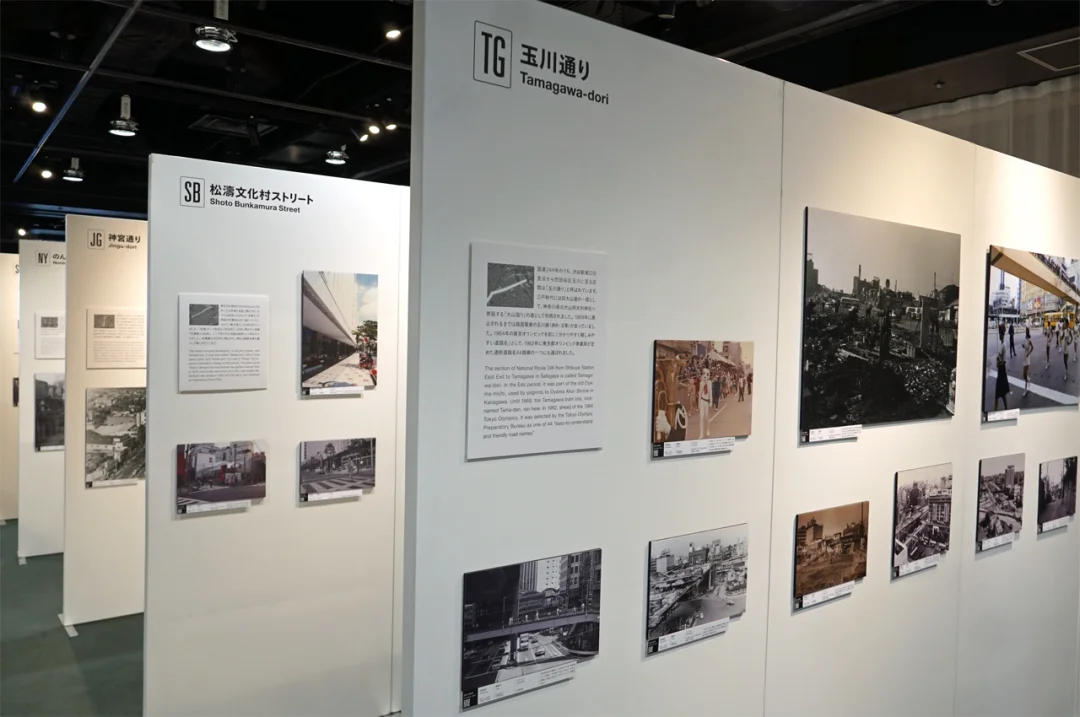
A scene from the venue where archival photographs are displayed on each street in Shibuya.
In Shibuya, where large-scale redevelopment continues, new buildings and roads are being created, but at the same time, the shops, facilities, people's activities, and memories of the town that once existed there are slowly disappearing.
Sugiura said, "Knowing how Shibuya came to be as it is today, and understanding its past, will make a big difference for the younger generation involved in future urban development. Stories we can hear now from people in their 90s may not be available in 10 years. It's important to record them now, leave them in a way that everyone can see, and pass them on to the next generation."

"Some visitors will feel nostalgic for the scenery of the past, while younger people will enjoy seeing Shibuya for the first time. A unique feature of this exhibition is that people in their 20s and those in their 70s and 80s can sit side by side and enjoy the same photographs. We hope everyone will enjoy it from their own perspective," he said, urging people to come.
The event will be held from 11:00 AM to 8:00 PM (until 6:00 PM on the last day). Admission is free.
- Shibuya Archive Photo Exhibition 2026: Shibuya's Streets and the Memories They Tell / Streets and Voices
- Date: November 10th (Tuesday) to November 23rd, 2026 (Monday/Holiday)
- Time: 11:00-20:00 (until 18:00 on the last day)
- Venue: "8/COURT" on the 8th floor Shibuya Hikarie
- Rates: Free admission
- Organized by: Commons Archive Collective
- Co-sponsored by: Shibuya Dogenzaka Shopping Street Promotion Association
- Supported by: Shibuya-ku,
- Official: More detailsThis direction
Venue
Genres within EVENT
Articles in the same genre
2026-09-19〜2026-11-23
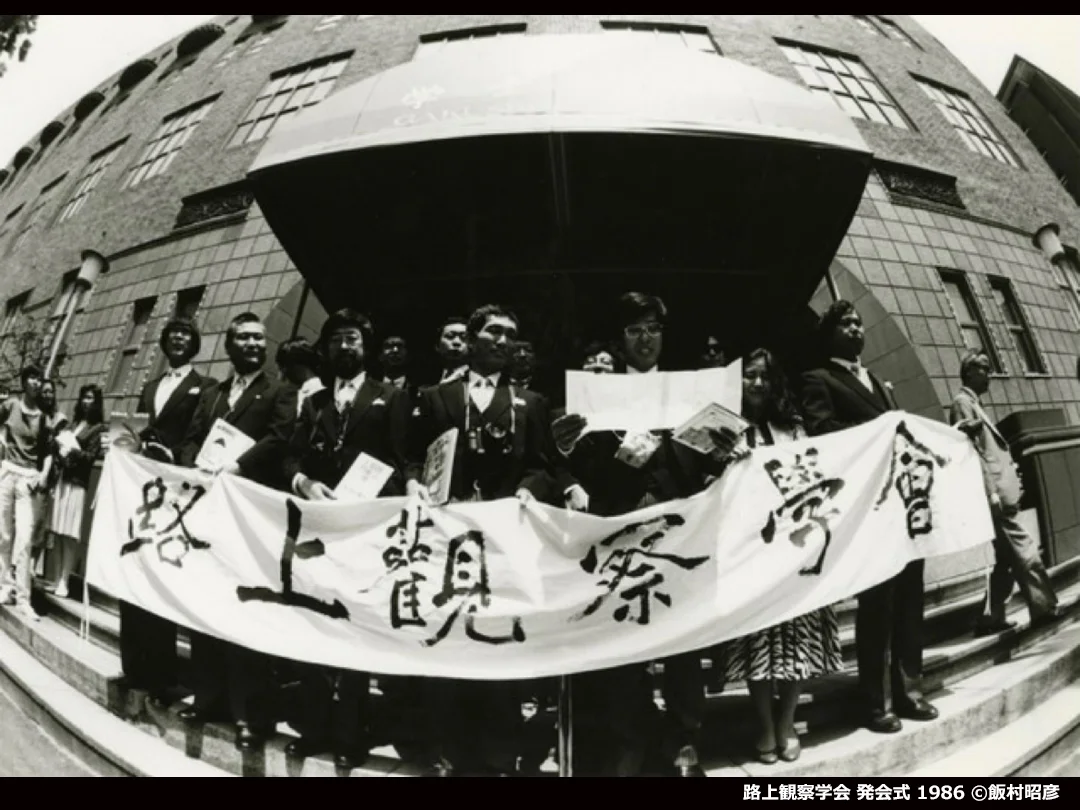
"Are we intruding on the street?" at the Shoto Museum of Art: 40 years of the Street Observation Society question the public nature of the city.

2026-11-19〜2026-11-24
Ryusei School 140th Anniversary Commemorative Flower Exhibition "Ikebana: Past, Present, East and West"

2026-11-20〜2026-11-20
Shibuya Parco holds exhibition celebrating the 50th anniversary of the magazine "POPEYE," featuring 50 issues from throughout its history and a recreation of the editorial office.

2026-11-28〜2027-01-27
A special exhibition commemorating the 100th anniversary of Gaudí's death is being held in Shibuya, featuring over 160 items including original drawings and architectural models.
Featured articles on the site
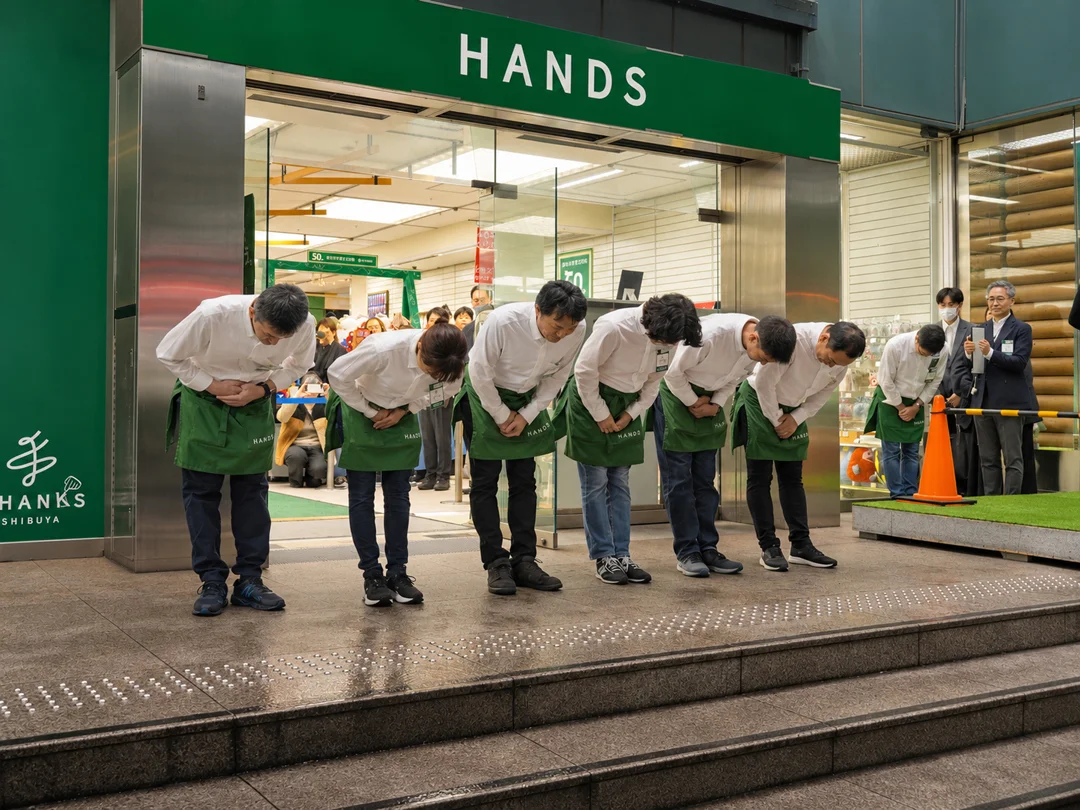
さよなら、渋谷のハンズ。48年の歴史に幕 坂の街に生まれた「創造の迷宮」
Architect Hiroshi Naito talks about "Memories of Shibuya": Unraveling the city's DNA and future through photographs

Making Shibuya Station's East Exit More Enjoyable with Art: Collaboration Between People with Disabilities and Urban Development Members