

SHIBUY.A. × WATCH

When the streets become a stage: A social experiment in "urban theater" on Shibuya Park Street
SHARE
As part of the official program of "DIG SHIBUYA 2026," a street performance titled "Street x Theater - A Foreshadowing of the Future of Shibuya" was held on February 14th on Shibuya Koen-dori.
Traffic was restricted on a section of Shibuya Koen-dori, Shibuya's main street, to create a "Urban Theatre (Theatron)" for a limited time of a few hours. The organically shaped balloon structure that stands on the road was designed by ALTEMY, a company led by architect Eri Tsugawa.

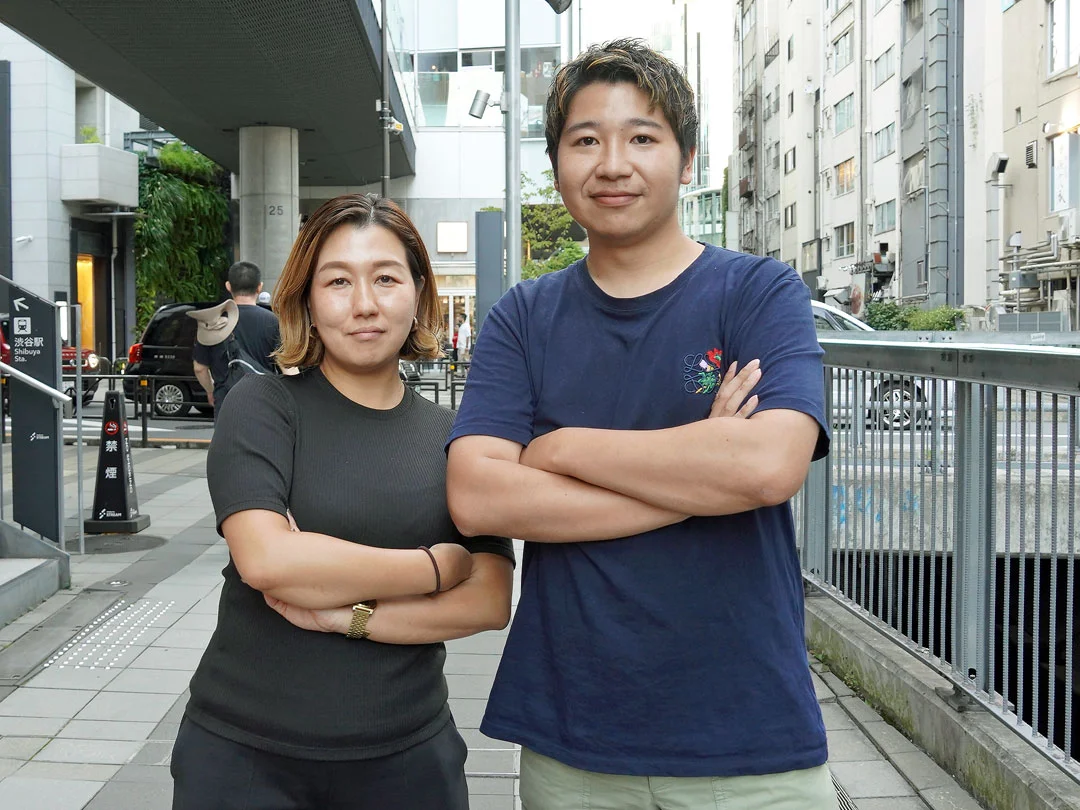
Eri Tsugawa, the architect behind "Theatron"
Tsugawa says, "Two years ago, our design for this road was selected in a design competition, and this time we're running a social experiment to try out that proposal in real life. We want people to sit on the white balloon-like objects placed around the area and enjoy the experience of the road space transforming into a stage. Based on the idea of 'creating culture from the city, and culture from the road,' this is an attempt to turn the road into a teatron, or theater."
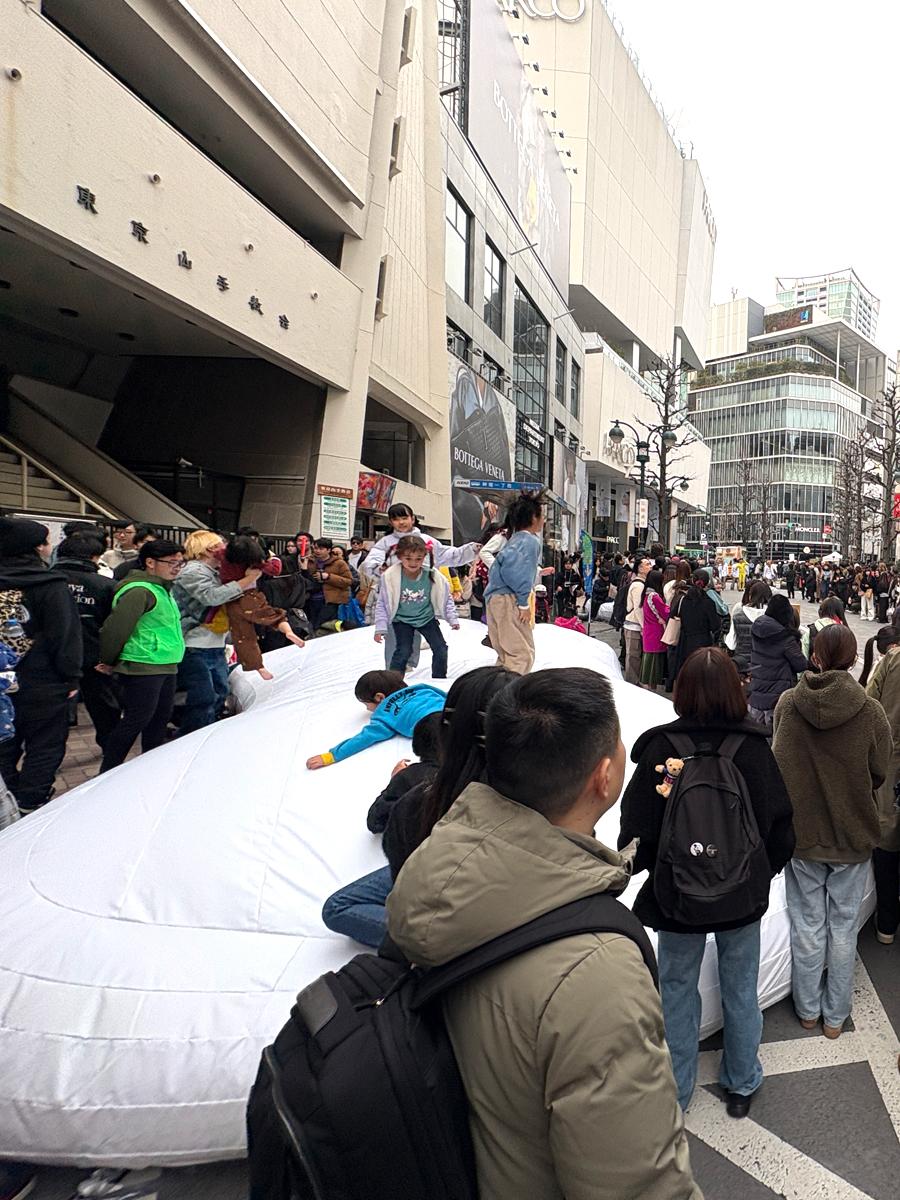
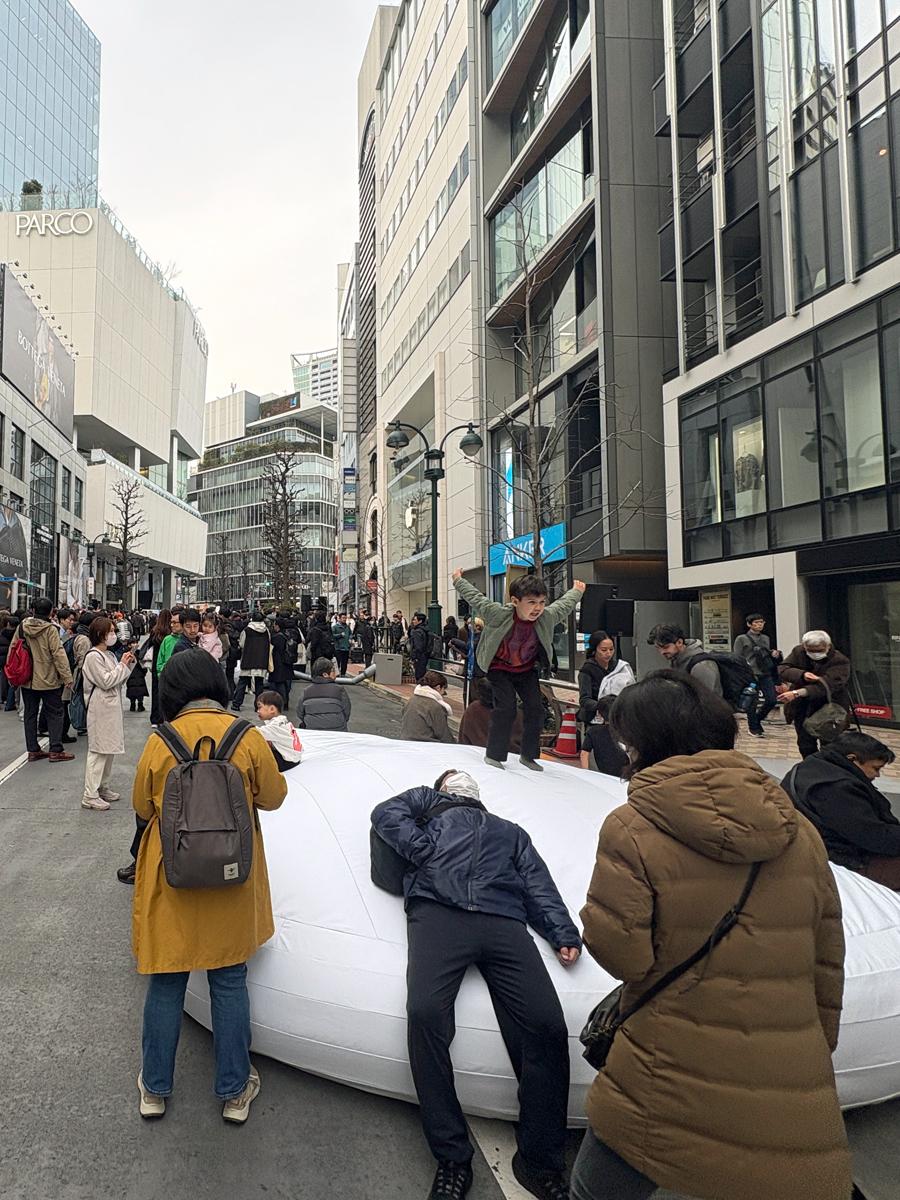
People were seen sitting or lying down on the "white balloons" set up on Koen-dori, and children were seen jumping and playing on them.
The arrangement, like water droplets scattered across a flat surface, creates natural points of presence and convergence of gazes on the road, gently drawing people in to the stage. There are no seats for spectators, so simply being in the street becomes an act of appreciation. This situation was temporarily established on the everyday landscape of Koen-dori.
In the basement of Tokyo Yamate Church on Koenji Street, there used to be a small theater called "Shibuya Janjan," known as a mecca for underground culture. Shibuya is also known as "theater town" for its concentration of cinemas, theaters, and cultural facilities, including mini-theaters "Cinema Rise," "Seed Hall," and "PARCO Theater." This initiative, based on that historical lineage, can be seen as a challenge to present a new way of expression in public spaces.
A vision of the future of cities guided by nonverbal expression
The performance lasted approximately 30 minutes and was held twice, at 3:30 pm and 4:15 pm. The non-verbal composition, which relied on body and music, presented the concept of "from the street to the theater."
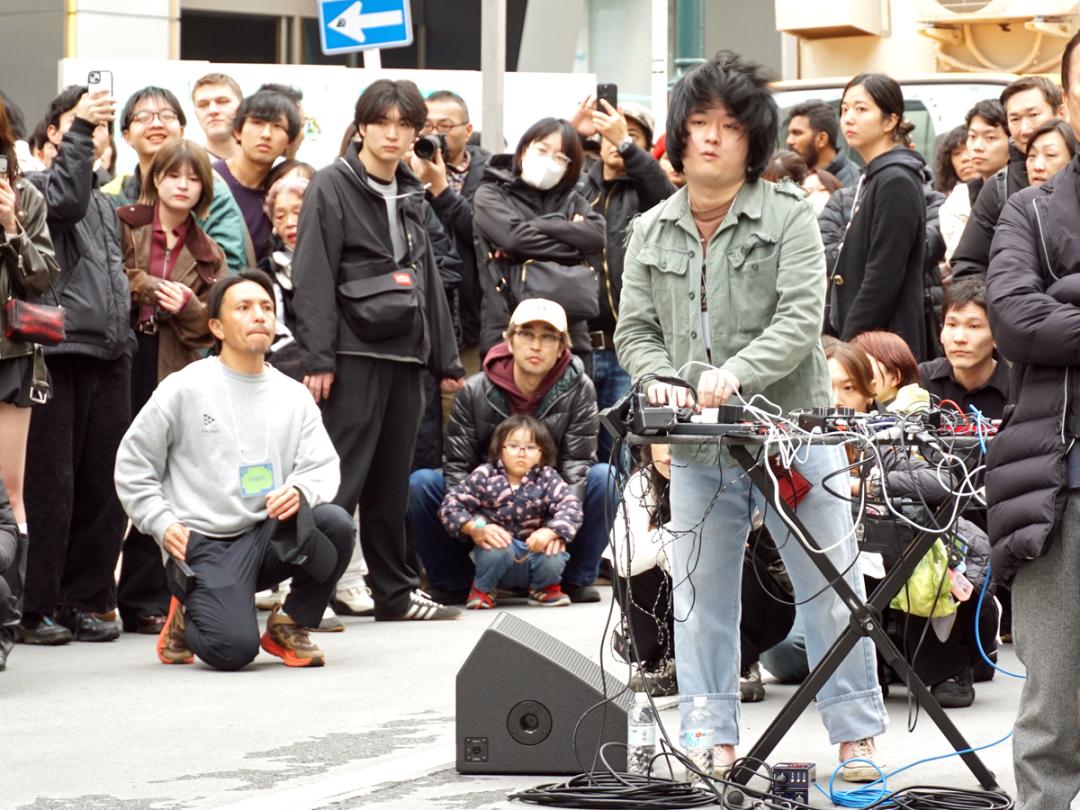
Cwondo's aggressive live performance, making full use of electronic sounds. It was a luxurious collaboration with Shuta Hasunuma and Aya Noguchi.
The music was created by Shuta Hasunuma, a musician active both in Japan and abroad. The sound, created in collaboration with Aya Noguchi and Cwondo, intertwines with the ambient sounds of the city to outline the space.
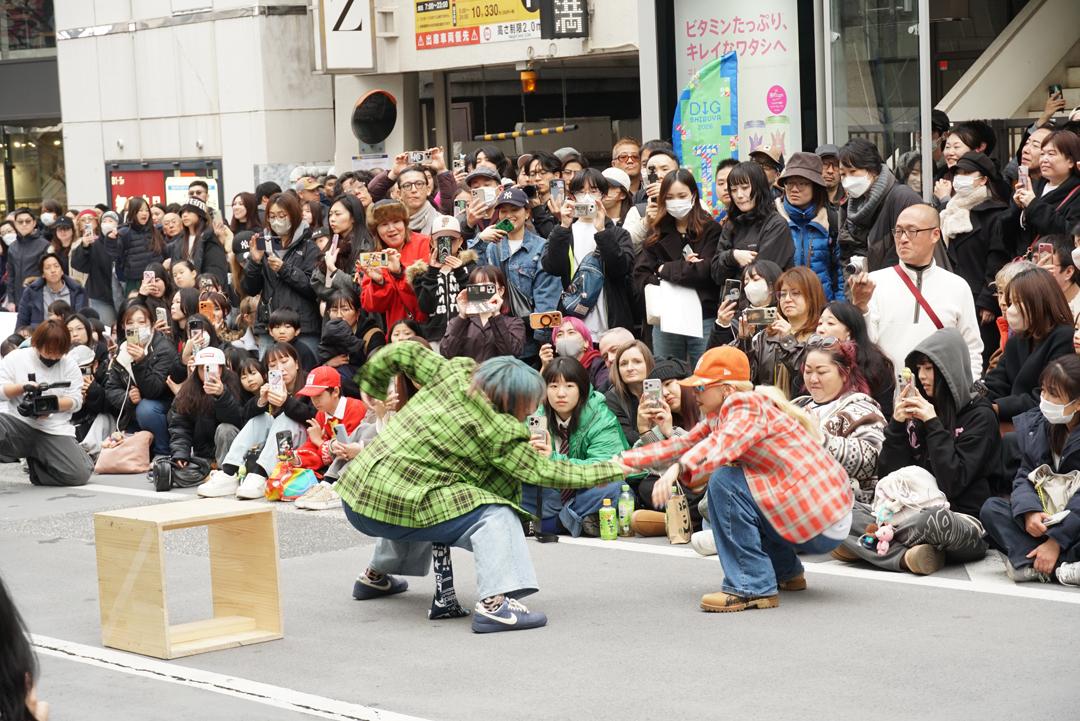
RushBall, Japan's leading hip-hop dance unit
Without verbal explanation, the audience was free to interpret the city from their own perspective and build upon their imagination. This was an experiment in expressing the city in a way that was open to the street.
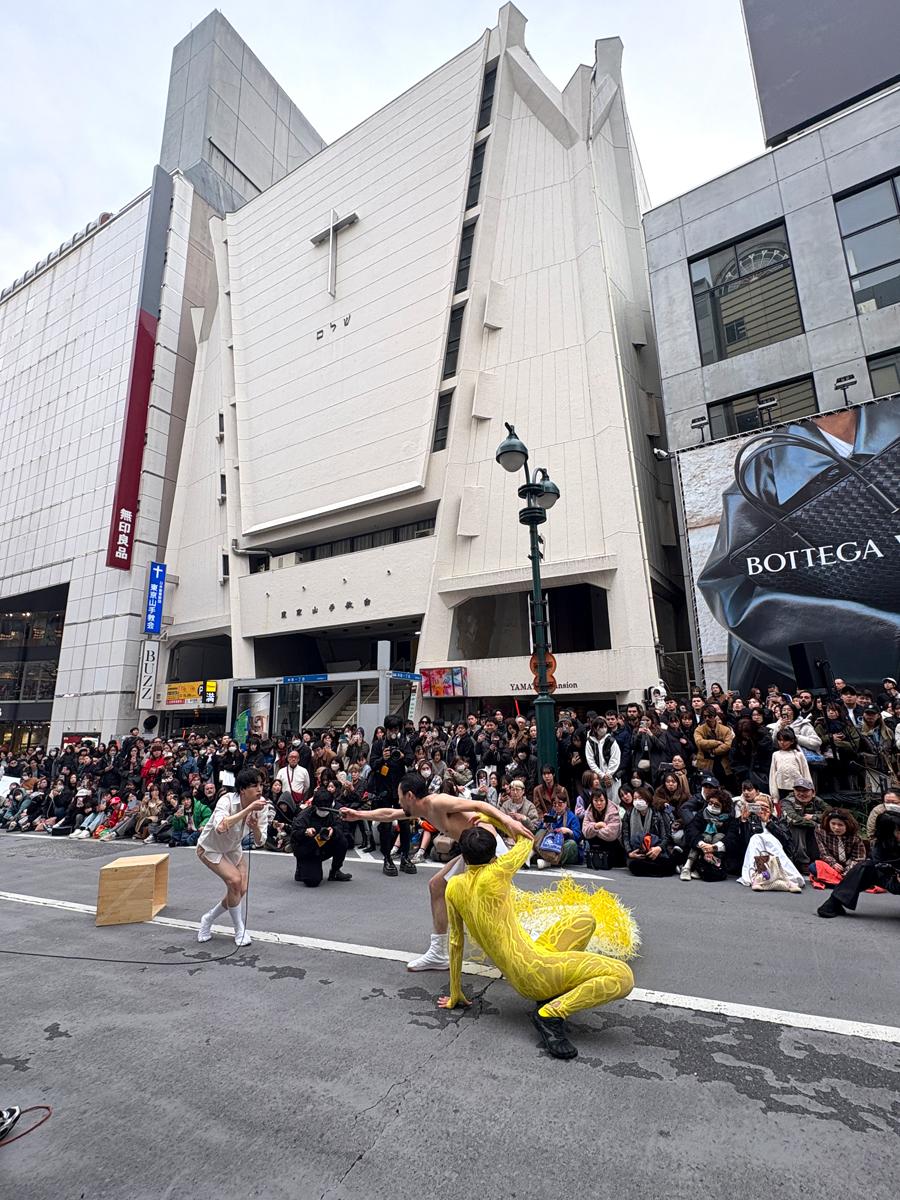
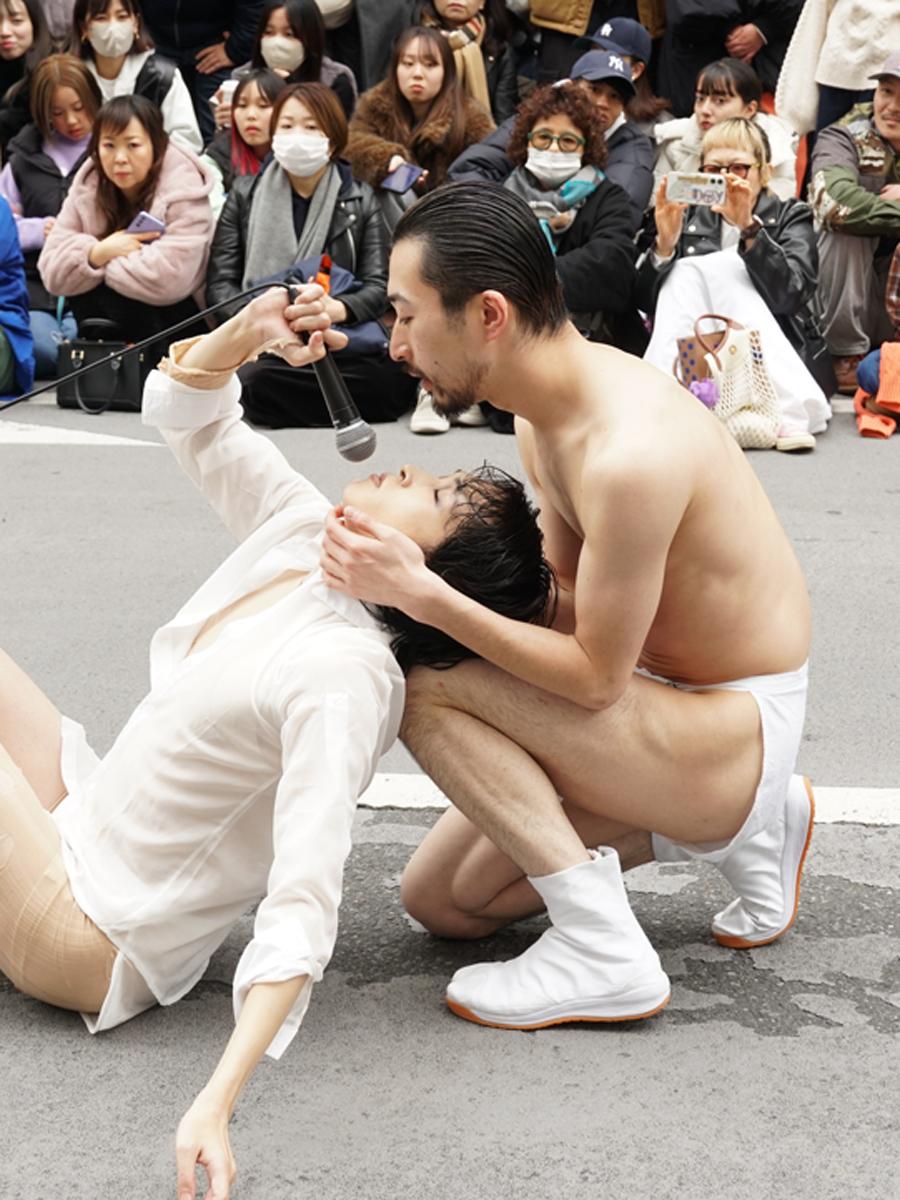
Performance by Tsuki Takamura, Runa Miura and others
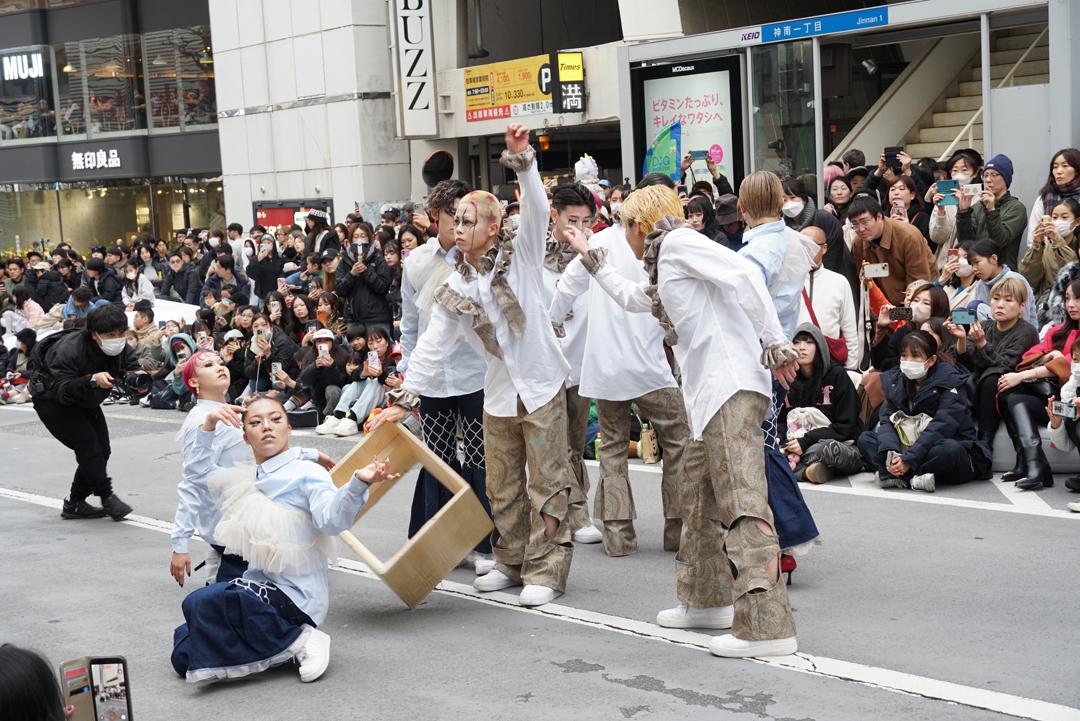
KADOKAWA DREAMS and others joined in, and the gazes of the people watching from the roadside became heated.
The performers included RushBall, a female duo active on the world stage, KADOKAWA DREAMS, the first group in history to win consecutive titles in the D.LEAGUE, Takamura Tsuki, who is active across multiple fields including stage and film, and Miura Runa, who has attracted attention for her unique physical expression. The distance between the performers and the audience was extremely close, with even their gazes and movements becoming part of the performance.
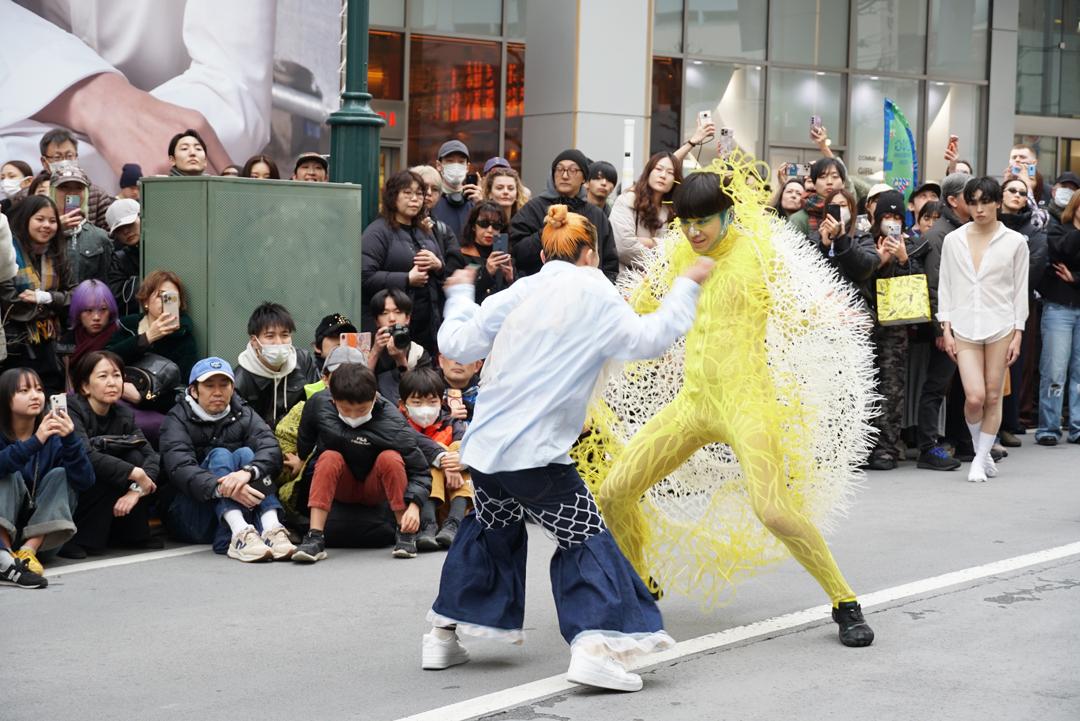
People passing by on the street, shoppers who stop to look, tourists who happen to be there - a diverse range of beings mix together to form a single landscape.
After the performance, the structure will be removed and Koen-dori will once again return to normal traffic, but what was shown on this day was that Shibuya's streets can be transformed into a "cultural stage." How can public space be opened up, and who can take the lead? This initiative not only visualized the potential of the city of Shibuya, but also gave us hope for new developments that will utilize the streets.
Venue
Editorial Department: Takashi Fujii
Shibuya registrar. In addition to Shibuya of Culture information, seasonal news and topics, it will spell write that feel every day.
Genres within watch
Articles in the same genre

2026-10-01〜
THE HIKARIE WINDOW / Keisuke Hara ― 変わり続ける渋谷と、日常のリズム
2026-09-30〜
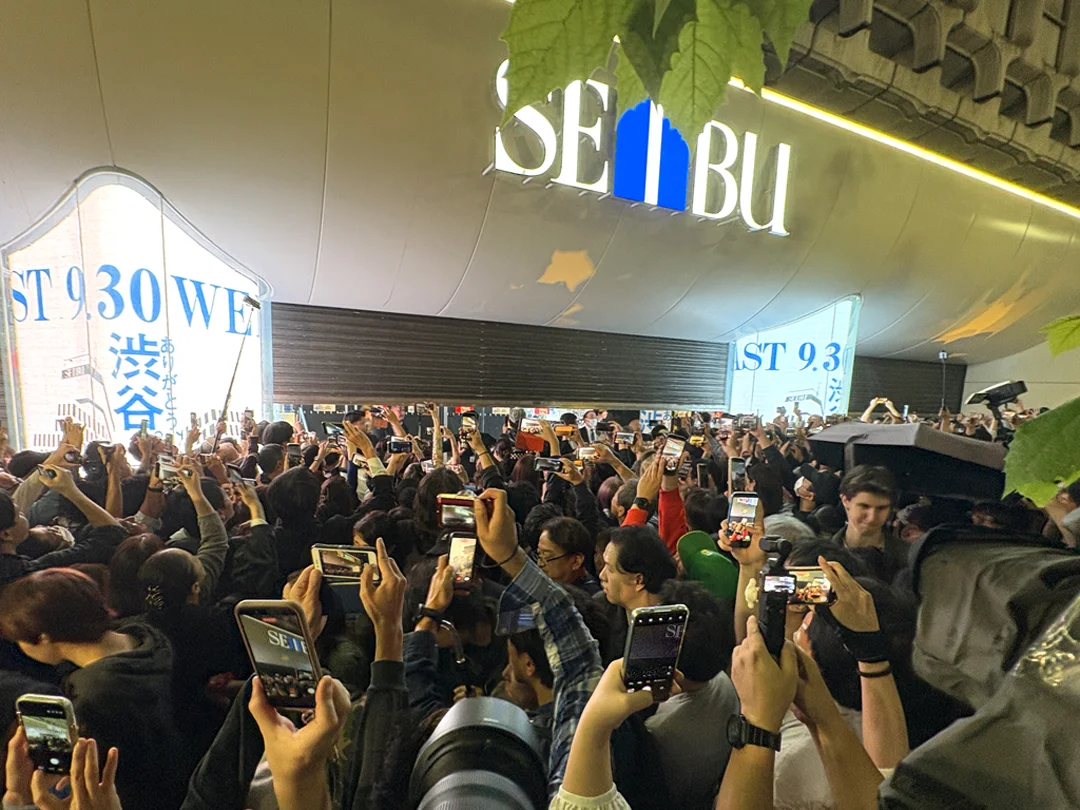
西武渋谷店、58年の歴史に幕 「シブヤ」をつくった百貨店、最後のシャッター
![[Shibuya Scenery Records Vol. 2] The "Onko Gakkai Kaikan" continues to preserve the legacy of blind scholar Hanawa Hokiichi](https://biz.shibuyabunka.com/storage/images/watch//1787122066.webp)
2026-09-02〜
[Shibuya Scenery Records Vol. 2] The "Onko Gakkai Kaikan" continues to preserve the legacy of blind scholar Hanawa Hokiichi
2026-08-20〜
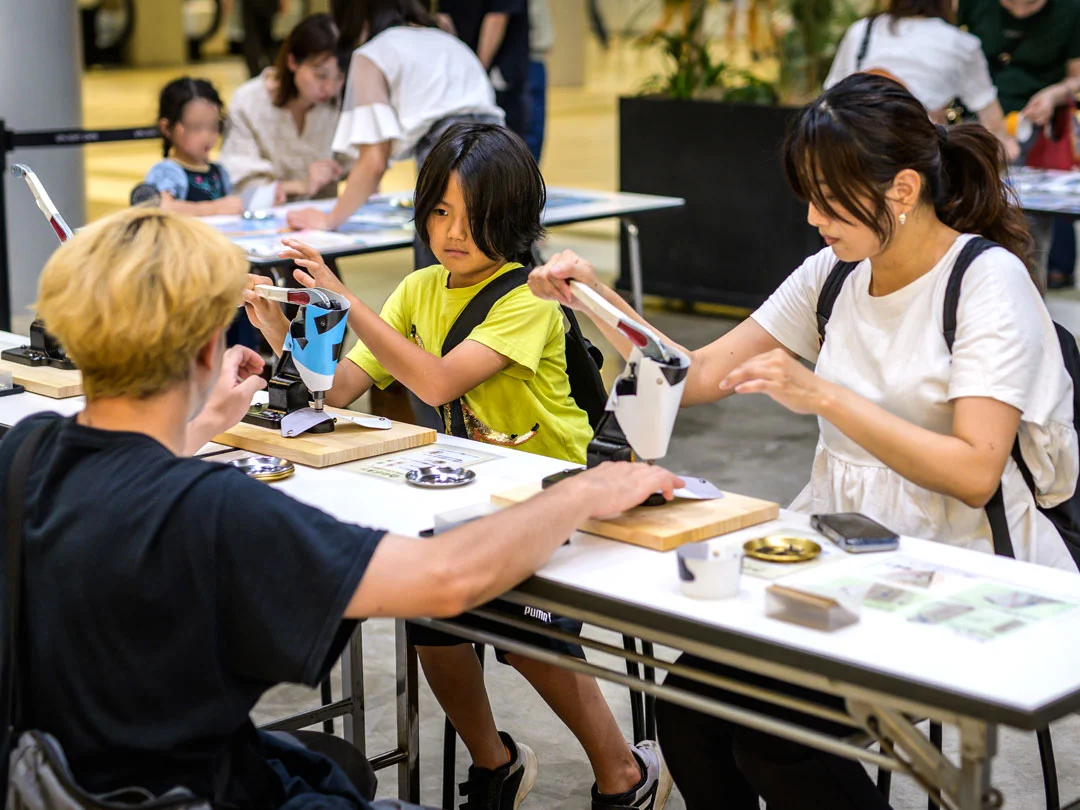
Parents and children reuse advertising banners displayed at Shibuya Station to create one-of-a-kind wallets.
Featured articles on the site
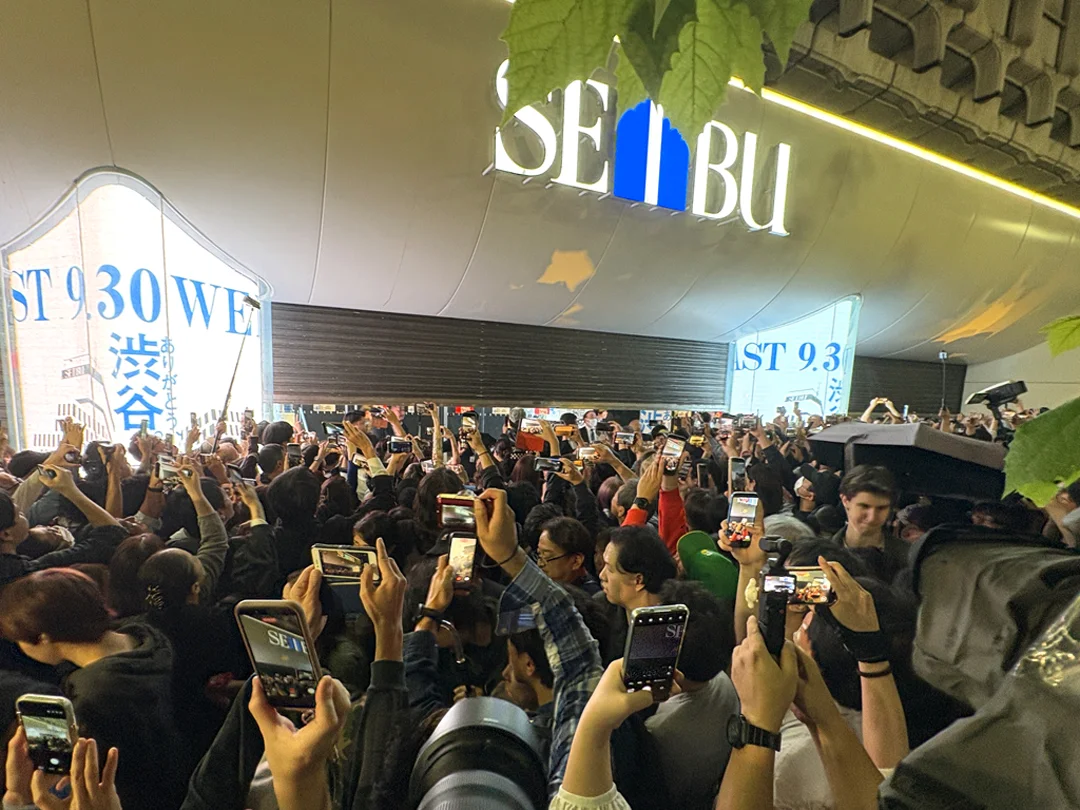
西武渋谷店、58年の歴史に幕 「シブヤ」をつくった百貨店、最後のシャッター

渋谷の肉料理おすすめ5選! 渋谷在勤・かごさんが厳選するお店を紹介
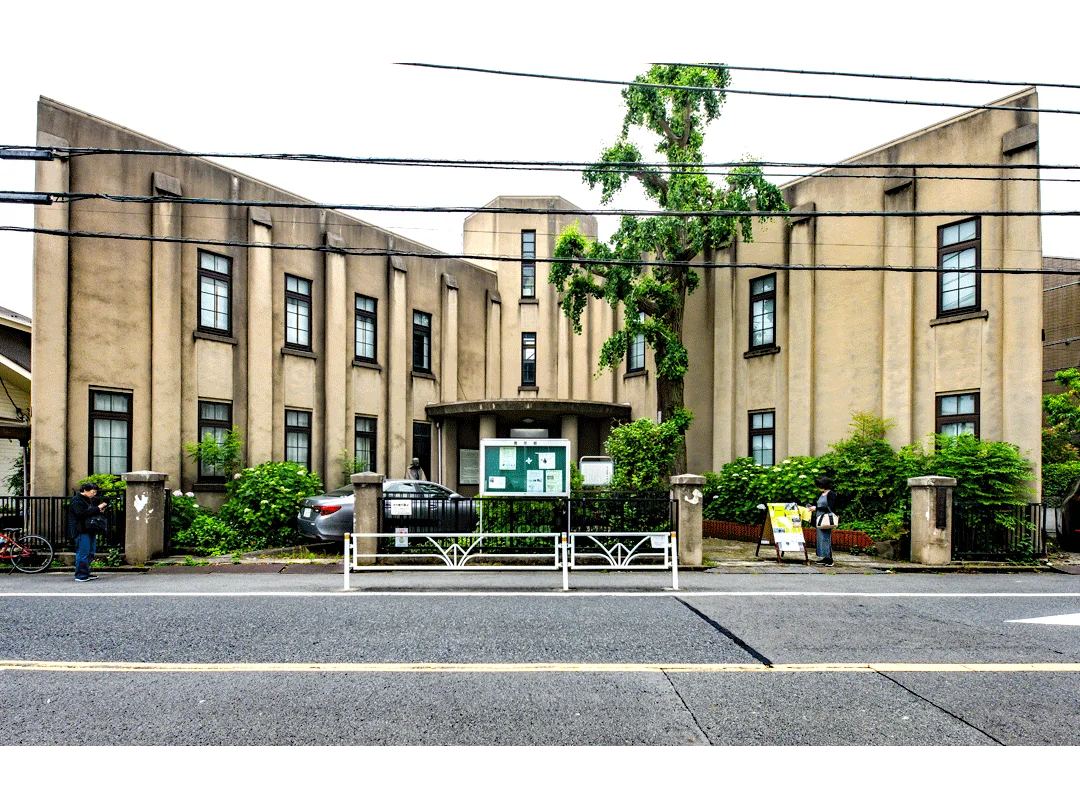
[Shibuya Scenery Records Vol. 2] The "Onko Gakkai Kaikan" continues to preserve the legacy of blind scholar Hanawa Hokiichi