

SHIBUY.A. × WATCH
![[Business x Public Education: The Future of Shibuya ①] The Challenge of "Future Co-creation Space," a Hub for Co-creation Between Adults and Children](https://biz.shibuyabunka.com/storage/images/watch/1777286266_wide.png)
[Business x Public Education: The Future of Shibuya ①] The Challenge of "Future Co-creation Space," a Hub for Co-creation Between Adults and Children
2026-05-11
SHARE
Shibuya, a city undergoing redevelopment and where diverse talents and values intersect, is currently undergoing a major transformation in its approach to public education. Beyond the confines of schools, diverse adults—including businesses, the community, and parents—are becoming involved in learning, working together with children to shape the future. This two-part series will explore the innovative initiatives taking place in Shibuya's public elementary and junior high schools, showcasing the new possibilities of learning unlocked by "business x public education" and the future vision of Shibuya that lies beyond.
In September 2025, the Aoyama Campus for Shibuya Ward's elementary and junior high schools opened near Shibuya and Omotesando stations. Currently, it serves as a temporary school building while the schools are being rebuilt, and is used by Hiroo Junior High School and Shoto Junior High School. Jinnan Elementary School is scheduled to join in the summer of 2026. However, the Aoyama Campus is not merely a temporary place to wait for rebuilding. It embodies the concept of "Schools of the Future," Shibuya Ward's vision for the future of schools, and can be considered a grand experimental ground for schools to expand outward. A symbol of this is the "Future Co-creation Space" established within the school building.
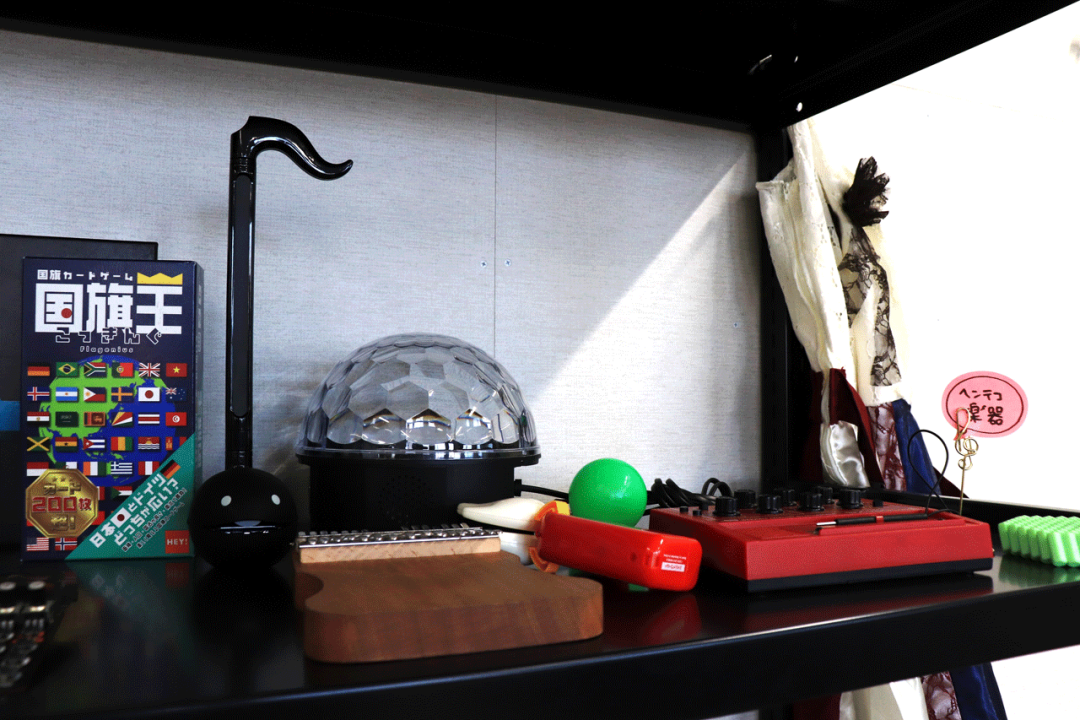
Quirky musical instruments, card games, craft materials...the future co-creation space is packed with things that stimulate children's curiosity.
This is a step towards changing the common perception that "schools are places invisible from the outside."
Stepping into the "Future Co-creation Space," you're greeted by a row of 3D printers, high-spec PCs, and equipment for immediate video recording. In the center, there's a flexible arrangement of desks and chairs, creating an atmosphere reminiscent of a startup office. Tokyu Corporation (hereinafter Tokyu) and the specified non-profit organization VIVITA JAPAN (hereinafter VIVITA) are involved in the operation of this space. The two organizations, which have previously collaborated on children's workshops and other events in Shibuya, applied to form a joint venture in response to Shibuya Ward's public call for proposals. They continue to cooperate in daily operations and coordination.
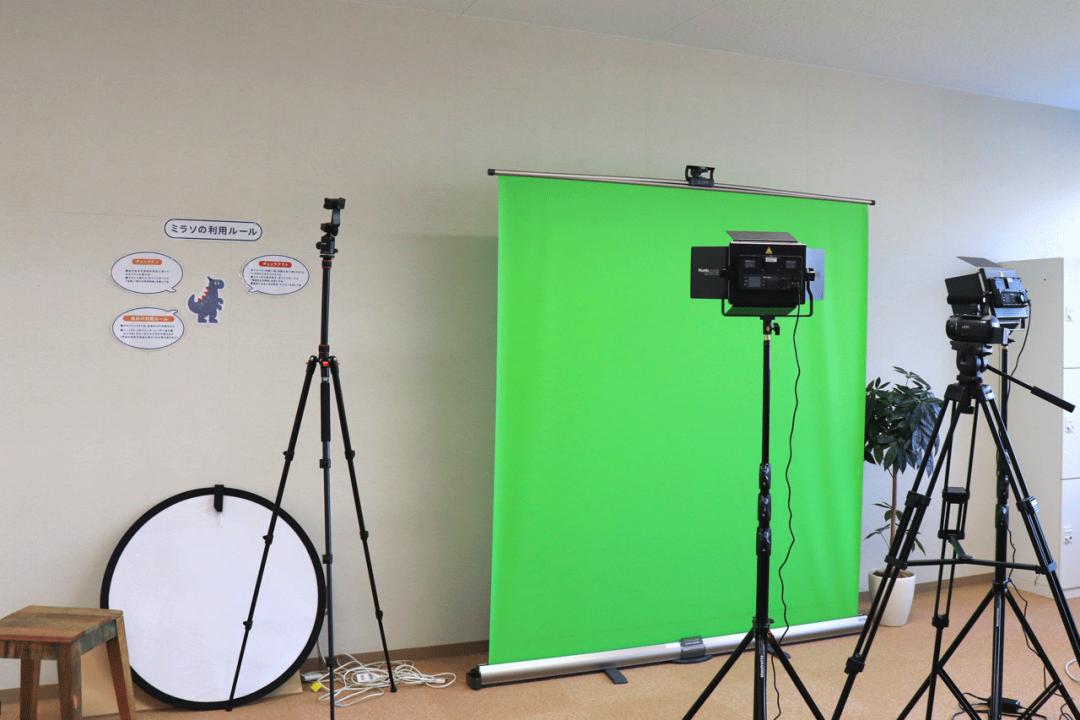
Professional-grade video streaming equipment is always available! It's like a studio.
In Shibuya Ward's "School of the Future" project, while the rebuilding of school buildings is progressing, starting with the Aoyama campus, the "Shibuya Future Studies" inquiry-based learning program has been launched in all municipal elementary and junior high schools since 2024. Utilizing the Ministry of Education, Culture, Sports, Science and Technology's "Special Class Hours System," the amount of class time for subjects such as Japanese language and mathematics has been reduced by 10%. As a result, approximately 150 hours per year are allocated to "integrated learning time" for the "Shibuya Future Studies" inquiry program. Children use the knowledge and skills they have gained from subject learning to solve questions they have posed themselves, working together with others to find solutions and move towards new questions. Rather than being passively "taught" by teachers, each individual proactively delves into their own interests, representing a cutting-edge learning style. The "Future Co-creation Space" is being utilized as a place to support this inquiry-based learning.
In the "Shibuya Future Studies" inquiry-based learning program, there are two types of research: "Theme-Based Research," where students work on a common theme as a grade or class, and "My Research," where each student develops questions based on their interests and concerns and delves deeper into them. Many schools set up several seminars corresponding to the My Research themes. Students with similar themes gather together, and teachers provide support as they progress through their research. Hiroo Junior High School, located on the Aoyama campus, is no exception; when it's time for My Research (called "My Project" at Hiroo Junior High), students belonging to the "Mirasso (short for Future Co-creation Space) Seminar" gather in the Future Co-creation Space.
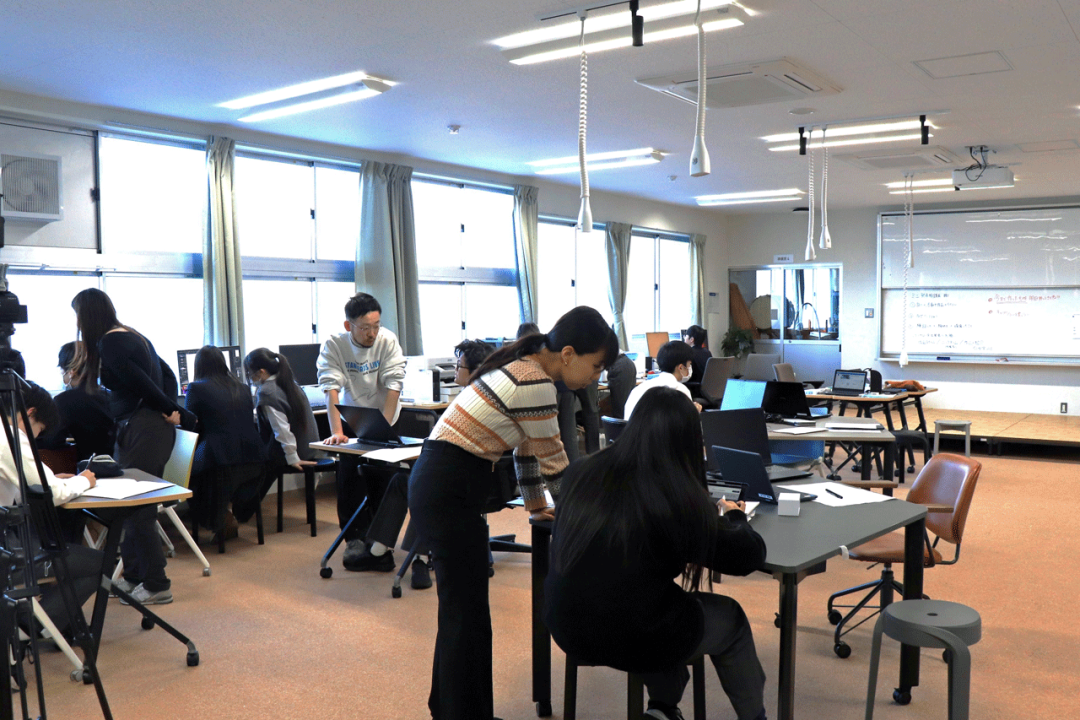
A scene from "Mirasozemi." Adults belonging to Tokyu and VIVITA, known as "crew," act as sounding boards for the students.
Instead of "teaching" children, we should "accompany" them.
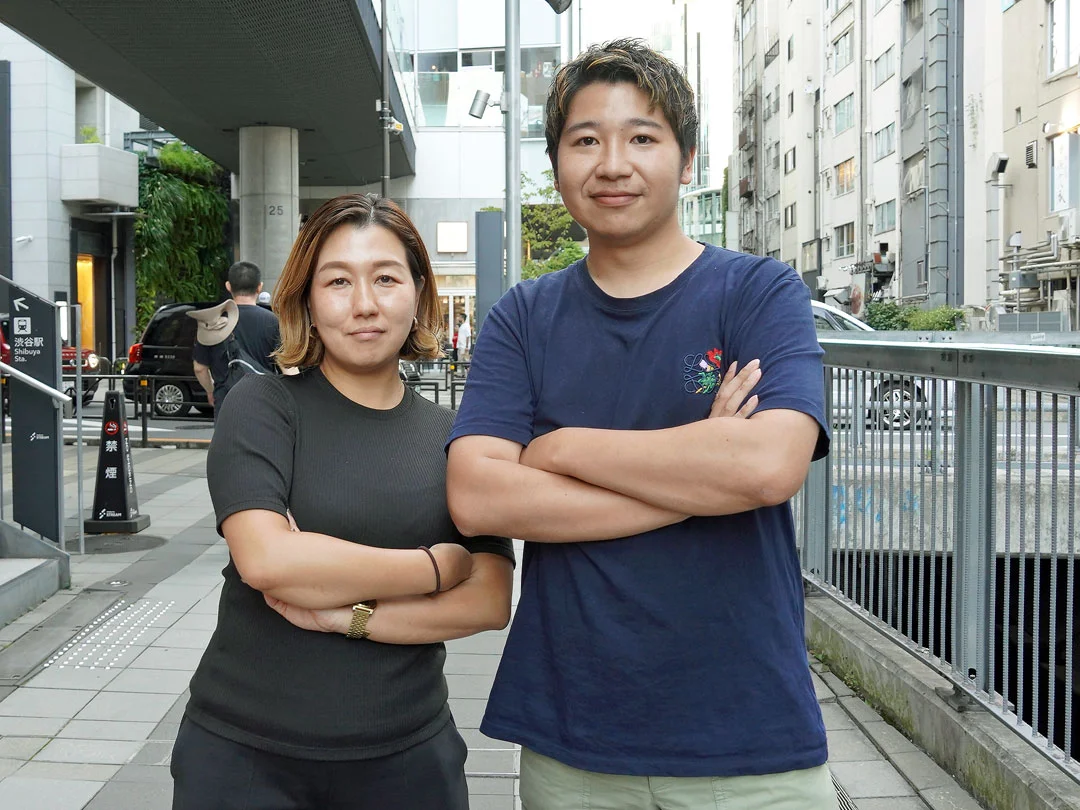
Maya Kamihigashi, who works at Tokyu's Future Design Lab, is part of the Future Co-creation Space crew, working alongside colleagues from the Future Design Lab and members of VIVITA. Originally, she had a strong interest in children's learning and joined the education team at Tokyu's new business division, Future Design Lab. She has been involved in projects related to public education, such as problem-solving learning and programming classes in collaboration with IT companies in Shibuya Ward at elementary and junior high schools. This time, we were given a glimpse of a class at the Future Co-creation Space and spoke with Ms. Kamihigashi.
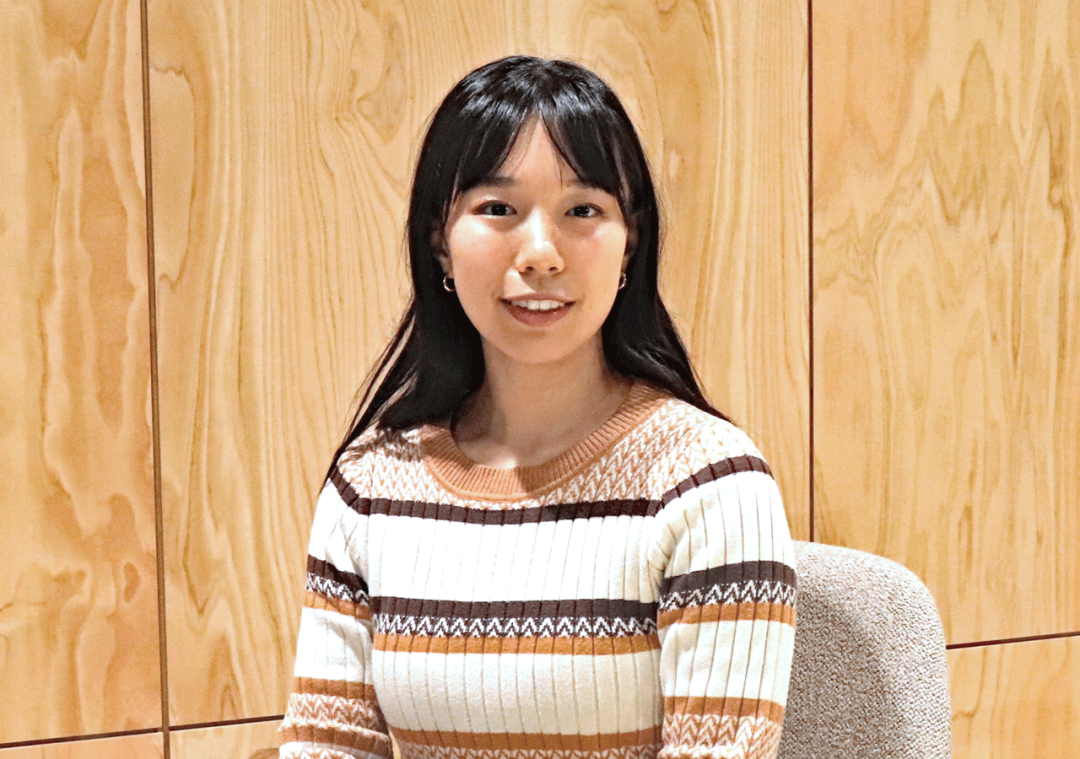
Prior to joining Tokyu Corporation, Ms. Kamihigashi had experience in creating a third place at a part-time high school. She approached Tokyu with the idea that she could work in education.
As the class began, the students started their individual tasks. Some edited videos to create movies, others experimented to build paper airplane launching devices, and still others used modeling software to design useful school gadgets and print them out with a 3D printer. The tasks varied widely. The crew, including Mr. Kamito, moved around Miraso, talking to the students. The students, too, were diverse in their approach: some silently focused on their own work, others worked in teams, and some stood up to talk to students nearby. It was a scene quite different from a typical classroom during class.
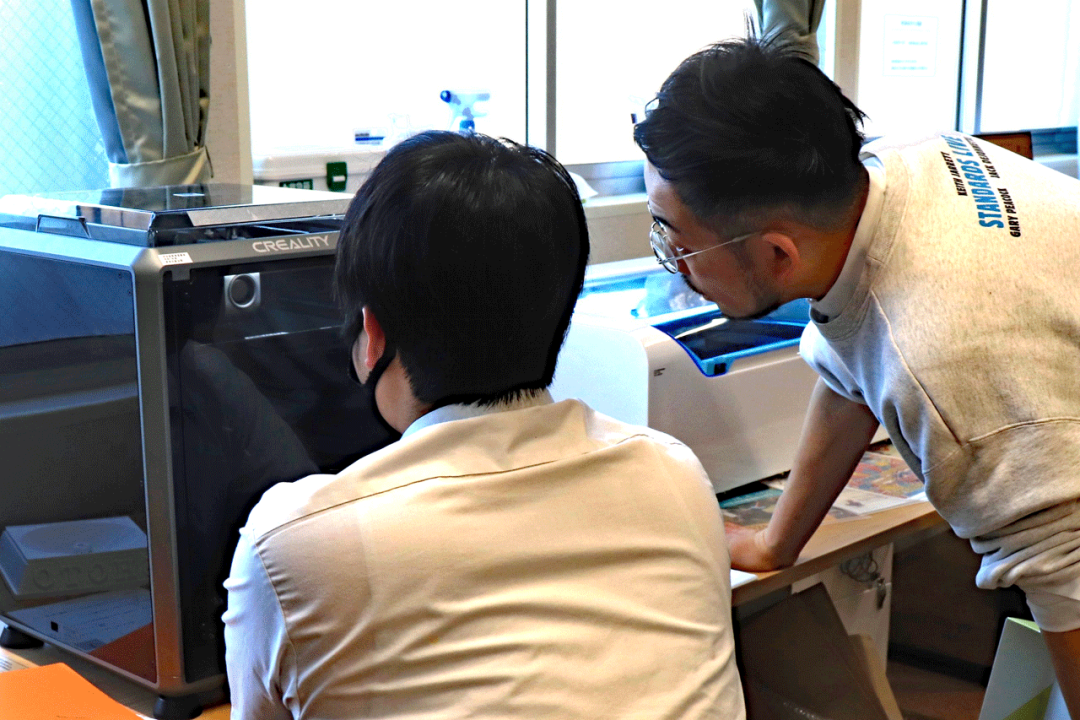
One of the students was having trouble because the 3D printer wasn't working as expected. Seeing this, a crew member rushed over to help.
The role of the crew stationed at the Future Co-creation Space is not to "teach" but to "support." The crew carefully understands the individuality and progress of each student. "We hold a 1.5-hour meeting after each class to plan what to say and how to engage with each student next time," says Kamihigashi. Their approach is closer to that of a project manager than an educator. For example, when a student was making handy gadgets with a 3D printer, they suggested, "Why don't you ask the entire grade level about their needs?" but the student was reluctant, saying they were too embarrassed to do so. So they had a thorough discussion with the student and reconsidered the approach, suggesting, "Maybe they could do it if it was in the form of a survey," and the crew discussed how to proceed. Of course, things don't always go according to plan. Students' motivation and condition vary greatly from day to day, so they respond flexibly, such as "not forcing conversation on days when a student seems to want to concentrate on their work."
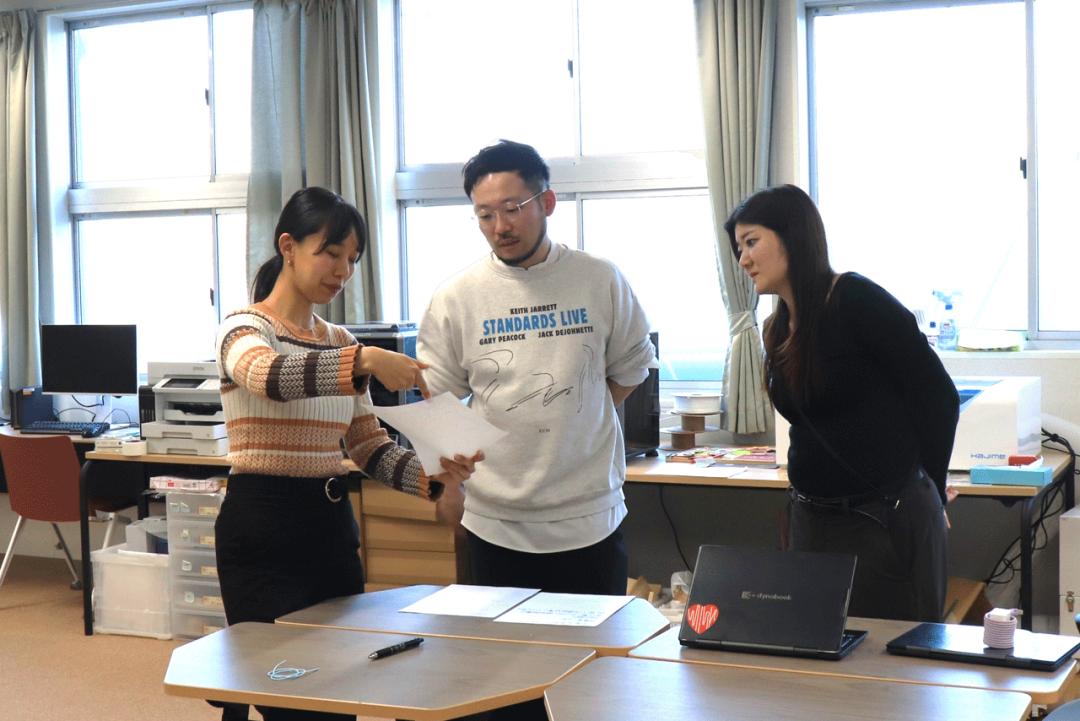
Post-lesson meeting. We review the day's lessons and discuss how to support students in the next lesson, while looking at the notes they wrote.
The meaning of having adults who are not "teachers" in a school
The greatest value of the Future Co-creation Space lies in the presence of adults who are neither teachers nor parents, but with whom students can call each other by nicknames, creating a flat, collaborative environment. "Some kids just drop by during recess, chat about personal matters, and then leave. Perhaps there are times when they want to talk to an adult who is in a different position than their teachers or parents," says Kamihigashi with a smile. The Future Co-creation Space (Miraso), which is open after school, is frequented by students from both Hiroo Junior High and Shoto Junior High, regardless of grade or class. University students also come on days when they enjoy playing TRPGs (tabletop role-playing games) with the students. The facility is equipped with board games and crafting tools, and there are notices recruiting project members for activities such as "mystery solving" and "TRPGs," with various features designed to broaden children's interests and foster connections with others.
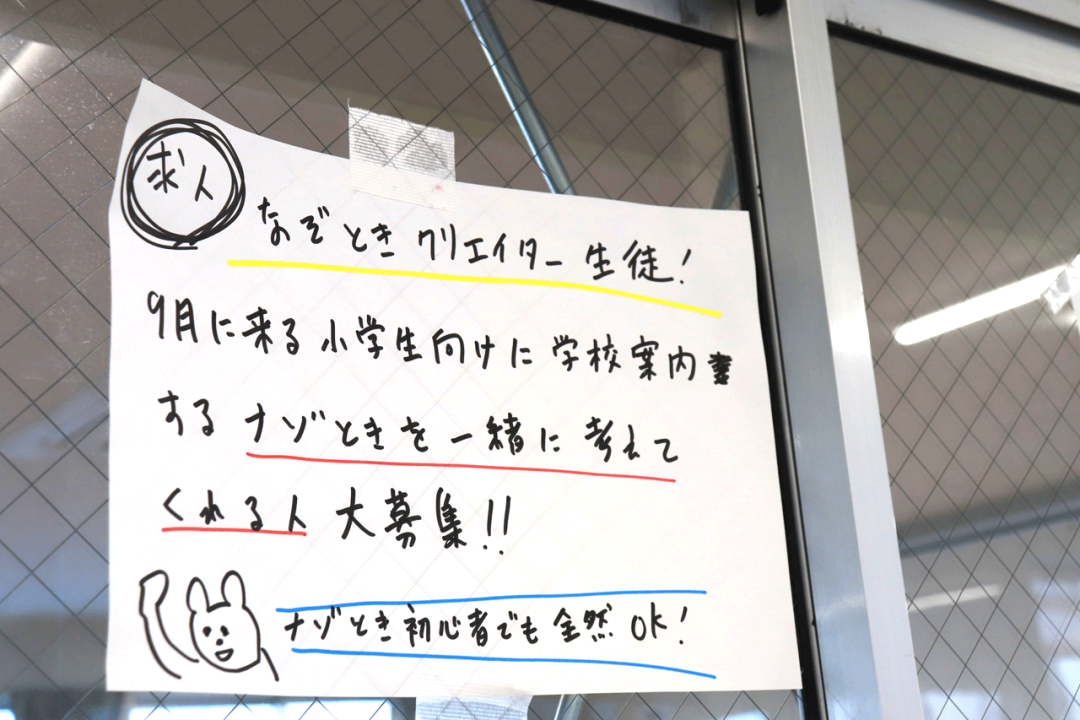
A call for puzzle creators is posted at Miraso. This is where you can meet friends from different grades and schools.
Furthermore, because it's a different environment from a regular classroom, unexpected growth can sometimes be observed. Students who normally require support in regular classes are independently pursuing their "My Inquiry (My Project)" using modeling software and 3D printers at "Miraso Seminar." During the Miraso class, a crew member was seen sitting next to the student, providing careful support, but this is not limited to that student; individualized and optimal support is provided to all students. "Until now, it was difficult for him to write, so we interviewed him and wrote reports for him, but today he wrote it himself!" said Kamihigashi, unable to hide his surprise.
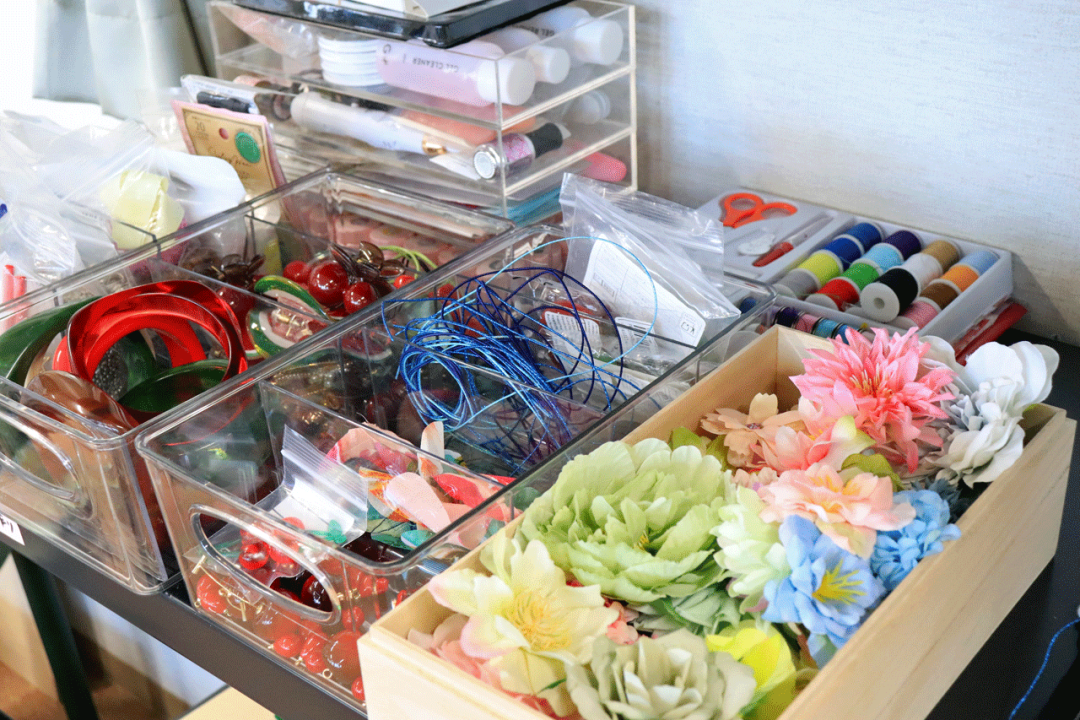
There are also many materials on display that can inspire creativity in manufacturing.
Another significant aspect of having working professionals on campus is the "connection with society." Rather than simply listening to lectures by guest teachers, students can connect with professionals from various fields through the broad and diverse networks that the staff members possess. For example, to a student researching "why mechanical pencil leads don't break easily," they might suggest, "Why don't you try talking to someone from a stationery manufacturer?" To a student who wants to create games, they might introduce a game creator, and to a student who enjoys drawing, they might connect with a designer. Through these kinds of dialogues, students gain new ideas and perspectives.
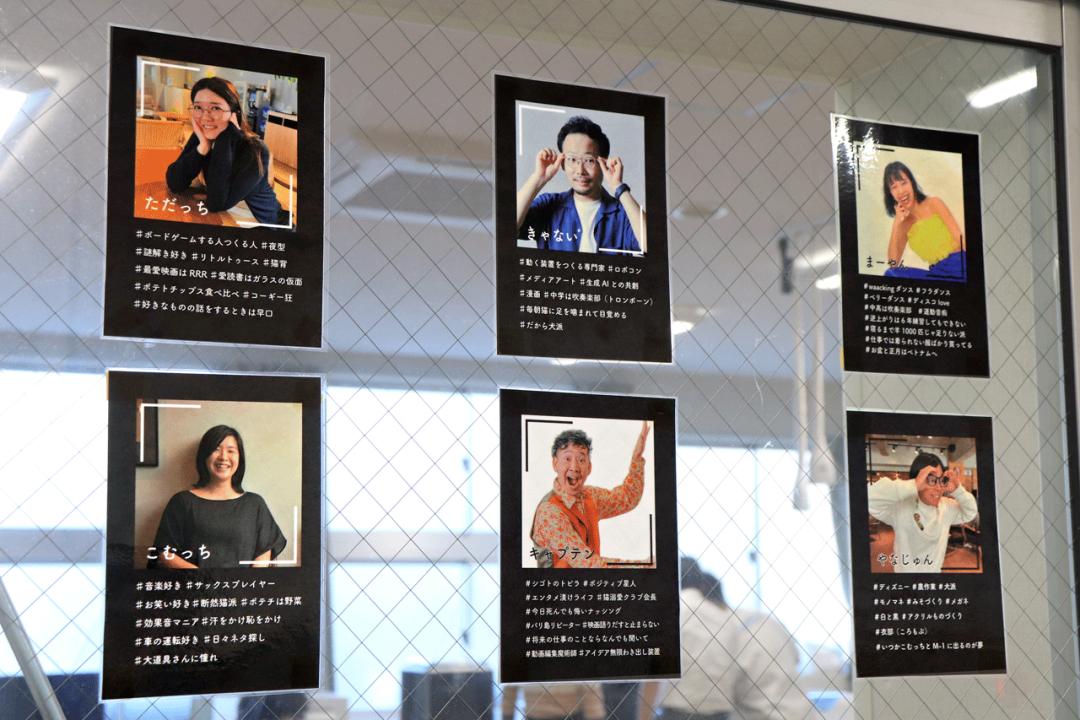
The Miraso crew. Looking at this introduction panel, it's easy to see why children would feel like they're approachable and easy to talk to.
Connecting "schools" and "businesses" will change the future of Shibuya.
It's easy to imagine how corporate involvement in public education can change the system, but what is the significance of a company committing to the education field? In Tokyu's case, it's about improving the value of the areas along its railway lines. Improving educational standards enhances the attractiveness of these areas as desirable places to live, which in turn strengthens the company's business foundation. Furthermore, "it also helps to cultivate key people who will support the community," says Mr. Kamito. Nurturing future users, and even people with whom they can co-create in the future, is linked to the company's business strategy.
The benefits are also significant for individuals like her who transition from corporate roles to the education field. For example, situations in educational settings change incredibly quickly. It's not uncommon for things like, "Preparing for an event took longer than expected, so we're moving tomorrow's class schedule to next week." Students' motivation also fluctuates wildly from day to day; "They were full of enthusiasm last week, but this week they have absolutely no motivation." Opportunities to deal with such situations effectively are rare in adult-only settings. Furthermore, the experience of connecting teachers working in educational settings with professionals operating within organizations and groups hones their ability to mediate and adjust.
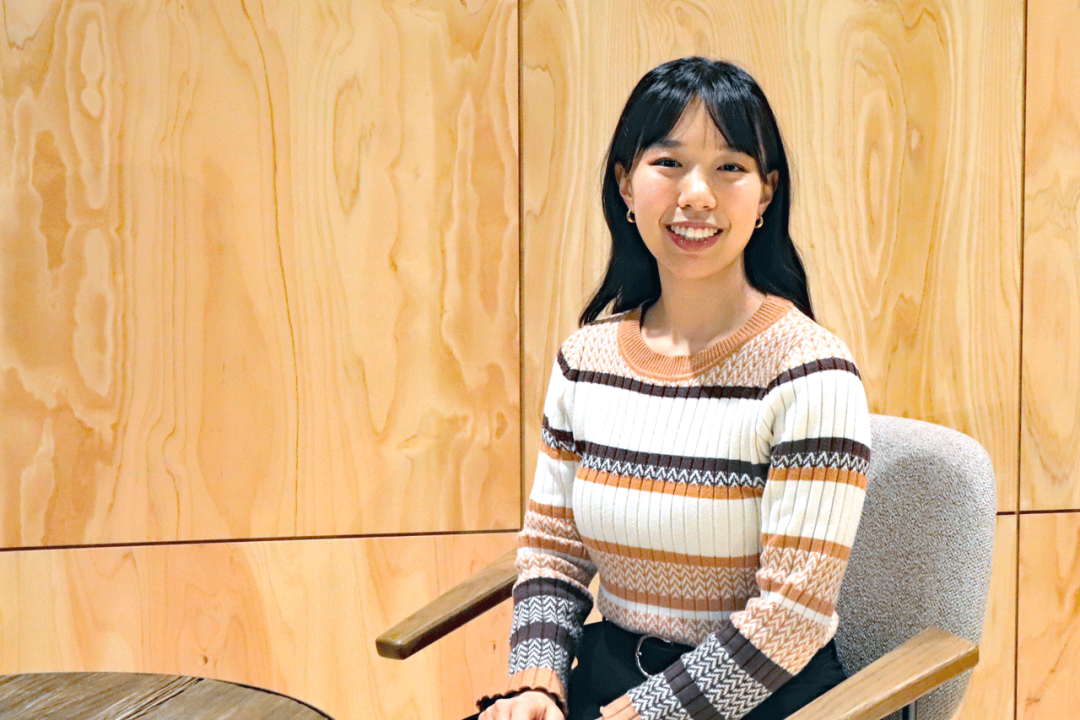
Kamihigashi, who originally aspired to work in the field of education, said, "I'm able to do what I wanted to do, so my dream has truly come true!"
Many working professionals who have interacted with students at Miraso have shared comments such as, "I was happy that my knowledge and skills could be useful to the children," and "I received energy from the children." The feeling that their cultivated expertise is being used to nurture the next generation is a great source of motivation. For the crew, "being able to witness the children's growth up close" is the greatest reward. They say there is an unparalleled joy in witnessing a child who was previously shy and had difficulty connecting with others after school, now enthusiastically engaging in conversation about hobbies with a student they have just met. For the students, realizing that "there are people who are compatible with me" and "there are adults who will help me" through connections across generations is undoubtedly a great source of confidence.
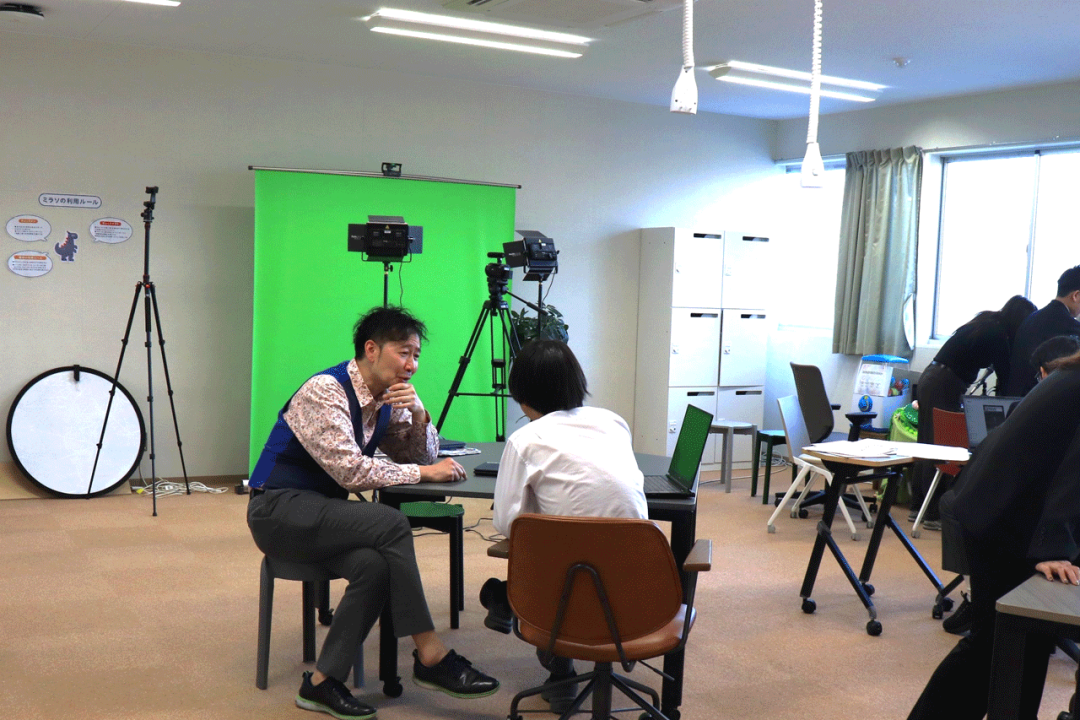
Intergenerational dialogue holds great significance for both adults and children.
By working for a private company while committing to the field of education, nurturing the next generation, and simultaneously giving value back to their own businesses—this kind of cycle is what Shibuya and Japan need in the future: "co-creation talent." Instead of "adults teaching," adults and children will work together to create an exciting future. The future co-creation space is planned to spread to elementary and junior high schools throughout Shibuya Ward. The innovations born from this will surely transform Shibuya into an even more creative city.
Venue
Haruka Furukawa (tannely)
Lived in Shibuya Ward for about 20 years. She also works as a writer for women's magazines, childcare magazines, etc. I would like to share information from the perspective of a mom living in Shibuya.
Genres within watch
Articles in the same genre
![[Business x Public Education: The Future of Shibuya ②] Shibutan is building a city-wide learning ecosystem](https://biz.shibuyabunka.com/storage/images/watch//1777552336.png)
2026-05-11〜
[Business x Public Education: The Future of Shibuya ②] Shibutan is building a city-wide learning ecosystem
2025-03-31〜
Everyone is affected! Yui Shibuya becomes a catalyst for connecting with "welfare"
Featured articles on the site
西武渋谷店、58年の歴史に幕 「シブヤ」をつくった百貨店、最後のシャッター

渋谷の肉料理おすすめ5選! 渋谷在勤・かごさんが厳選するお店を紹介
[Shibuya Scenery Records Vol. 2] The "Onko Gakkai Kaikan" continues to preserve the legacy of blind scholar Hanawa Hokiichi