

SHIBUY.A. × EVENT

2026-03-30
7th Space QOL Research and Development Center Event "What is 'Comfort' and 'QOL' in the Era of Space Travel and Space Living?" (QWS Academia, Waseda University)
A program to encounter "unknown questions" in collaboration with universities
2026-02-19
SHARE
Source: Peatix
[SHIBUYA QWS original program "QWS ACADEMIA"]
This is a program in collaboration with universities that allows students to encounter "unknown questions." At universities, there are students and researchers who are facing a wide variety of "questions." "QWS ACADEMIA" is not just a class where knowledge is transmitted, but aims to stimulate each other in both directions and create a chemical reaction.
<Purpose of the event>
Waseda University's Global Science and Intelligence Fusion Research Institute and Space QOL Research and Development Center will be holding a public event titled "What are 'comfort' and 'QOL' in the era of space travel and space life?"
Space was once a realm that only a select few experts, such as astronauts, could set foot in. However, in recent years, with the realization of private space travel and the concept of space hotels emerging one after another, the possibility of low Earth orbit (LEO) becoming a new living space for humanity is becoming more realistic. The Basic Plan for Space Policy, approved by the Cabinet in 2023, also clearly calls for the expansion of economic activity in space and the promotion of manned exploration from Earth to the Moon and Mars, and companies, universities, and research institutions are stepping up efforts to build a new space industry.
Supporting this movement are fundamental technologies such as the Environmental Control and Life Support System (ECLSS). Up until now, ECLSS has been developed as infrastructure to support survival in space, but going forward, research, development, and implementation will be required that incorporate aspects of comfort and quality of life (QOL).
Therefore, Waseda University launched the "Space QOL Research and Development Center to Realize Healthy and Comfortable Space Life for the General Public" in August 2024. Space QOL focuses on aspects such as human physiology, cognition, and experience, and aims to improve comfort, health, and QOL during space stays by combining ECLSS research with a human-centered research approach.
This event will bring together researchers, practitioners, companies, startups, and others from various fields to share and discuss the potential of space QOL research and development and visions for its social implementation, with an eye toward a future where living in space will create new markets.
If you are interested in the project, would like to exchange information on research topics, or are interested in industry-academia collaboration, please make the most of your time and participate. Researchers and students participating in the project will gather.
◆Date and time: March 30, 2026 (Monday) 17:00-21:00 (Doors open: 16:30)
◆ Venue: SHIBUYA SCRAMBLE SQUARE 15th floor SHIBUYA QWS Cross Park
◆Participation fee: Free
◆Capacity: 60 people
◆Application for participation:
https://qws-academia0330.peatix.com/
◆ Target audience: Anyone interested in the project can participate (high school students, technical college students, university students, graduate students, faculty and staff, teachers, researchers, working adults, etc.)
◆ Co-organized by: SHIBUYA QWS Innovation Council, Waseda University Global Science and Knowledge Integration Institute
◆ Co-hosted by: Ministry of Education, Culture, Sports, Science and Technology's Aerospace Science and Technology Promotion Commission "Product and Service Design Human Resource Development Program for Supporting Human Comfort in ECLSS Environments" and Waseda University's Industry-Government-Academia Co-Creation Consortium for the Promotion of Sustainable Future Food
◆Sponsor: Beyond 2020 NEXT PROJECT
◆ Program
16:30
Opening/Reception
Moderator: Ayaka Matsumoto (2nd year student, Graduate School of Advanced Science and Engineering, Waseda University / Chief Secretary of Beyond 2020 NEXT PROJECT)
17:00-17:05
Opening remarks: Yasunori Kamachi (Vice Director, Open Innovation Strategy Research Organization, Waseda University)
17:05-17:20
Lecture 1: "Supporting health, QOL, and comfort of space travel through space QOL research and development"
Tomomi Nonaka (Professor, Faculty of Science and Engineering, Waseda University)
17:20-17:35
Lecture 2: "Physical Activity and Health Maintenance in the Space Environment: The Potential of Space Sports" (tentative)
Motohiko Miyaji (Professor, Faculty of Sport Sciences, Waseda University)
17:35-17:50
Lecture 3: "Cell and tissue approaches to make space life more comfortable"
Tatsuya Shimizu (Director/Professor, Institute of Advanced Biomedical Sciences, Tokyo Women's Medical University)
17:50-18:05
Lecture 4: "ECLSS (Ecrus)" - Supporting Life in Space
Masato Sakurai (Principal Investigator, Japan Aerospace Exploration Agency, JAXA)
18:05-18:20
Lecture 5: "Comfortable Space Life Needs Revealed through Astronaut Health Management Operations"
Hiroshi Takeshita (Director, Japan Manned Space Systems Corporation (JAMSS))
18:20-18:30
break
18:30-18:45
Lecture 6: "Possibilities and Business Development of Private Space Stations"
Misaki Inoue (General Manager of Utilization and Development Department, Japan Low Orbital Orbit Corporation)
18:45-19:00
Lecture 7: "How can we spread space life and space business?: A behavioral economics approach"
Ryuichiro Ishikawa (Professor at the Faculty of International Research and Education, Waseda University / Director of SciDe Lab Inc.)
19:00-19:15
Lecture 8: "Bringing Earth-based Technology to Space: How to Build Space Experimental Devices"
Shinichi Kimura (Director, Space Systems Creation Research Center, Graduate School of Science, Tokyo University of Science)
19:15-19:30
Lecture 9: "Why will space life fail if we don't think about it as a 'system'?: Industrial architecture that determines the winning strategy of the space industry"
Seiko Shirasaka (Chairman/Professor, Graduate School of System Design and Management, Keio University)
19:30-19:40
Introduction to our human resource development program
“FY2020 Space Aerospace Science and Technology Promotion Commission Fund: Space specialist human resource development
Product and service design training program for supporting human comfort in ECLSS environments
Tomomi Nonaka (Professor, Faculty of Science and Engineering, Waseda University)
19:40-20:30
panel discussion
"What do we really need as space travel and space living become more prevalent?"
Panelists
・Masato Sakurai (Research Director, Japan Aerospace Exploration Agency, JAXA)
・Hiroshi Takeshita (Director, Japan Manned Space Systems Corporation (JAMSS))
・Misaki Inoue (General Manager of Utilization and Development Department, Japan Low Orbital Orbit Corporation)
Ryuichiro Ishikawa (Professor at the Faculty of International Research and Education, Waseda University / Director of SciDe Lab Inc.)
・Motohiko Miyaji (Professor, Faculty of Sport Sciences, Waseda University)
・Tatsuya Shimizu (Director/Professor, Institute of Advanced Biomedical Sciences, Tokyo Women's Medical University)
Shinichi Kimura (Director, Space Systems Creation Research Center, Graduate School of Science, Tokyo University of Science)
・Shirosaka Seiko (Chairman/Professor, Graduate School of System Design and Management, Keio University)
Moderator: Tomomi Nonaka (Professor, School of Creative Science and Engineering, Waseda University)
20:30-20:35
Closing remarks: Toru Asahi (Professor, Dean of the Graduate School of Advanced Science and Engineering, Faculty of Science and Engineering, Waseda University)
20:35-21:00
networking
[Opening remarks]
Yasunori Kamachi (Vice Director/Chief Creative Manager, Open Innovation Strategy Research Organization, Waseda University)
After completing his master's degree at the Graduate School of Science and Engineering at Waseda University in 1981, he joined Mitsubishi Electric Corporation and engaged in satellite development. In 1998, he was seconded to Space Communications Co., Ltd., where he served as Director and General Manager of the Satellite Operations Division, responsible for rocket and satellite procurement and satellite operations for a satellite communications and broadcasting company. Since 2002, he has promoted the development of domestic and international satellite and ground systems at Mitsubishi Electric. He oversaw the company's space business as Deputy General Manager of the Kamakura Plant and Executive Director and General Manager of the Space Systems Division. During this time, he contributed to the construction of Japan's communications, observation, weather, and positioning satellite infrastructure, as well as the export of satellite systems overseas. In 2017, he was appointed Managing Director of Sales and President of Mitsubishi Space Software Co., Ltd., and Director and General Manager of the Corporate Planning Office of Mitsubishi Electric Software Co., Ltd., where he provides solutions to customers in the space, defense, communications, life sciences, public energy, and other fields using ICT as their core technology, and manages the company. He will assume his current position in 2024.
【Speakers】
Masato Sakurai (Principal Investigator, Japan Aerospace Exploration Agency, JAXA)
He holds a PhD in Chemical Engineering from the Department of Applied Chemistry, School of Science and Engineering, Waseda University, specializing in chemical engineering, fluid phenomena in microgravity (Marangoni convection), space environment utilization science, and Environmental Control Life Support System (ECLSS). He invented a 3D observation technique for the Marangoni convection phenomenon, which becomes prominent in microgravity, and proposed the basis for the first and most frequently conducted experiment on the ISS "Kibo." He invented water electrolysis technology in microgravity to produce oxygen, and is working on regenerative Environmental Control Life Support System (ECLSS) technology, including air and water regeneration. He is conducting research to realize a space base that is conscious of material circulation as a test bed for global environmental issues.
Hiroshi Takeshita (Director, Japan Manned Space Systems Corporation (JAMSS))
He studied the mechanism of DNA strand scission at the Department of Synthetic Chemistry, Faculty of Engineering, Kyoto University. After graduating, he joined Honda R&D Co., Ltd., where he was involved in the development of functional materials and their application to various sensors and devices, as well as research and development related to the lifespan prediction of parts and materials.
After joining JAMSS, he was in charge of supporting space environment utilization experiments on the Space Shuttle and the International Space Station (ISS), the development and operation of the ISS/JEM (Japanese Experiment Module, Kibo), and engineering related to the international space exploration program. He is currently in charge of coordinating the ISS/JEM and HTV-X business (operations/utilization/training/health management operations, etc.) and space business development in commercial LEO (Low Earth Orbit).
Misaki Inoue (General Manager of Utilization and Development Department, Japan Low Orbital Orbit Corporation)
He completed his master's course at the Graduate School of Engineering, Osaka University in 2015. After joining NEC Corporation in the same year, he worked on production engineering for satellite development and was also responsible for launching new businesses in the space field. From 2020 to 2024, he worked at Mitsui & Co. Aerospace/Mitsui & Co., where he worked on expanding and commercializing space utilization, including the use of the ISS, and pioneering the space business through collaboration with companies and research institutions. He has been in his current position since 2024.
The Japan Low-Earth Orbit Corporation is promoting business development to realize the concept of the "Japan Module," which will be the successor to the International Space Station (ISS) Japanese Experiment Module "Kibo" and serve as a new core base for Japan's space station utilization in the post-ISS era. Based on public-private collaboration, the company aims to build a sustainable space utilization model in the era of private space stations, with a view to applications ranging from research to industrial use.
Motohiko Miyaji (Professor, Faculty of Sport Sciences, Waseda University)
He graduated from the Department of Sport and Physical Education at the National Institute of Fitness and Sports in Kanoya and completed his graduate studies at the same university's Graduate School of Physical Education. He received his Ph.D. in Physical Education Science from the University of Tsukuba. He then served as an assistant professor at Kawasaki Medical Welfare University and a visiting researcher at the University of Colorado in the United States. In 2003, he joined the National Institute of Health and Nutrition (now the National Institutes of Biomedical Innovation, Health and Nutrition), where he served as Director of the Physical Activity Research Department. In 2021, he became a professor at Waseda University's Faculty of Sport Sciences. His research focuses on the interactions between physical activity and diet on health using physiological and epidemiological methods. He is a member of the 24th and 25th terms of the Science Council of Japan, a member of the Ministry of Health, Labor and Welfare's "Physical Activity Standards and Guidelines for Health Promotion" Revision Review Committee, and supports government activities as a member of the Japan Sports Agency and the Ministry of Land, Infrastructure, Transport and Tourism. Since 2025, he has served as a PO in the research and development area of AMED's Innovative Advanced Research and Development CREST PRIME "Elucidating and Controlling Life Phenomena Leading to Vitality" project.
Tatsuya Shimizu (Director/Professor, Institute of Advanced Biomedical Sciences, Tokyo Women's Medical University)
After graduating from the Faculty of Medicine, the University of Tokyo in 1992, he worked as a cardiologist at Saiseikai Central Hospital and JR Tokyo General Hospital. He then engaged in molecular biology research at the University of Tokyo Graduate School. In 1999, he began research into regenerative medicine using Japan-originated cell sheet technology at the Institute of Advanced Biomedical Sciences, Tokyo Women's Medical University, where he successfully created three-dimensional beating myocardial tissue at a level visible to the naked eye. He became a professor at the institute in 2011 and director in 2016. He aims to apply three-dimensional tissue construction technology to regenerative medicine, drug discovery models, and cultured food. He received the Minister of Education, Culture, Sports, Science and Technology's Science and Technology Award (Research Category) in 2009, the Nikkan Kogyo Shimbun Prize at the 7th Monozukuri Collaboration Awards in 2012, the Japanese Circulation Society's 39th Japan Heart Foundation Sato Prize in 2014, and the 2015 Japanese Society for Regenerative Medicine Award in 2015. His specialties are regenerative medicine, tissue engineering, myocardial regeneration, and cardiology. He is the project manager for the Moonshot Agriculture, Forestry and Fisheries Research and Development Project Goal 5: "Bioeconomic cultivated food production system using circular cell culture with algae and animal cells."
Ryuichiro Ishikawa (Professor at the Faculty of International Research and Education, Waseda University / Director of SciDe Lab Inc.)
In 2002, he left Hitotsubashi University Graduate School of Economics with sufficient credits, and in 2003, he received his PhD in Economics from Hitotsubashi University.
After working as an assistant professor at Hitotsubashi University, a lecturer at the Graduate School of Systems and Information Engineering at the University of Tsukuba, and an associate professor in the Department of Systems and Information Engineering at the same university, he became an associate professor at Waseda University in 2016. He has held his current position since 2020. Aiming to implement economics in society, he founded SciDe Lab Inc. in 2021 and became a director. He has also served as an advisor to Gaudiy Inc., a community science company. His specialties are game theory, experimental and behavioral economics, and mechanism design. He applies cutting-edge economic theory to work on designing incentives for personnel placement and job allocation, and designing and implementing evaluation indicators for building consensus within communities and improving employee engagement.
His co-edited books include "The Economics of Institutions and Recognition" (NTT Publishing) and "Mechanism Design of Communication Spaces" (Keio University Press).
Shinichi Kimura (Director, Space Systems Innovation Research Center, Graduate School of Science, Tokyo University of Science)
He completed his doctoral studies at the University of Tokyo Graduate School of Pharmaceutical Sciences in 1993 (PhD in Pharmacy). After working at the Ministry of Posts and Telecommunications' Communications Research Laboratory (now the National Institute of Information and Communications Technology), he has been working at Tokyo University of Science since 2007. He has been researching technologies to remove space debris, participating in many space robot and small satellite missions such as the Engineering Test Satellite VII (Orihime/Hikoboshi), Manipulator Flight Demonstration (MFD), Micro Labsat-1, and Hodoyoshi Satellite-3, and has developed various space equipment such as the surveillance camera systems for IKAROS and Hayabusa-2 by utilizing ground-based consumer devices. As Director of the Tokyo University of Science's Space Systems Creation Research Center, which was established in April 2021, he promotes research into technologies for living in space, linking ground-based technologies such as environmental and lifestyle-related technologies to space. He also serves as a member of the Space Utilization Subcommittee and Chair of the Investigation and Safety Subcommittee of the Ministry of Education, Culture, Sports, Science and Technology.
Professor and Chair of the Graduate School of System Design and Management, Keio University
Graduated from the University of Tokyo Graduate School of Aerospace Engineering and Keio University Doctoral Program in Systems Engineering. After graduating from the graduate school of Aerospace Engineering, he worked in space development at Mitsubishi Electric Corporation for 15 years. He participated in the development of "Kounotori" and other projects. At the university, he has been researching large-scale system development and innovation creation methodologies for technology and society integration systems. He has been teaching system design at Keio University since 2004, and has been an associate professor at the Graduate School of System Design and Management since 2010 and a professor since 2017. He will be the dean of the SDM Graduate School in October 2023. He developed an on-demand small synthetic aperture radar (SAR) satellite as a program manager for the Cabinet Office's Impulsing Paradigm Change (ImPACT) Program. He founded Synspective Inc. to implement the technological results in society (received the Minister of Education, Culture, Sports, Science and Technology Award at the Japan Startup Awards 2022). He supports government activities as a member of many committees, including the Cabinet Office Space Policy Committee, the Cabinet Secretariat Digital Market Competition Council, and the Ministry of Economy, Trade and Industry's Industrial Structure Council Green Innovation Project Subcommittee.
Tomomi Nonaka (Professor, School of Creative Science and Engineering, Faculty of Science and Engineering, Waseda University / Principal Investigator of the "Product and Service Design Human Resource Development Program for Supporting Human Comfort in ECLSS Environments")
He specializes in production systems engineering and service engineering. He holds a PhD in Systems Engineering. After graduating from the Faculty of Environment and Information Studies at Keio University and working for a company, he enrolled in the Master's and Doctoral programs at Keio University's Graduate School of System Design and Management (SDM) as a member of the inaugural class, graduating in four years. While at SDM, he participated in postgraduate study abroad programs at Delft University of Technology and the Swiss Federal Institute of Technology, as well as a research internship at MIT. He has served as a specially appointed assistant professor at the Graduate School of Systems Informatics at Kobe University, an assistant professor in the Department of Industrial Systems Engineering at the College of Science and Technology of Aoyama Gakuin University, an associate professor in the College of Food Management at Ritsumeikan University, and deputy general manager of Ritsumeikan EDGE+R. He will become a professor in the Department of Industrial Systems Engineering at the School of Creative Science and Engineering at Waseda University in April 2023. He is involved in sustainable business and social system design, research and development of space quality of life for ordinary civilians in space, and service production system design based on human information such as job satisfaction and productivity. He is an ad hoc member of the Council for National Research and Development Agencies of the Ministry of Education, Culture, Sports, Science and Technology (Subcommittee of the Japan Aerospace Exploration Agency), a member of the Green Innovation Project Subcommittee of the Industrial Structure Council of the Ministry of Economy, Trade and Industry, a well-being policy advisor for Onomichi City, a member of IFIP WG5.7, a director of the Japan Industrial Management Association, a director of the Japan Creativity Academy, and a director of the Japanese Food Culture Association.
[Closing Remarks]
Toru Asahi (Professor and Dean of the School of Advanced Science and Engineering, Faculty of Science and Engineering, Waseda University)
Born in Fukui Prefecture and raised in Tokyo, he graduated from Tokyo Metropolitan Hakuoh High School. He graduated from the Department of Applied Physics, School of Science and Engineering, Waseda University in 1986, completed a Master's degree in Physics and Applied Physics in 1988, and received a PhD in Science in the same department in 1992 and a Master's of Business Administration in 2007. He is Director of the Waseda University Global Science and Knowledge Integration Institute, Vice Director of the Nano & Life Innovation Research Organization, and will serve as Dean of the Faculty of Science and Engineering, Waseda University, from September 2024. He promotes interdisciplinary research and fosters innovative talent. He is Deputy Project Manager for the Moonshot Agriculture, Forestry and Fisheries Research and Development Program Goal 5, "Development of a circular food production system supported by insects to solve global food problems and advance humanity into space," and a project member for the "Bioeconomic cultivated food production system using circular cell cultures using algae and animal cells." He is also Project Manager for the Yamauchi Material Space Tectonics Project, a JST Creative Science and Technology Promotion Program (ERATO), and an advisor for Onomichi City's Well-Being Policy. He serves as chairman of the "Industry-Government-Academia Collaborative Consortium for the Promotion of Sustainable Future Food." His research interests include chiral science, biophysics, crystal optics, functional thin films, symmetry breaking, and recycling-based food production systems.
[Moderator]
Ayaka Matsumoto (2nd year doctoral student in the Department of Advanced Science and Engineering, Graduate School of Waseda University / Chief Executive of the Beyond 2020 NEXT PROJECT)
He graduated from Waseda University Honjo Senior High School in 2020 and from the Department of Life and Medical Sciences, School of Advanced Science and Engineering, Waseda University in 2024. He is currently a member of the Waseda University Biophysical Science Laboratory (Asahi Laboratory). His specialties are physical chemistry and chiral science. He currently works as a part-time lecturer at Waseda University Honjo Senior High School. He joined the student group Beyond 2020 NEXT PROJECT in 2020, serving as General Affairs in 2022, Secretary General from 2023, and Chief Secretary from 2025. He is a member of the World Children's Future Conference Project, which supports the United Nations, the SDGs Education Curriculum Project, and the Entrepreneurship Education Project.
[Executive Committee]
Rintaro Kuga (1st year master's student, Business Design Department, Graduate School of Creative Science and Engineering, Waseda University)
【ABOUT SHIBUYA QWS】
SHIBUYA SCRAMBLE SQUARE opened on November 1, 2019, directly connected to and above Shibuya Station. SHIBUYA QWS (hereinafter QWS) is a members-only facility located on the 15th floor. With the concept of "Not just asking, not just meeting, not just creating, but changing the world," the facility aims to create a movement that leads to unknown value by intersecting the [questions] of players with diverse backgrounds.
https://shibuya-qws.com/
[Regarding the content of your responses that includes personal information]
The personal information you provide will be managed in accordance with SHIBUYA SCRAMBLE SQUARE, Ltd.'s personal information management regulations, and will be disposed of in an appropriate manner after use. https://shibuya-qws.com/privacy-policy
[About the information listed for this event]
Information regarding speakers and the program will be updated as changes or additional decisions are made.
To apply to participate in the event
Thank you from here.
Venue
Genres within EVENT
Articles in the same genre
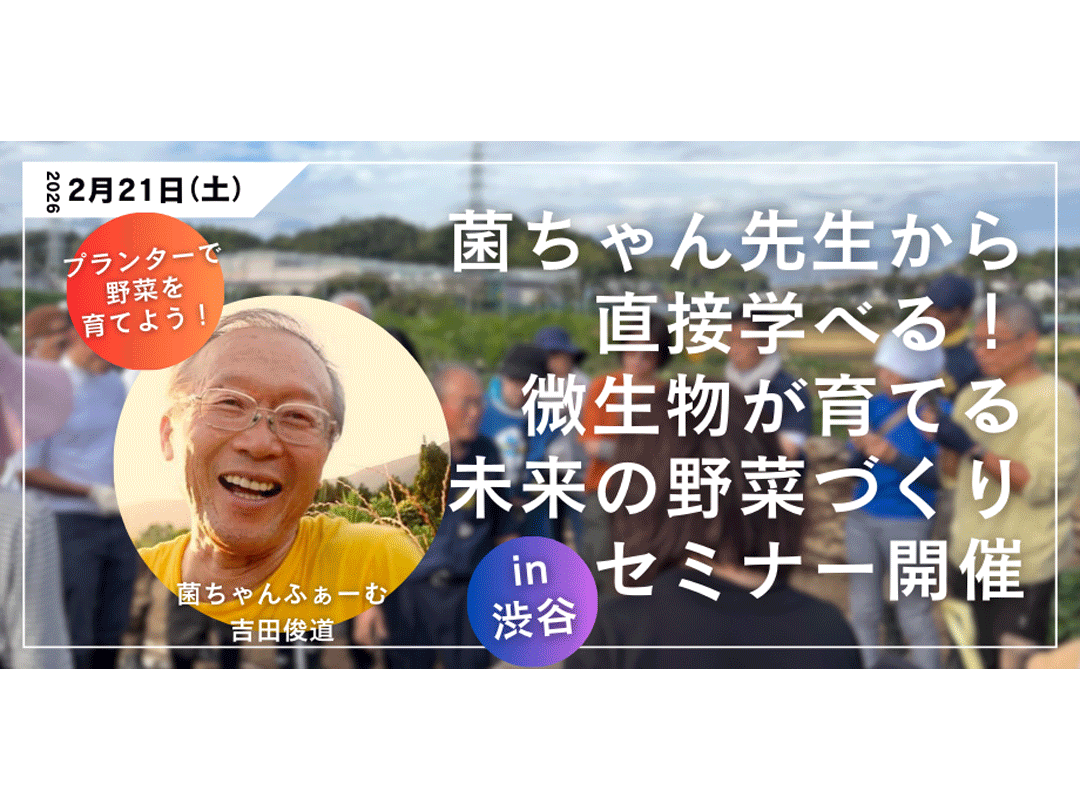
2026-02-21〜2026-02-21
"Learn how to make planters directly from Professor Kinchan! Growing vegetables of the future with microorganisms" Kinchan farming method lecture in Shibuya, sponsored by Chibanian Part-time Agricultural School
![[Vol.3] +ART×BIZ TALK | Talking with an artist about the intersection of creativity and business (Guest: Tatsuya Taguchi, CEO of Taguchi Fine Art)](https://biz.shibuyabunka.com/storage/images/event/1770031131.png)
2026-02-23〜2026-02-23
[Vol.3] +ART×BIZ TALK | Talking with an artist about the intersection of creativity and business (Guest: Tatsuya Taguchi, CEO of Taguchi Fine Art)

2026-02-24〜2026-02-24
住み続けられるまちづくり (経営編) 〜まちを戦略的にデザインする〜
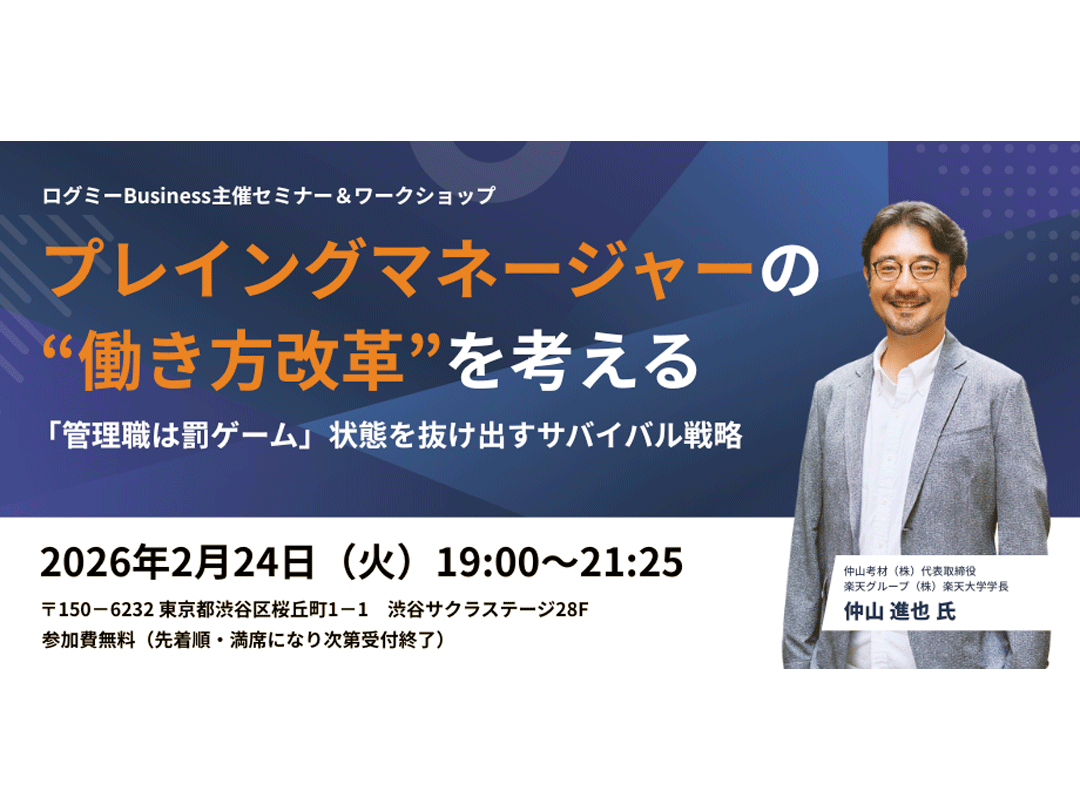
2026-02-24〜2026-02-24
プレイングマネージャーの“働き方改革”を考える 「管理職は罰ゲーム」状態を抜け出すサバイバル戦略
Featured articles on the site
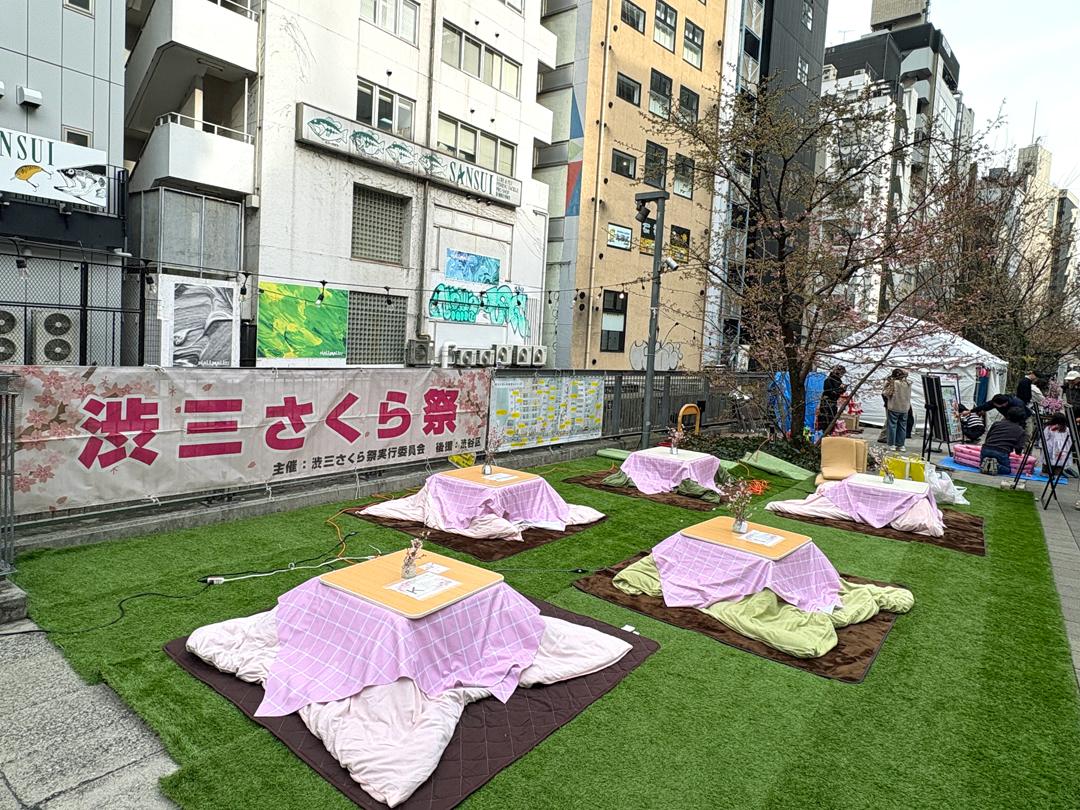
Enjoy mulled wine while admiring the Kawazu cherry blossoms at the "Sakura Kotatsu" along the Shibuya River
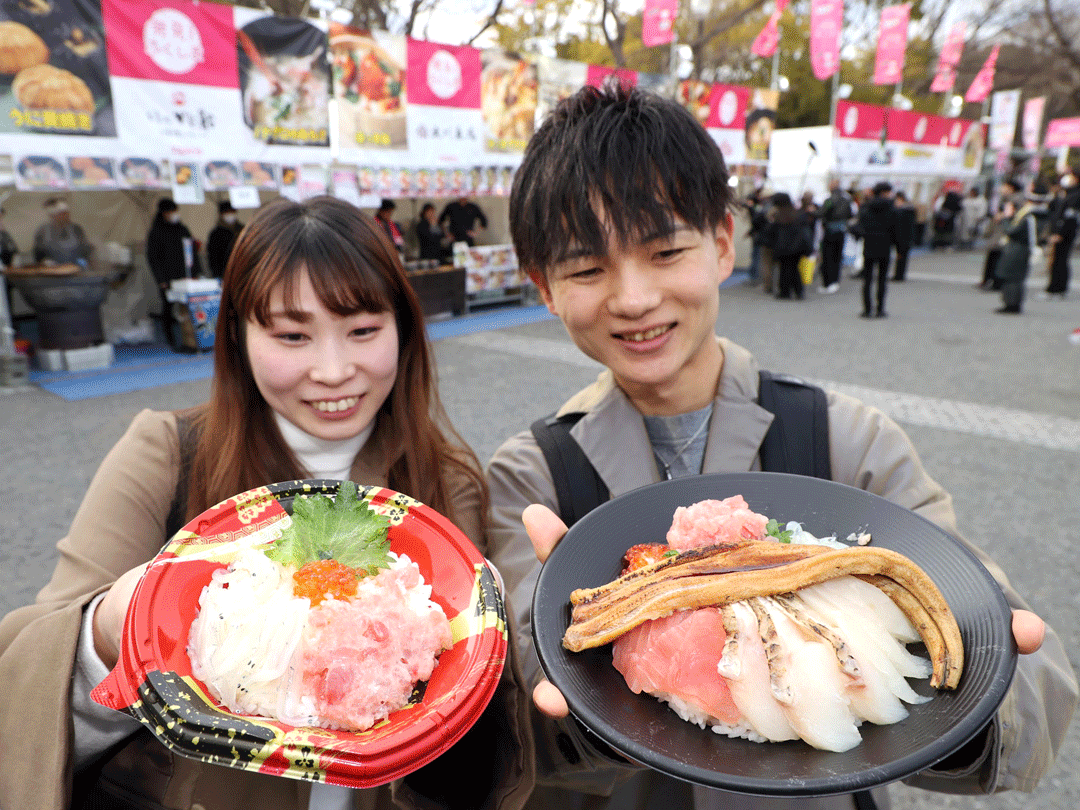
Seafood gourmet festival "SAKANA & JAPAN FESTIVAL" - seasonal seafood all in one place
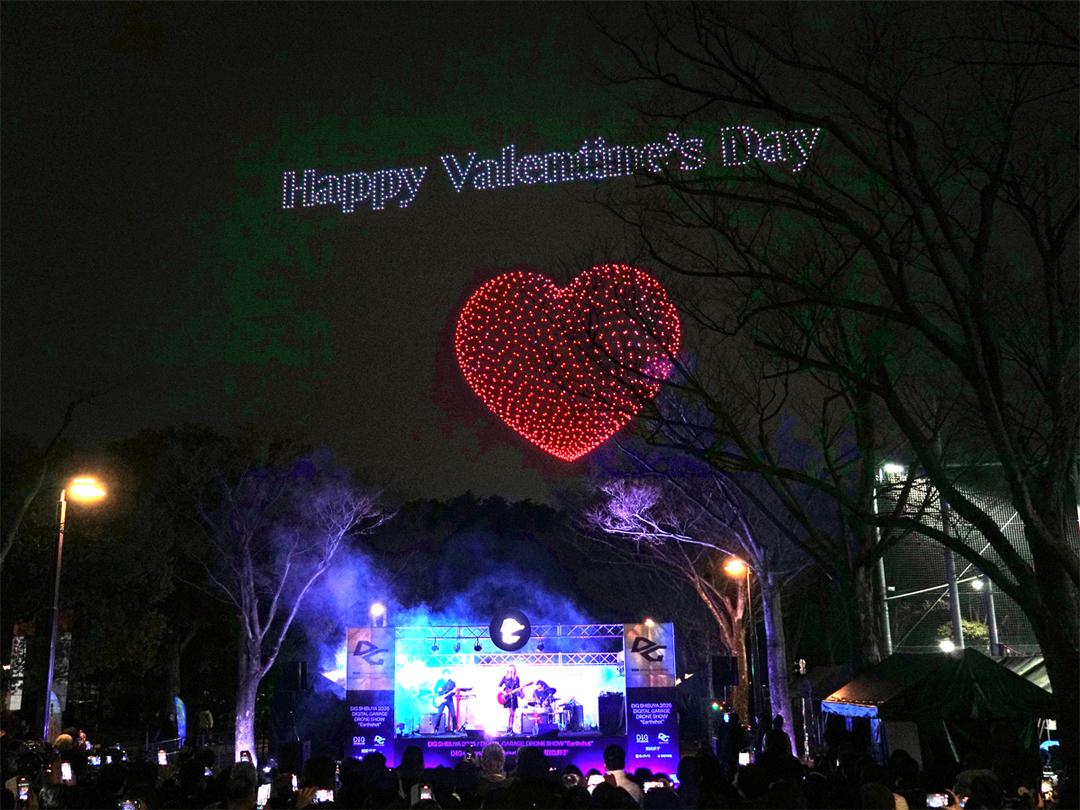
DIG SHIBUYA Drone Show: 3,030 drones in the Shibuya night sky