

SHIBUY.A. × INTERVIEW
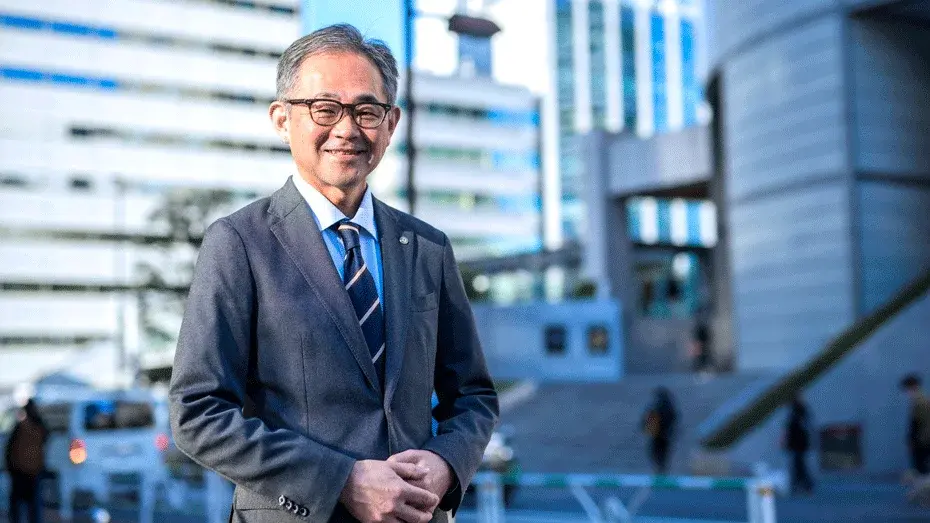
Representative Director, Shibuya Station Area Management Association
A culture unique to Shibuya naturally emerges.
Developing urban platforms
2026-03-30
SHARE
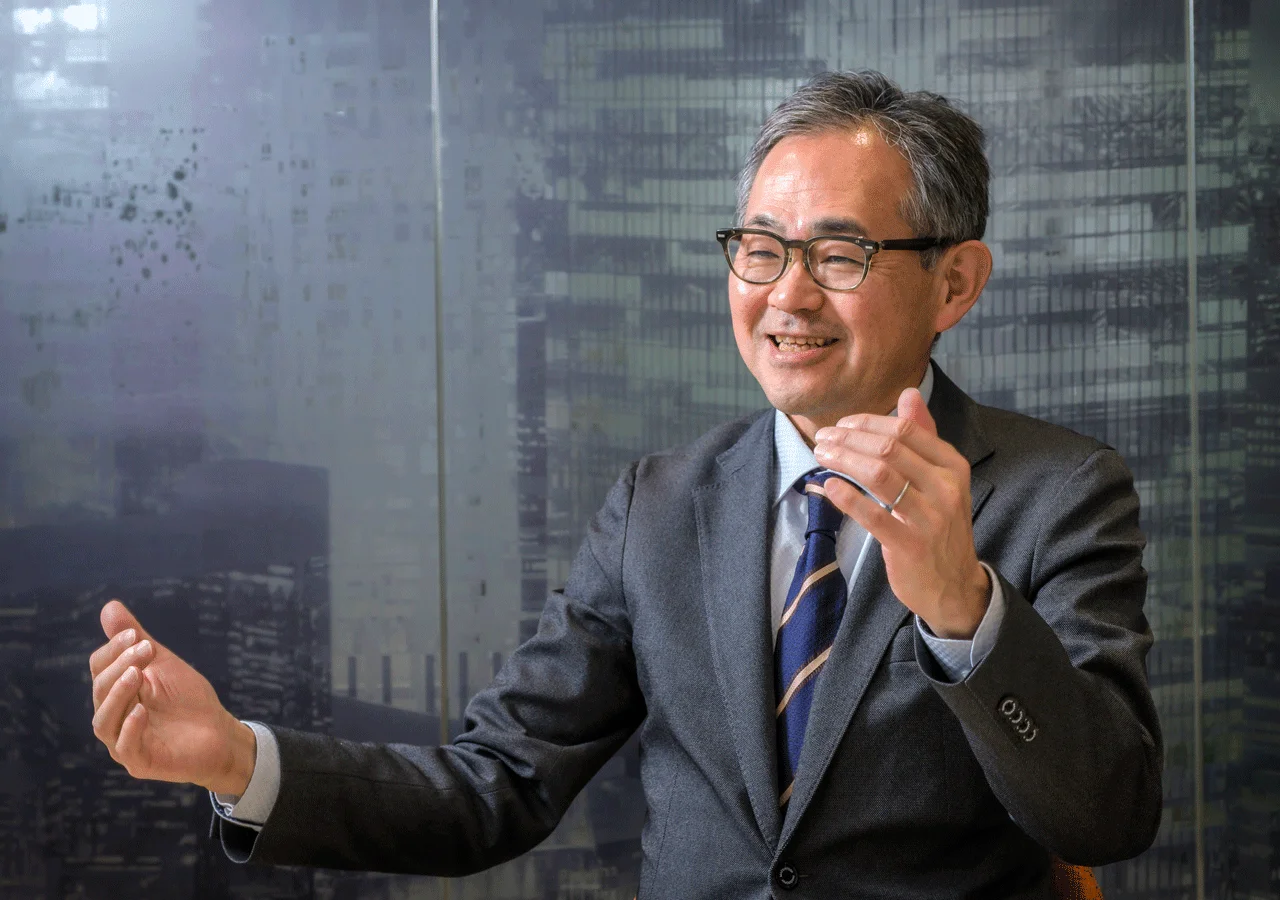
Representative Director of the Shibuya Station Area Management Association, and Executive Officer and General Manager of the Shibuya Development Division, Urban Development Headquarters, Tokyu Corporation. After studying urban planning at university, he joined Tokyu Corporation in 1990. For over 30 years, he has been involved in urban development, handling a variety of projects including commercial facilities, offices, residences, and hotels. He has been involved in the development of COREDO Nihonbashi, Capitol Tokyu Tower, and SHIBUYA CAST, and was stationed in Ho Chi Minh City, Vietnam for approximately seven years in the international division. Since 2021, he has served as the Representative Director of the Shibuya Station Area Management Association.
Large-scale redevelopment is underway around Shibuya Station, with new buildings and spaces emerging one after another. At the same time, the perspective of how to manage and nurture this city is becoming increasingly important. The organization responsible for such urban management is the Shibuya Station Area Management Association. What kind of mechanisms and environment are they creating to ensure that Shibuya remains a city where people who aspire to new challenges gather and where a unique Shibuya culture naturally emerges? We spoke with Representative Director Yoichiro Sakai about their past efforts and future prospects.
How to manage Shibuya, which is undergoing redevelopment,
The perspective of urban management is being questioned.
Please tell us about the circumstances that led to the establishment of Shibuya Station Area Management.
Shibuya is undergoing a massive redevelopment project described as a "once-in-a-century" undertaking, but a city's development isn't finished once it's built. The question then becomes how to manage the city afterward. The Shibuya Station Area Management Association, where I serve as representative director, was established to take on the responsibility of managing Shibuya's urban area. Our organization has two functions: a "council" and a "general incorporated association." The council includes management associations for various buildings, including railway operators, as well as the Shibuya Ward government and other administrative bodies, and plays a role in discussing the new form and rules of the city. On the other hand, the general incorporated association secures financial resources through advertising revenue and other means, and uses these to maintain and develop the city, as well as to hold events that people can enjoy.
The reasons why people visit cities and their consumer behavior are changing dramatically. It has been said that the trend has shifted from "things to experiences," but recently it has progressed even further and is now expressed as "experiences to moments." It's not just the event itself that's creating value, but the shared experience of "something happening at that time, in that place." In particular, the public space in front of Shibuya Station is a place where an overwhelming number of people flow in. What is expressed and communicated there directly becomes the value of the city. Creating a platform for this is a crucial role for us in Shibuya Station Area Management.
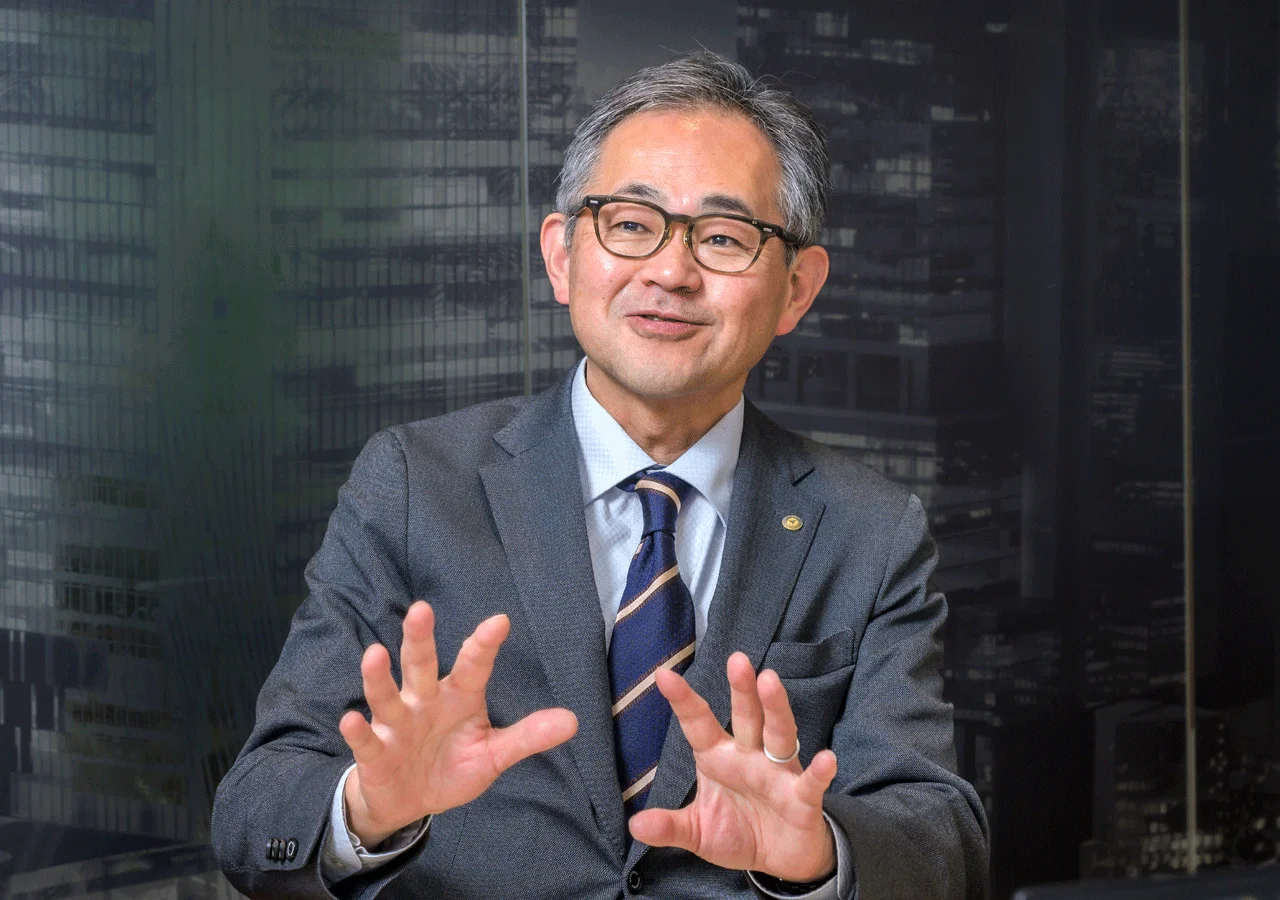
Other cities also have organizations responsible for area management, but what do you think are the unique characteristics of Shibuya?
The current structure of Shibuya was shaped during the post-earthquake reconstruction process following the Great Kanto Earthquake. Since then, the city has been continuously renewed as diverse people gather and mingle. In recent years, the word "diversity" has been frequently used, but for Shibuya, diversity is not a concept imposed from the outside. It is not a city entirely created by some company, but rather a place where new challengers have emerged with the times, alongside the presence of local residents, and where the culture has been layered upon it each time.
As evidenced by its culture in theater, records, and fashion, Shibuya's culture isn't something designed and created by someone; it has nurtured naturally, as if it were spontaneously emerging. Behind this is the "atmosphere of freedom" that permeates this city. That's why people who want to send a message to the world, such as solidarity with the situation in Ukraine or support for LGBTQ+ people, gather here. Shibuya has a "magnetic force" that draws people in, and at the same time, it possesses the power to amplify the voices that gather there to a wider audience.
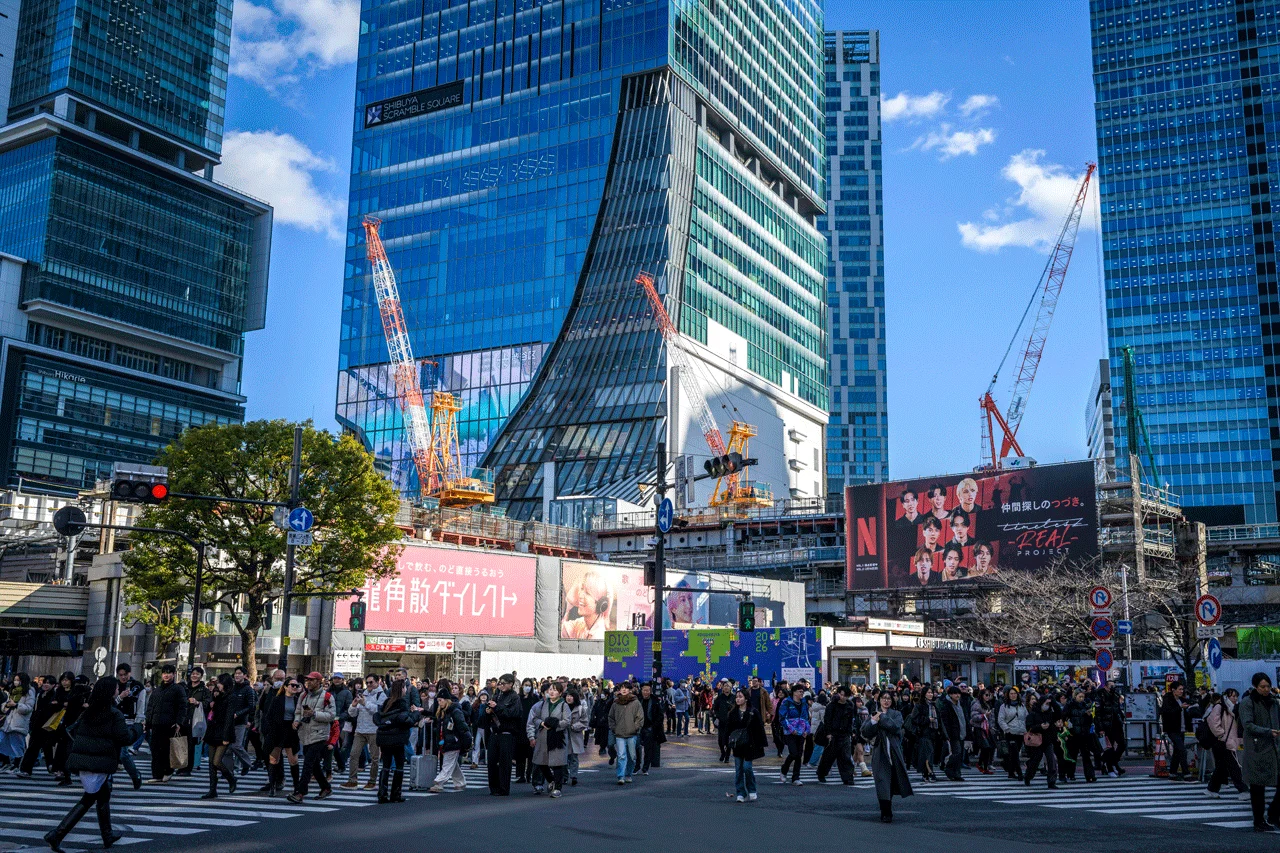
Shibuya, a city permeated with an atmosphere of "freedom," possesses an appeal that attracts many people.
Funded by advertising revenue utilizing public spaces
Let's make Shibuya a city where people can enjoy themselves with greater peace of mind.
What specific activities does the Shibuya Station Area Management team engage in?
Our activities are supported by an advertising revenue system that utilizes the public space in front of Shibuya Station. We reinvest these profits into street cleaning activities, road maintenance, and events that allow people to enjoy the city of Shibuya.
For example, we are responsible for beautifying the area around the station, but we are not just cleaning; we are also taking steps to reduce the amount of waste itself. Starting in March 2026, we will install water dispensers in the powder room of the east exit underground plaza and begin distributing eco-friendly bottles to reduce plastic bottle waste. We are also working on creating a circular system to reuse the large amount of advertising banners that are discarded every two weeks and recycle them into eco-bags and pouches.
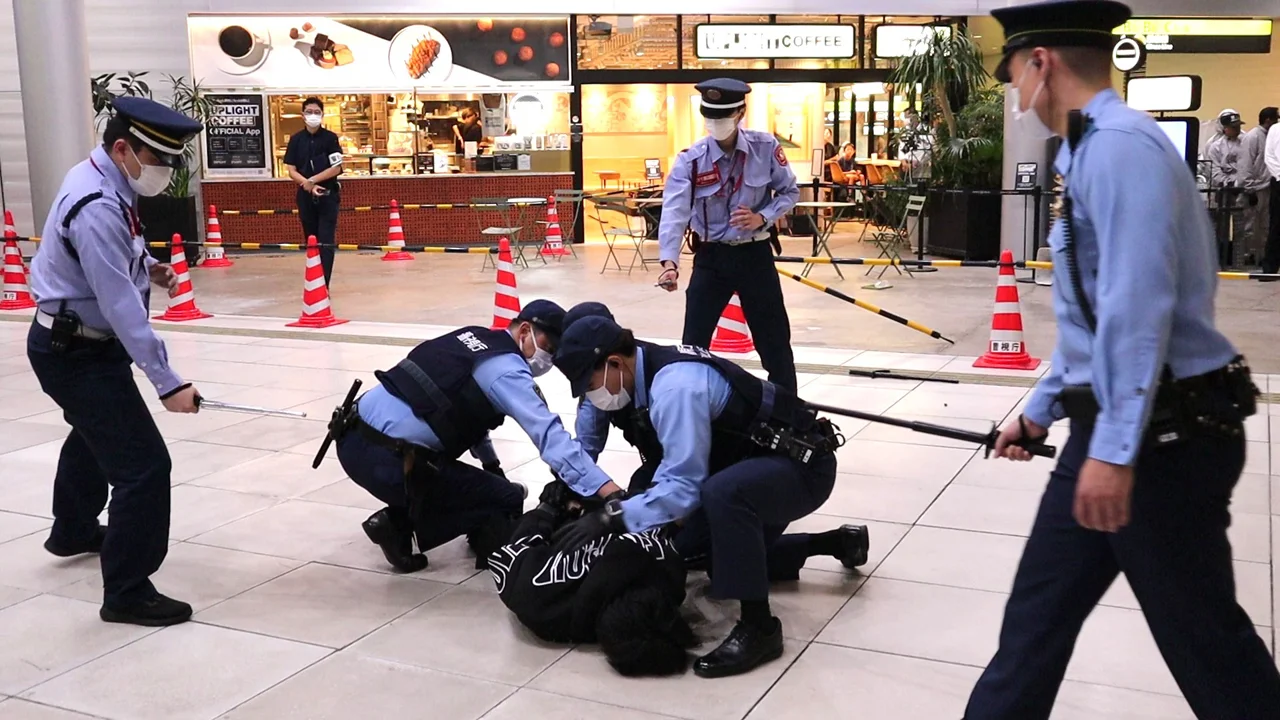
A crime prevention drill conducted in the underground plaza at the east exit (Image provided by Shibuya Station Area Management Association)
We are also advancing initiatives related to safety and security, which are fundamental to the city. In cooperation with the police and security companies, we conduct practical crime prevention drills in front of the station. By deliberately conducting drills simulating chemical terrorism in a place visible to many people, we aim to make visible the stance that "this city is thinking about safety together." Also, at one point, there were incidents in the toilets of the east exit underground plaza where wallets stolen by pickpockets and bag snatchers were flushed down the toilet. As a result of wrapping the toilets with etiquette awareness messages in four languages, such incidents have drastically decreased.
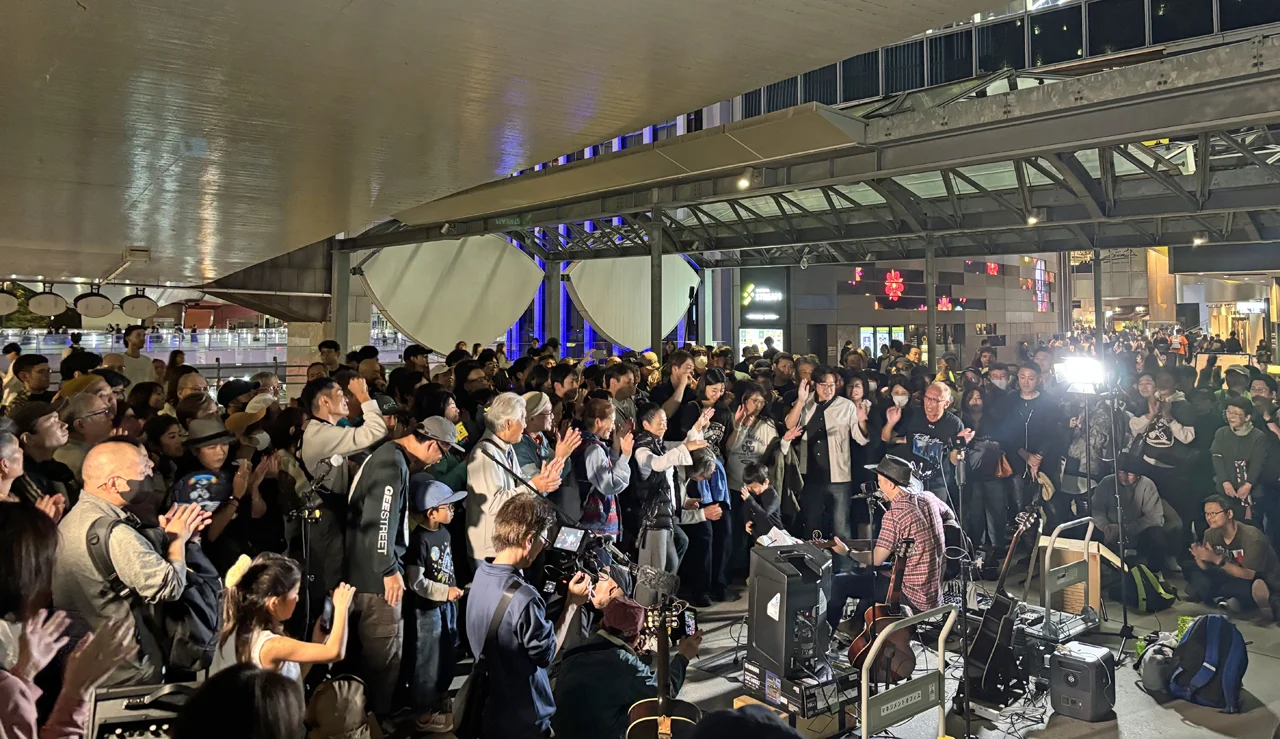
Scenes from the Shibuya Street Live held on the pedestrian walkway across National Route 246 (Image provided by Shibuya Station Area Management Association)
We are also working to create a culture unique to Shibuya. Street music, which was once subject to crackdowns, has now become an official activity as part of the Shibuya Station area management activities, by establishing rules under the name "Shibuya Street Live." Diverse people perform in the underground plaza at the east exit and on the pedestrian deck across National Route 246 connecting SHIBUYA STREAM and SHIBUYA SCRAMBLE SQUARE, creating opportunities for new culture to naturally emerge. In addition, we are involved in various activities such as lighting up the area in front of the station.
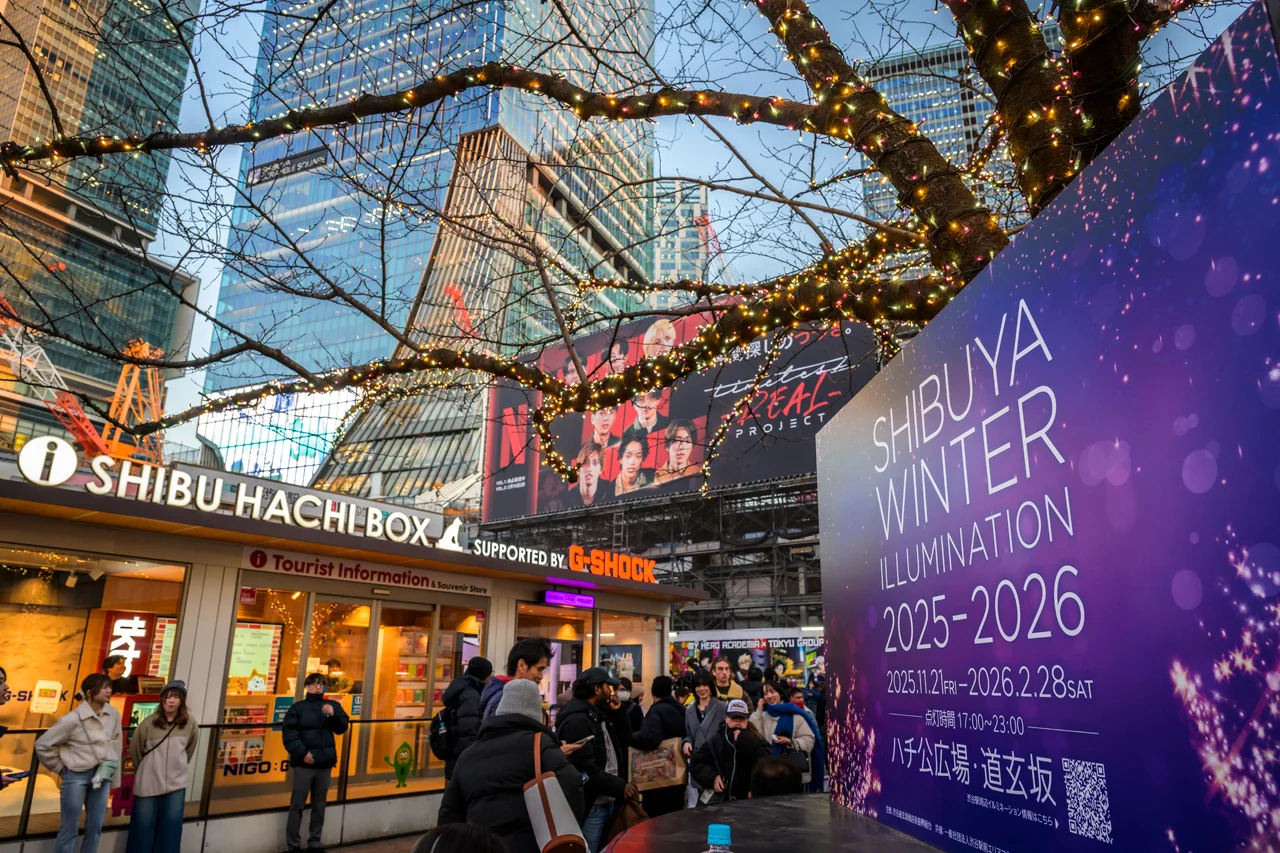
The "SHIBUYA WINTER ILLUMINATION," held every winter at the Hachiko Square in front of Shibuya Station, is also supported by the Shibuya Station Area Management.
A little bit of joy in your busy daily life.
That's what "+FUN" aims for.
You've launched the "SHIBUYA + FUN PROJECT," but could you tell us why you chose "FUN" and "playfulness" as your concepts?
In today's world, everyone is busy, and it's becoming increasingly difficult to find time for leisure in daily life. That's why we want to create opportunities for people to feel "something fun" in unexpected moments. That's why we've adopted "FUN" and "playfulness" as our concepts.
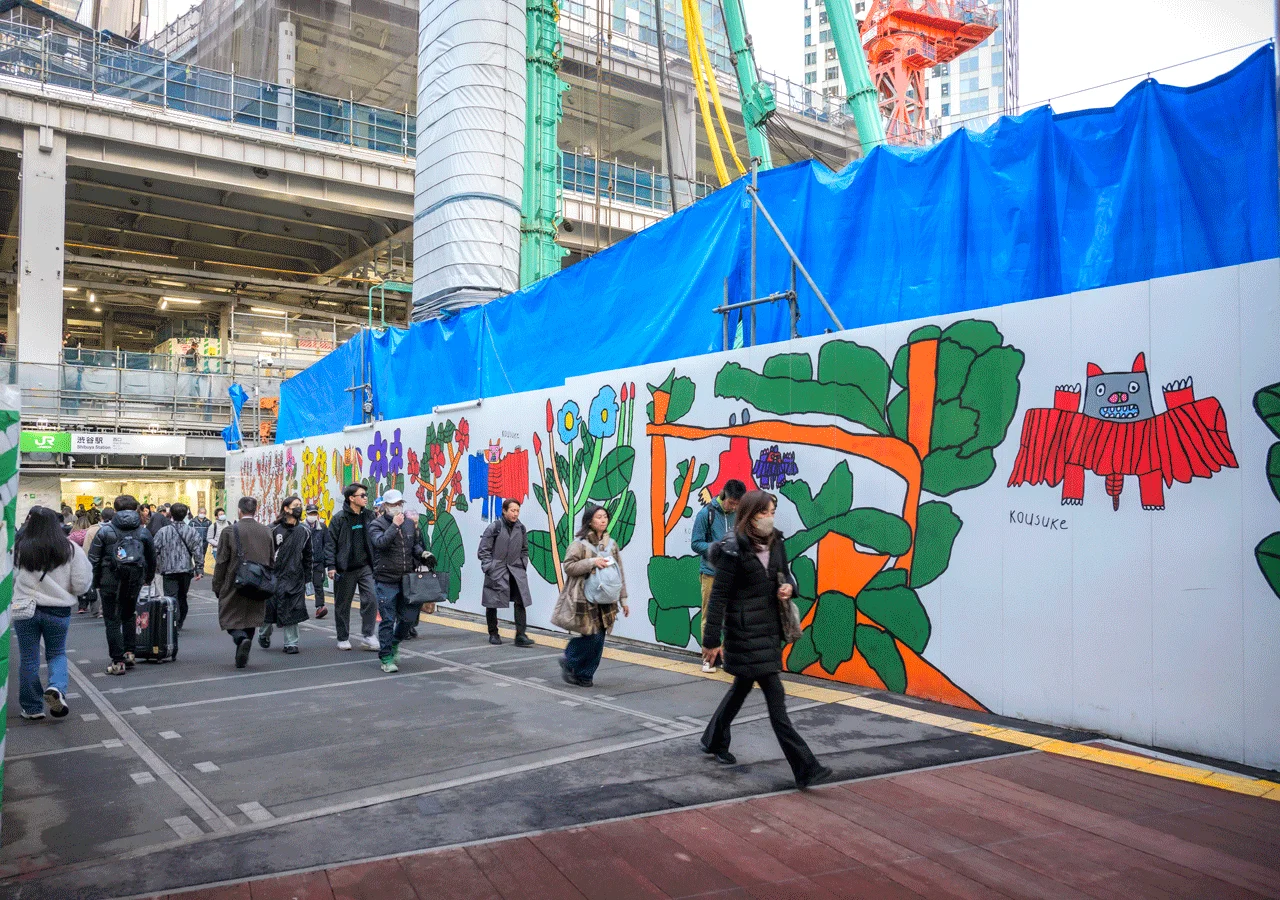
The otherwise sterile construction fence around Shibuya Station has been adorned with wall art, adding vibrant colors and a sense of dynamism.
For example, long-term construction sites associated with urban redevelopment are often perceived as inconvenient and impersonal spaces. So, we're using the temporary fences as canvases to create art installations. It's a small endeavor, but we hope it brings a little bit of joy to everyday routines. We'd be delighted if people who resonate with this initiative were to move from being audience members to creating their own art. That's certainly not an easy task, but we believe that Shibuya offers a stage where such challenges can be pursued with greater freedom.
While the existence of Shibuya Station Area Management isn't necessarily widely known, I believe that being a behind-the-scenes force is sufficient. Ideally, the term "+FUN" would become more widespread, and people would naturally associate it with the idea that "something interesting is happening here."
Shibuya is a city where no one ever "graduates."
You can continue to take on challenges even if your position or age changes.
What kind of city do you think Shibuya should become in the future?
My visit to Melbourne, Australia, two years ago provided me with great inspiration when considering the future of Shibuya. It was a vibrant city where music and art were naturally integrated into everyday life.
What impressed me most was the graffiti that adorns the city. There was a time when the Melbourne government tried to remove the ever-increasing amount of graffiti. However, citizens opposed this, saying that "inclusiveness of the vulnerable is the soul of Australia," and as a result, they chose to leave it as it was by establishing rules. Now, that graffiti has transformed dark alleyways into bright and attractive tourist spots. Street performances are also by registration, creating an environment where performers can play freely under certain regulations. I was also impressed by the high level of environmental awareness. There are water refill stations everywhere in the city, and everyone carries their own water bottle. Seeing this, I strongly felt that "this should be adopted in Shibuya as well."
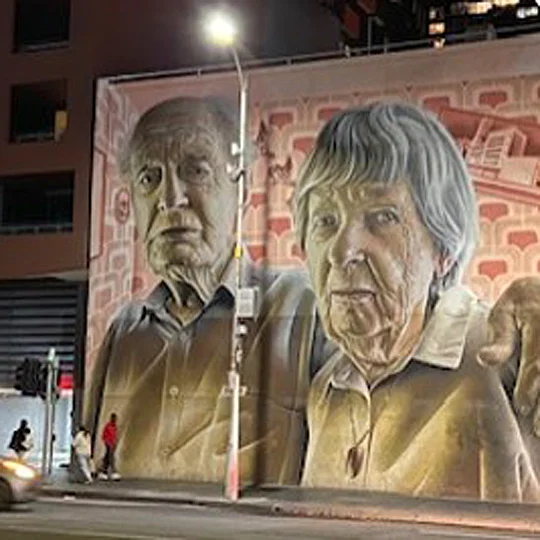
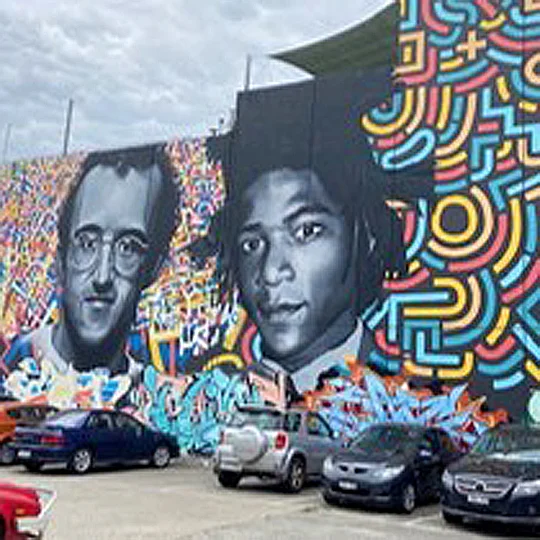
Graffiti overflowing in the streets of Melbourne (Image courtesy of Shibuya Station Area Management Association)
Prioritizing the economy and measuring wealth by GDP is one way of thinking. However, when we consider what true happiness is, isn't it not just about the amount of money one has, but also about the experiences one has and the way one spends their time? I feel that a society that doesn't cherish values such as music and art being readily available, and environmental considerations naturally integrated into daily life, cannot truly become a "cool country" or a "cool city."
Shibuya naturally attracts people who appreciate those values. It's not just for the money; it's a place where people with a strong desire to pursue music or express themselves come seeking a platform to challenge themselves. Our goal is to create a stage that embraces that energy and generate opportunities through area management mechanisms.
After the redevelopment is complete, what role do you think Shibuya Station area management should play?
We believe that we should take on a more central role in urban management once the redevelopment is complete. Our real role begins when we proactively manage the city after the hardware is finished. For example, the government is promoting the utilization of road space under the "Hokomichi" (pedestrian-friendly road) system, but its implementation is still insufficient. Shibuya Station Area Management aims to be at the forefront of this effort, building a track record and trust with the police and administration, and enabling initiatives that were previously difficult to implement.
In this city, a cycle has emerged that could be called the "Shibuya-style urban life," where work, living, and play are all integrated. New ideas and challenges are constantly being born from the fields of play. In Shibuya, there's a feeling that there's no such thing as "graduating" from it. People who played here when they were young come back as adults and start something new again. I myself have been involved with this city for nearly 50 years now. Shibuya may be a city where you can continue to take on challenges no matter how your position or age changes. That's why I believe that the completion of the physical infrastructure through redevelopment is merely a new starting point.
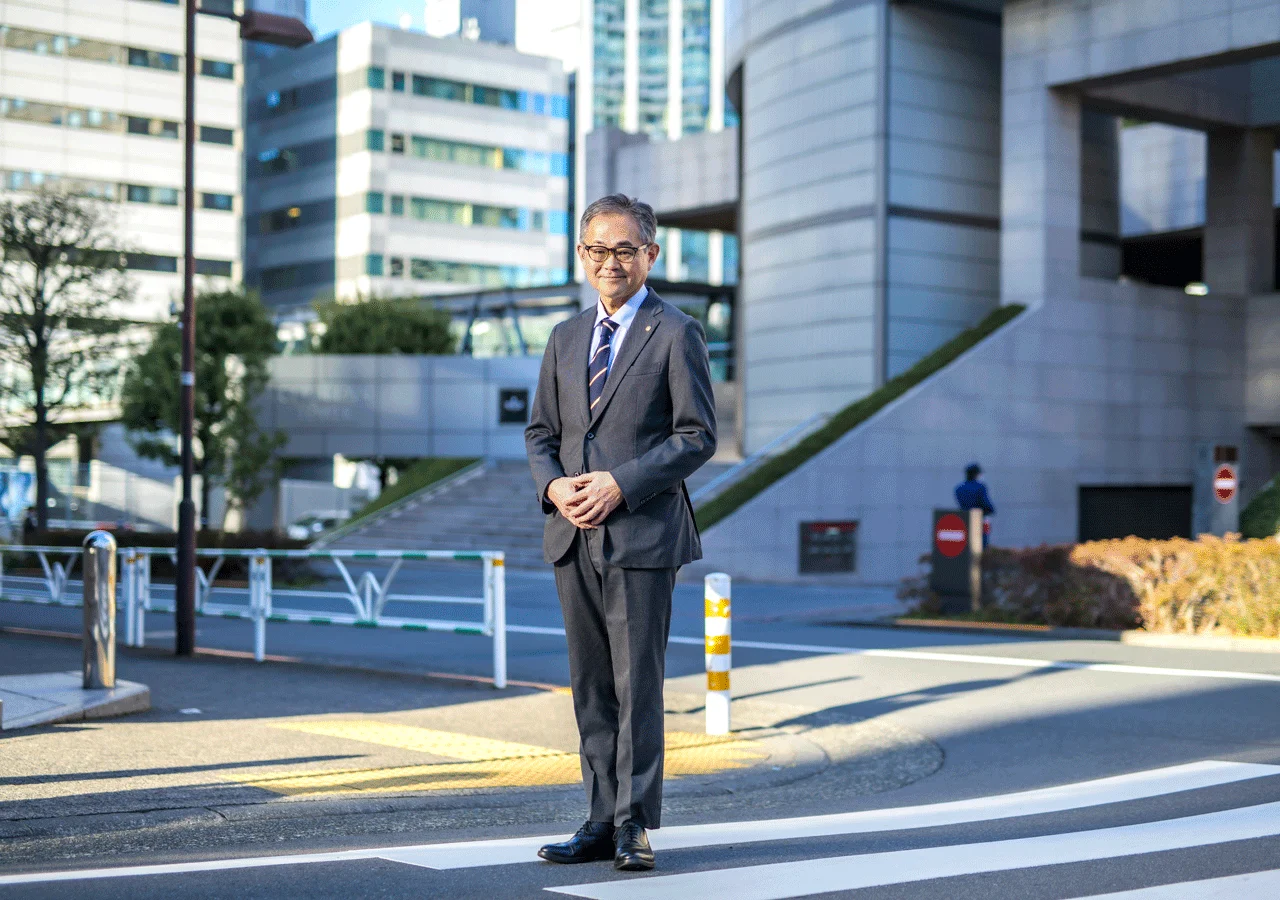
Interview and writing: Ryota Ninomiya / Photography: Osamu Matsuba
Featured articles on the site
西武渋谷店、58年の歴史に幕 「シブヤ」をつくった百貨店、最後のシャッター

渋谷の肉料理おすすめ5選! 渋谷在勤・かごさんが厳選するお店を紹介
[Shibuya Scenery Records Vol. 2] The "Onko Gakkai Kaikan" continues to preserve the legacy of blind scholar Hanawa Hokiichi