

SHIBUY.A. × WATCH
![[Report] Art exhibition at Shibuya Hikarie that encourages "play": Giant board game and table tennis with pots that make noise.](https://biz.shibuyabunka.com/storage/images/watch/1787381089_wide.webp)
[Report] Art exhibition at Shibuya Hikarie that encourages "play": Giant board game and table tennis with pots that make noise.
2026-08-22
SHARE
The experiential event "SHIBUYA WANDERING CRAFT 2026" began on August 22nd at "Creative Space 8/" on the 8th floor Shibuya Hikarie.
This event is an annual tradition that has been running since 2014. Each facility on the 8th floor will present exhibitions, talks, workshops, and more, all based on a common theme. This year's theme is "Stay and Belonging," and it will explore the question, "What kind of place allows you to be yourself, born from a fulfilling stay?"
The main event is "Hara Rintaro + Hara Yu Interactive Art 'Summer Kids are Like Bees. City Kids are Like Spheres!'" held at the event space "8/COURT" and the adjacent gallery "8/CUBE". Artist unit Hara Rintaro + Hara Yu will present interactive works such as a giant board game and a ping pong table.
Hara and his partner have been working together as a unit for 17-18 years. They have presented experiential works both domestically and internationally, including at the Echigo-Tsumari Art Triennale and the Setouchi International Art Festival. Rintaro was creating kinetic art using motors and light, while Yu was creating paintings, but they began combining their techniques after working on a large-scale project. Currently, they focus on "play" and create many works that incorporate the culture and history of the local area.
Playing "Figure-Eight Sugoroku" in the streets of Shibuya
The latest creation is "Shibuya Figure-Eight Sugoroku (a type of board game)." It's a giant board game where players walk around on squares laid out on the floor, like game pieces.
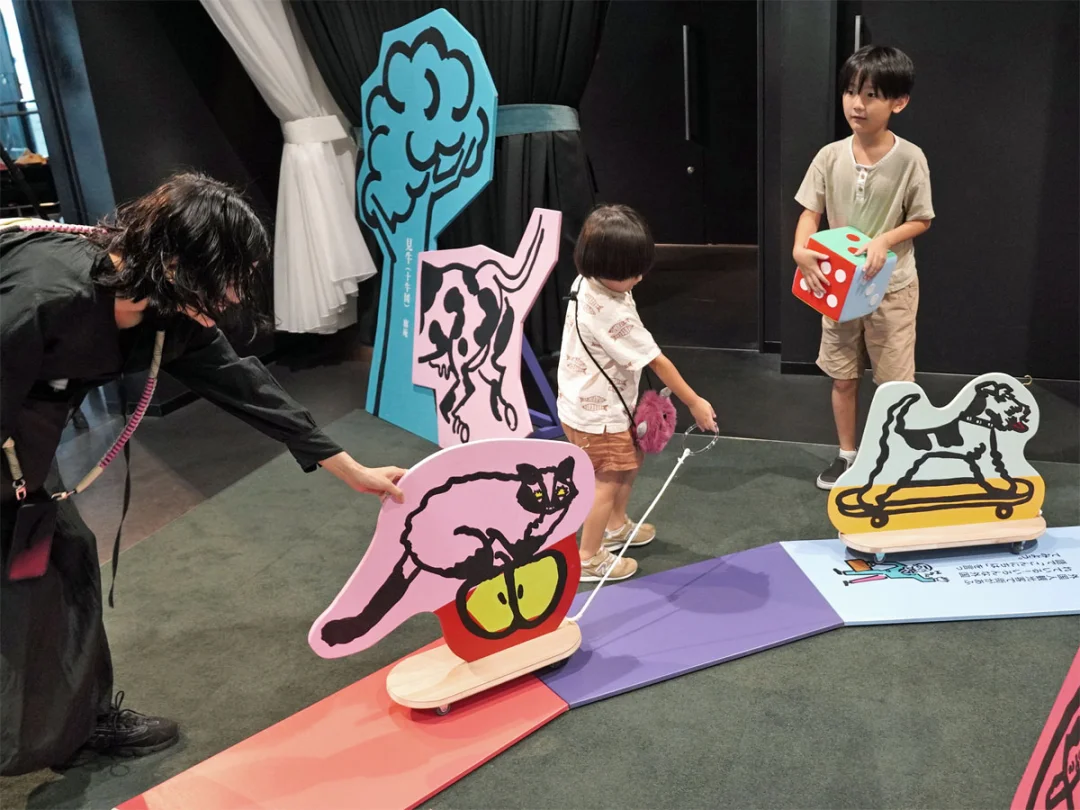
Children playing "Sugoroku" (a Japanese board game)
When asked why he chose "8 (hachi)" as the motif, Rintaro said, "This is on the 8th floor and it's called 'Creative Space 8/', and Hachiko is also nearby. If you turn 8 on its side it becomes infinity, and there's also the insect bee. When I was thinking about a board game in Shibuya, it just popped into my head."
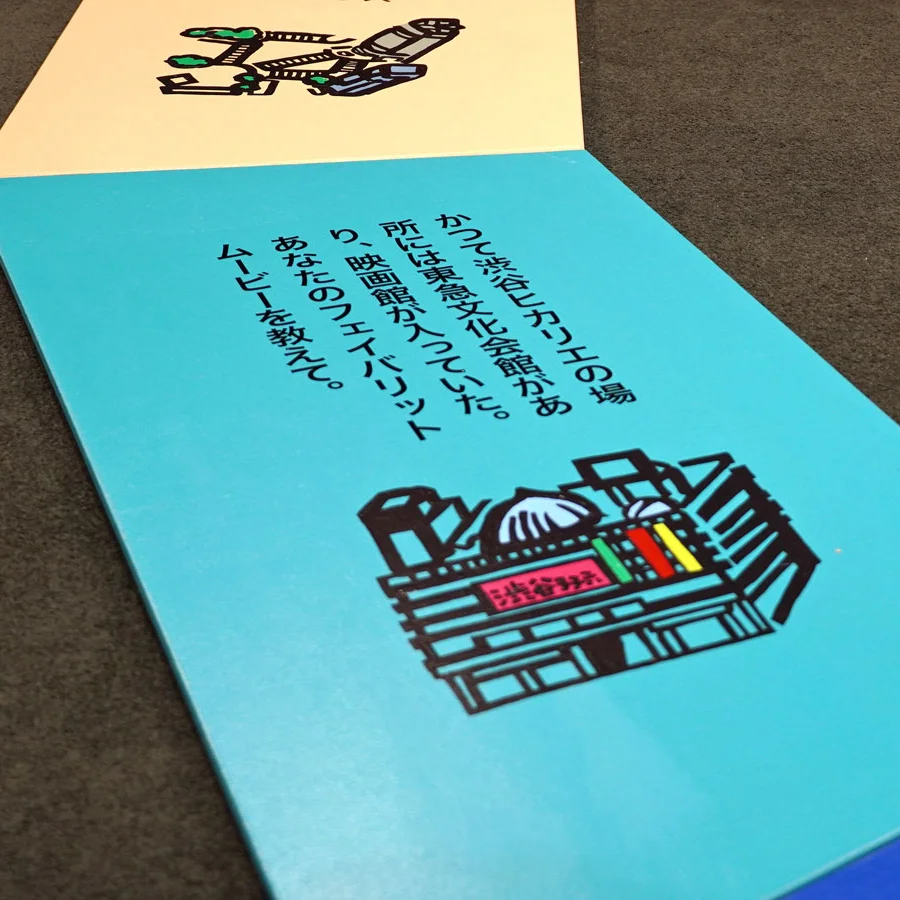
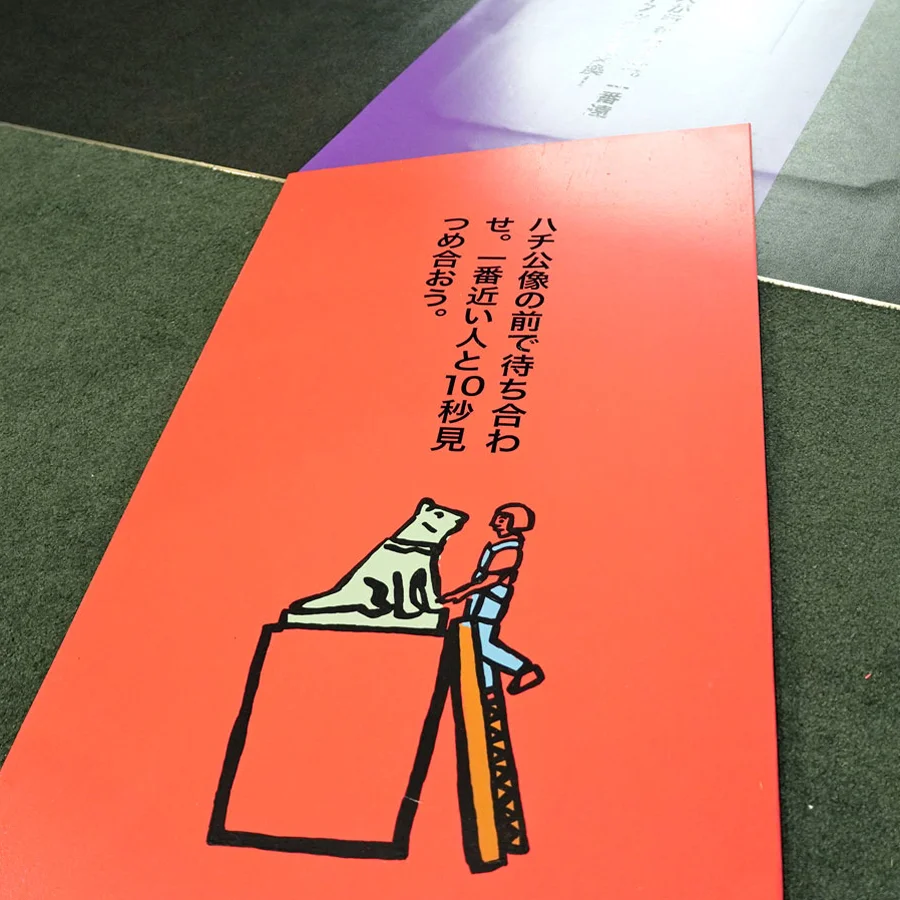
Game pieces for a board game with content and instructions related to Shibuya.
The game incorporates over a dozen instructions related to Shibuya, such as the Shibuya Scramble Crossing, Spanish Hill, and the Hachiko statue. In addition to content that teaches about the city, there are also activities that involve physical movement, such as using a hula hoop and a kendama (cup-and-ball game).
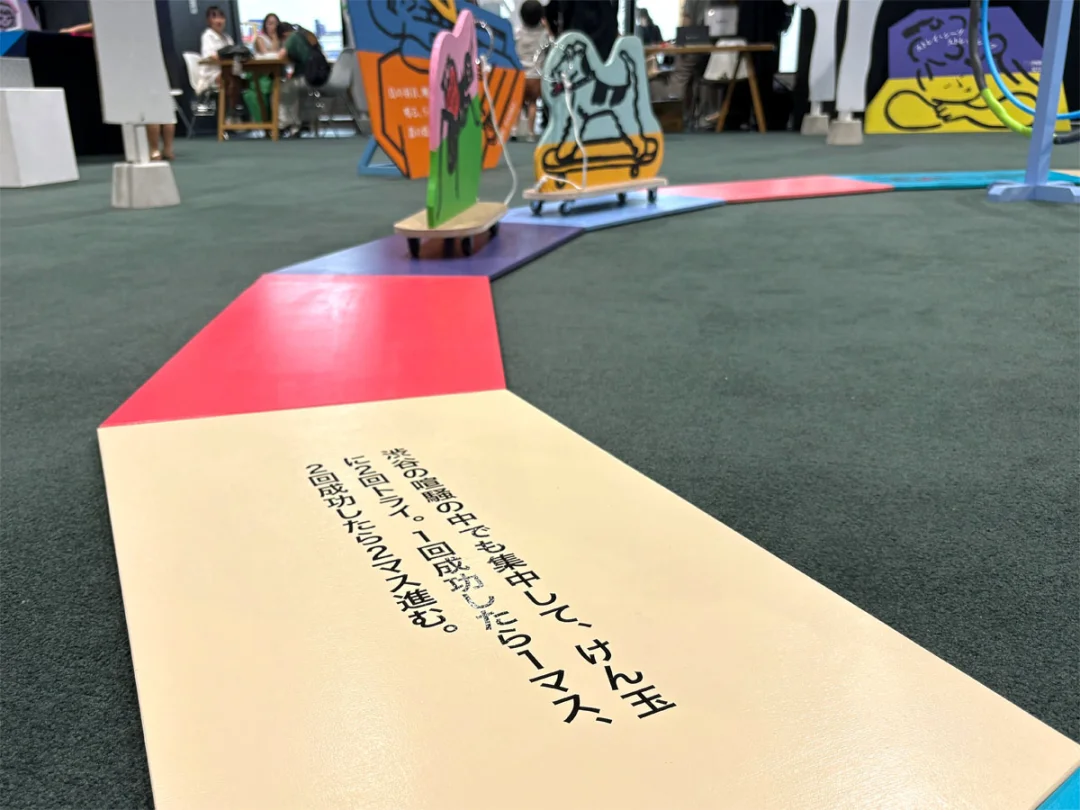
The game pieces are small paintings depicting creatures that inhabit Tokyo, such as ants, raccoons, hawks, and dogs. Participants hold a leash for their chosen creature and move forward, "taking them for a walk" according to the roll of the dice.
Rintaro said, "If someone suddenly asked me to do a hula hoop in a normal place, I'd be embarrassed. But within the rules of a board game, I can do it naturally."
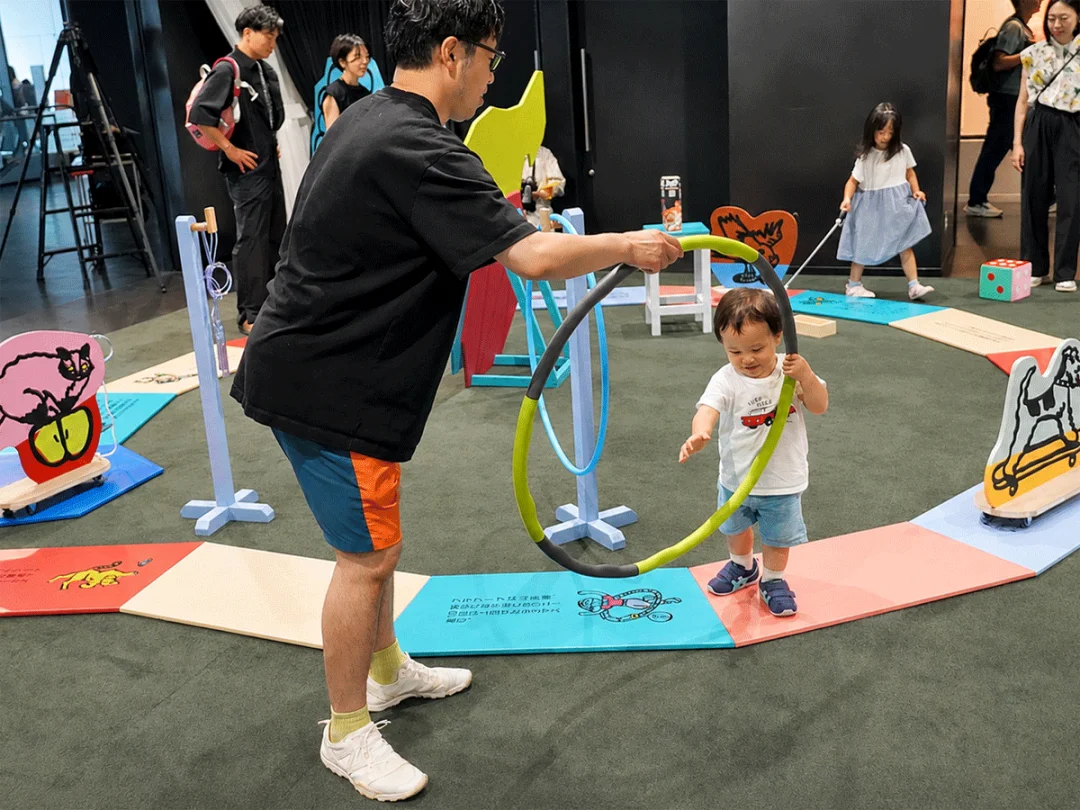
Parent-child communication will naturally develop.
He says that what he aims for with his work is not so much winning or losing, but the time that is created between people. "Whether it's between parents and children or friends, I hope that people will communicate with each other there. I hope that not only the artwork itself, but also the atmosphere and scenery created in that space will become art."
Table tennis with the sound of a pot banging, table tennis played by three people.
The venue also features table tennis artworks that represent Hara and his colleagues. The series began in 2019 when they were asked to "create a table tennis hall" on Megijima Island in Kagawa Prefecture for the Setouchi Triennale, and they have since created more than a dozen pieces.
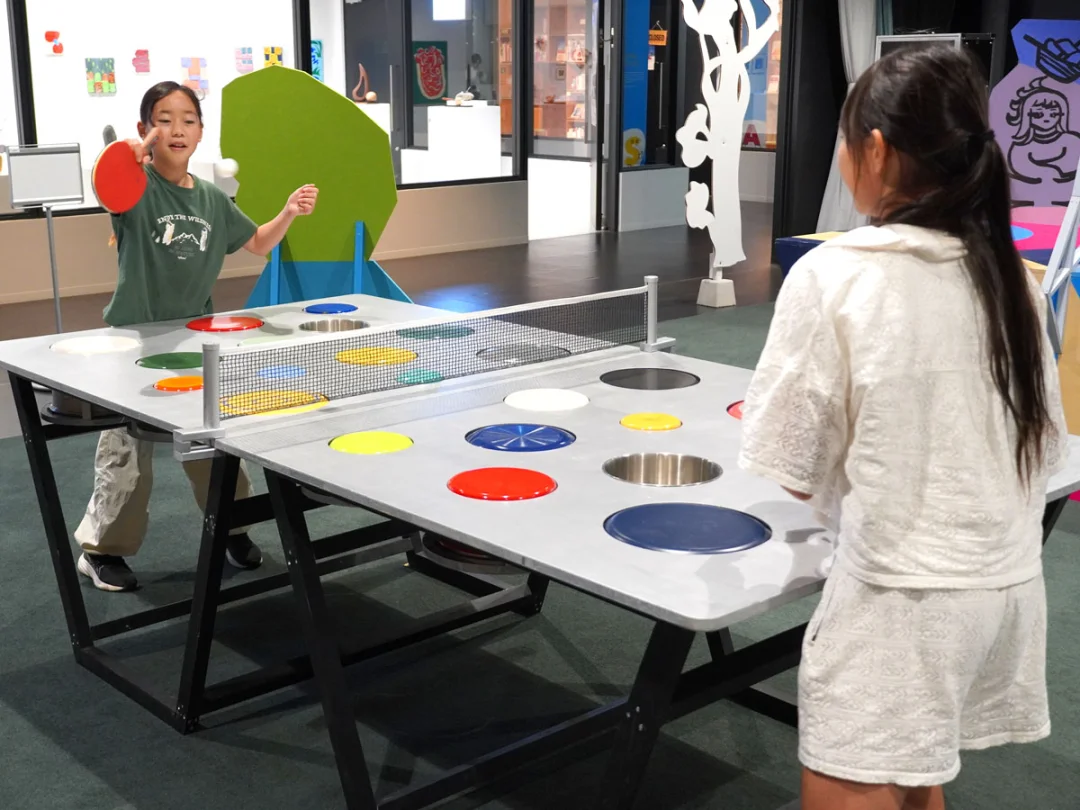
"Ping Pong Pan!" features colorful pots of various sizes embedded in the wall, reminiscent of pop art.
"Ping Pong Pan!" is a piece of artwork that attaches various sizes of pots to a ping pong table. When the ball hits a pot, it makes a different sound depending on the material and size of the pot.
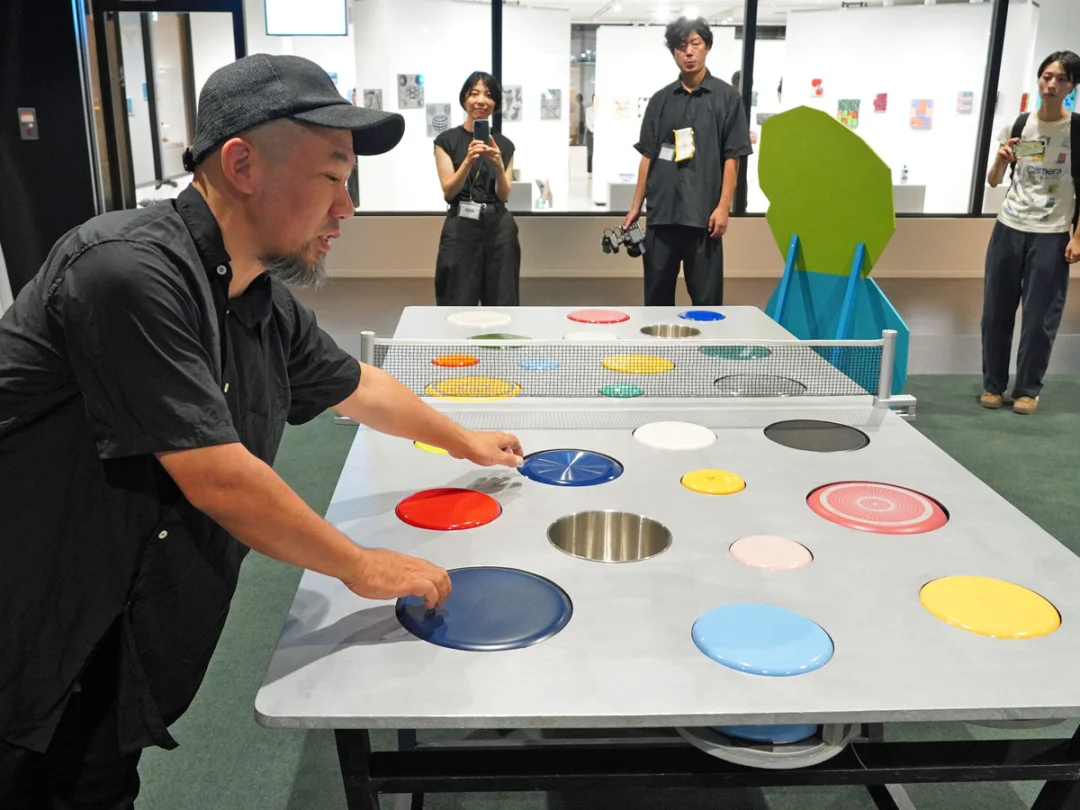
"I've tried various pots and pans, and enamel is the best. Aluminum ones don't make a very nice sound," explains Rintaro.
"I took a ping pong ball to a pot shop and checked the sound of each one. I was mistaken for a suspicious person (laughs)," said Rintaro, explaining that he attached more than 20 pots to the piece.
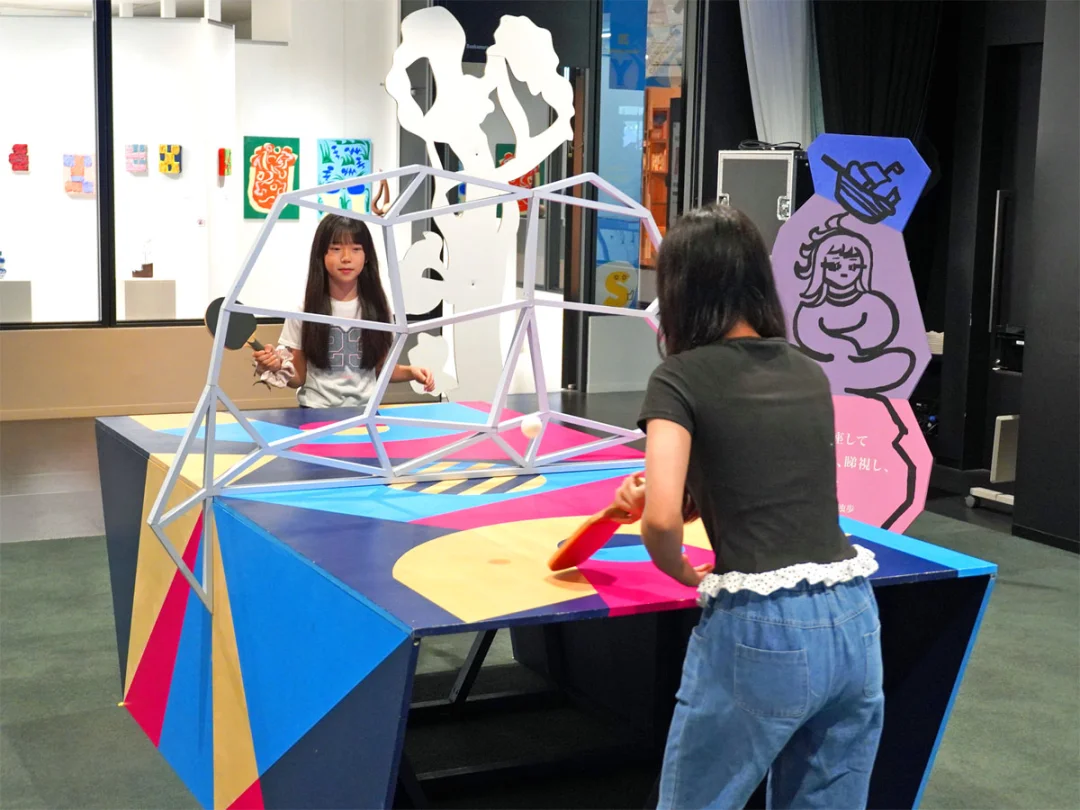
The "Geosymmetric Ping Pong" table features a distinctive geometric pattern.
The adjacent ping pong table, "Geometric Ping Pong," is a work created for the 2020 Roppongi Art Night. Although it couldn't be displayed at the time due to the cancellation of the event because of the spread of COVID-19, its design, which combines vibrant colors and geometric patterns, is eye-catching. The polygonal net in the center is designed so that the ball can pass through both the top and the middle.
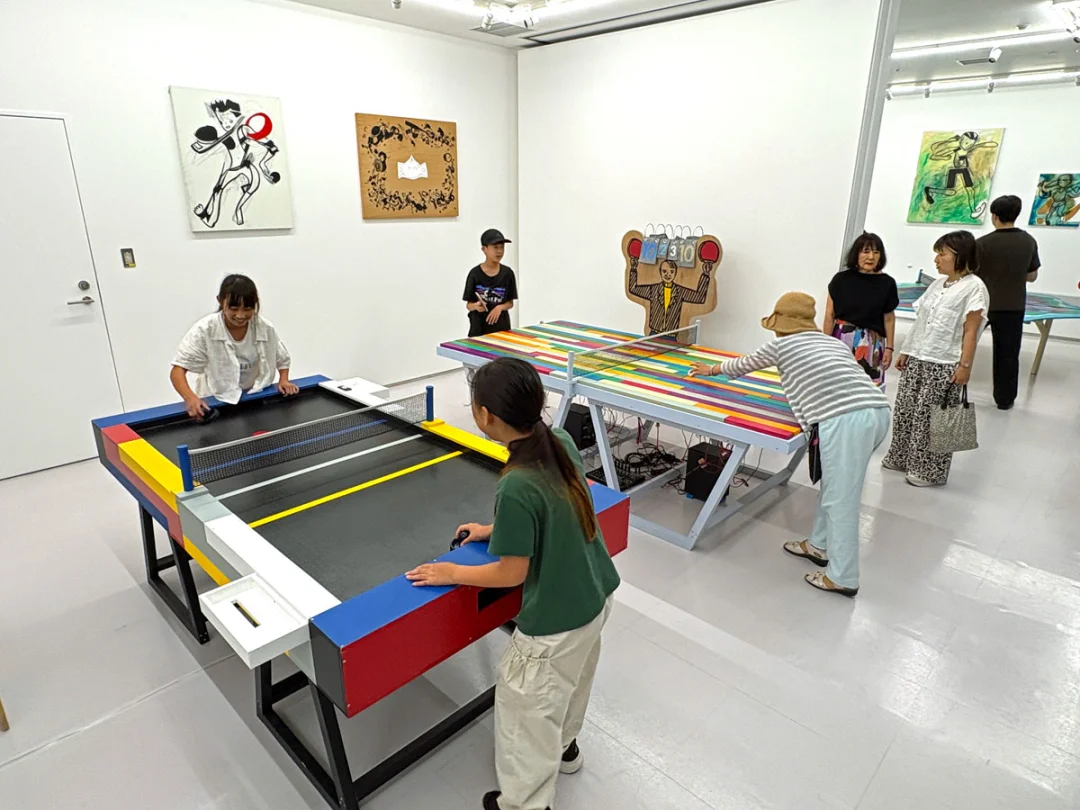
Left: A table tennis table called "Air Hockey (De Stijl)". Designed in red, blue/yellow, white/black/gray, based on the principles of the Dutch art movement "De Stijl". Right: "Marimba Ping Pong", which produces different sounds depending on the length of the paddles. A contact microphone is attached to the bottom of the table, and a sound is emitted each time the ball hits the xylophone.
Furthermore, the gallery "8/CUBE" also features works such as "Marimba Ping Pong," which produces a xylophone-like sound, and "Air Hockey (De Stijl)," a piece that allows you to enjoy air hockey and table tennis alternately.
"Musashino Three-Player Table Tennis" is a table tennis game where three people play together, keeping one ball in play. It is based on Kunikida Doppo's novel "Musashino" and features illustrations of familiar animals such as raccoons and cats. Yu says, "Since there are three of us, it's more about working together to keep the ball in play rather than winning or losing. We've also lowered the table to make it easier for children to participate."
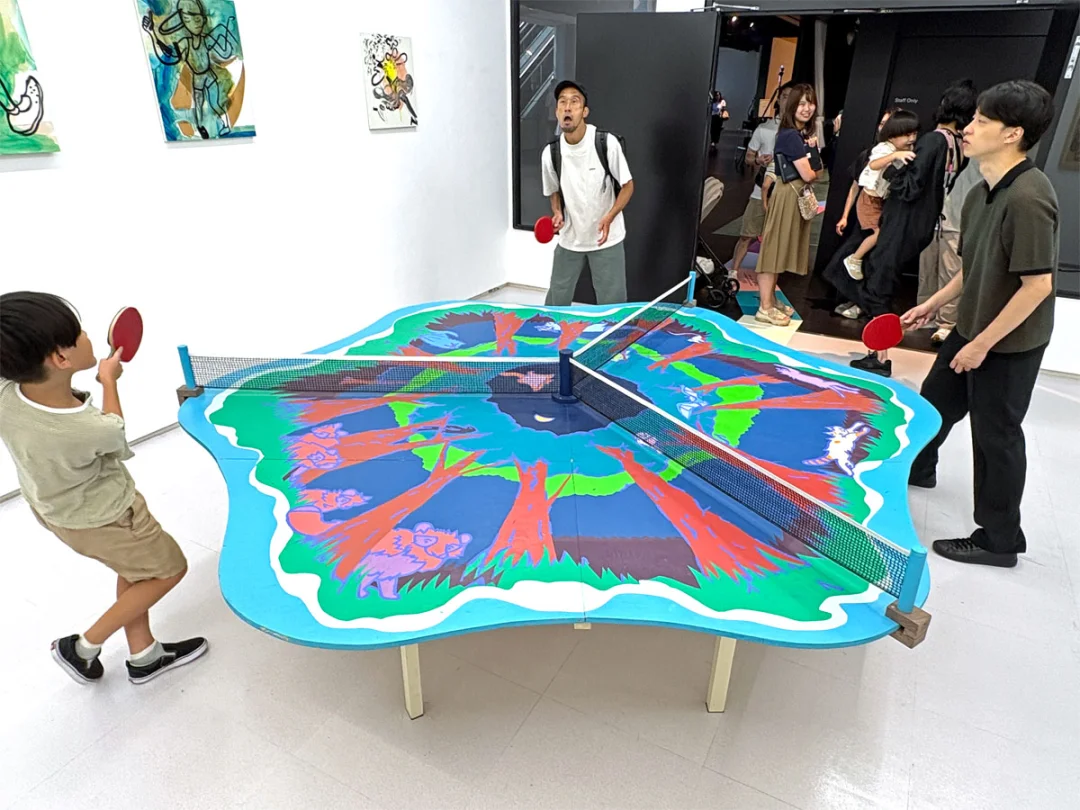
"Musashino 3-Player Table Tennis" is a game that adults and children can enjoy together. The game incorporates tricks that make it appear as if animals living in the Musashino forest are reflected on the surface of a lake, or as if they are looking up from the bottom of the lake.
An interactive art space to explore while playing.
This exhibition also incorporates ingenious methods to create a continuous space between "8/COURT" and "8/CUBE." Upon seeing the green floor of 8/COURT, Rintaro said, "I thought it would become a space that's a little like a forest," and he placed tree-like objects and artworks there. This creates a flow that allows visitors to wander around playfully and naturally enter the adjacent gallery.
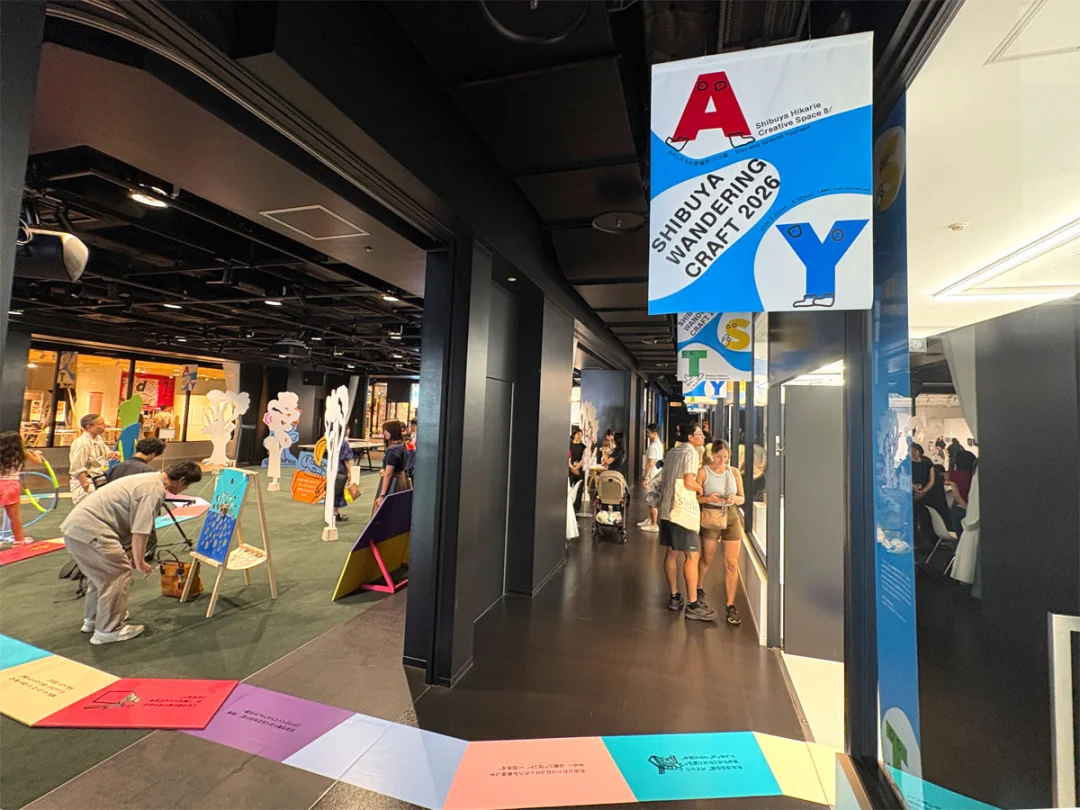
The venue layout connects the two locations using a board game (sugoroku), encouraging visitors to move around naturally.
They also offer a self-workshop called "Sticky Bug Collection," where participants create insects by combining paper and attach them to trees with "Sticky Bug" adhesive. As more participants join, the trees become adorned with a variety of colorful insects.
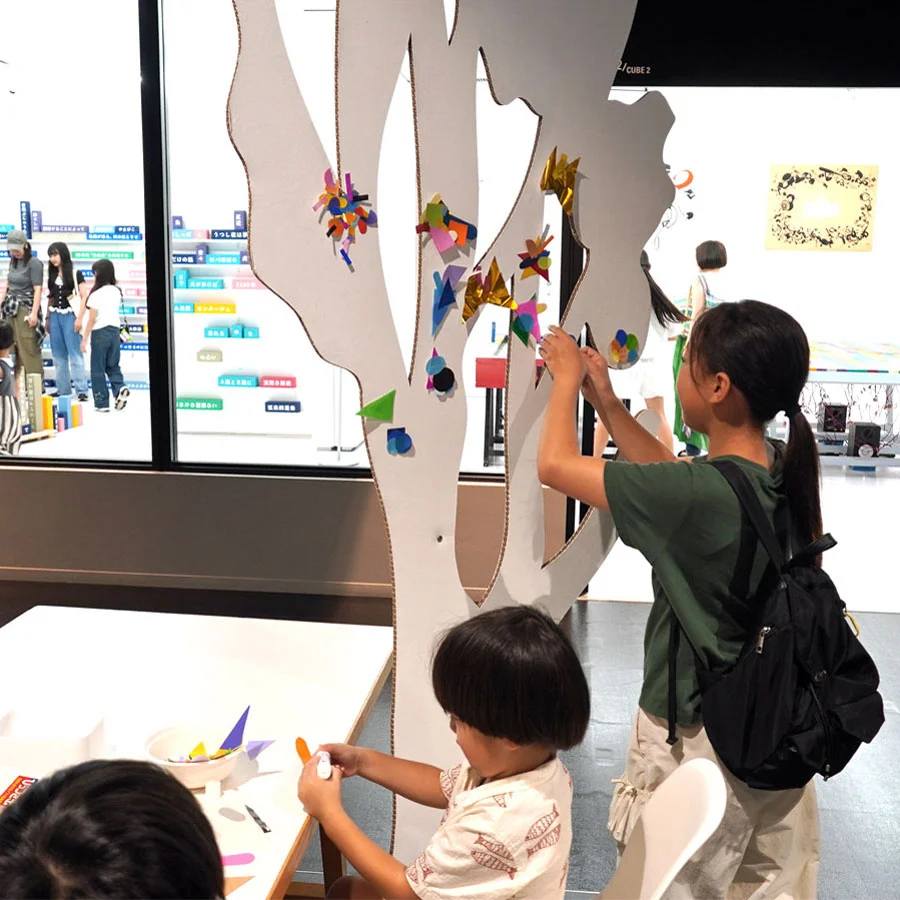
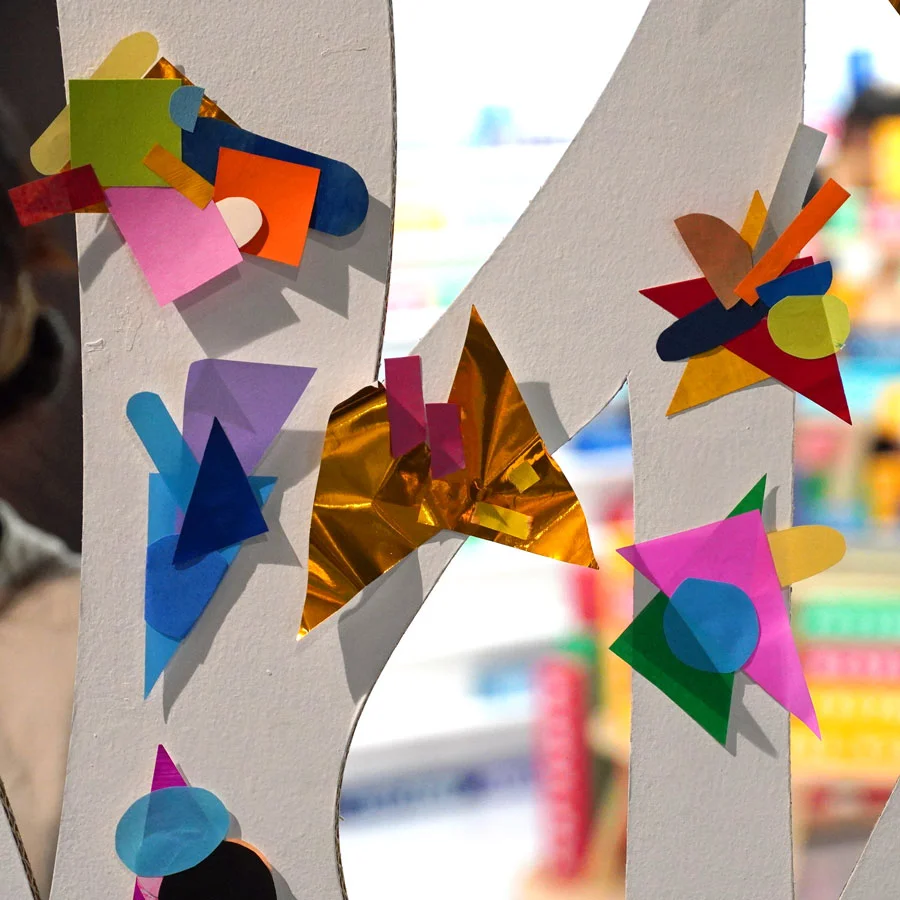
The more insects the participants create, the more colorful the tree becomes. The "sticky insect tree" grows into a vibrant spectacle.
"The workshop was designed with children in mind, but adults are enjoying it quite a bit too," said Yu.
Further inside the space, there will be an exhibit called "Logos Garden," which uses approximately 500 building blocks.
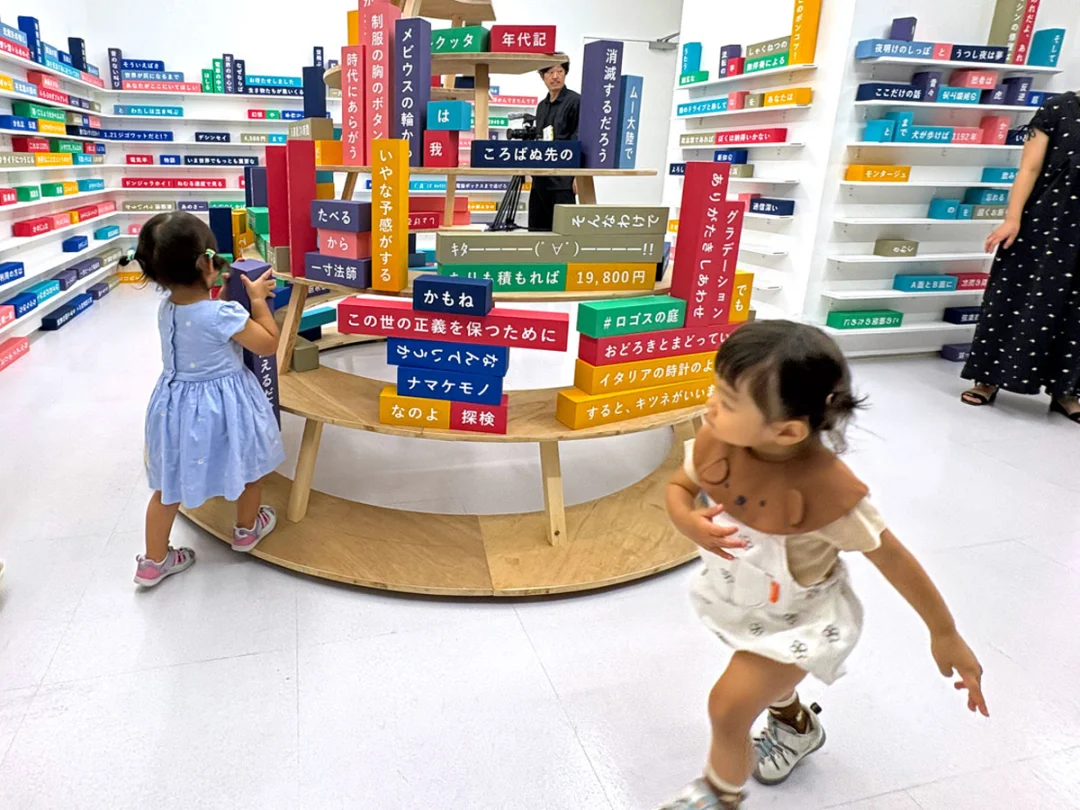
"Logos Garden" is an interactive artwork where you can freely combine "word blocks" to enjoy the experience.
The building blocks are inscribed with words picked up from movies, books, and radio, as well as everyday words seen in the city, such as "parking lot" and "lunchtime." Participants freely combine the blocks to create sentences and towers of words.
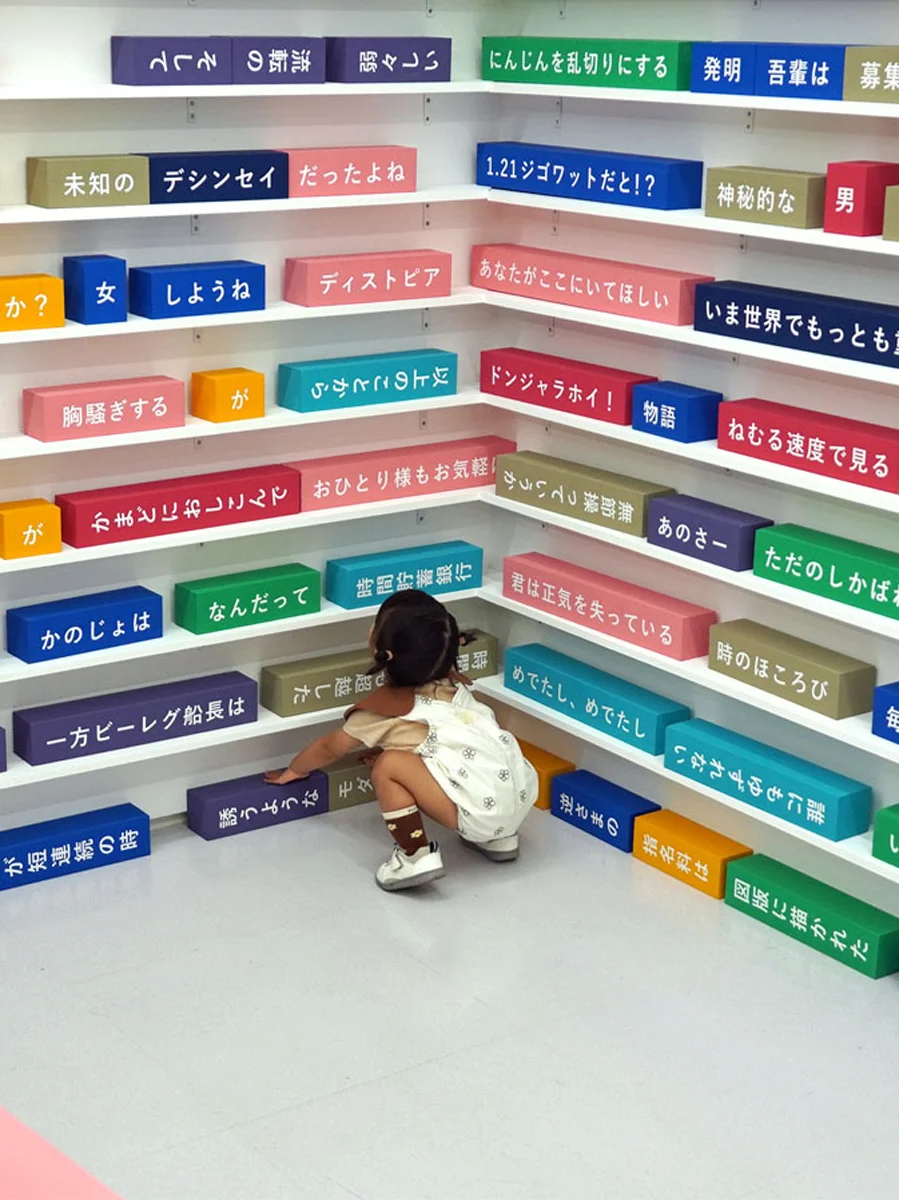
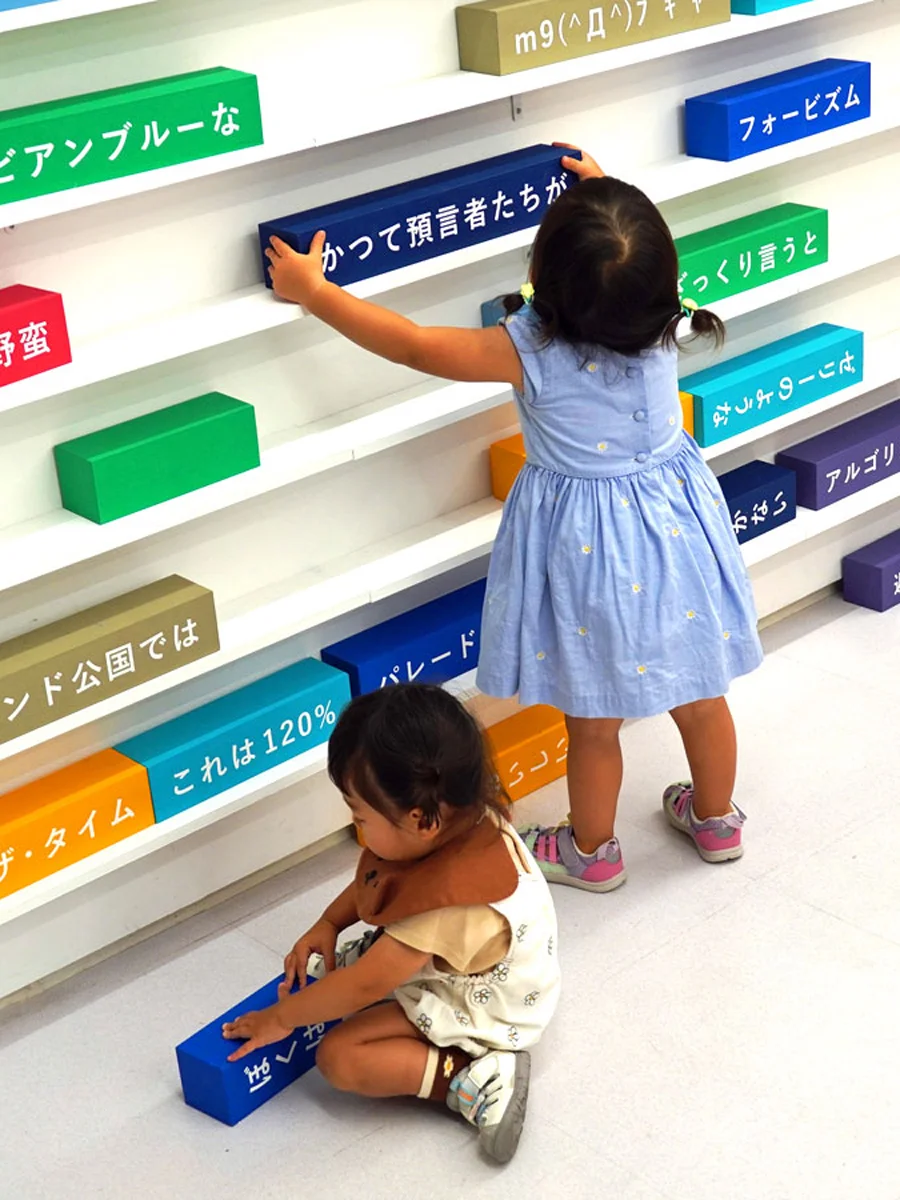
The artwork was born from a solo exhibition inspired by the "Tower of Babel" from the Old Testament. Rintaro explains, "When you combine words, surreal or unexpected meanings emerge. It's a work that people can not only look at, but also play with by combining the words themselves."
Showcasing rural experiences in the "urban heart of the city"
For Hara and his friends, Shibuya is a familiar place. Yu has been visiting since childhood because her parents' company was located in Shibuya, and Rintaro also commuted to Shibuya from Yokohama on the Tokyu Toyoko Line. "Watching movies at the Tokyu Culture Hall, going around to independent theaters, and visiting Tower Records and Parco Book Center was our regular routine," he recalls.
In recent years, he has been active mostly in rural areas such as Echigo-Tsumari and Setouchi, so he says about this exhibition, "It's challenging to be able to showcase the experiences I've cultivated in rural areas in the heart of the city."
Rintaro says he sees potential in developing his work in commercial facilities. "The playgrounds that companies usually create within facilities are designed for 'playing,' so the starting point is different. We start from the context of art and incorporate play into it. Unlike functional and highly polished play equipment, ours are a little looser and have some room for error. That's where the diversity and flexibility unique to art comes in," says Rintaro.
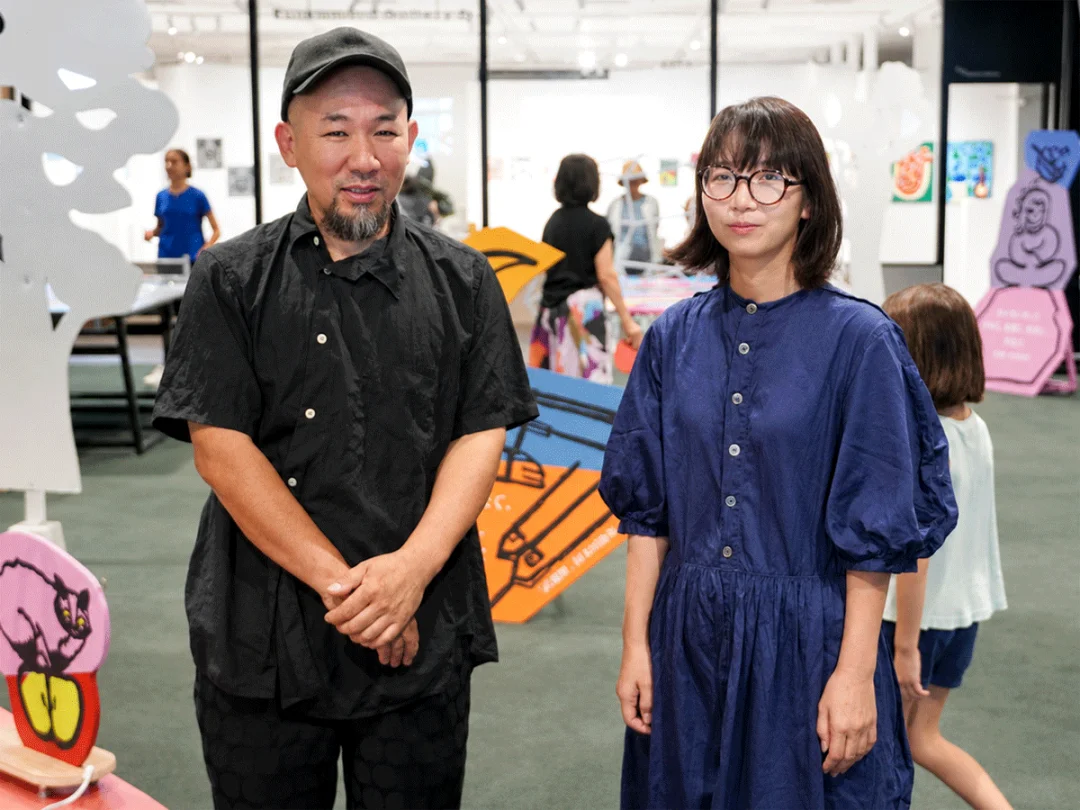
From left: Rintaro Hara, Yu Hara
Each piece incorporates elements connected to culture, history, and literature. The slightly uneven and spacious "playgrounds," created by the artists' handiwork, are what differentiate them from typical playgrounds. "Currently, we are exhibiting a 15-meter-long water-based artwork in a commercial facility in Taiwan. I expect that opportunities for this kind of experiential art to enter urban commercial facilities will increase even further in the future," he says, expressing his hopes.
Finally, Rintaro said, "Our work has a very broad appeal, from preschoolers to adults. Parents and children can play together, and sometimes strangers meet through three-person table tennis. We want people of all generations to experience it." Yu added, "It's too hot to play outside right now, so I think it would be good to have more places like this in the city," urging people to come.
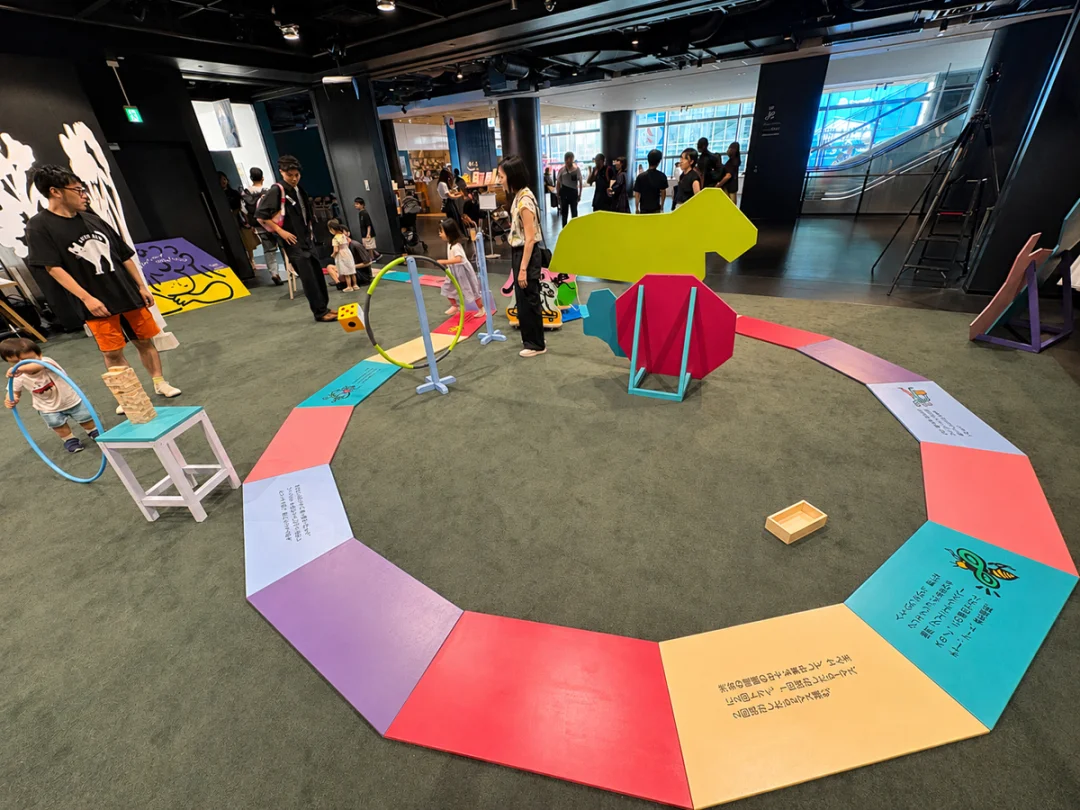
Beyond simply "looking" at the artwork, Hara and his colleagues view the temporary landscapes that emerge from these interactions—the connections between people—as art itself.
The event runs until August 30th. Participation is free.
Venue
Editorial Department: Takashi Fujii
Shibuya registrar. In addition to Shibuya of Culture information, seasonal news and topics, it will spell write that feel every day.
Genres within watch
Articles in the same genre
2026-10-01〜
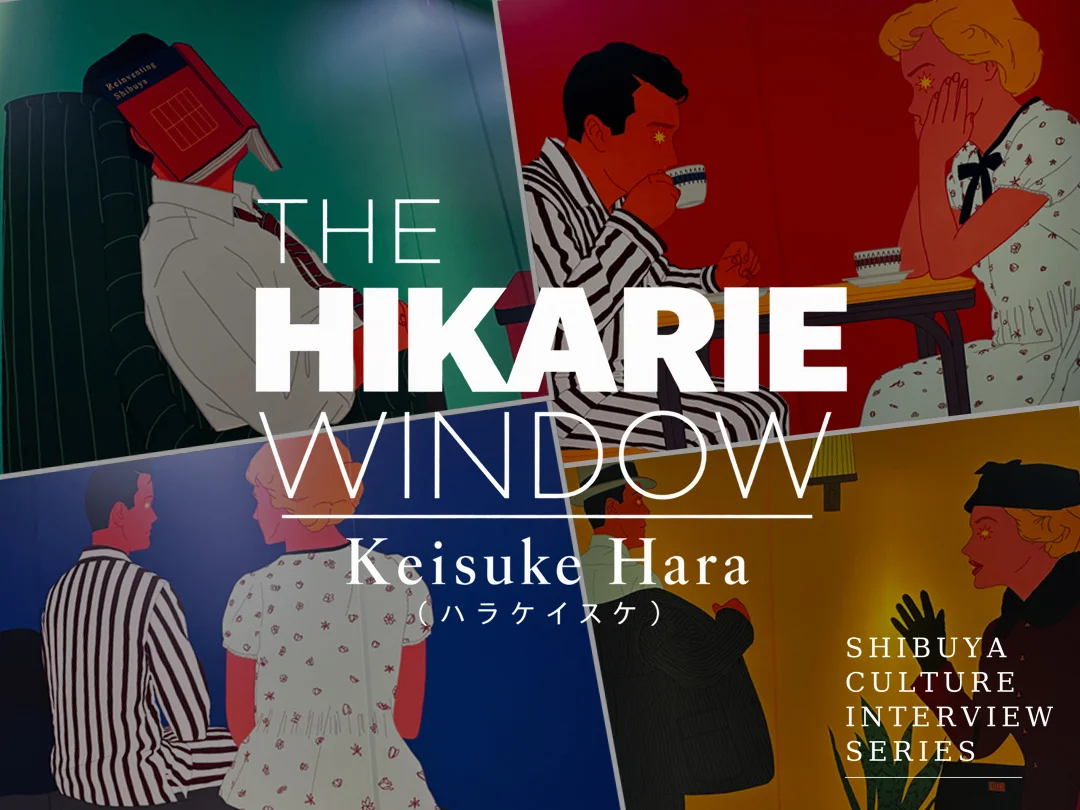
THE HIKARIE WINDOW / Keisuke Hara ― 変わり続ける渋谷と、日常のリズム
2026-07-08〜
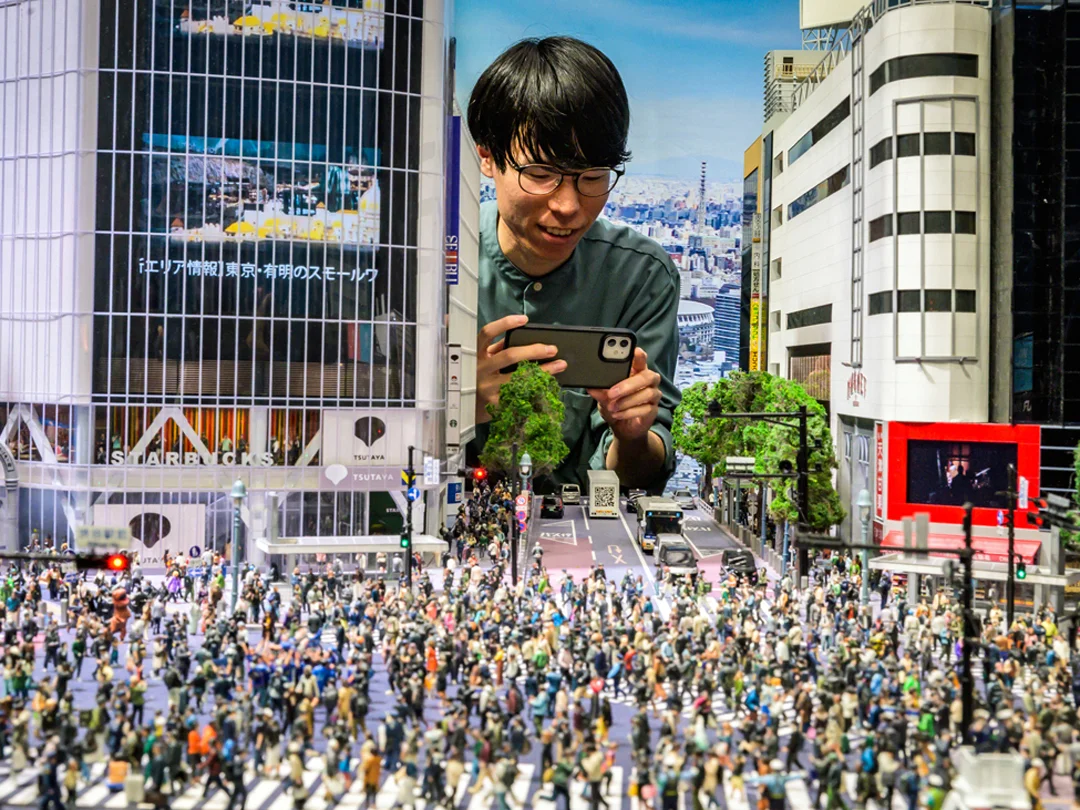
A 1/80 scale diorama of Shibuya is born: Urban modeler Yu Irimajiri talks about the charm of Shibuya.
![[Report] Yuriko Takagi Photo Exhibition at Shibuya Bunkamura: Approximately 100 works on display, depicting a journey through nomadic "villages."](https://biz.shibuyabunka.com/storage/images/watch//1773409167.jpg)
2026-03-14〜
[Report] Yuriko Takagi Photo Exhibition at Shibuya Bunkamura: Approximately 100 works on display, depicting a journey through nomadic "villages."
2026-01-06〜
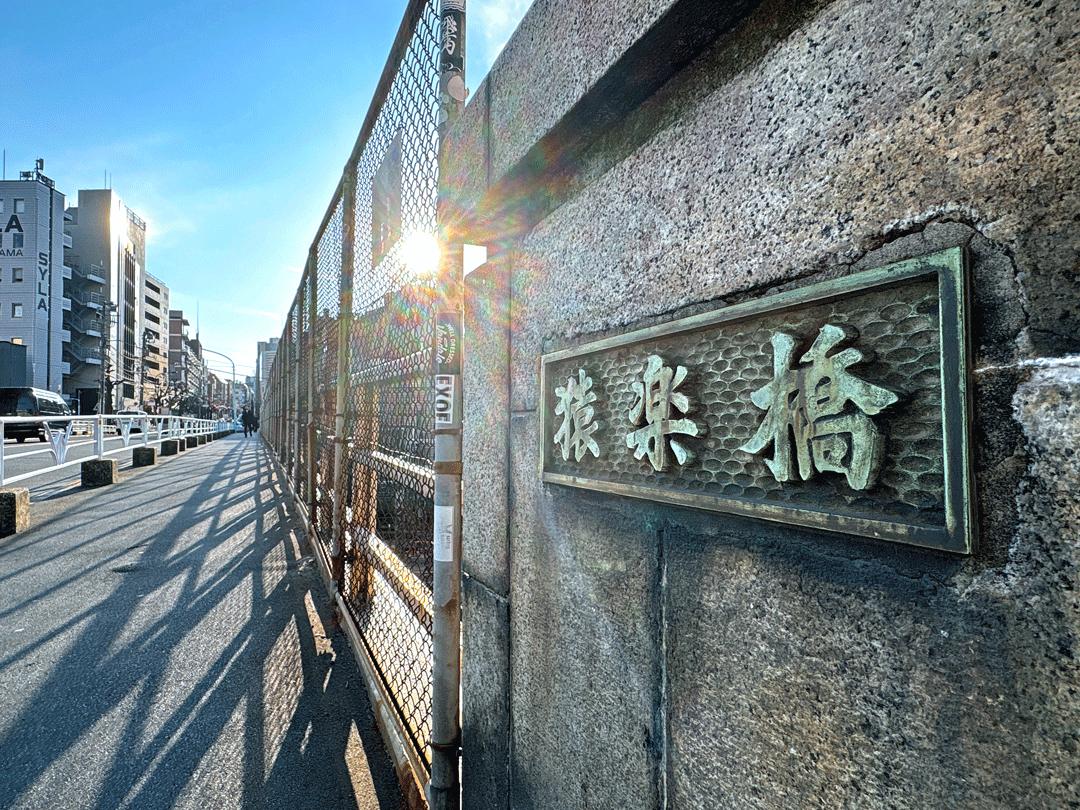
Sarugaku Bridge, connecting Shibuya and Daikanyama, to be rebuilt after more than 10 years of road closure; model on display at ward office
Featured articles on the site
代々木公園で「九州観光・物産フェア」 九州グルメ約100店、マグロ解体ショーも
西武渋谷店、58年の歴史に幕 「シブヤ」をつくった百貨店、最後のシャッター
渋谷の肉料理おすすめ5選! 渋谷在勤・かごさんが厳選するお店を紹介