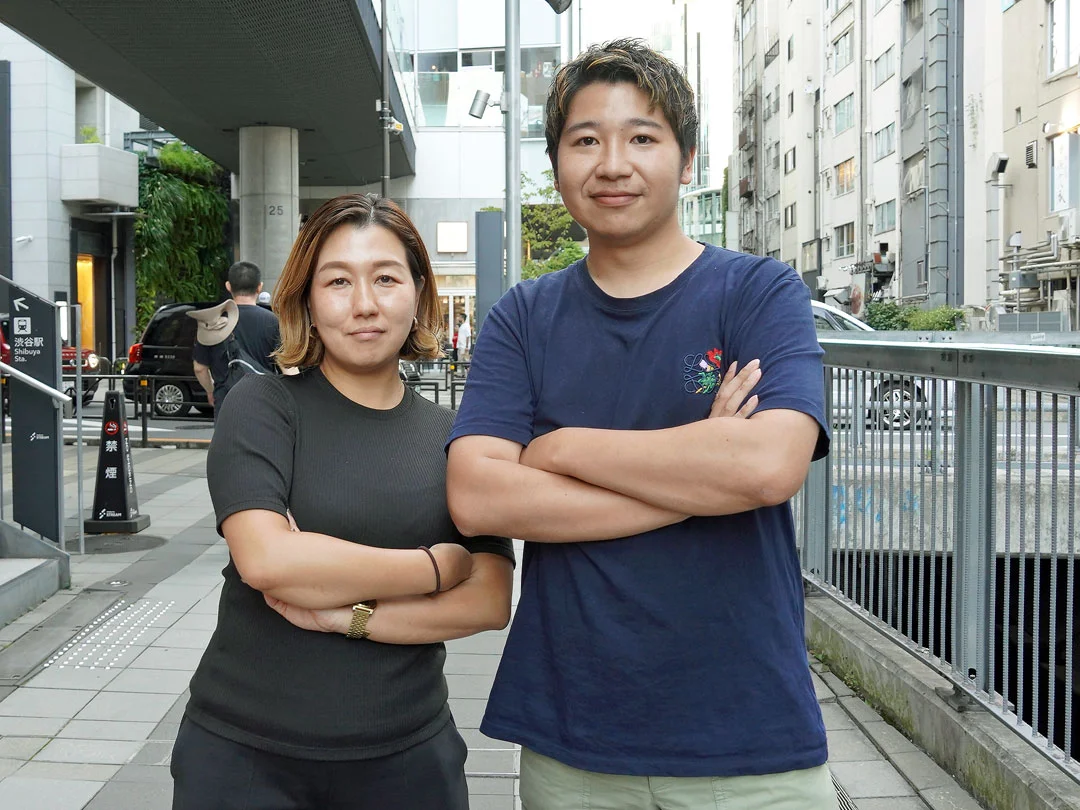


SHIBUY.A. × WATCH

To ensure the safe guidance of visitors during flooding, a joint drill led by local residents was held for the first time around Shibuya Station.
2026-08-10
SHARE
A joint flood prevention drill was held at the Shibuya Station East Exit Underground Plaza on July 28, with approximately 30 people participating.
The drill, organized by Tokyu Community and Shibuya Station Area Management, was conducted with the cooperation of Shibuya Ward, the Tokyo Metropolitan Government, the Shibuya Fire Department, and railway operators. It simulated a scenario in which torrential rain flooded roads around Shibuya Station, and water also approached underground spaces.
Shibuya Station, where people and water gather at the bottom of the valley
Shibuya Station is located at the bottom of a bowl-shaped area surrounded by Dogenzaka and Miyamasuzaka. The area around the station is home to the Shibuya River and the Udagawa River, which is now an underground culvert. In the past, torrential rains have caused flooding into subway stations and underground shopping areas.
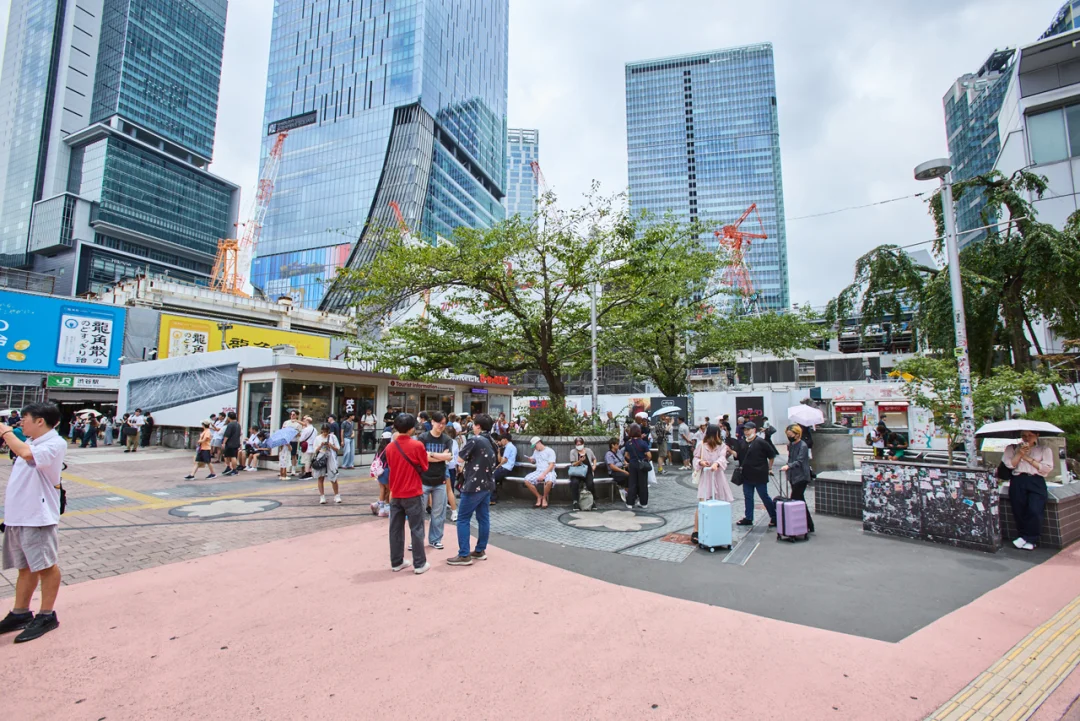
The area around Shibuya Station, where railways and commercial facilities are concentrated, is low-lying at about 15 meters above sea level, and rainwater concentrates there from the surrounding slopes such as Dogenzaka and Miyamasuzaka (which are about 30-34 meters above sea level).
Furthermore, the area around Shibuya Station is home to railways, underground shopping malls, commercial facilities, and offices, all managed by various entities. To protect the safety of visitors from flooding caused by heavy rain, ongoing cooperation across facilities and organizations is crucial.
Assuming flooding of surrounding roads, evacuation guidance will be directed towards Exit B6.
Approximately 30 disaster prevention personnel from facilities around the station and railway operators, including Shibuya Ward, TOKYU CORPORATION, Shibuya SHIBUYA SCRAMBLE SQUARE Scramble Square, SHIBUYA STREAM Shibuya Hikarie, Shibuya Stream, Shibuya Fukuras, SHIBUYA MARKCITY City, and SHIBUYA AXSH, participated in the event. They reviewed evacuation guidance and flood control procedures, transcending the boundaries of their respective management bodies.
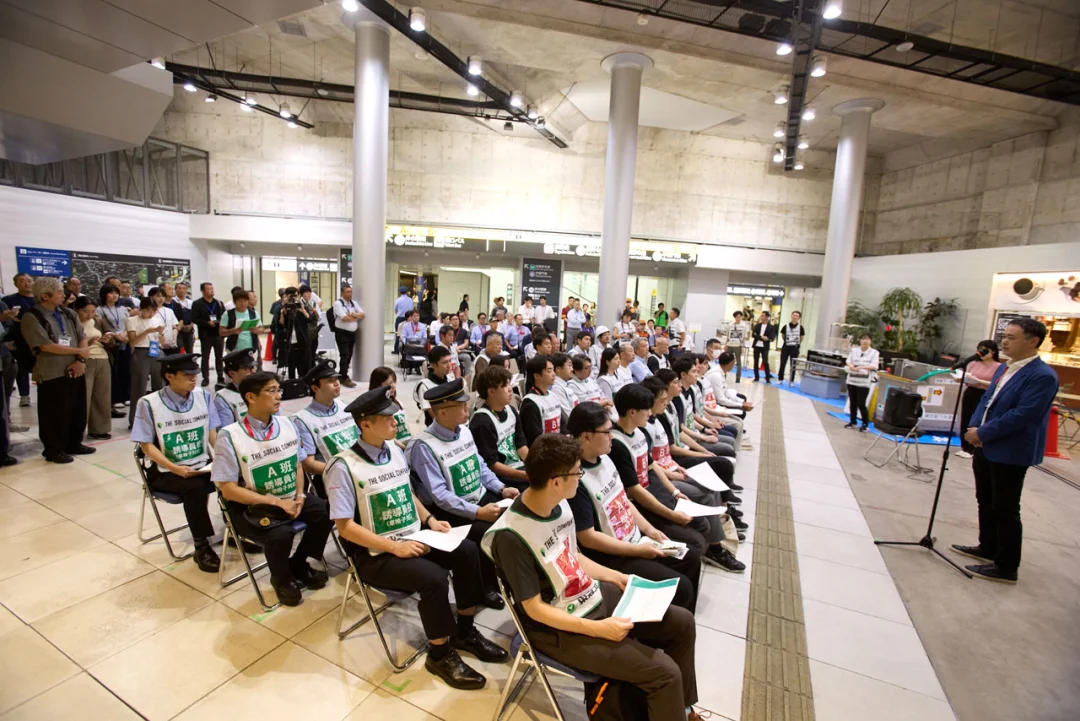
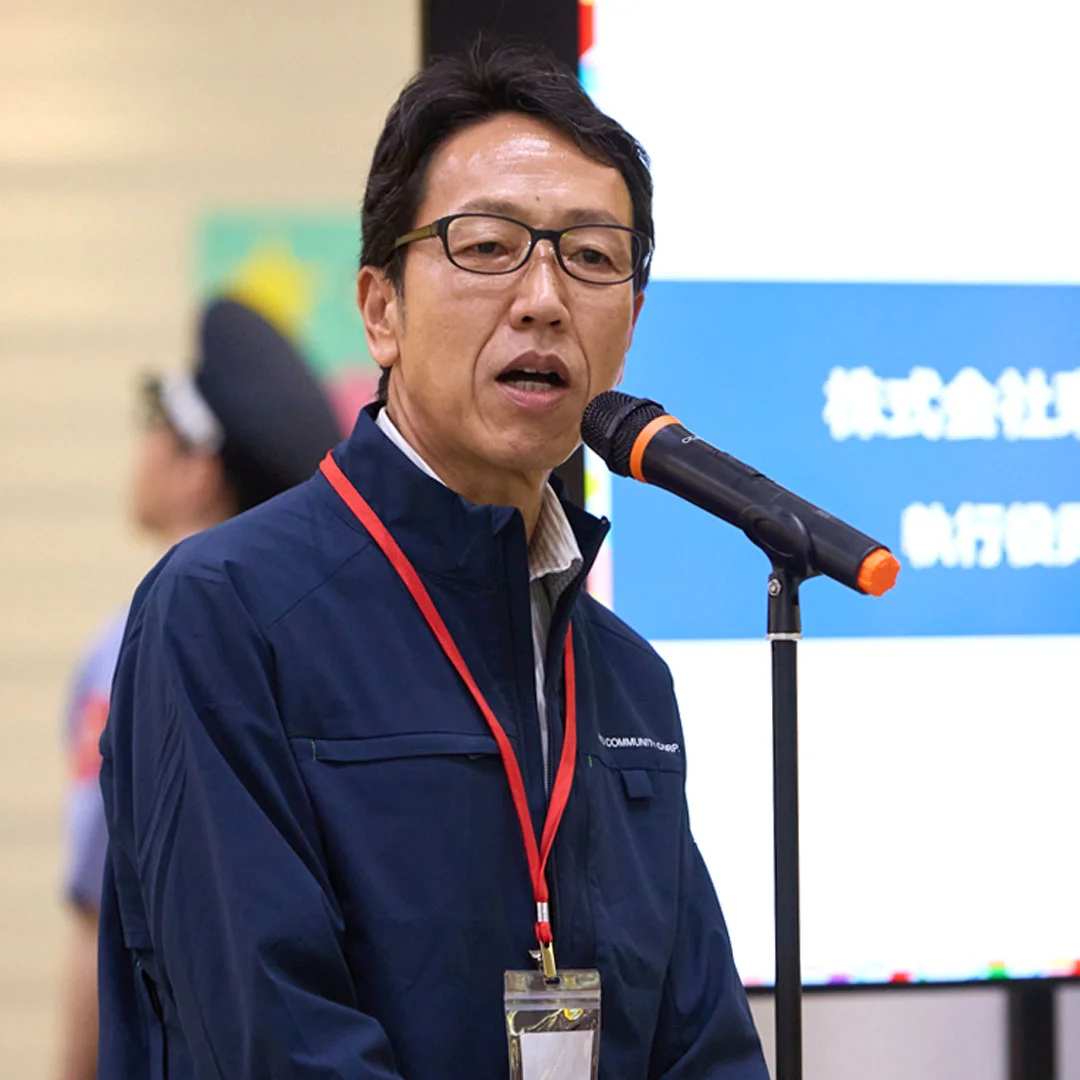
Prior to the training, Takashi Mitsubuchi, Representative Director of Shibuya Station Area Management, gave a greeting.
At the beginning of the event, Mr. Mitsubuchi said, "Until now, the Tokyo Metropolitan Government's Underground Shopping Area Flood Control Council has been conducting joint training exercises, but from this time onwards, it will be conducted primarily by the local community. I hope that by sharing the challenges identified from each perspective and taking them back to our respective organizations, disaster prevention efforts in Shibuya will be further strengthened."
The drill began with the scenario that heavy rain due to an approaching typhoon had led to the issuance of a Level 4 "Evacuation Order" from Shibuya Ward, following a Level 3 "Evacuation for the Elderly and Others" alert. Assuming that roads around the station were flooded and the Shibuya River had reached a dangerous flood level, a "vertical evacuation" was carried out, guiding people in underground spaces to the second floor or higher of surrounding buildings.
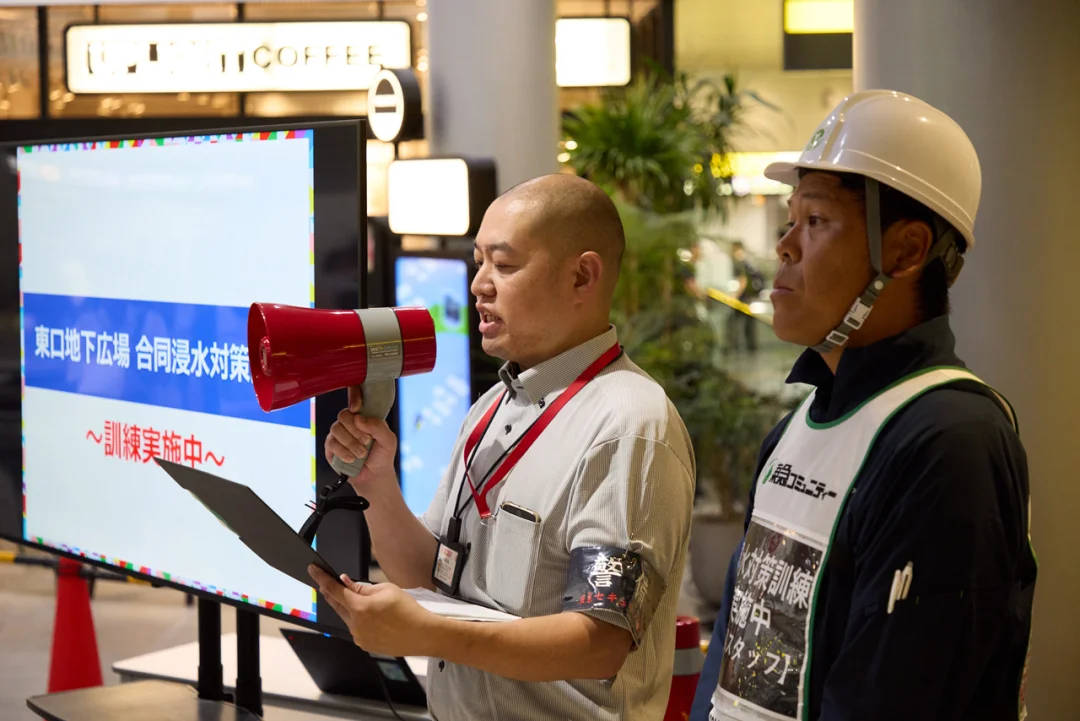
A guide using a loudspeaker to call for evacuation.
Participants were divided into two roles: guides and visitors. They evacuated from the East Exit underground plaza (B2F) towards Exit B6 (SHIBUYA SCRAMBLE SQUARE East Building) to the ground floor. Visitors were given different roles, including foreigners, wheelchair users, people who missed the evacuation announcements because they were in the restrooms or powder rooms, and people who continued to film the scene with their smartphones. Guides used their voices and gestures to lead visitors to the second floor or higher of surrounding buildings.
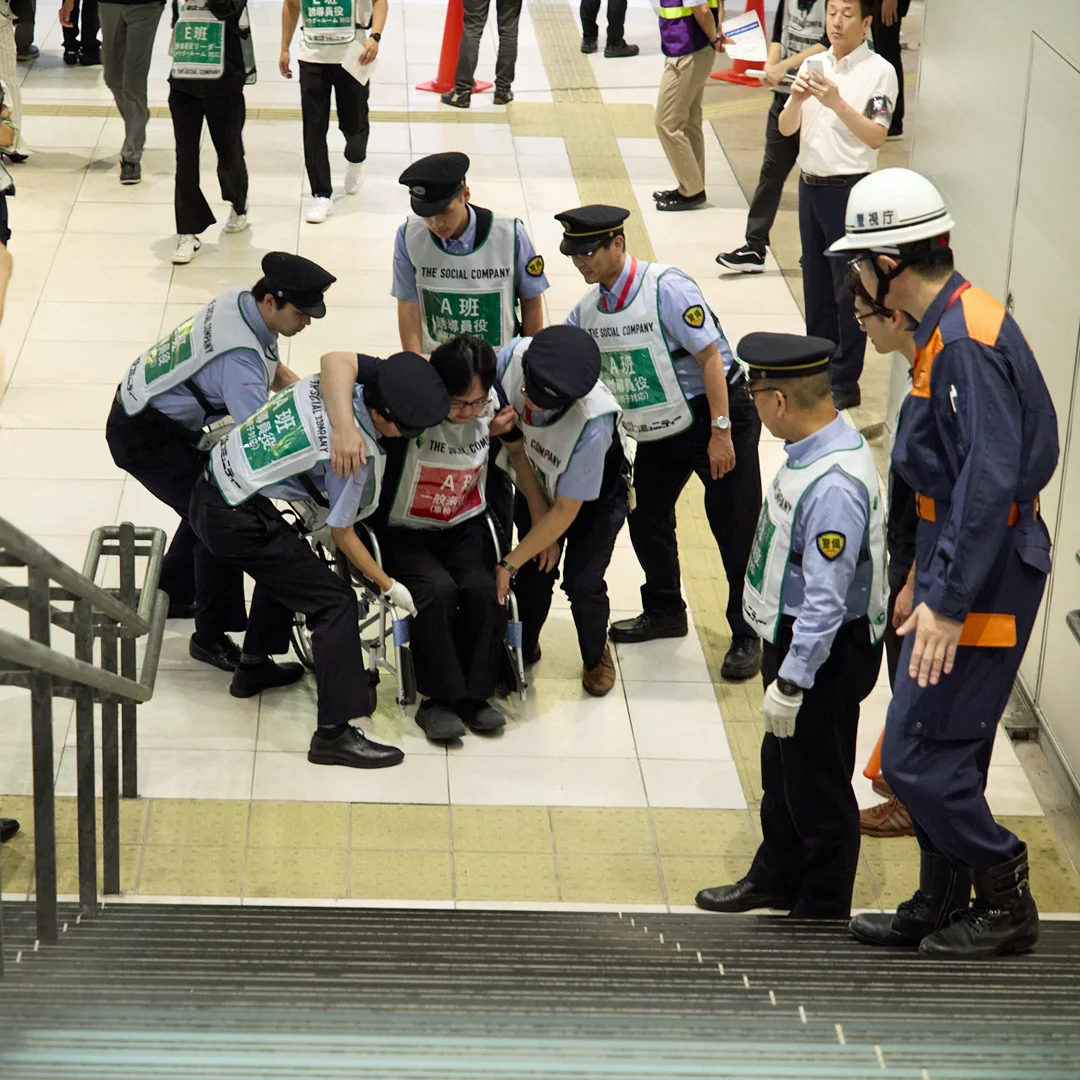
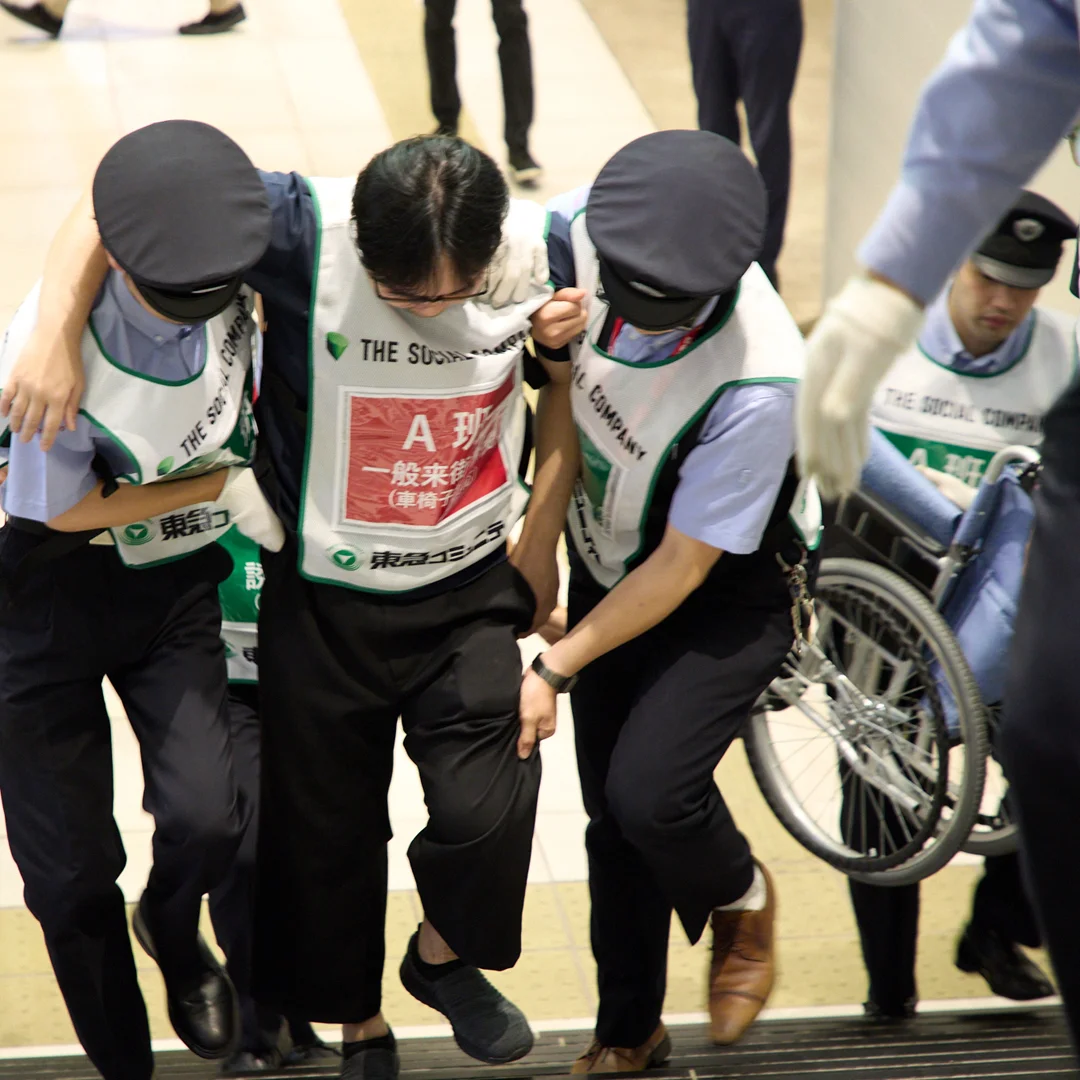
Assisting wheelchair users on the stairs while guiding them to safety.
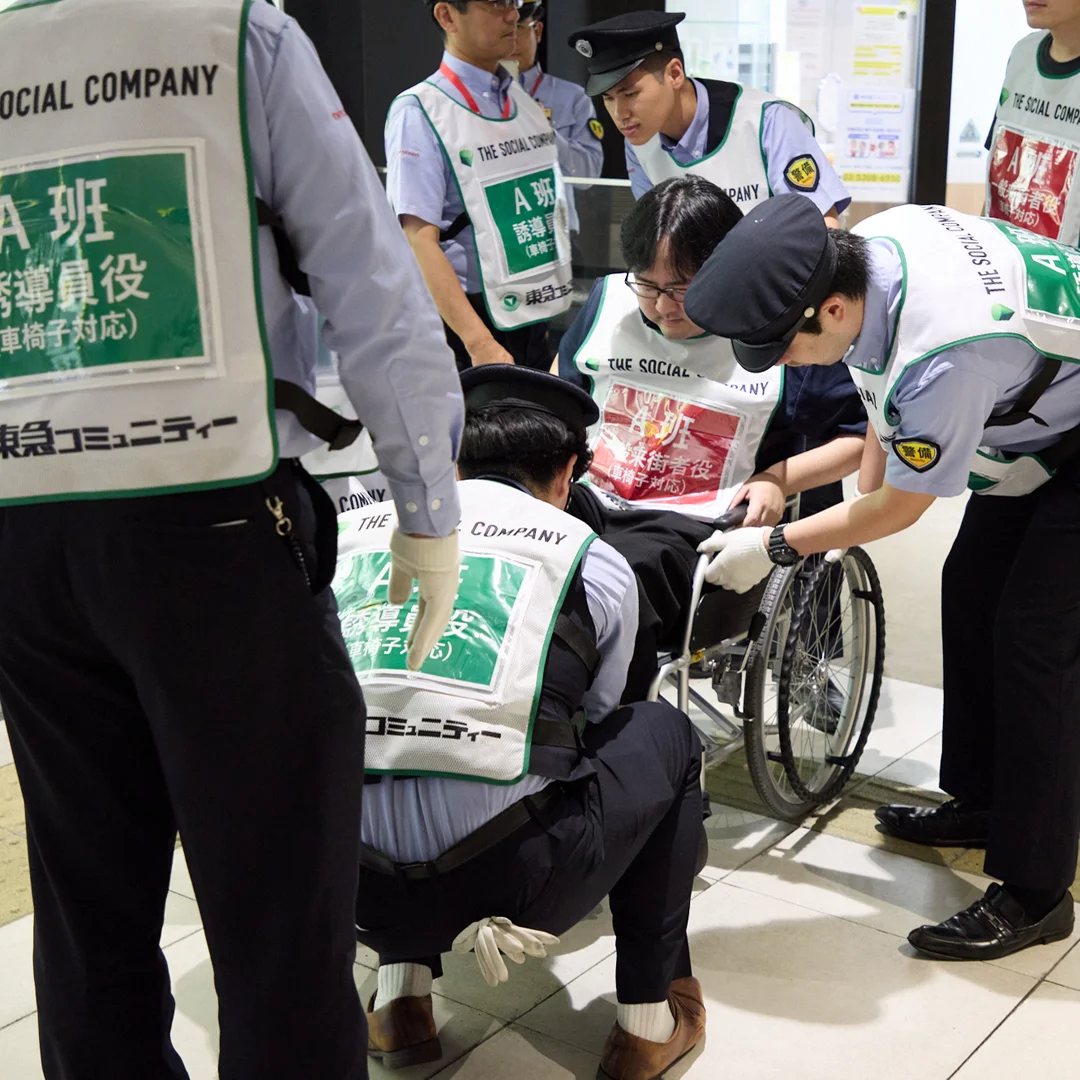
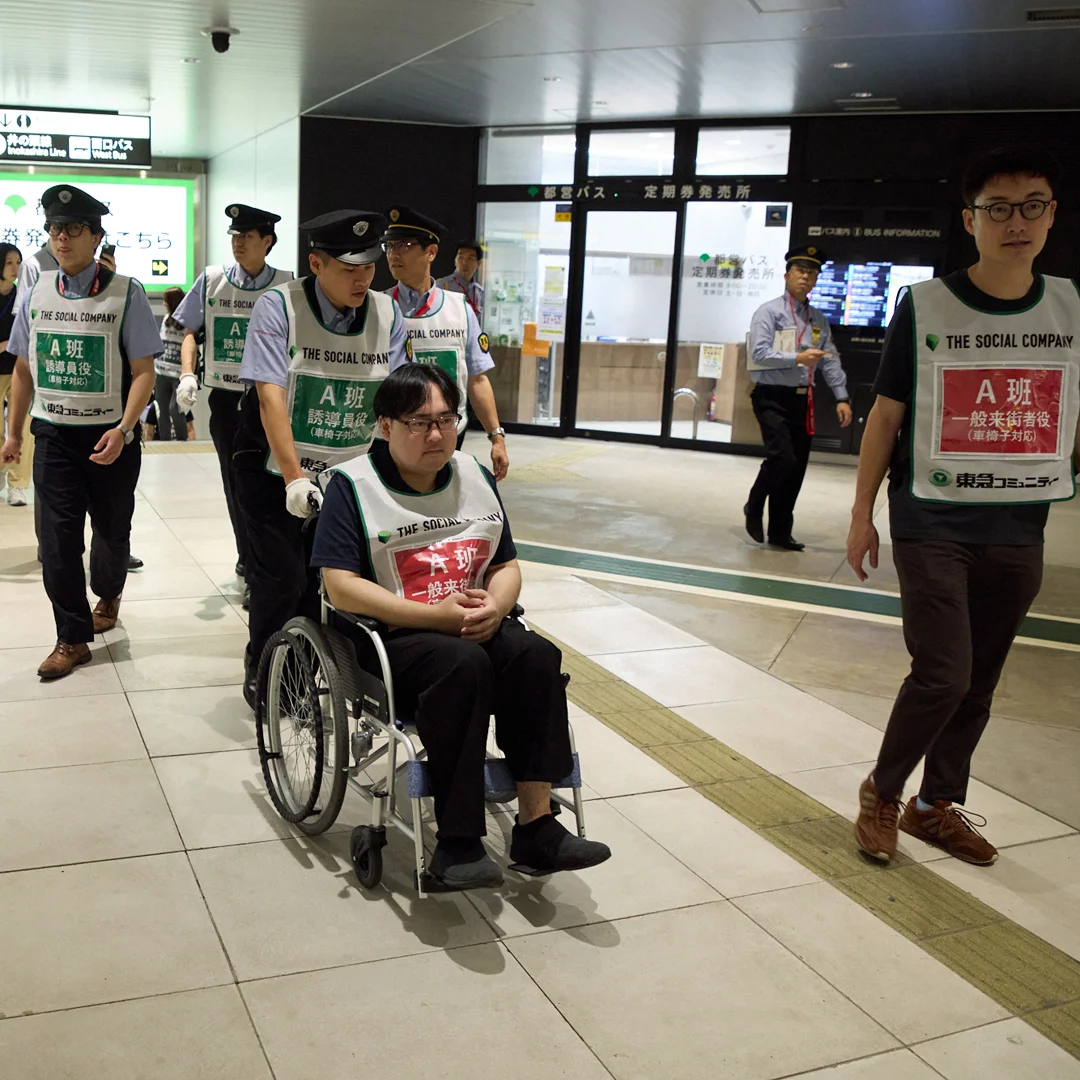
This image shows people "vertically evacuating" to a safe location on the second floor or higher, via Exit B6, which connects to the Urban Core of the East Tower of SHIBUYA SCRAMBLE SQUARE Square.
Check the installation procedure for waterproof panels to prevent water from entering the basement.
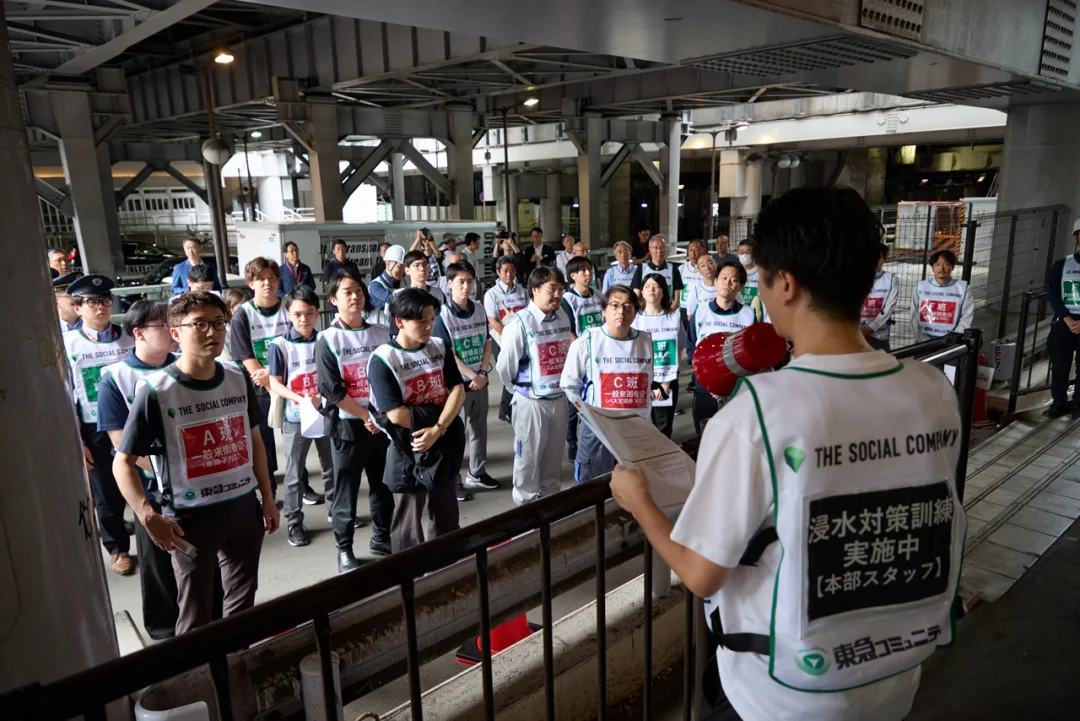
Explanation regarding the installation of waterproof panels to prevent flooding at train stations, commercial facilities, etc.
Following the evacuation guidance, participants moved to the first floor SHIBUYA SCRAMBLE SQUARE to observe the installation of waterproof panels at the building's entrances and exits. These waterproof panels are designed to prevent water from flowing into the underground space through entrances and exits during heavy rain.
The person in charge explained the installation procedure as they fitted the waterproof panels into the grooves of the entrance and secured them with metal fittings. The participants observed the entire process, from carrying the panels to sealing the entrance.
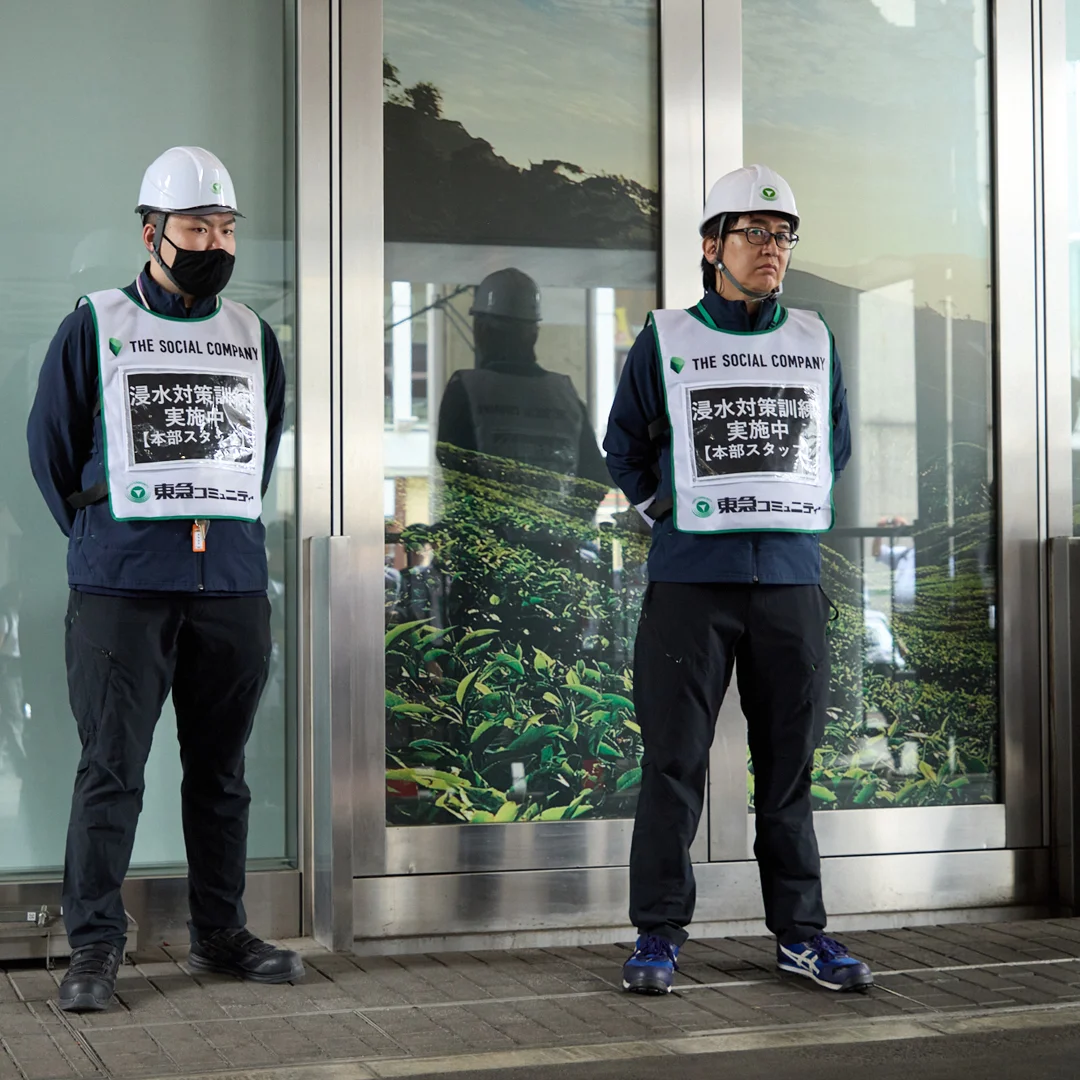
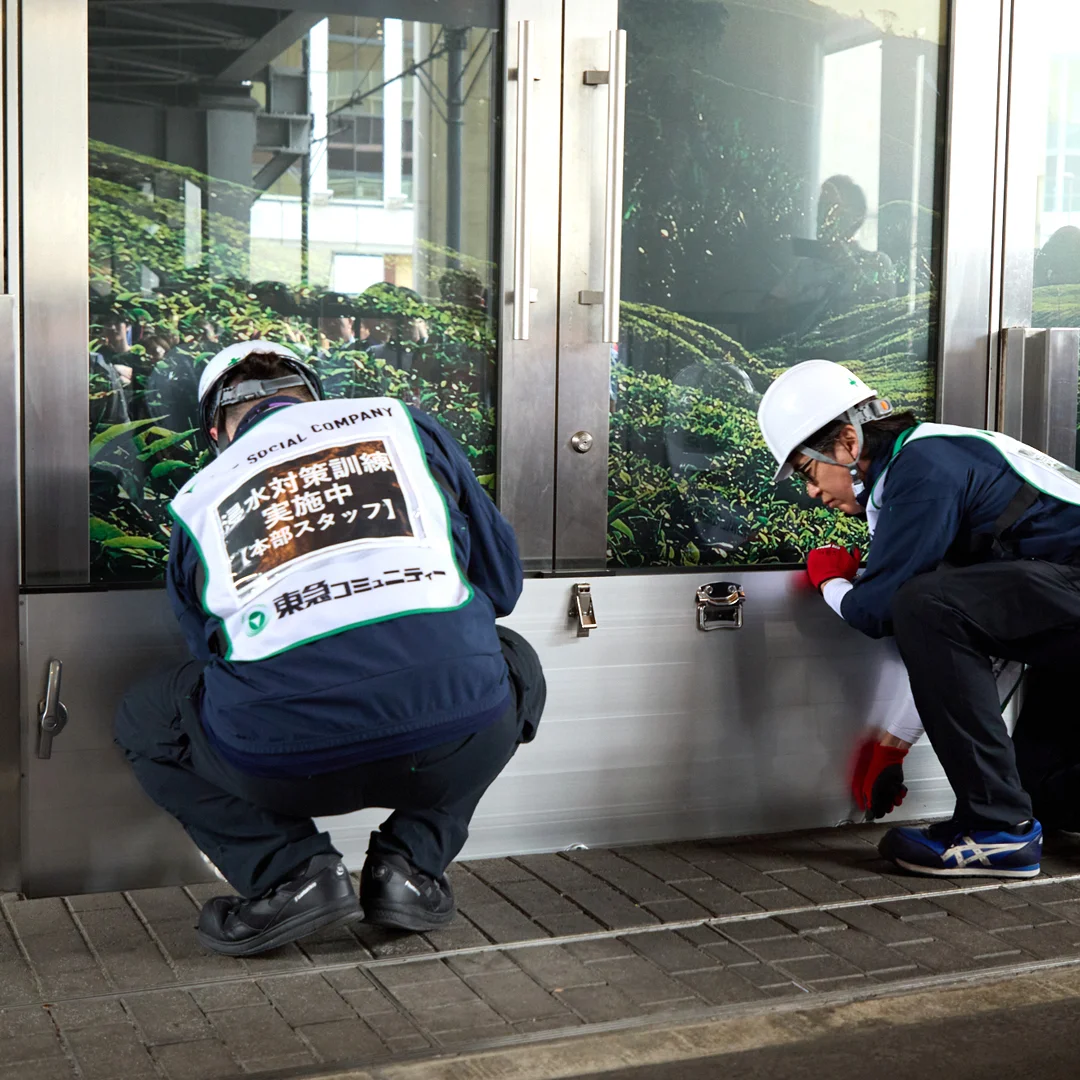
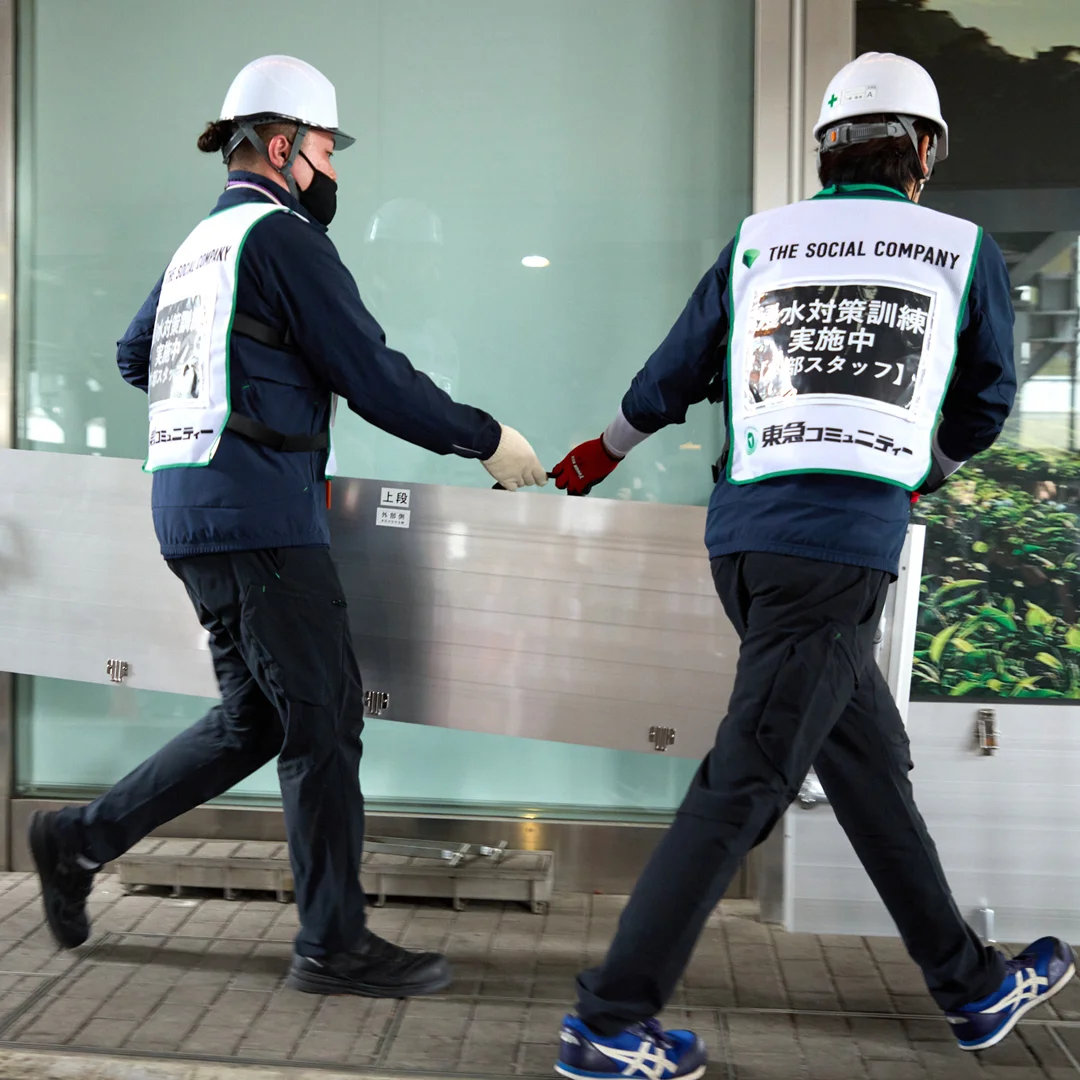
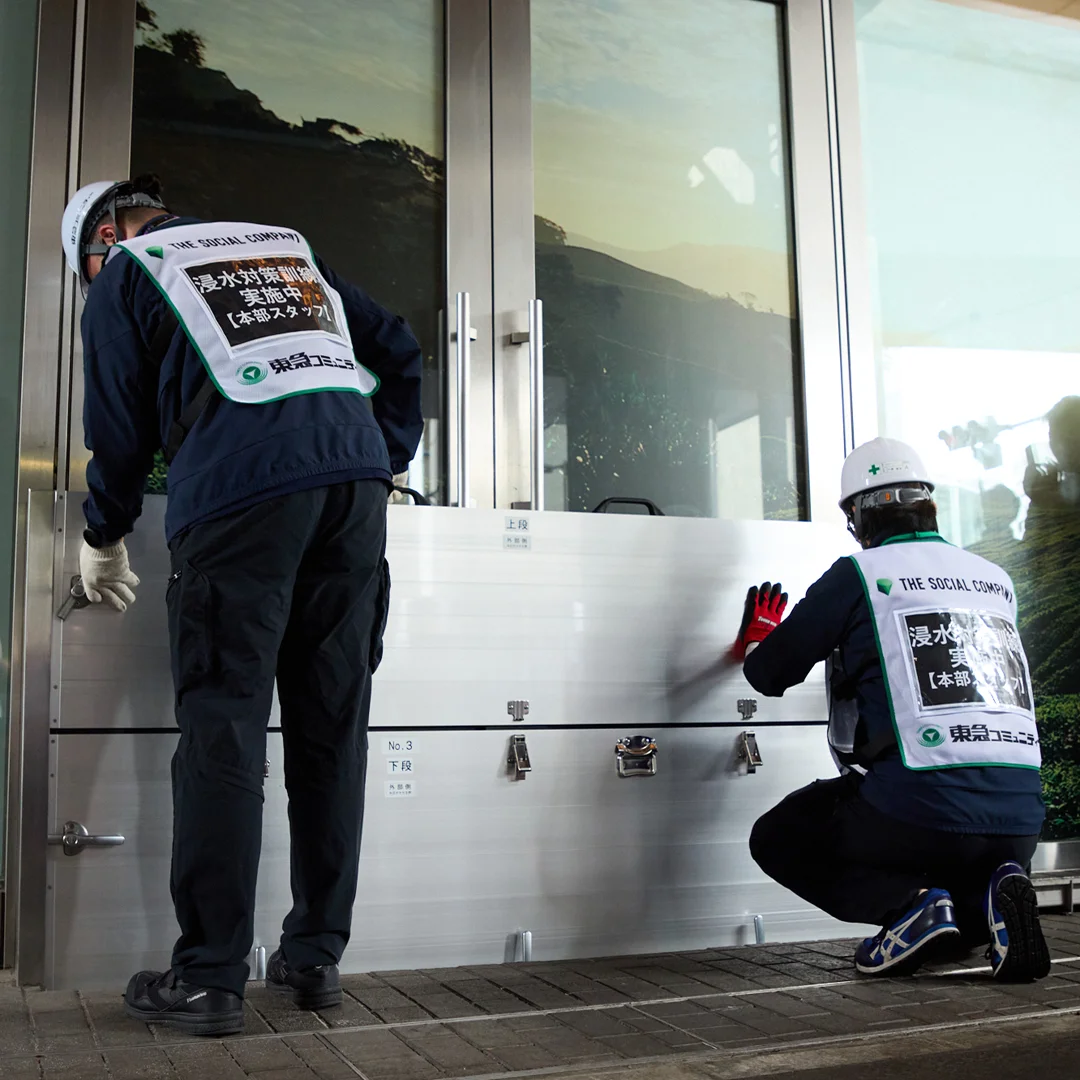
The process of installing two waterproof panels at the entrance of the building.
Experience flooding using AR and models.
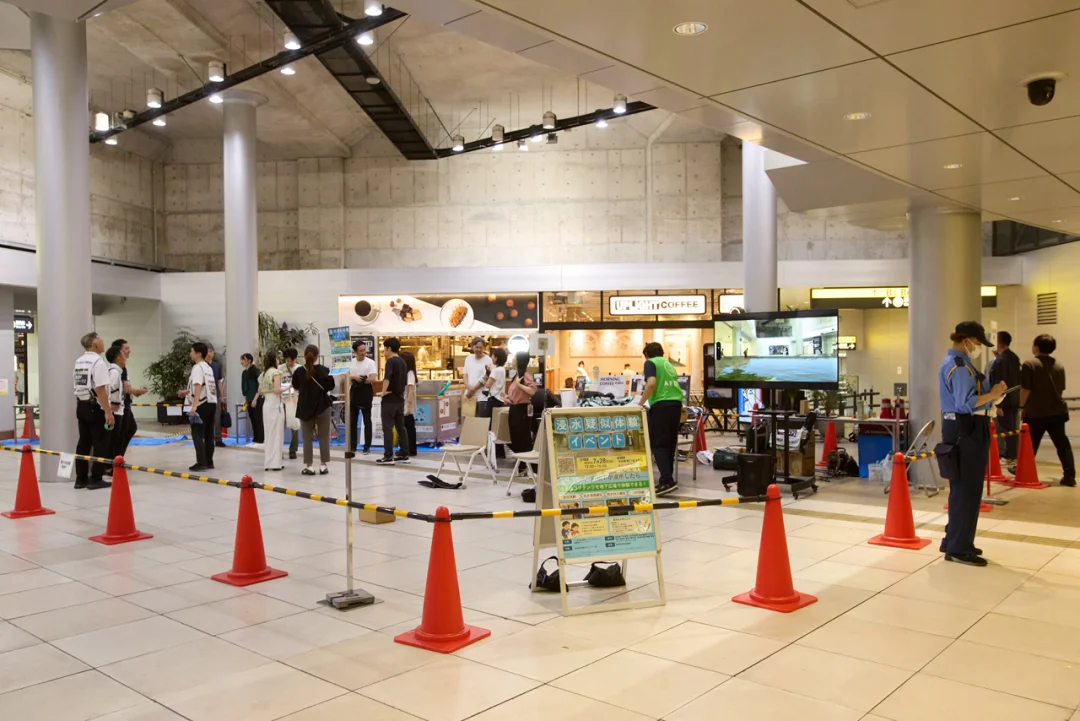
Following the training, a "simulated flooding experience event" was held.
The training also included experiences that taught participants about the dangers of flooding and the mechanisms of rainwater countermeasures. The "Water Pressure-kun" water pressure simulation device recreated the force exerted on a door by accumulated water. Many participants realized that opening a door required more force than they had imagined, and that it was not easy to open.
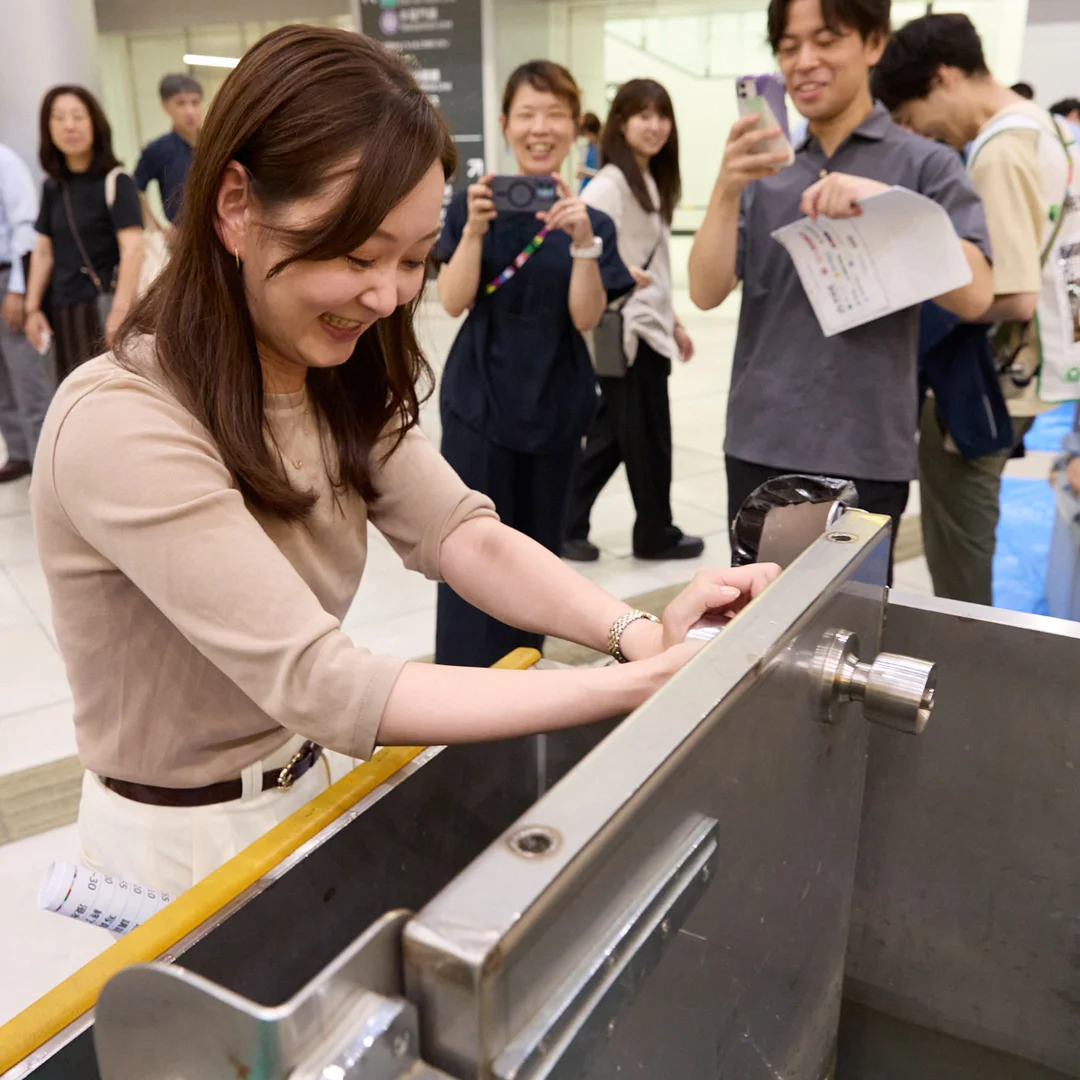
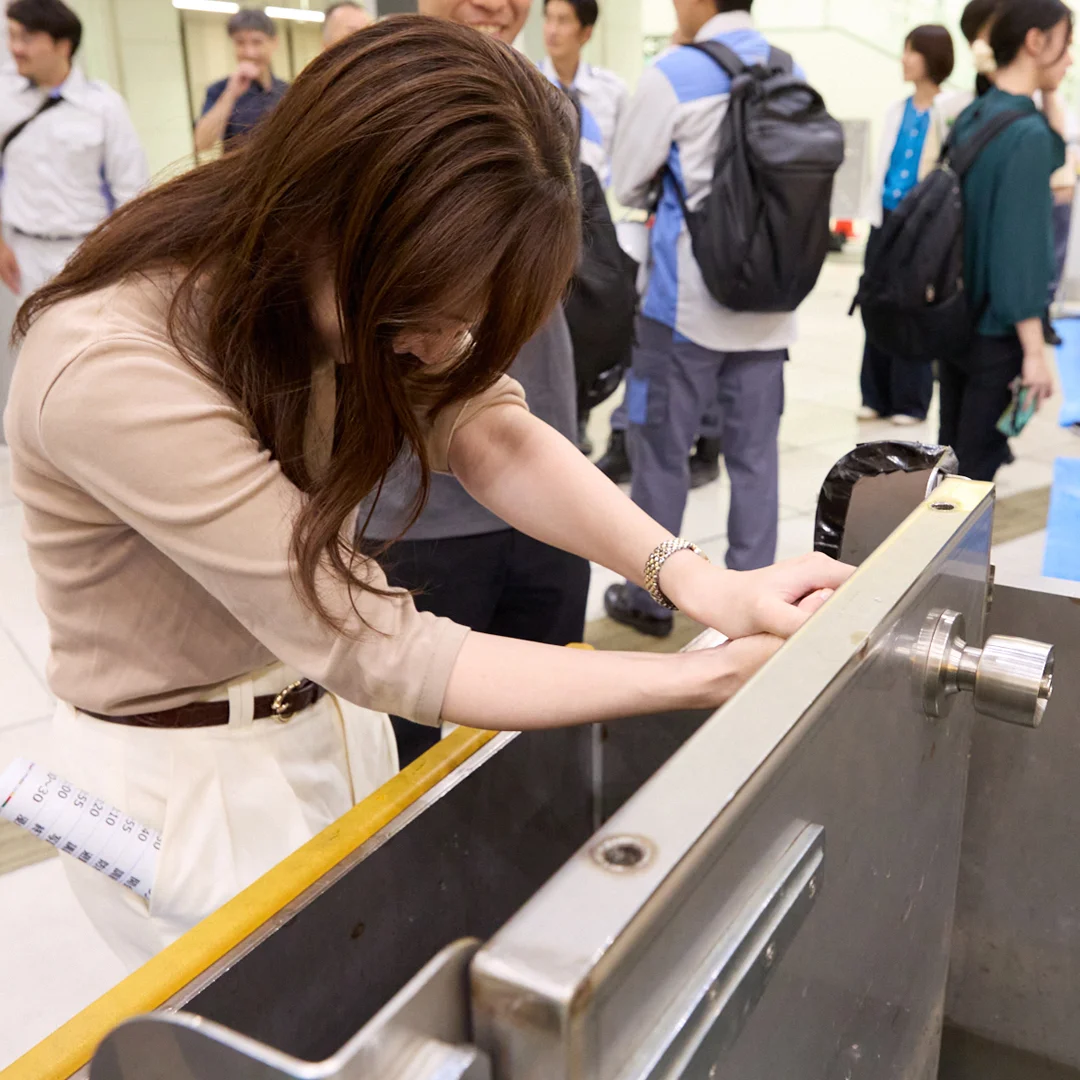
Participants experience the force exerted on a door during flooding using the "Water Pressure-kun" device. At a water depth of 10cm, a force of 3.5kg is exerted on the door, and at a water depth of 30cm, a force of 31.5kg is exerted, making it difficult to open the door.
The "AR Flood Simulator" allowed participants to experience what it would be like if the area around Shibuya Station were flooded. Participants wore 2kg weights on each foot to experience the difficulty of walking in floodwaters. They also experienced the fear of how visibility worsens when water overflows, making it difficult to move as intended and to judge the surrounding situation.
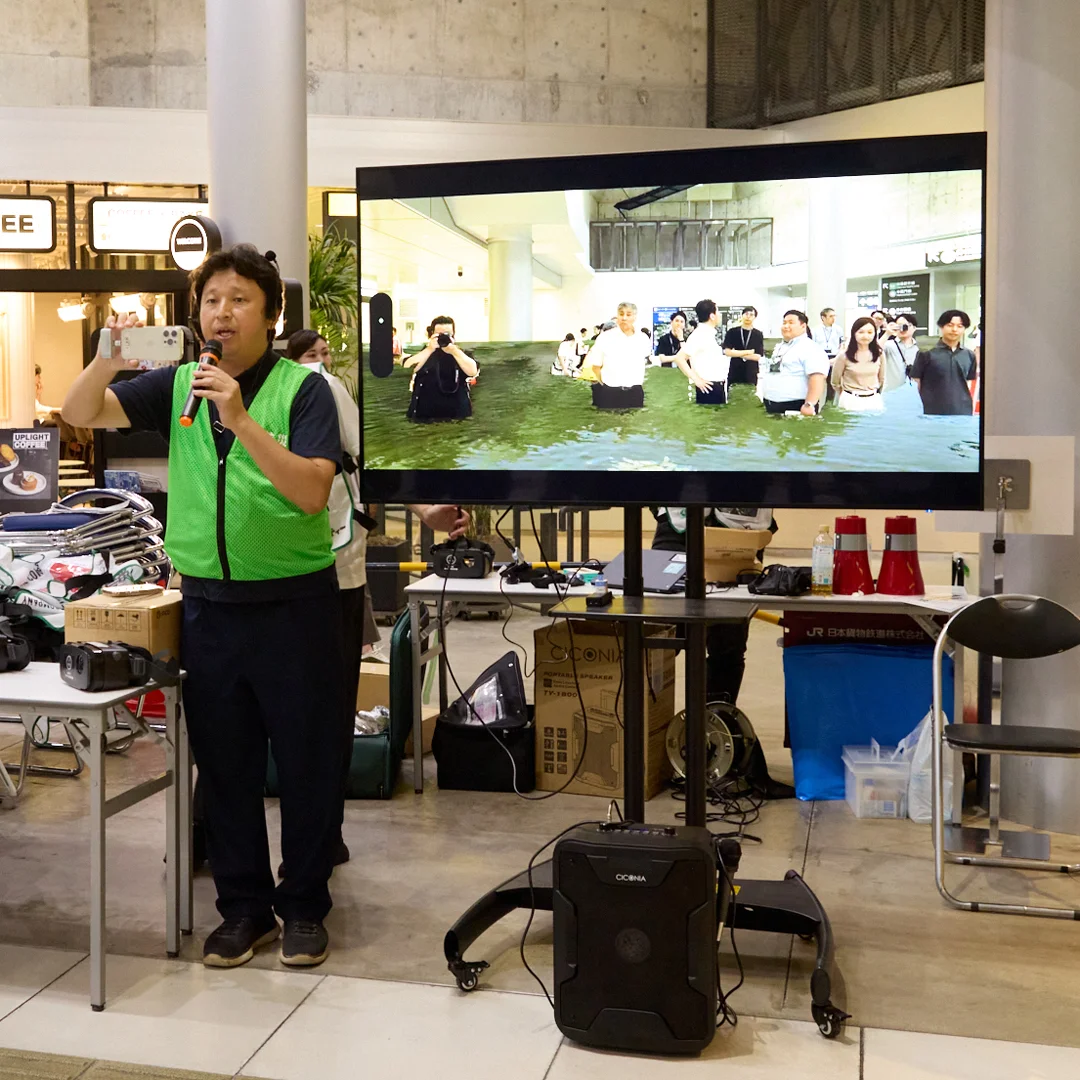
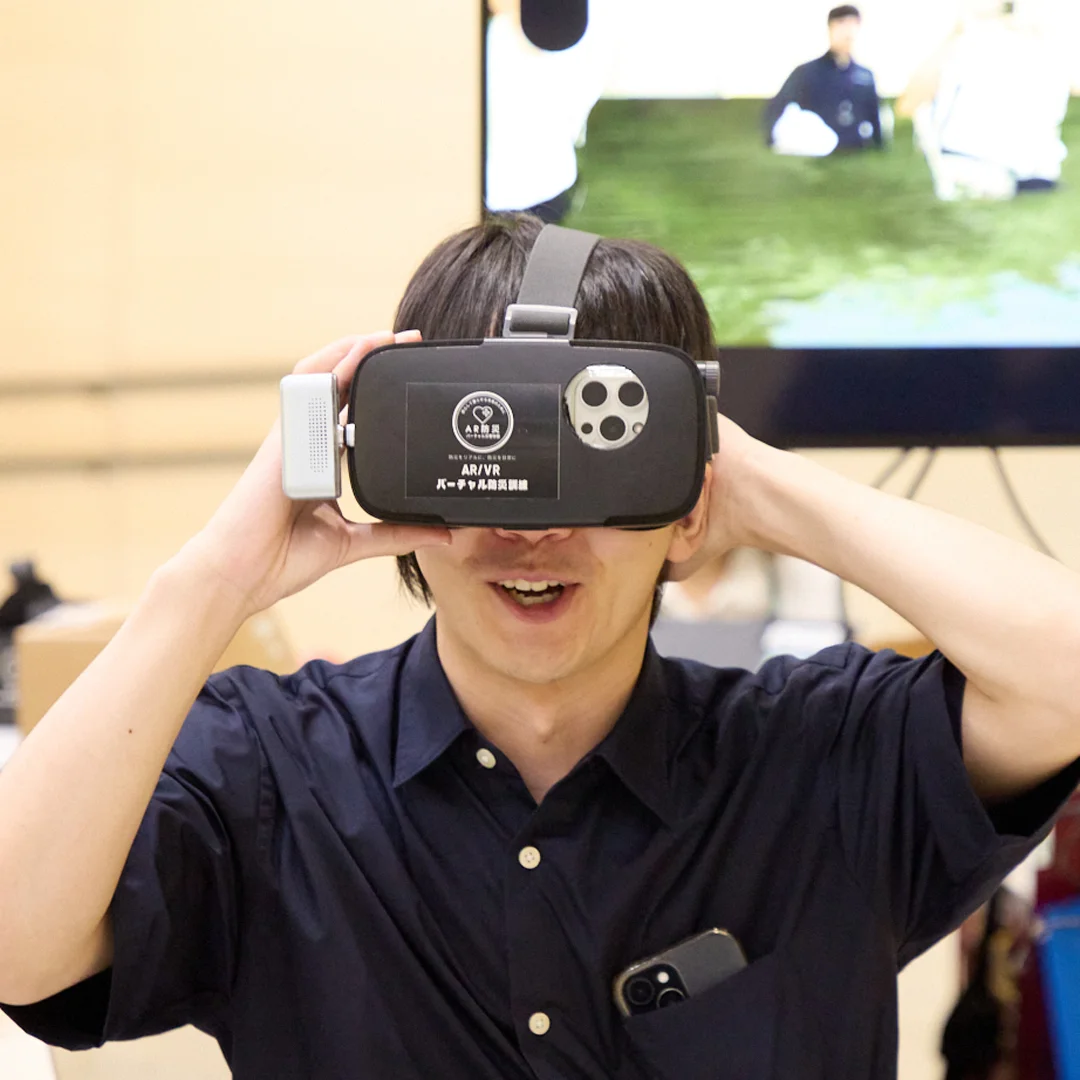
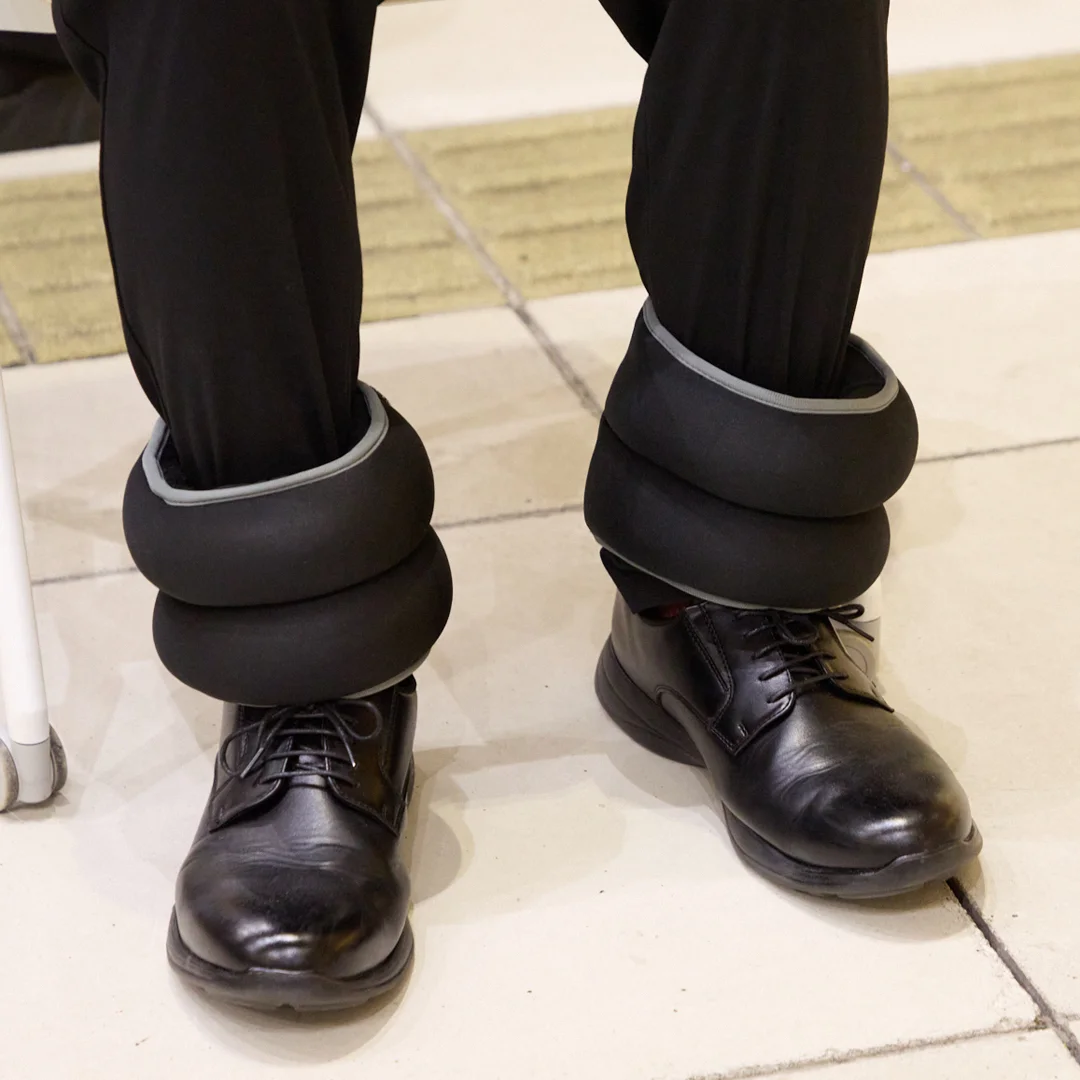
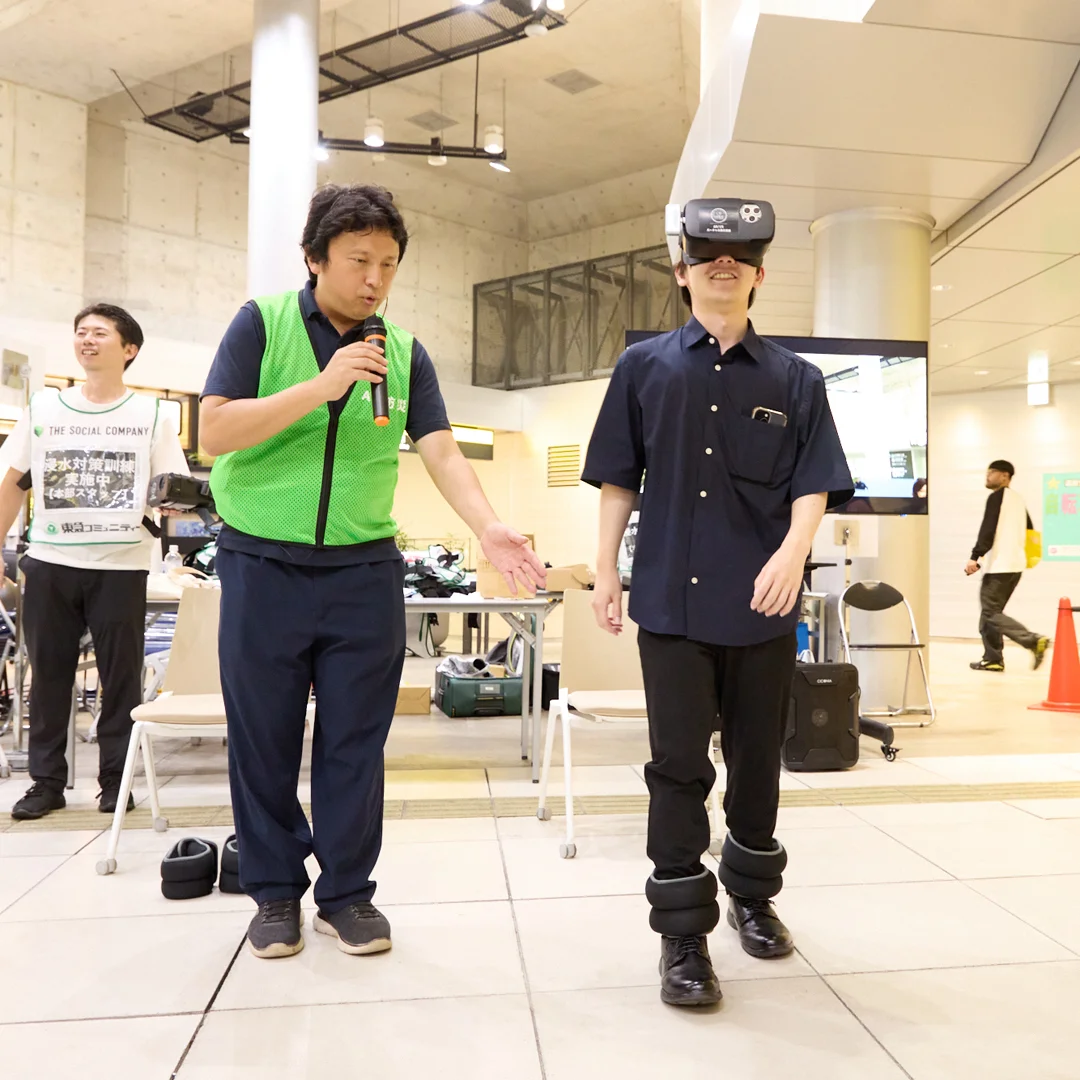
The "AR Flood Simulator" simulates flooding in the Shibuya Station underground. Participants wear headsets and weights on their feet and try to walk through the underground area, but they find it difficult to move as they wish.
The rainwater infiltration model "Infiltration-kun" and the rainwater inflow model "Rainwater Drain-kun" introduced how rainwater seeps into the ground in the city and is discharged through rainwater drains on the roads. The models also recreated how, if rainwater drains are blocked by fallen leaves or blocks used for vehicle access, rainwater cannot be discharged, leading to road flooding. Participants gathered around the models and learned that cleaning and maintaining facilities that are usually not visible also contributes to flood prevention.
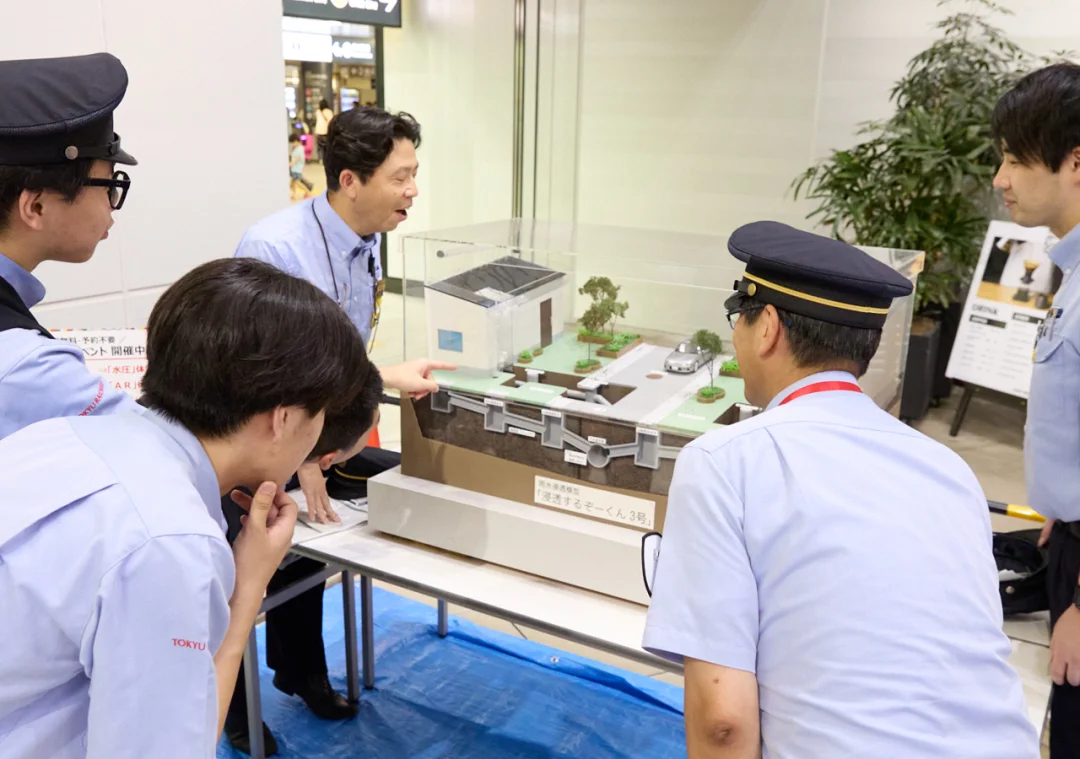
Participants learn about rainwater drainage systems using models.
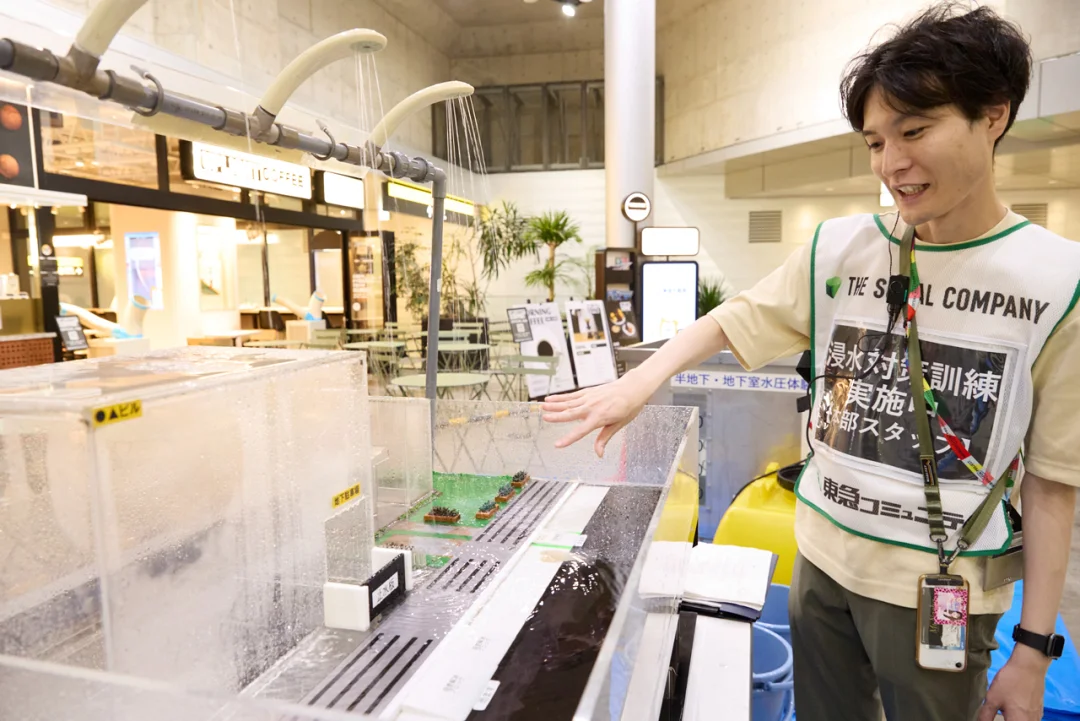
This device demonstrates how clogged rainwater drains ("rainwater catch basins") can hinder rainwater from flowing into the sewer system, making flooding more likely. Regularly cleaning rainwater catch basins is one way to prevent flooding.
To strengthen cooperation among surrounding facilities, transcending organizational boundaries.
Following the evacuation guidance, participants reflected on the training, and there were lectures by Yoshiki Matsuoka of the Tokyo Metropolitan Government Bureau of Urban Development and commentary by Masamitsu Isoda of the Shibuya Fire Station. Finally, Yoichiro Terashima of Tokyu Community summarized the training.
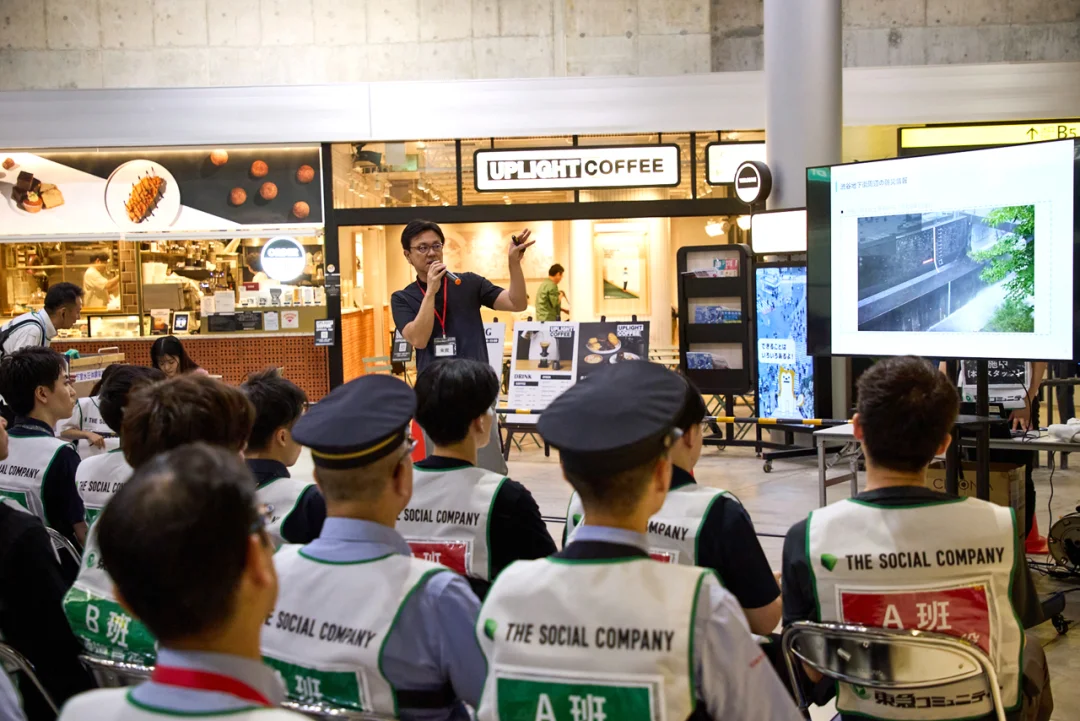
Yoshiki Matsuoka, Tokyo Metropolitan Government Bureau of Urban Development
"In underground spaces, the difficulty in understanding the conditions above ground and in rivers is itself a risk. In the past, the water level of the Shibuya River has risen by 4.5 meters in about 20 minutes. It is important to regularly check rainfall information and river water levels and choose a safe exit depending on the situation," says Matsuoka.
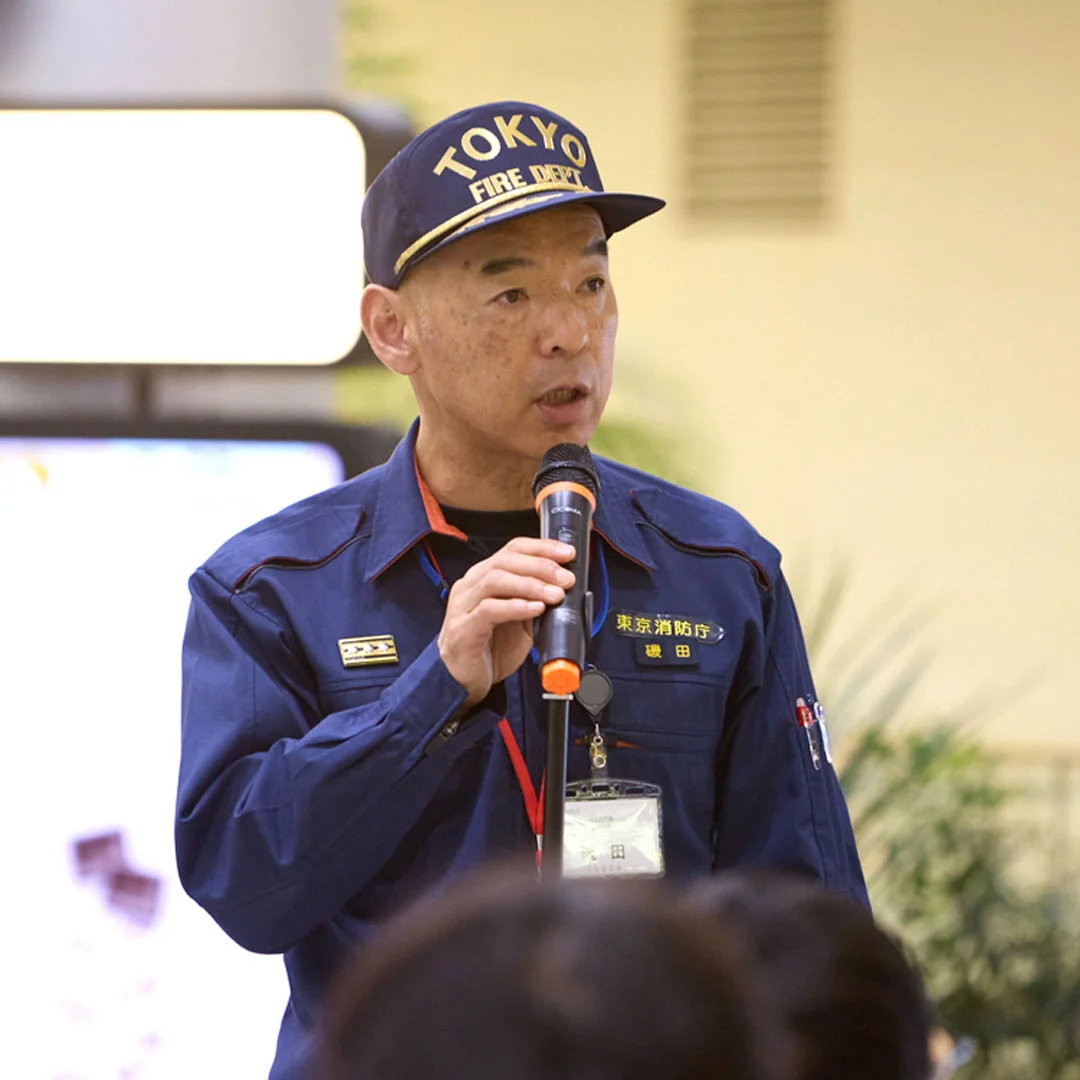
Left: Masamitsu Isoda of Shibuya Fire Station Right: Yoichiro Terashima of Tokyu Community
Mr. Isoda commented, "It's perfectly fine for the training to be full of failures. I want you to identify the issues and use them to improve the next training. Bringing together information from each facility, government, and fire department and repeating the training will lead to safety in Shibuya." Mr. Terashima also summarized, "In the event of an actual disaster, we will have to guide many more diverse people. Initial response on site and collaboration that transcends organizational boundaries will be crucial."
This training exercise transcended the boundaries of management entities. For the participants, it was a valuable opportunity to experience situations similar to actual disasters, such as guiding wheelchair users and foreigners, and sharing information when communication lines are congested. It also served as an opportunity to reaffirm the importance of strengthening cooperation among surrounding facilities on a daily basis in order to guide visitors more safely in times of emergency.
- Protecting Shibuya, located in a valley, from torrential downpours! Rainwater storage facility under Shibuya Station to begin operation (2020/08/28)
- "Rainwater storage facility" renamed "Amecho" to highlight the existence of facility protecting Shibuya from heavy rain (2021/03/03)
- Special Feature: "The Power to Nurture Shibuya – Area Management Mechanisms and Challenges"
Interview and writing: Takine Oyamada / Photography: Jun Tomiyama
Venue
Genres within watch
Articles in the same genre
![[Shibuya Scenery Records Vol. 2] The "Onko Gakkai Kaikan" continues to preserve the legacy of blind scholar Hanawa Hokiichi](https://biz.shibuyabunka.com/storage/images/watch//1787122066.webp)
2026-09-02〜
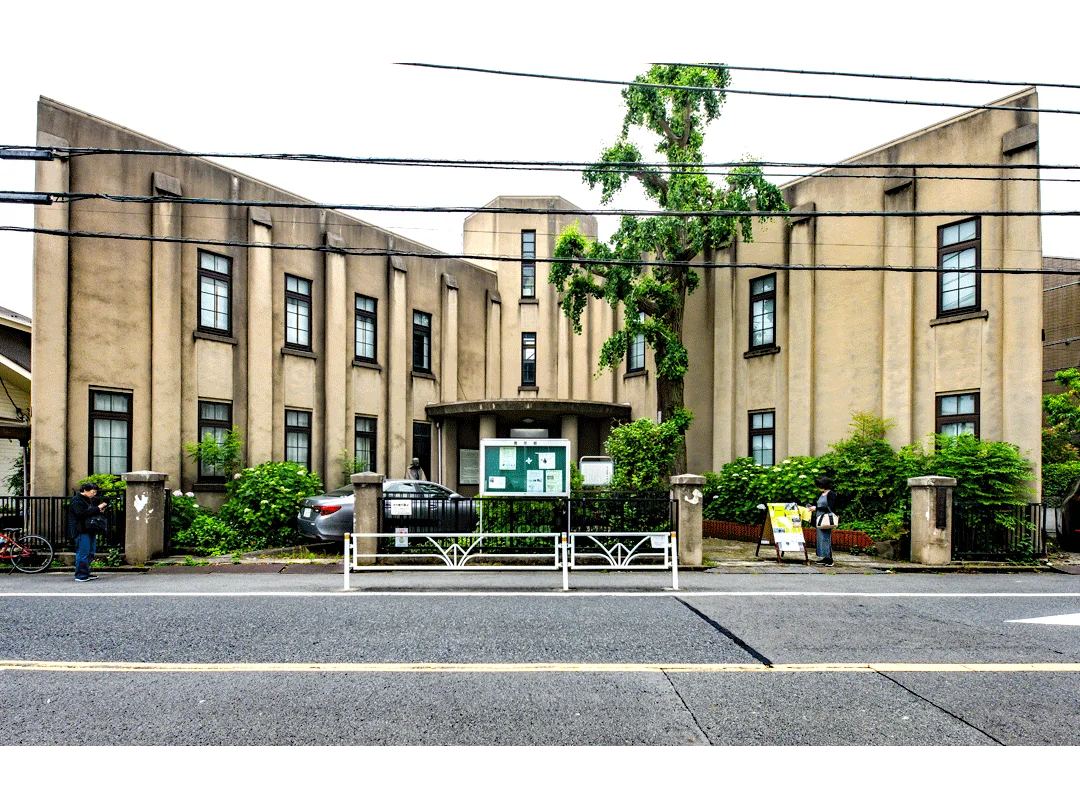
[Shibuya Scenery Records Vol. 2] The "Onko Gakkai Kaikan" continues to preserve the legacy of blind scholar Hanawa Hokiichi
2026-07-08〜
A 1/80 scale diorama of Shibuya is born: Urban modeler Yu Irimajiri talks about the charm of Shibuya.
2026-06-10〜
Water refill station opens in underground plaza at Shibuya Station East Exit, becoming a hub for promoting "reusable water bottle culture."
2026-05-27〜
"Even if you erase it, it will reappear": Shibuya's graffiti problem and a new challenge for Shibuya Multi-story Parking Garage.
Featured articles on the site

渋谷の肉料理おすすめ5選! 渋谷在勤・かごさんが厳選するお店を紹介
[Shibuya Scenery Records Vol. 2] The "Onko Gakkai Kaikan" continues to preserve the legacy of blind scholar Hanawa Hokiichi
Seibu Shibuya and Tokyu Department Store collaborate for the "final" time: Former rivals offer each other encouragement.