

SHIBUY.A. × WATCH
"Even if you erase it, it will reappear": Shibuya's graffiti problem and a new challenge for Shibuya Multi-story Parking Garage.
2026-05-27
SHARE
Walking through the rapidly redeveloping streets of Shibuya, one can see graffiti painted on temporary fences, shutters, and the walls of public facilities. For Shibuya, a bustling area constantly attracting attention, graffiti is one of the major urban problems, alongside littering.
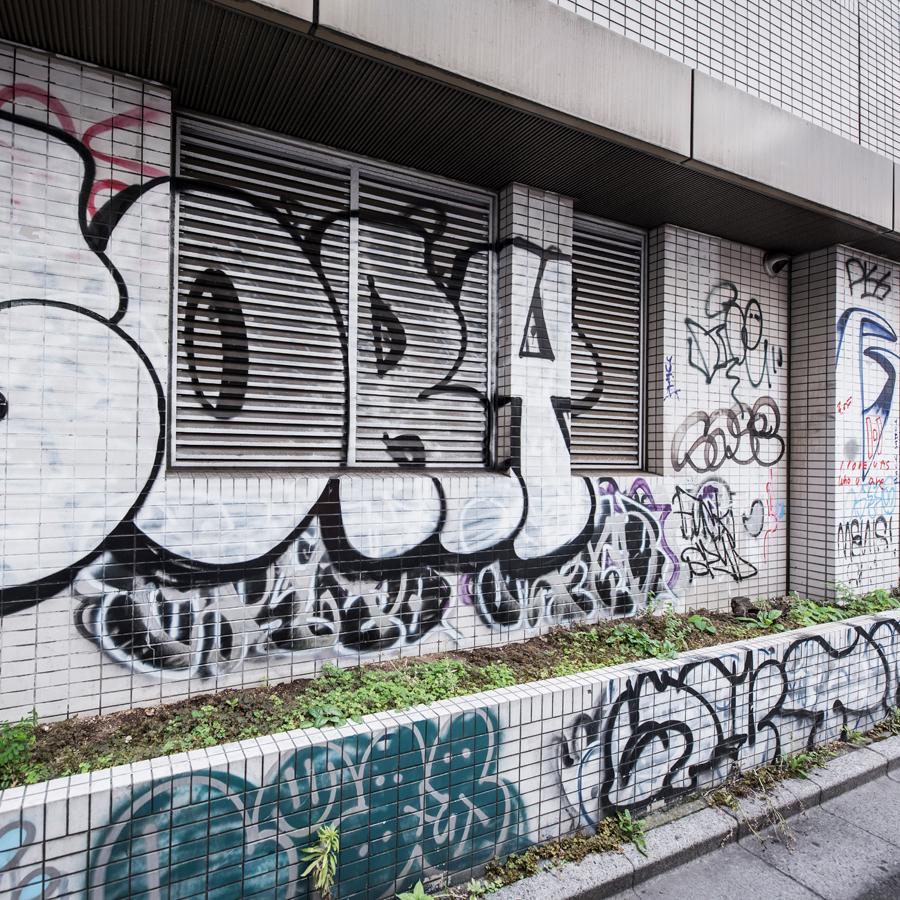
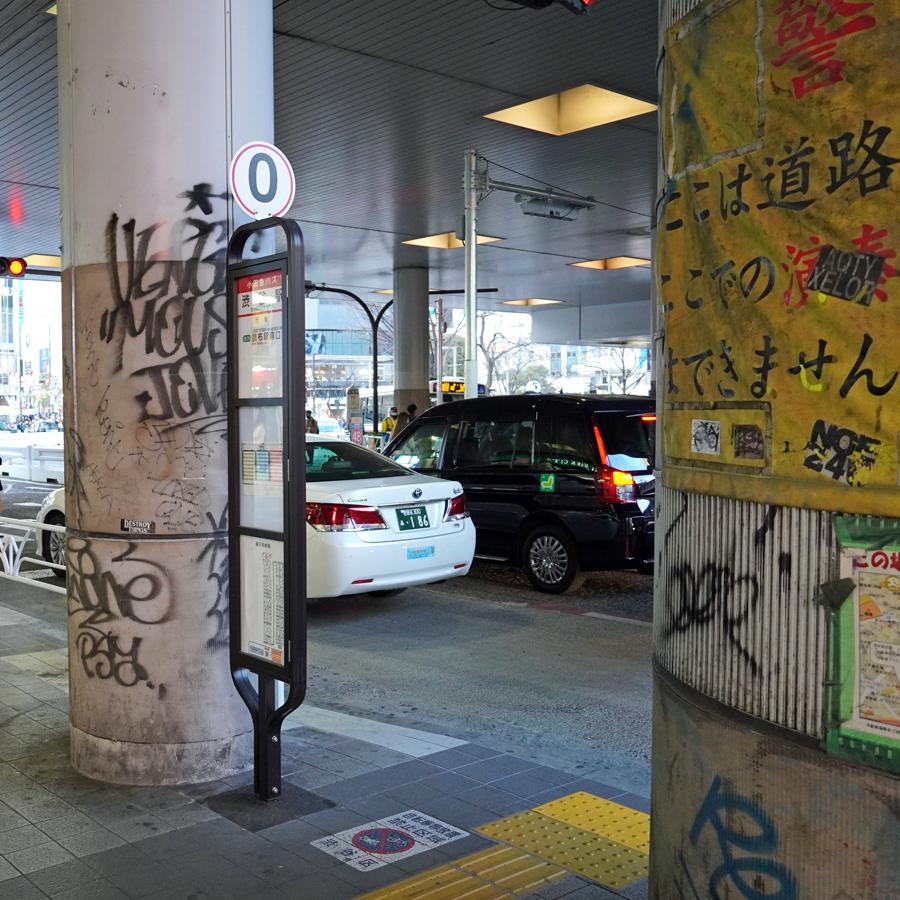
Left: A building slated for redevelopment (photographed in 2018), Right: A pillar in front of Shibuya Station (photographed in 2022)
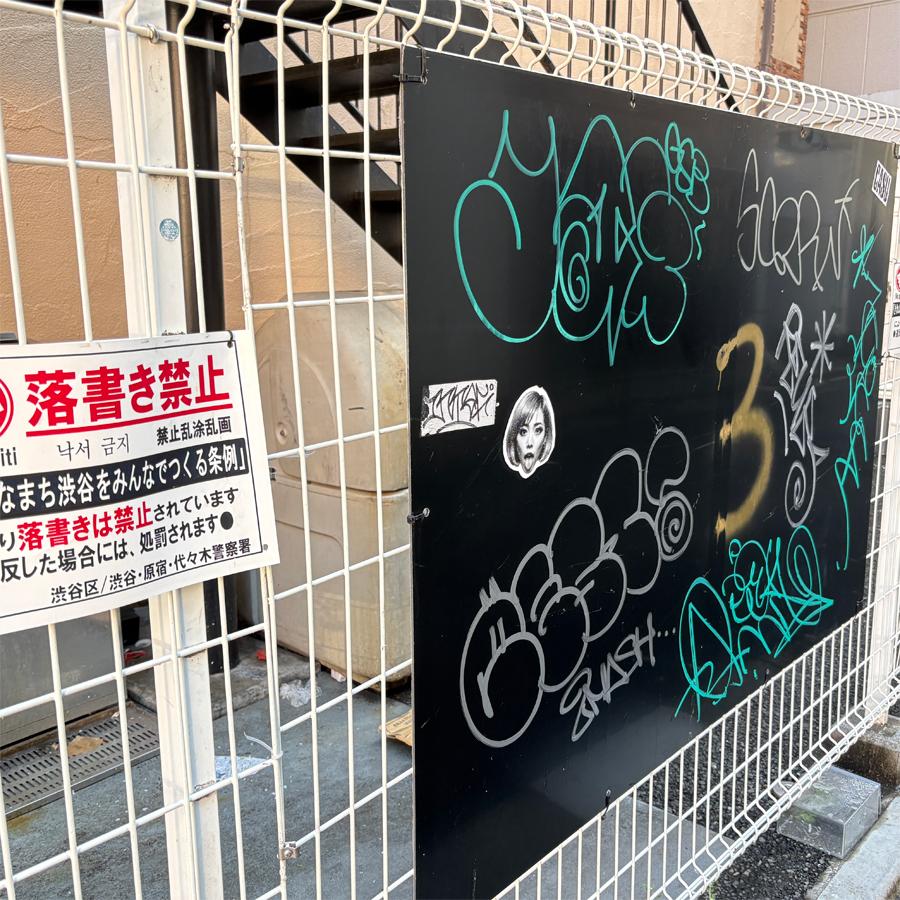
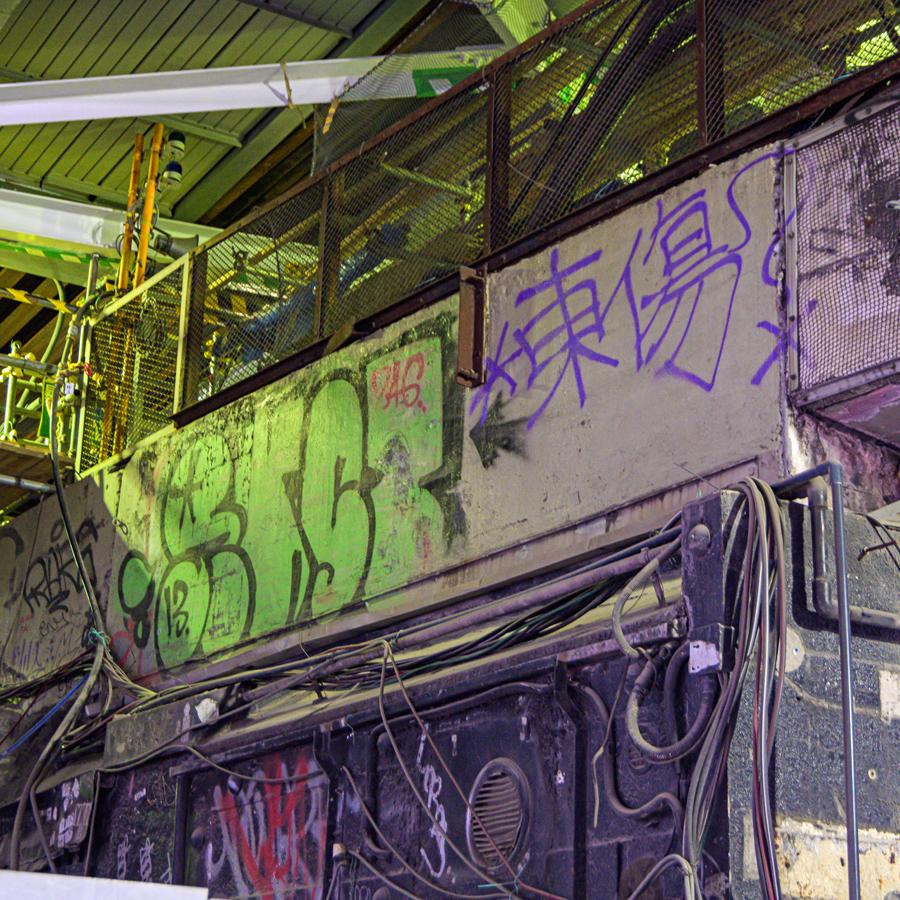
Left: "No graffiti" signs prove ineffective (photographed in 2026), Right: Construction site under the elevated train tracks (photographed in 2022)
Graffiti, even if erased, will reappear after some time—it's a never-ending cycle. It's not just a matter of aesthetics; it gives the impression of an "unmanaged space," which can encourage further vandalism such as graffiti and littering. It's a problem closely related to urban order and a sense of security.
On the other hand, Shibuya also has an aspect as a hub for street culture known as "graffiti." The boundary between "expression" and "illegal activity" tends to become blurred, and this duality makes the problem even more complicated.
Breaking Free from the Cat-and-Mouse Game: A Look at the Shibuya Multi-Story Parking Garage
The case of the Shibuya Multi-Story Parking Lot, managed by Tokyu Corporation, exemplifies the difficulty of combating graffiti. The facility has repeatedly suffered from graffiti damage, and Shibuya Ward has carried out removal work multiple times. Although a total of approximately 3 million yen has been spent, the situation has continued where the graffiti is removed only to be reappeared.
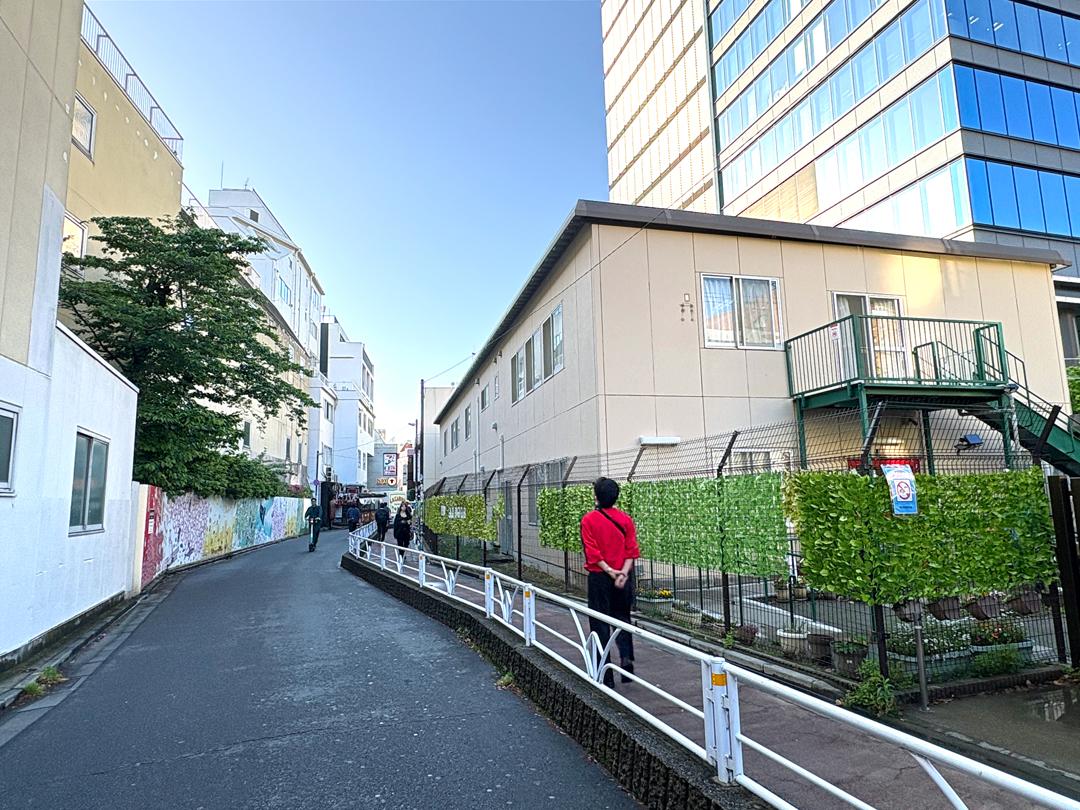
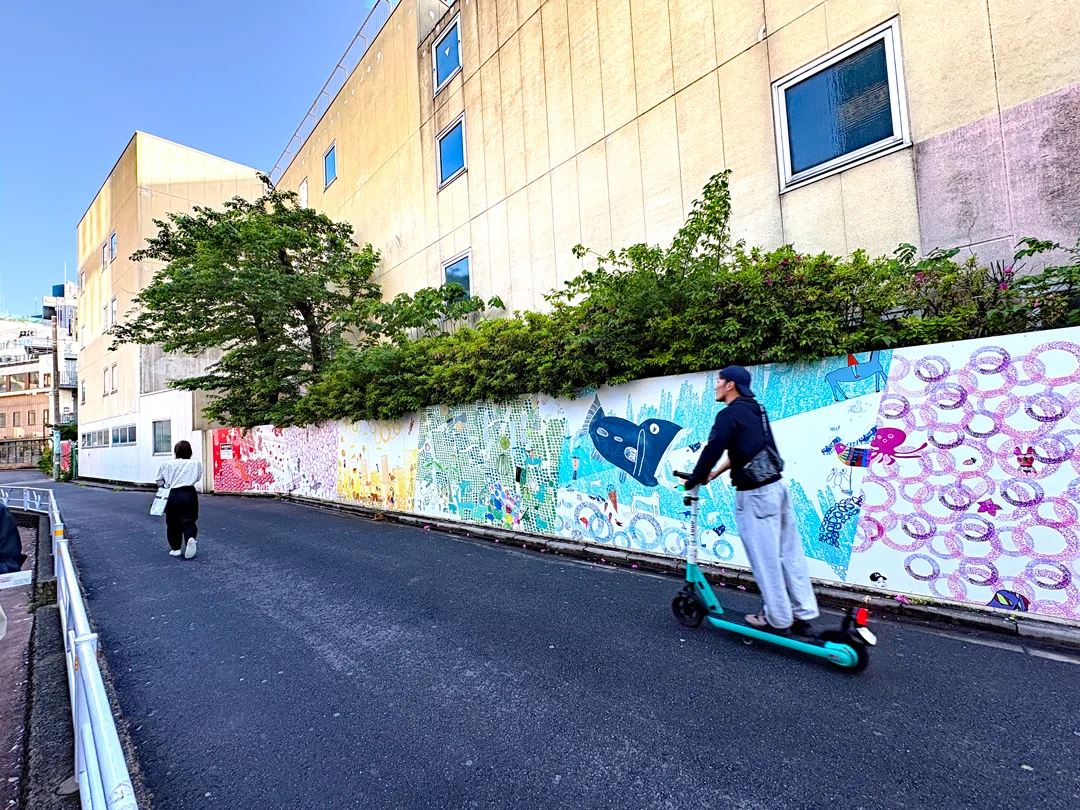
Udagawa Street, formed by culverting the Udagawa River. The road, which follows the meandering course of the river, has a charming character. The wall on the left is behind the Shibuya Multi-story Parking Garage, and the building on the right is a nursery school (photographed in May 2026).
The site has less foot traffic at night compared to the area in front of the station, and it has a structure with a wide wall surface. Azusa Takeuchi of Tokyu, who was in charge of graffiti countermeasures, recalls, "The wall surface was wide and easy to draw on, so it may have become a place where people could easily satisfy their desire for self-expression."
He added, "Even when Shibuya Ward took measures to remove the graffiti, it would reappear within a short period of time, making it a never-ending cycle."
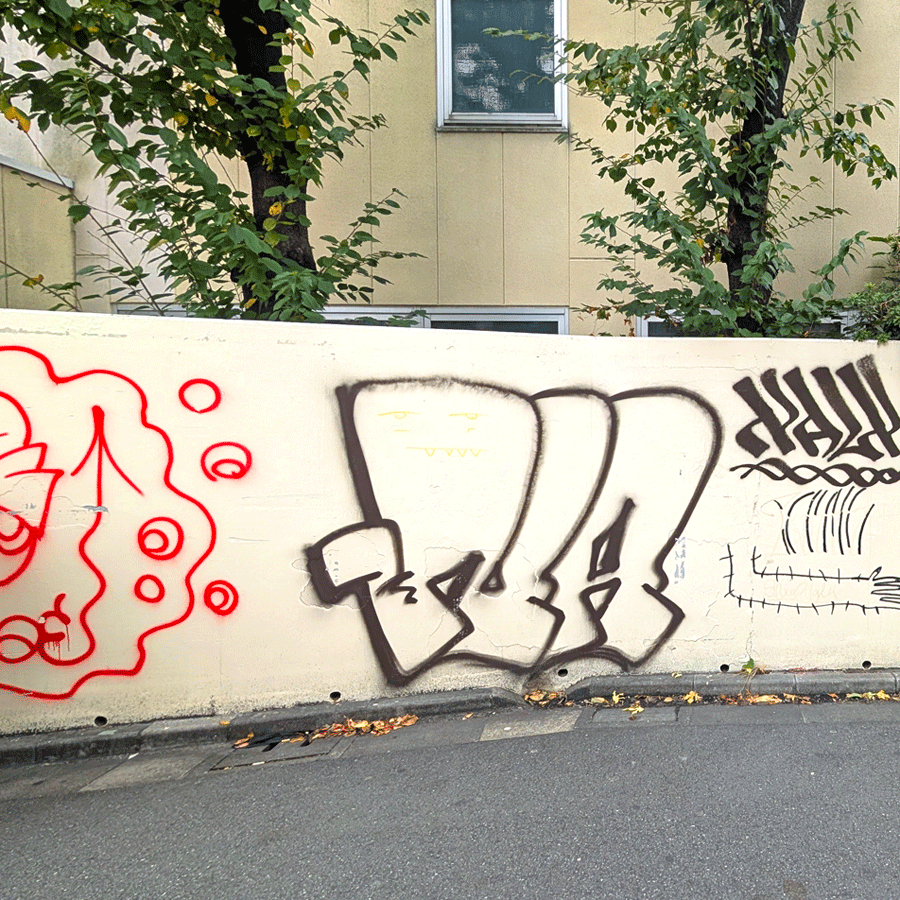
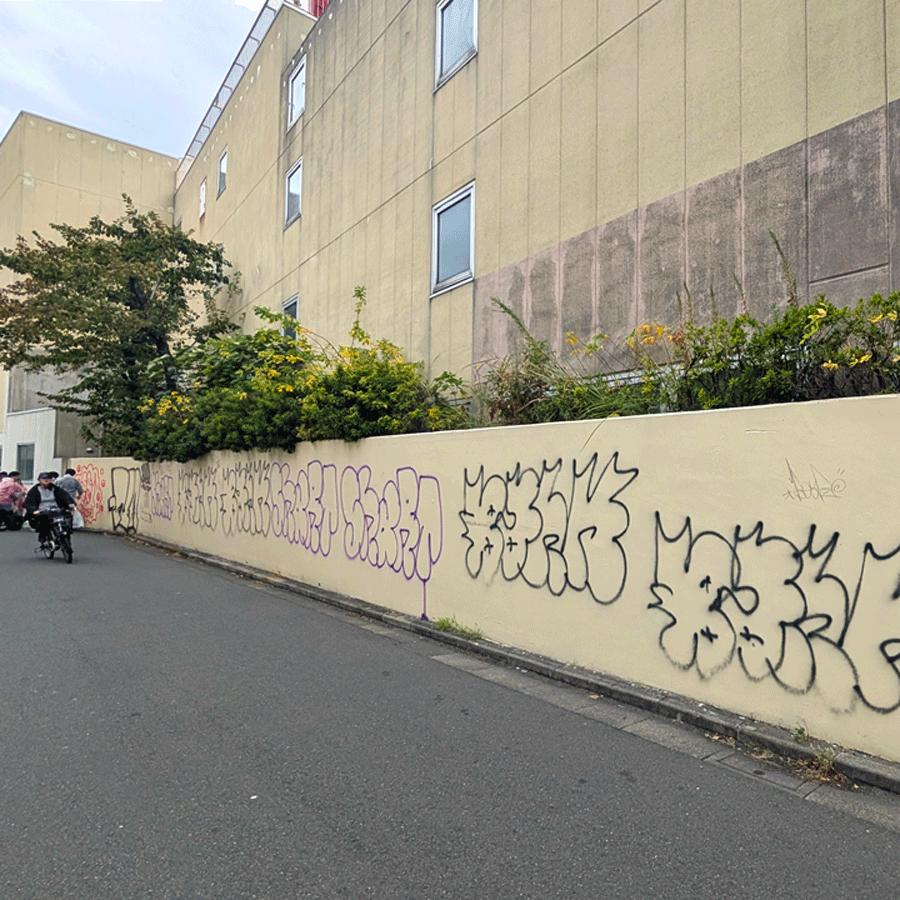
Graffiti damage (photographed in 2025)
The problem wasn't limited to just a deterioration of the landscape.
"Graffiti was scattered throughout that area. Even just one piece of graffiti can give the impression that it's an 'unmanaged place,' which can encourage further graffiti and littering. We were concerned that this would ultimately lead to a deterioration of public safety in the entire area."
Since there was a nursery school across the street from the site, Takeuchi said, "It's undesirable to have a large graffiti in an environment so close to a place where parents can leave their children with peace of mind. I felt that it could cause unnecessary anxiety for the children and their parents."
In response to this situation, Shibuya Ward requested that private companies take more than just erase the images; fundamental measures were needed. From there, a new initiative began that went beyond simply "erasing" the images.
First, utilizing the framework of Shibuya Ward's "Graffiti Removal Supporter Program (Rakusapo)," approximately 12 Tokyu employees participated in a graffiti removal activity last November, following a lecture by ward officials. On that day, Tokyu employees lined up in front of a wall that stretched for about 30 meters and was covered in spray-painted graffiti. They spent about an hour repainting the wall white.
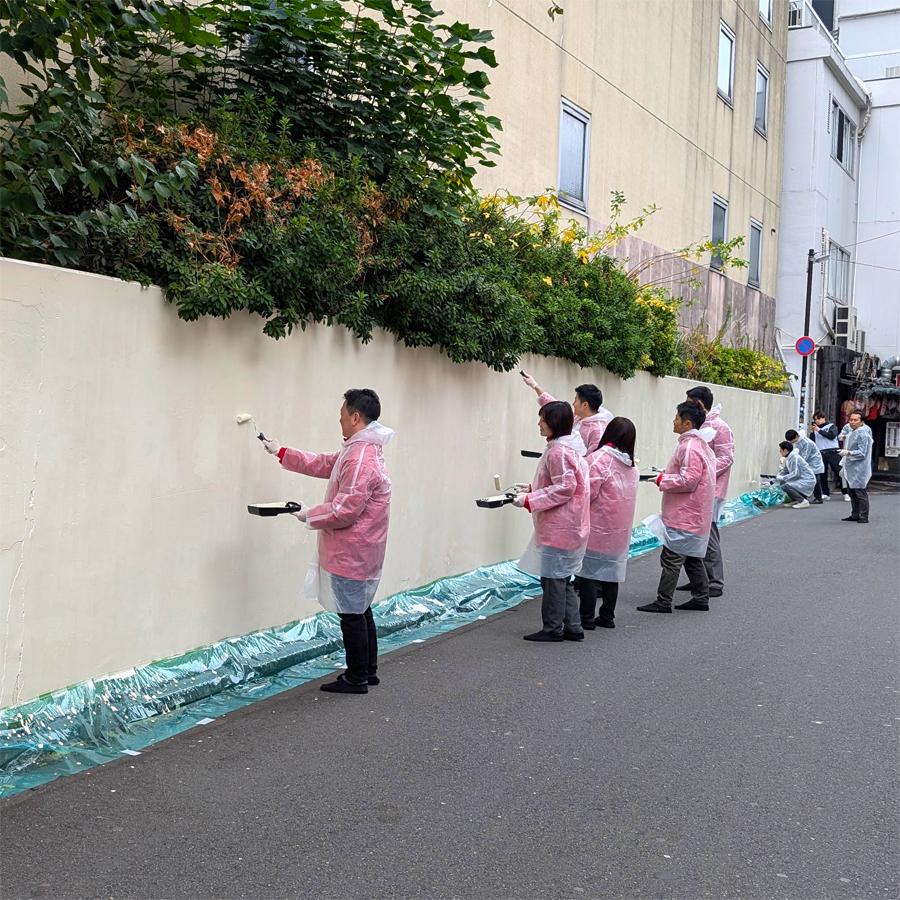
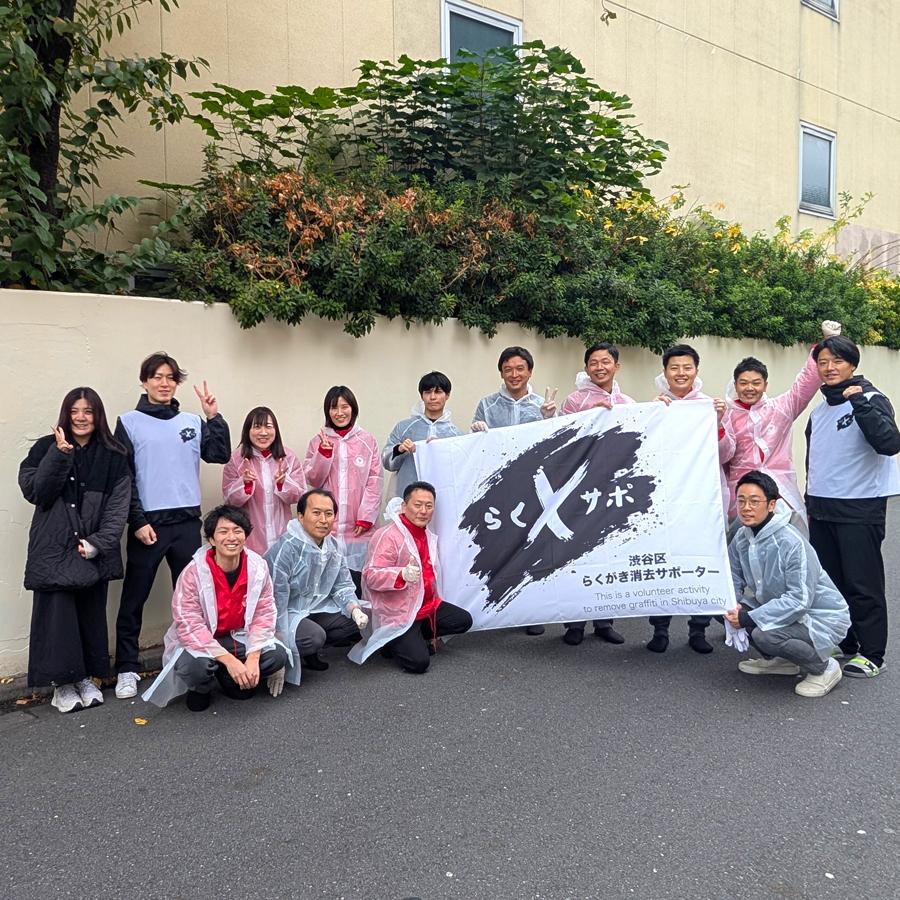
Left: Scene of graffiti removal activity. Right: Members who participated on the day (photo taken in November 2025).
Takeuchi said, "Until now, we had mainly relied on Shibuya Ward to remove the graffiti, but we felt that Tokyu, as the property manager, also needed to take a proactive role."
"By having the employees themselves do the work, they were able to see the problem as 'their own problem.' In fact, when the wall that they had cleaned themselves was vandalized with graffiti again in just about a month, they felt a stronger sense of frustration and anger than ever before," he said, adding that through that experience, "they came to a deeper realization of the need to protect their own buildings and city with their own hands."
Furthermore, after the graffiti was removed, art design sheets were displayed across the entire wall. Because there was a risk of the wall being vandalized again if it remained plain white, they decided to work with the ward to use the space as an advertising design board as a measure against graffiti.
The design chosen was that of "Shibuya Font," which is produced by disability support facilities and other organizations within Shibuya Ward.
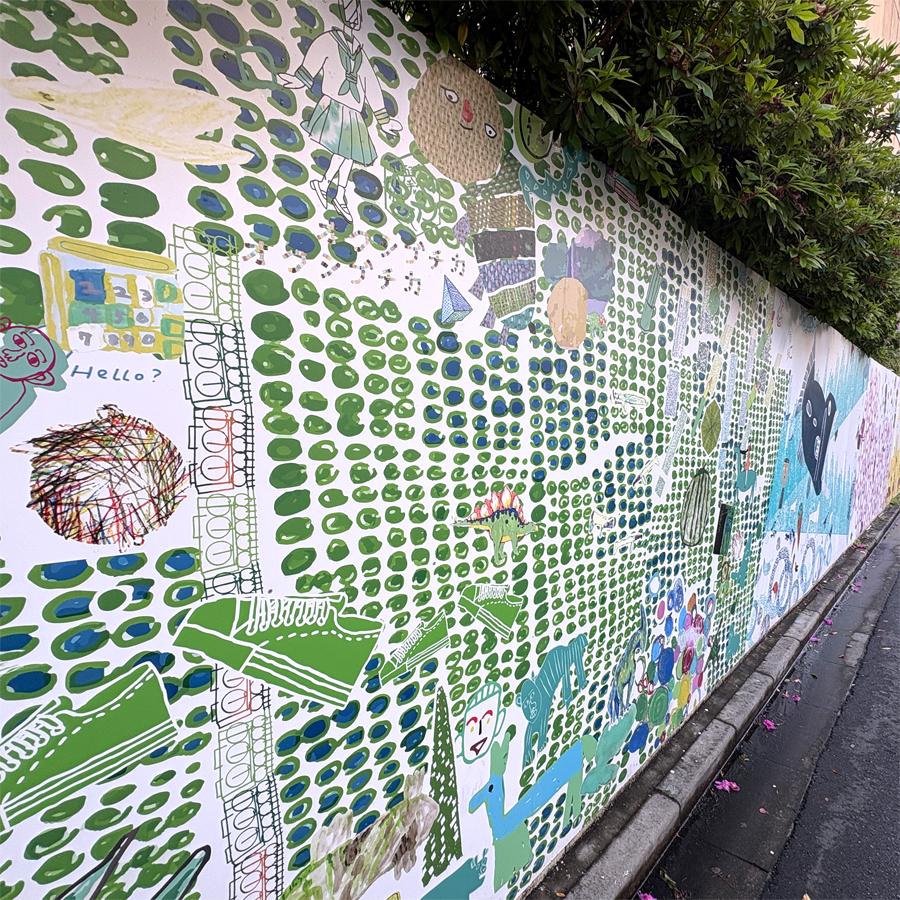
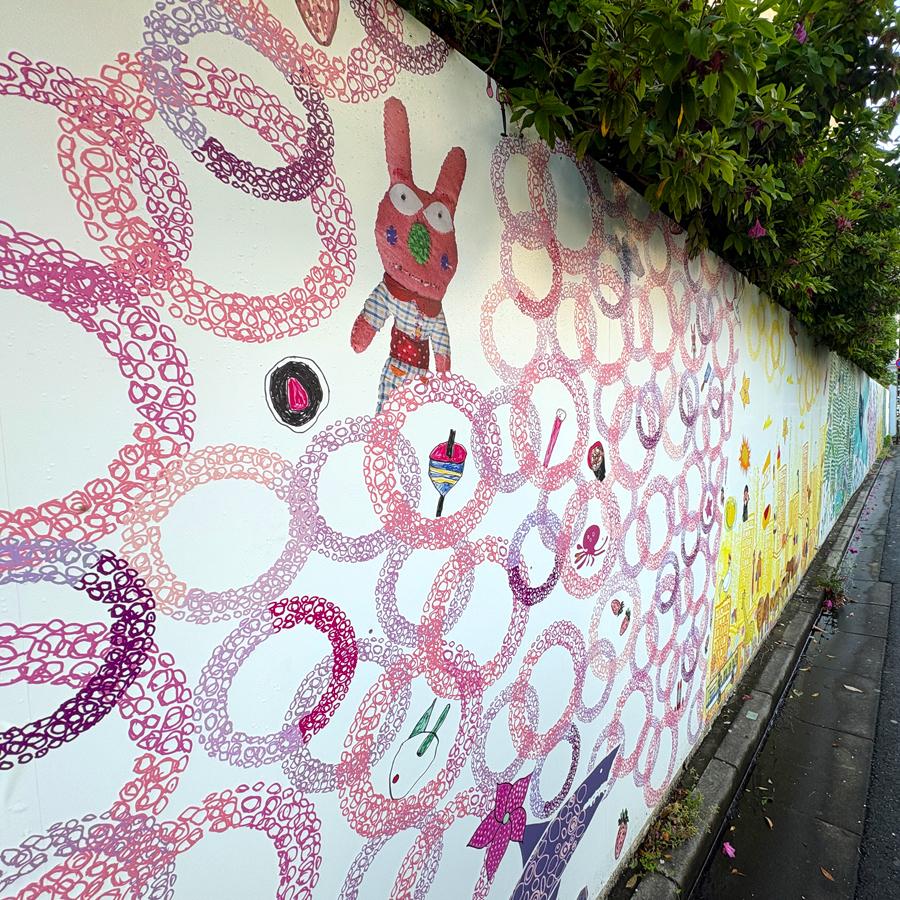
After the graffiti was removed, the street was transformed into a cheerful and bright street with the addition of Shibuya Font design (photographed in May 2026).
Takeuchi explains, "Because this is a collaborative project with Shibuya Ward, we wanted to use a design that evokes the essence of Shibuya." He adds, "We considered art aimed at young people, but since the children at the nursery school will be the ones who see this wall most often, we wanted to choose a design that was warm and that children would enjoy."
Local shopkeepers' associations have also given positive feedback, saying things like, "It blends in well with the town, which is great."
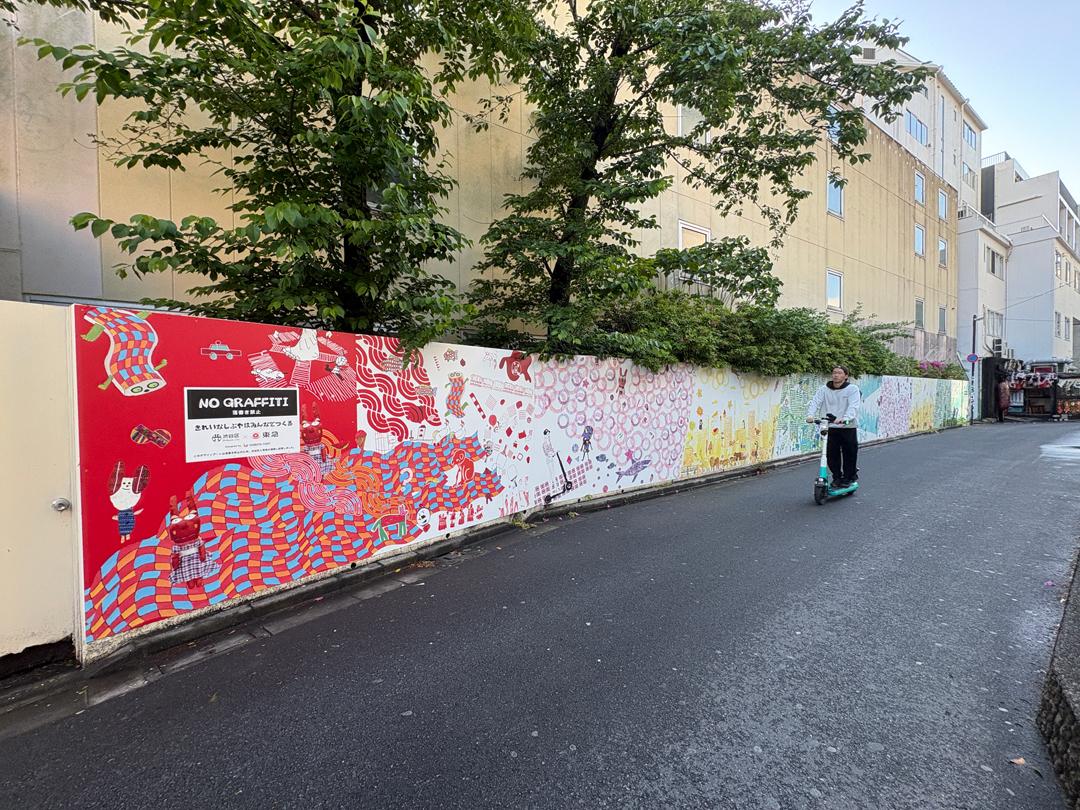
Udagawa Street after the art design sheets were put up (photographed in May 2026)
From "erasing" to "engaging"—the evolution of countermeasures
Shibuya Ward is currently working on developing community-participatory systems such as "Rakusapo." The aim is to make visible the intention to create a "city that is not neglected" by having residents and businesses take the initiative to participate.
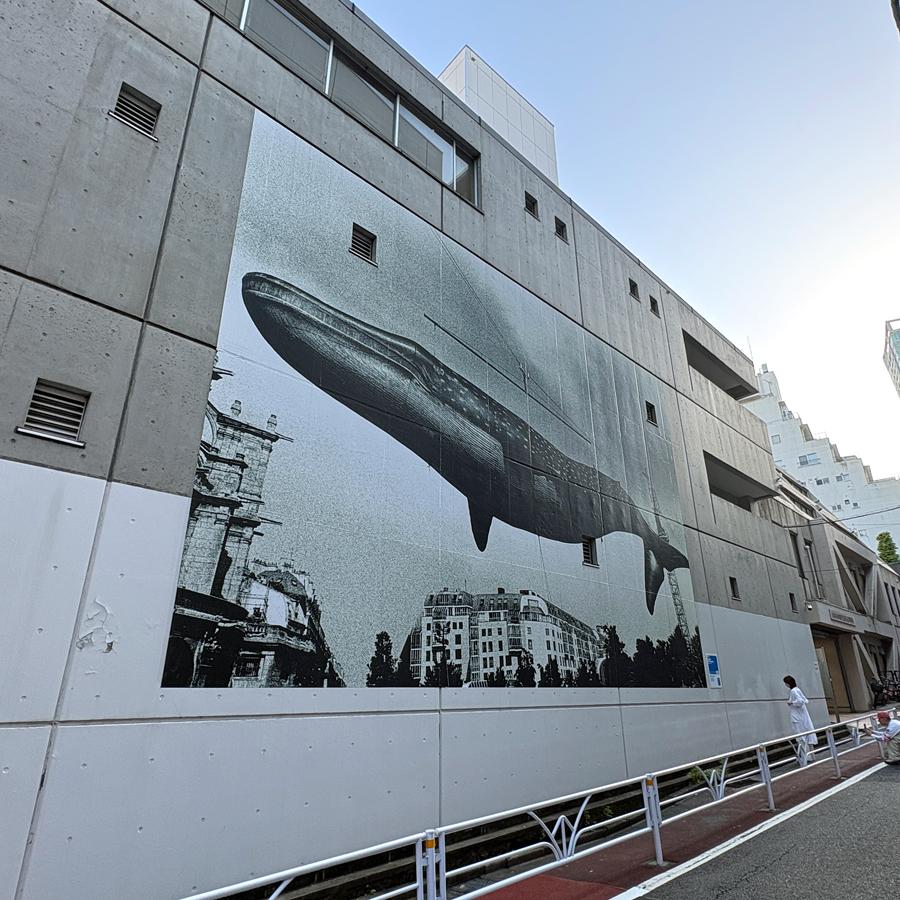
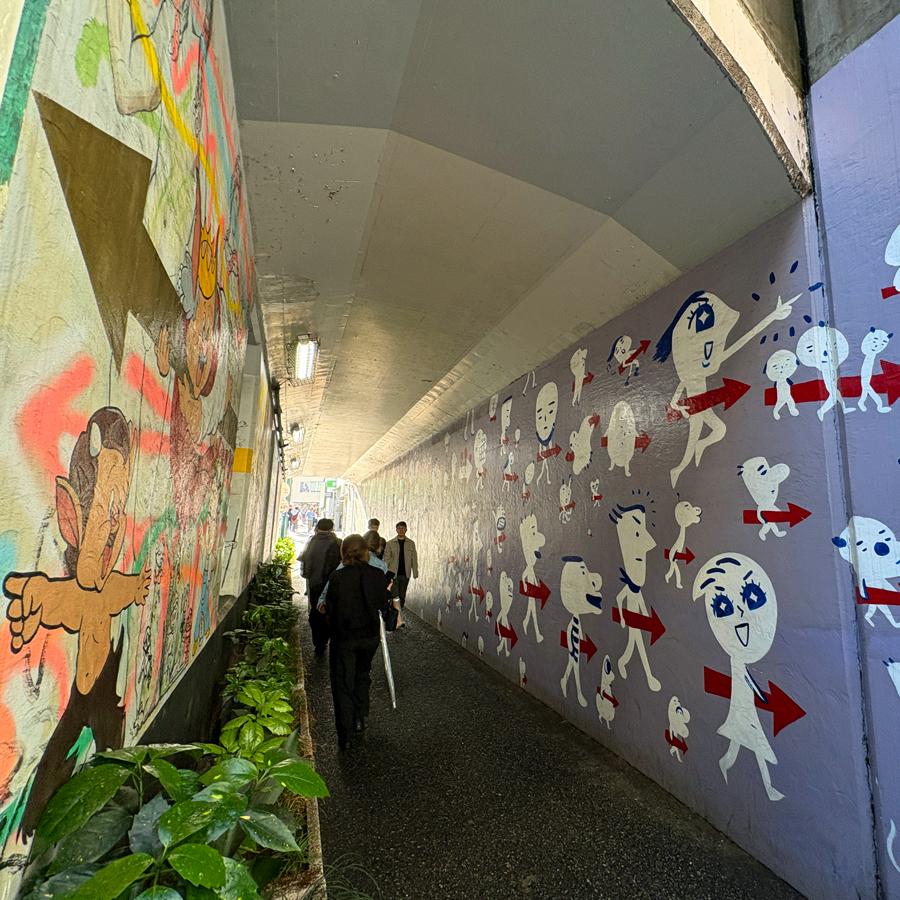
Left: Shibuya Arrow Project, work by photographer Daido Moriyama (near Shibuya Fire Station); Right: Works by manga artist Kotobuki Shiriagari and others (under JR East elevated railway tracks)
Furthermore, the ward is also implementing initiatives such as the "Shibuya Arrow Project," which started in 2017, that serve both to prevent graffiti and to provide evacuation guidance signs during disasters. In this project, prominent artists such as Shiriagari Kotobuki, Hiro Sugiyama, Barry McGee, and Moriyama Daido have participated, using "arrows" that indicate the direction to evacuation sites as a motif. They are working to improve the city's landscape by applying art to public spaces that were previously dark and enclosed.
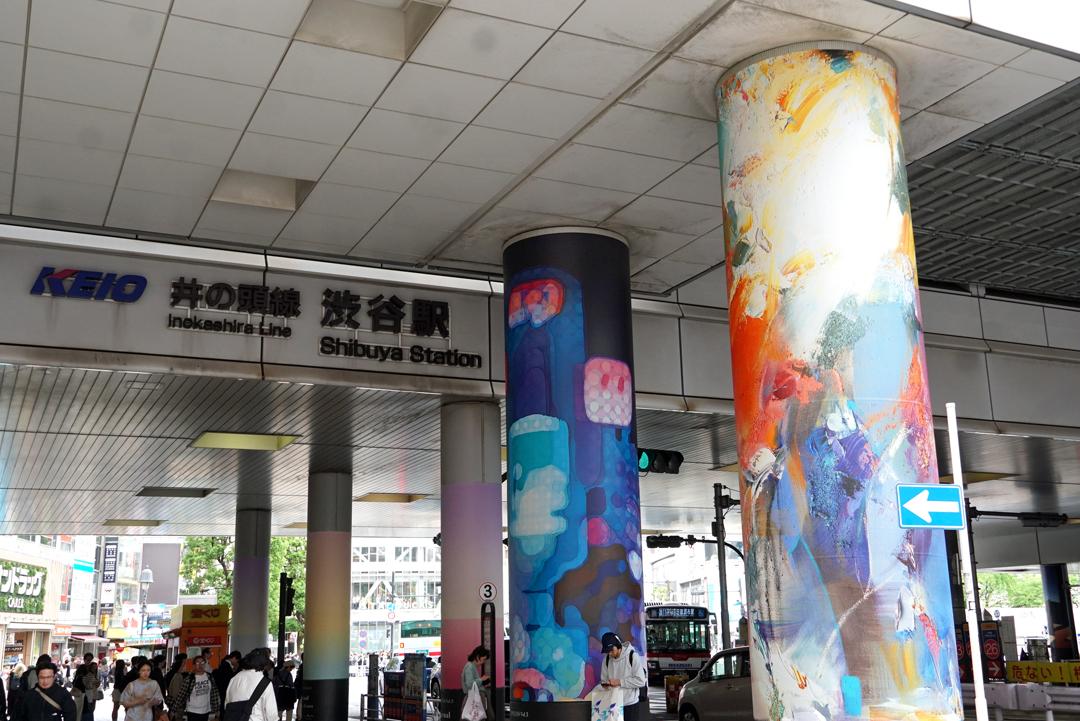
The pillars in front of Shibuya Station on the Keio INOKASHIRA LINE Line were also heavily covered in graffiti, but they are now being used as a venue for open-call art projects by young creators and artists, as a measure to combat graffiti (photographed in 2026).
Furthermore, in front of Shibuya Station, the Shibuya Station Area Management Association is developing "TYPELESS," a public art project that utilizes the pillars in front of Keio INOKASHIRA LINE Shibuya Station as a canvas. This project aims to combat graffiti while simultaneously creating opportunities for young artists to express themselves.
These efforts are not merely about combating graffiti, but are spreading as initiatives that give new value and roles to public spaces themselves.
Takeuchi said, "By adopting designs rooted in the local community and creating artwork together with local people through workshops, we can create spaces that residents will feel attached to." He added, "I feel that the initiative of deliberately applying art to places where graffiti is frequent in order to prevent it has potential in other properties as well."
Should graffiti be eliminated or should we coexist with it?
Graffiti in Shibuya cannot be described in a simple dichotomy of "graffiti that should be eliminated" or "a culture that should be nurtured."
Unauthorized graffiti is clearly illegal and requires swift removal. On the other hand, it is also true that world-renowned artists such as Basquiat, Keith Haring, KAWS, and Banksy have emerged from street art, and it cannot be denied that graffiti has developed as an integral part of urban culture.
Takeuchi says, "It's important to understand the background and environment of the place and to design it with the city in mind."
Much of the "graffiti" is merely marking to satisfy one's desire for self-expression, and does not reflect any intention to improve the city. On the other hand, art as a form of street culture is closely tied to the context of the city and the lives of its people, and strives to create new value and meaning.
The important thing is to design the city in a way that considers "where," "who," and "how" things can be expressed.
For example, by creating "places where drawing is permitted" using temporary fences and construction walls, enforcing rules to promptly remove illegal graffiti, and establishing a system to evaluate and promote legitimate artwork, it becomes possible to achieve both "order" and "creativity" by combining these three layers.
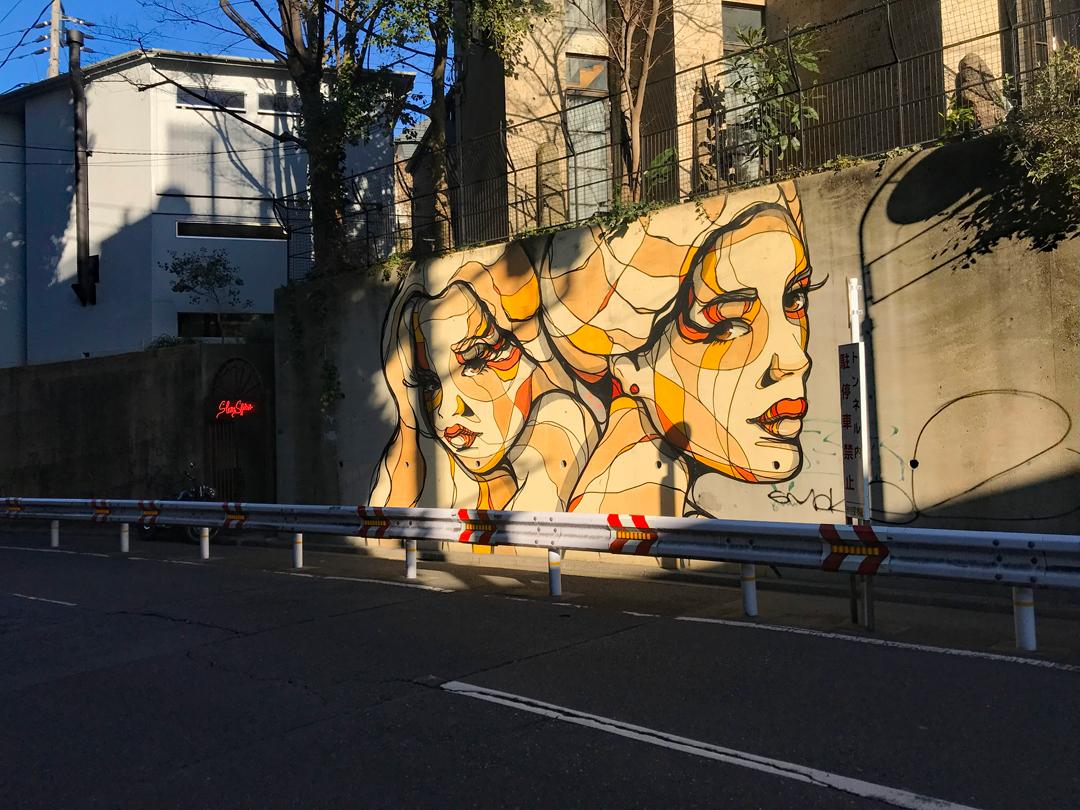
On the exterior wall of the fashion brand "SHARE SPIRIT" in Daikanyama, there is a work by Berlin-based street artist "El Bocho" depicting the faces of two women (photographed in 2019).
In fact, overseas, the Berlin Wall, a symbol of the end of the Cold War, has been preserved as an open-air gallery stretching approximately 1.3 kilometers, and has become a tourist attraction. In Melbourne, Australia, alleys in the city center, such as Hozier Lane, are known as famous spots for street art. Even within the Shibuya area, the works of street artist El Bocho in Daikanyama are gaining popularity as a photo spot.
Shibuya has a history of embracing diverse cultures and forms of expression. Rather than "allowing everything" or "excluding everything," it's important to consider how the city can coexist.
Takeuchi says, "A city isn't something that someone will improve on its own; it grows through the will and actions of each individual involved. I think what's needed is to create spaces that bring out the city's charm while making the most of Shibuya's unique mix and energy."
In Shibuya, where redevelopment is progressing, the question now is, "What should we preserve, and what should we renew?" Graffiti and mural art can be said to be one of the symbolic themes of this question.
What we should aim for is not simply a "beautiful city." Rather, it should be a city where each and every one of us can continue to engage with it with a sense of attachment.
- A close look at the activities of Clean&Art, which is working on "art that returns things to zero" (2018/12/07)
- What's the difference between "mural art" and "graffiti"? Construction fences transformed into art (2022/11/02)
- Shibuya Station construction fence art: Kosuke Ota depicts "the symbol of Shibuya" (2026/02/20)
Venue
Editorial Department: Takashi Fujii
Shibuya registrar. In addition to Shibuya of Culture information, seasonal news and topics, it will spell write that feel every day.
Genres within watch
Articles in the same genre
2026-09-30〜
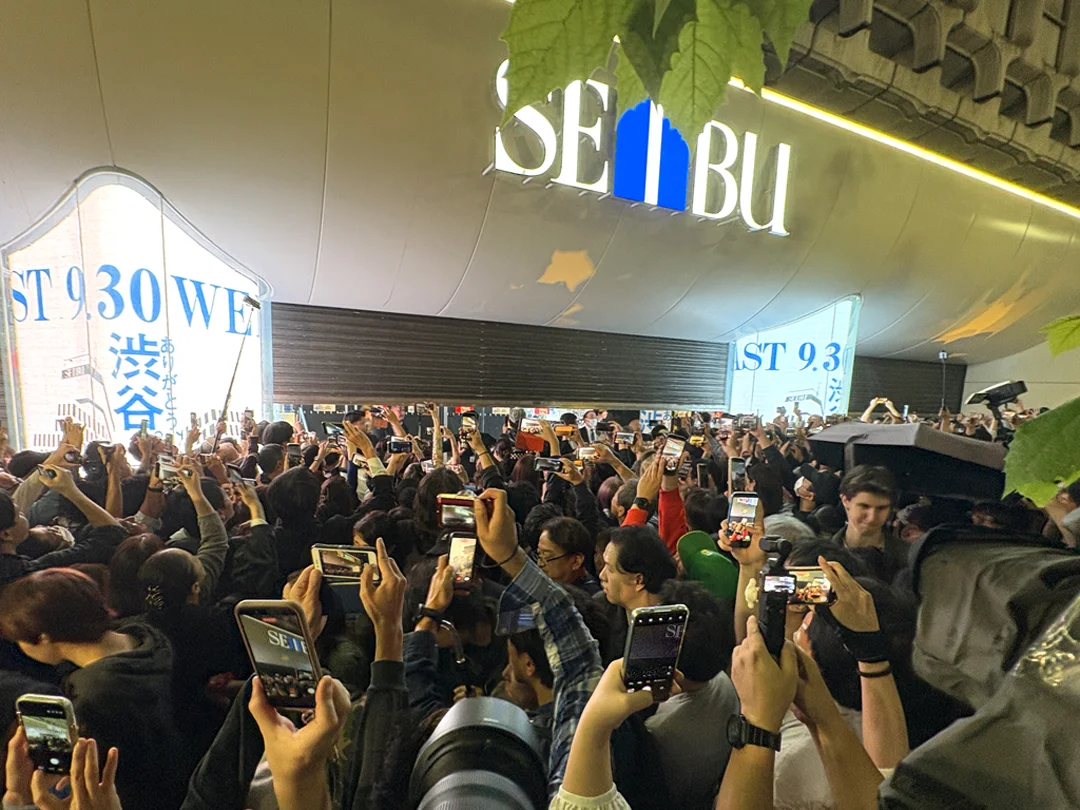
Seibu Shibuya Store closes its doors after 58 years of history: The department store that created "Shibuya" marks the end of its history.
![[Shibuya Scenery Records Vol. 2] The "Onko Gakkai Kaikan" continues to preserve the legacy of blind scholar Hanawa Hokiichi](https://biz.shibuyabunka.com/storage/images/watch//1787122066.webp)
2026-09-02〜
[Shibuya Scenery Records Vol. 2] The "Onko Gakkai Kaikan" continues to preserve the legacy of blind scholar Hanawa Hokiichi
2026-08-10〜
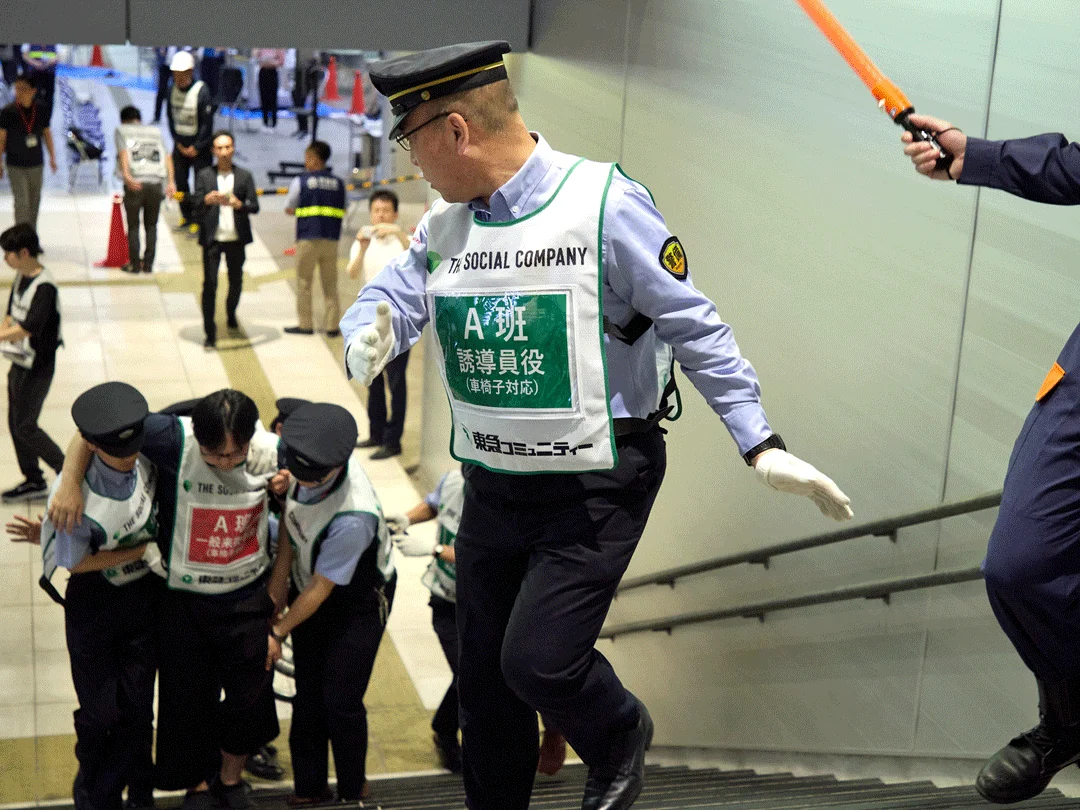
To ensure the safe guidance of visitors during flooding, a joint drill led by local residents was held for the first time around Shibuya Station.
2026-07-08〜
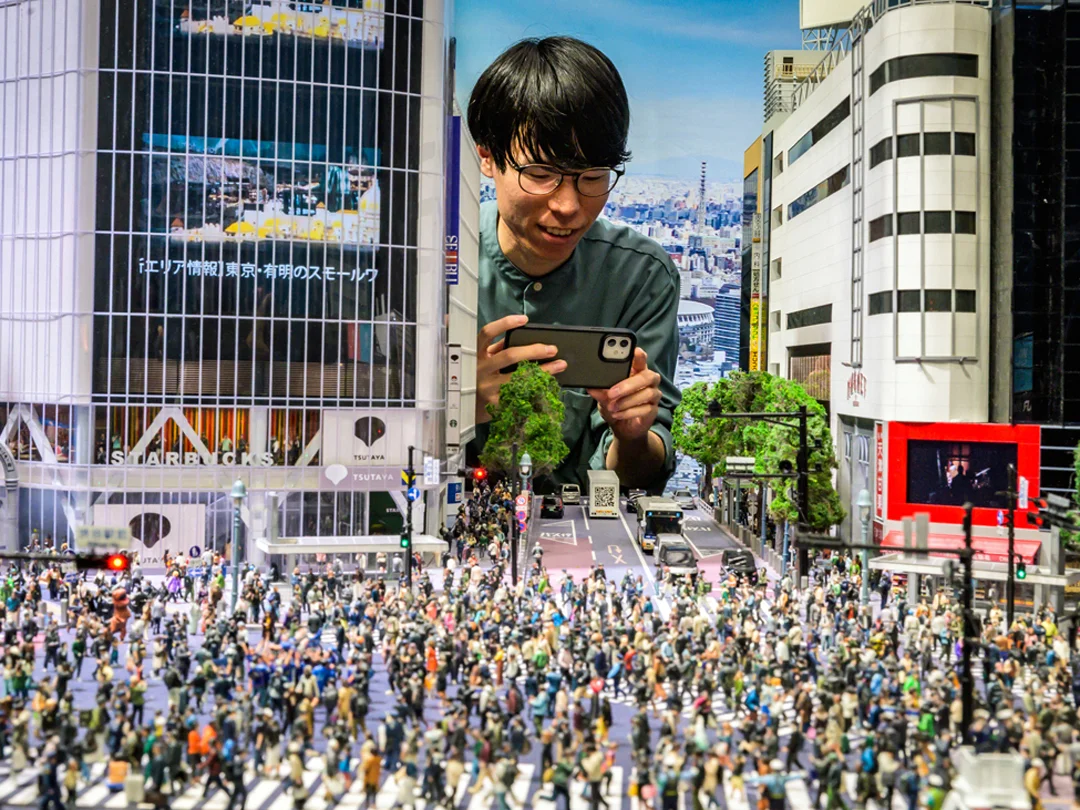
A 1/80 scale diorama of Shibuya is born: Urban modeler Yu Irimajiri talks about the charm of Shibuya.
Featured articles on the site

Yoyogi Park to host "Kyushu Tourism and Local Products Fair" featuring approximately 100 Kyushu gourmet food vendors and a tuna cutting show.
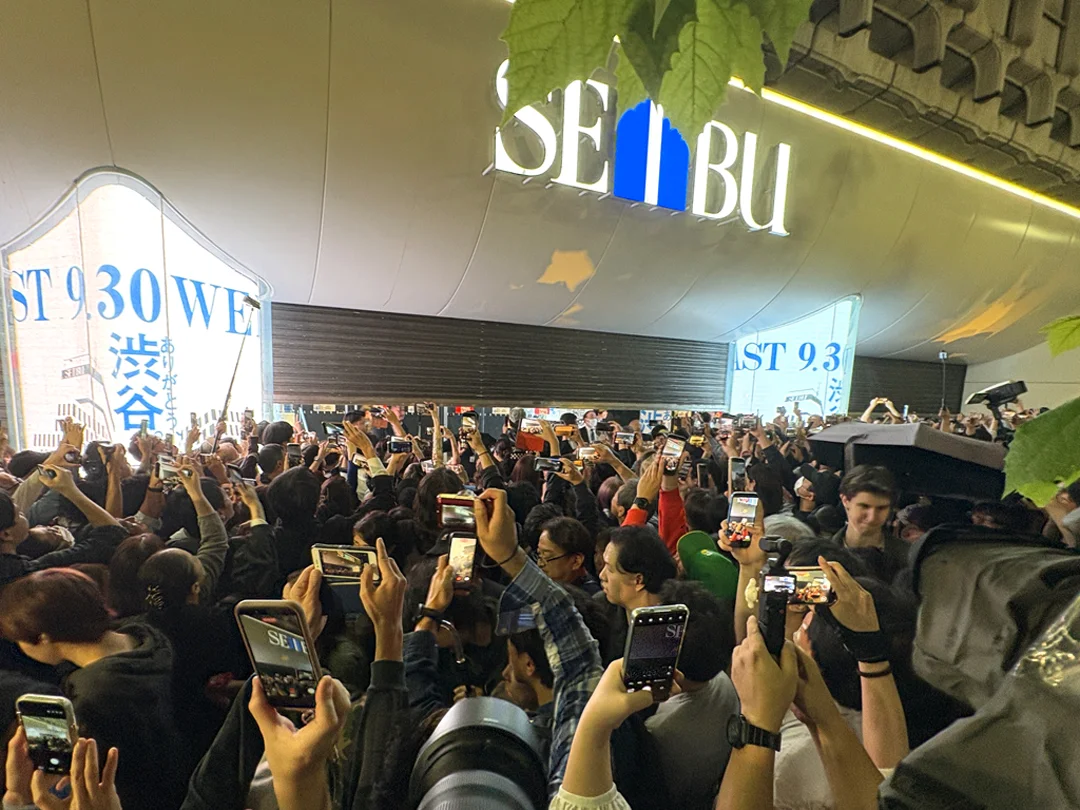
Seibu Shibuya Store closes its doors after 58 years of history: The department store that created "Shibuya" marks the end of its history.

Top 5 Recommended Meat Dishes in Shibuya! Shibuya resident Kago-san's hand-picked restaurants are introduced.